In a few short days, The Naked Swiss: A Nation Behind 10 Myths will be on the shelves in Swiss bookshops. The official Swiss launch date is October 11th but the book is already available to buy on Amazon and on the Bergli Books website.
This is the point where the book will no longer belong to me. It will be read and handled by (hopefully) many people. Drops of tea and coffee will be splashed on it, and it will be carried around from place to place, in backpacks and handbags. Most importantly, it will (again hopefully) entertain and inform readers and give them something to think, or argue, about.
So, what am I doing in these final days before the book comes out? One thing keeping me busy is writing articles about the book, like this one published today on the online Swiss magazine, newlyswissed.com – 10 things people (wrongly) assume about the Swiss.
I am also helping to organise the launch party in Bern and one in Dublin, and figuring out what I will say (and wear!) on the night. Last Sunday I spent an enjoyable day at the Expat Expo in Geneva and had a chance to meet readers and tell people about the book.
The interesting part for me is coming up. Finally, I will get to see how people react to The Naked Swiss, and all the hours of thinking, researching, writing, rewriting and more rewriting will be transformed into something meaningful.
If you are one of the early readers of the book, it would be incredibly helpful if you could rate or review it on Amazon or Goodreads to get the ball rolling.
I’ll leave you with a quote from Dostoyevsky, an excerpt from a letter he wrote to a good friend in 1868 while living near Geneva. There is an amazing online archive of Dostoyevsky’s correspondence which is worth browsing through if you like that kind of thing. I include this quote in The Naked Swiss because I think it is amusing and because I’ve heard people say similar things almost 150 years later. I myself do not agree with the Russian genius.
Oh if only you knew, what a stupid, dull, insignificant, savage people they are! It is not enough to travel through as a tourist. No, try to live there for some time! But I cannot describe to you even briefly my impressions: I have accumulated too many. Bourgeois life in this vile republic has reached the ne plus ultra.
If you want to find the real Swiss, I was told, there is a place near the corner where Switzerland, Austria and Germany meet, where the old ways have been preserved. That place is two half-cantons – Appenzell Ausserrhoden and Appenzell Innerrhoden – a rural pocket inhabited by famously traditional folk with quaint customs.
As these were the only (half-) cantons I had never visited, and I wanted to leave no stone unturned, I decided to make the trip this month. The timing turned out to be good, as this weekend the annual farmers market was being held in the village of Urnäsch, the highlight being the ceremonial descent of the herds from the summer pastures in the mountains (Alpabzug).
There is no better place or day to get immersed in the traditional rural Swiss life of Appenzellerland (the tourist name for both cantons combined).
Politically, the cantons are known for two things. Appenzell Innerrhoden (the Protestant one) was infamously the last Swiss canton to grant women the vote on a cantonal level, holding out until 1991 when forced to do so by the Federal Court. Today, the same half-canton is one of only two Swiss cantons where the annual voting assembly (Landesgemeinde) of the canton is held in the open air, with votes taken by a show of hands.
But this was not a day for politics. This was a day to celebrate the end of another summer season of hard work. Listen out for the men singing in this clip. The strange falsetto harmony is quite unearthly.
To complete the experience, I bought Alp cheese from the Brunner family at their stand. Made by the Mr Brunner from this summer’s milk in the chalet where he spent the past few months looking after his cows.
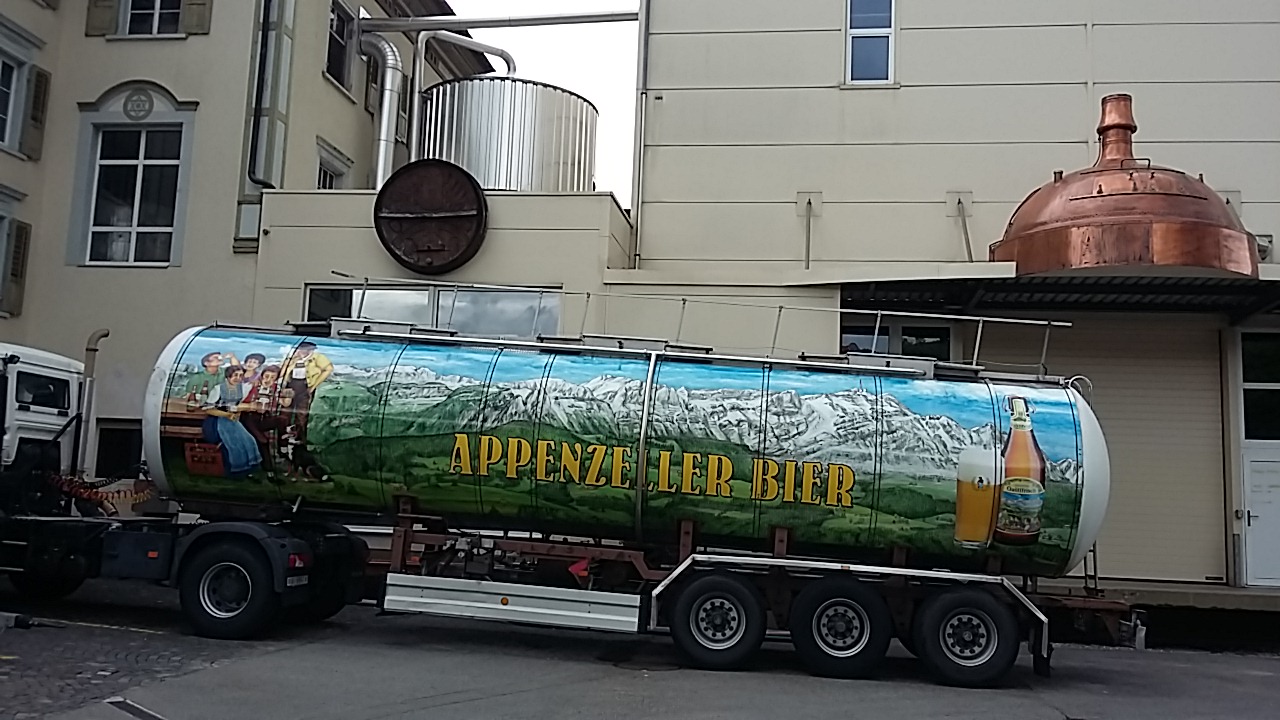
Next stop was Appenzell, the capital of Appenzell Innerrhoden and the home of Appenzeller beer.
I had a little wander around and an expensive coffee. Next time I’ll come back for longer and do some hiking, another thing for which Appenzellerland is famous.
Walking into the crowded authors’ tent at Le livre sur les quais (The book on the quays) literary festival in Morges on Saturday, my first thought was that I had entered a cattle market of books and authors. The festival now boasts a roll call of more than 300 authors. Could this be too much of a good thing?
Le livre sur les quais is only in its seventh year but has achieved significant national and international recognition, attracting big names and 40,000 visitors. Although mainly a festival of French-language literature, the festival has an excellent English programme and star-studded guest list (Paula Hawkins, The Girl on the Train).
Morges is a pretty little town on Lake Geneva, a short commute from the city of Lausanne. On the five-minute walk down from the train station to the lake shore, you glimpse large courtyards to the left and right, surrounded by low-rise apartment blocks. This is urban living at its best. There is an attractive old centre, and when you cross the main street, Grande rue, any of the side streets lead down to the lake shore and stunning views of the water and the French Alps to the south.
The authors’ tent is right on the water’s edge, an impossibly long marquee with the sides left open on the lake side in the hopes of a breeze. Continuous lines of tables run along the ‘walls’ on each side of the tent, facing several inner rectangular ‘islands’ of tables. It was a hot day on Saturday and the temperature in the tent was sweltering.
The authors sit behind these tables, each with a pile of books on display. The presence of so many authors in one place, selling their books (not that they handle money, you take the books from the table and pay at a till) creates a feeling that they are vying for attention.
Maybe I was projecting, the way I do with cows too, but some of the authors looked a little forlorn and overwhelmed. According to the programme there were 348 guests attending the festival, authors, poets, translators.
For the visitors, the wonderful thing about the set-up was that you could walk up to an author you admire and strike up a conversation. This accessibility is one of the great attractions of the festival. I went straight to the island of English-speaking authors island. The authors come and go participating or attending various talks in venues around the town or on pleasure boats!
I was delighted to meet Alison Anderson, author of The Summer Guest, which I had been reading on the train journey to Morges (big disadvantage of ebooks – you can’t get them signed!). The novel is a fictionalised account of a real summer spent by Chekhov and his family in an idyllic country setting in Sumy in Eastern Ukraine. The story is told partly through the diary of a blind woman who became close to the great writer, made poignant by the knowledge that she is dying, and partly from the perspective of the present day translator of the diary. Anderson gives a fascinating account of her research trip to Sumy here.
It was a day of discoveries and striking up connections with people. One talk I attended was a panel discussion about historical fiction with Rosie Thomas, Petina Gappah (amazing speaker from Zimbabwe), John Boyne and Anne Korkeakivi. John Boyne, best known as the author of Boy in the Striped Pyjamas, talked about the nit-pickers who come to him with minor factual corrections. He also confessed he checked one-star Amazon reviews to see what people did not like about his books.
“There are no mistakes in fiction. Once you put a made-up character into a historical setting, it’s corrupted. The story you’re telling comes first.” I am really looking forward to reading my new copy of Boyne’s latest novel, A History of Loneliness, his first novel with an Irish setting.
My visit to Le Livre sur les quais was a very enriching day for me, but one where I was glad to be the observer and not the observed. But soon it will be my turn to sit at a table and talk about my book. After a career of asking questions, I’m not sure how easy it will be to have the roles reversed. This month I will be giving my first interviews about my book, and two talks at the Geneva Expo on October 2 (more info here).
One more thing for any of you who are on Goodreads. The Naked Swiss is now listed there and you can mark it as ‘want to read’ if you like, and/or follow my author page.
Have you attended any literary festivals this year? What do you think is the best formula? I know a huge amount of work goes into these events and I think they are fantastic for readers. I hope authors feel the same. Not only did I come away with these great books, but I was able to meet or listen to four out of the five authors.
The ‘Stroh Deluxe’ room in Hotel Kemmeriboden Bad in the Emmental is a world away from the real thing
The longest night I ever lived through in Switzerland was spent half way up a mountain in a barn, my head resting on a rough pillow several feet above a calving cow. Although 90 per cent of the population lives in the lowlands, the Swiss like to think of themselves as a mountain people, and therefore they celebrate all the trappings of rustic mountain life. When the idea of ‘sleeping in the straw’ came up, I took my cue from my enthusiastic Swiss friends and convinced myself it would be a fun thing to do.
It was a chair lift ride and half a day’s hike to get to the chalet where a farming couple were spending the summer looking after their herd of two dozen cows. We ate fondue outside and watched the sun set over the pre-Alps. I had to agree it was lovely. When we were shown to the accommodation upstairs – rough-hewn wooden bunks with the promised straw-filled mattresses and army blankets – I thought it could have been worse. I hadn’t taken vernacular Swiss architecture into account.
To keep everybody warm in winter, Swiss farmhouses traditionally integrated the family’s living quarters and the barn or cowshed under one roof. We were actually sleeping in the old hay loft, directly above the stall. This soon became clear from what I could smell through the gaps between the floorboards. One cow was being kept in for the night (I soon discovered why) while the rest were free to roam outside. When I resigned myself to the smell and the occasional sounds of snorting and stamping from downstairs, it seemed like sleep might be possible.
I awoke from a short and fitful sleep to distinctly more unhappy sounds coming from the cow below. I don’t know how many hours that poor cow was calving but I didn’t sleep a wink throughout. It did eventually come to an end and finally the light went out and the sound of lowing and voices was gone. All was not lost, I thought, dawn was still at least an hour off. I hadn’t reckoned on the morning milking, which started after what felt like a mere moment of shut-eye. First the whole house shook with the thundering of twenty-four sets of hooves on the wooden floor, and the clanging of twenty four cowbells, as the cows came in to be milked. Then the milking machine generator started up, also seemingly located directly under my bed, with its own penetrating noise. Eventually I was lulled back to sleep by the chugging – until it stopped. But then it was time for the cows to be let out, and the din of hooves started up again.
The next day I hurried down to the Central Swiss Plateau, glad to be back in the one of the most densely populated areas in Europe if it meant having modern conveniences and sleeping through the night.
The age-old tradition of taking herds up the mountains to the summer pastures is only maintained by a relatively small number of famers nowadays. Some 17,000 mountain farmers make the trek every year with 800,000 livestock, usually staying in simple chalets while they look after their animals, serve drinks to hikers, and make cheese or other farm produce. Where practical, herds or flocks are left alone, or in the care of sheepdogs.
An incredible two thirds of Switzerland’s land surface is taken up by mountains but my sleeping in the straw experience is the closest most Swiss get to mountain life in the land of Heidi, chalets and yodelling from alp to alp. To the Swiss who live in the lowlands, the mountains are their playground, a place to go skiing, hiking, paragliding or hunting. The fact is it is difficult to make a living up there. The majority of Alpine farmers rely on subsidies, and volunteers are drafted in to help with the summer harvest in a support programme organised by the charity Caritas. And the Swiss are loyal to their high-altitude brethren. The charity for hard-up mountain dwellers Schweizer Berghilfe (Swiss Mountain Aid) is one of the most popular in Switzerland for bequests. On the scientific front, the Swiss are global leaders in avalanche and glacier research. They also know a thing or two about hydroelectric power, since more than half of Switzerland’s electricity production comes from hydroelectric power generation.
This summer I summoned the courage to sleep in a mountain hut again, this one belonging to the family of a friend. First we had a hair-raising drive up a narrow winding road hewn out of the mountainside, literally stuck between a rock and a hard place whenever we met another car. Then came a long hike, up and up. There was no milking involved this time – the small herd left alone on our particular alp were too young – so I only had the spiders to worry about as I waited for morning to come. But I did have the pleasure of being first up and lighting the morning fire to heat water for breakfast, one of those age-old tasks that almost made me sentimental about mountain life. Have you ever tried sleeping on the straw? Or what is the equivalent where you come from? For those curious to try it, check out this Swiss agritourism website to find a farmhouse nearby. But if you prefer something more refined, why not try the room in the picture above at the Hotel Kemmeriboden Bad in Emmental, canton Bern? I know I’m tempted.
My Swiss book has a title – and a cover! It has an author’s note, an afterword, and ten action-packed chapters in between. Now that the book has start to pop up on book retailers’ websites, I wanted to share the news here.
I am at the stage of dotting the i’s and crossing the t’s, and by the end of the week my work on the manuscript itself will finally be done. What a year it’s been. This time last year I had just arrived in Ireland by ferry for my annual summer holiday. I had the task of reworking the concept for the book I had pitched to Bergli Books two months beforehand, plus a new sample chapter to write.
The starting point for me was that I felt the Swiss were poorly served by the clichés – some flattering, many negative – that had crystallised around them. Their true nature was obscured by false assumptions and fixed ideas. To paint an accurate picture, I wanted to go through the dirty laundry and great achievements, and get close to the Swiss at their best and at their worst.
Did the Swiss really help the Nazis? Are Swiss women stuck in the past? Are the Swiss xenophobic? Is there even such as thing as a real Swiss person? How did these people get so rich? And what’s going on with the banks?
This book introduces an engaging cast of Swiss characters – refugees from Stalin’s Soviet Union, one of the country’s last surviving suffragettes, a street-sweeper philosopher, a pragmatic private banker and a president with no regrets, to name but a few. It also provides all the context you need to make your mind up about this complex and dynamic land.
Have a look at the Bergli Books catalogue for autumn 2016 (The Naked Swiss is on page 6) for the full list of chapters. If you are a long-term planner, you can pre-order the book here. So far it’s only available to pre-order on German-language websites (although the book is in English) but I’ll let you know as soon as the English-language Bergli website has the book for sale.
If you are interested in keeping up to date on The Naked Swiss, I’ve just started a Facebook page which will be a good source of book news and related events over the next three months ahead of publication in October. Now that we’re on the subject of non-fiction, what is your favourite non-fiction book?
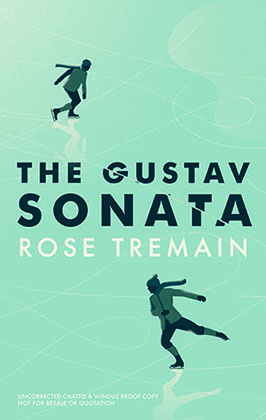
When I heard Rose Tremain’s new book, The Gustav Sonata, was set in Switzerland, I could not wait to get my hands on it. Knowing she had a particular gift for evoking time and place, I had to see what she would do with the challenging setting of Switzerland during the Second World War.
From the first page, I was struck by how exquisite this novel is. Tremain delivers on all three fronts – story, characters and writing. The first of three parts is written from the point of view of the protagonist, Gustav, as a boy. I wanted to rush in and rescue this darling child. The middle part shows us how his ill-fated parents met each other and drifted towards their ruin. The third ‘movement’ brings us close to the present day, where we meet Gustav again in late middle age, the proprietor of a hotel and lonely heart.
Tremain fits so much human frailty and so many wrong turnings in these pages, inspiring compassion for every character, even those with awful failings. At the same time, she captures the atmosphere of small-town Swiss society and has an amazing touch for the environment and cadence of language, so much so that you feel you could be reading a Swiss work in translation. No chisel marks are visible on her sentences – they seem to have come into existence ready-made and perfect.
There are so many stories in one here, set against one of the biggest stories of all, the persecution and genocide of the Jews in the Nazi Germany. The character of Gustav’s father, an assistant police chief, is inspired by a real Swiss police chief, Paul Grüniger who risked his career by falsifying documents to admit 3,000 Jewish refugees into Switzerland illegally. Like Gustav’s father, Erich Perle, Grüniger was dismissed from his position and disgraced for this crime.
The Gustav Sonata is a story of a man who, by being true to his own humanity, will lose everything he holds dear. It is also a story of a lovely boy and his troubled mother who cannot see the treasure she has in him, and the story of a mismatched couple who fail at the first test. Through it all runs the special relationship and lifelong friendship between two sensitive boys, Gustav from a poor and loveless home and the much more privileged Anton.
One chapter in my non-fiction book examines the role of Switzerland during the Second World War, which has been severely criticised over the years. Switzerland’s record in taking in Jewish refugees during the war is mixed. Although it was one of the main routes out of Nazi territory for several years and thousands of Jews were able to transit through Switzerland or find refuge there, the border was closed against Jews in their greatest hour of need. Worst of all, in 1938 the Swiss asked the Germans to stamp the passports of Jewish citizens with a red letter J so that they could identify and turn back likely refugees without having to resort to imposing a visa requirement on all Germans. The chief of the aliens police Heinrich Rothmund welcomed the move, maintaining that he did not want Switzerland to be “swamped” by people unable to assimilate to the Swiss way of life. Doesn’t that sound familiar?
Swiss President Kaspar Villiger issued a public apology for the treatment of Jewish refugees in 1995: “There is no doubt in my mind that our policy has brought guilt upon us. By introducing the so-called Jewish stamp, Germany was complying with a request made by Switzerland. At that time in an excessively narrow interpretation of our country’s interest, we made a wrong decision. The Federal Council deeply regrets this, and apologises for it, in the full knowledge that such a failure is ultimately inexcusable.”
It has to be remembered that most other European countries and the United States either imposed strict quotas on Jewish refugees or tried to restrict any Jewish immigration before and during the first half of the war. There was a change of heart but it came too late to save most European Jews.
Most Swiss villages have a shooting range where men do annual target practice as part of their military service, a legacy of the war years #ordinaryswitzerland
To get back to The Gustav Sonata, and an interesting note about how novelists get their ideas. While I was reading, I was struck by how familiar the circumstances of the Perle family seemed. And then I read the acknowledgments where Tremain mentions the debt she owes to Mitya New’s 1997 book, Switzerland Unwrapped: Exposing the Myths. I came across this book during my research for my book on Switzerland. It was written by New after some years working as a Reuters journalist in Zurich. The book is a series of interviews with key Swiss individuals whose views and experiences shed light on Swiss society, narrated in the first person if I remember rightly. It is a great selection. One of the New’s subjects is Ruth Rhoduner, the daughter of Police Chief Grüniger. There is also an interview with a leading banker and a woman from a Swiss Yenish (gypsy) family who was forcible taken into care. And, another theme that feeds into the novel, a description of a day out at a Schwingen festival, a traditional Swiss wrestling sport.
Tremain’s novel is set in the fictional town of Mazlingen. I’d love to know how much time she spent in Switzerland researching this book. Did she stay in an earnest little hotel like Gustav Perle’s and go for walks through sleepy valleys dotted with cherry trees? Considering that the last novel I read by Tremain was set in New Zealand during the gold rush of the 1860s, it is possible she was able to rely purely on good research and her gift for recreating a distant place and time.
I really enjoyed how Tremain portrayed the ordinariness of Switzerland – the everyday food and drink, modest homes, plain streets and dull jobs that are hardly ever seen by tourists. Recently, I’ve been having some fun on Twitter, inviting people to post pictures using the hashtag #ordinaryswitzerland, just to remind ourselves and others that we don’t live in a spectacular film set. We tend to automatically post pretty views of our surroundings on social media. It’s been refreshing keeping an eye out for the less lovely views and watching others do the same.
Looking forward to hearing your reaction to The Gustav Sonata (or Tremain’s other novels) or any of the other themes I’ve touched on today. Have a great start to the summer!
With every language you try to learn, you are opening up common ground with potentially millions of new people. That’s a great thing. But when you have to live your life in that language, you are also opening up a world of uncertainty and struggle. Those foreign words that represent thousands of years of a unique culture can be your enemies as well as your friends.
These are just some of the challenges that come up every day when you are trying to make your way in a foreign language. Next time you speak to a faltering non-native speaker, be kind. They are on a socially painful journey marked by some, if not all of the following trials and tribulations.
The Pained Look. Known to all language learners. Unless you have perfect command of the language and the words flow error-free (there are a lucky few who get to this level), you will regularly come across the pained look when you try to express yourself. The look appears when you are struggling to get to the end of what you want to say, or when you make a mistake, or just because your accent is grating on the listener’s sensitive ear. It’s a little bit crushing every time.
The Quality Dive. You have reached a level of proficiency that is good enough to get you through almost any situation without drawing attention to yourself or sparking the pained look. You start to feel comfortable, maybe even a tiny bit proud. Then comes a quality dive. Without any warning, you enter a new situation and your language ability suddenly crumbles. It could be small talk at the playground or handing over your car to a mechanic. You will either be unable to find the key words to say whatever banality you reach for, or you will destroy a sentence with mistakes like hand grenades. Once the unravelling starts, it won’t stop until you exit the situation. Crushed again.
You’re Hilarious. This comes when you mix up words and say something completely out of place. These slapstick language moments cause great merriment – to others. Like when I wanted to say insecure but said the word uninsured (unversichert versus verunsichert). Funnier than you’d think.
The Ceiling. Language learning goes in phases. There is the early fun phase where the words are like pieces of Lego and you are the child and you can’t believe you can build sentences. Everything is fresh and fun. This is followed by the hard grind years, where you have to knuckle down and learn difficult things like case endings and verb conjugations and build up your vocabulary to the point of being able to manage whatever life throws at you. Eventually this pays off and you get to a shaky level of fluency, which can sometimes masquerade as real fluency. This I call the ‘look Mum no hands’ phase. From here you think you’ll get to real fluency one day until suddenly, with a blow to the head, you hit the ceiling. You have exhausted your learning ability. Even if you live another fifty years in this country you will never get any better. A chain of mistakes has infected your speech like a virus never to be dislodged. This is where you will stay, a big step short of perfection and comfort, deprived of the ability to be witty or clever forever.
The Nerves. Because of your imperfect mastery of the language, nerves can hit unexpectedly at any time. This often happens when you need to make a phone call and can’t fall back on the support of facial expression and gestures. A task that you would do without the slightest hesitation in your own language – making a dental appointment, ordering curtains – becomes a test of courage. You have to look up words, pace the room and work up the nerve to communicate. It’s humbling.
Out of the Loop. This is where someone refers to a person or event, a book, television show or comic, and you either have to hold up the whole conversation while someone explains to you what Max and Moritz is/was or you have to feign understanding and guess your way across the gap.
Nodding and Smiling. When you didn’t quite understand what the person said but don’t want to do the whole stop and repeat palaver so you smile and nod. This works well most of the time, except when you are rumbled and come across like you either don’t care what the person is saying or are only pretending to understand everything. Cringe. In a group setting you may have to give up for a while until the conversation gets back onto solid ground. Go to a loud place and you turn into your deaf grandmother, hopelessly lost with no choice but to opt out of all the shouted conversations around you.
Not a Whit of Wit. You might be the Oscar Wilde of your own language but in a foreign tongue you have to give up any hopes of being the funny one. Attempts to throw in witty one liners will fall flat, either because your humour doesn’t cross cultural lines or because you didn’t phrase it right. Resign yourself to laughing at other people’s jokes, if you understand them.
Simpleton. You get used to searching for the simplest way to explain something or present an idea. You will not have three or four words to choose from to refine your point. Some contributions you will not even bother trying to make. The less vocabulary you have at your disposal, the less interesting you will be. Welcome to your new personality.
Kids are Cruel. If you think the pained look is bad, try blank incomprehension. Many children cannot accept or believe that an adult is speaking to them incorrectly. Do they help you out, try to meet you half way? No, they are children. They don’t like speaking to adults anyway so they just boycott your efforts and leave you hanging.
The only way to get through all these challenges is with a big helping of patience and a dollop of humility. Learning is a painful process but there are rewards – people who appreciate your efforts, people who love your accent, friendships you would otherwise never have made. And then there are the good days, when you get through twenty-four hours without any of the above happening!
Does this sound familiar? What are your experiences of struggling with a foreign language? Or are you one of the lucky truly fluent few? I’d love to hear from you.
A year has gone by since I walked away from a permanent job that ticked almost all the boxes for me. It was part-time, an easy commute, I liked my boss, the money was fine and the people were great. But something was missing.
That something was freedom. The Pocahontas in me wanted the freedom to discover new professional territory, and the freedom to say no sometimes.
I have no illusions about work. No matter what your job, you have to spend most of the time digging and planting in order to have days (or brief moments) when you can eat sun-kissed strawberries. The same rule applies whether you are working for yourself or for someone else. But in my case, I have found that being self-employed gives me a better digging to strawberry-eating ratio. And home-grown strawberries also taste better.
Looking back over the last 12 months, I’m pleased with the range of work I’ve found. One thing I’ve learned about being self-employed is that it is very much about relationships. I’m lucky to have made connections with good people. I’ve worked on a mix of writing and translation projects for corporate, scientific and media clients. I registered my own company (easy) and sorted out the paperwork for national insurance (not easy). After going to hell and back with my old laptop, I finally bought a new one which has been very obedient so far.
The challenging part of working from home has been keeping my work time fenced off from family duties. Swiss school hours don’t make this any easier. But I’ve got so used to working with interruptions now, I probably couldn’t work uninterrupted anymore!
The most unexpected and exciting project to come from my new freelance life is the book about Switzerland I am very close to completing. When I left the Swiss Broadcasting Corporation last year, one of the things on my list was to submit a proposal for a non-fiction book to Bergli Books in Basel. That proposal was ultimately developed into the book that will be published in October. I’m looking forward to announcing the title and cover as soon as the publisher’s catalogue is ready.
I saw in a recent report that 28% of Swiss citizens work at least one half day per week at home, and one in four are self-employed. Of the remaining 75%, one third would like to go freelance in the next year. It’s not always a smooth transition. On my previous two attempts at working freelance I struggled to find enough work. But that was at an earlier stage in my career in a different economic climate. It helps too to have a broader base of activities.What is your perspective on working from home or working for yourself? Anyone thinking of taking the plunge?
I’ve just returned from an exhilarating weekend at the Geneva Writers Conference and I know I’ll be sifting through all those impressions and key pieces of information and advice for months to come. For now, I’d like to post this magpie-style round-up of some of the inspiring ideas and people from the workshops and panel discussions I attended.
The wonderful English novelist and short story writer Tessa Hadley gave a workshop on Beginnings. One of my favourite short story collections is Married Love by Hadley so I was particularly keen to hear her speak. I can only describe her teaching style as joyful. The students in her creative writing class at Bath Spa University College are very lucky.
On the subject of beginnings, Hadley said: “There’s probably no rule for beginning a book except one: it should begin with force.”
I was paying particularly close attention because I am currently working on the opening of my book about Switzerland. The challenge is to make the opening lines “intelligent, odd or interesting”, Hadley said, so that the reader will want to spend time with you and see how the puzzle unfolds.
With revising, Hadley said we have to be able to approach the text with fresh eyes, as if reading it for the first time. “One of the most important skills of being a writer is to learn to be your own reader.”
The non-fiction author Andrea Stuart made some observations that really struck a chord with me. She spoke about the sense of loss that comes with the end of a project when you realise it is not going to be the dream masterpiece that you imagined. This is what makes letting go difficult.
“We have to accept the limitations of what we can do gracefully,” she said. And learn from it, go on to do better.
“We all have passion and uncertainty we’re trying to work through, and we resent it but it is essential,” Stuart said.
The Barbadian-British writer described the confidence that she has drawn from her writing, which includes a biography of Josephine Bonaparte (The Rose of Martinique) and Showgirls, a collective biography of female performers throughout history to the present day. Her 2012 book Sugar in the Blood: A Family’s Story of Slavery and Empire gave her a great sense of pride. “It bolstered me, made me feel I could intercede in debates about British life.”
Hearing directly from two inspirational writers in one weekend would have been amazing enough but there were many other excellent speakers. Publishing consultant Jane Friedman patiently and skilfully explained what authors need to know about their online presence. Her website provides a wealth of information on navigating the industry and making smart decisions in the digital age.
The final inspiring speaker I’d like to mention is JJ Marsh, a Zurich-based crime writer who co-founded a writers’ collective called Triskele Books. The five Triskele writers are based in three different countries but they pool their skills and energy to publish their books independently.
Among the challenges authors face, Marsh said, is the fact that writing is a solitary occupation. But there is great support to be found, even if you need to start a writers’ group yourself. Marsh mentioned various associations and groups and said it’s a question of figuring out where you belong. Her full talk on community, networking and resources, with lots of helpful links, is here.
There was an amazing friendly atmosphere at the conference, probably because everyone was so delighted to be let out to play at last. A big thank you to the organisers from the Geneva Writers’ Group whose hard work gave us all such a positive experience. Now for that forceful beginning …
Naming is claiming. This was the parting idea for my short story, The Favour, which was published in The Irish Times on Saturday as part of the Hennessy New Irish Writing competition. I was interested in the statement of freedom and ownership first expressed by parents when they choose a name for their child.
It is the first decision an outsider (and everyone is an outsider to new parents) may object to, though usually not openly. Many more life-shaping decisions will follow. But what if the parentage of the child was unconventional? How much more complex and fraught the situation could be if someone else was involved in bringing the child into the world.
Please be my guest and read the story here before I reveal too much.
In this story Maeve does a large favour for her sister that turns out to have unexpected dimensions. Maeve came to me as a fully-formed character. She sees herself as strong and free-spirited, capable of great things. And yet she finds her life slipping by with no sign of the great things. When the opportunity comes along to do something noble and momentous, she grabs it. Her grand gesture is a means of securing life tenure of the good sister role. But can she impress her emotionally unavailable mother?
It’s important to say that my story is just an imagined set of circumstances, which are not meant to make a definitive statement about the reality of surrogacy. However, if you are interested in the subject, this fascinating radio documentary, first broadcast in July 2015 on Irish public radio is worth a listen. Seven Years and Nine Months is an unvarnished account of a couple’s quest to have the family of their dreams through surrogacy.
I wrote The Favour a year ago and the story spent many months languishing on various submission piles. I hope this will encourage other writers who believe they are on the right track to keep polishing their work and searching for the right home.
While on the subject of the short story, I have to recommend a wonderful new anthology of Irish women writers. The Long Gaze Back, edited by Sinéad Gleeson and published by New Island, is a collection of 30 stories spanning four centuries, that showcases all the amazing possibilities of the form (review to follow on the blog).
Finally, a word of thanks to Niall McArdle (fellow Hennessy New Irish Writing finalist) and Cathy Brown for suggesting I include this blogpost in their annual celebration of Irish culture, The Begorrathon.
(Image courtesy of tuelekza at FreeDigitalPhotos.net)






 Clare O'Dea