The ultimate Swiss tourist trap

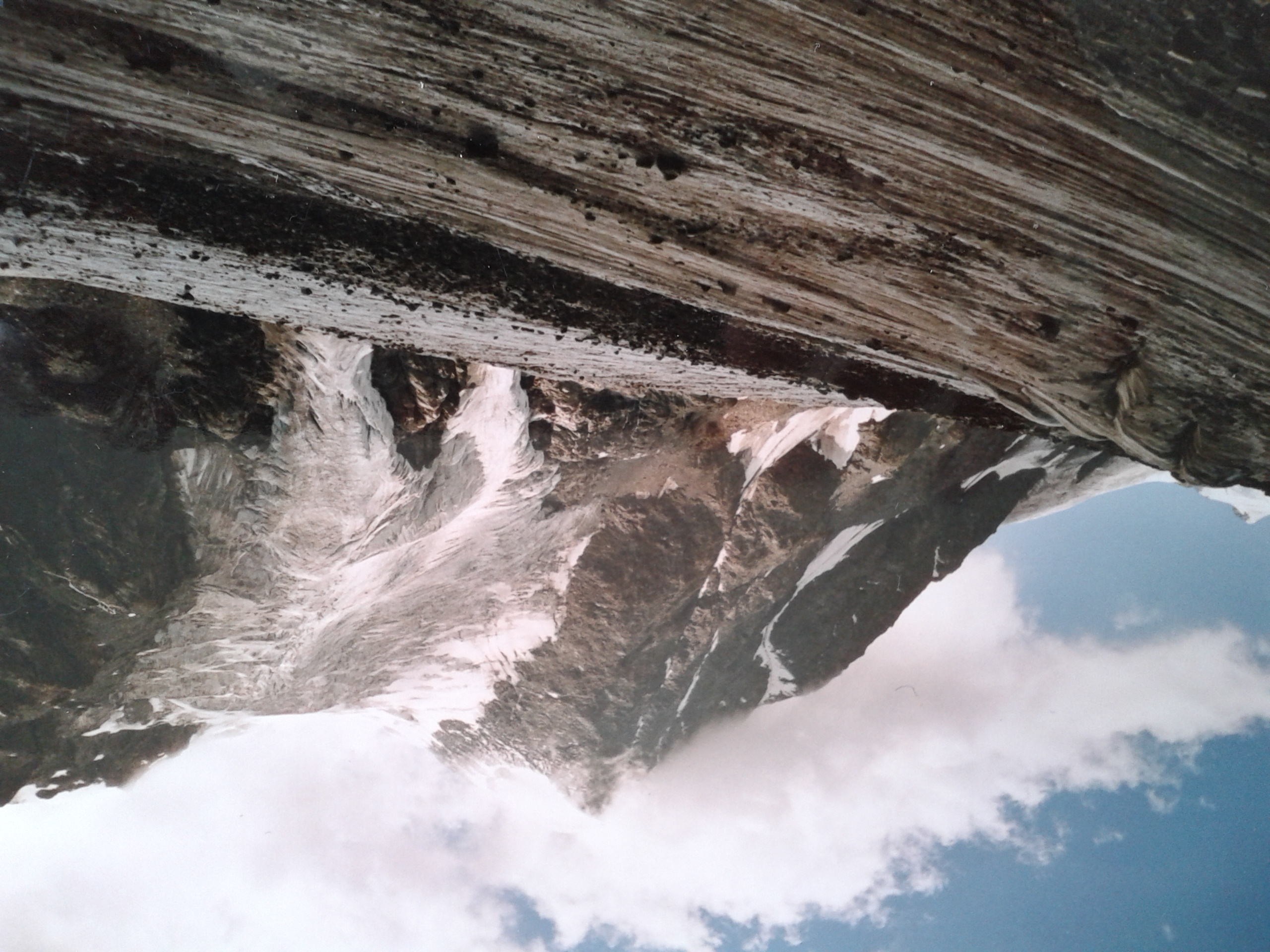
Luckily there's no railway to the Grand Combin glacier
Luckily there’s no railway to the Grand Combin glacier near Verbier

In the summer of 1868, three years before the Rigi railway at Lake Lucerne was completed, an English noblewoman travelling incognito made an excursion to Mount Rigi. The stout 49-year-old woman had a lot of work and family troubles on her mind as she was carried up the mountain in a sedan chair. But this lady was no ordinary tourist. She happened to be the most powerful woman in the world, with the job title Monarch of the United Kingdom of Great Britain and Ireland.

Queen Victoria visited at the beginning of the mountain railway boom. Entrepreneurs were snapping up railway concessions all over the Alps and rushing to complete the first, the highest, the steepest railway lines to make a killing in the lucrative new tourist market.

It is a staggering fact that two thirds of Switzerland’s land surface is taken up by mountains. Small communities had always eked out an existence on the lower slopes but the great peaks were out of bounds, known only from a distance. It was only in the second half of the nineteenth century that the Alps began to be seen as an amenity, first for hikers and climbers and later for less adventurous visitors who could be transported up to dizzying heights in their Sunday best.

Not everyone agreed that laying tracks and blasting tunnels in the Alps for tourists was a worthwhile pursuit, as I discovered when researching article for swissinfo.ch about the centenary of the Jungfrau railway last year.

“We regret that so many mountain lines have already been built, which only benefit a small number of people economically, while from the ethical point of view they are not only useless but even harmful,” the Swiss League for the Defence of Natural Beauty and the Swiss Heritage Society wrote in a petition to the government calling for a more prudent granting of railway concessions.

In its first full year in operation, 1913, the Jungfraujoch station – Europe’s highest train station – on the shoulder of the Jungfrau mountain in the Bernese Oberland attracted 42,880 tourists; last year 833,000 people, myself included, made the unique rail trek to “The Top of Europe”.

The return trip from Interlaken to Jungfraujoch (3,454 metres above sea level) is about an hour and a half each way, with two train changes. If ever I had the feeling of being herded, it was on that day. I joined the multitudes of Indian, Chinese, American, European and Arab tourists being efficiently ushered from one train to the next by smartly-dressed guides. After leaving Kleine Scheidegg for the final leg of the journey there were more stops inside the tunnel at the viewing windows cut into the rock face.

I arrived at the top around lunchtime to join throngs of people wandering around through a maze of tunnels or milling about in front of the different eateries (including what must be the most expensive Indian buffet in mainland Europe). I could see the magnificent Aletsch glacier for a few minutes before everything was obscured by cloud.

Here’s the report I wrote for swissinfo.ch about the centenary.

The 200-franc day trip which is billed as the ultimate Swiss tourist experience seemed to me to be rather overpriced, overhyped and exhausting. Within minutes of boarding the return train, everyone on board promptly fell asleep, wiped out by the altitude and possibly the stress of being herded around all day.

Here’s a little secret. Switzerland is full of mountains and easy ways of getting up them and while I’m not saying they all look the same, there are spectacular views to be seen from almost anywhere, even the top of the smallest, most humble 12-franc chair lift.

It’s holiday time again. Have you got any tourist trap stories to share?

This fork sculpture at Vevey, Lake Geneva is a bit of fun

All aboard for a spontaneous evening

2013-07-13 10.41.33

One of the many things that disappear when small children take over your heart and your home is the ability to do spontaneous things out of interest. Much stronger reasons are needed to justify abandoning the chicks in the nest without warning, leaving your mate to find last minute worms and put up with all that chirping. Those reasons include traffic jams, emergency health issues and paid work. There may be one or two more but it’s a short list and it certainly doesn’t include lectures by interesting authors in other cities.

It is the unexpected dose of spontaneity that makes my trip to meet author and philosopher Alain de Botton for an interview in Basel last May so remarkable (to me). Picture the scene. I’m sitting at my desk on the outskirts of Bern cobbling information together on some distinctly non-literary topic. Probably something about an international tax agreement, climate change research or Swiss politics – I can’t quite remember. It’s a rainy Tuesday, or possibly Wednesday – definitely midweek.

On my Twitter feed which just happens to be open I notice Alain de Botton tweet the news that he is speaking in Basel that evening. I decide to pass on that snippet to other people who might be free to do things at the drop of a hat. On to the next thing. And then a few minutes later I get a tweet from de Botton himself along the lines of: ‘It’ll be fun. Why don’t you come along?’

Well of course you know the reason why. This is an unplanned midweek evening activity after a working day. Having left the house at 7 a.m., and expecting to do the same the following day, I am already fending off the niggling thought that I might be short-changing the children on essential mothering hours. I’m hardly going to make things worse by not coming home, am I?

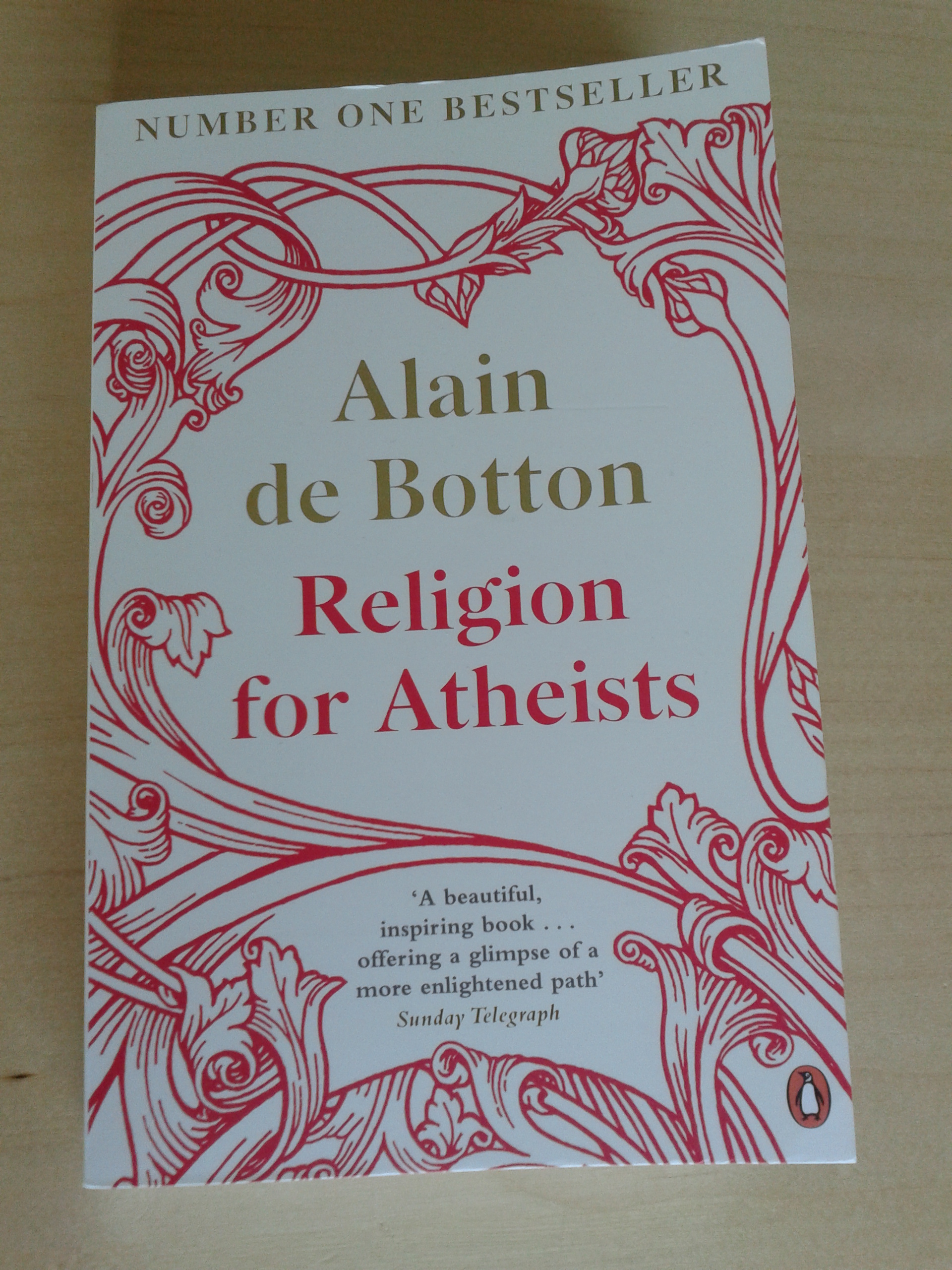
Actually, a few phone calls and tweets later that is exactly what I decided to do. I got the all-important green light from father bird, sorted out tickets to the sold-out event by arranging to go in a professional capacity and found myself sitting on a train to Basel a few hours later avidly reading my newly-bought copy of Religion for Atheists, de Botton’s latest bestseller.

That evening, sitting in the back of the hall in the Literaturhaus, I enjoyed the pure pleasure again of doing something cultural out of interest – something more than just going for a meal, hitting the playground or going on a work assignment. I got some time to listen to new ideas, to reflect on them and be moved by some of the human truths that bind us all together.

Below is the link to the story I wrote for swissinfo.ch following the talk in Basel. Turns out it’s been 20 years since Alain de Botton’s first book was published. He’s been a busy bee.

http://www.swissinfo.ch/eng/swiss_news/Alain_de_Botton,_20_years_a-writing_.html?cid=36044606

Have you done anything spontaneous recently to shake up the routine? Do tell.

Ten award-winning German words

library.sandiegozoo.org
‘Ugly, me?'(library.sandiegozoo.org)

After ten years in Switzerland, living right on the French/Swiss-German language border, I have gradually been won over by the charms of the German language. Like many foreigners here I started off with classes in one of the adult education centres run by the Swiss retail chain Migros. The learning curve is dragged down a bit by the huge gulf between the standard German learned in class and the dialect spoken by the locals, but hey you get there eventually.

Which brings me to my list today. One of the joys of learning a new language is finding words that express new concepts and ideas, or that describe familiar concepts in different ways. As a newcomer to a language you can also appreciate words purely for how they sound. Without further ado …

1. Ameise (ant): This is the year of the ant in our garden and with a three year old who points out every member of the animal kingdom with equal excitement, including the humble ant, Ameise is a word I hear very often. Far superior to ‘ant’, Ameise (almost rhymes with Eliza) is a great word to announce dramatically.

2. Kavaliersdelikt (peccadillo): One of those compound words that are the hallmark of German, I like the marrying of Kavalier (gentleman) – with Delikt (offence). These days Kavaliersdelikt, which has such a breezy devil-may-care ring to it, is mostly used in the context of the international tax dispute. Part of the reason Switzerland is viewed as a tax haven is because tax evasion is considered a Kavaliersdelikt in this country, i.e. no big deal.

3. Übrigens (by the way): I just enjoy this word because I learnt it early on and managed to sound like I had a bigger vocabulary by sticking it at the beginning of random sentences. Also it sounds funny to my ear – ‘oobrigens’ – as if it’s referring to something rude or silly.

4. Hebamme (midwife): There should be a reggae song written in German with the title Hebamme (sort of rhymes with Obama). It’s one of those bouncy musical words that instantly appeal to me. Might also have something to do with my HUGE respect for this line of work – the true oldest female profession, alongside farmer, market vendor, weaver, child minder, chef and healer. (Side rant: I really think we should protest every time we see prostitution referred to as “the oldest profession”. Enough already!)

5. Baubewilligung (building permission): There is a host of compound words made up with Bewilligung (w pronounced as v in German), such as residence permit, a nice long one Niederlassungsbewilligung. Bau, pronounced like the bow of a ship gives a good punch to this word.

6. Schwach (weak): You’ve got the ‘sh’, the ‘v’ and the ‘ch’ (like Scottish Loch) here. It’s a word you can really get your teeth and throat into. Although it means weak it’s a strong word. Imagine a vindictive voice shouting: ‘Du bist Schwach!’ Scary.

7. Vielfalt (variety): Pronounced feel-falt, I like the Fs and the Ls here. It’s all’s very soft and it’s another one of those words you can use early on to give the impression of an advanced vocabulary.

8. Verrückt (crazy, mad): This is another very expressive word, especially when you hear it pronounced the Swiss-German way as they have a pretty extreme ‘K’ which sounds like someone clearing their throat before spitting. It’s interesting too that the Swiss Germans use verrückt to mean angry as well, like the American double meaning of the word mad.

9. Einsamkeit (loneliness): There’s something gentle about this word. It’s romantic, poetic. You can just imagine someone writing it in a love letter 100 years ago. In general I like the –keit ending (pronounced ‘kite’), like Aufmerksamkeit (attention), Möglichkeit (possibility) and the old chestnut Ausländerfeindlichkeit (xenophobia).

10. Schildkröte (tortoise): I’ve sneaked this one in, not because I like it – I actually find it quite ugly – but because I can never remember the word and I hope to conquer it once and for all here.

I’m sure I’m not alone in enjoying foreign words. Anyone care to add to the German list or present some favourite words from other languages? I’m all ears!

Swiss poet treads the line between love and loss

If you’ve ever had your heart broken, felt crushed, used and discarded, Swiss poet Angelia Maria Schwaller has something to say to you. I recently interviewed the award-winning poet for swissinfo.ch – my first introduction to Swiss-German poetry.

Angelia writes in her unusual Freiburg dialect, which is not taught as a written language in Switzerland. Her first collection of poetry dachbettzyt was published last year. If you’ve never heard the Swiss German language, it’s worth listening to the clip of Angelia reading her poem crumbs (‘verbroosme’ in Swiss German) below. The desolation in the sparse lines written by this 25 year old reminds us that everybody hurts sometimes.

crumbs (unofficial translation) by Angelia Maria Schwaller

I am dry and old bread
lie enclosed in your hand
being crushed by you

afterwards
when it’s all over
you throw me
in crumbs
on the stone floor
as fodder

scattered, I fall down
the cracks
and get lost

© dachbettzyt, Knapp Verlag 2012

Listen to Angelia read crumbs here. She has a lovely voice:

https://clareodea.com/wp-content/uploads/2013/06/schwaller-verbroosme.mp3

Like to know more ? Read the full interview with Angelia published last week. It’s interesting that Angelia is a self-taught poet who picked up most of what she knows online, starting at the age of 12! Shows what a great resource the internet is for writers.

http://www.swissinfo.ch/eng/culture/I_never_imagined_writing_would_pay_the_bills.html?cid=36117988

And one more translated poem:

drops (unofficial translation)

delicately
drop after
drop
is lost

at the low point
a puddle
is collected

I flow
into it through
my racing heart

© dachbettzyt, Knapp Verlag 2012

Angelia’s homepage (only in German):
http://www.angeliaschwaller.ch

10 things to love about Switzerland

DSCN0831

I’ve been dwelling a lot lately on what I’m missing out on by not living in Ireland anymore so in the interests of positive energy I’ve put together a list of 10 wonderful things Switzerland has to offer.

1. The Alps: They take up almost two-thirds of the country’s landmass and play a big part in national consciousness and history. Whether you are sailing up in a chairlift over green meadows in a warm summer’s breeze, hiking over a glacier or swooping through a pine forest on skis, any visit to the Alps brings breath-taking moments where you just can’t get over the sheer beauty of it all.

2. Languages: For a language nut like myself, Switzerland is a fascinating mini Tower of Babel. I’ve enjoyed the challenge of cracking Swiss German, completely impenetrable the first time you hear it, even to Germans. Living in a town on the French-German language divide, there’s a lively mix of both cultures; people in my neighbourhood switch between the two languages effortlessly. How do you say hello in Switzerland’s fourth language, Romansh? Allegra!

3. Public Transport: Switzerland demonstrates what public transport should be. The service is frequent, reliable and synchronised, and can take you anywhere. Amazing that the Swiss still feel the need to have five million cars for eight million inhabitants.

4. Location, location, location: Imagine living in a place where in a couple of hours you could visit Germany, France, Italy or Austria. That place is Switzerland. Coming from an island on the edge of Europe, I still get a thrill when I stand in Zurich station and see destinations like Milan, Vienna, Warsaw and Prague on the timetable display.

5. Egalité: Go to an ice hockey match and you’ll see how strongly the Swiss feel about their local identity. People are very attached to their canton and recognise each other’s regional accents straight away. On the other hand there is no such thing as class-related accent and children of all backgrounds are educated side by side in state schools.

6. Built to last: Here’s something that amazes me. There are farmhouses in Switzerland still standing that were built in the 13th century. Not forts or castles but simple farmhouses. This surely is a sign of a great country. For more on that subject here’s a story I did about Switzerland’s oldest house in canton Schwyz: http://bit.ly/ddypTP

7. Traditions: With a huge variety of traditional celebrations and rituals still thriving, Switzerland is all about continuity. Carnival is massive, people spend half the year preparing their costumes and rehearsing with bands. The things people celebrate here feel authentic. Instead of Santa Claus, children wait excitedly for a visit from St Nicholas in early December, a man dressed as a bishop who goes from house to house giving out nuts and chocolate.

8. Waterways: For many people water is about boating and fishing – for me it’s swimming. Switzerland has a wealth of beautiful clean, accessible lakes and rivers. The water warms up by mid-summer and you can walk in without getting a heart attack. The beaches are well kept and there are numerous public pools built on the lake and river shores. So far I’ve swum in a dozen different Swiss lakes, each experience unforgettable – dozens more to go!

9. Cheese: I’m completely hooked on the national cheese dishes raclette and fondue. These melted cheese meals are an institution here, part of the weekly menu all through the winter. I can’t decide which one I like the most so I just have to keep eating them both until I make up my mind.

10. People: One in five Swiss marries someone from outside the country. Like many foreigners in Switzerland, you may start off loving one Swiss person but for those of us who stay and make the effort, the rewards are great. The Swiss I now count as friends are fun-loving, kind and generous. They make me feel at home.

It’s been a good exercise for me to count my Swiss blessings. Have you ever done the same for your adopted home?

The fear of dying badly

Most journalists covering Swiss news will eventually be confronted with the issue of assisted suicide, legal in this country as long as the person helping does not benefit from the other’s death. This week assisted suicide organisations claimed that a state-funded research programme exploring the theme of death and dying was biased against their activities (a claim swiftly denied). I’ve written about this controversial subject before and it always makes me think, and wonder. Will this ever come close to home?

Last year I attended the World Right-to-Die conference in Zurich – as well as popping in to the protest counter-conference across the street, convened by a Canada-based pro-life & anti-euthanasia group. It was a long day. Around that time I also interviewed a woman who had helped her elderly mother pursue her wish to die.
You can read about that case here http://bit.ly/Mc8mAJ .

One speaker at the right-to-die conference made a strong impression on me and I grabbed a few minutes with him later in the hotel lobby. A palliative care doctor who looks after 300 terminally ill patients a year, he has more experience than most of the wishes of the dying. Up to 20 of his patients per year express the wish to avail of assisted suicide but only one or two of them actually see it through.

What makes a person who knows they will die soon want to intervene and end their own life? According to the doctor, there are two types of terminally ill people seeking assisted suicide. The first type is a strong willed, usually successful person who is used to controlling their own destiny. They reject the decline and suffering facing them and decide to end things on their own terms.

But for most people this doctor deals with, the main motivating factor is fear – fear of suffering and fear of being a burden to others. Terminally ill patients are not afraid of death, but of dying badly. They are terrified of dying in awful pain, gasping for breath – a fate that modern medicine can spare us. When this fear is taken away, by informing the patient about pain management and sedation on the one hand and reassuring them that professionals will be in place to care for them when the time comes, the suicide wish usually goes away too.

Assisted suicide now accounts for one in four Swiss suicides. Most of the people who go down this road are suffering from long-term rather than terminal illnesses. Suicide is usually carried out by taking a lethal dose of barbiturates procured with the help of an assisted suicide organisation.

As our population ages and excellent health care means people can live for much longer (but not necessarily well) with multiple illnesses, investing in the provision of good palliative care is one way to make sure assisted suicide remains a minority choice. But for those who decide they can’t take any more, there is comfort in knowing that there is a safe, humane and legal way out.

Swiss crimes against tea

Image courtesy of podpad at FreeDigitalPhotos.net

When it comes to tea, different cultures have different ideas about what is appropriate and what is criminal adulteration. As an Irish tea drinker I am not a tea lover in the gourmet sense. I would never dream of owning a collection of fine teas. I shudder at the thought of accidently consuming Earl Grey. It’s got to be pure black and preferably one of the classic blends that have been sold by the Irish market leaders for generations. This is what we are talking about when we say we’d love a cup of tea.

Living in Switzerland over the past decade I am now wise to the dangers of tea crimes in everyday life here and can avoid the worst. For the uninitiated:

Crime number 1 – Hospitali-tea: Beware of a Swiss person, or French or German, offering you a cup of tea. If you listen closely you will hear that they are saying: Would you like a tea? Can you hear the broad sweep in there? It could mean literally anything, from lemon and ginger to a fruit berry concoction but almost never means a regular cup of black tea. The worst thing is when you are caught off guard and say yes gratefully to the offer of tea only to be presented with a cup of perfumed water which could not be further from the actual beverage you were gasping for.

Crime number 2 – Austeri-tea: You may work your way through the different brands of Schwarztee/ thé noir as systematically as you like, they all share the same unforgiveable weakness – weakness. Put the tea bag in and you will be drawing a pension before it draws to the right strength. Needless to say you can forget squeezing out a second cup.

Crime number 3 – Traves-tea: Sometimes, despite the best laid plans, you are going to have to order a cup of tea in a café or restaurant because it’s just what you want at that moment more than anything else in the world. Let’s ignore the fact that the French-speaking Swiss waiter will sometimes bring a can of sickly sweet iced tea because this is a more popular drink, the biggest problem is that you will be served a cup of hot water IN A GLASS. The water is not boiling hot and it does not contain tea. No, the tea is in an individually wrapped tea bag on the saucer. Good luck cobbling together a cup of tea with these raw materials.

Crime number 4 – Duplici-tea: In my book a cup of tea needs a decent splash of cold full-fat fresh milk before it is complete. This is considered an eccentricity in this part of the world, very Miss Marple. Tea here is served with no accompaniment apart from sugar and if you have the temerity to ask for milk you will be given one tiny container of UHT creamer. I don’t know what this milk-like product actually is, some kind of cream/milk hybrid, but it does not belong in a cup of tea, even in minute quantities.

Crime number 5 – Atroci-tea: A proper cup of tea belongs in the brown and amber part of the colour spectrum. The final crime against tea in Switzerland is not only that it is weak but also that it lets down the eye. When the milk is added all you have is an insipid grey brew which is about as appetising as all the other grey foods we like to consume. Oh wait, there aren’t any.

Disclaimer: Although black tea is my special area of prejudice, I have to admire how knowledgeable the Swiss are about the medicinal properties of various teas. A new mother in hospital will be served breastfeeding tea, babies with conjunctivitis have their eyes cleaned with cold black tea, children with stomach ache are given fennel tea and in every supermarket you can buy cough tea, bladder tea and, most importantly, calming tea.

Image courtesy of podpad at FreeDigitalPhotos.net

Suffering in Swiss children’s homes

This is an article I wrote published on swissinfo.ch last week. It was a very sad story to cover as it tells of the ill-treatment of vulnerable children. By the late 1950s and early 1960s, there was a lot more money in Switzerland and the whole approach to childcare and education began to change dramatically. In children’s homes, the pavillion system was introduced where small groups of up to 15 children would live in a family-type setting with the same carers. A far cry from the scores of children who were under the care of poorly-trained and overworked nuns in previous decades.

But unmarried mothers and their children as well as poor families and Swiss gypsies continued to suffer at the hands of the authorities well into the 1970s and even 1980s. The prevailing policy was to split families up rather than support them. I can post more about that later but for now, here is the story of the Ingenbohl sisters, the thankless unpaid job they did and the joint blame they, the authorities and society share for the damage done to children in their care.

Nuns admit to past mistakes in children’s homes

by Clare O’Dea in Brunnen, swissinfo.ch
Jan 23, 2013

An independent investigation into allegations of abuse at children’s homes run by the Swiss Ingenbohl Sisters of Mercy has found serious failings by the Roman Catholic nuns but has discounted the worst allegations involving deaths in care.

The excessive punishment doled out by some sisters was mainly due to the “systemic misery” of the homes, where both children and carers experienced hardship, the commission of experts found in its review of the decades from 1928 to the 1970s.

The commission, mandated by the Ingenbohl Sisters of Mercy of the Holy Cross two years ago, presented a 220-page report of its findings at the mother house of the order in Brunnen in canton Schwyz on Wednesday.

Under the chairmanship of lawyer Magnus Küng, the commission set itself the task of finding answers as to why a significant number of children were “so defencelessly abandoned to their tormentors”.

“Not only the authorities, the bodies who carried out inspections, and the management of the homes clearly bear their share of the institutional blame but also the leadership of the [religious] community. Many questions still remain about the guilt of individuals,” Küng said.

Punishments

Of the 55 former residents of 16 different children’s homes who came forward with their testimonies, more than a quarter had predominantly negative memories, 13 mixed and 60 per cent positive.

The punishments the former residents recall include beatings, being held underwater, being forced to eat up vomited food, being denied food and being locked up in the dark.

A former resident of a children’s home in canton Fribourg, staffed by Ingenbohl sisters told swissinfo.ch that the seven years she spent in their care were “dreadful”.

“Once a nun pulled me to the ground by my hair and a clump of my hair stayed in her hand. They held my head under water. They treated all the children in the same way. We were traumatised,” said Michèle Gillard-Loubhane.

The commission also interviewed 23 nuns born between 1917 and 1943 who worked in a total of 22 different homes countrywide. None of them recalled carrying out or witnessing excessive punishment.

Hard times

The experts, who include a former judge, an education expert, a historian and a psychologist, accept that “in different homes there were those who systematically visited abhorrent suffering on the children”. But they also point out that that there were nuns who did their best for the children under the most difficult circumstances.

Society also turned its back on these children, for the most part from broken homes. “They went in stigmatised and they came out stigmatised,” historian Carlo Moos told swissinfo.ch.

Psychologist and commission member Beatrix Staub-Verhees described the working conditions of the nuns she interviewed, some of whom worked for more than 30 or 40 years in numerous homes.

“The further back you go the more difficult the working conditions were: long working hours without free time or holidays, large groups of children to look after with insufficient financial means in crowded living conditions and with insufficient infrastructure.”

The mother superior of the Ingenbohl sisters Marie-Marthe Schönenberger has issued a blanket apology to those badly treated in the care of her order.

“With sadness and great regret we confirm that in individual cases our fellow sisters acted inappropriately in the work of looking after the children,” Schönenberger said.

“We are sorry for the suffering caused by our behaviour as individual sisters, as the leadership of the order and as a community,” she added.

Unclear

Accepting that sexual abuse was a reality in children’s homes to some extent, the commission could not shed any light on the role of the nuns in any confirmed cases of sexual abuse. It found no “robust proof either for or against the assumption that nuns also [sexually] attacked children.”

Accusations against sisters in different homes at different times do exist but could not be adequately verified so long afterwards, partly because of the “unmentionable” nature of such offences at the time and the lack of any contemporary documentation.

The issue of ill-treatment of children at Ingenbohl-staffed homes first hit the headlines in 2009 when excerpts from the memoirs of a former girl resident of the Rathausen home in canton Lucerne were published in which the woman blamed the death of her sister and that of another child on the violent actions of a named nun.

The diaries, found in the woman’s attic after her death claimed that her sister Bertha Bucher, aged 13, died in 1928 from a head injury two weeks after a beating by Sister Ursula and that the cause of death given was a fall from a swing.

The commission found that there was insufficient evidence to connect the alleged beating to the girl’s death but said the home had acted negligently in not seeking medical care for the seriously ill child in the days leading up to her death from meningitis.

The same woman also recorded the case of a boy called Paul Wildi who, she wrote, died after being thrown down the stairs by the same nun. Investigators found that this information was incorrect. Paul Wildi died in hospital of meningitis.

Allegations of three cases of children who committed suicide in the 1940s, as described by a former home resident in Rathausen were found to be groundless. The man claimed in 2011 that the three had killed themselves as a consequence of abuse in the home.

Switzerland has changed beyond recognition since the peak era of the Ingenbohl sisters around 1940 when they had 2,461 sisters living and working in 300 locations of different kinds in Switzerland.

“The absolute truth can never be established, but with this report we have come a significant step closer to the truth,” Küng said.