Burmese Days by George Orwell

Image courtesy of Ikunl at FreeDigitalPhotos.net

In Orwell’s Burmese Days you will get as close as humanly possible to observing the behaviour of the ruling British class in the waning days of the Indian Empire. Here is everything you need to know about colonialism and racism in one cracking story. You can pull up a bamboo chair in the European club and listen in on the casual contempt, and in many cases outright loathing, the English feel for the local population.

There was always a minority among making a living in the empire who respected the culture and people, spoke the language and were appalled by the system. People like Orwell who, under his real name Eric Arthur Blair, spent five years working as an imperial policeman in Burma (then a province of the Indian Empire, now Myanmar).

The book was written based on his experiences in different parts of the country and he had trouble getting it published, partly over fears it could be libellous, a clear indication of its autobiographical context.

Orwell explains the rot at the heart of the ex-pat society, a society whose whole existence was based on a lie – not just the lie of superiority which is well illustrated in the story but the lie of the grand theft of colonialism. Development was promoted purely to facilitate the massive system of stealing from the country, the true and only reason for the British presence.

But Burmese Days is much more than a vehicle for social commentary. It is first and foremost a novel, a beautiful, heart-breaking story of one lost soul, John Flory, and the empty life he is condemned to live as a timber merchant in a small regional outpost of the empire. Flory’s destiny shows that we can bear almost any degree of loneliness, degradation and ennui, until we get a glimpse of something more. If our hopes are raised – and then dashed – by the possibility of something better, in Flory’s case love, the disappointment is more than we can bear.

There is humour here too, in the quirks and catchphrases of the other characters, the viewpoint of the servants and the scenes of social agony known to anyone who has had to endure repetitive conversation with a small group of people locked in other’s company day after day for years.

Myanmar is opening up at last after many decades of repression. The 1934 novel is eagerly sold to tourists in Yangon, according to my father-in-law who was chased around a market in Yangon earlier this year until he bought the copy I ended up reading. I flew through the book, deeply impressed by the evocation of the climate, the wildlife, the countyside, the culture.

The next book based in Myanmar I would like to read is The Lizard Cage by Karen Connolly about a political prisoner. It is one of the books featured in the lovely memoir by Will Schwalbe The End of Your Life Book Club.

Just to finish off, here are George Orwell’s – or Eric Arthur Blair’s – six rules for writers from his 1946 essay Politics and the English Language, courtesy of Wikipedia:

1. Never use a metaphor, simile or other figure of speech which you are used to seeing in print.
2. Never use a long word when a short one will do.
3. If it is possible to cut a work out, always cut it out.
4. Never use the passive where you can use the active.
5. Never use a foreign phrase, a scientific word or a jargon word if you can think of an everyday English equivalent.
6. Break any of these rules sooner than say anything outright barbarous.

I’m sure I broke some of Orwell’s rules in this blogpost but I will try to be more vigiliant!
The ultimate Swiss tourist trap

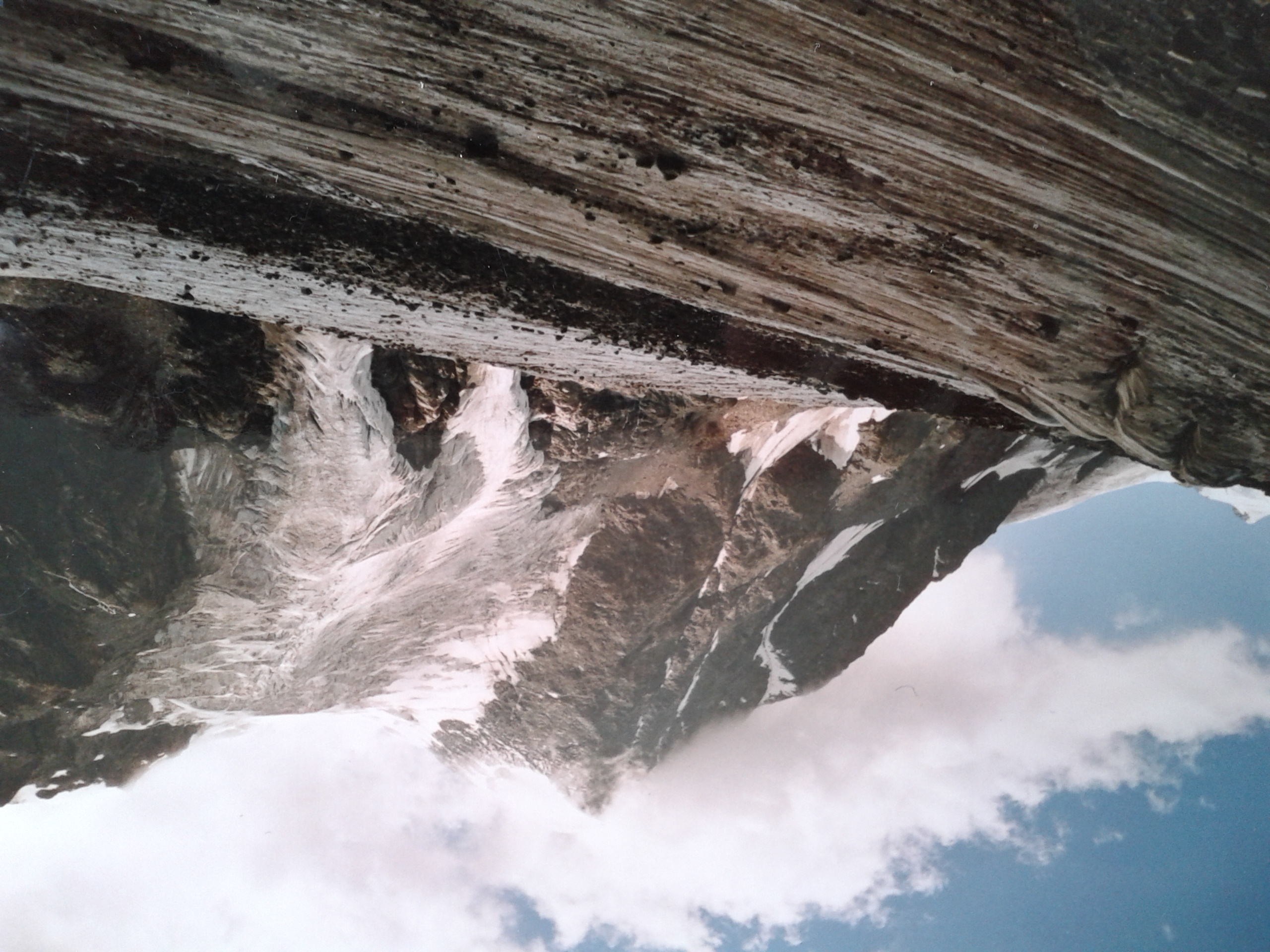
Luckily there's no railway to the Grand Combin glacier
Luckily there’s no railway to the Grand Combin glacier near Verbier

In the summer of 1868, three years before the Rigi railway at Lake Lucerne was completed, an English noblewoman travelling incognito made an excursion to Mount Rigi. The stout 49-year-old woman had a lot of work and family troubles on her mind as she was carried up the mountain in a sedan chair. But this lady was no ordinary tourist. She happened to be the most powerful woman in the world, with the job title Monarch of the United Kingdom of Great Britain and Ireland.

Queen Victoria visited at the beginning of the mountain railway boom. Entrepreneurs were snapping up railway concessions all over the Alps and rushing to complete the first, the highest, the steepest railway lines to make a killing in the lucrative new tourist market.

It is a staggering fact that two thirds of Switzerland’s land surface is taken up by mountains. Small communities had always eked out an existence on the lower slopes but the great peaks were out of bounds, known only from a distance. It was only in the second half of the nineteenth century that the Alps began to be seen as an amenity, first for hikers and climbers and later for less adventurous visitors who could be transported up to dizzying heights in their Sunday best.

Not everyone agreed that laying tracks and blasting tunnels in the Alps for tourists was a worthwhile pursuit, as I discovered when researching article for swissinfo.ch about the centenary of the Jungfrau railway last year.

“We regret that so many mountain lines have already been built, which only benefit a small number of people economically, while from the ethical point of view they are not only useless but even harmful,” the Swiss League for the Defence of Natural Beauty and the Swiss Heritage Society wrote in a petition to the government calling for a more prudent granting of railway concessions.

In its first full year in operation, 1913, the Jungfraujoch station – Europe’s highest train station – on the shoulder of the Jungfrau mountain in the Bernese Oberland attracted 42,880 tourists; last year 833,000 people, myself included, made the unique rail trek to “The Top of Europe”.

The return trip from Interlaken to Jungfraujoch (3,454 metres above sea level) is about an hour and a half each way, with two train changes. If ever I had the feeling of being herded, it was on that day. I joined the multitudes of Indian, Chinese, American, European and Arab tourists being efficiently ushered from one train to the next by smartly-dressed guides. After leaving Kleine Scheidegg for the final leg of the journey there were more stops inside the tunnel at the viewing windows cut into the rock face.

I arrived at the top around lunchtime to join throngs of people wandering around through a maze of tunnels or milling about in front of the different eateries (including what must be the most expensive Indian buffet in mainland Europe). I could see the magnificent Aletsch glacier for a few minutes before everything was obscured by cloud.

Here’s the report I wrote for swissinfo.ch about the centenary.

The 200-franc day trip which is billed as the ultimate Swiss tourist experience seemed to me to be rather overpriced, overhyped and exhausting. Within minutes of boarding the return train, everyone on board promptly fell asleep, wiped out by the altitude and possibly the stress of being herded around all day.

Here’s a little secret. Switzerland is full of mountains and easy ways of getting up them and while I’m not saying they all look the same, there are spectacular views to be seen from almost anywhere, even the top of the smallest, most humble 12-franc chair lift.

It’s holiday time again. Have you got any tourist trap stories to share?

This fork sculpture at Vevey, Lake Geneva is a bit of fun

All aboard for a spontaneous evening

2013-07-13 10.41.33

One of the many things that disappear when small children take over your heart and your home is the ability to do spontaneous things out of interest. Much stronger reasons are needed to justify abandoning the chicks in the nest without warning, leaving your mate to find last minute worms and put up with all that chirping. Those reasons include traffic jams, emergency health issues and paid work. There may be one or two more but it’s a short list and it certainly doesn’t include lectures by interesting authors in other cities.

It is the unexpected dose of spontaneity that makes my trip to meet author and philosopher Alain de Botton for an interview in Basel last May so remarkable (to me). Picture the scene. I’m sitting at my desk on the outskirts of Bern cobbling information together on some distinctly non-literary topic. Probably something about an international tax agreement, climate change research or Swiss politics – I can’t quite remember. It’s a rainy Tuesday, or possibly Wednesday – definitely midweek.

On my Twitter feed which just happens to be open I notice Alain de Botton tweet the news that he is speaking in Basel that evening. I decide to pass on that snippet to other people who might be free to do things at the drop of a hat. On to the next thing. And then a few minutes later I get a tweet from de Botton himself along the lines of: ‘It’ll be fun. Why don’t you come along?’

Well of course you know the reason why. This is an unplanned midweek evening activity after a working day. Having left the house at 7 a.m., and expecting to do the same the following day, I am already fending off the niggling thought that I might be short-changing the children on essential mothering hours. I’m hardly going to make things worse by not coming home, am I?

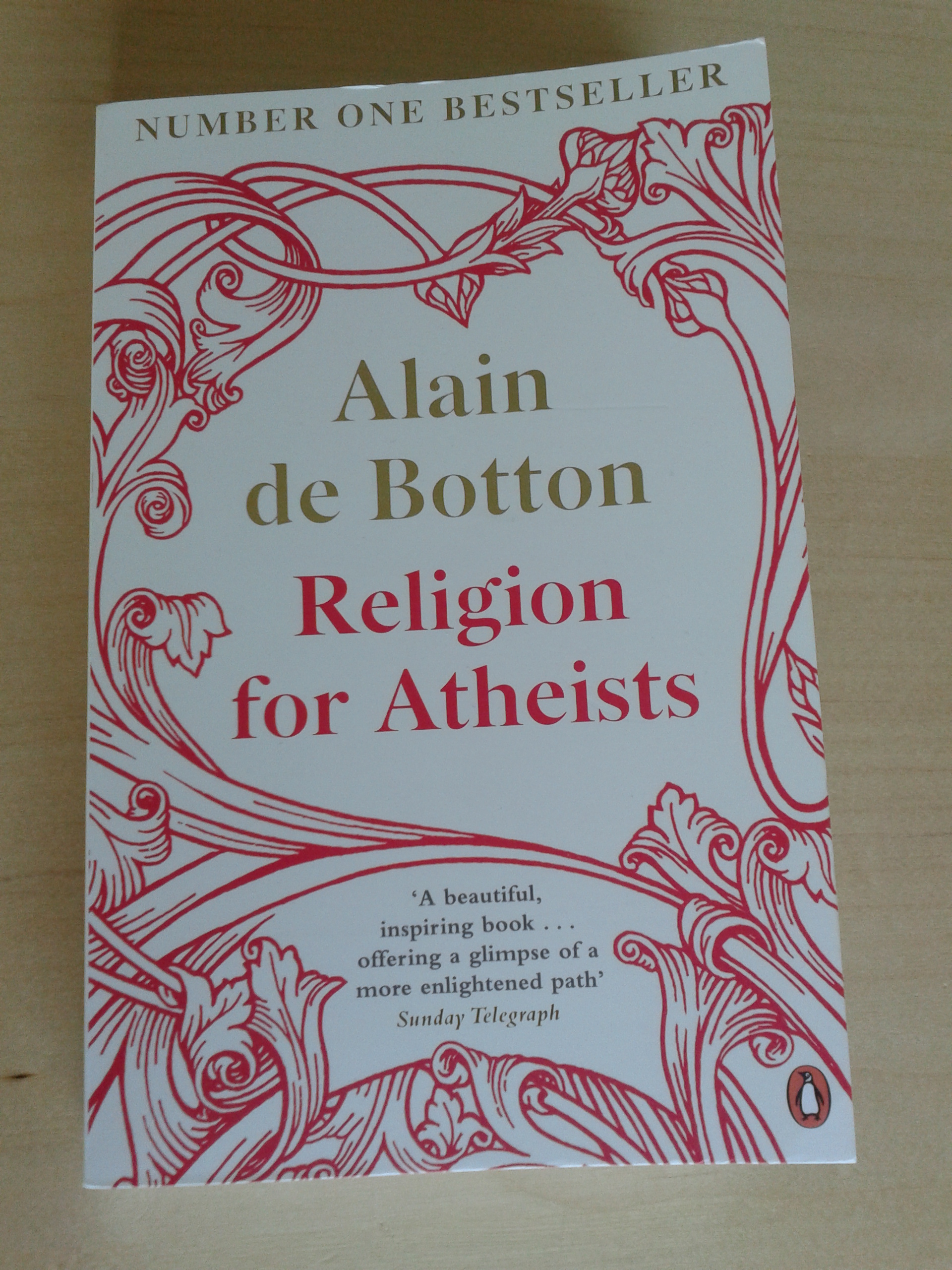
Actually, a few phone calls and tweets later that is exactly what I decided to do. I got the all-important green light from father bird, sorted out tickets to the sold-out event by arranging to go in a professional capacity and found myself sitting on a train to Basel a few hours later avidly reading my newly-bought copy of Religion for Atheists, de Botton’s latest bestseller.

That evening, sitting in the back of the hall in the Literaturhaus, I enjoyed the pure pleasure again of doing something cultural out of interest – something more than just going for a meal, hitting the playground or going on a work assignment. I got some time to listen to new ideas, to reflect on them and be moved by some of the human truths that bind us all together.

Below is the link to the story I wrote for swissinfo.ch following the talk in Basel. Turns out it’s been 20 years since Alain de Botton’s first book was published. He’s been a busy bee.

http://www.swissinfo.ch/eng/swiss_news/Alain_de_Botton,_20_years_a-writing_.html?cid=36044606

Have you done anything spontaneous recently to shake up the routine? Do tell.

Swiss poet treads the line between love and loss

If you’ve ever had your heart broken, felt crushed, used and discarded, Swiss poet Angelia Maria Schwaller has something to say to you. I recently interviewed the award-winning poet for swissinfo.ch – my first introduction to Swiss-German poetry.

Angelia writes in her unusual Freiburg dialect, which is not taught as a written language in Switzerland. Her first collection of poetry dachbettzyt was published last year. If you’ve never heard the Swiss German language, it’s worth listening to the clip of Angelia reading her poem crumbs (‘verbroosme’ in Swiss German) below. The desolation in the sparse lines written by this 25 year old reminds us that everybody hurts sometimes.

crumbs (unofficial translation) by Angelia Maria Schwaller

I am dry and old bread
lie enclosed in your hand
being crushed by you

afterwards
when it’s all over
you throw me
in crumbs
on the stone floor
as fodder

scattered, I fall down
the cracks
and get lost

© dachbettzyt, Knapp Verlag 2012

Listen to Angelia read crumbs here. She has a lovely voice:

https://clareodea.com/wp-content/uploads/2013/06/schwaller-verbroosme.mp3

Like to know more ? Read the full interview with Angelia published last week. It’s interesting that Angelia is a self-taught poet who picked up most of what she knows online, starting at the age of 12! Shows what a great resource the internet is for writers.

http://www.swissinfo.ch/eng/culture/I_never_imagined_writing_would_pay_the_bills.html?cid=36117988

And one more translated poem:

drops (unofficial translation)

delicately
drop after
drop
is lost

at the low point
a puddle
is collected

I flow
into it through
my racing heart

© dachbettzyt, Knapp Verlag 2012

Angelia’s homepage (only in German):
http://www.angeliaschwaller.ch

The advantage of owning a language

As an Irish person, I sometimes find myself in awe of how articulate the English are. I’m talking about the really clever ones, usually with cut-glass accents, deftly crafting arguments in flawless phrasing on television – my main point of contact with the English. It’s not only the ideas they are expressing, it’s their absolute mastery of the language. Well it’s almost as if they owned it.

You do hear affectionate remarks about the original use of English by the Irish, shaped as it is by the ghost of the old language underneath, but people in a position of security can afford to give generous praise. Part of me suspects most of this positive spin comes from Irish writers who have taken the compliment and run with it.

Now there could be a post-colonial, 800-years-of-oppression explanation for this respect, after all generations of my ancestors variously feared, loathed, mimicked and looked up to the English – but how would that explain the very similar reaction I observe with some Swiss Germans towards “real” Germans.

When it comes to live debate, Germans, with their natural command of the language, outshine their Swiss-German counterparts. Pit the Swiss finance minister against the German one and it’s like watching the receptionist take on the CEO. Swiss Germans only speak German when they have to, the rest of the time the cling to the comfort of their dialect.

Or maybe this is nothing to do with linguistic superiority and everything to do with superiority of numbers. Yes the Swiss can beat the Germans at football in theory, just as the Irish can beat the English but it takes a very lucky day. In the same way, the teams of leaders and thinkers from more populous countries have the advantage of being drawn from a much bigger pool.

Do the French-speaking Belgians feel the same about their big showy neighbour? Do they look at the French and sigh, giving up all hope of ever competing with their confidence and academies, their glorious language?

My best guess is that small neighbour complex is one phenomenon found all over the world, borrowed language syndrome is another and one should do everything possible to avoid having both together.

Cats and kings on Twitter

I’m not just a late adopter, I’m a reluctant one. If I’d been around in the 1920s, I probably would only have only learned the steps for the Charleston in 1931. It took a social media course at work for me to finally ‘join the conversation’ through gritted teeth last May. Turns out, like many arranged marriages, it was a good match after all.

Some see the service only as a glorified link-sharing platform or a place to let off steam, but it is much more than that. Twitter is a fantastic shortcut to good quality information. Through Twitter you borrow the eyes and ears of the people you find most interesting, important or fun. I think of it as a never-ending group discussion, like sitting around with a bunch of people making scrapbooks from a pile of global content. They’re pasting news reports, research findings, events, reviews, blog posts, videos, photos, personal observations and witty one-liners into their scrapbooks, pointing out each item to you as they go along. It’s a way of sharing passions and you can join or leave the feast at any time. For me that’s been invigorating, it has fed into my work on the journalism side as well as my creative writing.

Without Twitter I would not have:
1. Entered a flash fiction story for the National Flash Fiction Day Anthology yesterday because I wouldn’t have heard of it without following Irish writer @NualaNiC (Nuala Ní Chonchúir)
2. Interviewed @AlaindeBotton in Basel on Wednesday (all arranged last minute on Twitter, more about that next week)
3. Written articles about women’s issues in Switzerland in response to Anne Marie Slaughter’s @SlaughterAM having-it-all essay.

Twitter is all things to all (wo)men. The Twitterati I follow fall into three broad categories – news, countries and writing.

Twitter is a fabulous resource for people interested in a particular region or country. It has helped me feel much more present in Ireland. From small things, like hearing a pub I used to work in burned down, to big things like the current abortion debate, I get a sense of being around again. Don’t worry there’s lots of good stuff too, like the pictures of sunrises in Sandycove posted by @blathnaidhealy.

On the ground
There’s a thrill to be had following a dynamic developing story on Twitter. You don’t have to wait for the reporter to come out of the court for his or her piece to camera. Follow the right person (like BBC Africa Correspondent Andrew Harding @BBCAndrewH at the Pistorius trial) and you can get the action line by line as it happens.

Of course with an unfolding story, information has to be handled with care. One tweet during the Boston manhunt said it all (I’m paraphrasing here): “Faced with this barrage of confusing and conflicting information, I just wish there was a printed summary of all the verified facts available the next day.”

There’s so much to say about the writing community on Twitter that I’ll have to put it in another post. For emerging writers Twitter is Open University meets support group. Check it out for yourself!

10 things to love about Switzerland

DSCN0831

I’ve been dwelling a lot lately on what I’m missing out on by not living in Ireland anymore so in the interests of positive energy I’ve put together a list of 10 wonderful things Switzerland has to offer.

1. The Alps: They take up almost two-thirds of the country’s landmass and play a big part in national consciousness and history. Whether you are sailing up in a chairlift over green meadows in a warm summer’s breeze, hiking over a glacier or swooping through a pine forest on skis, any visit to the Alps brings breath-taking moments where you just can’t get over the sheer beauty of it all.

2. Languages: For a language nut like myself, Switzerland is a fascinating mini Tower of Babel. I’ve enjoyed the challenge of cracking Swiss German, completely impenetrable the first time you hear it, even to Germans. Living in a town on the French-German language divide, there’s a lively mix of both cultures; people in my neighbourhood switch between the two languages effortlessly. How do you say hello in Switzerland’s fourth language, Romansh? Allegra!

3. Public Transport: Switzerland demonstrates what public transport should be. The service is frequent, reliable and synchronised, and can take you anywhere. Amazing that the Swiss still feel the need to have five million cars for eight million inhabitants.

4. Location, location, location: Imagine living in a place where in a couple of hours you could visit Germany, France, Italy or Austria. That place is Switzerland. Coming from an island on the edge of Europe, I still get a thrill when I stand in Zurich station and see destinations like Milan, Vienna, Warsaw and Prague on the timetable display.

5. Egalité: Go to an ice hockey match and you’ll see how strongly the Swiss feel about their local identity. People are very attached to their canton and recognise each other’s regional accents straight away. On the other hand there is no such thing as class-related accent and children of all backgrounds are educated side by side in state schools.

6. Built to last: Here’s something that amazes me. There are farmhouses in Switzerland still standing that were built in the 13th century. Not forts or castles but simple farmhouses. This surely is a sign of a great country. For more on that subject here’s a story I did about Switzerland’s oldest house in canton Schwyz: http://bit.ly/ddypTP

7. Traditions: With a huge variety of traditional celebrations and rituals still thriving, Switzerland is all about continuity. Carnival is massive, people spend half the year preparing their costumes and rehearsing with bands. The things people celebrate here feel authentic. Instead of Santa Claus, children wait excitedly for a visit from St Nicholas in early December, a man dressed as a bishop who goes from house to house giving out nuts and chocolate.

8. Waterways: For many people water is about boating and fishing – for me it’s swimming. Switzerland has a wealth of beautiful clean, accessible lakes and rivers. The water warms up by mid-summer and you can walk in without getting a heart attack. The beaches are well kept and there are numerous public pools built on the lake and river shores. So far I’ve swum in a dozen different Swiss lakes, each experience unforgettable – dozens more to go!

9. Cheese: I’m completely hooked on the national cheese dishes raclette and fondue. These melted cheese meals are an institution here, part of the weekly menu all through the winter. I can’t decide which one I like the most so I just have to keep eating them both until I make up my mind.

10. People: One in five Swiss marries someone from outside the country. Like many foreigners in Switzerland, you may start off loving one Swiss person but for those of us who stay and make the effort, the rewards are great. The Swiss I now count as friends are fun-loving, kind and generous. They make me feel at home.

It’s been a good exercise for me to count my Swiss blessings. Have you ever done the same for your adopted home?

The fear of dying badly

Most journalists covering Swiss news will eventually be confronted with the issue of assisted suicide, legal in this country as long as the person helping does not benefit from the other’s death. This week assisted suicide organisations claimed that a state-funded research programme exploring the theme of death and dying was biased against their activities (a claim swiftly denied). I’ve written about this controversial subject before and it always makes me think, and wonder. Will this ever come close to home?

Last year I attended the World Right-to-Die conference in Zurich – as well as popping in to the protest counter-conference across the street, convened by a Canada-based pro-life & anti-euthanasia group. It was a long day. Around that time I also interviewed a woman who had helped her elderly mother pursue her wish to die.
You can read about that case here http://bit.ly/Mc8mAJ .

One speaker at the right-to-die conference made a strong impression on me and I grabbed a few minutes with him later in the hotel lobby. A palliative care doctor who looks after 300 terminally ill patients a year, he has more experience than most of the wishes of the dying. Up to 20 of his patients per year express the wish to avail of assisted suicide but only one or two of them actually see it through.

What makes a person who knows they will die soon want to intervene and end their own life? According to the doctor, there are two types of terminally ill people seeking assisted suicide. The first type is a strong willed, usually successful person who is used to controlling their own destiny. They reject the decline and suffering facing them and decide to end things on their own terms.

But for most people this doctor deals with, the main motivating factor is fear – fear of suffering and fear of being a burden to others. Terminally ill patients are not afraid of death, but of dying badly. They are terrified of dying in awful pain, gasping for breath – a fate that modern medicine can spare us. When this fear is taken away, by informing the patient about pain management and sedation on the one hand and reassuring them that professionals will be in place to care for them when the time comes, the suicide wish usually goes away too.

Assisted suicide now accounts for one in four Swiss suicides. Most of the people who go down this road are suffering from long-term rather than terminal illnesses. Suicide is usually carried out by taking a lethal dose of barbiturates procured with the help of an assisted suicide organisation.

As our population ages and excellent health care means people can live for much longer (but not necessarily well) with multiple illnesses, investing in the provision of good palliative care is one way to make sure assisted suicide remains a minority choice. But for those who decide they can’t take any more, there is comfort in knowing that there is a safe, humane and legal way out.

A new start in life, aged five

Do you know any five year olds? Imagine a little boy whose daily struggle to survive was so hard, he agreed to go away with a passing stranger for a chance at a new life. His name is Kam Moung and he comes from Myanmar (formerly Burma) in Southeast Asia.

Despite the heart-breaking choice made by this child, his story is a happy one. He has found security and acceptance in neighbouring Thailand in a school and orphanage set up specially for ethnic Shan refugees. His dream is to go back some day to his mother and his village and to travel around his homeland as a big music star.

km

In the meantime, Kam Moung is thriving in his new home. He is an excellent student and has won everyone over with his generous and bubbly personality.

A colleague of mine from swissinfo.ch, Luigi Jorio, introduced me to Kam Moung in the form of a book he had written with Mathias Froidevaux about the child and the plight of Shan refugees. Luigi discovered the school in 2010 and by chance arrived on the same day as Kam Moung, the perfect starting point for a story. I was only too happy to help out with the English translation.

The school and orphanage were set up by the young monk Noom Hkurh who himself fled Myanmar as a child after his village was burned to the ground. After getting an education in Thailand, he wanted to provide a caring home and safe place to study for orphans and other poor children to avoid the possibility of them being exploited or abused.

Last month, Luigi was able to return to Kam Moung’s school with copies of his book. Packed with photos and illustrations, the book will serve as a unique teaching tool. These stateless children will start English lessons with material written about their own lives.

More about the project here:
http://www.kam-moung.ch/index.php?id=10&L=1

Spare the rod?

I recently had a conversation with a friend of mine about disciplining children. I was telling her what a troublesome weekend we had with bad behaviour and imposing punishments and she informed me that she and her husband didn’t punish their children. Well I nearly fell off my chair.

My friend is a psychologist who works with children and I have to admit her kids seem less rowdy than mine. Have I been going wrong all this time?

Obviously the norms of childrearing change over time and one thing I am sure about is that I don’t want to have to use force to get through to my children. So what weapons are at our disposal today? The most common one for small children is probably time out. Will future child development experts say this was a horrible form of child cruelty? I hope not. If so the producers of the Supernanny programmes will have to stand trial first.

The whole issue brings to mind a recent article I wrote about the relatively soft sentencing practices in Switzerland.

http://www.swissinfo.ch/eng/swiss_news/Weighing_up_the_unusual_Swiss_justice_system_.html?cid=33999476

One criminology professor I spoke to pointed out that harsher sentences did not reduce crime rate – on the contrary. In other words there is no deterrent effect. During my research I also came across the work of the Australian criminologist John Braithwaite and his method of restorative justice. He believes that shaming is part of administering justice but that there is good shaming and bad shaming. According to Braithwaite shaming which stigmatises and alienates the person, like prison (or time out?), is much less effective than shaming which involves recognising what you did wrong and trying to atone for it. Here’s the link.

http://www.restorativejustice.org/leading/braithwaitej