What others say about Before the Leaves Fall

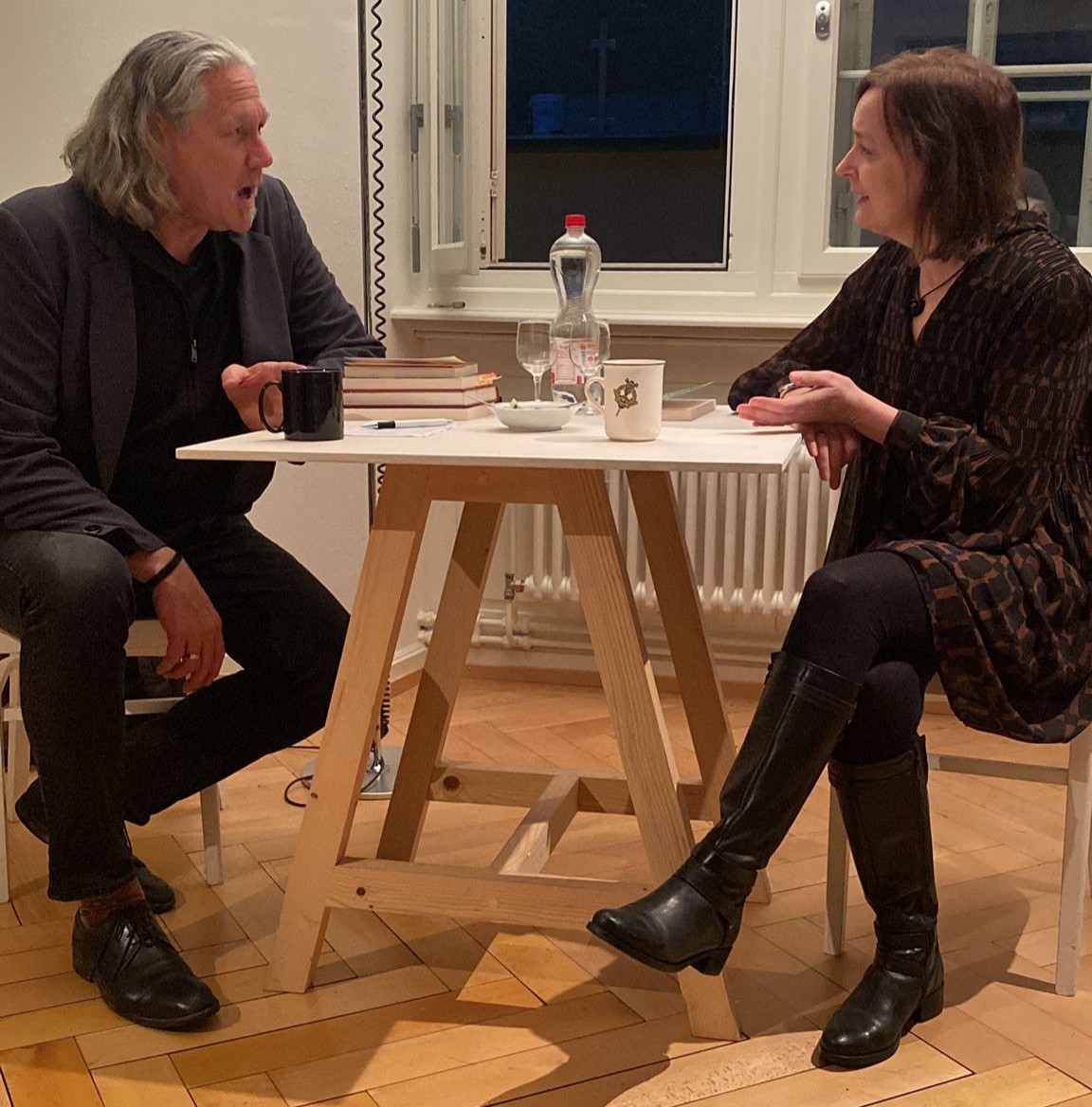
At the Zürich James Joyce Foundation event with Rafaël Newman in February 2026

In this post, I’m giving the floor to those who have been kind enough to write about my novel since publication day. These literary sommeliers genuinely love books. Their engagement is a safety net for authors and a fantastic resource for readers. If you follow them, you will be rewarded with great insights and recommendations.

The book reviewers and cultural voices in question are Linda Hill of Linda’s Book Bag, Cathy Brown of 746 Books, Susan Osborne of A Life in Books, Madame Bibliophile Recommends and Zürich-based Rafaël Newman.

The highest praise came from Linda’s Book Bag review. I’m amazed and extremely grateful for Linda’s generous review. “Before the Leaves Fall is magnificent. It’s one of those quiet books that permeates the reader’s soul and ensures an indelible impact. I adored it.”

“A book about a person – Margrit – deciding that they wish to die before the autumn, thereby avoiding yet another winter, perhaps sounds grim and unappealing. Before the Leaves Fall, however, is absolutely not depressing and miserable. Instead, it is a beautifully written insight into humanity, our flaws and the means to atone and come to terms with both ourselves and others. Not a single word is wasted in this exquisite narrative.”

And I was truly honoured by Cathy Brown’s review on 746 Books. Cathy runs several popular reading and reviewing initiatives on her blog such as Reading Ireland Month and Novellas in November.

“Clare O’Dea’s Before the Leaves Fall is one of those quietly affecting novels that seems modest on the surface but grows richer with every chapter. Like Voting Day, her debut, it shines a gentle light on the unnoticed corners of people’s lives, and although it’s not a direct sequel, it carries that same emotional intelligence and sense of humanity that made her debut so impressive and features one of the same characters, now at a later stage in her life.”

A Life in Books blog has been a fantastic source of recommendations for me over the years, which makes it all the more special that Susan has given Before the Leaves Fall her seal of approval in this review.

“This could very easily have become one of those issue-led novels with two-dimensional characters there to make a point but O’Dea neatly dodges that, exploring the complexities of both Ruedi and Margrit’s lives. The narrative alternates between the two, both engaging characters who change over the course of the summer. … I enjoyed this brief, moving and humane novella with its depiction of a choice made without duress, eased by an empathetic character who learns much from the experience of facilitating that choice.”

In her dual review of Before the Leaves Fall and Voting Day, Madame Bibliophile Recommends picked up on the gaps in communication within families, which so often leads to resentment and misunderstanding.

“Before the Leaves Fall follows the developing friendship between Margrit and Ruedi, as they both reflect on seemingly uneventful lives and how well these have been lived, as well as what living there is left to do. It’s deeply moving in its portrayal of how we hurt the ones we love and how insurmountable gaps in communication can seem.

As different relationships grow and develop through Before the Leaves Fall, they are evoked with compassion but without sentimentality.”

And finally, in his essay for 3 Quarks Daily, The Written Voice, Rafaël Newman finds special significance in Margrit’s own writings in the ‘life audit’ notebook gifted to her by Ruedi. Initially I had my doubts about this part of the storytelling but my editor was in favour of it. It did allow me to capture Margrit’s voice as vividly as possible.

“And as her initially cursory notes on the various decades of her life grow into something richer, as recollections of chance encounters become vignettes with a profound philosophical resonance, Margrit’s resolve is strengthened: not necessarily in the binary particulars of her decision—whether or not to end her life, which remains unknown until the novel’s conclusion—but in her assumption of a more generalized agency. An agency in which her own memory, her own will, and her own perspective are central.”

Rafaël Newman also analysed Voting Day in this essay about voting in Switzerland, and I’m very grateful to him for exploring the themes of my novels in such depth. All these contributions help rescue the work from potential oblivion and make the rewards outweigh the risks. If you’d like to support Before the Leaves Fall, I’d be happy to see more reviews on Amazon or Goodreads. Every mention and every star counts in keeping the book afloat.

I’d like to finish with one more paragraph from the 746 Books review: “Before the Leaves Fall ultimately becomes a story about acceptance and about facing the choices that we have made in life with a clear eye and an open heart. It is compassionate, finely observed, and deeply humane and a lovely companion to Voting Day.”
Setting the world to writes

Isn’t it difficult to think straight these days? All I can manage to write lately is a reading journal. That has the same benefit of helping me to slow down time a little and catch some of the thoughts passing through my head. But more importantly, it opens me up to the ideas of others.

Take this passage: “But I cannot work the soil. I have one single rainy day. I harvest nothing. I sow nothing. Nothing is sprouting or growing. My seasons are gone. Nothing comes of my days. They merely pass and I follow them and eat up my world and listen to the ghost in the house.”

If you find that intriguing, you’ll have to read On the Calculation of Volume by Solvej Balle. I loved it and plan to read the rest of the series. But back to the regular business of telling you what book events I have coming up in Zurich, Lausanne, Brussels and Geneva!

First, I am going to be a guest of the Zurich James Joyce Foundation for an author event on Friday, February 20th at 6.30pm. This outpost of Irish culture in Switzerland has been doing amazing work for years on Joyce and on literature in general. It’s an honour to be invited there and I hope I see some friendly faces in Augustinergasse next month. Full details and an email address to sign up to the event (required) at this link. The moderator is Rafaël Newman.

A week after that I will be heading to Brussels to give a writing workshop with the Wordcraft Collective. The workshop is entitled Holding it all Together: Structure in Fiction Writing. The Wordcraft Collective is a community of Brussels-based authors writing in English. They sound lovely and I’m looking forward to the workshop at 11am on Saturday, February 28th. Open to members and non-members, sign up here.

On March 5th, I’ve been invited by the Irish Business Network Switzerland to give a talk on the art of storytelling at Books Books Books in Lausanne. The event is open to all and it’s a good chance to discover the lovely new, bigger and brighter location of my favourite Swiss bookshop!

I’m excited to announce that I will be interviewing John Boyne at the Société de Lecture in Geneva on May 20th at 7pm. We’ll be talking about his new book / series of novellas The Elements, winner of the Prix du roman FNAC 2025 and the Prix Femina étranger 2025. I’ve read Water so far and loved it. John came to Fribourg for the Irish Festival in 2023 and I’m really looking forward to seeing him again.

I’d like to congratulate another Irish writer, Catherine Crichton, whose first novel tells the story of Harry Clarke’s ill-fated final stained glass masterpiece, The Geneva Window. She’s signed a contract with Stairwell Books in York to publish the book next year and I’m very excited to read it. Harry Clarke went to a sanitorium in Davos for his TB and sadly died in nearby Chur as he was trying to return home to Ireland. His life and work is a wonderful subject for historical biofiction.  

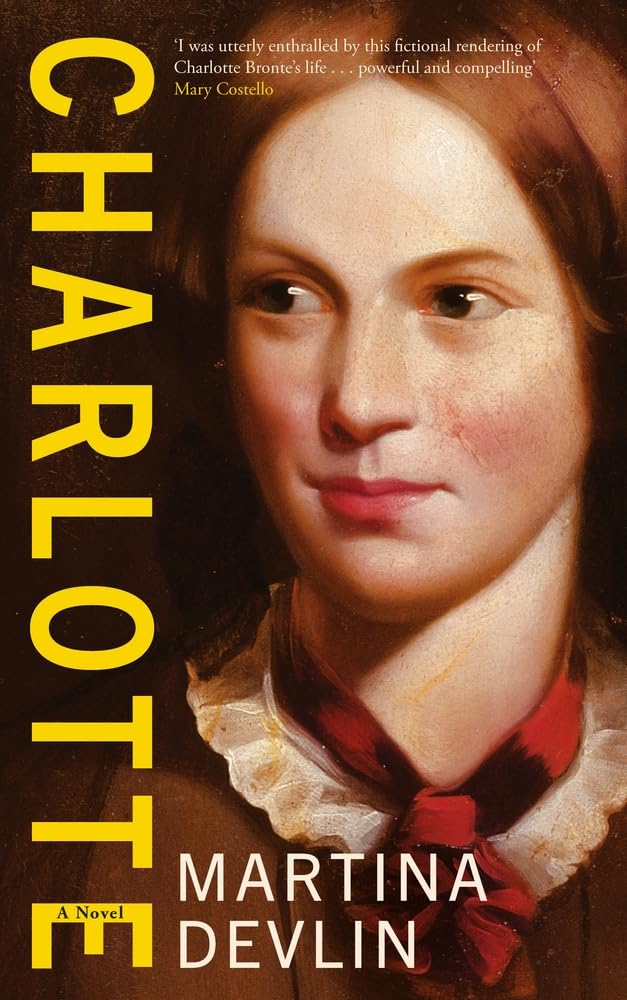
I also heard today that Martina Devlin, who came to Fribourg and Zurich last year to present her novel Charlotte during Ireland Week, will have a new book coming out in September. This one is based on the life of Mary Shelley and I cannot wait to read it!

I almost forgot to say that the Irish state broadcaster RTE published an extract from Before the Leaves Fall on its culture website in December. If you haven’t read the book yet, now’s your chance to check it out. And if you have read it, don’t forget to post a review somewhere online as every mention really helps.

Ps. Some of you may have heard that I applied for a writer’s residency (long-held wish) on Achill Island for this year. I found out this week that I wasn’t successful so I’m going to try elsewhere. Wish me luck!

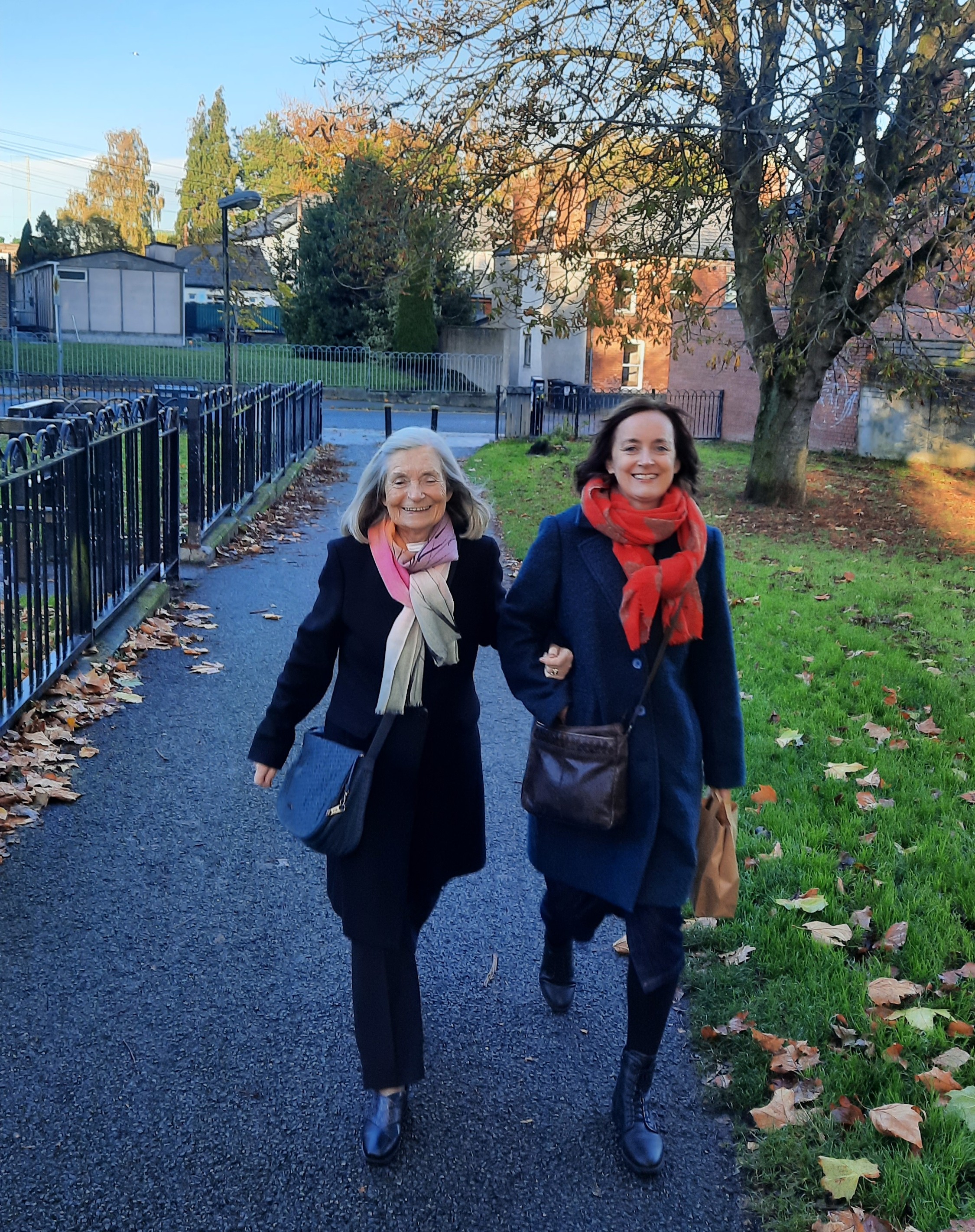
Pps. I’ve posted a picture of myself and my mother Máire here on our way from her house to the Gutter Bookshop in Dublin last October for the launch of Before the Leaves Fall. Such a happy day.

My own personal book awards of 2025

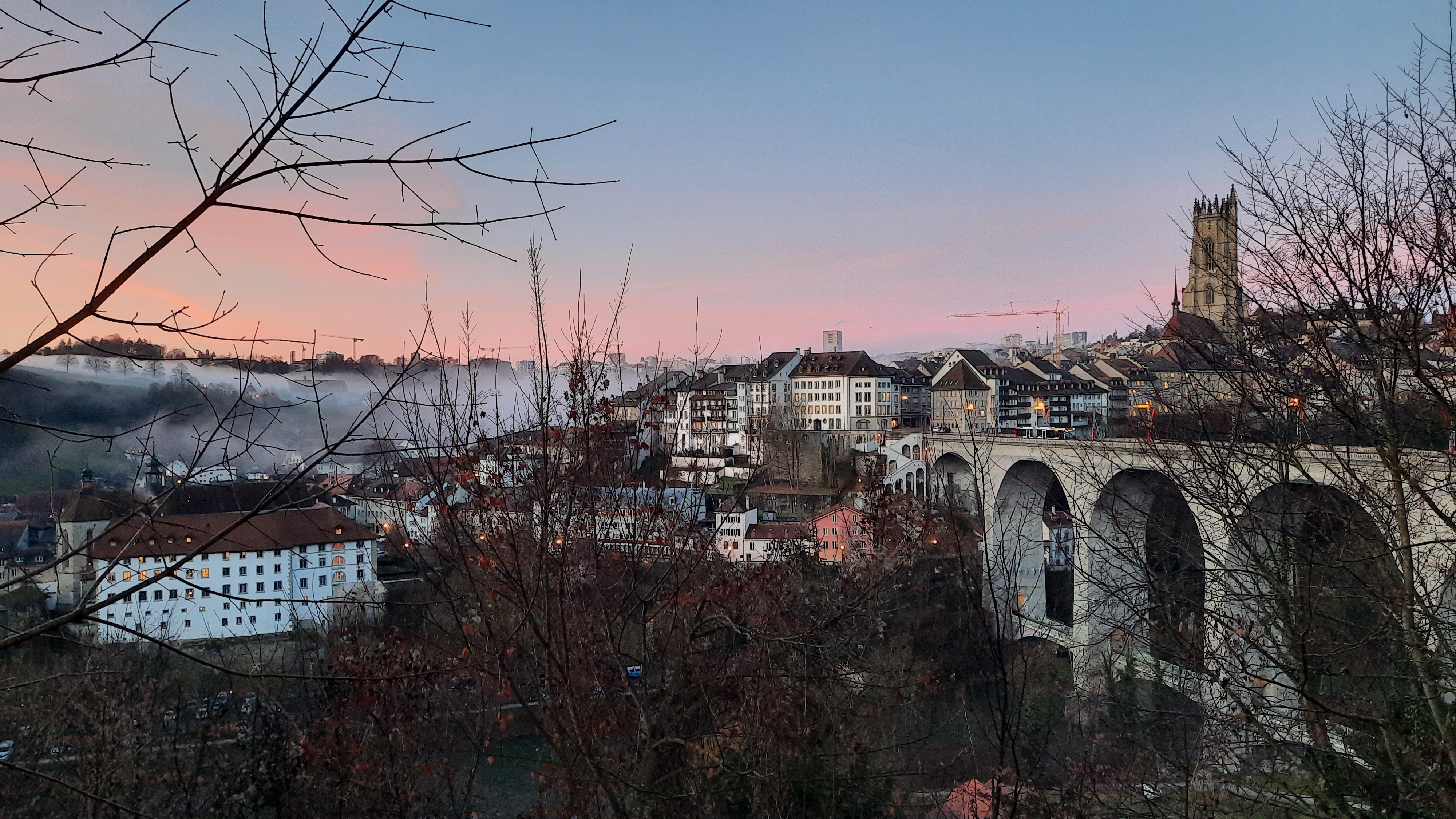
Fribourg at dawn, taken on my morning commute

I’ve decided to run a last-minute mini book awards with a jury of one (me) selecting from the books I’ve read in 2025. Please take a seat and see if you agree with the line-up of winners. We (the royal we) have nine categories this year.

And the Slightly Disappointing Award goes to Tell Me Everything by Elizabeth Strout. It’s only disappointing because I’ve loved everything of hers so far, and this novel I only liked. One too many walks with Bob and Lucy not quite saying what they’re thinking. The murder side plot was good and I wonder if I might have rushed it. Elizabeth Strout needs to be savoured. Might revisit.

Katriona O’Sullivan’s searingly honest memoir Poor wins in the non-fiction category with the award for Best Social Commentary. As the daughter of addicts, Katriona O’Sullivan endured desperate poverty and neglect in her childhood. If anyone doesn’t believe in systemic disadvantage yet, Poor will set them straight.

Also in non-fiction, there is an award for the Strangest / Most Original Book, which goes to The Sound of a Wild Snail Eating by Elisabeth Tova Bailey. This is the experience of a woman who was hit with a sudden and severe debilitating illness that left her almost unable to move. She found solace in the company of a snail accidentally carried into her sick room on a plant. I felt there was a little too much snail and not enough human in the book but still plenty of wonderful reflections on both conditions.

The Best Novel Set in Dublin Award goes to The Coroner’s Daughter by Andrew Hughes. The novel brings to life the dank, disturbing and oppressive Dublin of 1816 and introduced me to the wonderfully spirited and inquisitive character of Abigail Lawless.

Back to fiction, and the Rich Historical Fiction Award goes to Charlotte by Martina Devlin, an evocative and fascinating tale woven around Charlotte Brontë’s little-known Irish connections. Charlotte spent her honeymoon in Ireland with her Irish husband the year before she died tragically of pregnancy complications in 1855, the last of six Brontë siblings to die young.

The award for the Most Clichéd and Occasionally Sexist Nonsense book goes to Love is Blind by William Boyd. I was given a 10-CD set (don’t laugh) of this book that someone had lying around and I listened to it mostly on car journeys. It could also win an award for the most research dumping about the piano tuning profession, if there was such an award. Having said all that, it was entertaining.

To be more positive, may I present Three Days in June by Anne Tyler which walks away with the Easiest Read Award. Featuring a socially awkward mother of the bride navigating the days before and after her daughter’s wedding, it’s amusing, touching and insightful in equal measures.

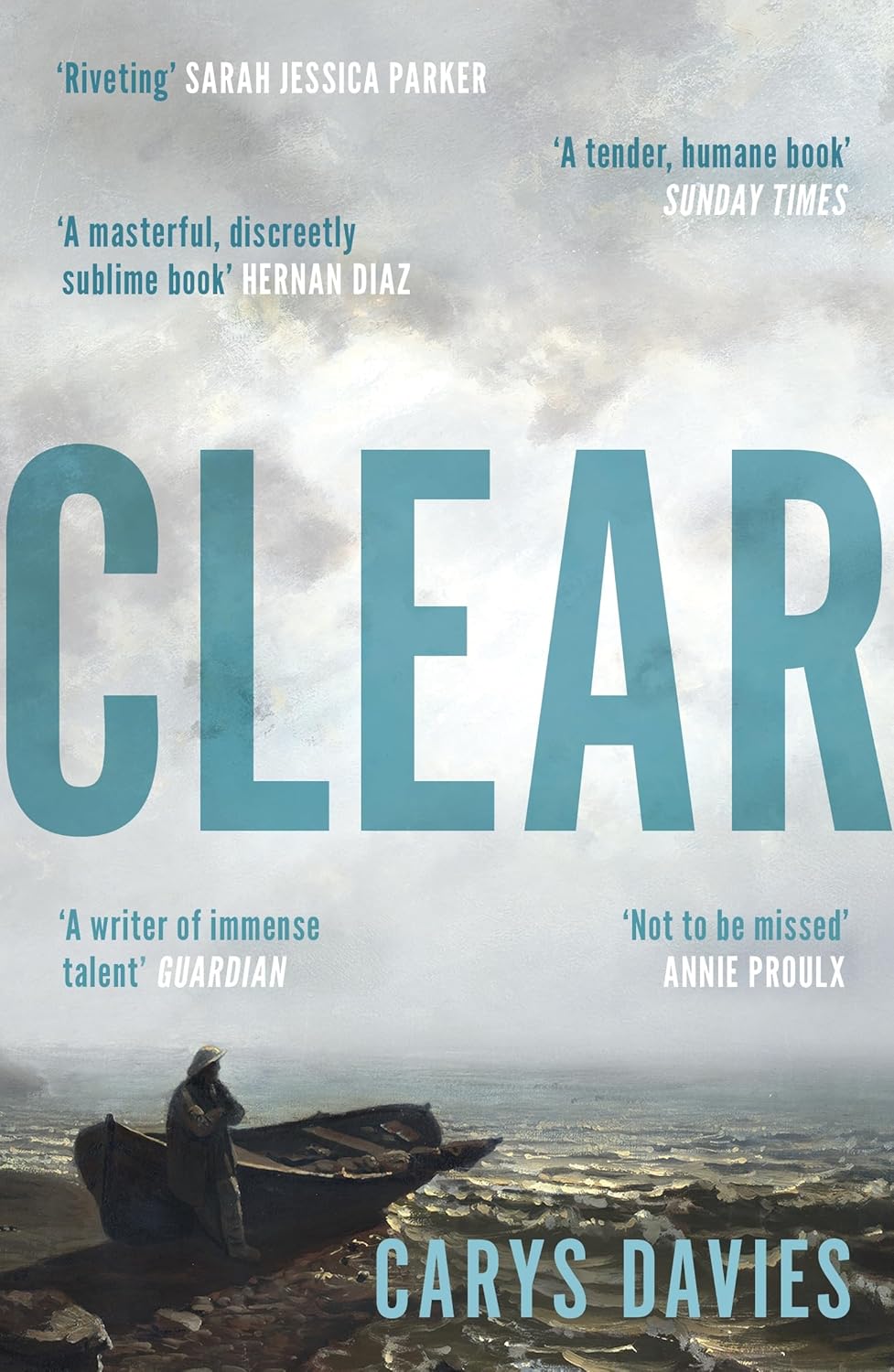
The Most Beautiful Story Award of 2025 is still Clear by Carys Davies, which I read in August and felt would be my book of the year. Set mainly on a remote Scottish island in the 1840s, it’s exquisite in every way.  Ivar, the sole occupant of the island, leads a life of quiet isolation until the day he finds a man unconscious on the beach below the cliffs. 

After listening to Colm Tóibín being brilliant about Henry James on The Secret Lives of Books podcast, his book A Long Winter caught my eye in Fribourg cantonal library.  It’s a long short story that’s just been given the Claire Keegan treatment by being sold as a book. And we are all the better for it! A Long Winter wins the Enchanting Sense of Place Award. In an afterword, Tóibín explains the background to the tragic story of a woman’s disappearance, which he heard during his time living in that region of Spain.

I hope you fall under the spell of one or more of these award-winning titles. Have you read any of them already? And what was your favourite read of 2025?

Summer reading, autumn happenings (save the date!)

Two high points of my childhood summers were berry picking and wild swimming. Those two free pleasures are still part of my life, and I managed to do both today – pick blackberries in the forest and go for a dip in my local river. With a good book thrown in, the perfect Sunday.

I’ve read more than usual this summer, helped by the fact that I have access to an endless supply of books at my day job working for a book distributor. I’ve just finished The Paris Express by Emma Donoghue, a real page-turner about a train hurtling towards disaster in 1895.

The novel is based on the true story of a derailment and, to create her characters, Emma Donoghue used the biographies of real people who were either on the train or could well have been. She says she drew on more than 40 articles about the accident in 26 publications. To find out more about the individual lives, especially uncelebrated ones, she “ransacked the wonderful hoard of French bureaucracy filae.com”.  The result of all this – apart from a gripping, richly-imagined story – is that you find out what became of the main characters in later life.  

Recent favourite reads include Tell Me What I Am by Una Mannion, Shy Creatures by Clare Chambers, Love is Blind by William Boyd, Audition by Katie Kitamura and the unforgettable Clear by Carys Davies.

Meanwhile preparations for the publication of my new novel Before the Leaves Fall are continuing and it’s time to save the date(s)! The Swiss launch of the book will take place in Stauffacher Bookshop in Bern on Thursday, October 9th at 8pm. The event is being generously sponsored by the Irish Embassy. Full details at this link.

Two weeks later in Dublin, the Gutter Bookshop in Cow’s Lane will host the Irish launch on Thursday, October 23rd, time tbc. All are welcome. I’m extremely grateful to both bookshops, who have a great record in supporting authors.

In between, I’ll be at the Frankfurt Book Fair for work and will hopefully steal a moment to present my book to Literature Ireland, which publishes a catalogue of translation-worthy new Irish fiction titles. I’d love to see the book translated into the Swiss languages as Voting Day was.

Before all that, September has some literary treats in store. I’ll be attending the annual Le livre sur les quais festival in Morges on the weekend of September 5th-7th. The full English programme has been published and it includes Natasha Brown, Alan Hollinghurst, Caroline Bishop, Mark O’Connell, Claire Massud and more. I’m very pleased to be interviewing Padraig Rooney about his biography of Annemarie Schwarzenbach, one of the most interesting Swiss women of the 20th century. That event is at 1pm on Saturday 6th in Hotel La Couronne.

At the end of September, the wonderful Jonathan Coe is coming to Geneva as a guest of the Société de Lecture. I will be interviewing him in the elegant salon jaune on Monday, September 29th. There’s lots to talk about in his latest cleverly-plotted, satirical, dark-yet-funny novel, The Proof of My Innocence.

With all that hopping around, I hope I get to see some of you over the next couple of months. For now, let’s enjoy this summer feeling and any good books we find along the way.

Before the Leaves Fall gets a botanical cover

Cover design by Becky Fish

One of the milestones of publishing a book is the moment when the cover design is revealed. I’m delighted to share the cover of Before the Leaves Fall with you today, along with the first endorsements the novel has received from authors Liz Nugent, Annie Lyons, Anne Griffin and Martina Devlin.

These amazing authors all gave their support unstintingly and I appreciate their generosity hugely. So here are the quotes, which I hope will whet your appetite for October.

‘This is a beautifully written study of Ruedi and Margrit, loosely connected by their past, bonding over a life changing decision causing both parties to reflect on their lives and relationships without sentimentality. The short length of the novel lends itself perfectly to the life expectancy of Margrit. Profoundly moving, I loved this book.’ — Liz Nugent, author of Strange Sally Diamond

‘A beautifully written story of unlikely friendship and the choices we face as we reach the end of our lives. Profound, poignant and refreshingly honest, this is very much a novel for our times.’ — Annie Lyons, author of The Brilliant Life of Eudora Honeysette 

Before The Leaves Fall once again shows O’Dea as a competent writer, unafraid to examine the relevant and vital issues of ordinary lives in Switzerland. The power of self-determination shines through in this touching read.’ — Anne Griffin, author of The Island of Longing

‘A poignant account of the lost boy trapped inside an old man, and his chance reconnection with a woman who touched his life when hers is almost played out. Told with compassion, wisdom and insight, it considers how death can offer a new perspective on life. It stayed with me long after I reached the end.’ — Martina Devlinauthor of The House Where It Happened and Charlotte.

This evening I sent off my feedback on the proofreader’s changes, which basically involved me agreeing with everything she marked up, bowing to her superior knowledge about hyphenation and the difference between ‘on to’ and ‘onto’. The next time I see the manuscript will be between the covers of a printed book! If you’re stuck for reading material in the meantime, have a look at the websites of the four talented writers above and take your pick.

I can’t wait for October. But I also want to enjoy this time before, when I can dream big about the book, hoping that it gets widely read and positively received, and that people understand – as Liz, Annie, Anne and Martina have done – that it comes from a good place.  

How does author platform work?

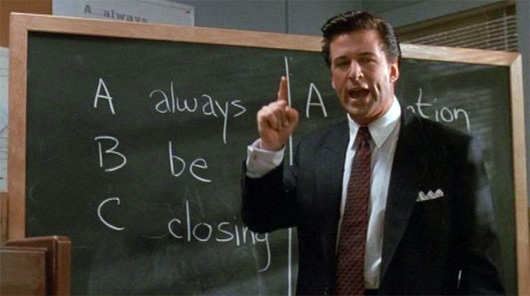
Golf_ABC

How much do you know about your favourite authors? Do you know what they are currently working on, their likes and dislikes, how they spend their free time? If I think of my favourite living writers, I have only the vaguest idea of biographical details or personality. When did we stop thinking this was normal?

The current wisdom on author platform suggests that the author inspires people to buy the book. What this means is that authors are under pressure to hook readers using their online presence. This is supposed to be a liberating development but the danger is it can enslave authors to the idea that they should Always Be Closing.

I once heard indie publishing guru Jane Friedman give a talk about platform where she said that people need to hear about a book an estimated eight times before they buy it. Does this mean authors have to make a lot of noise for their books to get noticed? It seems the lower down you are on the success chain, the less likely it is anyone else will make the noise for you, so yes.

As a reader, I don’t feel much curiosity about the person behind the book. I don’t feel the need to get to know them. If they are good I just want to keep reading their work. But most of my favourite authors have a high profile. Would I forget about them if their names didn’t keep popping up in the media?

In fact, I do forget about them for long stretches of time until I hear a radio interview, or see a festival programme, a tweet, a review. So these reminders are important, even for established writers. The author website is important too. We need to make it easy for our work to be discovered. After that it’s a question of narrowing down the best tools from a host of possibilities, including Facebook, Twitter, blogging, interviews, Goodreads, blog tours, giveaways, Youtube videos, podcasts, not to mention giving talks in person. But it’s impossible to do everything. It’s better to focus on the activities you are most comfortable with.

To approach the idea of platform from the other direction, a few days ago, I was asked for some book recommendations by a friend who has moved to a remote location. Two of the three books I recommended – The Unlikely Pilgrimage of Harold Fry by Rachel Joyce and The Return by Hisham Matar were written by authors I had met at Le Livre sur les Quais festival at Morges last month. A literary festival or is a great source of inspiration but they don’t come along that often.

The other place I get ideas from is bookshops, and I am always glad to see my own book so well displayed in Swiss book shops. The other day I bought the new John le Carré at Dublin airport, which would not be a typical choice for me. And I’m enjoying it so far. Another book I’d like to recommend is Petina Gappah’s collection of short stories set in Zimbabwe, An Elegy for Easterly.

Book blogs, like A Life in Books , are also a great source of reviews and ideas. Friends also recommend books and I receive books as presents, most recently Roddy Doyle’s new novel Smile. Apart from that, media coverage plays a big role in the search for new titles, but that’s usually when it’s an author whose work I already know and like. Because I have no access to newspapers in English, the main places I come across reviews or book talk are Facebook and Twitter, so that kind of link sharing also comes into play.

It’s been one year since my book, The Naked Swiss: A Nation Behind 10 Myths, was published, I haven’t figured out all the mysteries of the author platform yet. But thinking about it certainly helps.  What do you, as a reader or an author, find most useful or appealing in authors’ online activity? Do you have any dos and don’ts to share?