The National Archives will release the 1926 Irish Census online next month, the first census of the Irish Free State. For those of us who’ve enjoyed exploring the 1901 and 1911 pre-independence censuses this is an exciting moment.
The Kings, the Geoghegans, the O’Deas, the Sullivans. My four grandparents’ families were busily living their lives in the early 1900s in Connemara, Dublin and Kilkenny. Some things I know about them through family lore but there are, of course, lots of blanks.
What if I could send a spy into each household to get a more exact picture of how things were for them at a certain moment in time? Actually, I can. The work has already been done, in the 1901 and 1911 census, and today, anyone can look over the shoulder of the enumerator. Search here.
Connemara clues
But when I started exploring the entries online, I didn’t only find answers – I also stumbled across a few mysteries. I’ll start with the largest family, the Kings in Moyrus, Connemara. In 1911, Festy and Maggie had ten children living at home aged between 22 and three. My grandmother, the youngest, was born later that year.
The Kings were just about to launch on a chain of emigration that would see eight of those 11 offspring emigrate. The mystery is that Festy and Maggie both aged very rapidly between 1901 and 1911. In the first census, they were aged 45 and 30. Ten years later, Margaret had aged an extra ten years to become 50. Meanwhile, Festus had gained five extra years to end up a youthful 60.
What could have caused this mix-up? After asking around, I found out that there was an epidemic of rapid ageing in the country between 1901 and 1911. The catalyst was the old age pension that was introduced for people aged over 70 in 1908. No wonder people were keen to hurry things along.
Fifty kilometres away in Derryglin near Oughterard, the Geoghegan family were soon to welcome the birth of my grandfather Thomas. The mystery here was that I couldn’t find the family. Parents Mary and Thomas were not where they were supposed to be. But after a while, Mary and three children turned up in a nearby townland called Lettercnaff. Was Thomas away working perhaps? Why was Mary staying with her in-laws? Whether it was for one night or longer, perhaps the time to build a new house, it’s not clear from that snapshot in time.
Kilkenny baby
The 1911 census took place on the 2nd of April. My grandmother had been born in the Brewery House of Sullivan’s Brewery in Kilkenny City six weeks earlier, the first child of Richard Sullivan and Margaret, Peggy. But the mystery is that baby Elizabeth was not recorded in the census at all, and neither were her parents anywhere to be found in Kilkenny. You would think they would be proud to include their new baby. You would think the mother would be in the same place as her almost newborn baby.
But no, the couple turned up in the census, 100 kilometres away in Cappoquin, Co. Waterford, in the home of Peggy’s parents, the Redmonds. We’ve tried to puzzle this out in the family but there really is no way of knowing where baby Elizabeth was on the 2nd of April 1911. What we do know is that the brewery went out of business very shortly afterwards and Richard emigrated to Australia alone, never to return.
Dublin dynasty
Now we’re on to the last of the four families, the O’Deas in Dublin city. In this case, another absence made me curious. In 1911, the head of the family 61-year-old James O’Dea was living with his third wife Martha on Capel Street, probably in the same building as his hardware shop. The couple, both originally from Kilkenny, lived with two of their joint children, Jimmy and Rita, three of James’s older children, and two servants. Two other children, including my grandfather Joseph, were living away from home in a small boarding school in Kilcoole, Co. Wicklow for boys under the age of 12, run by the Holy Faith Sisters. My aunt gave me the tip of where to look for little Joe. The family obviously had their reasons for sending the boys away. Martha was running a toy shop on the quays so they had a lot on. Two generations later, my father was also in the toy business.
Jimmy and Rita both trained as opticians and Rita ran a shop in Duke Street for many years. Jimmy went on to enjoy a successful career as a stage, radio and screen actor, best known for his role as King Brian in the movie Darby O’Gill and the Little People and as the creator of his most famous character Biddy Mulligan. During the making of Darby O’Gill, he got on very well with Walt Disney.
There was no 1921 census because the Irish War of Independence was happening then. I’m sure a lot of us are very curious to see what details and stories will emerge next month. Let me know if you find any surprises.
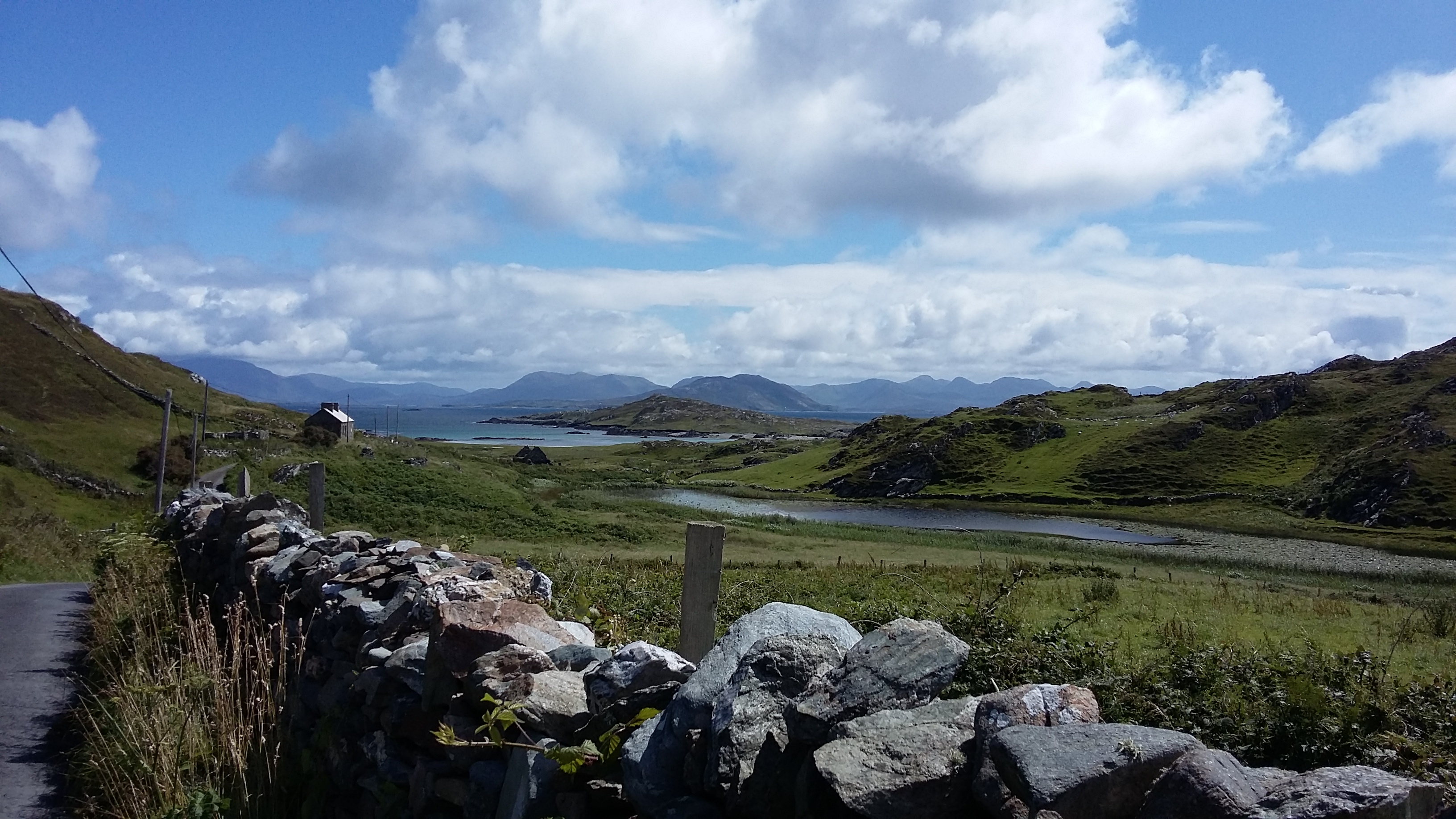
ps. My phone was stolen from my backpack in Fribourg train station at the weekend so I might be slow to respond to messages and pay bills! The photo of Inishbofin was the only one I could find of Connemara, taken on a happy day-trip there from Moyrus in 2015.

 Clare O'Dea