Help! The Swiss are voting on immigration again

Scroll down to see more YES and NO posters at the end of this post

Swiss voters are being asked to listen to their feelings ahead of an anti-immigration vote taking place this Sunday, particularly “the growing feeling of not being in one’s own country”.  The main message of the “yes” campaign is that Switzerland is full. The country just cannot take any more foreigners, we are told.  

Who are these foreigners? They are not your neighbours, colleagues, friends, your spouse, your mechanic, your doctor, your carer. Ordinary foreigners living ordinary lives are invisible to the proponents of this vote. They get no thanks for existing, let alone being net contributors to Swiss society and economy.

Because the rhetoric is about “mass migration” which portrays foreigners as a destructive force: foreign children ruining the education of Swiss children, foreign residents destroying nature by paving over Swiss countryside to build their homes, foreign drivers causing traffic jams, foreign criminals inflicting violence on the natives, “Islamic culture and foreign values being imported”.

These examples come directly from the official vote material distributed to all voters. The booklet provides the initiative committee with a channel to explain the reasoning behind their proposal, while the position of the government and parliament is also laid out (in both cases against).

The so-called “Sustainability Initiative” is fundamentally dishonest in that it is not about providing solutions to anything, sustainable or otherwise. It is about sowing division in society by encouraging the Swiss to blame their problems on others. It is about sowing chaos by forcing the country to break international agreements that would cause untold damage to Switzerland’s reputation and economy. Destruction is fine for the Swiss People’s Party as long as they are the ones causing it.

The last time the Swiss voted on an absolute cap on immigration was the Schwarzenbach Initiative in 1970. The proposal then (ultimately rejected) was to reduce the immigrant population to 10%. At the time the proportion of foreigners was 16%, mostly southern Europeans. These days, the proportion of foreigners permanently resident in Switzerland is 28%, mostly EU citizens. Immigration is largely a regional phenomenon from Switzerland’s natural hinterland.

I was interviewed about the vote by Derek Scally of The Irish Times. You can read his thorough article here, which explains more about the details and potential consequences of the proposal. I hope that Swiss voters will see through the trick and reject the initiative. As I’ve said before, we need bridges to be built between the Swiss and foreign population, not fences.

There is no returning to the fantasy land where only the Swiss get to enjoy Swiss success while guest workers (yes, this is in the proposal) have to live on the edge of society, separated from their families. If the campaigners for “sustainability” really want to change the dynamic, they should invent a way of having a well-functioning economy without having to rely on constant growth. Stop growth and you’ll stop immigration. And everyone will be happy, right?

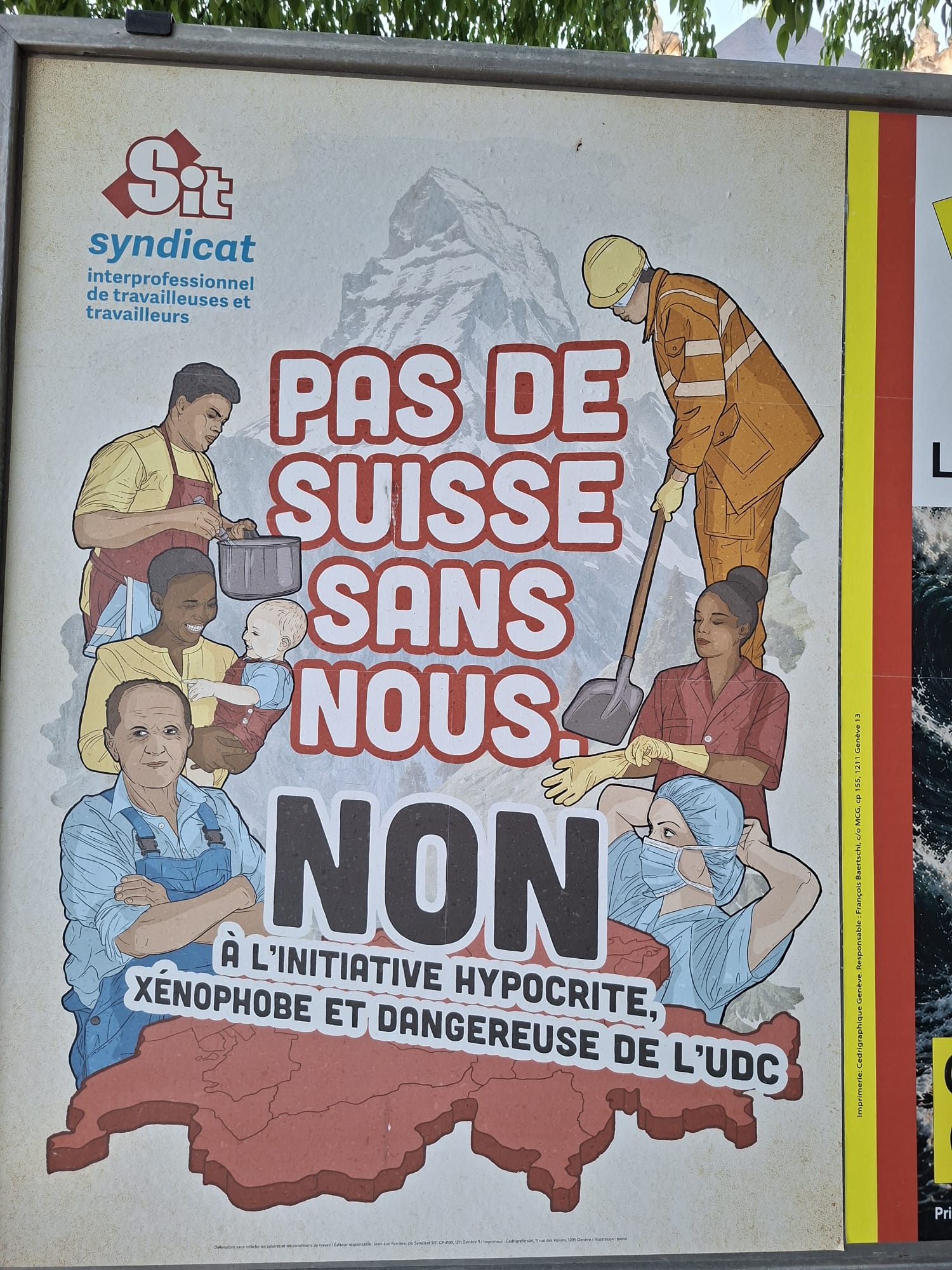
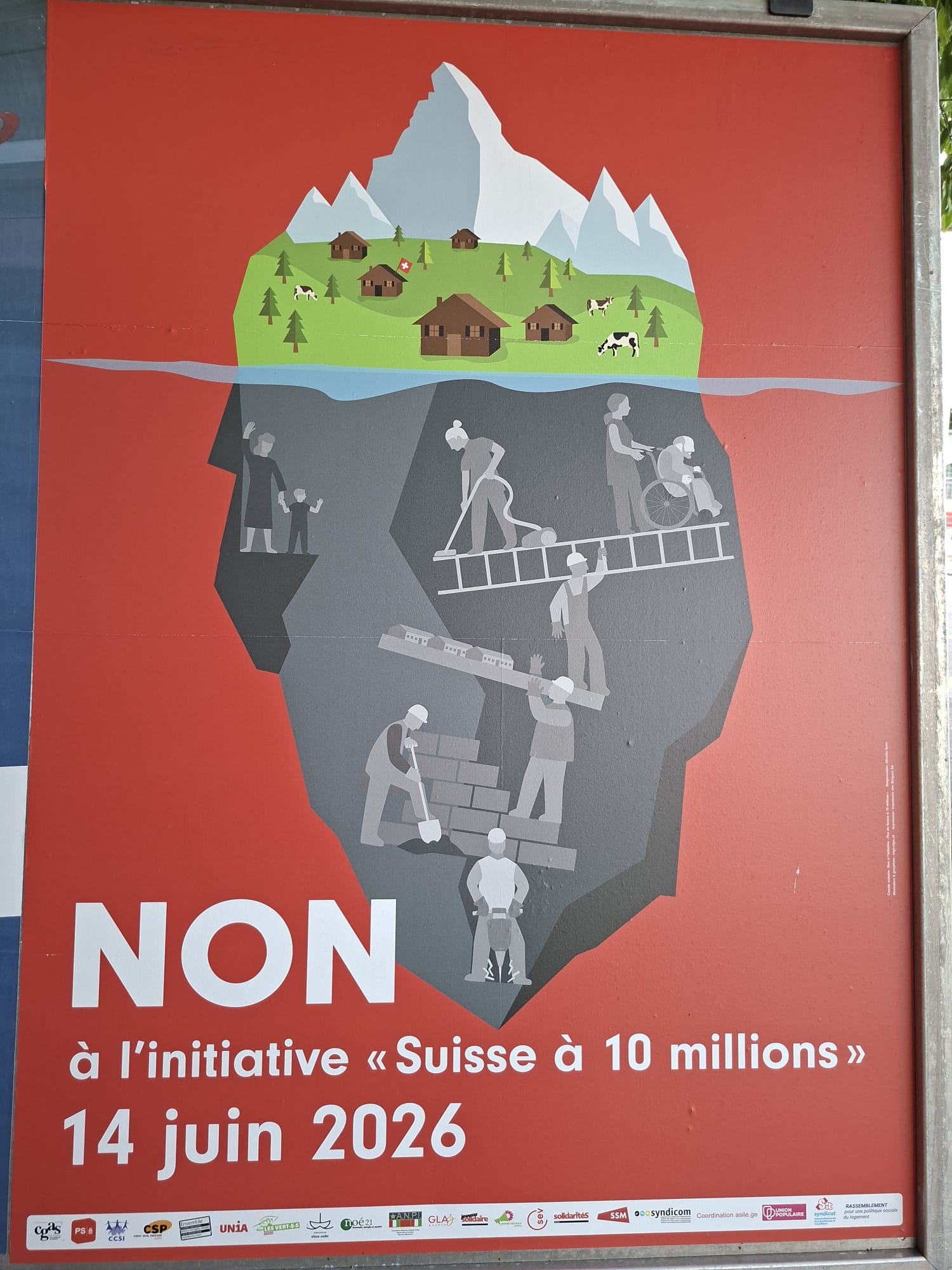
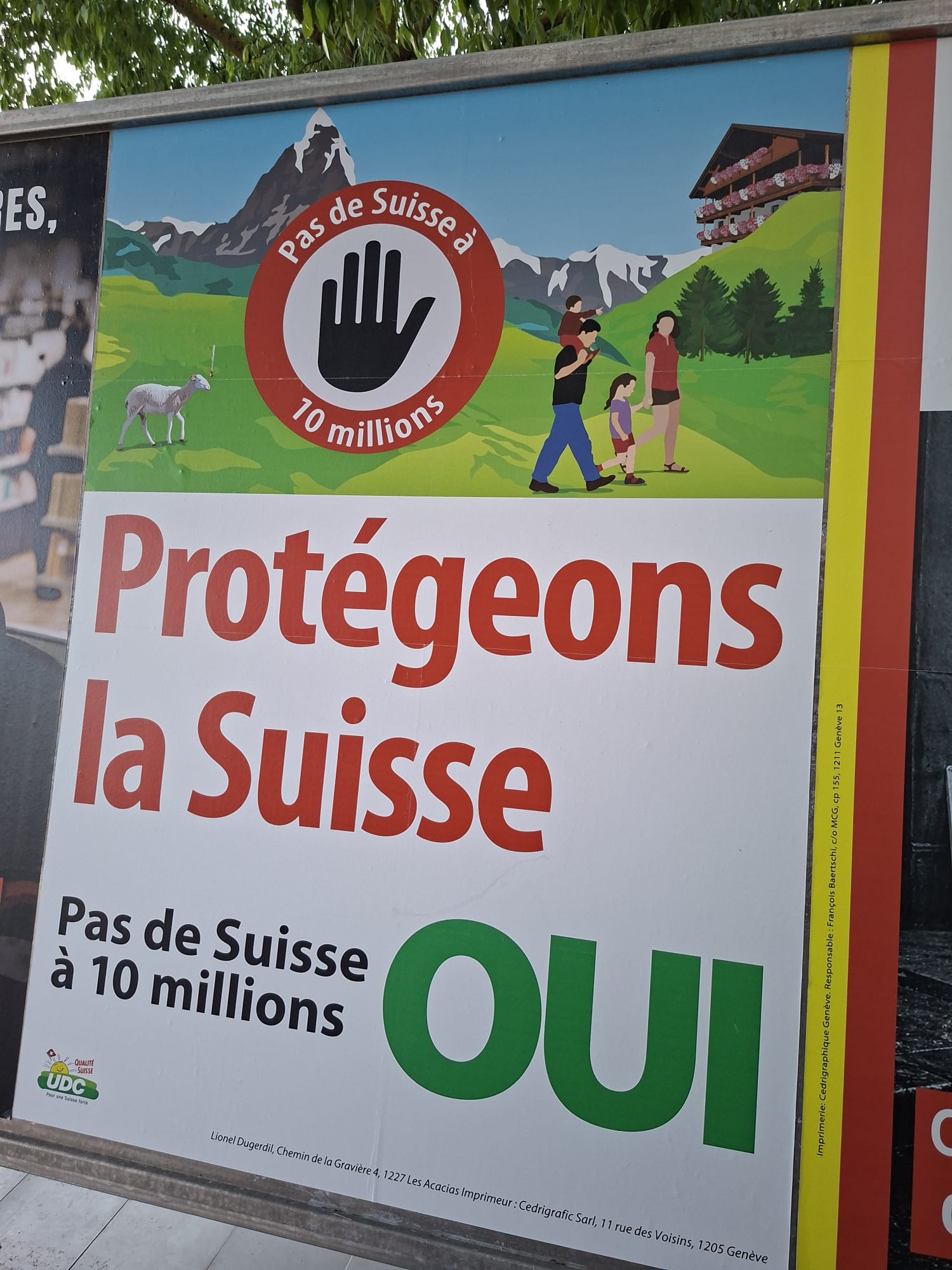
Here are some posters from both camps that I photographed in Geneva a couple of weeks ago. You may detect some romanticism on both sides. I’m so tired of this topic and look forward to the day when I do not have to write in defence of foreigners in Switzerland anymore. Hopefully a “no” vote on Sunday will bring us a step closer to that wish.

Where to get your Swiss news in English


Because so much big news happens in Switzerland, from peace talks to banking scandals, there is an abundance of Swiss news coverage in international English-speaking media. But if you live here, you will probably be interested in finding reliable sources of news and information relevant to residents.

If you look at home-produced news in English, the pool is relatively small. Here is a guide to some of the main news outlets and what they offer.

The most authoritative and extensive source of Swiss news in English (disclaimer: I worked there from 2005 to 2015) is swissinfo.ch. Bern-based swissinfo.ch, which operated in a previous incarnation as Swiss Radio International, is a unit of the state-funded Swiss broadcasting corporation SRG SSR idée suisse. It provides daily news coverage in ten languages, along with in-depth articles, video news and features, podcasts and galleries.

Swissinfo employs some 40 journalists, Swiss and foreign. Like all news organisations, it is evolving to be more fast-paced and social media-friendly, but it still has a relatively-traditional solid structure with an editor-in-chief, editorial department heads, picture editors etc., all of whom are subject to high professional standards.

Another website providing Swiss news is The Local. This is an English-language digital news publisher offering daily news, business and features, that originated in Sweden in 2004. It now has outlets in nine European countries. Run by a small team, with additional material from freelancers, the editorial style is light and accessible but the information is well-researched by journalists who have a good grasp of Swiss current affairs.

For those who need to keep up with business and financial news, finews.com conveniently translates the daily news written by its staff journalists in Zurich.

World Radio Switzerland (WRS), broadcasting from Geneva, was offloaded by the Swiss Broadcasting Corporation in 2013 and is now in private ownership. The station features a diverse mix of programming, including talk radio, magazine, business, culture and music shows. It runs news bulletins and publishes short news stories on the website. There are various ways to listen, detailed here.

WRS and The Local have to be commercially viable, so they also carry advertising and have separate sections featuring property listings and other earning links. The same applies to Le News, which covers national news with a regional focus, catering for people in the Lake Geneva region. Le News publishes a fortnightly newspaper with a large entertainment and events section, which is distributed free in the region.

In the entertainment and lifestyle category, the most prolific site is Newlyswissed.com, which covers culture, design, events and tourism. Newlyswissed regularly features listicles and has a light-hearted and humorous touch, well displayed by the current feature suggesting alternative activities for Valentine’s Day for singles in Zurich. A lot of the content is Zurich-oriented.

Other popular websites aimed at the Zurich market, with a strong what’s-on focus, include New in Zurich, which features many different writers, and Girlfriend Guide to Zurich, which bills itself as the ultimate directory to living in Zurich.

Basel has Basel in English, a one-stop shop of information for English-speaking Basel residents, and The English Show on Radio X from 18.30 to 20.00. And Zug has The Zug Post, a media partner of local newspaper the Zuger Zeitung. Because of its link to a local news player, this site provides more general local news, something it would be good to see more of.

And finally, Hello Switzerland is a comprehensive guide to relocating and living in Switzerland, with a free quarterly magazine in English. All of the above are also active on Facebook.

It’s not easy to make an exhaustive list but I hope I haven’t left out an important news or information provider. Please let me know if there’s a website that should be added to the roll call. And of course, there is an enormous range of news outlets in the local languages which are essential reading if you want to branch outside the English-speaking community. Maybe I’ll do a follow-up post with a guide to Swiss newspapers. A much bigger subject to tackle!

Meanwhile, if you are interested in putting Swiss news in context, check out my nonfiction book, The Naked Swiss: A Nation Behind 10 Myths, published by Bergli Books in October 2016.