Help! The Swiss are voting on immigration again

Scroll down to see more YES and NO posters at the end of this post

Swiss voters are being asked to listen to their feelings ahead of an anti-immigration vote taking place this Sunday, particularly “the growing feeling of not being in one’s own country”.  The main message of the “yes” campaign is that Switzerland is full. The country just cannot take any more foreigners, we are told.  

Who are these foreigners? They are not your neighbours, colleagues, friends, your spouse, your mechanic, your doctor, your carer. Ordinary foreigners living ordinary lives are invisible to the proponents of this vote. They get no thanks for existing, let alone being net contributors to Swiss society and economy.

Because the rhetoric is about “mass migration” which portrays foreigners as a destructive force: foreign children ruining the education of Swiss children, foreign residents destroying nature by paving over Swiss countryside to build their homes, foreign drivers causing traffic jams, foreign criminals inflicting violence on the natives, “Islamic culture and foreign values being imported”.

These examples come directly from the official vote material distributed to all voters. The booklet provides the initiative committee with a channel to explain the reasoning behind their proposal, while the position of the government and parliament is also laid out (in both cases against).

The so-called “Sustainability Initiative” is fundamentally dishonest in that it is not about providing solutions to anything, sustainable or otherwise. It is about sowing division in society by encouraging the Swiss to blame their problems on others. It is about sowing chaos by forcing the country to break international agreements that would cause untold damage to Switzerland’s reputation and economy. Destruction is fine for the Swiss People’s Party as long as they are the ones causing it.

The last time the Swiss voted on an absolute cap on immigration was the Schwarzenbach Initiative in 1970. The proposal then (ultimately rejected) was to reduce the immigrant population to 10%. At the time the proportion of foreigners was 16%, mostly southern Europeans. These days, the proportion of foreigners permanently resident in Switzerland is 28%, mostly EU citizens. Immigration is largely a regional phenomenon from Switzerland’s natural hinterland.

I was interviewed about the vote by Derek Scally of The Irish Times. You can read his thorough article here, which explains more about the details and potential consequences of the proposal. I hope that Swiss voters will see through the trick and reject the initiative. As I’ve said before, we need bridges to be built between the Swiss and foreign population, not fences.

There is no returning to the fantasy land where only the Swiss get to enjoy Swiss success while guest workers (yes, this is in the proposal) have to live on the edge of society, separated from their families. If the campaigners for “sustainability” really want to change the dynamic, they should invent a way of having a well-functioning economy without having to rely on constant growth. Stop growth and you’ll stop immigration. And everyone will be happy, right?

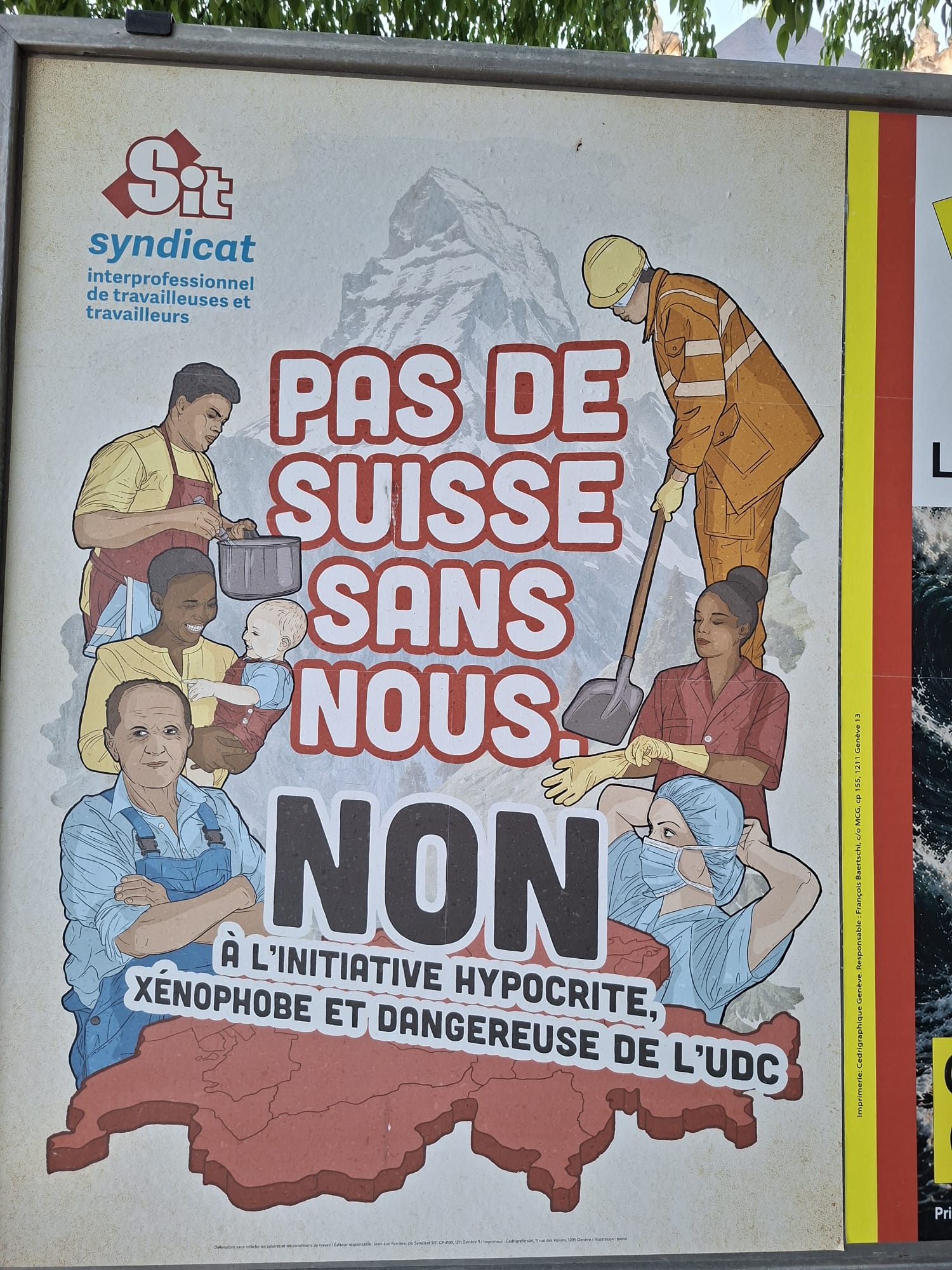
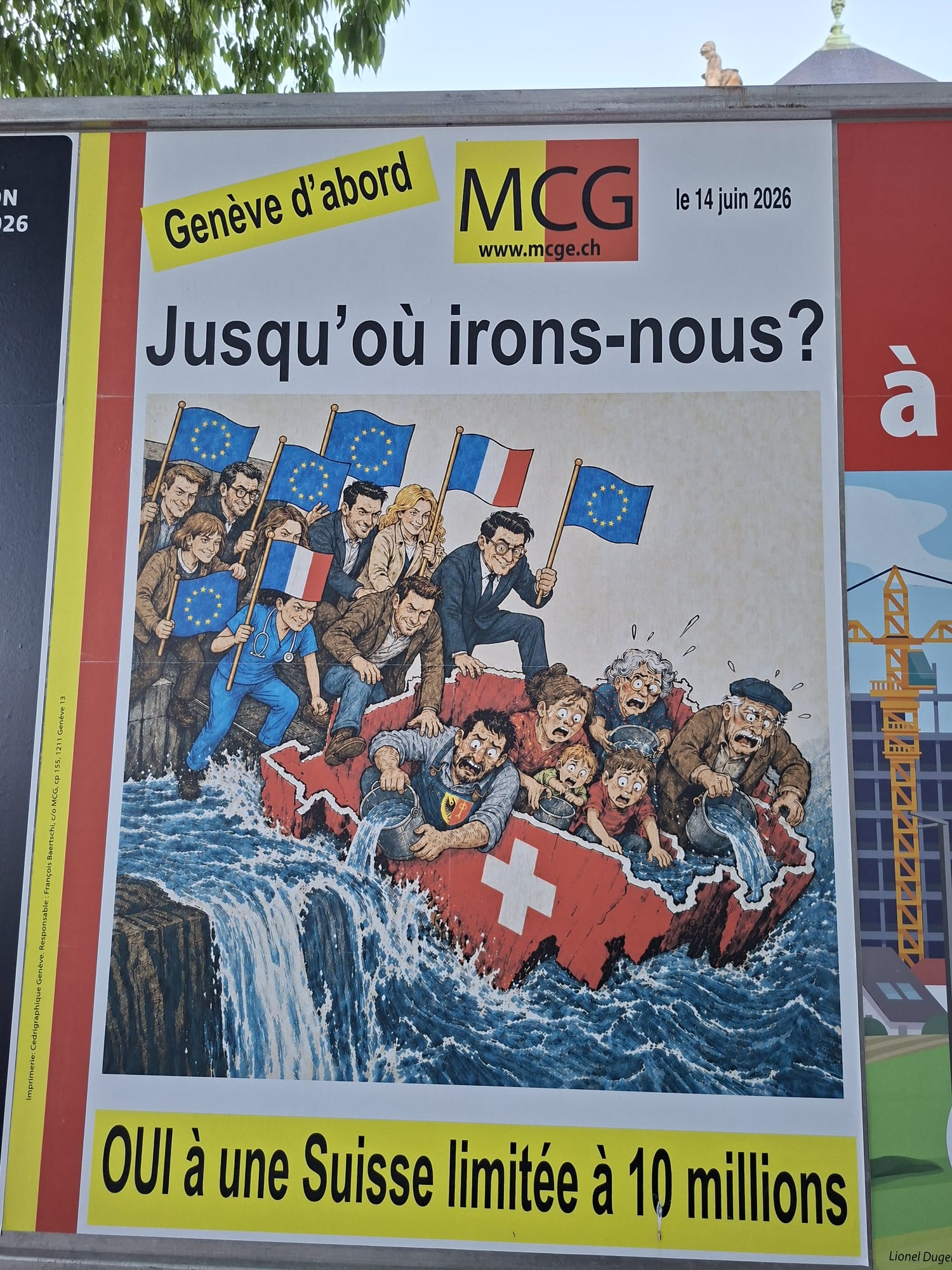
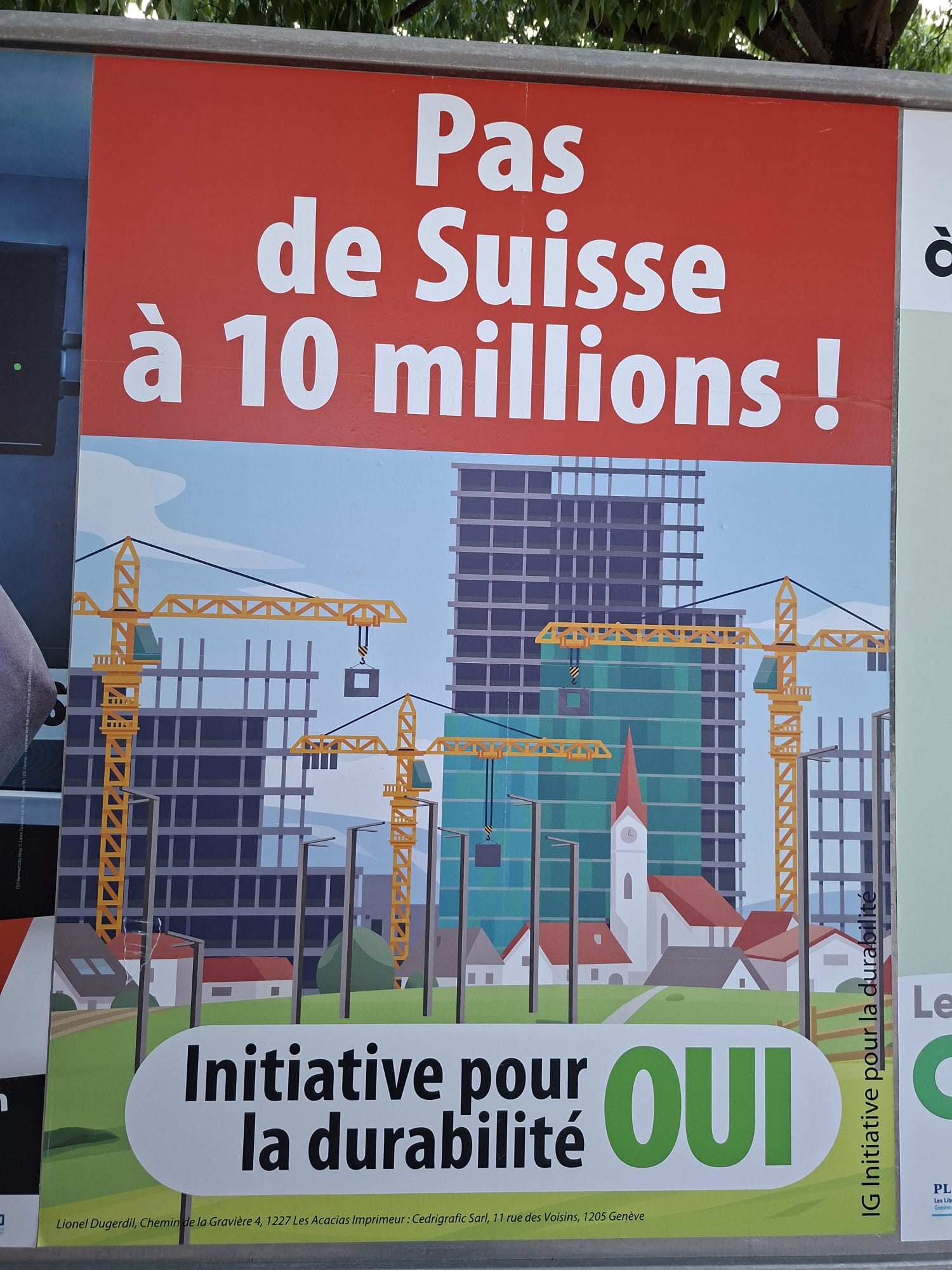
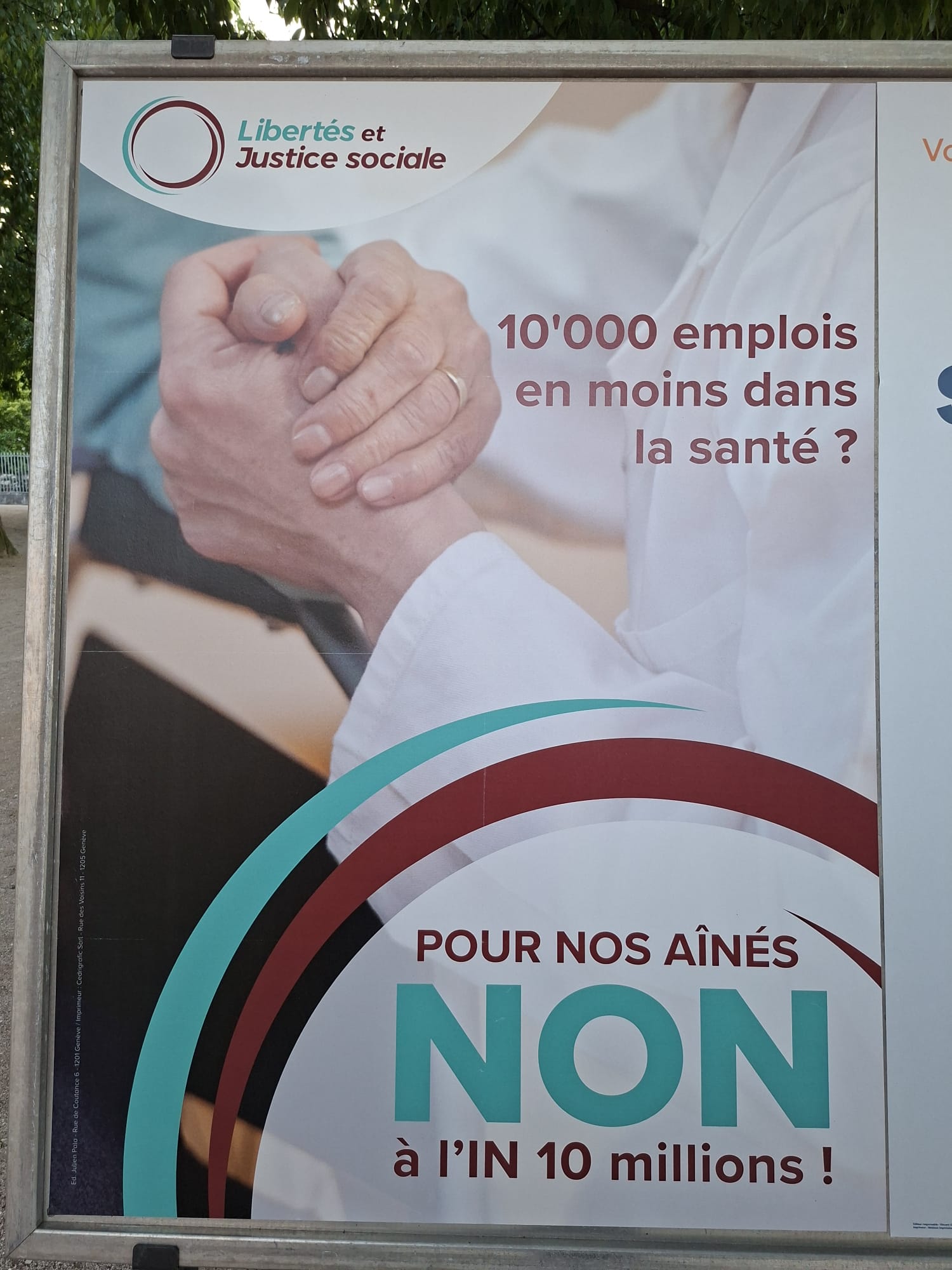
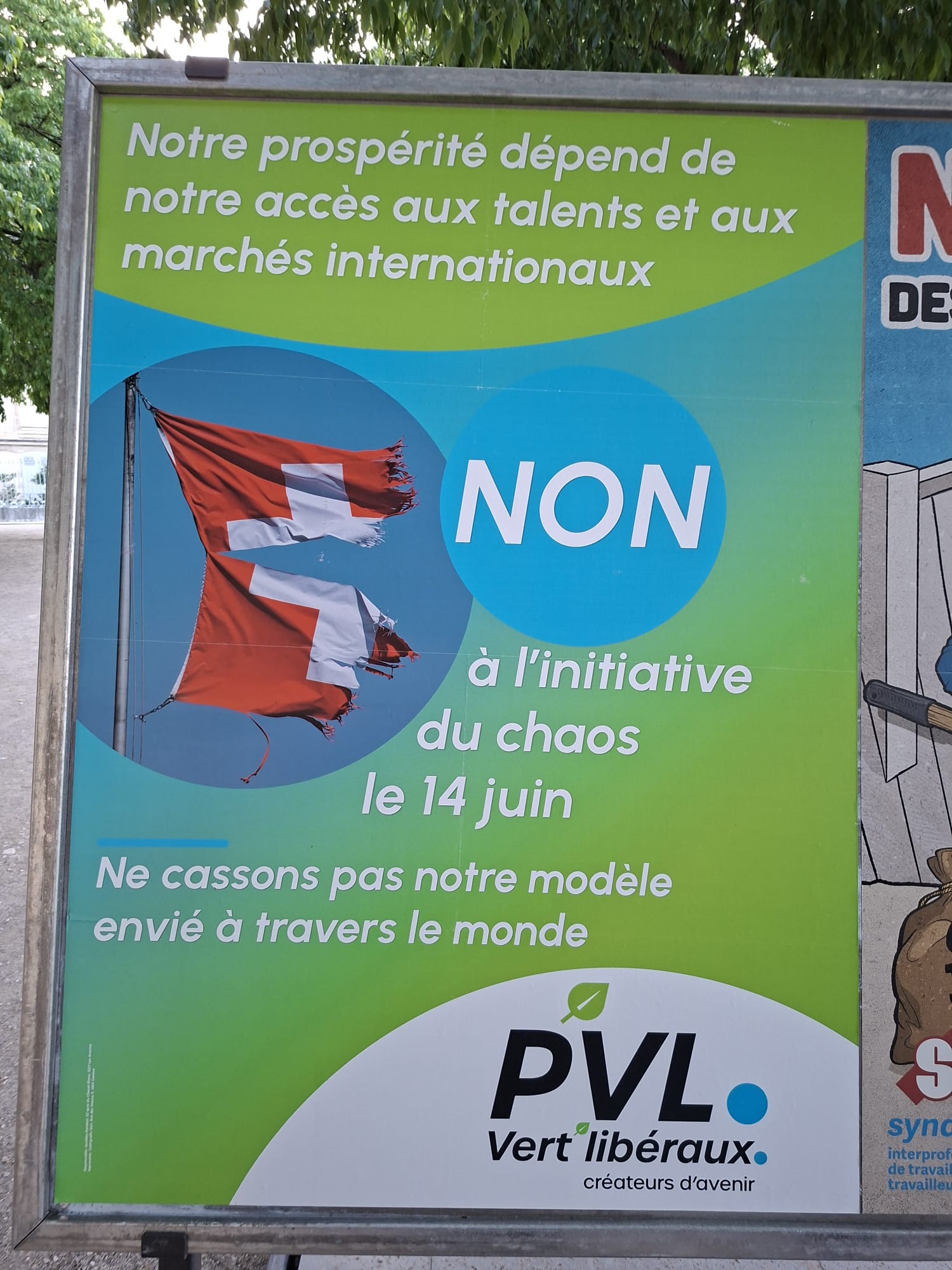
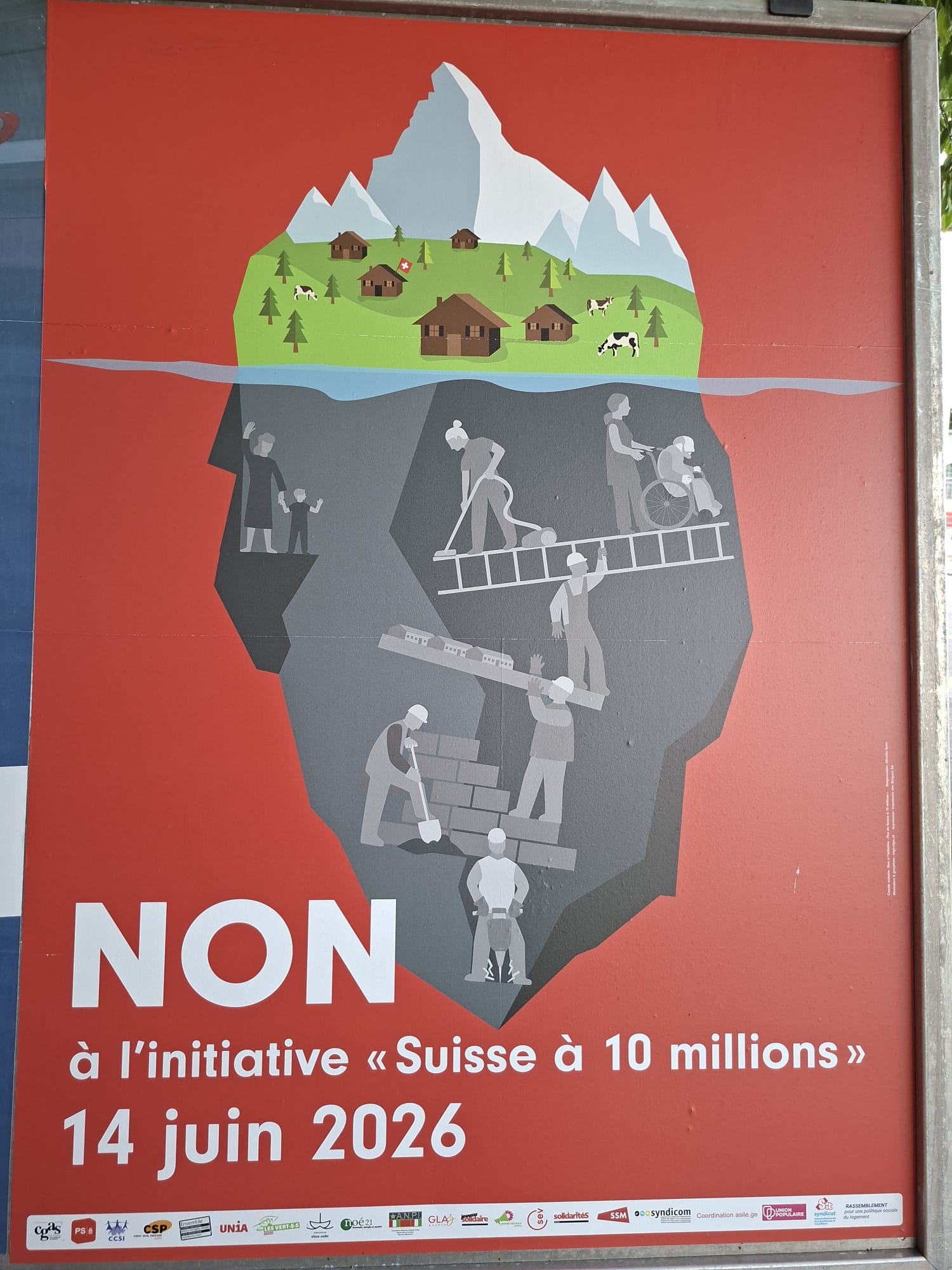
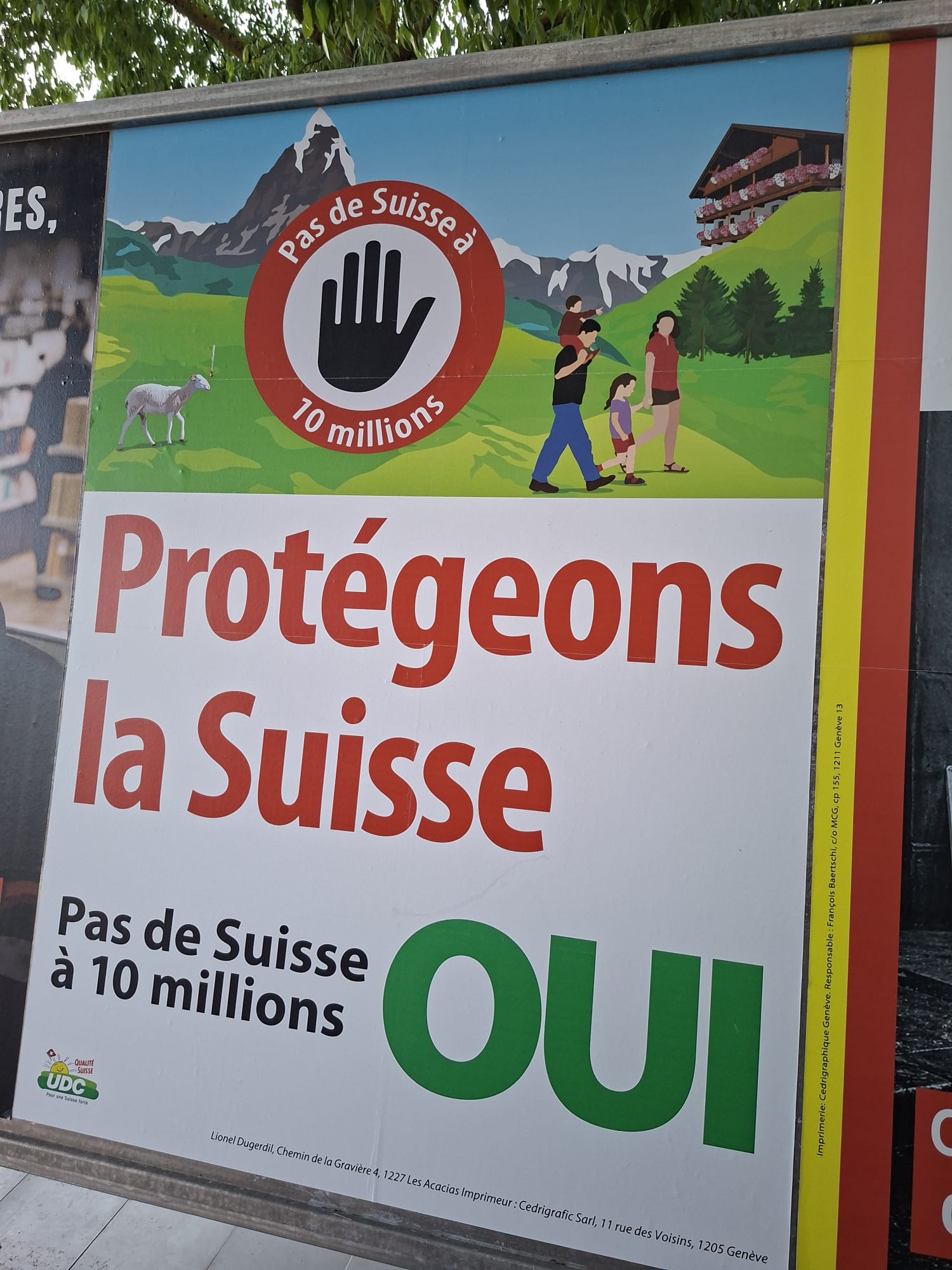
Here are some posters from both camps that I photographed in Geneva a couple of weeks ago. You may detect some romanticism on both sides. I’m so tired of this topic and look forward to the day when I do not have to write in defence of foreigners in Switzerland anymore. Hopefully a “no” vote on Sunday will bring us a step closer to that wish.

Switzerland and the foreigner thing

20150605_132001

After last Sunday’s vote in Switzerland to curb immigration from the European Union, I feel compelled to write about what a discouraging signal this sends to foreigners in this country. Having lived here for a decade and contributed the fruits of my labour to this country for that time – my work output, my taxes, my social security contributions, a thousand supermarket trolleys full of produce, not to mention three new Swiss citizens, I can safely say that Switzerland has enjoyed a substantial net gain from me.

And I’m no exception. The most recent OECD report on migration in Europe showed that the foreign population as a whole are net contributors to the rosy economy in Switzerland. Foreign women have bigger families, filling schools that would otherwise be half empty, with the future workers, footballers and leaders of Switzerland.

And then this campaign begins, peddling the idea that all the problems of the country, literally anything that is bothering the long-suffering natives in their daily lives, is down to this “uncontrolled” influx of people from the EU. Your train carriage is crowded? It’s because of them. You have to wait at the doctor’s? It’s their fault. Your rent has gone up? Obviously those pesky EU workers again. Urban sprawl offending your eyes? You know we wouldn’t have that without these outsiders.

The level of scapegoating would be laughable if it wasn’t hurting people. The debate has got to the point where there is no problem, present or future, that cannot be pinned on bloody foreigners.

And they lapped it up, or at least 50.3% of those who voted on February 9th did. The people have spoken, as is their right, but do they realise what they have said? Did they act to fix a real problem or was this just a way to score a cruel point, to hurt their neighbours?

To understand the result you have to know a little bit of background on how the vote came about. What you are seeing at work here is ‘direct democracy’, the purest form of democracy known to mankind, as I am now tired of hearing.

The Swiss political system has a very special role for popular petitions. Under the initiative system, any citizen may call for a vote on any issue or challenge a parliamentary decision providing they collect at least 100,000 signatures in support of their cause.

Well we all have our pet peeves so that’s great. Of course your average citizen doesn’t have the resources to gather 100,000 signatures but sometimes groups of citizens who are passionate about something get together and pull it off. More often this tool is used by well-organised and well-funded lobby groups and political parties. The gold medal in this category goes to the rightwing Swiss People’s Party.

This particular vote, dubbed “Stop mass immigration”, was brought to us by the Swiss People’s Party. With about a quarter of the popular vote, it is a fairly easy task for the party to gather so many signatures. What they do with this power is to focus on the social blight of foreigners.

For the past twelve years, EU citizens have been free to live and work in Switzerland, without any red tape, just as Swiss citizens have enjoyed the freedom to work and settle anywhere in the European Union. Known as the ‘free movement of people’, this agreement is one of the core principles of the EU and puts Switzerland on a par with EU member states.

It makes it easy for workers to follow work, Swiss retirees (for example) to move to Tuscany or Provence, and people living near borders to have access to the hinterland around them. You could see this as a win-win situation, or you could see it as an affront to your national sovereignty.

As a result of Sunday’s vote, the Swiss government now has to pull out of this agreement with the EU and return to a quota system of work permits, last used in 2002. Never mind that Switzerland has had a pretty good ride since then, helped in no small part by the easy working and living arrangements with its biggest market, i.e. every country surrounding it for as far as the eye can see.

Of course life will go on. Employers will find a way to hire the people they need and the people who are looking for work and prepared to uproot their lives to another country will still come to where the work is.

But the bitter taste will remain. Painted as the problem-makers, come here to rip the country off and make life difficult, we will continue to keep our heads down and work hard but the affection that was growing in our hearts for this nation is flickering and may be snuffed out. And that is the greatest loss of all to Switzerland.