My Swiss TV debut on Telezüri

English-speakers are really spoilt in Switzerland, more than any other language group. The locals gladly switch to English at the first opportunity, call centres for banks and insurance companies have English-speaking operators, most websites have an English page, and the state even produces much of its official documentation in English.

Of course that makes it harder to learn the national languages but most of the time it’s an advantage. I’ve written before about the challenges of being a non-native speaker when you live in a foreign country. My language ability varies, mainly depending on levels of confidence and tiredness in a given situation. That’s why is was such a breakthrough for me to accept my first television interview in German and to get through the interview in one piece!

This time last week I was googling tips to prepare for a television interview. Now, the interview is behind me and it’s a huge relief because everything went well. Not that I didn’t make any language mistakes but I managed to make my points clearly and calmly. The 25-minute discussion was broadcast yesterday by Zurich television station Telezüri. The host was Hugo Bigi and I was joined on the Talk Täglich show by fellow Bergli Books writer Wolfgang Koydl, author of Switzerland: A Cartoon Survival Guide. Above is a clip from the interview, and you can view the full programme on this link.

The Telezüri interview was a real case of stepping outside my comfort zone. It was daunting but extremely rewarding. Speaking in public is challenging for many of us, whether it is giving a presentation in work or asking a question in a lecture hall. One of the positive outcomes of writing The Naked Swiss has been that I have been forced to practice public speaking. Now I am at the point that I really enjoy it. It is a privilege to be given a platform to express your ideas, and I am glad to have overcome my fears, as a woman, as a semi-introvert and finally, as a foreigner, so that I can speak up and be heard.

Swiss-based authors: Anne Korkeakivi

DSCN1553

I took a walk on the wild side of Geneva with American author Anne Korkeakivi, the third subject to feature in this swissinfo.ch series of English-language writers based in Switzerland. The author of two novels, Shining Sea and An Unexpected Guest (both published by Little Brown), Anne’s work has been described as “eloquent” and “captivating”.

The New Yorker had a successful career as a journalist before she decided to try out her fiction wings. She stopped producing nonfiction work, taking a job as an editor for a French publishing house, and gave herself twelve months to make a go of fiction. She sold her first story in the eleventh month.

That was the encouragement Anne needed to devote herself to fiction. I spent a morning with Anne, walking through the woods and backroads of Geneva. Having lived abroad for most of her adult life, she is content to live in such an international city. This global spirit is evident in the many different locations Anne features in her work – from Paris to the Philippines to the Hebrides.

Anne’s two novels are very different in scope and tone. The action in the first, An Unexpected Guest, takes place over one day in Paris, as a woman married to a diplomat realises what shaky foundations her well-ordered life is built upon. Shining Sea has a panoramic sweep, following the lives of the large Gannon family over several decades and continents. You’ll find more information about Anne and her work on her website.

Also featured in this series is Susan Jane Gilman, author of The Ice Cream Queen of Orchard Street and three nonfiction books, as well as Jason Donald, author of Dalila and Choke Chain. There is one more author to come next week to complete the talented quartet.

Swiss-based authors: Susan Jane Gilman

DSCN1589

The dream gig continues … I’ve been meeting acclaimed English-language authors based in Switzerland for a series of interviews for my former employer, swissinfo.ch.  The profile of Susan Jane Gilman, best-selling author of The Ice Cream Queen of Orchard Street and three other books, was published this week.

Susan Jane is as entertaining in person as she is on the page. This photo was taken in Morges on Lake Geneva where we had to laugh (and buy ice cream) when the first thing we saw on the waterfront was an ice cream stand. It was just the sort of place the heroine in Susan Jane’s novel would have owned once upon a time in New York.

Morges is a lovely spot and location of the annual Le Livre sur les Quais literary festival which is held in September. I’ve heard the festival will feature Irish authors this year and can’t wait to find out who’s in the line-up. Susan Jane is also a fan of Irish literature, first inspired by her English teacher in high school, the legendary Frank Mc Court.

Susan Jane is teaching at the Zurich Writers Workshop (ZWW) next weekend (May 12-14) along with Jill Alexander Essbaum, author of Hausfrau, a book set in Switzerland which made a big impression on me. Two very high calibre writers. That event may well be booked out but, if you live within reach of Zurich, ZWW is worth following for its excellent instruction programme.

Here again, in case you missed it in the first paragraph, is the link to my interview with Susan Jane Gilman. And if you are catching up on this series, don’t forget Jason Donald, author of Dalila (2017) and Choke Chain (2009) who was the subject of the first swissinfo profile.  The next interview will be published on Thursday May 11th. Watch this space!

Where to get your Swiss news in English


Because so much big news happens in Switzerland, from peace talks to banking scandals, there is an abundance of Swiss news coverage in international English-speaking media. But if you live here, you will probably be interested in finding reliable sources of news and information relevant to residents.

If you look at home-produced news in English, the pool is relatively small. Here is a guide to some of the main news outlets and what they offer.

The most authoritative and extensive source of Swiss news in English (disclaimer: I worked there from 2005 to 2015) is swissinfo.ch. Bern-based swissinfo.ch, which operated in a previous incarnation as Swiss Radio International, is a unit of the state-funded Swiss broadcasting corporation SRG SSR idée suisse. It provides daily news coverage in ten languages, along with in-depth articles, video news and features, podcasts and galleries.

Swissinfo employs some 40 journalists, Swiss and foreign. Like all news organisations, it is evolving to be more fast-paced and social media-friendly, but it still has a relatively-traditional solid structure with an editor-in-chief, editorial department heads, picture editors etc., all of whom are subject to high professional standards.

Another website providing Swiss news is The Local. This is an English-language digital news publisher offering daily news, business and features, that originated in Sweden in 2004. It now has outlets in nine European countries. Run by a small team, with additional material from freelancers, the editorial style is light and accessible but the information is well-researched by journalists who have a good grasp of Swiss current affairs.

For those who need to keep up with business and financial news, finews.com conveniently translates the daily news written by its staff journalists in Zurich.

World Radio Switzerland (WRS), broadcasting from Geneva, was offloaded by the Swiss Broadcasting Corporation in 2013 and is now in private ownership. The station features a diverse mix of programming, including talk radio, magazine, business, culture and music shows. It runs news bulletins and publishes short news stories on the website. There are various ways to listen, detailed here.

WRS and The Local have to be commercially viable, so they also carry advertising and have separate sections featuring property listings and other earning links. The same applies to Le News, which covers national news with a regional focus, catering for people in the Lake Geneva region. Le News publishes a fortnightly newspaper with a large entertainment and events section, which is distributed free in the region.

In the entertainment and lifestyle category, the most prolific site is Newlyswissed.com, which covers culture, design, events and tourism. Newlyswissed regularly features listicles and has a light-hearted and humorous touch, well displayed by the current feature suggesting alternative activities for Valentine’s Day for singles in Zurich. A lot of the content is Zurich-oriented.

Other popular websites aimed at the Zurich market, with a strong what’s-on focus, include New in Zurich, which features many different writers, and Girlfriend Guide to Zurich, which bills itself as the ultimate directory to living in Zurich.

Basel has Basel in English, a one-stop shop of information for English-speaking Basel residents, and The English Show on Radio X from 18.30 to 20.00. And Zug has The Zug Post, a media partner of local newspaper the Zuger Zeitung. Because of its link to a local news player, this site provides more general local news, something it would be good to see more of.

And finally, Hello Switzerland is a comprehensive guide to relocating and living in Switzerland, with a free quarterly magazine in English. All of the above are also active on Facebook.

It’s not easy to make an exhaustive list but I hope I haven’t left out an important news or information provider. Please let me know if there’s a website that should be added to the roll call. And of course, there is an enormous range of news outlets in the local languages which are essential reading if you want to branch outside the English-speaking community. Maybe I’ll do a follow-up post with a guide to Swiss newspapers. A much bigger subject to tackle!

Meanwhile, if you are interested in putting Swiss news in context, check out my nonfiction book, The Naked Swiss: A Nation Behind 10 Myths, published by Bergli Books in October 2016.

All aboard the Swiss-bashing bandwagon

clint-eastwood

This week two Swiss newspapers reported on the problem of the “Swiss stare”. Apparently “expats” (I need a separate blog post to explain what I find wrong with this word) have been complaining online about how they dislike it when Swiss people stare at them. The fact that both papers quoted a forum discussion from 2013 gives an indication of how thin this story is.

I am used to Swiss-bashing articles appearing in the English-language media but when I see Swiss newspapers jumping on the bandwagon, I think it is unfortunate, to say the least. All it does is make everyone look bad.

Here’s the interesting part. I heard about the “Swiss stare” when I was contacted by one of the newspapers in question earlier this week, and asked for my take on the issue. I said, honestly, that I had never found it a problem. I’m a bit of a starer myself so maybe I’ve come to live in the right place. In my view, Swiss people in public behave quite like introverts. They are happier to observe others than to draw attention to themselves. That is the group dynamic rather than a reflection of individual characters.

The journalist did not use my answers because they did not fit into the thesis he was presenting. Fair enough. It’s a trivial enough subject and not a serious newspaper so that’s OK. But in the long run, these sorts of stories have a cumulative negative impact, and this is one of the reasons I was motivated to write The Naked Swiss. This quote is from chapter one:

Particularly in the English-speaking world, but also among Germans, there is a great appetite for ‘aren’t they strange’ cultural commentary stories about the Swiss. As a general rule, any piece that makes the Swiss appear ridiculous or sinister, or both, is welcome. The result is a caricature of the cat-eating, obsessively recycling, robotically-dull and silly rule-making Swiss that has been so carefully constructed over years that it may never be dismantled. It’s tough being the rich kid of Europe.

Is there any point in me pointing out that this is a multi-cultural country with a much higher proportion of foreigners than the UK or US (13% in each)? One in four people living in Switzerland are foreign-born. That proportion could well be higher on public transport. How do you even know if the person who stared at you on the train that time is Swiss?

But even if it is a real thing that Swiss people do above all others, I’m not sure why this has to be a problem. When I travel, I neither want nor expect the rest of the world to behave like Irish people. I have never been under the illusion that the Irish way is the defining way of behaviour worldwide. Maybe this is a big country / small country thing. If you don’t count Irish pubs, Ireland has never attempted to dominate the world (or indeed any other country) with its norms and culture. I wonder if it is easier to accept differences in other places if you come from a smaller, more insignificant country, or is it mainly down to the individual’s capacity to accept change and adapt?

In the introduction to my book, I quote Siri Hustvedt who said “no person leaves themselves behind in order to look at a painting”. Our individual responses to a work of art depend on who we are, our character. I think the same applies to our individual responses to a country as immigrants.

So, what can you tell me about the “Swiss stare”? Is it real or imagined? Does it make you dislike the Swiss in general? Or could it happen anywhere? I would love to hear some different perspectives on this from anyone who has experience of living in another culture.  

In praise of coworking (and other news)

20160707_172319

An early adopter is a person who starts using a new technology or product as soon as it becomes available. I am more of a chronically-late adopter, but that doesn’t stop me from being enthusiastic about the new thing when I eventually discover it for myself.

When I wrote a few months ago about how much I was enjoying my new self-employed lifestyle, the only drawback I mentioned was that it had been difficult, based at home, to keep working time fenced off from family and house duties. The other thing I didn’t mention was the isolation that goes with working solo. Social media makes up for this to some extent but it doesn’t beat having a little catch-up over coffee with real human beings.

I first heard of coworking through a video journalist colleague at swissinfo.ch who was working one day per week in a shared office space to pursue film and animation projects outside his regular four-day per week job. I thought it sounded great but I wasn’t looking for something like that at the time. Besides, I thought, that’s the kind of thing you only find in big cities.

And then one day this summer, when things were a bit hectic at home, I did an impulsive google search for ‘coworking Fribourg,’ and immediately struck gold with Colab Fribourg. It turned out that there was an ideal co-working space just five minutes’ away from where I live.

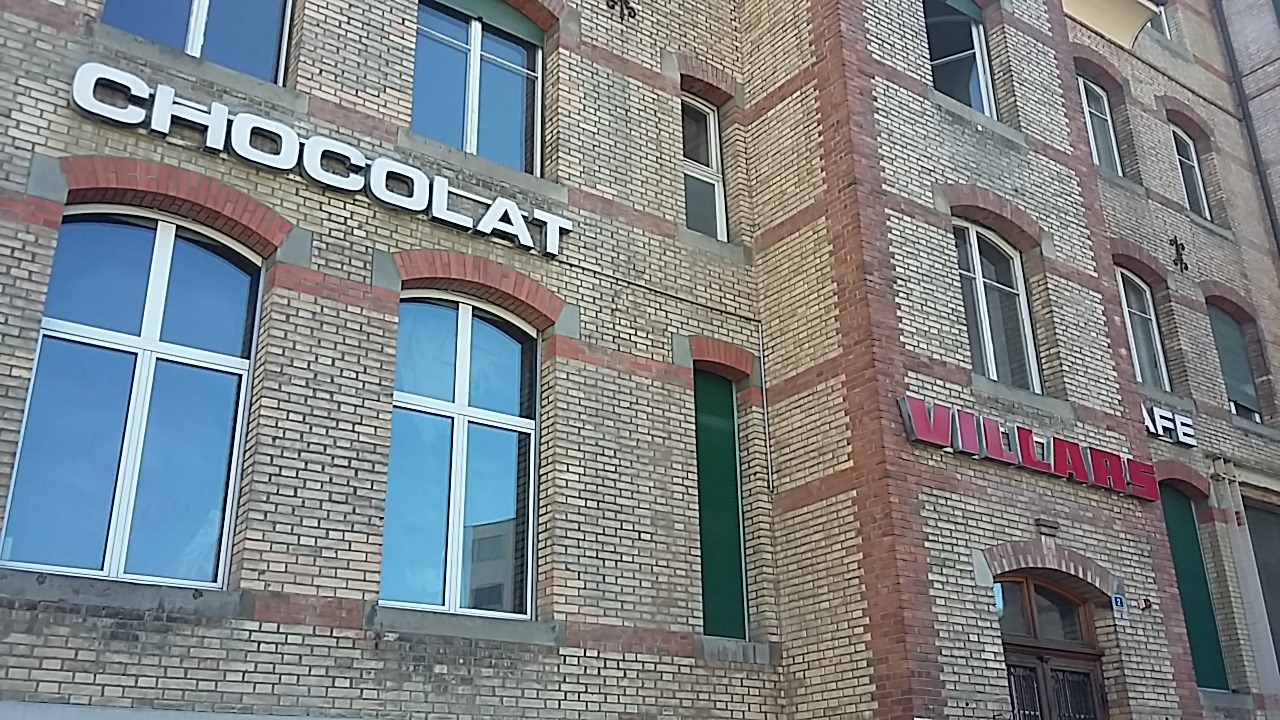
Colab Fribourg is an initiative of local entrepreneur Philippe Lang of attik.ch. It has the special attraction of being located in an atmospheric old building in the old industrial part of Fribourg. Not only that, the large, bright office space is directly above the Villars chocolate shop and café. People come from miles around to buy chocolate there.

It is a quiet working environment (with kitchen, meeting room etc.) but Philippe is currently converting a second room with a built-in phone cabin to cater for people who need to talk more and make phone calls.

I have met people from lots of different countries and professional backgrounds in Colab. Many are working on interesting projects. Some of these – like distributing solar panels in Africa, or coaching small businesses – are easy to understand. Others are at the innovative (and more obscure) end of new technology. I hate the word synergies but it is possible I could link up with some of these fellow Colab workers in future.

Apart from pooling resources, the advantage of self-employed people sharing an office space is that you can have as much or as little contact with each other as desired. In that sense, it is different to a regular working space where it’s more difficult to have a quiet day not talking much to colleagues.

In other news, I am getting very good feedback about The Naked Swiss, most recently this five-star review from nudge-book.com, in which the reviewer says she enjoyed the book so much she read it in one sitting. Check out this quote:

“Clare O’Dea’s writing is informative without being too dry, and her clear, well-structured style means that this is a fascinating read, occasionally funny, but never boring. It is an excellent social and historical portrayal of the Swiss nation.”

Last week I went to Basel to the home of Bergli Books’ parent company Schwabe Publishing. A good crowd turned out in Schwabe’s book shop Das Narrenschiff for an author talk and book signing. We ended up having a long question and answer session afterwards where I heard from people of several different nationalities. I’m really glad the book is also appealing to readers outside the English-speaking community. Fellow Irish author Padraig Rooney came along to the Narrenschiff event. I am currently reading his book The Gilded Chalet, a highly enjoyable crash course in literary Switzerland.

This week saw an interview about The Naked Swiss by Zurich-based freelance journalist Jennifer Lisle, published in newinzurich.com. It’s great to be getting the word out about the book. I hope I can come to Zurich soon for an event – just have to find the right co-host and venue.

Finally, the big news is that Bergli has reached an agreement with another Swiss publisher Helvetiq to bring out the French and German translations of the book next year. I’m delighted the book will reach a much wider audience in Switzerland. If you find any mistakes, now is the time to tell me!

A guide to the six stages of the immigrant experience

geneva-plane

Integration is a long road, with many twists and turns along the way. There’s always going to be some conflict in the mind of an immigrant; after all, this is a complex relationship with a lot of psychological wheels turning behind the scenes. For some people, a new country is like a step parent. They will never forgive the newcomer simply for being who they are. Bearing in mind that it’s not the same for everyone, here is my guide to the six stages of the immigrant experience, based on my 13 years in Switzerland.

Stage 1, Honeymoon: This will only happen if you have come to live the country under positive circumstances. If not, skip to Stage 2. This new start may be daunting but it is fundamentally an adventure for you. You waltz through the early weeks and possibly months (days if you are unlucky) in a state of hyper observation, mostly noticing the charming things and the positive differences – the street markets, the architecture, the trams, the cleanliness, the landscape. You will be discovering new tastes, sights and sounds, picking up phrases of the local language. It’s the perfect time to sign up for a language course. Enthusiasm is the order of the day. You’ve had no time to miss people at home. You may in fact be busy with a steady stream of visitors, keen to share the excitement of the new start.

Stage 2, The First Wobble: It might be a harsh word from someone in officialdom, a work or parent-teacher meeting where you felt out of your depth, or a bolt of loneliness brought on by an important event missed back home. Something will set you off on the first round of doubts, and the gloss of everything being new and different will suddenly disappear. Constantly learning and adapting is tiring. Is it possible this has all been a terrible mistake? The first wobble may be followed at any time by other wobbles in the future, varying in severity from a cold to a serious dose of flu. I hope you’ve got a good immune system. From here you will transition somewhat unhappily into …

Stage 3, Reality Bites: Just like that, the novelty wears off, you are faced with the realisation that life still has to be lived, in all its tedious repetition, with or without picturesque walks, cobbled streets and Christmas markets. There are days of work to get through, bills to be paid and housework to be done. From a promising start, you hit your first wall with the language learning. Fluency seems more unattainable than ever.

Stage 4, Frustration: All those things you found charming at the beginning start to get on your nerves. You adopt a hypercritical frame of mind: Why are they speaking like that, behaving like that? Oh, how much better [insert the thing(s) you miss] is back home. Linguistically, culturally and socially, you are still (still!) an outsider, and that’s discomfiting and humbling. The effort required to lose your outsider status is so great that it seems easier just to take refuge in negative judgments. Warning! Some people get stuck permanently in this phase. Don’t let this happen to you.

Stage 5, Transition: This is the point where everyone who might come to visit has already been at least once. Most will not come again. You have missed weddings, births and funerals back home. By not being there to share the fun and the tears, you have grown apart from people in your home country. There’s an unavoidable sadness in that, which can overshadow the new life you are trying to build. But it doesn’t have to. Because something unexpected is happening at the same time. Opportunities arise to support other people, or receive support, in the place where you live. New friendships are being tested and getting stronger, as you accompany people through marriage break-ups, illnesses and the challenges of child-rearing. Around this time, the language starts to flow. It might never be perfect but you’re making a decent go of it. Many logistical things that took effort before are now second nature. What’s that you notice around you? Could it be a community? Some days you feel a strong sense of belonging. You start to create your own traditions, favourite places to go and things to do. You are close, very close.

Stage 6, Comfort Zone: How do you know when you’ve reached this stage? You might notice, arriving back from travelling somewhere, that you feel the relief that only comes with returning home. Or, you might throw a party and realise the guest list would probably be shorter in your home country. You will be part of a community – people you can rely on and who can rely on you, from the small things to the major emergencies. Whether it’s through culture, sport, work or chance, you will have found like-minded people who share your values or passions. You will feel a bond with your familiar environment. The streets, the fields, the mountains, the well-worn paths will have become yours through use and experiences lived there. You catch yourself thinking or speaking like the locals. You dare to use the word home again.

We can’t get far in life without community. My experience, once I got over my first few wobbles, was that new communities were waiting with open arms to take me in. Whether it was the other students in German class, my in-laws, my work colleagues or the people in my neighbourhood. Many years later, I am still finding new communities, such as the small writers’ group I joined in Bern this summer.

This is why my book, which aims above all things to be fair, is written from a position of affection for the Swiss. My adopted country is not perfect, and I have highlighted some of those problems in The Naked Swiss. But there is so much here that is positive and admirable.

The Naked Swiss: A Nation Behind 10 Myths was a challenge to write, but a good challenge. My hope is that it will spark a conversation and some reflection among the Swiss and foreign residents here. If we can bring out the best in each other, the future is bright.

What stage of the immigrant experience have you reached? Have I left anything out? And, what I am most curious to know, what comes after the comfort zone? I’d love to know what’s around the corner!
Countdown to the launch of The Naked Swiss

exat-expo

In a few short days, The Naked Swiss: A Nation Behind 10 Myths will be on the shelves in Swiss bookshops. The official Swiss launch date is October 11th but the book is already available to buy on Amazon and on the Bergli Books website.

This is the point where the book will no longer belong to me. It will be read and handled by (hopefully) many people. Drops of tea and coffee will be splashed on it, and it will be carried around from place to place, in backpacks and handbags.  Most importantly, it will (again hopefully) entertain and inform readers and give them something to think, or argue, about.

So, what am I doing in these final days before the book comes out? One thing keeping me busy is writing articles about the book, like this one published today on the online Swiss magazine, newlyswissed.com – 10 things people (wrongly) assume about the Swiss.

I am also helping to organise the launch party in Bern and one in Dublin, and figuring out what I will say (and wear!) on the night. Last Sunday I spent an enjoyable day at the Expat Expo in Geneva and had a chance to meet readers and tell people about the book.

The interesting part for me is coming up. Finally, I will get to see how people react to The Naked Swiss, and all the hours of thinking, researching, writing, rewriting and more rewriting will be transformed into something meaningful.

If you are one of the early readers of the book, it would be incredibly helpful if you could rate or review it on Amazon or Goodreads to get the ball rolling.

I’ll leave you with a quote from Dostoyevsky, an excerpt from a letter he wrote to a good friend in 1868 while living near Geneva. There is an amazing online archive of Dostoyevsky’s correspondence which is worth browsing through if you like that kind of thing. I include this quote in The Naked Swiss because I think it is amusing and because I’ve heard people say similar things almost 150 years later. I myself do not agree with the Russian genius.

Oh if only you knew, what a stupid, dull, insignificant, savage people they are! It is not enough to travel through as a tourist. No, try to live there for some time! But I cannot describe to you even briefly my impressions: I have accumulated too many. Bourgeois life in this vile republic has reached the ne plus ultra.


Appenzell – the final frontier

Appenzell – the final frontier

If you want to find the real Swiss, I was told, there is a place near the corner where Switzerland, Austria and Germany meet, where the old ways have been preserved. That place is two half-cantons – Appenzell Ausserrhoden and Appenzell Innerrhoden – a rural pocket inhabited by famously traditional folk with quaint customs.

As these were the only (half-) cantons I had never visited, and I wanted to leave no stone unturned, I decided to make the trip this month. The timing turned out to be good, as this weekend the annual farmers market was being held in the village of Urnäsch, the highlight being the ceremonial descent of the herds from the summer pastures in the mountains (Alpabzug).

There is no better place or day to get immersed in the traditional rural Swiss life of Appenzellerland (the tourist name for both cantons combined).

Politically, the cantons are known for two things. Appenzell Innerrhoden (the Protestant one) was infamously the last Swiss canton to grant women the vote on a cantonal level, holding out until 1991 when forced to do so by the Federal Court. Today, the same half-canton is one of only two Swiss cantons where the annual voting assembly (Landesgemeinde) of the canton is held in the open air, with votes taken by a show of hands.

But this was not a day for politics. This was a day to celebrate the end of another summer season of hard work. Listen out for the men singing in this clip. The strange falsetto harmony is quite unearthly. 

To complete the experience, I bought Alp cheese from the Brunner family at their stand. Made by the Mr Brunner from this summer’s milk in the chalet where he spent the past few months looking after his cows.

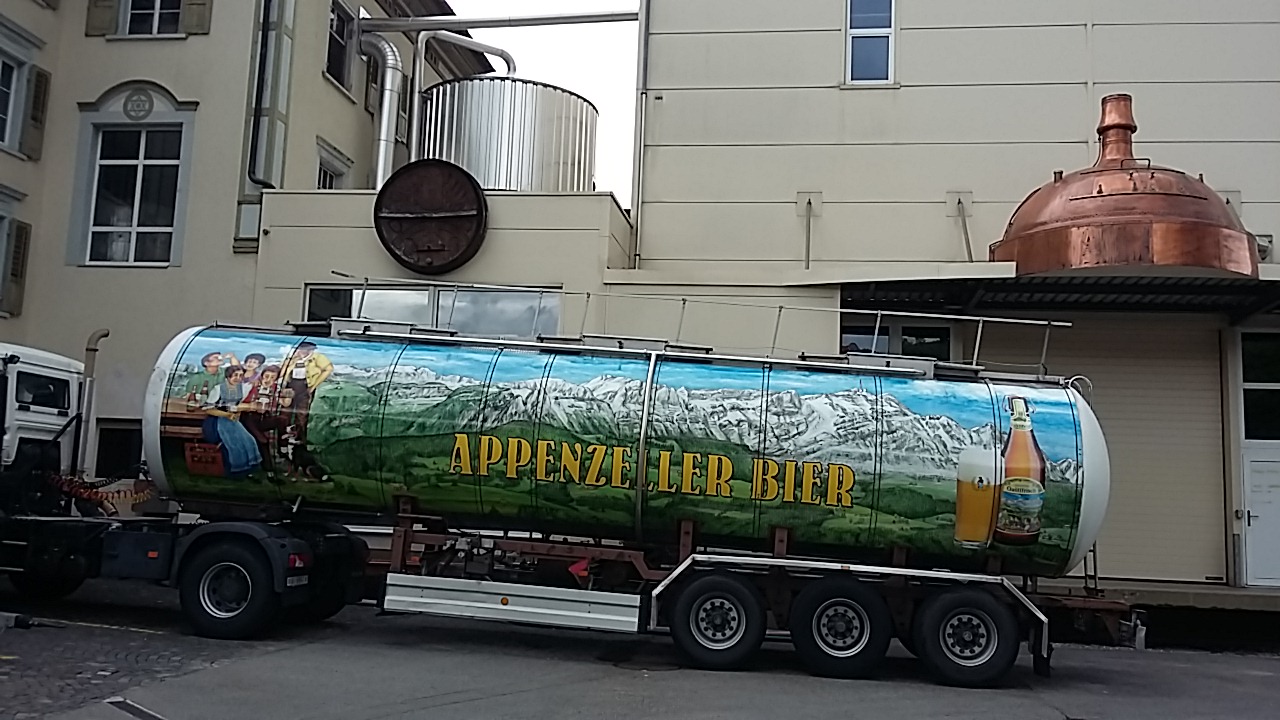
Next stop was Appenzell, the capital of Appenzell Innerrhoden and the home of Appenzeller beer.

I had a little wander around and an expensive coffee. Next time I’ll come back for longer and do some hiking, another thing for which Appenzellerland is famous. 

Book heaven on Lake Geneva

Book heaven on Lake Geneva

Walking into the crowded authors’ tent at Le livre sur les quais (The book on the quays) literary festival in Morges on Saturday, my first thought was that I had entered a cattle market of books and authors. The festival now boasts a roll call of more than 300 authors. Could this be too much of a good thing?

Le livre sur les quais is only in its seventh year but has achieved significant national and international recognition, attracting big names and 40,000 visitors. Although mainly a festival of French-language literature, the festival has an excellent English programme and star-studded guest list (Paula Hawkins, The Girl on the Train).

Morges is a pretty little town on Lake Geneva, a short commute from the city of Lausanne. On the five-minute walk down from the train station to the lake shore, you glimpse large courtyards to the left and right, surrounded by low-rise apartment blocks. This is urban living at its best. There is an attractive old centre, and when you cross the main street, Grande rue, any of the side streets lead down to the lake shore and stunning views of the water and the French Alps to the south.  

20160903_144802

The authors’ tent is right on the water’s edge, an impossibly long marquee with the sides left open on the lake side in the hopes of a breeze. Continuous lines of tables run along the ‘walls’ on each side of the tent, facing several inner rectangular ‘islands’ of tables. It was a hot day on Saturday and the temperature in the tent was sweltering.

The authors sit behind these tables, each with a pile of books on display. The presence of so many authors in one place, selling their books (not that they handle money, you take the books from the table and pay at a till) creates a feeling that they are vying for attention.

Maybe I was projecting, the way I do with cows too, but some of the authors looked a little forlorn and overwhelmed. According to the programme there were 348 guests attending the festival, authors, poets, translators.

20160903_143714

For the visitors, the wonderful thing about the set-up was that you could walk up to an author you admire and strike up a conversation. This accessibility is one of the great attractions of the festival. I went straight to the island of English-speaking authors island. The authors come and go participating or attending various talks in venues around the town or on pleasure boats!

I was delighted to meet Alison Anderson, author of The Summer Guest, which I had been reading on the train journey to Morges (big disadvantage of ebooks – you can’t get them signed!). The novel is a fictionalised account of a real summer spent by Chekhov and his family in an idyllic country setting in Sumy in Eastern Ukraine. The story is told partly through the diary of a blind woman who became close to the great writer, made poignant by the knowledge that she is dying, and partly from the perspective of the present day translator of the diary.  Anderson gives a fascinating account of her research trip to Sumy here.

It was a day of discoveries and striking up connections with people. One talk I attended was a panel discussion about historical fiction with Rosie Thomas, Petina Gappah (amazing speaker from Zimbabwe), John Boyne and Anne Korkeakivi. John Boyne, best known as the author of Boy in the Striped Pyjamas, talked about the nit-pickers who come to him with minor factual corrections. He also confessed he checked one-star Amazon reviews to see what people did not like about his books.

“There are no mistakes in fiction. Once you put a made-up character into a historical setting, it’s corrupted. The story you’re telling comes first.” I am really looking forward to reading my new copy of Boyne’s latest novel, A History of Loneliness, his first novel with an Irish setting.

My visit to Le Livre sur les quais was a very enriching day for me, but one where I was glad to be the observer and not the observed. But soon it will be my turn to sit at a table and talk about my book. After a career of asking questions, I’m not sure how easy it will be to have the roles reversed. This month I will be giving my first interviews about my book, and two talks at the Geneva Expo on October 2 (more info here).  

One more thing for any of you who are on Goodreads. The Naked Swiss  is now listed there and you can mark it as ‘want to read’ if you like, and/or follow my author page.

Have you attended any literary festivals this year? What do you think is the best formula? I know a huge amount of work goes into these events and I think they are fantastic for readers. I hope authors feel the same. Not only did I come away with these great books, but I was able to meet or listen to four out of the five authors. 

20160904_103643 (1)