Swiss-based authors: Jason Donald

Jason Donald Clare pic

There is a small but thriving English-language literary scene in Switzerland – workshops, retreats, writers’ groups and even an international festival. At the heart of that scene is the community of published and aspiring writers who live in Switzerland.

Recently, I had the wonderful opportunity to interview the leading lights of that community, four acclaimed authors with eleven books between them. Over the next few weeks, swissinfo.ch will publish these profiles as a series, beginning today with Scottish-born Jason Donald, author of the “beautifully observed” novel Dalila.

The list of places Jason has lived hints at some intriguing plot twists in the story of his life: Pretoria under apartheid, the deprived Glaswegian district of Govan, and, most recently, the luxury Swiss resort of Gstaad.

I made the trek (three trains and a bus journey) to the Bernese Oberland to meet the self-described nomad and economic migrant. You can read the full story here.

Death of a great Swiss leader and suffragette

DSCN1511

I was very saddened to learn of the death of Marthe Gosteli, one of the leading campaigners for women’s right to vote in Switzerland, who died on April 7 at the age of 99. I had the honour of interviewing Dr. Gosteli in her home in December 2015. We sat in the front room of the pretty old country house in Worblaufen near Bern, surrounded by evidence of her life’s work – the archive of the Swiss women’s rights movement. The other evidence of her life’s work is that I as a woman had the right to vote when I was granted Swiss citizenship, also in 2015.

Dr. Gosteli impressed me with her sharp intellect and vigour, despite the frailty imposed by her advanced years. There was no doubt she was still a formidable woman. But she was also warm and welcoming.

In her capacity as president of the national umbrella body for women’s associations, Dr. Gosteli negotiated with the government in the lead-up to the 1971 vote. I think of her not only as a campaigner but as a leader. She helped lead the Swiss out of the dead-end in which they were trapped. Massive societal change was needed for women and men to recognise the full potential of women. There was even a counter movement of women’s organisations objecting to the political goals of Dr. Gosteli and her colleagues, and actively fighting against them.

We talk about positive energy a lot these days. Nothing can match the positive energy of Marthe Gosteli and her collaborators. The only time she seemed wistful in our interview was when she mentioned how she missed the camaraderie and friendships of those years. We can only imagine the tireless dedication and team spirit of these women, losing many battles before they won the war.

The real challenge for Swiss suffragettes was winning the argument with male voters who held the real power in the direct democracy system.  Swiss women would not get the vote until Swiss men in all cantons used their electoral power to grant it. Gosteli and her colleagues were fighting a battle on dozens of fronts: “Many people don’t understand why it took so long. We had to win on three levels – communal, cantonal and federal. Full political collaboration was only possible when we had the right to vote on all three.”

Marthe Gosteli worked for the Swiss Army press and radio division during the Second World War and later for the American Embassy information service, before devoting herself fully to the women’s movement from the 1960s. The only complaint Dr. Gosteli had, she said, was that the achievement of female suffrage had lost recognition in Switzerland.  “Huge work was done by many brilliant women in our country and no-one knows about it.”

May she rest in peace. Marthe Gosteli (22 December 1917 – 7 April 2017)

A guide to writing your first nonfiction book

IMG-20161112-WA0000

Since my first book, The Naked Swiss: A Nation Behind 10 Myths, was published last October, I’ve met several people who’ve mentioned their wish to write a nonfiction book. These tend to be people who already write as part of their work. They have strong ideas and expertise, but they feel uncertain about making the leap to a book.

Like all challenges, this one can be broken down. The first thing to say is that you don’t need anyone’s permission to write. You could start this weekend. No-one will know, and no-one will stop you.

As an unpublished writer, the first stage of writing is purely between you and the page. It is a process of self-expression. When it comes to the next stage of writing – entering the writing business – things get more complicated. But that should not prevent you from attempting stage one.

Test the idea

It is likely you will have carried the idea for your book around in your head for a while. This is a good thing. It means the idea is incubating, and should hatch at some point. But if you don’t test it, you might never find out if the concept is strong enough to stand up.

In terms of subject matter, the sky is the limit. The important thing is that this is a subject you feel passionate about. You have something to communicate.

The test is to answer this question: What is the book about? Write it down in one line. Here are some examples I made up:

  • A week-by-week guide to cultivating a successful vegetable patch, with blank pages for readers to track their progress.
  • A self-help book for people who want to convert to a vegetarian diet, offering a mix of psychology, politics and recipes.
  • A compilation of ten mini-biographies of leading women scientists – aimed at young girls.
  • This book tells the true story of the Swiss children sent to work as chimney sweeps in Italy in the 20th century.

Get organised

When the concept is clear in your mind, you can expand it to a one-page pitch. If yours is a long-held idea, chances are you will have already done some research, if not in a targeted way. You need to organise that material. How much do you have? Perhaps you already have your own written content that could be fed into the book, such as articles, blogposts, diary entries or essays. What fresh research do you need to do? Come up with a system to collate your material – folders, notebooks, cards, whatever works for you.

This is the point where the structure becomes important. You need to put some thought into how your content can be arranged. In some cases, for example the scientist biographies mentioned above, the chapter divisions will be obvious. In other cases, you will have to carefully work out how to present your ideas or story. Have a look at the content pages of the nonfiction books you like. Reading books similar to one you intend to write is part of the research process, and an indication of your passion.

Every book is written one chapter at a time. When you are ready, sit down and try to write a chapter. It is only by writing a sample chapter that you will bring forth the style of the book. Expect to have to work through many drafts.

If you are planning to self-publish, you carry on from here. If not, this is the moment to pause and research submitting targets.

Submitting

Unlike fiction, where authors approach an agent or publisher with a polished, completed manuscript, nonfiction is usually sold on proposal. Most publishers and agents ask for one sample chapter, and a cover letter explaining the concept, structure and target audience. They want to hear why you are right person to write the book, what platform you have, and they may ask how you would help promote the book. Submission requirements vary, so do make sure to follow them faithfully to show your professionalism. Expect each submission to take as much time as a job application.

As a first-time writer, you can expect go through this process umpteen times without success. You will receive either no response or standard rejections, and be happy if you get a few words of encouragement from one in twenty submissions. Here is a post I wrote about dealing with rejection as an author.

The reality of the market is that the world is not waiting for anyone’s book. There is an oversupply of authors eager to be published. It comes down to finding the right match. If you present the right kind of book to the right person at the right time, you may be lucky.

Make time

If you do get to the point of ploughing ahead with the book, you will need to allocate time to write regularly. Even if you have plenty of free time, it makes sense to set yourself writing hours, as this is a project that requires discipline. If you don’t have much free time, you will need to decide what can be sacrificed from your weekly activities – television, social media, family time, sport. Something has to give.

Ideally, you should have a writing partner or editor to review your work as you go along, as a form of quality control. But whatever happens, no book should be sent out into the world without some form of editing from another party or parties, as well as proofreading.

I hope you found this advice useful. Depending on the reaction to this post, I may make it the first in a series of how-to articles. Don’t forget to share the link with others through the social media buttons below, and feel free to comment if you have any questions.

Where to get your Swiss news in English


Because so much big news happens in Switzerland, from peace talks to banking scandals, there is an abundance of Swiss news coverage in international English-speaking media. But if you live here, you will probably be interested in finding reliable sources of news and information relevant to residents.

If you look at home-produced news in English, the pool is relatively small. Here is a guide to some of the main news outlets and what they offer.

The most authoritative and extensive source of Swiss news in English (disclaimer: I worked there from 2005 to 2015) is swissinfo.ch. Bern-based swissinfo.ch, which operated in a previous incarnation as Swiss Radio International, is a unit of the state-funded Swiss broadcasting corporation SRG SSR idée suisse. It provides daily news coverage in ten languages, along with in-depth articles, video news and features, podcasts and galleries.

Swissinfo employs some 40 journalists, Swiss and foreign. Like all news organisations, it is evolving to be more fast-paced and social media-friendly, but it still has a relatively-traditional solid structure with an editor-in-chief, editorial department heads, picture editors etc., all of whom are subject to high professional standards.

Another website providing Swiss news is The Local. This is an English-language digital news publisher offering daily news, business and features, that originated in Sweden in 2004. It now has outlets in nine European countries. Run by a small team, with additional material from freelancers, the editorial style is light and accessible but the information is well-researched by journalists who have a good grasp of Swiss current affairs.

For those who need to keep up with business and financial news, finews.com conveniently translates the daily news written by its staff journalists in Zurich.

World Radio Switzerland (WRS), broadcasting from Geneva, was offloaded by the Swiss Broadcasting Corporation in 2013 and is now in private ownership. The station features a diverse mix of programming, including talk radio, magazine, business, culture and music shows. It runs news bulletins and publishes short news stories on the website. There are various ways to listen, detailed here.

WRS and The Local have to be commercially viable, so they also carry advertising and have separate sections featuring property listings and other earning links. The same applies to Le News, which covers national news with a regional focus, catering for people in the Lake Geneva region. Le News publishes a fortnightly newspaper with a large entertainment and events section, which is distributed free in the region.

In the entertainment and lifestyle category, the most prolific site is Newlyswissed.com, which covers culture, design, events and tourism. Newlyswissed regularly features listicles and has a light-hearted and humorous touch, well displayed by the current feature suggesting alternative activities for Valentine’s Day for singles in Zurich. A lot of the content is Zurich-oriented.

Other popular websites aimed at the Zurich market, with a strong what’s-on focus, include New in Zurich, which features many different writers, and Girlfriend Guide to Zurich, which bills itself as the ultimate directory to living in Zurich.

Basel has Basel in English, a one-stop shop of information for English-speaking Basel residents, and The English Show on Radio X from 18.30 to 20.00. And Zug has The Zug Post, a media partner of local newspaper the Zuger Zeitung. Because of its link to a local news player, this site provides more general local news, something it would be good to see more of.

And finally, Hello Switzerland is a comprehensive guide to relocating and living in Switzerland, with a free quarterly magazine in English. All of the above are also active on Facebook.

It’s not easy to make an exhaustive list but I hope I haven’t left out an important news or information provider. Please let me know if there’s a website that should be added to the roll call. And of course, there is an enormous range of news outlets in the local languages which are essential reading if you want to branch outside the English-speaking community. Maybe I’ll do a follow-up post with a guide to Swiss newspapers. A much bigger subject to tackle!

Meanwhile, if you are interested in putting Swiss news in context, check out my nonfiction book, The Naked Swiss: A Nation Behind 10 Myths, published by Bergli Books in October 2016.

Finding inspiration for 2017

20170105_142345

I have decided this will be the year of doing the good things. Switzerland is home to many world class galleries and museums which I almost never visit. Good intentions are not the problem; I have no shortage of good intentions. Time is not really the problem; these exhibitions run for months. But nine times out of ten I can’t seem to get myself to that location for a day trip. What is stopping me? It could be because I feel I should be doing ‘useful’ things all the time, so it’s hard to sacrifice a day for inspiration.

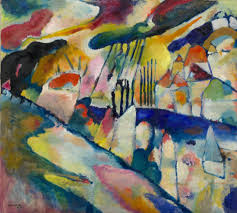
Until now. A few months ago, I picked up a brochure at the train station for an exhibition in the Beyeler Foundation in Basel, two hours away. For the first time in 30 years, Switzerland was hosting a large-scale exhibition of one of the most fascinating chapters of modern art – Der Blaue Reiter artistic movement, which kicked off in 1911. I didn’t know anything about this movement but I do now, and it was a wonderful discovery. Beautiful works by Kandinksy, Marc and Macke, among others, are now familiar to me, as are the stories of the artists. (There’s a lovely slideshow and info in German here).

landscape-wiki
Landscape with rain, 1913, Wassily Kandinsky

The exhibition runs until January 22 and I got there in the first week of the year. So, I’m hoping this will be the beginning of seeing through some of the other wishes I have for 2017. Not all my dreams and plans for the next 12 months are writing related but as this is a writing blog, I’ll stick to those:

First, I hope to get my new children’s novel shipshape and start submitting it as soon as possible, hopefully in time for the Meet the Agent event I am attending in Geneva next month, organised by the Geneva Writers’ Group.

I have an idea for a novel set in Switzerland, and I’d like to start getting this story down on paper this year. This will be a departure as I have yet to write any fiction set in Switzerland. After 13 years living here, it’s probably time.

Along with a partner, I plan to launch an online writing-related business. The preparation work for that has already started and I’m hoping it will be a way to combine my love of writing with a new source of income.

My nonfiction book about Switzerland, The Naked Swiss: A Nation Behind 10 Myths, will be coming out in French and German in the autumn. I’m expecting to do more promotion work this year and to create more opportunities to give author talks. Next talk is coming up in Basel on January 26th in Das Narrenschiff bookstore.

As always, I hope to write more and write better this year. That will involve attending some talks and workshops if possible, so I’ll be keeping an eye out for events. And if I can pull it off, I would love to have a short writing break in Ireland.

To go back to the Blaue Reiter artists, the story ended tragically after the outbreak of the First World War smashed their innocence and optimism. August Macke was killed in the second month of the war in France, and Franz Marc was killed in the Battle of Verdun in 1916. As an enemy alien, Russian-born Wassily Kandinsky had to leave Germany.

A month after Macke’s death, Marc wrote to Kandsinky, “I have the sad feeling that this war is flowing between us like a great flood that separates us; each of us can hardly see the other on the far shore.”

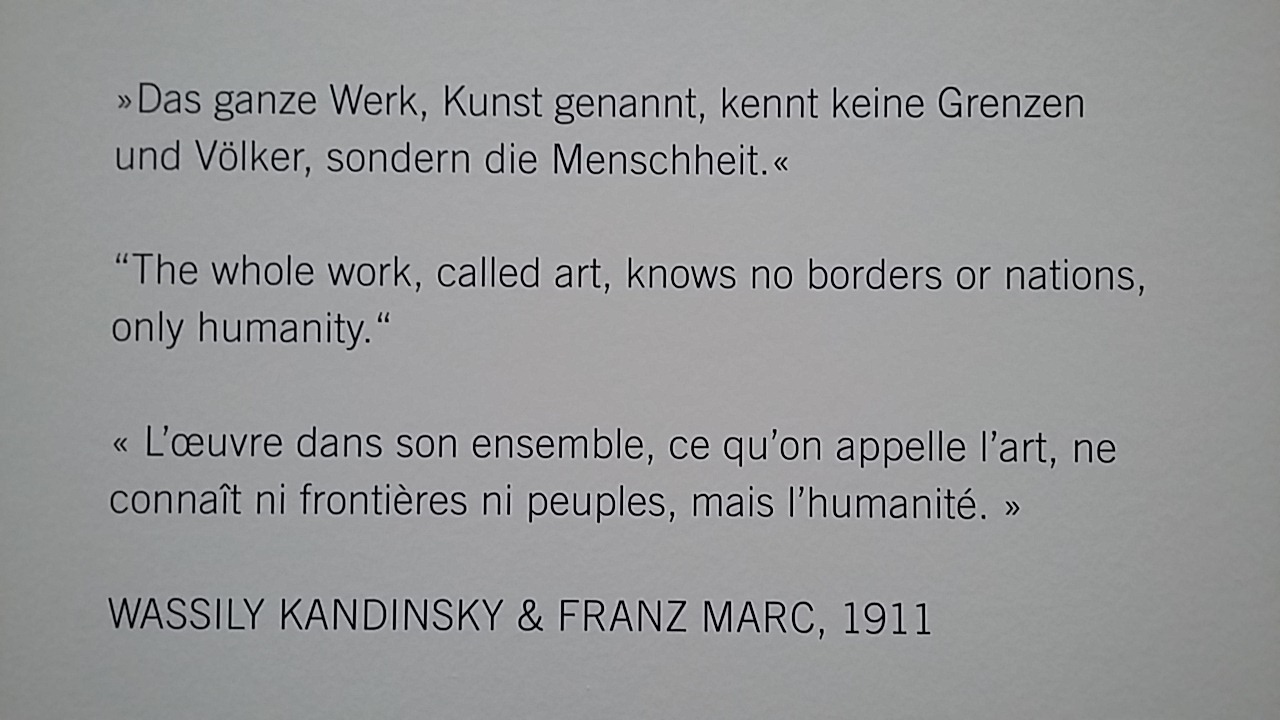
I don’t want to end on such a sad note. We hardly need reminding of the devastating cost of war. Here is another quote by Kandinsky and Marc about art, an expression of life and love that remains one of the great antidotes to war and death.

20170105_144947

Happy New Year!

A Christmas warning

christmas-carol

I am telling you this in good time. Producing a big Christmas feast for a group of people is a lot of work, and if all that work is left to one person, something is not right. Anne Enright’s latest book, The Green Road, tells the story of four siblings and their widowed mother in the lead up to a long overdue Christmas reunion.

Because the mother has opted out of the difficult parts of life, and three of the siblings live away from their native County Clare, and also happen to be completely self-absorbed, the task of preparing the Christmas dinner falls to the most reliable sister with the least glamorous life, Constance. No need to tell you that turns out to be a thankless task. Here she is doing the dreaded Christmas grocery shopping:

The next morning, she went early into Ennis. It was 10 a.m. on Christmas Eve and the supermarket was like the Apocalypse, people grabbing without looking, and things fallen in the aisles. But there was no good time to do this, you just had to get through it. Constance pushed her trolley to the vegetable section: celery, carrots, parsnips for Dessie, who liked them. Sausage and sage for the stuffing, an experimental bag of chestnuts, vacuum packed. Constance bought a case of Prosecco on special offer to wrap and leave on various doorsteps and threw in eight frozen pizzas in case the kids rolled up with friends. Frozen berries. Different ice cream. She got wine, sherry, whiskey, fresh nuts, salted nuts, crisps, bags and bags of apples, two mangoes, a melon, dark cherries for the fruit salad, root ginger, fresh mint, a wooden crate of satsumas, the fruit cold and promising sweet, each one with its own sprig of green, dark leaves. She got wrapping paper, red paper napkins, Sellotape, and – more out of habit, now the children were grown – packs and packs of batteries, triple A, double A, a few Cs. She took five squat candles in cream-coloured beeswax to fill the cracked hearth in the good room at Ardeevin, when no fire was lit this ten years past, and two long rolls of simple red baubles to fill the gaps on her mother’s tree. She went back for more sausages because she had forgotten about breakfast. Tomatoes. Bacon. Eggs. She went back to the dairy section for more cheese. Back to the fruit aisle for seedless grapes. Back to the biscuit aisle for water biscuits. She searched high and low for string to keep the cloth on the pudding, stopped at the delicatessen counter for pesto, chicken liver pate, tubs of olives. She got some ready-cooked drumsticks to keep people going. At every corner, she met a neighbour, an old friend, they rolled their eyes and threw Christmas greetings, and no one thought her rude for not stopping to converse. …

Constance pays, pushes the trolley down to the carpark, unloads the shopping into the boot, and remembers Brussels sprouts. What can she do? Everyone knows Christmas is an all-or-nothing occasion.

‘Oh what the hell,’ said Constance. She slammed the boot shut and turned her sore feet back to the walkway and the horrors of the vegetable section. The over to the spices to get nutmeg, which was the way Rosaleen liked her Brussels, with unsalted butter. And it was a good thing she went back up, because she had no cranberry sauce either – unbelievably – no brandy for the brandy butter, no honey to glaze the ham. It was as though she had thrown the whole shop in the trolley and bought nothing. She had no big foil for the turkey. Constance grabbed some potato salad, coleslaw, smoked salmon, mayonnaise, more tomatoes, litre bottled of fizzy drinks for the kids, kitchen roll, cling film, extra toilet paper, extra bin bags. She didn’t even look at the bill after another 15 minutes in the queue behind some woman who had forgotten flowers – as she announced – and abandoned her groceries to get them, after which Constance did exactly the same thing, fetching two bouquets of strong pink lilies because they had no white left. She was on the way home before she remembered potatoes, thought about pulling over to the side of the road and digging some out of a field, imagined herself with her hands in the earth, scrabbling around for a few spuds.

Lifting her head to howl.

You get the picture. Don’t be Constance this Christmas. The passage is also a commentary on the gluttony and excess that gripped Ireland during the economic boom, probably still the norm for many people.

The Green Road is one of about 25 books I read this year but I’m afraid it was almost too deliberately well-crafted for me. I enjoyed many of the sections as stand-alone pieces, particularly the scenes in Africa and New York. Less so the hammed-up Irish scenes. Ultimately the odd character of the mother at the centre of it all removed all the urgency of the climax as I didn’t care enough what happened to her or her spoilt/neglected kids.

Goodreads puts together a list of the books you’ve read each year, and looking back on my titles, I can give you my favourites. Best memoir: I Know Why the Caged Bird Sings, Maya Angelou Best non-fiction: Sugar in the Blood, Andrea Stuart Best novel: It’s a tie between Transatlantic by Colum McCann, The Uninvited by Liz Jensen (seriously disturbing), Nutshell by Ian McEwan (just finished, wow) and The Summer Guest by Alison Anderson.

If you are based in Switzerland and still looking for Christmas present ideas, don’t forget my non-fiction book, The Naked Swiss: A Nation Behind 10 Myths, stocked in all bookshops with English titles.

Happy holidays!

All aboard the Swiss-bashing bandwagon

clint-eastwood

This week two Swiss newspapers reported on the problem of the “Swiss stare”. Apparently “expats” (I need a separate blog post to explain what I find wrong with this word) have been complaining online about how they dislike it when Swiss people stare at them. The fact that both papers quoted a forum discussion from 2013 gives an indication of how thin this story is.

I am used to Swiss-bashing articles appearing in the English-language media but when I see Swiss newspapers jumping on the bandwagon, I think it is unfortunate, to say the least. All it does is make everyone look bad.

Here’s the interesting part. I heard about the “Swiss stare” when I was contacted by one of the newspapers in question earlier this week, and asked for my take on the issue. I said, honestly, that I had never found it a problem. I’m a bit of a starer myself so maybe I’ve come to live in the right place. In my view, Swiss people in public behave quite like introverts. They are happier to observe others than to draw attention to themselves. That is the group dynamic rather than a reflection of individual characters.

The journalist did not use my answers because they did not fit into the thesis he was presenting. Fair enough. It’s a trivial enough subject and not a serious newspaper so that’s OK. But in the long run, these sorts of stories have a cumulative negative impact, and this is one of the reasons I was motivated to write The Naked Swiss. This quote is from chapter one:

Particularly in the English-speaking world, but also among Germans, there is a great appetite for ‘aren’t they strange’ cultural commentary stories about the Swiss. As a general rule, any piece that makes the Swiss appear ridiculous or sinister, or both, is welcome. The result is a caricature of the cat-eating, obsessively recycling, robotically-dull and silly rule-making Swiss that has been so carefully constructed over years that it may never be dismantled. It’s tough being the rich kid of Europe.

Is there any point in me pointing out that this is a multi-cultural country with a much higher proportion of foreigners than the UK or US (13% in each)? One in four people living in Switzerland are foreign-born. That proportion could well be higher on public transport. How do you even know if the person who stared at you on the train that time is Swiss?

But even if it is a real thing that Swiss people do above all others, I’m not sure why this has to be a problem. When I travel, I neither want nor expect the rest of the world to behave like Irish people. I have never been under the illusion that the Irish way is the defining way of behaviour worldwide. Maybe this is a big country / small country thing. If you don’t count Irish pubs, Ireland has never attempted to dominate the world (or indeed any other country) with its norms and culture. I wonder if it is easier to accept differences in other places if you come from a smaller, more insignificant country, or is it mainly down to the individual’s capacity to accept change and adapt?

In the introduction to my book, I quote Siri Hustvedt who said “no person leaves themselves behind in order to look at a painting”. Our individual responses to a work of art depend on who we are, our character. I think the same applies to our individual responses to a country as immigrants.

So, what can you tell me about the “Swiss stare”? Is it real or imagined? Does it make you dislike the Swiss in general? Or could it happen anywhere? I would love to hear some different perspectives on this from anyone who has experience of living in another culture.  

In praise of coworking (and other news)

20160707_172319

An early adopter is a person who starts using a new technology or product as soon as it becomes available. I am more of a chronically-late adopter, but that doesn’t stop me from being enthusiastic about the new thing when I eventually discover it for myself.

When I wrote a few months ago about how much I was enjoying my new self-employed lifestyle, the only drawback I mentioned was that it had been difficult, based at home, to keep working time fenced off from family and house duties. The other thing I didn’t mention was the isolation that goes with working solo. Social media makes up for this to some extent but it doesn’t beat having a little catch-up over coffee with real human beings.

I first heard of coworking through a video journalist colleague at swissinfo.ch who was working one day per week in a shared office space to pursue film and animation projects outside his regular four-day per week job. I thought it sounded great but I wasn’t looking for something like that at the time. Besides, I thought, that’s the kind of thing you only find in big cities.

And then one day this summer, when things were a bit hectic at home, I did an impulsive google search for ‘coworking Fribourg,’ and immediately struck gold with Colab Fribourg. It turned out that there was an ideal co-working space just five minutes’ away from where I live.

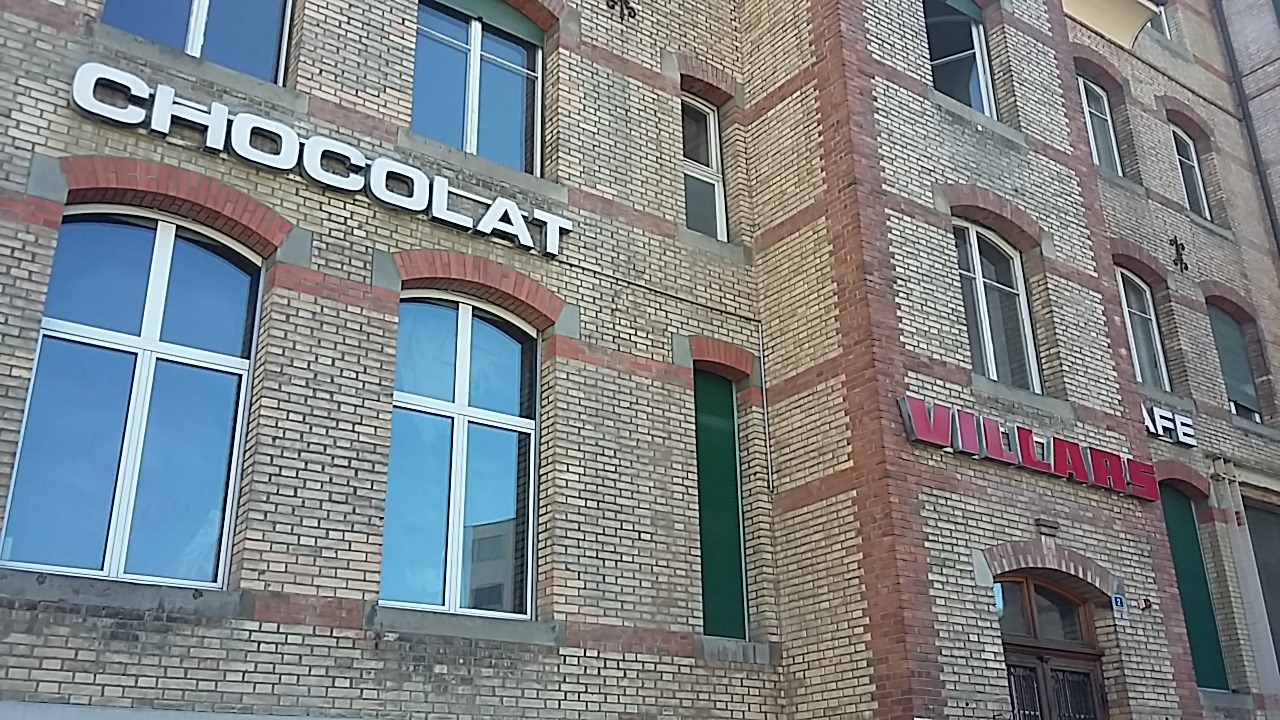
Colab Fribourg is an initiative of local entrepreneur Philippe Lang of attik.ch. It has the special attraction of being located in an atmospheric old building in the old industrial part of Fribourg. Not only that, the large, bright office space is directly above the Villars chocolate shop and café. People come from miles around to buy chocolate there.

It is a quiet working environment (with kitchen, meeting room etc.) but Philippe is currently converting a second room with a built-in phone cabin to cater for people who need to talk more and make phone calls.

I have met people from lots of different countries and professional backgrounds in Colab. Many are working on interesting projects. Some of these – like distributing solar panels in Africa, or coaching small businesses – are easy to understand. Others are at the innovative (and more obscure) end of new technology. I hate the word synergies but it is possible I could link up with some of these fellow Colab workers in future.

Apart from pooling resources, the advantage of self-employed people sharing an office space is that you can have as much or as little contact with each other as desired. In that sense, it is different to a regular working space where it’s more difficult to have a quiet day not talking much to colleagues.

In other news, I am getting very good feedback about The Naked Swiss, most recently this five-star review from nudge-book.com, in which the reviewer says she enjoyed the book so much she read it in one sitting. Check out this quote:

“Clare O’Dea’s writing is informative without being too dry, and her clear, well-structured style means that this is a fascinating read, occasionally funny, but never boring. It is an excellent social and historical portrayal of the Swiss nation.”

Last week I went to Basel to the home of Bergli Books’ parent company Schwabe Publishing. A good crowd turned out in Schwabe’s book shop Das Narrenschiff for an author talk and book signing. We ended up having a long question and answer session afterwards where I heard from people of several different nationalities. I’m really glad the book is also appealing to readers outside the English-speaking community. Fellow Irish author Padraig Rooney came along to the Narrenschiff event. I am currently reading his book The Gilded Chalet, a highly enjoyable crash course in literary Switzerland.

This week saw an interview about The Naked Swiss by Zurich-based freelance journalist Jennifer Lisle, published in newinzurich.com. It’s great to be getting the word out about the book. I hope I can come to Zurich soon for an event – just have to find the right co-host and venue.

Finally, the big news is that Bergli has reached an agreement with another Swiss publisher Helvetiq to bring out the French and German translations of the book next year. I’m delighted the book will reach a much wider audience in Switzerland. If you find any mistakes, now is the time to tell me!

A guide to the six stages of the immigrant experience

geneva-plane

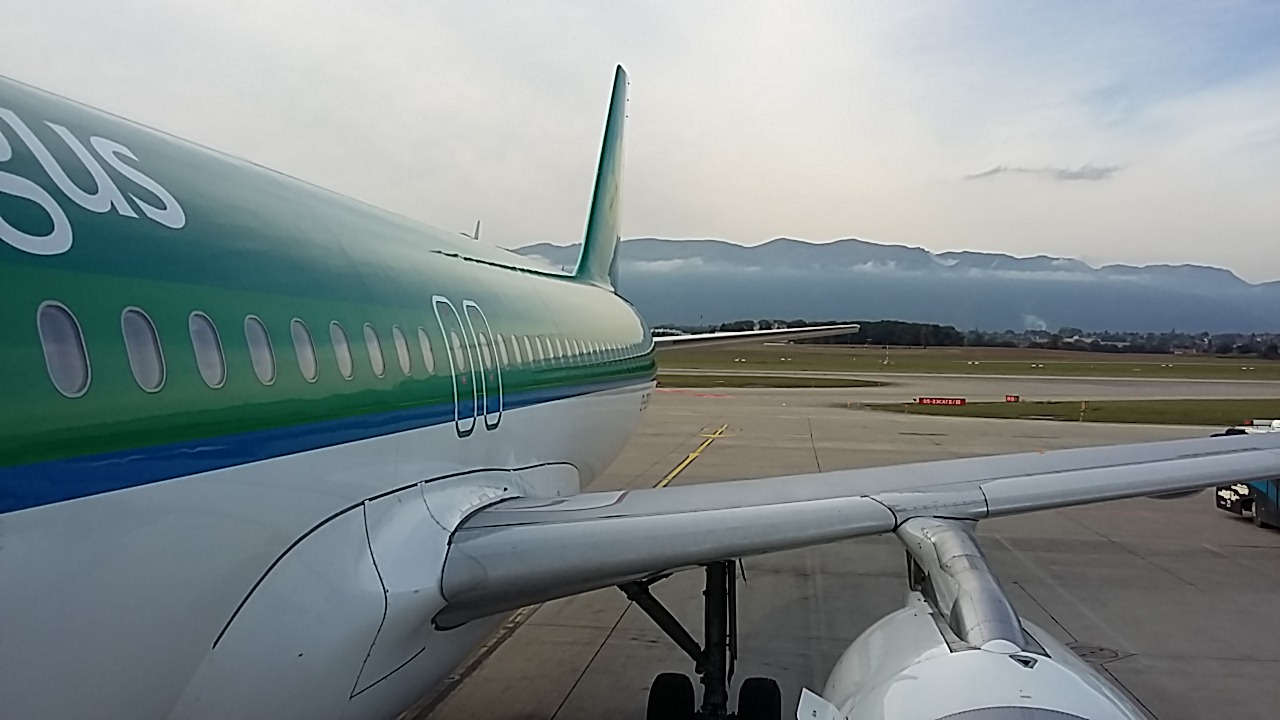
Integration is a long road, with many twists and turns along the way. There’s always going to be some conflict in the mind of an immigrant; after all, this is a complex relationship with a lot of psychological wheels turning behind the scenes. For some people, a new country is like a step parent. They will never forgive the newcomer simply for being who they are. Bearing in mind that it’s not the same for everyone, here is my guide to the six stages of the immigrant experience, based on my 13 years in Switzerland.

Stage 1, Honeymoon: This will only happen if you have come to live the country under positive circumstances. If not, skip to Stage 2. This new start may be daunting but it is fundamentally an adventure for you. You waltz through the early weeks and possibly months (days if you are unlucky) in a state of hyper observation, mostly noticing the charming things and the positive differences – the street markets, the architecture, the trams, the cleanliness, the landscape. You will be discovering new tastes, sights and sounds, picking up phrases of the local language. It’s the perfect time to sign up for a language course. Enthusiasm is the order of the day. You’ve had no time to miss people at home. You may in fact be busy with a steady stream of visitors, keen to share the excitement of the new start.

Stage 2, The First Wobble: It might be a harsh word from someone in officialdom, a work or parent-teacher meeting where you felt out of your depth, or a bolt of loneliness brought on by an important event missed back home. Something will set you off on the first round of doubts, and the gloss of everything being new and different will suddenly disappear. Constantly learning and adapting is tiring. Is it possible this has all been a terrible mistake? The first wobble may be followed at any time by other wobbles in the future, varying in severity from a cold to a serious dose of flu. I hope you’ve got a good immune system. From here you will transition somewhat unhappily into …

Stage 3, Reality Bites: Just like that, the novelty wears off, you are faced with the realisation that life still has to be lived, in all its tedious repetition, with or without picturesque walks, cobbled streets and Christmas markets. There are days of work to get through, bills to be paid and housework to be done. From a promising start, you hit your first wall with the language learning. Fluency seems more unattainable than ever.

Stage 4, Frustration: All those things you found charming at the beginning start to get on your nerves. You adopt a hypercritical frame of mind: Why are they speaking like that, behaving like that? Oh, how much better [insert the thing(s) you miss] is back home. Linguistically, culturally and socially, you are still (still!) an outsider, and that’s discomfiting and humbling. The effort required to lose your outsider status is so great that it seems easier just to take refuge in negative judgments. Warning! Some people get stuck permanently in this phase. Don’t let this happen to you.

Stage 5, Transition: This is the point where everyone who might come to visit has already been at least once. Most will not come again. You have missed weddings, births and funerals back home. By not being there to share the fun and the tears, you have grown apart from people in your home country. There’s an unavoidable sadness in that, which can overshadow the new life you are trying to build. But it doesn’t have to. Because something unexpected is happening at the same time. Opportunities arise to support other people, or receive support, in the place where you live. New friendships are being tested and getting stronger, as you accompany people through marriage break-ups, illnesses and the challenges of child-rearing. Around this time, the language starts to flow. It might never be perfect but you’re making a decent go of it. Many logistical things that took effort before are now second nature. What’s that you notice around you? Could it be a community? Some days you feel a strong sense of belonging. You start to create your own traditions, favourite places to go and things to do. You are close, very close.

Stage 6, Comfort Zone: How do you know when you’ve reached this stage? You might notice, arriving back from travelling somewhere, that you feel the relief that only comes with returning home. Or, you might throw a party and realise the guest list would probably be shorter in your home country. You will be part of a community – people you can rely on and who can rely on you, from the small things to the major emergencies. Whether it’s through culture, sport, work or chance, you will have found like-minded people who share your values or passions. You will feel a bond with your familiar environment. The streets, the fields, the mountains, the well-worn paths will have become yours through use and experiences lived there. You catch yourself thinking or speaking like the locals. You dare to use the word home again.

We can’t get far in life without community. My experience, once I got over my first few wobbles, was that new communities were waiting with open arms to take me in. Whether it was the other students in German class, my in-laws, my work colleagues or the people in my neighbourhood. Many years later, I am still finding new communities, such as the small writers’ group I joined in Bern this summer.

This is why my book, which aims above all things to be fair, is written from a position of affection for the Swiss. My adopted country is not perfect, and I have highlighted some of those problems in The Naked Swiss. But there is so much here that is positive and admirable.

The Naked Swiss: A Nation Behind 10 Myths was a challenge to write, but a good challenge. My hope is that it will spark a conversation and some reflection among the Swiss and foreign residents here. If we can bring out the best in each other, the future is bright.

What stage of the immigrant experience have you reached? Have I left anything out? And, what I am most curious to know, what comes after the comfort zone? I’d love to know what’s around the corner!

Rendezvous with a sheep farmer

canis_lupus_-_juraparc_vallorbe_vaud_switzerland_-_20090822_-_01

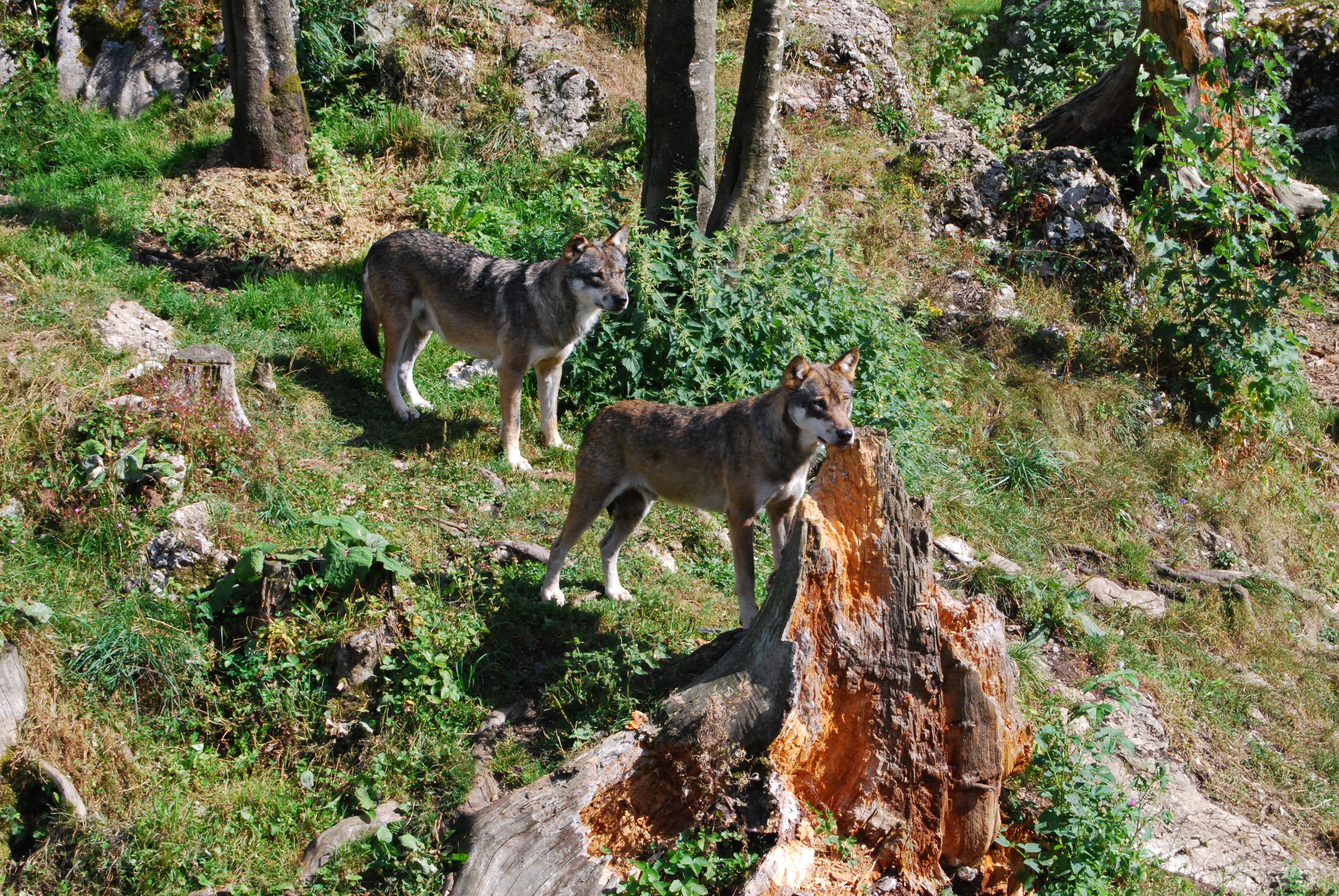
When a wolf attacks a flock of sheep they run but don’t scatter. The wolf circles the terrified flock biting anything within reach. That’s why there is so much damage. In the small canton of Glarus in central Switzerland a farmer lost ten sheep and lambs in one attack two summers ago. He made the grim discovery when he went up to check on his flock on a high mountain pasture above the town of Näfels. What made the Glarus attack special was that it was the first confirmed presence of a wolf in the canton for more than two centuries.

I had seen the story on the wires and decided to follow up on it. A few days later I had a rendezvous with the sheep farmer at 7.30a.m. I was the only guest in the B&B. The retired couple who ran the place served me a banquet for breakfast. They watched me eat with solicitous care, possibly still alarmed by my admission that I had left my children at home overnight. I explained that the children were in the care of their father but that did not seem to diminish their concern. No mother will ever feel unimportant in Switzerland.

This carefully prepared Swiss breakfast was a treat for the senses. Little ramekins of home-made jams sat next to a plate of cold cuts of meat. A loaf of fresh Zopf bread was draped with a white napkin, ready to be sliced, and the cheese board beckoned with a wealth of tastes and textures. There was a constant supply of fresh coffee and hot milk. The man of the house accepted my compliments for his special creation, carpaccio of fennel served with dill and vinaigrette. I was ready for my hike.

Before I travelled there, the only thing I knew about canton Glarus – one big valley, lots of mountains – was that it was where Switzerland’s ‘last witch’ was beheaded in 1782. I had once interviewed a local historian about the subject by telephone. Anna Goldi was a servant woman who worked for an influential family in the village of Mollis. When one of the children in her care sickened and allegedly coughed up pins, Anna was accused of witchcraft and locked up. Rumour had it she was also having sexual relations with her employer, information which would have been damaging to him if made public. Incredibly, even though the child recovered, Anna was sentenced to death by the Protestant church council, fifty years after the last similar execution for witchcraft had taken place in Germany. She was officially exonerated by the cantonal parliament in 2008 and there is now a museum in her memory.

The sheep farmer was waiting for me outside the train station. A stocky man with an Amish-style beard – Switzerland is home to the original Mennonites – he pointed to the high grey cliffs looming over the town of Näfels. Above the wall of rock I could see some patches of meadow in between the trees. That’s where we’re going, he said.  We drove a short distance outside the town and then began the hike up.

As we walked, we talked. Robert, a carpenter by trade, was a hobby farmer who brought his sheep up to graze in the Alpine meadow from May to September. The land he rented for a nominal sum from the commune of Näfels, a system of commonage that has survived since time immemorial. Most of the Alpine meadows in Glarus belong to the communes, he told me. He walked up three times a week, an hour each way, to check on his flock. I began to think I had met the quintessential Swiss man, a man who only needed a change of costume to seem right at home in the time of Anna Göldi and the last wolf in Glarus.

Robert pointed out tufts of black wool on the path. The wildlife ranger who had passed by there earlier in the week to inspect the scene of the wolf attack said that wool had been coughed up by a bird of prey after it had fed on the carcasses of the sheep.

The conversation had to stop when I ran out of breath, and we climbed steadily up the steep forest path. When we got above the tree line, a tiny mountain chalet came into view. A wizened old man was sitting outside the hut smoking a pipe, the shepherd. Aha, another character from the 18th century, I thought.

But behind the timeless traditions and rustic conditions, a modern, sophisticated, state-funded system was at work. The wolf’s DNA had already been gathered and sent off for testing and its presence would soon be recorded on the website of the monitoring group.

The old shepherd with the weather-beaten face was called Walter and he came from Valais on the other side of the country. He works with a sheepdog protection service that is mobilised within a couple of days of a wolf attack, run by Agridea, a national agriculture development agency. He had come with two sheepdogs, white-haired Italian Maremanno-Abruzzese, who did not take too kindly to my visit. Walter was there to get the dogs settled in and they were due to spend the rest of the summer on the alp, guarding the sheep.

Walter was a retired sports teacher turned sheep farmer and sheepdog breeder who had achieved his dream of living far away from and, in his case far above, the madding crowd.

The three of us sat on the bench outside the hut enjoying the morning sun and eating slices of dried sausage and cherries from Robert’s garden. Two border collies that Walter had brought along for company watched our every move, especially when the slices of sausage were involved. There was construction work going on in the valley and the low buzz of civilisation drifted up to us.

Later, Walter and I chatted about wolf and sheep matters while Robert cleared a large patch of thistles and nettles with a scythe, another subsidised task, under the protection of the mountains scheme.

I went to see the sheep to take some photographs, as close as the sheepdogs allowed me to get, and too soon, it was time to hike back down to roads and cars and houses and crowds. I was reminded of the allure of the mountains and the precious escape they provide to many Swiss people. Some argue that things are getting too crowded at high altitude too, as farmers, tourists and wildlife compete for space. I hoped the wolf would continue on her way and choose her next meal more carefully. If you’d like to read the story I wrote for swissinfo.ch about the return of the wolf, click here.

My non-fiction book about Switzerland, The Naked Swiss: A Nation Behind 10 Myths, partly draws on my years of reporting for swissinfo.ch, such as this trip to Glarus. Now available to buy through the publisher Bergli Books and on Amazon, it will be officially launched in Switzerland tomorrow. I’m really looking forward to feedback from readers, so don’t forget to rate or review on Goodreads or Amazon, drop over to my Facebook page to comment, or simply tell your friends about The Naked Swiss.

Image courtesy of Micha L. Rieser, Wikipedia Commons