Clueless in Paris, London or New York

20150729_114809

I am eighteen years old and living alone in Paris. It is my first time away from home. The cash I brought with me covered one month’s rent but only a fortnight of living expenses. Pay day is two weeks away and my first credit card is eight years in the future.

For now, the Irish pub that promised to hire me full time is only able to give me three shifts per week – working from 5pm to 2am. My French is not good enough to look for another job. No, that’s just an excuse. I could work as a chambermaid but I am not brave enough to go knocking on hotel doors. Next year I will have the courage, but I don’t know that yet.

There is an older man who comes to the bar every night and has taken a rather unsettling interest in me. He wears a loose-fitting white linen shirt and his beard is patchy. One afternoon, walking through Les Halles on my way to work, he appears from nowhere, hands me a poem written on white card, and scurries away. The handwritten poem mentions swans and breasts. I am mortified but I sense that he is harmless. In this instance my judgment is right.

The bar manager gives me money for a taxi at the end of each shift. Grubby and tired, I walk out of the side street and turn right towards the rue de Rivoli. Later I will adopt the habit of stopping for a blackcurrant sorbet in one of the late-night cafes, but for now I need the money for proper food. So I walk home through the streets of Paris in the small hours, still amazed at the fact that it can be warm at night.

This flash memoir is inspired by Áine Greaney, a transatlantic Irish author living on Boston’s North Shore. Last week I came across an extract from Greaney’s compelling memoir, where she describes her experience as a young emigrant leaving Ireland for the United States in the 1980s. That’s what got me thinking about my first shaky steps towards (short-lived) independence in a foreign land. Greaney’s account, published in the online journal Numéro Cinq and taken from her book What Brought You Here?, takes us to Dublin in 1986 on the day when the young Mayo woman is on her way to the American embassy for her visa interview. After thirty years in the United States, the homepage image on the author’s website is an airport departure lounge.

Pass the lawnmower

I have read numerous articles about helicopter parenting, but I was surprised to discover that there is a new mutation of this syndrome – lawnmower parenting. These are the parents who clear all obstacles from their children’s path, the ones who drive university admissions teams to drink.

It’s easy to laugh but the more I think about it, the more I understand how difficult it must be let young people stand on their own two feet. When you could save them so much trouble! I was singularly unprepared for my stay in Paris and I can’t imagine ever letting a daughter of mine take off like that into the unknown.

When I was young it was normal for our generation to conceal our private lives from our parents, fill out our own forms and make our own plans. We neither expected nor wanted them to be involved in everything we did, let alone make decisions for us. The time for being close could come later. This independence meant facing risks and problems, and it was how we learned resourcefulness.

But in the new family, bound together by open communication and the sharing of feelings, we now have parents who cultivate a close and equal relationship with their kids. This has to be a good thing, until it becomes too much of a good thing. Like good servants, parents anticipate their children’s needs, helping them to negotiate their way through puberty (now celebrated, when it used to be dreaded), providing practical support and advice when the youngsters become sexually active (as opposed to never EVER mentioning the word sex), and taking on the project of finding the best studies and career path. There is no divide between your world and their world; everyone is on the same team. But where in this osmosis-type relationship is there an opportunity to cut the apron strings?

I’ve interviewed people who were sent away from their family home, or children’s institution, at the age of twelve to work. This was not uncommon in Switzerland and Ireland in the bad old days, when fostering, especially in rural communities, was based on paying your way with hard work.

Young Swiss people between 16 and 18 years of age are now likely to be sent away on all-expenses-paid language-learning trips, staying with host families. From the moment they set foot on foreign soil they are in the care of parents just like their own.

I was talking to a cousin of mine about this recently. After completing a one-year secretarial course in Dublin (we’re back in the 1980s), she moved to London with a friend to start her working life at the age of 18. She told her parents she had somewhere to stay but the two girls had no fixed plans and just enough money to pay for a few weeks of cheap accommodation. Proper preparation would have meant more time saving and making arrangements but they were young and impatient for a new life to begin. Luckily they found jobs quickly, overcame the challenges of the new city, and their parents were never the wiser about what a precarious start they’d had. The whole adventure would never have happened if the parents hadn’t trusted in the girls’ abilities in the first place.

I’m off to see Brooklyn tomorrow. I enjoyed the book, although I found it a little quiet. Academy Street, another story of Irish female emigration in the 1950s, had a much more powerful current to it. So many novels, for both children and adults, deal with the arrival of a young person in a new place. I don’t think that story ever gets old. When was the first time you had to manage alone away from home? Was it ultimately a positive experience? I hope so.

A tall start to the year

2015-07-18 14.23.59
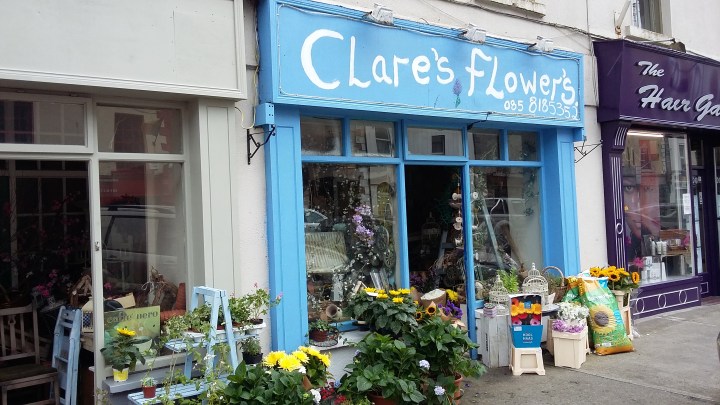
If you’re ever looking for flowers in Ballinasloe, Co. Galway …

Fact: I am beginning 2016 four centimetres taller than I was last year. It turns out that I have been selling myself short for a very long time. All because I never thought of measuring my height again since I filled out my first passport application form at the age of fifteen.

What else has changed over the past year? One big thing is that I have made the transition to being self-employed. It’s been a positive move in terms of the variety and quantity of work I’ve done. Most of the time I relish the freedom of working for myself. My work pattern alternates between semi-idle periods and Stakhanovite bursts of productivity. This is easier to manage alone at home.

The more challenging aspect of not being away at the office is the pressure of family duties intruding on work time. Housework I can ignore, but the children’s various appointments eat into my time, not to mention the fact that the children return home during the two-hour school lunch break. It is an ongoing challenge to fence off the time.

2015 was the year that I secured a book deal, finally signing the contract in November, five months after I first made contact with the publisher, Bergli Books. Because non-fiction books are sold on proposal, I have landed myself with a huge writing task that will dominate the beginning of this year. The deadline to deliver the manuscript is April but there will be more detailed edits to do after that. I expect to have the final word on the title soon.

Last January in my first blogpost of 2015, I mentioned a few New Year’s resolutions, and shared some photographs from the previous year. It’s time to revisit the wishlist:

Spend more time in Ireland: This I managed to do, making a six-week trip to Ireland in the summer. It was the first time I had made the journey by car and ferry and I can report that France goes on forever. Crossing that central plain, I really started to lose hope that I would ever reach the sea. One holiday highlight: cycling around the island of Inishbofin off the coast of Galway, stopping for dip in the Atlantic five minutes from where this photograph was taken.

20150729_124953

Become a Swiss citizen: My approval came through in May, after a six-month procedure and I now have a Swiss ID card and the right to vote. Although the experience wasn’t completely positive, I’m glad to have done it at last. That story is for another day. Here’s a post I wrote about taking the decision to apply for naturalisation.

2015-09-25 14.52.09.jpg

Find inspiration for writing, write more and write better! My first novel was longlisted for the Exeter Novel Prize on January 1st last year but, apart from one longlisting for a short story, there are no accolades to show for the fiction I wrote in 2015. Despite the lack of results, I had a productive and satisfying writing year and learned a lot about submitting. I am happy to say that I will have a small but notable success to announce soon. Although it is a natural progression from journalism, I wasn’t expecting to have a breakthrough in non-fiction and I am thrilled to have this opportunity to develop and showcase my writing skills.

20150630_142641
Art installation at the APCd Foundation

Finish the first draft of my second novel: Not quite there. Can you believe it? I set myself the challenge in October to finish the first draft of this novel, got as far as the second-last chapter and stopped dead. No more excuses, I know how the story ends, I just have to turn it into words.

DSCN1445

Stop and smell the roses (or whatever nature has on special offer): I’m lucky to live on the edge of beautiful countryside and having a dog means I have to go out in all weathers. Highlights of the year were the deer I saw one morning and the cross-country hike I did in May.

As for my 2016 writing goals, I’m looking forward to a successful launch of the Swiss book, and hoping to learn a lot about book marketing along the way. Ideally, I’d like to find an agent and a home for my novels, and keep writing short stories, which has been one of the great writing pleasures of the past year.

What about you? Has the year got off to a good start? Do you believe in making New Year’s resolutions?

Disclaimer: I am a woman

2015 First batch 284.jpg

At the moment I am writing about women in Switzerland for the book, and trying very hard to be fair. I almost think this chapter needs a disclaimer: I am a woman but the word may not mean the same thing to you as it does to me.

We are all products of our culture and family circumstances, and I have to hold my hands up and say that my background makes it very difficult for me to approach the Swiss situation in a non-judgmental way. I believe that the subjugation of women is the biggest swindle in human history. Nothing in my experience has taught me that women are in any way less important or less capable than men, therefore I cannot and will not accept any arrangement based on this idea.

My family is full of inspiring women, going back more than a century. I grew up in a three-generation household where both my mother and grandmother worked full-time as teachers. My maternal grandmother worked as a cook before she married, and later farmed a smallholding, while bringing up nine children. Her sisters emigrated to America to work. A great-grandmother on the other side was a ‘deserted wife’ who trained as a nurse in England in the 1910s and went on to work as matron of an old people’s home. There’s another great-grandmother who had her own toy shop in Dublin in the 1890s. One thing all these women had in common was that, somewhere along the line, the men in their lives could not be financially relied upon, mostly through no fault of their own. The women learned through experience that having children and doing paid work did not have to be mutually exclusive (disclaimer within a disclaimer: I think looking after children without doing paid work is equally admirable, as long as it’s a choice).

I come from an all-girl family, which meant I never experienced the division of chores on gender lines that happens in some households. I was just as often asked to wash the floor as cut the grass or bring in the coal. The secondary school I attended was also all-girls with a long tradition of fostering female achievement. A woman became president of my country when I was eighteen, not to mention that women got the vote in Ireland at the foundation of the state in 1922 (in Switzerland it was 1971).

By the time I noticed that my version of what it meant to be a woman was not the norm, it was too late. The meaning of the word had set in my mind forever. Forget about ‘Frailty thy name is woman’, I will always believe that women are strong, capable decision-makers. That is why I don’t like the ‘Irish Mammy’ cliché, which portrays Irish mothers as simple-minded old biddies. Funnily enough there is no popular incarnation of the Swiss mother, like the Italian or Jewish mamma or the Irish Mammy. One saving grace at least.

Have you ever thought about what the word woman means to you? I’m curious to hear your thoughts.

Good news about my Swiss book deal

2015 First batch 418

I am delighted to announce that I have signed a book deal with Swiss publisher Bergli Books for a non-fiction book about Switzerland. I believe this country is hopelessly misunderstood and a little unloved. Armed only with a cheap laptop, I intend to stress-test the stereotypes, and change the narrative about Switzerland.

People always say you should write the book only you could write. That’s what I’m doing now. I came to Switzerland in 2003 on the love train (actually an Aer Lingus flight to Geneva). Since then I have experienced the country on many levels – as an immigrant, a journalist, a foreign spouse, and mother of three Swiss children.

Churchill famously said that Russia was a riddle, inside a mystery, wrapped in an enigma. At times Switzerland has felt like that to me too. But over the past decade of covering Swiss news for swissinfo.ch, and navigating everyday life, I feel I have stripped away the layers and got closer to understanding the Swiss soul. I’m ready to share the good and the bad about the Swiss.

This book will introduce readers to the real face of Switzerland, from presidents to poets, from bankers to street sweepers. At the same time it will paint a faithful picture of the political, cultural, economic and historic landscape.

Recently I wrote about rejection on this blog because it was becoming my specialized subject. I was getting used to it. In fact I was even getting good at it. After all that I can’t tell you how good it feels to take this long-awaited step towards being an author.

The title of the book has yet to be confirmed. The release date is also still being worked out by teams of experts (well maybe one small team), but I’m expecting it to be sooner rather than later. In the meantime I have a lot of work to do and will keep you posted on progress.

I’ll leave you with one small interesting fact. Bergli Books is an imprint of the Swiss publisher Schwabe, which was established in Basel in 1488, making it the oldest publishing house in the world.

Hot House Novel Part II

November rose
November rose

Seventeen thousand words in eighteen days. I’m pretty happy with the result of my October writing challenge. I didn’t manage to get to the end of the first draft but at least the end is now in sight.

In case you missed the previous post about this, I had half a children’s novel on my hands that I couldn’t seem to finish. Inspired by the NaNoWriMo (National Novel Writing Month) buzz on Twitter, I decided to tackle the problem with an intensive burst of writing, ahead of the November pack.

There was a small lull in the middle when I went to Germany for the weekend and discovered that my two-prong Swiss plug would not fit into the three-prong German socket. That was the end of writing on the laptop so I tried writing longhand and produced a rather scribbled chapter.

Lots of writers swear by this method, especially for first drafts, but I couldn’t wait to get back to the keyboard where the words stand out crisp and even on the screen and you have the magic of deleting.

All being well I’ll finish the first draft this week and move on to other things.

I never do any correcting or revising while in the process of writing. Let’s say I write a thing out any old way, and then, after it’s cooled off—I let it rest for a while, a month or two maybe—I see it with a fresh eye. Then I have a wonderful time of it. I just go to work on it with the ax. But not always. Sometimes it comes out almost like I wanted it.

That’s a quote from Henry Miller taken from a 1961 interview in The Paris Review, which I came across during the week. While I had to raise an eyebrow at Miller referring to “the writer” by definition as a man, I did find his thoughts on our lack of moral code interesting. At a time when Europe is turning a blind eye, or worse, to distressed refugees at its borders, his words seem to sum things up perfectly.

You see, civilized peoples don’t live according to moral codes or principles of any kind. We speak about them, we pay lip service to them, but nobody believes in them. Nobody practices these rules, they have no place in our lives.

On the subject of refugees, this is the best piece of journalism I’ve read about the crisis so far, by AA Gill. Simply devastating.

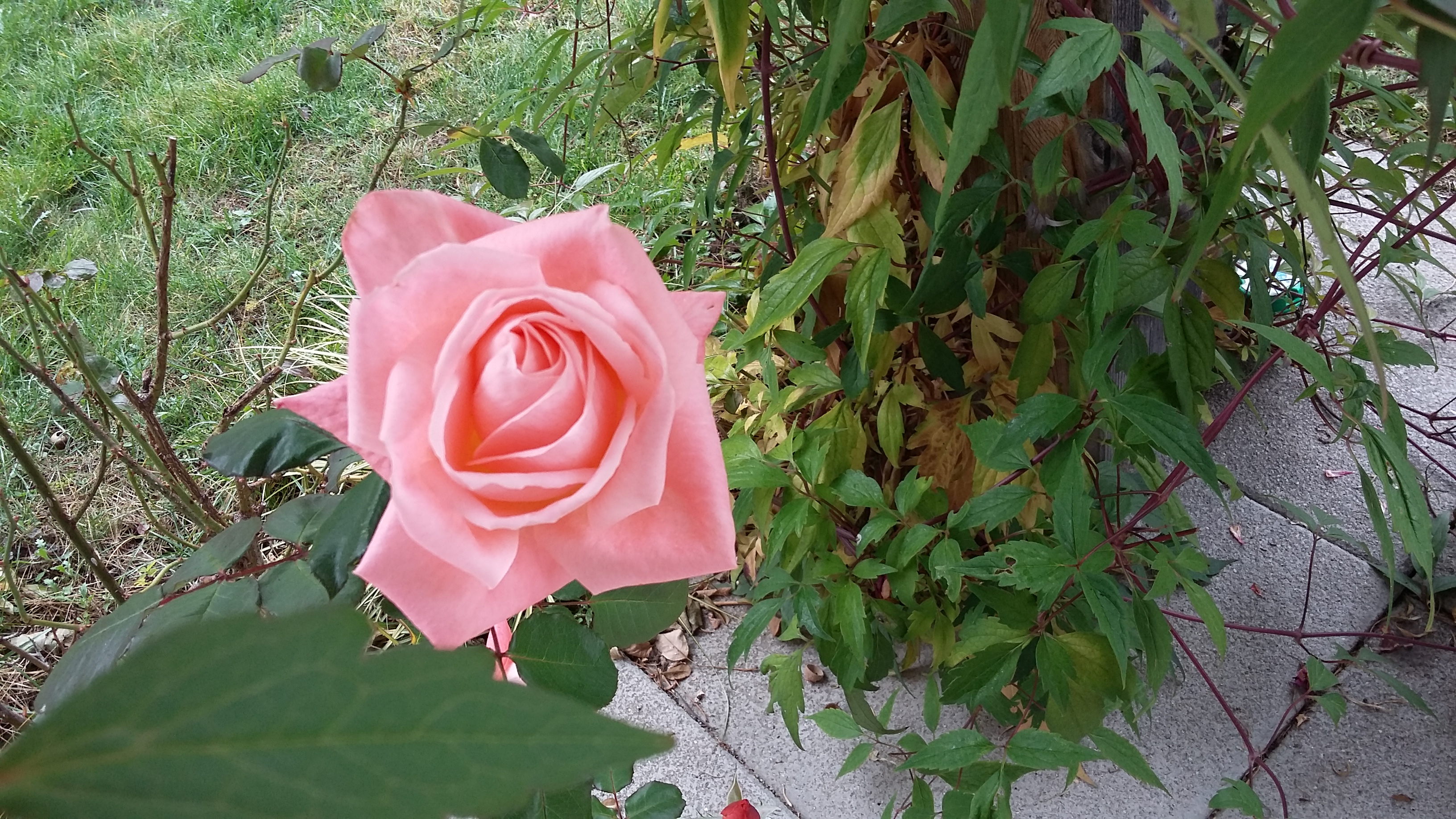
Above is a picture of a rose taken yesterday. It cheered me to see something beautiful surviving in a hostile environment – a bit like the kindness being shown by some individuals in Europe.

My other perfect life

Don't get me started on Swiss home decorations
Autumnal scene in Bern, Switzerland

A simple effective way to banish clutter forever. This is the beguiling promise on the cover of Marie Kondo’s book about tidying. It’s big in Japan. But not only in Japan. The Life-Changing Magic of Tidying has been published in more than 30 countries and has sold 1.5 million copies.

A colleague recommended the book to me when he was in between jobs. A bit of a hoarder, he said it really helped him gain control over his environment and achieve clarity. Kondo makes great claims about the transformative power of tidying. I had to find out more.

One of the reasons I love writing is because I have discovered it is something I can see through to the end. I get the satisfaction that only comes from completing a job properly. In other areas I’m not so good at getting across the finish line.

Kondo starts by telling us that there is no use in partial tidying. It’s an all-or-nothing deal. You have to follow her method through to the end, tidying your possessions in every category and every room – every single object – until the job is completely done. Only then can you reap the benefits of the new better life that has eluded you thus far.

I was intrigued by this idea of a better life being just out of reach. Better lifestyle is more accurate. Like that inadequate feeling you get from looking through an Ikea catalogue. I went to Ikea this week but my house is just as cluttered and uncoordinated as it was before I went!

To be fair, Kondo is not saying you can achieve your dreams by buying more objects. She wants us to work hard to reduce the burden of unnecessary objects. True to form, I only made a half-baked attempt at the Kondo method. I will not be granted access to that better life. But I do have her to thank for a massive clear out of my wardrobe.

The Kondo test for whether or not to keep an object is very simple. You have to hold it and ask yourself if it sparks joy. Joy-sparking objects in; non joy-sparking objects out. Now obviously this test doesn’t apply to the tin opener but can be used for almost anything non-essential, she says.

Even though I won’t get to live my other perfect life, I thought it would be fun to list some of those unfulfilled aspirations. In my other life:

I use the juicer I bought to make juices every morning with fresh spinach

I volunteer for several charities.

I have a low meat diet and can think of tasty new vegetarian dishes all the time.

The front path is swept and leaves no longer blow into the hall when I open the door.

I have a short-haired dog or no dog (as opposed to a very hairy collie).

I make homemade ketchup.

My children enjoy dried fruit as a snack.

I let my hair go naturally grey and it really suits me.

I can ski better than my children.

I don’t have a car.

I buy farm produce.

I go horse riding once a week, with galloping.

I banish clutter forever.

May all your troubles be little ones, as they say. So, are you a clutter clogs or a tidy terror? What super lifestyle are you missing out on? I’d love to hear your secret wishes …

Hot House Novel

© africa, freedigitalphotos.net

Some manuscripts need the hot house treatment. My second novel is a prime candidate. I’ve taken the usual slowly-but-surely approach on this book but somewhere along the line the story stopped growing. Now I want to try writing fast.

Today I came across some great advice on writing fast from author Kelly Creighton. The advantage of rapidly firing the words onto the page is that the subconscious takes over, Creighton says. You are less likely to have plot holes because you are immersed in the story. I’ve experienced this flow in the past and now I’d like to try to tap into ‘the force’ again.

Creighton’s advice is prompted by the upcoming annual writing challenge NaNoWriMo – National Novel Writing Month – in which participants worldwide try to write a complete novel from scratch in the month of November, fueled by massive solidarity on social media.

I’ve set myself an October deadline, linked to a competition. I started the year with a modicum of competition success when my first novel was longlisted for the Exeter Novel Prize. That hasn’t translated into a breakthrough on the submissions front but I have had some encouraging responses. The latest news on that novel is that I have handed it over to a professional editing service. The book still raises too many questions for me and I’m hoping to get some answers from this edit.

In the meantime, the second novel can have its moment. I wrote the opening to the book two years ago during an extended visit to Dublin and the word count has crept up in increments since then. I’m happy with the ‘big idea’ behind this children’s novel, which grew from a rather sinister radio play I wrote. I believe it satisfies the “interesting, unique and universal” criteria, and I hope readers will one day feel the same.

Because I keep letting other writing commitments get in the way, I’ve come to the conclusion that forced productivity is the only way for this story. By hook or by crook I will finish the first draft this month. That means writing every day but I should be doing that anyway. I’m off to flying start and hope to be able to type THE END at the end of the month.

These kinds of against-the-clock challenges are only meant to help writers achieve a first draft, and anything written at speed is likely to need a lot of reworking. No matter. I’d rather be reworking a rough first draft than have an unfinished manuscript humming ‘you don’t send me flowers anymore’ in my head.

The final words of inspiration come from Kelly Creighton, debut author of the psychological thriller The Bones of It: “In writing, nothing is ever a waste of your time.”

Is anyone considering taking part in NaNoWriMo?

What was your most productive writing time?

The A to Z of rejection for writers

© Witthaya Phonsawata, freedigitalphotos.net
© Witthaya Phonsawat, freedigitalphotos.net

Hi, my name is Clare and I’m a submitting writer. It’s been one day since my last rejection. This post goes out to all those who are submitting their work to agents, competitions, journals or the man in the moon. Big hugs everyone.

Rejection ALWAYS comes when I least expect it. Thanks smartphone. The latest polite message came when I was walking aimlessly around a forest. Tip: rope parks are more fun for kids than for the accompanying adult on the ground.

Every rejection is a test of your BELIEF in yourself and your work.

Accept the CHALLENGE! One particular person at one particular point in time cannot or does not wish to take this specific piece of work. Change the person, the time and the piece and anything is possible.

DESPAIR will make an appearance with each rejection. Keep it brief. Just let the big D come and go again and you’ll be fine. Treat the two imposters just the same and all that.

In the old days writers waited for the postman. Now the poison dart is sent by EMAIL and you will hear a ding before you are struck. Assume the crash position and click!

You come to treasure the personalized rejections because they contain precious FEEDBACK. We will take these crumbs from the publishing table because, you know, starvation. Hearing that my story was “strongly crafted” gives me wings.

Submission GUIDELINES. They are serious about this S**T. Ignore at your peril.

HOWEVER. This word comes after something half positive like “I genuinely liked the work” or “I enjoyed reading your chapters”. It means no.

INSIDE job. Don’t get all bitter about other people getting published because of some perceived unfair advantage. Authors get dropped by publishing houses all the time. You still have your chance.

JUST be yourself. Authentic work is what counts. There is no point trying to mould your writing to fit a particular fashion. Anything that is popular now is likely to be old hat by the time you are submitting and your version won’t ring true.

KNOWLEDGE The publishing industry is just that, an industry. Don’t be a total ingénue. Do your homework and be preprared for a long apprenticeship.

You’ve got to LAUGH a little, cry a little, until the clouds roll by a little.

“Could you send me the full MS?” These words herald a good day. The great big hot air balloon of hope rises but you need to pull it back down quickly. At the very least it will lead to precious feedback.

NETWORK. I’m not talking about stalking agents, although twitter is good for building up a picture of someone. The best networking you can do is among peers who support each other and pass on valuable information.

ORGANISATION is a key part of perseverance. Do the research and keep a record of every submission and whatever progress it makes. Keep a note of what agents / journals are looking for. Could save you legwork the next time.

Nobody likes to be ignored but that doesn’t mean we can break the golden rule of submitting. Be POLITE. You don’t want to end up the star of the ‘crazy author’ anecdote at the annual agents’ bash.

QUITTING. Don’t even think about it. If Donal Ryan sent his second book out to 45 agents, I’m not giving up after 16 and neither are you. But don’t forget to write the next book or story. Helps take the sting out of things.

Be prepared for RADIO silence from time to time. It happens. Even after a request for a full manuscript. Some agents simply cannot keep up with their correspondence. Not to be taken personally.

STANDARD rejection. ‘Not right for my list.’ ‘Unable to offer representation at this time’. ‘He’s just not that into you,’ as Miranda would say. If you are getting annoyed by standard rejections, try drafting your own to see if you can do any better.

Submitting is a quest and should retain at least a modicum of enjoyment and optimisim. If it’s becoming a grim obsession give yourself some TIME OUT.

Don’t UNDERESTIMATE how long the process of submission is. Putting together a good submission takes time and effort. Multiply that by a large number and then add the waiting game. We are in this for the long haul or we might as well forget it.

VANITY. Actually this should be PRIDE but I’ve already used up my P. We all want recognition but don’t let pride become too central in this quest. Modesty is the best policy.

WORD count. The devil is in the detail. 10,000 words, the first three chapters, one-page synopsis, under 500 words, less than 3,000 words. Read the fine print.

The eXCEL sheet is where you keep track of all the rejections. Date sent, name, email, submissions policy, response. Mine is colour coded (I know). After each rejection I upate the file and I feel back in control. An important little ritual.

YES! One day you too will be asked to the ball and you will be able to smile and say YES!

ZEN is the only way. The writing is one thing and the business is the other. The hard truth is that not everyone can get picked for the team so let’s keep this in perspective. Life outside writing has to be more important.

On not knowing what your novel’s about

full cover (2)

On the blog today, it is my great pleasure to introduce the English writer Anne Goodwin, author of Sugar and Snails, whose journey to publication I have been following with great interest since we first connected through blogging two years ago. In this guest post, Anne shows it’s not always easy to distill the essence of your own story.

So, you’re lying on your deathbed (hopefully, many years from now) and an angel comes in with a shorthand notebook and retractable pencil. He’s been commissioned to write your obituary, but first he wants you to tell him what your life was about. Could you tell him? Would the sentence even make sense?

A novel isn’t the same as a life. A novel has structure. A novel has plot. But it can be just as difficult to reduce the essence of a novel to a single headline as it can be to sum up a life.

So I identified strongly with Clare’s post couple of years ago, What’s the book about? Yet some might imagine I should’ve known better. Unlike Clare, I wasn’t in the process of getting acquainted with my first novel. I was a few months into the submission circus, with some encouraging feedback from agents alongside the stack of rejections. Shouldn’t I have known what my book was about?

Of course I had my pitch. I had my carefully-crafted one-page synopsis. But these were summaries of what happened; what my novel was about lurked somewhere underneath.

In my initial attempts at synopsis writing, I’d finished off with a list of the themes. But somewhere along the line I was advised to drop the intangibles and focus on the fictional “facts”.

I’ll never know if my failure to snare an agent is attributable to my woolly pitch. It certainly didn’t prevent several requests for the full manuscript, but some of those who liked my novel might have been daunted by a perceived difficulty in representing it to publishers. Thankfully, there are lots of independent presses around who can take more of a risk (and the early reviews of my novel suggests they were right to do so).

But no-one’s going to want to publish a rambling novel without focus. When submitting to small publishers, I still did my best to present a coherent story. But this had a surprising downside, of which others should beware.

Sugar and Snails is a midlife coming-of-age story about a woman who’s kept her past identity a secret for thirty years. (An “about” sentence I’ve found only recently, partly through attending a media training day run by the Society of Authors.) The catalyst for change is her meeting with a man who takes a fancy to her at a dinner party and their on-off relationship provides the skeleton of the contemporary strand. Now, we all understand the romance genre; it’s hardwired with the fairytales we heard at our mothers’ knees. Somewhere along the line, without a conscious decision, boy-meets girl provided my novel a ready-made structure to contain the more amorphous story of a woman’s journey to self-acceptance.

Now, I knew Sugar and Snails wasn’t a romance. My publisher knew it wasn’t. My therapist certainly knew it wasn’t. Even friends and family who hadn’t yet read it but had listened patiently to me babbling about it knew Sugar and Snails wasn’t a romance. But when it came to writing the blurb to go on the back cover, that’s exactly how we framed it. In the emails shuttling back and forth in an attempt to perfect the words and punctuation, neither I nor my editor recognised we were stuck in the romance mode. It was as if we were engaged in a folie à deux.

Okay, we might have come to our senses without external intervention. The wider Inspired Quill team might have refused to give it the go-ahead. But, for me, it was only through the happenstance of consulting a few friends on a disagreement on some minutiae of the wording, that I recognised how close we’d come to mis-selling the book. Although a lucky escape, it was a painful moment to have this exposed. I was supposed to be the wordsmith, not my friends.

The romance element still gets a mention in the rewritten version, but it’s background to the larger story of a woman learning to live with herself:

The past lingers on, etched beneath our skin …
At fifteen, Diana Dodsworth took the opportunity to radically alter the trajectory of her life, and escape the constraints of her small-town existence. Thirty years on, she can’t help scratching at her teenage decision like a scabbed wound.

To safeguard her secret, she’s kept other people at a distance … until Simon Jenkins sweeps in on a cloud of promise and possibility. But his work is taking him to Cairo, and he expects Di to fly out for a visit. She daren’t return to the city that changed her life; nor can she tell Simon the reason why.

Sugar and Snails takes the reader on a poignant journey from Diana’s misfit childhood, through tortured adolescence to a triumphant mid-life coming-of-age that challenges preconceptions about bridging the gap between who we are and who we feel we ought to be.

Two weeks now since publication, I’m having fun playing around with what my novel is about. Writing guest posts and completing Q&A’s for my mammoth blog tour lets me explore my novel from different angles and the reader reviews reflect it back to me in interesting ways. I can’t begin to describe how wonderful, moving and humbling it is to have my novel not only read, but thought about, even discussed.

Yet there are still points at which I reach for that single-sentence summary. Print journalists and radio broadcasters need their soundbites and, grateful for the coverage, I try to give them just that. But I relish the opportunity to give a more discursive version of my story.

Thanks to Clare and her blog readers for indulging that need in me here.

Anne Goodwin writes fiction, short and long, and blogs about reading and writing, with a peppering of psychology. Her debut novel, Sugar and Snails, was published last month by Inspired Quill. Catch up on her website: annethology or on Twitter @Annecdotist.

Best of luck with the book Anne!

Dying a fictional death

DSCN1218

Death comes to all, even fictional characters, but it is a particular challenge to write about death through the perspective and diminishing senses of the dying character. In previous blogposts I’ve written about dastardly husbands, childbirth and bad marriages in fiction so it seems death has a natural place in this series.

Before I get into the fictional accounts of dying, there is one very interesting factual account of dying, or the feeling of being close to death, that I’d like to share. It comes from a radio interview I heard two years ago when I was living for a short time in Dublin. Irish radio is full of these kinds of gems.

The woman being interviewed was an eminent surgeon in her early fifties with no children. She described a time when she had been seriously ill with cancer. Her life at that point was hectic because on top of her regular work she had taken on other charity commitments abroad.

A fiercely independent woman, she had never had to rely on anyone for help before. That was the first big transition she had to make. When things had got very bad, she said she remembered lying in her hospital bed, weak and completely helpless and being certain that she was going to die. She felt unmoved about the prospect of her life being over and not in the least alarmed. ‘So this is how all my problems are going to be solved,’ she remembered thinking with a feeling of relief.

Life does present us with a seemingly unending chain of problems, big and small, and how surprising it is when the chain suddenly turns out to have an end and the end is now. The individual who realizes they are dying may well have time to rationalize what’s happening before the lights go out for ever. This process is no more beautifully expressed than in the dying moments of William Stoner at home alone in John Williams’ novel Stoner.

“A kind of joy came upon him, as if borne in on a summer breeze. He dimly recalled that he had been thinking of failure – as if it mattered. It seemed to him now that such thoughts were mean, unworthy of what his life had been. Dim presences gathered at the edge of his consciousness; he could not see them, but he knew that they were there, gathering their forces toward a kind of palpability he could not see or hear. He was approaching them, he knew; but there was no need to hurry. He could ignore them if he wished; he had all the time there was.

There was a softness around him, and a languor crept upon his limbs. A sense of his own identity came upon him with a sudden force, and he felt the power of it. He was himself, and he knew what he had been.”

I’ve just finished A God in Ruins by Kate Atkinson, which I read on the recommendation of fellow blogger Safia Moore (based in the United Arab Emirates), a great supporter of new writers and recent winner of the Bath Short Story Prize with her poignant story That Summer.

This novel was a delight to read – moving, entertaining, thought-provoking. You can check out Safia’s review here and then please read the book too because all of life is in it and there is so much to enjoy. The main character is called Teddy and I don’t think it’s a spoiler to reveal his death scene here because the author makes it clear early on in the story that he lives to know his grandchildren.

Moments left, Teddy thought. A handful of heartbeats. That was what life was. A heartbeat followed by a heartbeat. A breath followed by a breath. One moment followed by another moment and then there was a last moment. Life was as fragile as a bird’s heartbeat, fleeting as the bluebells in the wood. It didn’t matter, he realized, he didn’t mind, he was going where millions had gone before and where millions would follow after. He shared his fate with the many.

And now. This moment. This moment was infinite. He was part of the infinite. The tree and the rock and the water. The rising of the sun and the running of the deer. Now.

This next one is a spoiler so if you want to read Last Man in Tower by Aravind Adiga, skip ahead to the end. The story, told in the multiple first person, is set in Mumbai and revolves around residents of an apartment block faced with an offer they cannot refuse by a ruthless property developer. In the end the neighbours turn against each other and the story concludes with the murder of one of their number, Yogesh Murthy, who is first badly beaten and then thrown from the roof.

Now, when he opened his eyes, he could not tell if he were dead or alive; these men seemed to be demons, though kindly, who were forcing his body to budge from some place between life and death where it was stuck.
And this was because he was neither good nor bad enough; and neither strong nor weak enough. He had lost his hands; he had lost his legs; he could not speak. Yet everything he had to do was right here, in his head. He thought of Guarav, his son, his living flesh. ‘Help me,’ he said.

And then he realized that the thing that was blocking his passage was cleared, and he was falling; his body began its short earthly flight – which it completed almost instantaneously – before Yogesh Murthy’s soul was released for its much longer flight over the oceans of the other world.

There are other notable dying moments that come to mind, such as the death scene in One Day by David Nichols which I thought was very movingly written, and the heart-wrenching drowning scene from The Hand That First Held Mine by Maggie O’Farrell where the character fights for her life through the growing realization that she will be absent from all the future important moments of her child’s life.

OK, I’ll stop there. I hope I haven’t depressed anyone with these notes on dying. Can you think of any other memorable dying scenes that deserve a mention here?

Coming up on the blog later this week I will have my first ever guest post, from new author Anne Goodwin. Keep an eye out for Anne who is on a blog tour to coincide with the launch of her novel Sugar and Snails. My copy has been dispatched so I will tell you more about the book as soon as possible.