I’ve decided to run a last-minute mini book awards with a jury of one (me) selecting from the books I’ve read in 2025. Please take a seat and see if you agree with the line-up of winners. We (the royal we) have nine categories this year.
And the Slightly DisappointingAward goes to Tell Me Everything by Elizabeth Strout. It’s only disappointing because I’ve loved everything of hers so far, and this novel I only liked. One too many walks with Bob and Lucy not quite saying what they’re thinking. The murder side plot was good and I wonder if I might have rushed it. Elizabeth Strout needs to be savoured. Might revisit.
Katriona O’Sullivan’s searingly honest memoir Poor wins in the non-fiction category with the award for Best Social Commentary. As the daughter of addicts, Katriona O’Sullivan endured desperate poverty and neglect in her childhood. If anyone doesn’t believe in systemic disadvantage yet, Poor will set them straight.
Also in non-fiction, there is an award for the Strangest / Most Original Book, which goes to The Sound of a Wild Snail Eating by Elisabeth Tova Bailey. This is the experience of a woman who was hit with a sudden and severe debilitating illness that left her almost unable to move. She found solace in the company of a snail accidentally carried into her sick room on a plant. I felt there was a little too much snail and not enough human in the book but still plenty of wonderful reflections on both conditions.
The Best Novel Set in DublinAward goes to The Coroner’s Daughter by Andrew Hughes. The novel brings to life the dank, disturbing and oppressive Dublin of 1816 and introduced me to the wonderfully spirited and inquisitive character of Abigail Lawless.
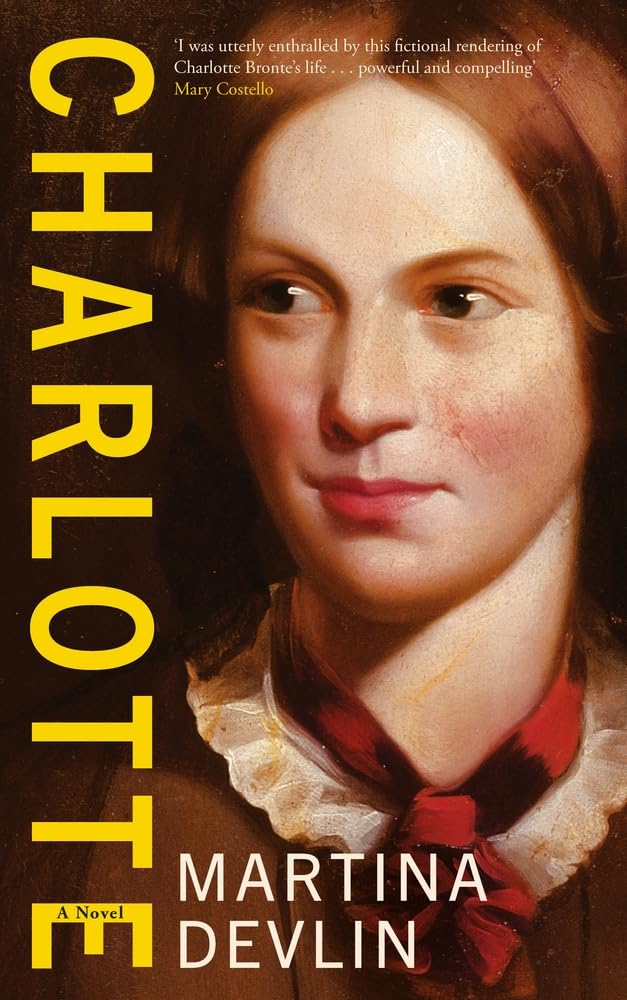
Back to fiction, and the Rich Historical Fiction Award goes to Charlotte by Martina Devlin, an evocative and fascinating tale woven around Charlotte Brontë’s little-known Irish connections. Charlotte spent her honeymoon in Ireland with her Irish husband the year before she died tragically of pregnancy complications in 1855, the last of six Brontë siblings to die young.
The award for the Most Clichéd and Occasionally Sexist Nonsense book goes to Love is Blind by William Boyd. I was given a 10-CD set (don’t laugh) of this book that someone had lying around and I listened to it mostly on car journeys. It could also win an award for the most research dumping about the piano tuning profession, if there was such an award. Having said all that, it was entertaining.
To be more positive, may I present Three Days in June by Anne Tyler which walks away with the Easiest Read Award. Featuring a socially awkward mother of the bride navigating the days before and after her daughter’s wedding, it’s amusing, touching and insightful in equal measures.
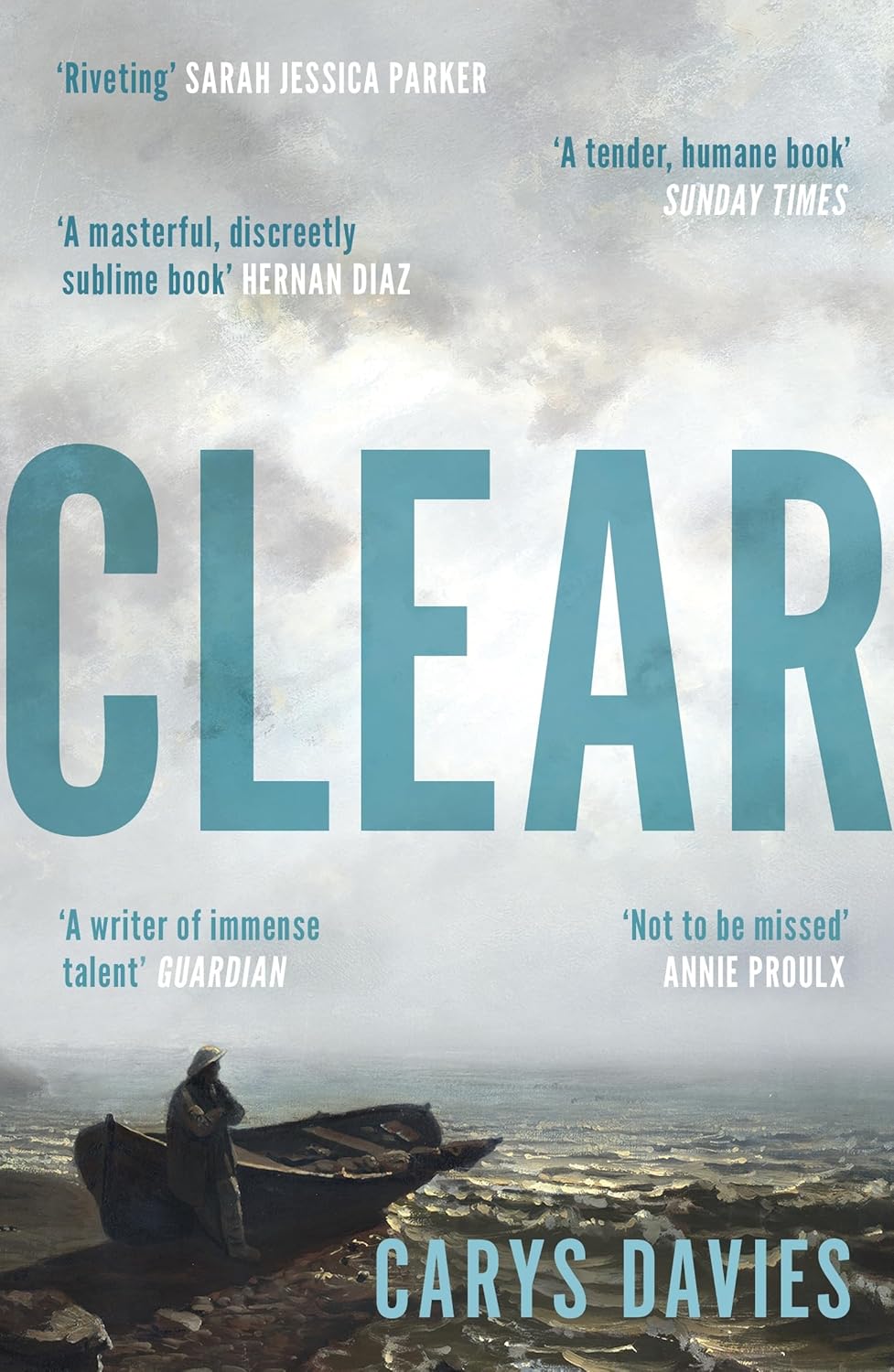
The Most Beautiful Story Award of 2025 is still Clear by Carys Davies, which I read in August and felt would be my book of the year. Set mainly on a remote Scottish island in the 1840s, it’s exquisite in every way. Ivar, the sole occupant of the island, leads a life of quiet isolation until the day he finds a man unconscious on the beach below the cliffs.
After listening to Colm Tóibín being brilliant about Henry James on The Secret Lives of Books podcast, his book A Long Winter caught my eye in Fribourg cantonal library. It’s a long short story that’s just been given the Claire Keegan treatment by being sold as a book. And we are all the better for it! A Long Winter wins the Enchanting Sense of Place Award. In an afterword, Tóibín explains the background to the tragic story of a woman’s disappearance, which he heard during his time living in that region of Spain.
I hope you fall under the spell of one or more of these award-winning titles. Have you read any of them already? And what was your favourite read of 2025?
Two high points of my childhood summers were berry picking and wild swimming. Those two free pleasures are still part of my life, and I managed to do both today – pick blackberries in the forest and go for a dip in my local river. With a good book thrown in, the perfect Sunday.
I’ve read more than usual this summer, helped by the fact that I have access to an endless supply of books at my day job working for a book distributor. I’ve just finished The Paris Express by Emma Donoghue, a real page-turner about a train hurtling towards disaster in 1895.
The novel is based on the true story of a derailment and, to create her characters, Emma Donoghue used the biographies of real people who were either on the train or could well have been. She says she drew on more than 40 articles about the accident in 26 publications. To find out more about the individual lives, especially uncelebrated ones, she “ransacked the wonderful hoard of French bureaucracy filae.com”. The result of all this – apart from a gripping, richly-imagined story – is that you find out what became of the main characters in later life.
Recent favourite reads include Tell Me What I Am by Una Mannion, Shy Creatures by Clare Chambers, Love is Blind by William Boyd, Audition by Katie Kitamura and the unforgettable Clear by Carys Davies.
Meanwhile preparations for the publication of my new novel Before the Leaves Fall are continuing and it’s time to save the date(s)! The Swiss launch of the book will take place in Stauffacher Bookshop in Bern on Thursday, October 9th at 8pm. The event is being generously sponsored by the Irish Embassy. Full details at this link.
Two weeks later in Dublin, the Gutter Bookshop in Cow’s Lane will host the Irish launch on Thursday, October 23rd, time tbc. All are welcome. I’m extremely grateful to both bookshops, who have a great record in supporting authors.
In between, I’ll be at the Frankfurt Book Fair for work and will hopefully steal a moment to present my book to Literature Ireland, which publishes a catalogue of translation-worthy new Irish fiction titles. I’d love to see the book translated into the Swiss languages as Voting Day was.
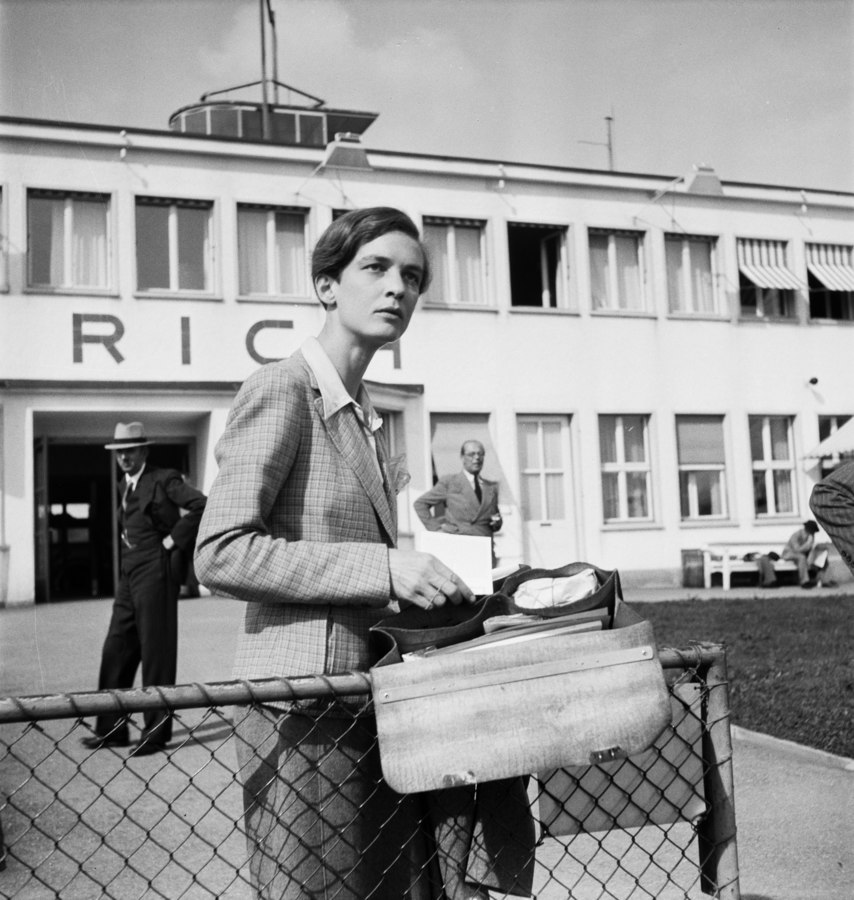
Before all that, September has some literary treats in store. I’ll be attending the annual Le livre sur les quais festival in Morges on the weekend of September 5th-7th. The full English programme has been published and it includes Natasha Brown, Alan Hollinghurst, Caroline Bishop, Mark O’Connell, Claire Massud and more. I’m very pleased to be interviewing Padraig Rooney about his biography of Annemarie Schwarzenbach, one of the most interesting Swiss women of the 20th century. That event is at 1pm on Saturday 6th in Hotel La Couronne.
At the end of September, the wonderful Jonathan Coe is coming to Geneva as a guest of the Société de Lecture. I will be interviewing him in the elegant salon jaune on Monday, September 29th. There’s lots to talk about in his latest cleverly-plotted, satirical, dark-yet-funny novel, The Proof of My Innocence.
With all that hopping around, I hope I get to see some of you over the next couple of months. For now, let’s enjoy this summer feeling and any good books we find along the way.
Famous people with a dark side run the risk of having their diaries and correspondence destroyed by those close to them who want to influence how the person is remembered. But is this done to protect the reputation of the living or the dead?
In the recent BBC drama Miss Austen, Jane’s sister Cassandra is shown to be acting out of love when she burns Jane’s unhappiest letters. It’s not so likely that Renée Schwarzenbach was acting out of love when she destroyed her daughter Annemarie’s letters and diaries after the young writer’s tragic death in 1942.
Reputation meant different things to the two women. Renée cared mainly about a certain kind of high society, pro-Nazi respectability, and Annemarie cared about recognition and her own personal freedom.
This mother-daughter relationship from hell is just one of many fascinating threads running through Padraig Rooney’s mesmerising new biography of the iconic Swiss writer, journalist and photographer Annemarie Schwarzenbach.
In Rebel Angel: The Life and Times of Annemarie Schwarzenbach, Rooney gets as close to the troubled beauty as it is possible to get, yet the ever-striving, ever-suffering Annemarie still keeps some mystery about her. Maybe the answers were in those long-lost letters.
Zurich-born Annemarie came of age in the 1920s, with an appetite for every possible kind of adventure – travel, sexual, narcotic, creative and political. Annemarie was always running from her conservative and hypocritical upbringing. Eyes on the horizon, she was also seeking relevance and a real place in the world as a young, lesbian woman with something to say.
Schwarzenbach was the kind of writer who could lock herself in a hotel room for two weeks in between drink and drugs binges, and come out with a novel. She fell madly in love time and time again but never seemed to find her soulmate. She drove flashy cars, dressed in masculine clothes from a very young age and travelled to far-flung places, generating endless travel articles for Swiss media, and picking up a marriage of convenience along the way.
Annemarie Schwarzenbach started feverishly writing articles as a student in Zurich. By the time she finished her studies in Paris, she was a published novelist. She went on to write many books – fiction with an autobiographical slant, non-fiction and travel. And she took amazing photographs all over the world, some of which are featured in the book, along with moody portraits taken by her many admirers.
In Rebel Angel, Padraig Rooney has captured Annemarie Schwarzenbach, who deserves to be celebrated as a queer icon, in all her self-destructive brilliance and chaos. She liked peace when she found it but she didn’t find it often.
Annemarie was closely involved with Thomas Mann’s family, mainly his two wildest children, Erika and Klaus, who were close friends and sometimes more. She turned up as a long-staying guest in various Mann households in Germany, France and the United States over the years, causing trouble more often than not.
A morphine addition wreaked havoc on most of Annemarie’s adult years. Her friendships were taxed to the limit, and, during her most severe breakdown in New York in 1940, past the limit. Those were times when her family had to step in.
Rooney’s book encompasses so much of this incredibly full life – family conflicts, the 1930s social scene in Berlin, travels to Persia, Afghanistan, India, the United States, the Soviet Union, the west coast of Africa, Congo. Unfortunately, Annemarie’s addictions and regular mental health crises left her at the mercy of the psychiatric treatments of the day.
Most of these experiences happened in first-class settings though Annemarie’s sympathies were usually with the downtrodden of society. She was virulently anti-Nazi, unlike some members of her family, notably her mother, who went the other way.
Meanwhile, war was looming until it eventually crashed over everything. Annemarie had many friends who were refugees, scrambling for the right papers, sneaking over borders at night, the unlucky ones ending up in enemy alien camps or going down with a torpedoed ship.
Interestingly, Annemarie Schwarzenbach never wrote about female suffrage, or lack of it, in her homeland. Rooney notes the contradiction between Annemarie’s sympathy for the injustices endured by the black population of the Southern US states and her blithe acceptance of mass exploitation in colonial Africa. She saw the latter system as being important for the war effort and possibly, like many (most?) of her generation of European, the natural order of things.
Padraig Rooney’s rebel angel emerges as a tragic figure unable to find contentment, who, after all her dangerous escapades, died after the most innocuous seeming bicycle accident in her beloved Sils in Graubünden. Her head injury was atrociously mismanaged and her mother swooped in at the end to control her free-spirited daughter one last time.
Rebel Angel: The Life and Times of Annemarie Schwarzenbach is published by Polity Books in February 2025 and is worth getting for the photos alone. Available online and in all good bookshops, if you have the patience to wait a couple of days.
We’re running out of January days which is not necessarily a bad thing. But what I do like about January is that it holds the promise of a new start – a new year where we all get a second chance, or a 52nd chance in my case.
Until a few weeks ago, I had virtually no plans for 2024. Now, I’m glad to say, I have a few literary dates in the diary, and pop-up event in March connected to the Irish Festival Fribourg/Freiburg.
On February 14th, I’ll be interviewing Anne Eekhout about her book Mary and the Birth of Frankenstein. The event is taking place in the Société de Lecture in Geneva, and it should be popular with the locals, seeing as Mary Shelley started writing her iconic novel in that part of the world at the tender age of eighteen.
Interviews and history
When I was asked to do the Eekhout interview, I bought Miranda Seymour’s biography of Mary Shelley. I’ve been blown away by how daring and talented this 19th century woman was. Running away with a married poet at sixteen precipitated a life very much out of the ordinary but also plagued with loss. I’m still waiting for the Eekhout translation (from Dutch) to arrive. Tickets and more info on the event available here.
Also at the Société de Lecture, I will be interviewing Deborah Levy on May 29th. I’m a huge fan of Levy’s writing, especially her memoir trilogy. Really looking forward to both these conversations.
My third literary interview of the first half of this year is with Bern-based Kim Hays whose third book, A Fondness for Truth is coming out in April. Kim is having her Swiss launch on June 13th in the Progr venue in Bern. Her Polizei Bern crime novels are cracking good reads, showing the murky side of Swiss life.
Then there is the event connected to the Irish Festival Fribourg/Freiburg. We haven’t got an exact date yet but it will be in the week of March 11th to 17th – Ireland Week. All being well, we’ll have a pop-up historical exhibition in Fribourg about Ireland’s early ties to the European Continent. Think saints and scholars. Details to follow soon.
Writing talk
As for my own writing, I’m still working on my second novel and hope to submit it soon. It’s a story about human connection, where we rejoin two of the characters from Voting Day whose paths cross again in the present day.
I’m also very pleased to have a memoir essay published in the Sunday Miscellany Anthology, edited by Sarah Binchy, which won Irish Book of the Year at the Irish Books Awards in November. It’s nice to have a tiny share of the glory (100+ contributors), even if it’s from a distance. My essay Northern Sky is about the time I went to Russia as a student in the early 1990s and met some Irish language enthusiasts there. You can listen to me reading the piece on radio here.
Speaking of radio, I will be interviewed on Dublin South FM on February 23rd. You can listen live to the programme Rhyme and Reason with Helen Dwyer or listen to the podcast after the show has aired. It’s a chat about books, life and Switzerland with some poetry and music.
Apart from the culture and books, I am carrying on with my regular freelance work and weighing up other options. One thing I’m looking at is possibly to train as a secular funeral celebrant in Switzerland. There’s a long story behind that, which I’ll tell another time.
Very best wishes for 2024! If you’ve any exciting plans or good news, do let me know in the comments.
The first quarter of the year is over and the Irish Festival Fribourg/Freiburg is taking shape. A lot has been accomplished since I last wrote about the festival in October. Even though there is plenty more to do, and it feels as if new tasks are added to the list daily, we are also seeing the first results of the winter’s work.
I’ve attended my fair share of cultural events over the years but only once before actually worked on the organisational side. That was in 2003, the last job I had before I left Ireland for good, when I worked as a producer for Gúna Nua theatre company. I’d forgotten how enjoyable and satisfying it is to make things happen! But, my God, where did that 20 years go?
The most important breakthrough this year was that the Agglomération de Fribourg, the equivalent of the city council, decided to back the festival. Without their support, other potential funders would automatically have said no.
We got the news on March 9th after sending in our 25-page application at the end of November with 13 supporting documents. More supporting documents were requested in January, including a contract with one of the venues. The project was discussed at three meetings before we finally got the good news. A champagne moment.
Group effort
Having the support of the Irish Embassy, Tourism Ireland, Fribourg Tourism and the Irish Film Institute International helped make our case much stronger. There are still some funding decisions to come in and possibly more applications to send out. In the meantime, we are getting everything else lined up – the programme, the venues, the website, publicity, ticketing, volunteers, insurance, travel … the list goes on.
Now it’s as sure as sure can be: Ireland is coming to Fribourg for the weekend of 6-8 October. Save the date! We’ll be announcing the programme in June, which is suddenly around the corner. Just a note that I’m not using the royal we. I’m joined in the whole enterprise by two brilliant Fribourg women – Julie Hunt and Deirdre Coghlan. Follow the festival Facebook page to hear more about our progress.
Book anniversary
In other news, it’s a year since Voting Day was published by Fairlight Books, and two years since the Swiss edition came out. I’m visiting two Swiss schools in the next few weeks to talk to students who’ve studied the novel and I’ve been invited to a university in Poznań in Poland later this month for the same reason. I’m delighted the story is still making waves, and I love meeting readers of all ages.
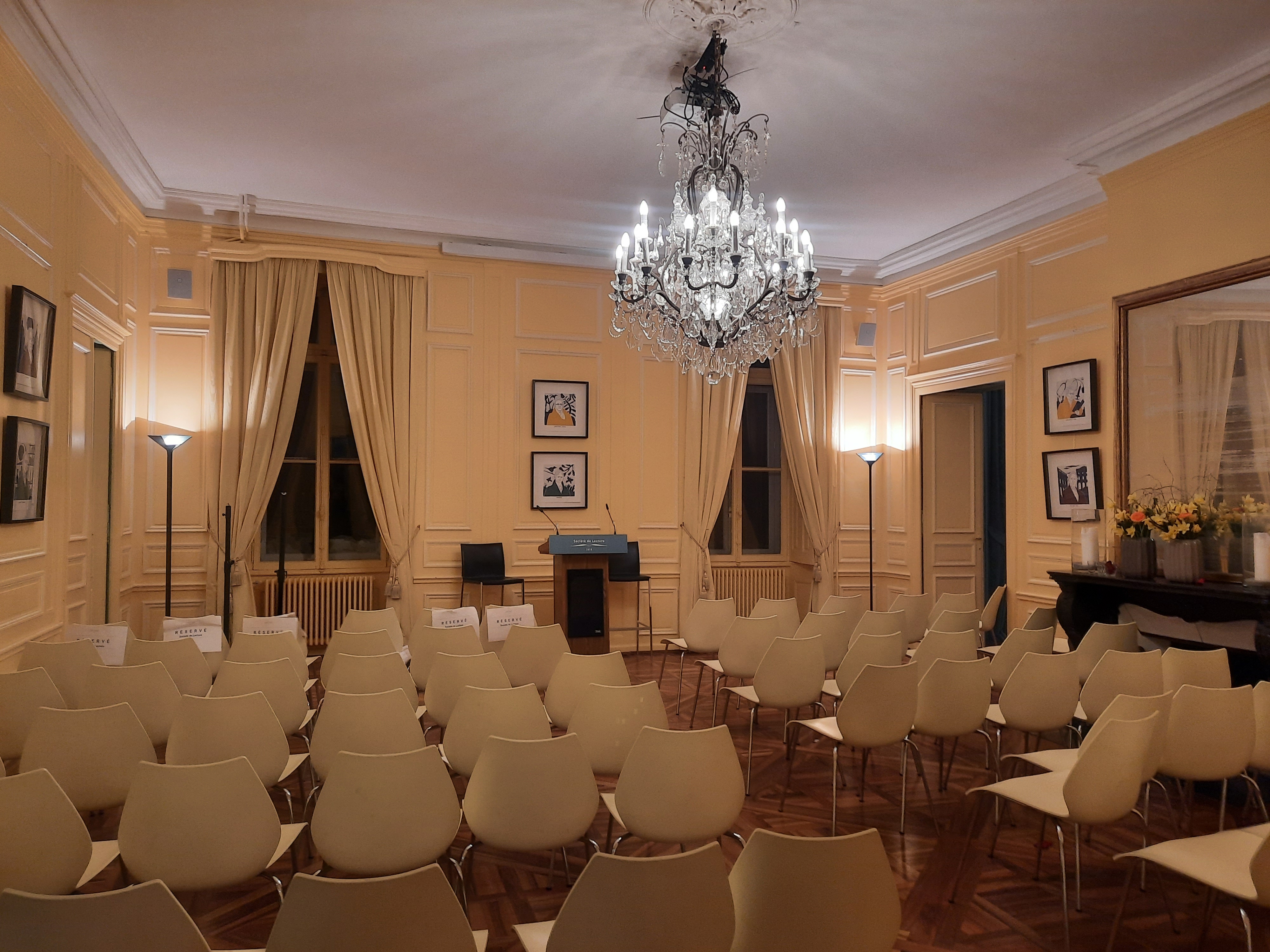
On my own reading pile, I’ve been working my way through the excellent Wyndham-Banerjee series of crime novels, set in Calcutta in the 1920s. I was lucky enough to interview the author Abir Mukherjee at the Société de Lecture in Geneva last week. We were in the beautiful yellow room you see above. I don’t have photos of the event yet.
More reading tips
My standout read of the year so far is Haven by Emma Donoghue, an extraordinary, captivating story set in seventh-century Ireland, featuring three monks on a quest to found a monastery in the most inhospitable place possible – Skellig Michael off the coast of Kerry. It was amazing to be transported back that far in history. Donoghue must be one of the most accomplished writers of historical fiction working today. I can also highly recommend the film adaptation of her 2016 novel, The Wonder.
And there’s a treat in store for fans of Swiss crime fiction with the publication of the second title in the Polizei Bern series by Kim Hays this month. Sons and Brothers centres on the suspicious death of an eminent (but not very likeable) heart surgeon whose body is pulled from the Aare in Bern on a winter’s night. The investigation leads detectives Giuliana Linder and Renzo Donatelli back to the doctor’s childhood home in the Emmenthal region.
Time for me to wrap up and wish the readers of this blog a pleasant Easter break. This is birthday season in our home with three birthdays coming up next week, so my to-do list is taken over by presents, cakes and parties for the next while. A very welcome change.
Lviv, Ukraine – March 2, 2022. Evacuees from eastern Ukraine near the railway station in western Ukrainian city of Lviv.
I did my school-leaving exams in the summer of 1989, what’s known as the Leaving Certificate in Ireland. It was long ago and far away; the world was younger than today etc. Seventeen-year-old me studied like mad in the last couple of months. I always was a crammer.
We felt (and we were repeatedly told) that our whole future depended on how we did in those three weeks of written exams. If you wanted to go to university you had to get enough points overall, counting the six best subjects out of eight. It was intense but you also gained temporary VIP status in the family.
We had to fill in the application form for third level courses in January of exam year. I was good at languages and writing, but clueless about careers. My first choice was a Communications course and my second choice was French and Russian in Trinity College. As it turns out, those two fields have dominated my working life.
Mikhail Gorbachev was the man of the moment. He had been president since 1985 and suddenly everyone knew two new Russian words – glasnost and perestroika. I got into the French and Russian course, and found myself surrounded by enthusiasts for all things Russian. There I made friends for life.
That’s the beauty of higher education, finding other people who tick like you, and diving into the world of your chosen subject. I took a year off between second year and third year, spending the first half working in restaurants in Paris to improve my French and save for Russia. At the beginning of 1992, I was on my way to St. Petersburg for a semester.
The Soviet Union had just ceased to exist, replaced by the Russian Federation and the Commonwealth of Independent States. The Baltic States had achieved their independence, Gorbachev had resigned and Yeltsin was waiting in the wings.
In his resignation speech on Christmas Day 1991, Gorbachev touched on an important point, saying he was “concerned about the fact that the people in this country are ceasing to become citizens of a great power and the consequences may be very difficult for all of us to deal with”.
What he couldn’t foresee was that the culture of lying and repression that the ruling elite were steeped in would be revived to a terrible degree in the twenty-first century under a new self-serving, amoral and extremely dangerous leader.
The time I spent in St. Petersburg was the peak of my love of Russian culture. This memoir essay I read on Irish radio gives a flavour of the excitement. As students of the city’s state university, we had official student cards and could get tickets for everything in roubles.
We could easily afford long-distance train travel, which we took advantage of, visiting Moscow, the Baltics and Ukraine, all the way down to Odesa. Tickets for museums and the many theatre, ballet and opera productions cost next to nothing.
We were able to get by on ten dollars per week, which converted into increasingly large piles of roubles. Unfortunately, ordinary Russians were suffering economically while their better-placed and more corrupt compatriots were stripping the national assets. Organised crime took off.
I lived in Russia a second time in 1999 and I have spent the ensuing years feeling no desire to return. I have regarded the country with increasing dismay as Putin tightened his stranglehold on Russian life. The worst vainglorious tendencies of Russian people, tendencies often displayed by citizens of former empires, have been pumped up and twisted into something truly nasty, with deadly consequences.
Which brings us to today, and the war in Ukraine. There are decent Russians, who don’t subscribe to Putin’s genocidal project. It takes exceptional critical faculties and exceptional courage to maintain any opposition to such a powerful force inside Russia. I salute those people.
The rest of the population is awash in disinformation and short on options. They have been encouraged to take refuge in a dangerous brand of patriotism, built on grievance and false superiority.
I can’t express strongly enough how much I abhor what Russia is currently doing to Ukraine. We had a Ukrainian family staying with us for a few months this year. They have lost everything – their home, their school, their friends and family left behind, their business, their peace of mind, all their favourite things, all their plans.
Those losses are multiplied by thousands, millions, and the sad thing is that these refugees are the lucky ones. Countless others have lost their lives, or suffered horrific injuries, terror, torture, rape, bereavements.
In normal life, most of us apologise when we bump into someone, or rush to help when a person trips in the street. How can it be that one group of people is willing to inflict such terrible damage on another group? It is a question that has always been asked about humanity, a question that haunts me as 2022 draws to a close.
The people of Ukraine are foremost in my thoughts this festive season. As part of a communications project this year, I worked with several Ukrainian colleagues, and I have nothing but admiration for their dignity and fortitude. Even in that small circle, they have experienced so much disruption and fear.
The Russians like to talk about the Russian soul and how special it is. A cancer has taken hold of that soul, and there is a long and painful road to travel before it can be cured. Repentance will be part of the cure, though that seems very far off right now.
I was originally going to write a post about the novels I’ve read this year. One of them is The Orphanage by Serhiy Zhadan. It’s a gritty portrayal of Ukrainian citizens caught up in conflict, a difficult read but worth your time if you want to understand better. A gentler but equally affecting story is Grey Bees by my favourite Ukrainian author Andrey Kurkov.
Wishing the readers of this blog a peaceful and cheerful Christmas break. I hope that we will have happier things to report at the end of next year. Take care.
(Photo credit: see link to the Ukraine-based content platform Depositphotos ‘Say no to war’)
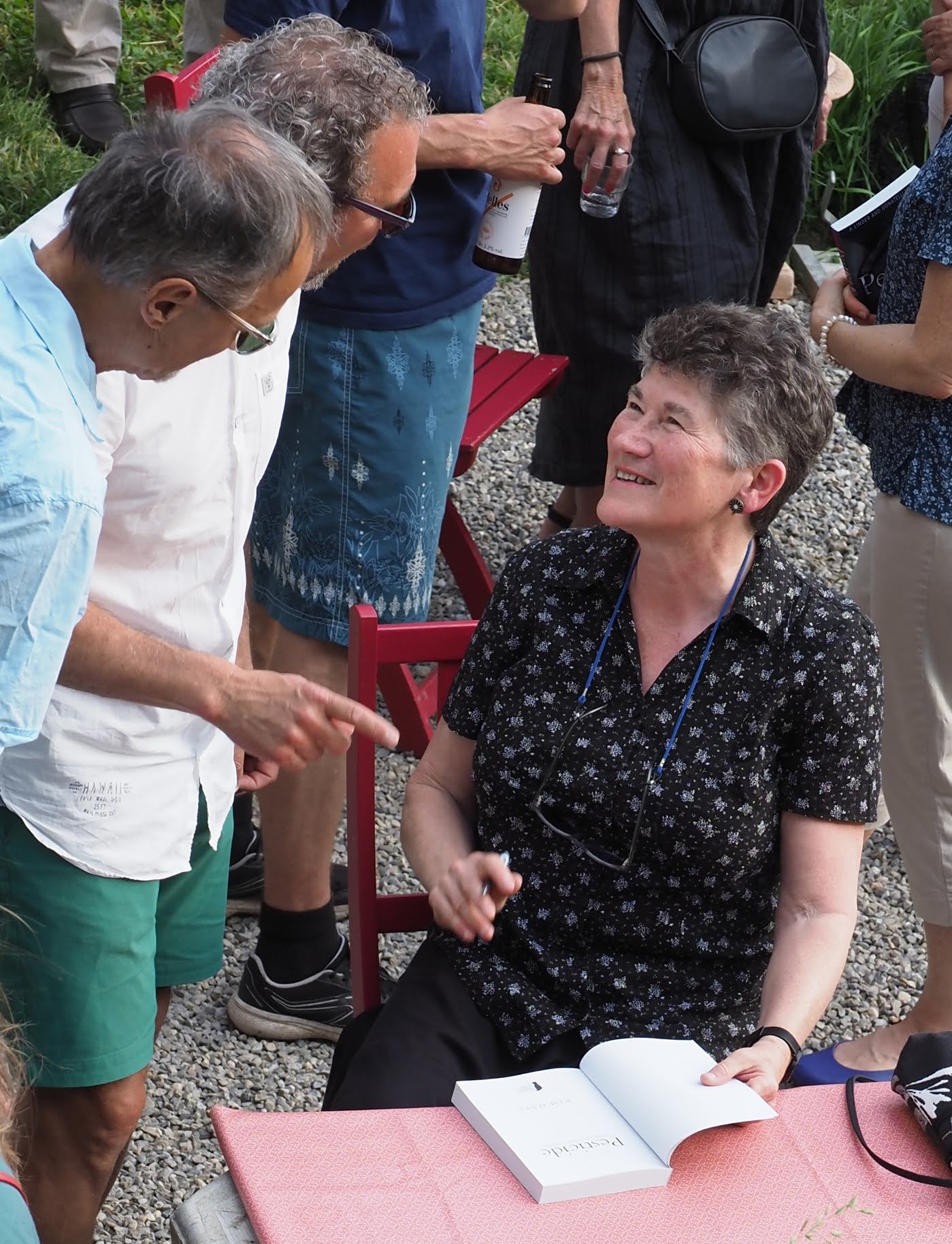
Kim Hays at the launch of Pesticide in Bern (photo credit: Bettina Vollenweider Stucker)
There are lots of reasons why I would like to recommend the work of Swiss-American author Kim Hays. First, she writes great crime fiction, and if you like her debut novel Pesticide, there are more to follow soon in the Linder & Donatelli series. Second, her authentic, clever and gripping police procedurals are set in Bern, a city I know well. Third, she has served her time in the writing trenches and is now enjoying well-earned success. And, finally, she is my friend.
Kim’s heroine in the series is homicide detective Giuliana Linder, ably assisted by her younger colleague Renzo Donatelli. Both characters are sympathetic and have depth and realistic married lives. They grapple with the moral questions thrown up by police work, and the little, or not so little, complication of being attracted to each other. I particularly like Urs, the character of Giuliana’s husband, who is a freelance journalist, working all hours and keeping the home fires burning. Nice to come across a male character in this role.
Swiss noir
The murders are brutal and gruesome as murders inevitably are but the violence is not the focus, nor is it there in any way to titillate – something that puts me off a lot of crime fiction, especially with female victims and sadistic killers. Kim writes the kinds of murders that could happen to people you know, involving murderers you might meet in the corner shop or a Dorffest (village festival).
Kim has a flair for dramatizing the investigation in a really interesting and human way, building momentum, unravelling all the knots, as her heroes doggedly search for the truth, and hopefully justice.
The suspense-filled stories take place in a Switzerland I recognise, an ordinary, gritty, diverse, and complicated place with secrets beneath the surface. The settings are pleasingly far from the clichés of bankers and Alps.
Double murder
Pesticide. No flowers were harmed in the taking of this picture.
Here’s what you need to know about the opening action of Pesticide …
When a rave on a hot summer night in Bern erupts into violent riots, a young man is found the next morning bludgeoned to death with a policeman’s club. Giuliana Linder is assigned to the case. That same day, an elderly organic farmer turns up dead and drenched with pesticide. An unexpected discovery ties the two victims together.
If you want to order the book, you can find it in the usual online places. For Swiss deliveries I recommend Books Books Books in Lausanne or Stauffacher / Orell Füssli. The book is in the system so you should be able to order it anywhere in the US or Switzerland. Published by Seventh Street Books and distributed by Simon & Schuster.
To find out more about Kim Hays, check out her website and blog or read this interview on the Cosy Dragon website. I’ve known Kim since 2016 when I sat beside her at a writing workshop in the Geneva Writers’ Group and we got on like a house on fire.
Summer reads
A little more about my summer reads, which also fall into the category of liking the author before discovering their work. I am just about to start Mother’s Boy by Patrick Gale about the life of the enigmatic British WW2 poet Charles Causley. Before that I read the wonderful Edith by Martina Devlin about the life of Edith Somerville around the time of the Irish War of Independence. I keep finding treasures in this booming genre of historical biofiction.
I have another book on the go about real-life conflict but I’m working through it slowly. It’s much harder to read because it’s set in (recent) present-day Ukraine and it brings the reader straight into the horror of what Russia has perpetrated there. The Orphanage by Serhiy Zhadan is visceral, depressing, eye-opening, staggering. If you think that’s too much to take, Andrey Kurkov’s Grey Bees is a gentler version of blighted lives in the occupied zones, more sweetly devastating but still hard hitting.
Finally, Voting Day was mentioned on this list of summer reads put together by Isabel Costello on her literarysofa blog, which I’ve been following for years. She found my novella “very moving and beautifully written”. I still can’t believe it when I get a reaction like this. Feeling very grateful.
You’re bound to find some reading inspiration on the list. Lest I forget, Isabel Costello’s highly enjoyable new novel Scentis the quintessential summer read, set between Provence and Paris. A heady summer affair from her youth comes to the surface for Clementine in a disturbing way just at the moment when her own marriage seems to be grinding to a painful, empty halt. Clementine is a successful perfumer with her own shop but the time has come to confront the façades in her life.
Happy summer reading, folks! Do report back if you pick up any of these titles.
Spring is in the air and I’m ready for more colour and connection. I think everybody feels the same. At the moment, I’m gearing up for the UK & Ireland launch of Voting Day with Fairlight Books on April 1st. The book will also be available in the United States which is very exciting (links to order below).
When Voting Day came out in Switzerland, this time last year, book shops were closed and the maximum number of people who were allowed to gather was five. It makes me all the more grateful for the opportunities coming up this year – especially an invitation to the legendary Listowel Writers’ Week!
Here are some dates for your diary if you live in Switzerland or Ireland:
March 8 BERN International Women’s Day event in Stauffacher Book Shop, Neuengasse in Bern. Stauffacher was founded in the 1950s and my book is set in Bern in the 1950s. Serendipity! My characters could have shopped there. I’m pretty sure Beatrice would have been a regular.
Doors open for the FRAUEN IM FOKUS event at 8pm. There’ll be music from pop duo Cruise Ship Misery and I’ll be in conversation with the German translator of Voting Day, Barbara Traber. Come along, bring your friends, and let’s celebrate books, women’s rights, music and other positive things. Tickets (CHF 15.00) and more info here. The event is in German.
April 6 ZURICH at the Swiss National Museum (Landesmuseum). As part of the current exhibition Amazingly ambivalent (Wunderbar widersprüchlich), I’ll be giving a short tour and talk on the topic of contradictions in Switzerland. The tour, in German again, starts at 6pm. You can reserve a place at this link.
April 21 DUBLIN for the launch of Voting Day (Fairlight Books) in Hodges Figgis Book Shop, Dawson Street. After two years of cancellations and missed opportunities, I’m not missing the chance to celebrate the new edition of Voting Day. The book will be launched by the lovely Anne Griffin, author of Listening Still. The launch starts at 6pm and everyone is welcome. The more the merrier!
June 1 – 5 LISTOWEL WRITERS’ WEEK in Co. Kerry. One of Ireland’s longest-running book festivals, Listowel Writers’ Week is a famously friendly and stimulating occasion. Lots of great writers have been part of the festival over the years and I’m truly honoured to be asked to present Voting Day in this beautiful part of the world. Date of the event to be confirmed.
For all my books I’ve worked with small publishers and no agent. It’s been a bit of a rocky road but somehow, good things keep happening – just in the nick of time – that make it all worthwhile. I hope I get to meet some of this blog’s readers in person over the next couple of months.
Here are those links I promised to buy Voting Day in different places:
Barnes and Noble (US), Waterstones (UK) and Stauffacher (Orell Füssli). I also have an order form for the four Swiss editions (English, German, French & Italian) on this website, if you want to order directly from me to a Swiss address. Available from O’Mahony’s in Ireland.
And you might enjoy this review I wrote for the Dublin Review of Books of Rosita Sweetman’s wonderful memoir Feminism Backwards. One last link in this link-fest – I really enjoyed writing this essay for the booksbywomen.org website about time travellers and book research. Have you spoken to any time travellers recently?
Marriage is great fodder for fiction. ColmTóibín’s latest novel, The Magician, tells the story of the life of Thomas Mann. In a sweeping narrative, it takes in German culture and politics of the first half of the twentieth century, Mann’s creative life, as well as his family and erotic life. But most of all, according to the author, it’s the story of a marriage.
Tóibín came to Zurich this week, and I jumped at the chance to hear him talk. He was interviewed on stage in a gorgeous venue, the 100-year-old Kaufleuten, a legendary nightclub, pub-restaurant and cultural space. It’s the kind of place Mann might have frequented when he lived in Zurich. James Joyce once had a play staged there.
The character of Mann craves a lot of things – stability, routine, recognition, young men’s bodies. He was one of many homosexual men of his time who married for convenience or safety. Yet his marriage to Katia Pringsheim, a student of physics and mathematics from one of the wealthiest families in Germany, was no less interesting for that.
“The marriage was intense, and the loyalty between them was intense, and the love was intense. It was in many ways a great relationship,” Tóibín said.
I agree, at least in how Tóibín depicts the relationship. But Katia remains a bit of a mystery. Once in the book, there is a scene where she is pressed to justify why she married Mann and she says it’s personal. All she reveals is that her father was a philanderer and she knew she would never have that trouble with Mann (who obviously fancied her beautiful twin brother). Marriage to Mann gave Katie a certain freedom. Coming from a rich, cultured, high-achieving family, he was a prize for her too.
Katia Mann is shown tolerating her husband’s roving eye and infatuations for boys and young men. More than that, she is quite magnanimous about it. Mann’s sexual life was mainly lived in his head and he rarely dared to follow up on these feelings. She seems to have understood that. Now I’m making the same mistake as the moderator on Wednesday night, treating the book as if it were a biography, and Tóibín the biographer.
A rich tapestry
Mann’s life is so interesting – a gay man, literary genius, dissident, exile, father of six extraordinary children, the most famous German voice in the United States during the war – it’s easy to get sucked into only thinking about him.
So, more about the writing. It’s a linear narrative from childhood in Lübeck to the end of his life in Switzerland, divided into chapters entitled the year and place. Overall, a rich tapestry. After lingering in Lübeck, the story skips along through Mann’s career and home life. We enjoy dinner party conversations with a great number of clever and unconventional people, there are terribly poignant scenes of Mann receiving tragic news, his imaginings and travels, moments and settings where he got his ideas – the Davos sanitorium, the famous Lido in Venice – and regular interactions with (mostly negative) political events.
We see the marriage in action, in their conversations and habits, getting to the point as readers where we know what is unsaid between Thomas and Katia. But Tóibín never shows us any physical intimacy between the pair. I wish I’d had a chance to ask why he shied away from the marital bed but there were no questions from the audience.
I managed to scribble down a few notes in the dark. “There’s a difference always between what we think we feel, what we feel and what we say. A novel can show that gap,” Tóibín said.
The German question
The Irish writer had plenty of research material at his disposal to fill that gap. The lives of the Manns have been exhaustively documented in diaries, contemporary accounts and biographies. We even heard Thomas Mann’s voice in the Kauflauten theatre from a 1942 broadcast in English, one of several speeches he made railing against the Nazis. A nice touch.
Mann’s brother Heinrich and three of Thomas Mann’s children were also writers, so we also have their body of work to add to Mann’s oeuvre. Many of the Mann circle were the subjects of biographies themselves. Tóibín credits 35 works in the back of his book. It must have been quite a struggle to stop researching and start writing.
Interestingly, all of the titles Tóibín mentions are in English and I wonder how Germans feel about an Irish writer (researching in English) speaking for Mann who is after all a national treasure. But Tóibín didn’t want to be drawn on this. The interviewer Blas Ulibarri tried to ask about the German reception to the book but Tóibín just said, “the Germans are very nice” and pointedly put his microphone back down on the table. Because he came straight from a book tour in Germany, we would all like to have heard more.
Anyway, I loved the book. A lot happens, there are many scene changes, just as there were in Mann’s life – from his staid home city of Lübeck to Munich, Lugano, South of France, Princeton, Los Angeles and back to Switzerland.
The Nazis’ rise to power is the dramatic engine of the middle part of the book, not just because it forces the Manns into exile but because of the delay before Mann publicly denounced Hitler. His timidity almost cost him the love of some family members. But Tóibín makes this conflict between Mann’s private views and his public position an understandable failing.
Mann’s routine is dull and unchanging, working every morning in his study wherever he lives, taking meals and having conversations with his wife and children, receiving visitors. This lack of action presented a challenge, Tóibín said, but he clearly overcame the challenge. There is ample external drama in between the quiet days: complications with Mann’s mother and siblings, the horror of the Second World War and the unruly behaviour of his children.
Three out of six younger Manns were gay, two of them openly and joyously so, in the years before Hitler choked all the joy out of German life. The same three – Klaus, Erika and Golo Mann – were also prolific writers. All the Mann children were damaged by the experience of losing their homeland, however much they were protected by their parents’ great wealth.
Other gems
Tóibín’sThe Magician(Penguin) is the third great work of biofiction I’ve read this year, all by Irish writers. If you want more after finishing The Magician, I highly recommend Nora (New Island) by Nuala O’Connor, a banquet of a novel written in the voice of James Joyce’s wife Nora Barnacle. Covering the same era, it’s another story of fame, genius, an unconventional marriage, the peripatetic life and difficulties with grown children.
A Quiet Tide by Marianne Lee is the third title, a masterful debut, also published by New Island Books. It tells the story of the great Irish botanist Ellen Hutchins, a solitary and tragic figure. A fascinating and moving novel that depicts the complexity of early nineteenth century Ireland in exquisite detail.
That should be enough reading to keep you occupied when the clocks go back. I have no decent photos from the Kaufleuten venue so I opted for this street view of the famous Bahnhofstrasse nearby. It was fun travelling to another city for a night of culture and meeting writing friends, especially with Thomas Mann’s story so fresh in my mind.
Have you been to a reading recently? If you’re in the mood, the Dublin Book Festival is running until November 12with a fantastic online programme. Have a great weekend!
The Jan Michalski Foundation in Montricher is like a cathedral of literature in the middle of the countryside
My reading list for the first half of the year was weighted in favour of two authors who came to Switzerland, Jonathan Coe from Britain and Andrey Kurkov from Ukraine. I was invited to moderate a discussion with the visiting authors at the Bibliotopia Festival in Montricher in May. Apart from being talented and prolific writers from newsworthy countries, Coe and Kurkov are kindred spirits.
Born in the same year, 1961, both Coe and Kurkov are keen musicians. They both use humour to lampoon the social and political woes of their respective countries. Their work is a pleasure to read, which is just as well because I had to read their books in bulk in a short space of time – The Rotters’ Club, Number 11 and Middle England by Coe, and Death and the Penguin, Ukraine Diaries and The President’s Last Love by Kurkov. I recommend all of the above and I look forward to reading more from these authors.
Hailed as a post-Soviet Kafka, Kurkov’s work is whimsical on the surface with a dark undercurrent. In Death and the Penguin, the eponymous penguin is called Misha and he lives with a lonely writer called Viktor. Misha exhibits human-like emotions, or at least Viktor interprets his behaviour that way. At one stage, Misha looks at his master and considers him ‘with the heartfelt sincerity of a worldly-wise party functionary’. Hungry for work, Viktor agrees to take on the task of writing advance obituaries of VIPs for a newspaper editor. All seems fine until his first subject meets an untimely end. Before long there is an epidemic of untimely ends in the bulging obituary file, as Viktor finds himself ensnared by powerful forces. Through Viktor’s circumstances, Kurkov is making a commentary on corruption and the cheapness of life in Ukraine.
“All was well, or appeared so. To every time, its own normality. The once terrible was now commonplace, meaning that people accepted it as the norm and went on living, instead of getting needlessly agitated. For them, as for Viktor, the main thing, after all, was still to live, come what may.”
In a similar vein, the satirical gem The President’s Last Love, gives us wickedly funny characters in outlandish situations. Following the life of the fictional serving president of Ukraine, Bunin, from his youth in the 1980s, we witness the combination of cluelessness and opportunism which helps him climb up the greasy pole of politics. Bunin goes from an amoral hand-to-mouth existence to an amoral gilded existence, always entangled in blighted love affairs and sustained by heavy drinking. Ironically, when he has the most power, he has the least freedom. Even the new heart he received in a transplant comes with strings attached. You will learn more about post-Soviet Ukraine in this highly-entertaining book than you would from reading a hundred articles, and the story will make you laugh and cry. I can’t wait to read Kurkov’s latest novel, Grey Bees set in the Donbass grey zone, which is about to be published in English.
The third book of Kurkov’s I read was his Ukraine Diaries: Dispatches from Kiev which covers the time of the Maidan protests in 2013/2014. Kurkov lived a short distance away from the square where all the action happened and travelled extensively around the country during those months.
The juxtaposition of everday family life, planting vegetables at the dacha, attending literary events, throwing children’s birthday parties, with the danger, lies and absurdity of the political situation is a great way to capture recent history. It is fascinating to accompany Kurkov, an ethnic Russian, as he experiences the revolution first-hand and observes the crafty machinations of neighbouring Russia.
Incidentally, another speaker at the Bibliotopia festival, the literary activist Mikhail Shishkin, had some alarming things to say about Russia. The Swiss-based author explained that there is a civil war happening in Russia on the internet. “The frontlines are clear and everyone knows what side they are on,” he said. He warned that the war would inevitably go offline into the real world. The problem with Russia has always been the transition of power. “Russia now is pregnant with new states,” he said, predicting that the day Putin is gone, the whole system of Russia will fall apart.
Speaking of formerly powerful empires falling apart, Jonathan Coe does a wonderful job of excavating the cracks running through British society. His twelfth and most recent novel, Middle England, is being referred to as the great Brexit novel. Some of the main characters have appeared in two previous books, The Rotters’ Club and Closed Circle, but Middle England stands alone as a hugely satisfying read. Coe refers to these books as “panoramic serio-comic political novels”.
Middle England gives us the latest portrait of a nation, striking a pleasant harmony between light and dark notes. What shines through is how exceedingly clever and compassionate Coe is, another thing he has in common with Kurkov. Coe gently savages the dull and prosperous areas of “deep England”, graced with enormous garden centres, palaces of time-wasting for those with leisure and money. This is the heartland of Conservative voters who rely on the we-won-two-World-Wars argument no matter what the political question. The absolute rejection of the other side’s point of view, as seen in the divisions between the characters, is not a million miles away from the online civil war in Russia to which Shishkin referred.
Coe takes a broad canvas when he writes about British society, from the London Riots of 2011 to the Brexit campaign to the influence of trans rights activists in academia, all featured in Middle England. With more action and an even broader sweep, Number 11 is a fantastic read. Coe has packed a lot in, very successfully from the uber-rich of London to reality TV to food banks. A series of episodes with interconnected characters, the novel features a mini police drama and a delightful fable about the quest for the security and innocence of lost childhood. It even takes a horror-movie like turn at one point.
The black humour in The Rotters’ Club is even more pronounced. This time we are back in the 1970s, in the youth of Benjamin Trotter. Set in Birmingham where Coe is from, the novel features a big cast of characters. Like Kurkov in The President’s Last Love, this novel is closely aligned with the writer’s generation, time and place. There are stories within stories in The Rotters’ Club and plenty of characters with strongly-held opinions. An interesting way to explore the class system, labour relations, teenage angst and creativity, friendship, sexual discovery, police violence, music and more.
And all along, there are real events which shape the characters’ lives, none more so than the scene (spoiler alert) where two characters are caught up in one of the 1974 Birmingham pub bombings. Coe builds up to the horrible climax so masterfully that its impact is devastating. You think you are in a sweet, love scene but you are actually in a vicious death scene. I hardly ever have the experience of being too shocked to continue reading but I had to put the book down for a while to recover after that scene. Not that there is any gore, just an awful realisation.
I’m going to squeeze in just one more title on the subject of politics. Another writer at the festival (it really was a fantastic line-up) was Philippe Sands, the author of East West Street, published in 2016.
This non-fiction book is partly a memoir and has been hugely popular, even though it is a fairly dense read. The city of Lvov / Lviv / Lemberg is at the heart of the book, along with the Nuremberg trials. Sands traces the stories of three Jewish men and their families from Lviv (now in Ukraine), one of whom is his own grandfather. The other two were legal scholars who ended up connected to the post-war trial through their work on the definition of genocide and crimes against humanity.
East West Street is a powerful and important book. How the author managed to write about those terrible years in such a restrained way is admirable. I loved all the personal details in the background of the three men. Accompanying Sands on his research quest was a great way to tell the interlocking stories. My only complaint is that there was too much repetition of the genocide versus crimes against humanity argument. Sands himself is a human rights lawyer.
So many books, so little time. Thanks to Goodreads, I know that I have read 25 books in the first 25 weeks of this year. When I finish Barbara Kingsolver’s Unsheltered it’ll be a neat one book per week for the first half of the year.
Finally, some snippets of news to do with my work in Switzerland. Back in April, I was invited to take part in the Sunday radio show Les Hautes Parleurs on RTS radio to talk about Brexit. The interview (in French) was filmed and you can view the recording here.
Shortly before that I was the Sonntagsgast (Sunday guest) on the Regionaljournal programme on German-language Swiss public radio, Radio SRF 1. That was a more wide-ranging discussion in German. Meanwhile I am putting the finishing touches to a new writing project, and I will have exciting news about that next month.
That’s all folks. Enjoy your summer reading and do let me know if you take the plunge with Kurkov and Coe!






 Clare O'Dea