The abortion referendum is an empathy test for Ireland

20180502_092901

Something vitally important to the lives and health of Irish women is happening this month in Ireland. On May 25th, voters will finally have the chance to repeal the Eighth Amendment to the Constitution, the one that has allowed the country to deny essential healthcare to generations of women.

I will be in Ireland for the vote and I hope to witness the end of a deep-rooted tradition of silencing and shaming women. This tradition has always been dependent on indifference to female suffering.

Well it’s harder to be indifferent when people start speaking their truth openly. One of the positive outcomes of the referendum debate is that so many Irish women and couples are coming forward to speak out about how the amendment has affected them. The referendum has become an empathy test for the nation.

Just like women in every country in the world, Irish women need abortion, preferably provided with compassion as early as possible in the pregnancy. But unlike women in most Western countries, Irish women are criminalised if they seek abortion. The same applies to women in Northern Ireland. So they have to travel in secret to Britain, if they can afford it, or they buy pills online and go through the termination without medical supervision, afraid to seek help if anything goes wrong.

The Irish abortion ban means fear and danger for Irish women, it means additional stress, delay and expense at a time of crisis. This is nothing less than punishment and it has worked for this long because it fits neatly with the cultural legacy of strict social control of women’s fertility.  

The Eighth Amendment of 1983 acknowledges the right to life of “the unborn” without any definition. It says that the state guarantees in its laws to respect, defend and vindicate that right, with “due regard to the equal right to life of the mother”.

This wording does not just mean that no regular abortion services can be made available in Ireland, it also enforces callous and dangerous restrictions in prenatal and maternity care when patients are at their most vulnerable.  

Currently, a pregnant woman or child with a physical illness or experiencing a medical emergency may only have a termination in Ireland if there is a “real and substantial risk” to her life if she does not have a termination. The same applies to suicidal women and girls. This law dictates everything from the management of miscarrying patients and cases of fatal foetal abnormality to the management of labour in mothers about to deliver full term healthy babies.

In the case of a miscarriage that drags on for days, doctors do not intervene as long as there is a heartbeat, no matter how unwell the patient is. They can only perform a D&C if the woman reaches the point where her life is in danger. Unless, as in the tragic case of Savita Halappanavar in Galway in 2012, they miss that window between extreme suffering and impending death and the woman dies of sepsis.

Suffering is fine. The woman may suffer any degree of physical or mental anguish but as long as her life is not in imminent danger, it doesn’t count. The woman’s health or wellbeing during or after pregnancy does not count. The unborn’s right to life trumps her right to safety or peace of mind from day one.  

The same rules apply to everyone, from a child of 12 in care to a 45-year-old mother of four, regardless of whether she is a rape victim, a cancer patient whose treatment must be suspended or someone with a serious illness made worse by pregnancy. Legally, nothing in the woman’s circumstances matters while she is pregnant. That this injustice has been tolerated for so long is simply staggering.

Switzerland, where I live, allows unrestricted access to abortion in the first 12 weeks of pregnancy and has one of the lowest rates of abortion in the world. The Irish abortion rate cannot even be accurately measured because it is shrouded in secrecy and illegality, even more so since abortion pills became available. You cannot help people if you criminalise them.

The Eighth Amendment was added to the Constitution in 1983 in a context where abortion was already illegal and there was no discernible movement to change that. At that time, up to 4,000 Irish women were travelling to England per year to avail of terminations. Those lonely journeys have continued and are still happening this month and every month.  

The amendment was a pre-emptive strike and a highly effective one too. The complicated realities of unwanted pregnancy, pregnancy loss, fatal foetal abnormality, pregnancy by rape, pregnancy with serious illness, child pregnancy – all of it disregarded in one stroke.

I was 11 years old when this happened. My parents campaigned against the Eighth then and my mother and sister carry on the fight now in the Together4Yes campaign. As a non-resident I can no longer vote in Ireland. But I am counting on my fellow countrywomen and countrymen to show they care and strike back for all our women and girls.

Repeal the 8th

Ps. I have disabled comments on this post to keep the scary element away. You can show your love by liking or sharing.

A Swiss woman of fire and fury

20170226_170655

This time sixty years ago, Iris von Roten was putting the finishing touches to her life’s work, a 600-page cri de coeur on the woeful position of women in Swiss society. A journalist and lawyer, von Roten put years of research into her book, Frauen im Laufgitter: Offene Worte zur Stellung der Frau (Women in the Playpen: Plain Words About the Situation of Women). In ruthless and unsentimental terms, she examined subects like equality in the workplace (or lack thereof), civil rights, domestic drudgery, motherhood and sexuality. This is a work of fire and fury, the product of a free spirit who all around her saw women in chains.

To give you a taste of von Roten’s style and themes, here is a short passage I translated from the opening chapter, “Female professional activity in a man’s world”.

“Every era has its favourite illusions, and one of the most cherished of our century is that of “the modern woman”, the professionally equal, independent and successful woman.

The “woman of today” supposedly has extensive professional fields open to her; in contrast to her grandmother she is active in every job at every level. Even the most prestigious and highly-paid jobs are not out of reach of the capable woman. Where such positions are not yet occupied by women it is only because no woman has yet deigned to clamber up and take the place that the progressive man is hurrying to offer her. Just like a young man, the young woman can attain the job that corresponds to her talents, standing on her own two feet. To wait for a man, to marry so as to be provided for, this is unknown to today’s woman. She marries purely for love, when and whom she wishes, which allows her to complete the work of art – the combination of job, housework and motherhood – running the show and “mastering life with a laugh”. Beside the modern woman stands the progressive man, filled with admiring awe for the proud swan that the ugly duckling has become. He has long ago freed his mind of prejudices and slowly but surely clears the way for the equality of the sexes in the life of the family, the economy and the state.

The reality, however, looks different in some places, and especially in Switzerland.”

You’ve got to love that sarcasm. I would like to see von Roten’s work gain wider recognition in the English-speaking world. Her radical book/manifesto is one of the leading feminist texts of the twentieth century and there is still a lot to learn from it.

For a brief update on the position of women in Switzerland today, check out this article I wrote for the current edition of International School Parent Magazine: Working mothers in Switzerland – something has to give. I’ll start you off here with the opening two paragraphs.

“Switzerland manages to successfully project two flattering but contradictory images side-by-side. On the one hand, it is a rural mountain idyll populated by wholesome country folk, and dotted with chalets, ski resorts and pretty medieval towns. On the other hand, it is a sophisticated economic hub powered by a productive and innovative workforce.

It is nice balance if you can spend your working hours in business Switzerland and your free time in bucolic Switzerland. But for women, it is certainly not easy if you are expected to raise a family in the traditional model while facing all the challenges of the modern workplace. Something has to give.” (Read more)

Carnival season is kicking off in Switzerland. It’s hugely popular but I’ve never really enjoyed carnival much, if I may admit that. I like the effigy (Rababou) burning in Fribourg because, after the long speech, it’s the only part where I don’t feel bored and cold!

Von Roten’s book came out in the autumn of 1958, a few months before Swiss men voted by a two-thirds majority to deny women the right to vote. She had hoped that her carefully constructed arguments would win hearts and minds. But instead of seeing her ideas analysed and debated, von Roten was personally attacked and villified in the media. Some even blamed her for the negative outcome of the vote. Most painfully, she was ridiculed at the Basel carnival, her fellow townsfolk having spent the winter preparing elaborate costumes and floats on the theme of her book.

But don’t let me ruin carnival for anyone. Depending on where you go, it can be spectacular and wild. If you have any good carnival tips or experiences to share, let me know in the comments. I’d also be really interested to hear your thoughts on Iris von Roten’s work.

Another day, another commute from France to Switzerland

DSCN1599

On the eve of Bastille Day last year, I joined several hundred French commuters returning from Lausanne to Thonon-les-Bains after their day’s work in Switzerland. The 50-minute ferry journey against the backdrop of Lake Geneva and the French Alps must be one of the most picturesque commutes in the world.

I made the trip as part of the research for a new chapter about Europe in the second edition of The Naked Swiss: A Nation Behind 10 Myths, due out next month. The chapter examines Switzerland’s relationship with the European Union, and I wanted to see for myself the phenomenon of cross-border commuting in action.

Frontaliers, Grenzgänger or frontalieri make up six per cent of the Swiss workforce. The relationship between Switzerland and the EU is above all a human one, with millions of Swiss and EU citizens interacting with each other every day in workplaces, families and communities. Apart from the 318,500 cross border workers, some 1.4 million EU citizens currently live in Switzerland, while 430,000 Swiss citizens live in EU countries.

As the commuters streamed onto the Général Guisan ferry that summer’s evening, some carrying scooters and laptops, and many still wearing work badges, the atmosphere was jovial. The last woman to make it on board joined a table of friends indoors. “I left the clinic at 27 past,” she announced, before pulling up a chair.  The table soon filled with bottles of beer and glasses of white wine, and the conversation turned to plans for the holiday.

The captain reversed the ship out and swung around to head southwest to the town of Thonon-les-Bains. The 5.30pm crossing in the Général Guisan is one of 28 daily crossings between the two ports each way run by CGN ferries. Some 600 people make this particular crossing every day.

I wandered around with my camera taking pictures, and struck up a conversation with a Swedish marketing director and an IT worker who were having a drink outside, sheltered from the strong breeze at the stern of the boat.

Both were returning to their homes in the Thonon area. We were out in the middle of the lake, where the border lies. “The border is not important,” the Swedish woman said. “We live and work in the same region.”

The journey is not always as pleasant as it was on that July day. “It can be magnificent, travelling when the sun is setting or rising,” the IT man said, “but in the winter, travelling both ways in the dark, we feel a bit like cattle.”

They both agreed that working in Switzerland is not complicated. It is not complicated because, after fifteen years of free movement of labour between Switzerland and the EU, Swiss employers are used to cross-border workers. All the necessary arrangements are in place, including the mutual recognition of professional qualifications, exemption from taxation at source, and coordination of social insurance systems. For more information on cross-border workers in Switzerland, see this summary.

The average age of the ferry passengers I travelled with was 30 to 50. The scooter riders queued at the door as the ferry docked, eager to get off first.

Thonon was lively the day before the French national holiday, with all generations out on the streets in a festive mood. The next morning I expected there to be much fewer people on the 6.30am ferry to Ouchy, Lausanne but it was still quite busy.

DSCN1609

Understandably the atmosphere was more subdued, with some people already in work mode on their laptops, other sipping coffee and staring into space and a few tired souls with their heads down on their arms sleeping.

I chatted to some hospital staff from Lausanne’s university hospital CHUV. They were blasé about their special circumstances, as only French people can be blasé, but I left the ship impressed with the slice of life I had witnessed, and keen to understand more about the special relationship between Switzerland and the EU.

Do you have any experience of cross-border commuting in Switzerland or elsewhere? Have I painted too rosy a picture? I’d love to hear more first-hand perspectives on this.

Enough of the faux confusion over #metoo

20171029_140758

Let’s get one thing straight. You cannot sexually harass or abuse a woman without realising you are doing it. This is active, deliberate, targeted behaviour that some men choose to engage in. That means they don’t do it to everyone. They do it when and where they can get away with it, and they want to do it.

Last night I watched a Swiss TV report in which about 20 men were interviewed about how difficult it is now interacting with women and how they don’t know if they can give a compliment anymore. This was the line of questioning from the woman journalist. As in, literally, “do you feel like you can’t give a compliment anymore?” The report was part of a longer item on the #metoo phenomenon, a wave of truth telling by victims which grew from the Harvey Weinstein revelations and the numerous allegations against powerful men that have followed.

What a perfect example of conflating two totally different problems, involving two totally different groups of people. On the one hand, men who find it hard to gauge their charm skills, and on the other hand, men who get sexual gratification from making women uncomfortable or afraid.

Bottom line, if you worry about women taking your comments or your birthday hug the wrong way, you are not a predator, you are socially inept. Predators don’t worry about these situations, and falsely presenting predator behaviour as social ineptness is the very definition of disingenuous.

If this is the message that reaches those hearing about #metoo from a distance, people who do not even bother to read the stories of horrible experiences or ask the women in their life what it means to them, it is a crying shame.  

Here is what #metoo means: humiliation, fear, shame, flashbacks, and nasty memories that make you sick to the stomach.

Remember, these toxic men cross the line when and where they can get away with it. One of the perks of getting older is that you fall off the radar of creeps like this. They know who they can embarrass or intimidate into silence, most often girls and young women. So, apart from the risk of a very random event, I feel safe now in my daily life. I am now a person who will tell an aggressor to fuck off, I will report them and, most importantly, I have credibility. They know that and they act accordingly.

But I know that girls and young women are still in the firing line. My direct experience of male sexual violence and harassment was worst between 11 and 22, give or take. I can think of at least a dozen incidents when I felt frightened, in danger, and disgusted by the behaviour of predatory men. And I’m not talking about compliments.

For starters, I’m talking about exhibitionists, the dirty old men and young men that waited in the lanes and backstreets of my neighbourhood to expose themselves to schoolchildren. If you think flashers are harmless, please understand that the victim does not know it will end there. Every time it happens you dread that maybe this will be the one that grabs you, and does those acts you don’t understand but you fear so much.

I’m talking about inappropriate comments in the workplace. When I was 16 and working in my first proper job serving drinks in a bar, there was a barman who would tease me with questions about my non-existent sex life. He only did this in front of select others who would either laugh with him or blush with me. Did you have sex last night? How many times did you do it? And on and on. He knew what he was doing. I did not know how to handle it. He would not speak to me like that now.

I’m talking about being followed and pestered on public transport and in the street, telling a guy to leave me alone and not being left alone, being called ugly names instead. I’m talking about a boss more than twice my age and weight trying to get sexual with me. There is nothing subtle about this, these are not misread signals or clumsy compliments, this is groping and forced kissing and someone trying to physically overpower you.

You good guys, you know who you are. You are the majority and we love you. Partners, friends, workmates, neighbours, cousins, you make us comfortable, you make us laugh or smile, you want to treat us well and you do. It’s that simple. The others don’t want to treat us well and they don’t. No soul searching or faux confusion required.

Based on what the wonderful women in my life have told me, I know that my experiences of sexual harassment are on the minor end of the scale and that is a serious relief. I have heard tales of child rape and gang rape that chilled my soul. I know there’s a hope that teaching young men about consent will make potential aggressors think, oh now I get it, respect women. I’m not convinced. My feeling is, you are either a decent man who cares how you make women feel or you are not, and you know damn well which one you are.

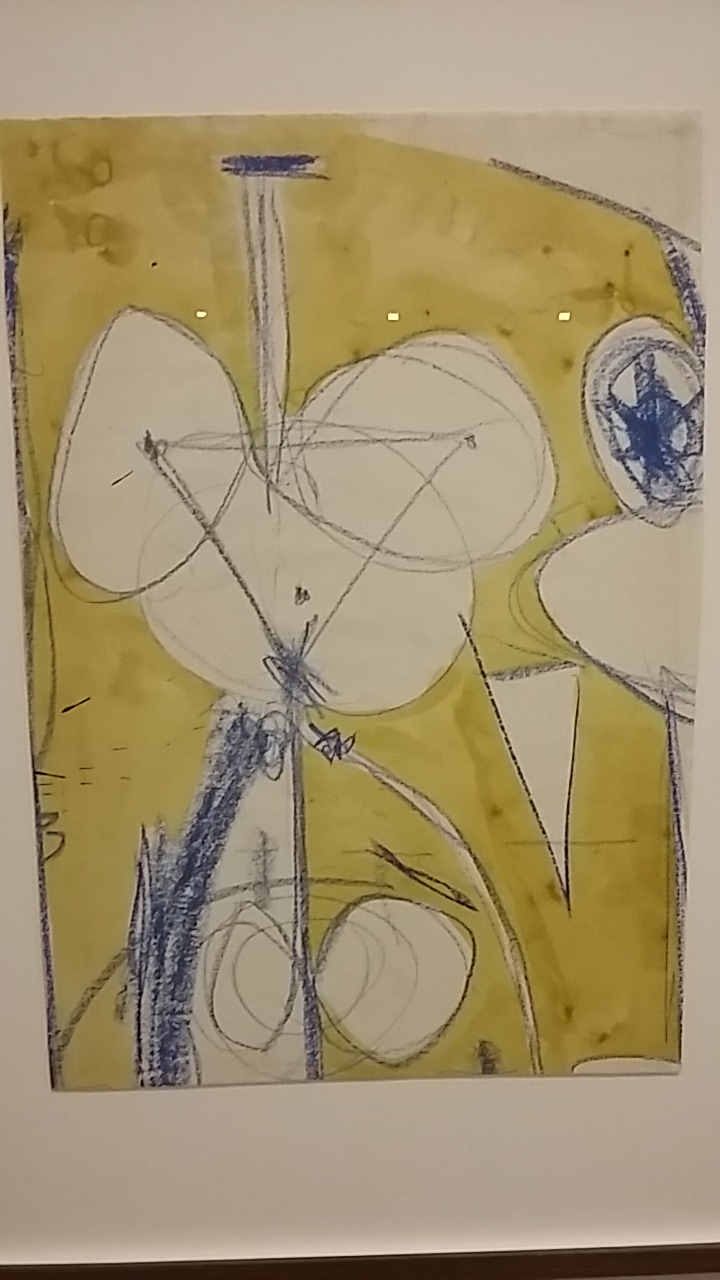
(That painting is Concept of a Woman by Robert Motherwell, 1946, currently on display at the Paul Klee Museum in Bern.)

My Swiss TV debut on Telezüri

English-speakers are really spoilt in Switzerland, more than any other language group. The locals gladly switch to English at the first opportunity, call centres for banks and insurance companies have English-speaking operators, most websites have an English page, and the state even produces much of its official documentation in English.

Of course that makes it harder to learn the national languages but most of the time it’s an advantage. I’ve written before about the challenges of being a non-native speaker when you live in a foreign country. My language ability varies, mainly depending on levels of confidence and tiredness in a given situation. That’s why is was such a breakthrough for me to accept my first television interview in German and to get through the interview in one piece!

This time last week I was googling tips to prepare for a television interview. Now, the interview is behind me and it’s a huge relief because everything went well. Not that I didn’t make any language mistakes but I managed to make my points clearly and calmly. The 25-minute discussion was broadcast yesterday by Zurich television station Telezüri. The host was Hugo Bigi and I was joined on the Talk Täglich show by fellow Bergli Books writer Wolfgang Koydl, author of Switzerland: A Cartoon Survival Guide. Above is a clip from the interview, and you can view the full programme on this link.

The Telezüri interview was a real case of stepping outside my comfort zone. It was daunting but extremely rewarding. Speaking in public is challenging for many of us, whether it is giving a presentation in work or asking a question in a lecture hall. One of the positive outcomes of writing The Naked Swiss has been that I have been forced to practice public speaking. Now I am at the point that I really enjoy it. It is a privilege to be given a platform to express your ideas, and I am glad to have overcome my fears, as a woman, as a semi-introvert and finally, as a foreigner, so that I can speak up and be heard.

Swiss-based authors: Anne Korkeakivi

DSCN1553

I took a walk on the wild side of Geneva with American author Anne Korkeakivi, the third subject to feature in this swissinfo.ch series of English-language writers based in Switzerland. The author of two novels, Shining Sea and An Unexpected Guest (both published by Little Brown), Anne’s work has been described as “eloquent” and “captivating”.

The New Yorker had a successful career as a journalist before she decided to try out her fiction wings. She stopped producing nonfiction work, taking a job as an editor for a French publishing house, and gave herself twelve months to make a go of fiction. She sold her first story in the eleventh month.

That was the encouragement Anne needed to devote herself to fiction. I spent a morning with Anne, walking through the woods and backroads of Geneva. Having lived abroad for most of her adult life, she is content to live in such an international city. This global spirit is evident in the many different locations Anne features in her work – from Paris to the Philippines to the Hebrides.

Anne’s two novels are very different in scope and tone. The action in the first, An Unexpected Guest, takes place over one day in Paris, as a woman married to a diplomat realises what shaky foundations her well-ordered life is built upon. Shining Sea has a panoramic sweep, following the lives of the large Gannon family over several decades and continents. You’ll find more information about Anne and her work on her website.

Also featured in this series is Susan Jane Gilman, author of The Ice Cream Queen of Orchard Street and three nonfiction books, as well as Jason Donald, author of Dalila and Choke Chain. There is one more author to come next week to complete the talented quartet.

Death of a great Swiss leader and suffragette

DSCN1511

I was very saddened to learn of the death of Marthe Gosteli, one of the leading campaigners for women’s right to vote in Switzerland, who died on April 7 at the age of 99. I had the honour of interviewing Dr. Gosteli in her home in December 2015. We sat in the front room of the pretty old country house in Worblaufen near Bern, surrounded by evidence of her life’s work – the archive of the Swiss women’s rights movement. The other evidence of her life’s work is that I as a woman had the right to vote when I was granted Swiss citizenship, also in 2015.

Dr. Gosteli impressed me with her sharp intellect and vigour, despite the frailty imposed by her advanced years. There was no doubt she was still a formidable woman. But she was also warm and welcoming.

In her capacity as president of the national umbrella body for women’s associations, Dr. Gosteli negotiated with the government in the lead-up to the 1971 vote. I think of her not only as a campaigner but as a leader. She helped lead the Swiss out of the dead-end in which they were trapped. Massive societal change was needed for women and men to recognise the full potential of women. There was even a counter movement of women’s organisations objecting to the political goals of Dr. Gosteli and her colleagues, and actively fighting against them.

We talk about positive energy a lot these days. Nothing can match the positive energy of Marthe Gosteli and her collaborators. The only time she seemed wistful in our interview was when she mentioned how she missed the camaraderie and friendships of those years. We can only imagine the tireless dedication and team spirit of these women, losing many battles before they won the war.

The real challenge for Swiss suffragettes was winning the argument with male voters who held the real power in the direct democracy system.  Swiss women would not get the vote until Swiss men in all cantons used their electoral power to grant it. Gosteli and her colleagues were fighting a battle on dozens of fronts: “Many people don’t understand why it took so long. We had to win on three levels – communal, cantonal and federal. Full political collaboration was only possible when we had the right to vote on all three.”

Marthe Gosteli worked for the Swiss Army press and radio division during the Second World War and later for the American Embassy information service, before devoting herself fully to the women’s movement from the 1960s. The only complaint Dr. Gosteli had, she said, was that the achievement of female suffrage had lost recognition in Switzerland.  “Huge work was done by many brilliant women in our country and no-one knows about it.”

May she rest in peace. Marthe Gosteli (22 December 1917 – 7 April 2017)

Where to get your Swiss news in English


Because so much big news happens in Switzerland, from peace talks to banking scandals, there is an abundance of Swiss news coverage in international English-speaking media. But if you live here, you will probably be interested in finding reliable sources of news and information relevant to residents.

If you look at home-produced news in English, the pool is relatively small. Here is a guide to some of the main news outlets and what they offer.

The most authoritative and extensive source of Swiss news in English (disclaimer: I worked there from 2005 to 2015) is swissinfo.ch. Bern-based swissinfo.ch, which operated in a previous incarnation as Swiss Radio International, is a unit of the state-funded Swiss broadcasting corporation SRG SSR idée suisse. It provides daily news coverage in ten languages, along with in-depth articles, video news and features, podcasts and galleries.

Swissinfo employs some 40 journalists, Swiss and foreign. Like all news organisations, it is evolving to be more fast-paced and social media-friendly, but it still has a relatively-traditional solid structure with an editor-in-chief, editorial department heads, picture editors etc., all of whom are subject to high professional standards.

Another website providing Swiss news is The Local. This is an English-language digital news publisher offering daily news, business and features, that originated in Sweden in 2004. It now has outlets in nine European countries. Run by a small team, with additional material from freelancers, the editorial style is light and accessible but the information is well-researched by journalists who have a good grasp of Swiss current affairs.

For those who need to keep up with business and financial news, finews.com conveniently translates the daily news written by its staff journalists in Zurich.

World Radio Switzerland (WRS), broadcasting from Geneva, was offloaded by the Swiss Broadcasting Corporation in 2013 and is now in private ownership. The station features a diverse mix of programming, including talk radio, magazine, business, culture and music shows. It runs news bulletins and publishes short news stories on the website. There are various ways to listen, detailed here.

WRS and The Local have to be commercially viable, so they also carry advertising and have separate sections featuring property listings and other earning links. The same applies to Le News, which covers national news with a regional focus, catering for people in the Lake Geneva region. Le News publishes a fortnightly newspaper with a large entertainment and events section, which is distributed free in the region.

In the entertainment and lifestyle category, the most prolific site is Newlyswissed.com, which covers culture, design, events and tourism. Newlyswissed regularly features listicles and has a light-hearted and humorous touch, well displayed by the current feature suggesting alternative activities for Valentine’s Day for singles in Zurich. A lot of the content is Zurich-oriented.

Other popular websites aimed at the Zurich market, with a strong what’s-on focus, include New in Zurich, which features many different writers, and Girlfriend Guide to Zurich, which bills itself as the ultimate directory to living in Zurich.

Basel has Basel in English, a one-stop shop of information for English-speaking Basel residents, and The English Show on Radio X from 18.30 to 20.00. And Zug has The Zug Post, a media partner of local newspaper the Zuger Zeitung. Because of its link to a local news player, this site provides more general local news, something it would be good to see more of.

And finally, Hello Switzerland is a comprehensive guide to relocating and living in Switzerland, with a free quarterly magazine in English. All of the above are also active on Facebook.

It’s not easy to make an exhaustive list but I hope I haven’t left out an important news or information provider. Please let me know if there’s a website that should be added to the roll call. And of course, there is an enormous range of news outlets in the local languages which are essential reading if you want to branch outside the English-speaking community. Maybe I’ll do a follow-up post with a guide to Swiss newspapers. A much bigger subject to tackle!

Meanwhile, if you are interested in putting Swiss news in context, check out my nonfiction book, The Naked Swiss: A Nation Behind 10 Myths, published by Bergli Books in October 2016.

All aboard the Swiss-bashing bandwagon

clint-eastwood

This week two Swiss newspapers reported on the problem of the “Swiss stare”. Apparently “expats” (I need a separate blog post to explain what I find wrong with this word) have been complaining online about how they dislike it when Swiss people stare at them. The fact that both papers quoted a forum discussion from 2013 gives an indication of how thin this story is.

I am used to Swiss-bashing articles appearing in the English-language media but when I see Swiss newspapers jumping on the bandwagon, I think it is unfortunate, to say the least. All it does is make everyone look bad.

Here’s the interesting part. I heard about the “Swiss stare” when I was contacted by one of the newspapers in question earlier this week, and asked for my take on the issue. I said, honestly, that I had never found it a problem. I’m a bit of a starer myself so maybe I’ve come to live in the right place. In my view, Swiss people in public behave quite like introverts. They are happier to observe others than to draw attention to themselves. That is the group dynamic rather than a reflection of individual characters.

The journalist did not use my answers because they did not fit into the thesis he was presenting. Fair enough. It’s a trivial enough subject and not a serious newspaper so that’s OK. But in the long run, these sorts of stories have a cumulative negative impact, and this is one of the reasons I was motivated to write The Naked Swiss. This quote is from chapter one:

Particularly in the English-speaking world, but also among Germans, there is a great appetite for ‘aren’t they strange’ cultural commentary stories about the Swiss. As a general rule, any piece that makes the Swiss appear ridiculous or sinister, or both, is welcome. The result is a caricature of the cat-eating, obsessively recycling, robotically-dull and silly rule-making Swiss that has been so carefully constructed over years that it may never be dismantled. It’s tough being the rich kid of Europe.

Is there any point in me pointing out that this is a multi-cultural country with a much higher proportion of foreigners than the UK or US (13% in each)? One in four people living in Switzerland are foreign-born. That proportion could well be higher on public transport. How do you even know if the person who stared at you on the train that time is Swiss?

But even if it is a real thing that Swiss people do above all others, I’m not sure why this has to be a problem. When I travel, I neither want nor expect the rest of the world to behave like Irish people. I have never been under the illusion that the Irish way is the defining way of behaviour worldwide. Maybe this is a big country / small country thing. If you don’t count Irish pubs, Ireland has never attempted to dominate the world (or indeed any other country) with its norms and culture. I wonder if it is easier to accept differences in other places if you come from a smaller, more insignificant country, or is it mainly down to the individual’s capacity to accept change and adapt?

In the introduction to my book, I quote Siri Hustvedt who said “no person leaves themselves behind in order to look at a painting”. Our individual responses to a work of art depend on who we are, our character. I think the same applies to our individual responses to a country as immigrants.

So, what can you tell me about the “Swiss stare”? Is it real or imagined? Does it make you dislike the Swiss in general? Or could it happen anywhere? I would love to hear some different perspectives on this from anyone who has experience of living in another culture.  

In praise of coworking (and other news)

20160707_172319

An early adopter is a person who starts using a new technology or product as soon as it becomes available. I am more of a chronically-late adopter, but that doesn’t stop me from being enthusiastic about the new thing when I eventually discover it for myself.

When I wrote a few months ago about how much I was enjoying my new self-employed lifestyle, the only drawback I mentioned was that it had been difficult, based at home, to keep working time fenced off from family and house duties. The other thing I didn’t mention was the isolation that goes with working solo. Social media makes up for this to some extent but it doesn’t beat having a little catch-up over coffee with real human beings.

I first heard of coworking through a video journalist colleague at swissinfo.ch who was working one day per week in a shared office space to pursue film and animation projects outside his regular four-day per week job. I thought it sounded great but I wasn’t looking for something like that at the time. Besides, I thought, that’s the kind of thing you only find in big cities.

And then one day this summer, when things were a bit hectic at home, I did an impulsive google search for ‘coworking Fribourg,’ and immediately struck gold with Colab Fribourg. It turned out that there was an ideal co-working space just five minutes’ away from where I live.

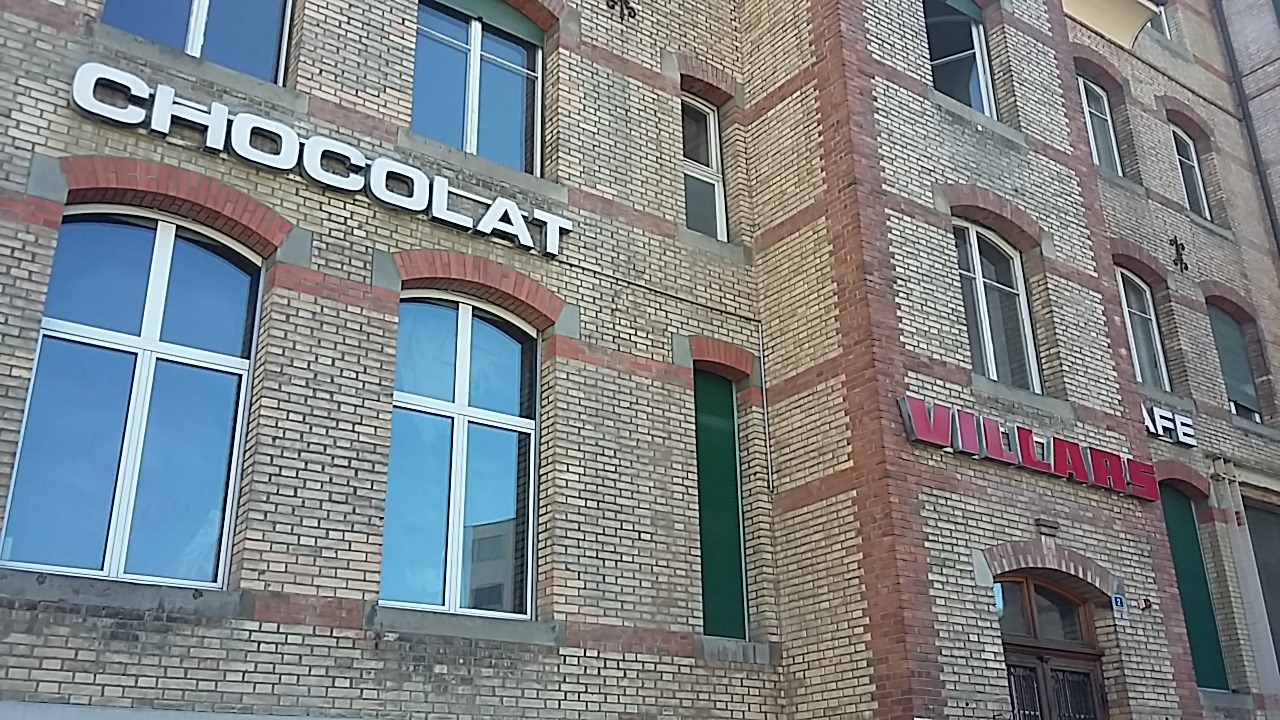
Colab Fribourg is an initiative of local entrepreneur Philippe Lang of attik.ch. It has the special attraction of being located in an atmospheric old building in the old industrial part of Fribourg. Not only that, the large, bright office space is directly above the Villars chocolate shop and café. People come from miles around to buy chocolate there.

It is a quiet working environment (with kitchen, meeting room etc.) but Philippe is currently converting a second room with a built-in phone cabin to cater for people who need to talk more and make phone calls.

I have met people from lots of different countries and professional backgrounds in Colab. Many are working on interesting projects. Some of these – like distributing solar panels in Africa, or coaching small businesses – are easy to understand. Others are at the innovative (and more obscure) end of new technology. I hate the word synergies but it is possible I could link up with some of these fellow Colab workers in future.

Apart from pooling resources, the advantage of self-employed people sharing an office space is that you can have as much or as little contact with each other as desired. In that sense, it is different to a regular working space where it’s more difficult to have a quiet day not talking much to colleagues.

In other news, I am getting very good feedback about The Naked Swiss, most recently this five-star review from nudge-book.com, in which the reviewer says she enjoyed the book so much she read it in one sitting. Check out this quote:

“Clare O’Dea’s writing is informative without being too dry, and her clear, well-structured style means that this is a fascinating read, occasionally funny, but never boring. It is an excellent social and historical portrayal of the Swiss nation.”

Last week I went to Basel to the home of Bergli Books’ parent company Schwabe Publishing. A good crowd turned out in Schwabe’s book shop Das Narrenschiff for an author talk and book signing. We ended up having a long question and answer session afterwards where I heard from people of several different nationalities. I’m really glad the book is also appealing to readers outside the English-speaking community. Fellow Irish author Padraig Rooney came along to the Narrenschiff event. I am currently reading his book The Gilded Chalet, a highly enjoyable crash course in literary Switzerland.

This week saw an interview about The Naked Swiss by Zurich-based freelance journalist Jennifer Lisle, published in newinzurich.com. It’s great to be getting the word out about the book. I hope I can come to Zurich soon for an event – just have to find the right co-host and venue.

Finally, the big news is that Bergli has reached an agreement with another Swiss publisher Helvetiq to bring out the French and German translations of the book next year. I’m delighted the book will reach a much wider audience in Switzerland. If you find any mistakes, now is the time to tell me!