Rendezvous with a sheep farmer

canis_lupus_-_juraparc_vallorbe_vaud_switzerland_-_20090822_-_01

When a wolf attacks a flock of sheep they run but don’t scatter. The wolf circles the terrified flock biting anything within reach. That’s why there is so much damage. In the small canton of Glarus in central Switzerland a farmer lost ten sheep and lambs in one attack two summers ago. He made the grim discovery when he went up to check on his flock on a high mountain pasture above the town of Näfels. What made the Glarus attack special was that it was the first confirmed presence of a wolf in the canton for more than two centuries.

I had seen the story on the wires and decided to follow up on it. A few days later I had a rendezvous with the sheep farmer at 7.30a.m. I was the only guest in the B&B. The retired couple who ran the place served me a banquet for breakfast. They watched me eat with solicitous care, possibly still alarmed by my admission that I had left my children at home overnight. I explained that the children were in the care of their father but that did not seem to diminish their concern. No mother will ever feel unimportant in Switzerland.

This carefully prepared Swiss breakfast was a treat for the senses. Little ramekins of home-made jams sat next to a plate of cold cuts of meat. A loaf of fresh Zopf bread was draped with a white napkin, ready to be sliced, and the cheese board beckoned with a wealth of tastes and textures. There was a constant supply of fresh coffee and hot milk. The man of the house accepted my compliments for his special creation, carpaccio of fennel served with dill and vinaigrette. I was ready for my hike.

Before I travelled there, the only thing I knew about canton Glarus – one big valley, lots of mountains – was that it was where Switzerland’s ‘last witch’ was beheaded in 1782. I had once interviewed a local historian about the subject by telephone. Anna Goldi was a servant woman who worked for an influential family in the village of Mollis. When one of the children in her care sickened and allegedly coughed up pins, Anna was accused of witchcraft and locked up. Rumour had it she was also having sexual relations with her employer, information which would have been damaging to him if made public. Incredibly, even though the child recovered, Anna was sentenced to death by the Protestant church council, fifty years after the last similar execution for witchcraft had taken place in Germany. She was officially exonerated by the cantonal parliament in 2008 and there is now a museum in her memory.

The sheep farmer was waiting for me outside the train station. A stocky man with an Amish-style beard – Switzerland is home to the original Mennonites – he pointed to the high grey cliffs looming over the town of Näfels. Above the wall of rock I could see some patches of meadow in between the trees. That’s where we’re going, he said.  We drove a short distance outside the town and then began the hike up.

As we walked, we talked. Robert, a carpenter by trade, was a hobby farmer who brought his sheep up to graze in the Alpine meadow from May to September. The land he rented for a nominal sum from the commune of Näfels, a system of commonage that has survived since time immemorial. Most of the Alpine meadows in Glarus belong to the communes, he told me. He walked up three times a week, an hour each way, to check on his flock. I began to think I had met the quintessential Swiss man, a man who only needed a change of costume to seem right at home in the time of Anna Göldi and the last wolf in Glarus.

Robert pointed out tufts of black wool on the path. The wildlife ranger who had passed by there earlier in the week to inspect the scene of the wolf attack said that wool had been coughed up by a bird of prey after it had fed on the carcasses of the sheep.

The conversation had to stop when I ran out of breath, and we climbed steadily up the steep forest path. When we got above the tree line, a tiny mountain chalet came into view. A wizened old man was sitting outside the hut smoking a pipe, the shepherd. Aha, another character from the 18th century, I thought.

But behind the timeless traditions and rustic conditions, a modern, sophisticated, state-funded system was at work. The wolf’s DNA had already been gathered and sent off for testing and its presence would soon be recorded on the website of the monitoring group.

The old shepherd with the weather-beaten face was called Walter and he came from Valais on the other side of the country. He works with a sheepdog protection service that is mobilised within a couple of days of a wolf attack, run by Agridea, a national agriculture development agency. He had come with two sheepdogs, white-haired Italian Maremanno-Abruzzese, who did not take too kindly to my visit. Walter was there to get the dogs settled in and they were due to spend the rest of the summer on the alp, guarding the sheep.

Walter was a retired sports teacher turned sheep farmer and sheepdog breeder who had achieved his dream of living far away from and, in his case far above, the madding crowd.

The three of us sat on the bench outside the hut enjoying the morning sun and eating slices of dried sausage and cherries from Robert’s garden. Two border collies that Walter had brought along for company watched our every move, especially when the slices of sausage were involved. There was construction work going on in the valley and the low buzz of civilisation drifted up to us.

Later, Walter and I chatted about wolf and sheep matters while Robert cleared a large patch of thistles and nettles with a scythe, another subsidised task, under the protection of the mountains scheme.

I went to see the sheep to take some photographs, as close as the sheepdogs allowed me to get, and too soon, it was time to hike back down to roads and cars and houses and crowds. I was reminded of the allure of the mountains and the precious escape they provide to many Swiss people. Some argue that things are getting too crowded at high altitude too, as farmers, tourists and wildlife compete for space. I hoped the wolf would continue on her way and choose her next meal more carefully. If you’d like to read the story I wrote for swissinfo.ch about the return of the wolf, click here.

My non-fiction book about Switzerland, The Naked Swiss: A Nation Behind 10 Myths, partly draws on my years of reporting for swissinfo.ch, such as this trip to Glarus. Now available to buy through the publisher Bergli Books and on Amazon, it will be officially launched in Switzerland tomorrow. I’m really looking forward to feedback from readers, so don’t forget to rate or review on Goodreads or Amazon, drop over to my Facebook page to comment, or simply tell your friends about The Naked Swiss.

Image courtesy of Micha L. Rieser, Wikipedia Commons

Would you pass the Swiss sleeping-in-straw test?

csm_Heubuehne_1_gross_ef4165d139
The ‘Stroh Deluxe’ room in Hotel Kemmeriboden Bad in the Emmental is a world away from the real thing

The longest night I ever lived through in Switzerland was spent half way up a mountain in a barn, my head resting on a rough pillow several feet above a calving cow. Although 90 per cent of the population lives in the lowlands, the Swiss like to think of themselves as a mountain people, and therefore they celebrate all the trappings of rustic mountain life. When the idea of ‘sleeping in the straw’ came up, I took my cue from my enthusiastic Swiss friends and convinced myself it would be a fun thing to do.

It was a chair lift ride and half a day’s hike to get to the chalet where a farming couple were spending the summer looking after their herd of two dozen cows. We ate fondue outside and watched the sun set over the pre-Alps. I had to agree it was lovely. When we were shown to the accommodation upstairs – rough-hewn wooden bunks with the promised straw-filled mattresses and army blankets – I thought it could have been worse. I hadn’t taken vernacular Swiss architecture into account.

To keep everybody warm in winter, Swiss farmhouses traditionally integrated the family’s living quarters and the barn or cowshed under one roof. We were actually sleeping in the old hay loft, directly above the stall. This soon became clear from what I could smell through the gaps between the floorboards. One cow was being kept in for the night (I soon discovered why) while the rest were free to roam outside. When I resigned myself to the smell and the occasional sounds of snorting and stamping from downstairs, it seemed like sleep might be possible.

I awoke from a short and fitful sleep to distinctly more unhappy sounds coming from the cow below. I don’t know how many hours that poor cow was calving but I didn’t sleep a wink throughout. It did eventually come to an end and finally the light went out and the sound of lowing and voices was gone. All was not lost, I thought, dawn was still at least an hour off. I hadn’t reckoned on the morning milking, which started after what felt like a mere moment of shut-eye. First the whole house shook with the thundering of twenty-four sets of hooves on the wooden floor, and the clanging of twenty four cowbells, as the cows came in to be milked. Then the milking machine generator started up, also seemingly located directly under my bed, with its own penetrating noise. Eventually I was lulled back to sleep by the chugging – until it stopped. But then it was time for the cows to be let out, and the din of hooves started up again.

The next day I hurried down to the Central Swiss Plateau, glad to be back in the one of the most densely populated areas in Europe if it meant having modern conveniences and sleeping through the night.

The age-old tradition of taking herds up the mountains to the summer pastures is only maintained by a relatively small number of famers nowadays. Some 17,000 mountain farmers make the trek every year with 800,000 livestock, usually staying in simple chalets while they look after their animals, serve drinks to hikers, and make cheese or other farm produce. Where practical, herds or flocks are left alone, or in the care of sheepdogs.

An incredible two thirds of Switzerland’s land surface is taken up by mountains but my sleeping in the straw experience is the closest most Swiss get to mountain life in the land of Heidi, chalets and yodelling from alp to alp. To the Swiss who live in the lowlands, the mountains are their playground, a place to go skiing, hiking, paragliding or hunting. The fact is it is difficult to make a living up there. The majority of Alpine farmers rely on subsidies, and volunteers are drafted in to help with the summer harvest in a support programme organised by the charity Caritas. And the Swiss are loyal to their high-altitude brethren. The charity for hard-up mountain dwellers Schweizer Berghilfe (Swiss Mountain Aid) is one of the most popular in Switzerland for bequests. On the scientific front, the Swiss are global leaders in avalanche and glacier research. They also know a thing or two about hydroelectric power, since more than half of Switzerland’s electricity production comes from hydroelectric power generation.

This summer I summoned the courage to sleep in a mountain hut again, this one belonging to the family of a friend. First we had a hair-raising drive up a narrow winding road hewn out of the mountainside, literally stuck between a rock and a hard place whenever we met another car. Then came a long hike, up and up. There was no milking involved this time – the small herd left alone on our particular alp were too young – so I only had the spiders to worry about as I waited for morning to come. But I did have the pleasure of being first up and lighting the morning fire to heat water for breakfast, one of those age-old tasks that almost made me sentimental about mountain life. Have you ever tried sleeping on the straw? Or what is the equivalent where you come from?  For those curious to try it, check out this Swiss agritourism website to find a farmhouse nearby. But if you prefer something more refined, why not try the room in the picture above at the Hotel Kemmeriboden Bad in Emmental, canton Bern? I know I’m tempted.

Strawberries for the self-employed

WP_001013

A year has gone by since I walked away from a permanent job that ticked almost all the boxes for me. It was part-time, an easy commute, I liked my boss, the money was fine and the people were great. But something was missing.

That something was freedom. The Pocahontas in me wanted the freedom to discover new professional territory, and the freedom to say no sometimes.

I have no illusions about work. No matter what your job, you have to spend most of the time digging and planting in order to have days (or brief moments) when you can eat sun-kissed strawberries. The same rule applies whether you are working for yourself or for someone else. But in my case, I have found that being self-employed gives me a better digging to strawberry-eating ratio. And home-grown strawberries also taste better.

Looking back over the last 12 months, I’m pleased with the range of work I’ve found. One thing I’ve learned about being self-employed is that it is very much about relationships. I’m lucky to have made connections with good people. I’ve worked on a mix of writing and translation projects for corporate, scientific and media clients. I registered my own company (easy) and sorted out the paperwork for national insurance (not easy). After going to hell and back with my old laptop, I finally bought a new one which has been very obedient so far.

The challenging part of working from home has been keeping my work time fenced off from family duties. Swiss school hours don’t make this any easier. But I’ve got so used to working with interruptions now, I probably couldn’t work uninterrupted anymore!

The most unexpected and exciting project to come from my new freelance life is the book about Switzerland I am very close to completing. When I left the Swiss Broadcasting Corporation last year, one of the things on my list was to submit a proposal for a non-fiction book to Bergli Books in Basel. That proposal was ultimately developed into the book that will be published in October. I’m looking forward to announcing the title and cover as soon as the publisher’s catalogue is ready.

I saw in a recent report that 28% of Swiss citizens work at least one half day per week at home, and one in four are self-employed. Of the remaining 75%, one third would like to go freelance in the next yearIt’s not always a smooth transition. On my previous two attempts at working freelance I struggled to find enough work. But that was at an earlier stage in my career in a different economic climate. It helps too to have a broader base of activities. What is your perspective on working from home or working for yourself? Anyone thinking of taking the plunge?

A tall start to the year

2015-07-18 14.23.59
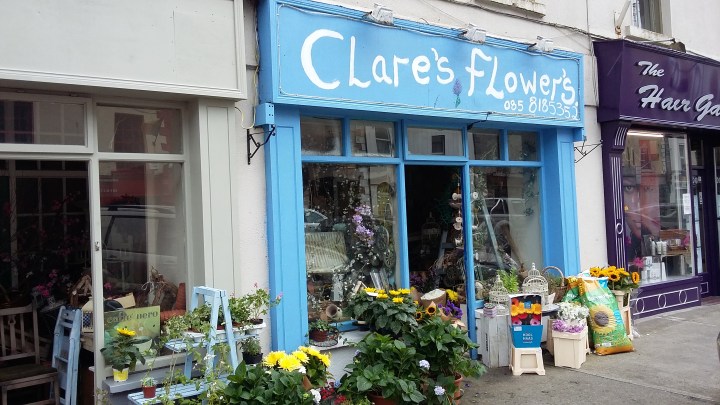
If you’re ever looking for flowers in Ballinasloe, Co. Galway …

Fact: I am beginning 2016 four centimetres taller than I was last year. It turns out that I have been selling myself short for a very long time. All because I never thought of measuring my height again since I filled out my first passport application form at the age of fifteen.

What else has changed over the past year? One big thing is that I have made the transition to being self-employed. It’s been a positive move in terms of the variety and quantity of work I’ve done. Most of the time I relish the freedom of working for myself. My work pattern alternates between semi-idle periods and Stakhanovite bursts of productivity. This is easier to manage alone at home.

The more challenging aspect of not being away at the office is the pressure of family duties intruding on work time. Housework I can ignore, but the children’s various appointments eat into my time, not to mention the fact that the children return home during the two-hour school lunch break. It is an ongoing challenge to fence off the time.

2015 was the year that I secured a book deal, finally signing the contract in November, five months after I first made contact with the publisher, Bergli Books. Because non-fiction books are sold on proposal, I have landed myself with a huge writing task that will dominate the beginning of this year. The deadline to deliver the manuscript is April but there will be more detailed edits to do after that. I expect to have the final word on the title soon.

Last January in my first blogpost of 2015, I mentioned a few New Year’s resolutions, and shared some photographs from the previous year. It’s time to revisit the wishlist:

Spend more time in Ireland: This I managed to do, making a six-week trip to Ireland in the summer. It was the first time I had made the journey by car and ferry and I can report that France goes on forever. Crossing that central plain, I really started to lose hope that I would ever reach the sea. One holiday highlight: cycling around the island of Inishbofin off the coast of Galway, stopping for dip in the Atlantic five minutes from where this photograph was taken.

20150729_124953

Become a Swiss citizen: My approval came through in May, after a six-month procedure and I now have a Swiss ID card and the right to vote. Although the experience wasn’t completely positive, I’m glad to have done it at last. That story is for another day. Here’s a post I wrote about taking the decision to apply for naturalisation.

2015-09-25 14.52.09.jpg

Find inspiration for writing, write more and write better! My first novel was longlisted for the Exeter Novel Prize on January 1st last year but, apart from one longlisting for a short story, there are no accolades to show for the fiction I wrote in 2015. Despite the lack of results, I had a productive and satisfying writing year and learned a lot about submitting. I am happy to say that I will have a small but notable success to announce soon. Although it is a natural progression from journalism, I wasn’t expecting to have a breakthrough in non-fiction and I am thrilled to have this opportunity to develop and showcase my writing skills.

20150630_142641
Art installation at the APCd Foundation

Finish the first draft of my second novel: Not quite there. Can you believe it? I set myself the challenge in October to finish the first draft of this novel, got as far as the second-last chapter and stopped dead. No more excuses, I know how the story ends, I just have to turn it into words.

DSCN1445

Stop and smell the roses (or whatever nature has on special offer): I’m lucky to live on the edge of beautiful countryside and having a dog means I have to go out in all weathers. Highlights of the year were the deer I saw one morning and the cross-country hike I did in May.

As for my 2016 writing goals, I’m looking forward to a successful launch of the Swiss book, and hoping to learn a lot about book marketing along the way. Ideally, I’d like to find an agent and a home for my novels, and keep writing short stories, which has been one of the great writing pleasures of the past year.

What about you? Has the year got off to a good start? Do you believe in making New Year’s resolutions?

Hot House Novel Part II

November rose
November rose

Seventeen thousand words in eighteen days. I’m pretty happy with the result of my October writing challenge. I didn’t manage to get to the end of the first draft but at least the end is now in sight.

In case you missed the previous post about this, I had half a children’s novel on my hands that I couldn’t seem to finish. Inspired by the NaNoWriMo (National Novel Writing Month) buzz on Twitter, I decided to tackle the problem with an intensive burst of writing, ahead of the November pack.

There was a small lull in the middle when I went to Germany for the weekend and discovered that my two-prong Swiss plug would not fit into the three-prong German socket. That was the end of writing on the laptop so I tried writing longhand and produced a rather scribbled chapter.

Lots of writers swear by this method, especially for first drafts, but I couldn’t wait to get back to the keyboard where the words stand out crisp and even on the screen and you have the magic of deleting.

All being well I’ll finish the first draft this week and move on to other things.

I never do any correcting or revising while in the process of writing. Let’s say I write a thing out any old way, and then, after it’s cooled off—I let it rest for a while, a month or two maybe—I see it with a fresh eye. Then I have a wonderful time of it. I just go to work on it with the ax. But not always. Sometimes it comes out almost like I wanted it.

That’s a quote from Henry Miller taken from a 1961 interview in The Paris Review, which I came across during the week. While I had to raise an eyebrow at Miller referring to “the writer” by definition as a man, I did find his thoughts on our lack of moral code interesting. At a time when Europe is turning a blind eye, or worse, to distressed refugees at its borders, his words seem to sum things up perfectly.

You see, civilized peoples don’t live according to moral codes or principles of any kind. We speak about them, we pay lip service to them, but nobody believes in them. Nobody practices these rules, they have no place in our lives.

On the subject of refugees, this is the best piece of journalism I’ve read about the crisis so far, by AA Gill. Simply devastating.

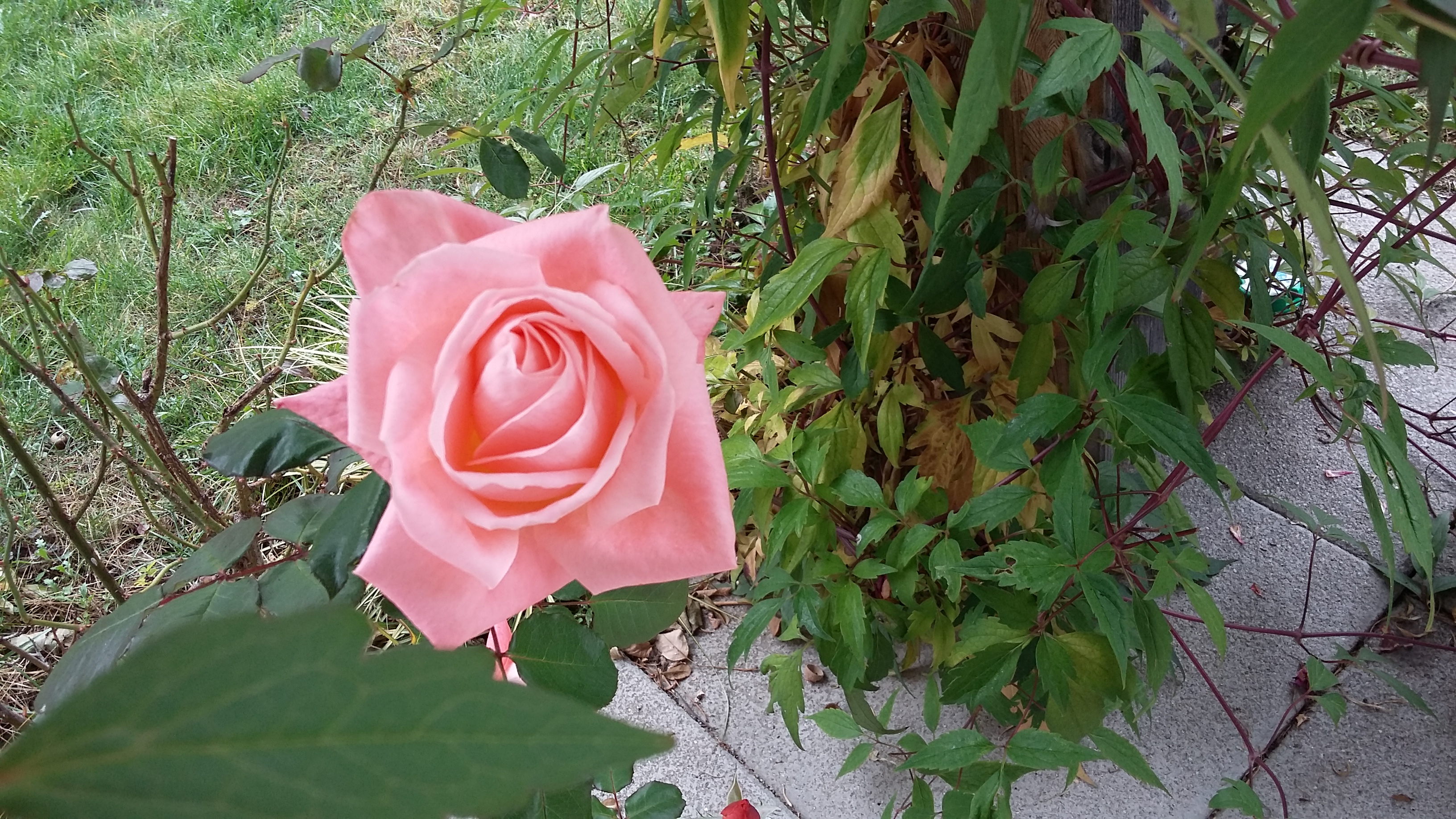
Above is a picture of a rose taken yesterday. It cheered me to see something beautiful surviving in a hostile environment – a bit like the kindness being shown by some individuals in Europe.

Can journalists make the switch to fiction?

vintage_newsroom

There’s a long list of successful authors who were once journalists but you can be sure there’s a much longer list of journalists whose novels never got off the hard drive or the back of a beermat.

I’ll admit I’m hoping the answer to this question will be yes for me, as I have been a journalist for most of my working life and have been attempting to make that leap to fiction. I’m currently seeking representation for my first novel while working on the first draft of my second novel.

But let’s be completely objective and take a look at what natural advantages and disadvantages news scribblers can expect on the rocky path leading from fact to fiction.

Uphill struggle

1. Lack of staying power. Journalism has always been about concise writing and fitting the space available. But things have taken a more radical turn with the advent of ‘mobile first’: some top news organisations are now advocating stories of 500 words or less. I worked under strict length guidelines for a long time with the result that I am now hard wired to have any story wrapped up within 1,200 words. I believe that has cramped my style in short stories, where I struggle to get above 1,500 words. And it makes me unconsciously (until this moment) write short chapters. One to work on.

2. Empty tank. The need to constantly come up with new story ideas in the day job can suck the creative juices dry. But it’s not just the idea mill that demands creative energy, more creative effort must go into the researching and crafting of those articles, with precious little inspiration left for other subjects.

3. Ingrained style. Journalism is about spelling it out, clarity all the way. You inevitably develop (and overuse) favourite words and turns of phrase. Newswriting is a genre in itself and you become steeped in it, consuming the work of others and probably imitating them too. There is some scope for introducing emotion or descriptive writing in feature articles but that still remains inside a set framework.

Grease the wheels

1. The groove. You’ve already got the habit and the discipline of writing on a daily basis. You have to produce texts that are coherent and correct, over and over again. That is definitely worth something. Language and storytelling skills build up over time, and the grammar, punctuation and sentence-building muscles become strong.

2. The Professionals. Once you have worked as one kind of professional writer, it should be possible to make the transition to a different category, shouldn’t it? Deadlines are not a problem. The same goes for the editing process. A good journalist can’t be precious about their work. They have to accept tough editing decisions and be prepared to rewrite if necessary.

3. Eye of the magpie. Journalists listen to conversations and watch situations differently. Could there be a story in that? is the reflex thought. They are keen observers, interviewing someone while at the same time taking in their appearance and the surroundings with a view to writing about it. I notice the same dynamic at work as a fiction writer. When I hear or see something sparkly that could be used for a story, I pick it up, magpie style, and stash it away somewhere for safekeeping.

There can be a hint of scepticism from people in the literary world when journalists stray into their territory. Are they interlopers who’ve jumped the slush pile because of their name or connections? I don’t know about that. Most journalists are (semi-)unknown and publishing industry outsiders. But some may have a platform and platform has become important. My guess is the publishing industry is so spoilt for choice they don’t need to give anyone special treatment.

Have I forgotten anything? It would be great to be able to add to the list of advantages (especially) or disadvantages (if you must) for journalists turning to fiction. Are there any journalists-turned-novelists whose work you’ve enjoyed, or not? I can think of three recent Irish examples – Kathleen MacMahon , Rachel English and Shane Hegarty, only one of whom has ‘given up the day job’ and it hasn’t all been plain sailing for her.

Lunchtime walk at the office

2014-04-09 12.57.11

It’s 1pm outside a monochrome office block on a season-defying day on the outskirts of Bern. If it’s autumn, the air shimmers in the heat of a ridiculously late Indian summer. If it’s winter, a false spring has sprung, only to scamper away again by evening.

The automatic doors sweep open and a motley but relaxed group emerges from the grand entrance of the building. The smokers outside are heard to snigger amongst themselves and a raucous voice calls out: “Et voilà, les anglais.” A disparaging remark is made about the lunchtime walk.

Les anglais are mostly not anglais but they do subscribe to a certain English decorum and do not dignify the heckling with a response. United in purpose, they stride away in the direction of the allotments, shedding jackets with practised ease, and commenting on the deceptively pleasant weather.

On their walk they will pass houses and tower blocks, an old farm and country house, little scraps of gardens tended by homesick foreigners, a hospital, a school and a motorway. All of human life is there, although because this is Switzerland there will not be many human beings in evidence.

The walkers will split into little knots of twos and threes. Discussion will turn from politics to family matters. Holidays are being planned or children are having problems in school. An elderly parent is ailing. The conversation has been going on for years, added to in small increments, and responsible for the familiarity and affection that has built up between les anglais.

There will be something new on every walk to provoke a moment of reflection: A hearse waiting at the back of the small hospital; grandparents on their allotment lovingly setting out toys around a baby on a blanket.

The walkers complete the loop all too quickly. There won’t have been time to talk to everyone about everything. But there will be another walk the next day, and the next. There will be small news and big news to share and always someone to listen.

Back in the office, the different members of the office family return to their stations. There will be coffee at three, a short break where laughter is the main currency. For now, the keyboard beckons: username, password, login.

This little tribute to office camaraderie is dedicated to my former colleagues of at least twenty nationalities at SWI swissinfo.ch in Bern. I spent the best part of ten years in the trenches at swissinfo, a happy soldier demobbed just last month.

When I get my ducks in a row I will officially embark on a new phase of working as a freelance writer and translator, final grand title to be decided. I welcome any tips on the organisational or motivational side of freelance work.

Here’s to old friends and new beginnings!

Ps. This post was partly inspired by this lovely article about ‘work family’ by Marion McGilvery writing in The Guardian.

Irish nobles, a lost fortune and the Swiss connection

Croagh Patrick, Co. Mayo

Irish history teachers are a mournful bunch. Their job is to tell children a series of sad stories, filling their heads with tales of dashed hopes and doomed endeavors. When the teachers come into the classroom, the children look up with baleful eyes, wondering what misery is in store.

The Flight of the Earls is one such epic saga of shattered dreams but little is known of the Swiss chapter in this story.

Short version: In 1607, a group of increasingly marginalised Irish nobles, their families and followers set sail for mainland Europe, looking for Spanish support to challenge English rule. On their way to Spanish-controlled Milan, they passed through Switzerland.

Do I need to add that things didn’t work out so well? The nobles died in exile, after being diverted to Rome by the Spanish, who had in the meantime switched to being friendly to the English. The loss of these great Ulster families marked the end of the old Gaelic order.

And what about the Swiss connection? Travelling with the group was a scribe, Tadhg Ó Cianáin, whose job it was to record the fateful events of the day. His account of the journey has survived and been translated into English.

Ó Cianáin said of the Swiss people that they were “the most just, honest, and untreacherous in the world, and the most faithful to their promises”.

A smaller group of 30 Irish men and women arrived in Basel in March 1608 and travelled from there to Lucerne. They then crossed Lake Lucerne heading for the Gotthard Pass. On St Patrick’s Day 1608 the party crossed the Devil’s Bridge near Andermatt in the lower reaches of the Gotthard Pass.

This was the toughest part of the journey at the end of a legendary cold winter, as Ó Cianáin describes.

“The next day, Saint Patrick’s day precisely, the seventeenth of March, they went to another small town named Silenen. From that they advanced through the Alps. Now the mountains were laden and filled with snow and ice, and the roads and paths were narrow and rugged. They reached a high bridge in a very deep glen called the Devil’s Bridge. One of Ó Néill’s horses, which was carrying some of his money, about one hundred and twenty pounds, fell down the face of the high, frozen, snowy cliff which was in front of the bridge. Great labour was experienced in bringing up the horse alone, but the money decided to remain blocking the violent, deep, destructive torrent which flows under the bridge through the middle of the glen. They stayed that night in a little town named Piedimonte. Their journey that day was six leagues.

The next day the Earl proceeded over the Alps. Ó Néill remained in the town we have mentioned. He sent some of his people to search again for the money. Though they endured much labour, their efforts were in vain.”

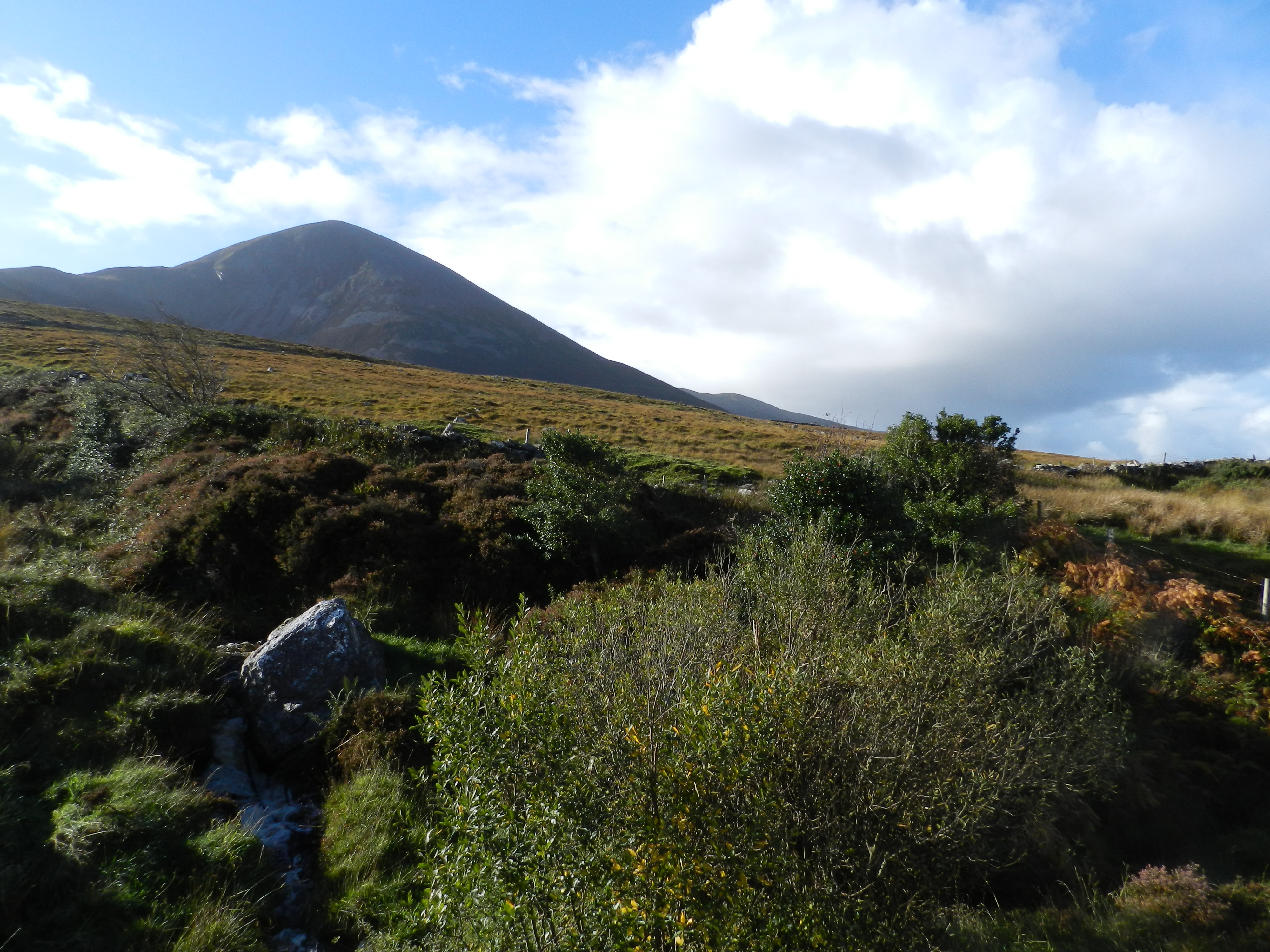
A little slice of Irish and Swiss history for you there. The photo above is a view of Croagh Patrick in Co. Mayo, a famous mountain associated with the man himself. Incidentally, traces of gold have been found there which indicate significant gold deposits but that’s another lost fortune which will never be mined because of the cultural value of the site.


Children behind the gates – writing about historical abuse

2014-03-29 10.58.45

We know what children need – love, protection, guidance, understanding – and we know what a travesty it is when they are deprived of those basic needs. But is this a recent discovery? Looking back at the treatment of children in the care system in the middle of the last century, you might think so.

The 1990s was the decade of revelations about failings and injustice the Irish system. More recently Switzerland has been going through its decade of revelations of historical abuse. It’s a process that is being repeated all around the world and it’s heart-breaking because there is nothing you can do to help those children. It’s too late.

Did the authorities and caregivers in those times have no concept of children’s welfare and emotional needs? I would argue that they did, to a greater or lesser extent, depending on their own experience of home life. But there were limits to their ability or willingness to provide for those needs. And these factors have to be taken into account when writing about this period. If we turn those involved into evil caricatures, we are incapable of gaining any insight into our own failings as a society today.

So why was it that some children mattered less? What was stopping the authorities and religious orders from doing right by the children in their care? Some of the limits stemmed from prejudice – in particular the prevailing prejudice against ‘illegitimacy’ and against the ‘bad poor’.

The stigma attached to children born outside marriage was so strong, so well enforced by the church and its followers, that people could hardly see the child behind the stigma, if at all. The shame and secrecy let the fathers of these children off the hook and also made it possible for families to reject their ‘sinning’ daughters, even to the point of having them locked up for years.

As for poverty, widespread to an extent that we have so quickly forgotten, there were prejudices at work here too. On the one hand you had the ‘good poor’, hard-working, honest people, scraping by somehow, tipping their caps and not making any trouble. And then there were the ‘bad poor’, parents overwhelmed by the daily struggle to feed and clothe their children, families whose mothers lived on the verge of a nervous breakdown, whose fathers turned to drink or crime, whose children appeared neglected. Sympathy for these families was not forthcoming.

That’s to speak of the willingness to care for children who were unwanted or rejected by society in one way or another. I also mentioned the ability to care for these children.

A well-run children’s home should have enough money to provide a good diet for the children, as well as clothes and play materials. In a cold climate it should be well heated. The staff should be well trained and recruited for their aptitude to provide loving care to children. There should be a compassionate discipline policy in place, with good oversight so that there is no room for abuse of any kind. But what if none of these requirements is met?

Let’s put the cruel sadists aside. They are in a category of their own and nothing excuses their actions. What about the ordinary inadequate carers? Two years ago I attended the presentation of a report into allegations of historical abuse at children’s institutions run by the Swiss Ingenbohl Sisters of Mercy. The worst allegations could not be verified but the authors of the report did find “excessive punishment” doled out by some sisters.

It also described the systemic misery for both adults and children living in the homes – long working hours without free time or holidays, large groups of children to look after with insufficient financial means in crowded living conditions and with insufficient infrastructure.

But the ill-treatment didn’t end at the gates. For my story I spoke to a remarkable man, Roland Begert, the son of a Swiss gypsy (Jenisch) woman who was deserted by her husband. He was given up by his mother as a baby and grew up in the system, first with the nuns and afterwards living with a farming family as an unofficial child labourer.

Roland Begert is forgiving of the tough discipline and lack of affection shown by the nuns in the children’s home where he spend the first twelve years of his life. What hurts him most, looking back, was the attitude of the people in the town to the ‘home children’.

The townspeople warned their children not to have anything to do with the ‘home children’ and the local children obliged by throwing stones at them. Roland’s excitement at being sent out to the town school quickly ended when the teacher started bullying him mercilessly.

So while the townspeople loved and protected their own children and did their best to give them a good start in life, they participated in a horrible double standard. Society was complicit in banishing the ‘home children’ from the mainstream in the first place and the community actively kept that exclusion in place.

Writing about failings in a system that happened fifty years ago does not serve any purpose if it stays in the realm of storytelling, with a cast of wicked witches. We have to try to understand the broader mechanisms of society that caused so much suffering if we have any chance of avoiding the same mistakes.

I think a lot of lessons have been learned. One huge problem was that, until recently, society did not allow for children to be raised by one parent, whether for practical or moral reasons. Marriage breakdown or the death of one parent left children in a precarious position. No access to contraception also made it impossible for parents to limit their family size to a level they could manage.

But there are still children behind the gates in society, for example the children of asylum seekers living in direct provision. Few countries today can claim that they have a best-practice care system in place that guarantees the wellbeing and protection of their most vulnerable children. Even Switzerland, which prides itself on ‘Swiss quality’, still does not have an exemplary system, as I discovered recently when researching an article about foster care.

The stories from the past are important and they have to be told. But they have to be told in a fair way and they should never be used to make us feel complacent about our own problems.

Switzerland and the foreigner thing

20150605_132001

After last Sunday’s vote in Switzerland to curb immigration from the European Union, I feel compelled to write about what a discouraging signal this sends to foreigners in this country. Having lived here for a decade and contributed the fruits of my labour to this country for that time – my work output, my taxes, my social security contributions, a thousand supermarket trolleys full of produce, not to mention three new Swiss citizens, I can safely say that Switzerland has enjoyed a substantial net gain from me.

And I’m no exception. The most recent OECD report on migration in Europe showed that the foreign population as a whole are net contributors to the rosy economy in Switzerland. Foreign women have bigger families, filling schools that would otherwise be half empty, with the future workers, footballers and leaders of Switzerland.

And then this campaign begins, peddling the idea that all the problems of the country, literally anything that is bothering the long-suffering natives in their daily lives, is down to this “uncontrolled” influx of people from the EU. Your train carriage is crowded? It’s because of them. You have to wait at the doctor’s? It’s their fault. Your rent has gone up? Obviously those pesky EU workers again. Urban sprawl offending your eyes? You know we wouldn’t have that without these outsiders.

The level of scapegoating would be laughable if it wasn’t hurting people. The debate has got to the point where there is no problem, present or future, that cannot be pinned on bloody foreigners.

And they lapped it up, or at least 50.3% of those who voted on February 9th did. The people have spoken, as is their right, but do they realise what they have said? Did they act to fix a real problem or was this just a way to score a cruel point, to hurt their neighbours?

To understand the result you have to know a little bit of background on how the vote came about. What you are seeing at work here is ‘direct democracy’, the purest form of democracy known to mankind, as I am now tired of hearing.

The Swiss political system has a very special role for popular petitions. Under the initiative system, any citizen may call for a vote on any issue or challenge a parliamentary decision providing they collect at least 100,000 signatures in support of their cause.

Well we all have our pet peeves so that’s great. Of course your average citizen doesn’t have the resources to gather 100,000 signatures but sometimes groups of citizens who are passionate about something get together and pull it off. More often this tool is used by well-organised and well-funded lobby groups and political parties. The gold medal in this category goes to the rightwing Swiss People’s Party.

This particular vote, dubbed “Stop mass immigration”, was brought to us by the Swiss People’s Party. With about a quarter of the popular vote, it is a fairly easy task for the party to gather so many signatures. What they do with this power is to focus on the social blight of foreigners.

For the past twelve years, EU citizens have been free to live and work in Switzerland, without any red tape, just as Swiss citizens have enjoyed the freedom to work and settle anywhere in the European Union. Known as the ‘free movement of people’, this agreement is one of the core principles of the EU and puts Switzerland on a par with EU member states.

It makes it easy for workers to follow work, Swiss retirees (for example) to move to Tuscany or Provence, and people living near borders to have access to the hinterland around them. You could see this as a win-win situation, or you could see it as an affront to your national sovereignty.

As a result of Sunday’s vote, the Swiss government now has to pull out of this agreement with the EU and return to a quota system of work permits, last used in 2002. Never mind that Switzerland has had a pretty good ride since then, helped in no small part by the easy working and living arrangements with its biggest market, i.e. every country surrounding it for as far as the eye can see.

Of course life will go on. Employers will find a way to hire the people they need and the people who are looking for work and prepared to uproot their lives to another country will still come to where the work is.

But the bitter taste will remain. Painted as the problem-makers, come here to rip the country off and make life difficult, we will continue to keep our heads down and work hard but the affection that was growing in our hearts for this nation is flickering and may be snuffed out. And that is the greatest loss of all to Switzerland.