Enough of the faux confusion over #metoo

20171029_140758

Let’s get one thing straight. You cannot sexually harass or abuse a woman without realising you are doing it. This is active, deliberate, targeted behaviour that some men choose to engage in. That means they don’t do it to everyone. They do it when and where they can get away with it, and they want to do it.

Last night I watched a Swiss TV report in which about 20 men were interviewed about how difficult it is now interacting with women and how they don’t know if they can give a compliment anymore. This was the line of questioning from the woman journalist. As in, literally, “do you feel like you can’t give a compliment anymore?” The report was part of a longer item on the #metoo phenomenon, a wave of truth telling by victims which grew from the Harvey Weinstein revelations and the numerous allegations against powerful men that have followed.

What a perfect example of conflating two totally different problems, involving two totally different groups of people. On the one hand, men who find it hard to gauge their charm skills, and on the other hand, men who get sexual gratification from making women uncomfortable or afraid.

Bottom line, if you worry about women taking your comments or your birthday hug the wrong way, you are not a predator, you are socially inept. Predators don’t worry about these situations, and falsely presenting predator behaviour as social ineptness is the very definition of disingenuous.

If this is the message that reaches those hearing about #metoo from a distance, people who do not even bother to read the stories of horrible experiences or ask the women in their life what it means to them, it is a crying shame.  

Here is what #metoo means: humiliation, fear, shame, flashbacks, and nasty memories that make you sick to the stomach.

Remember, these toxic men cross the line when and where they can get away with it. One of the perks of getting older is that you fall off the radar of creeps like this. They know who they can embarrass or intimidate into silence, most often girls and young women. So, apart from the risk of a very random event, I feel safe now in my daily life. I am now a person who will tell an aggressor to fuck off, I will report them and, most importantly, I have credibility. They know that and they act accordingly.

But I know that girls and young women are still in the firing line. My direct experience of male sexual violence and harassment was worst between 11 and 22, give or take. I can think of at least a dozen incidents when I felt frightened, in danger, and disgusted by the behaviour of predatory men. And I’m not talking about compliments.

For starters, I’m talking about exhibitionists, the dirty old men and young men that waited in the lanes and backstreets of my neighbourhood to expose themselves to schoolchildren. If you think flashers are harmless, please understand that the victim does not know it will end there. Every time it happens you dread that maybe this will be the one that grabs you, and does those acts you don’t understand but you fear so much.

I’m talking about inappropriate comments in the workplace. When I was 16 and working in my first proper job serving drinks in a bar, there was a barman who would tease me with questions about my non-existent sex life. He only did this in front of select others who would either laugh with him or blush with me. Did you have sex last night? How many times did you do it? And on and on. He knew what he was doing. I did not know how to handle it. He would not speak to me like that now.

I’m talking about being followed and pestered on public transport and in the street, telling a guy to leave me alone and not being left alone, being called ugly names instead. I’m talking about a boss more than twice my age and weight trying to get sexual with me. There is nothing subtle about this, these are not misread signals or clumsy compliments, this is groping and forced kissing and someone trying to physically overpower you.

You good guys, you know who you are. You are the majority and we love you. Partners, friends, workmates, neighbours, cousins, you make us comfortable, you make us laugh or smile, you want to treat us well and you do. It’s that simple. The others don’t want to treat us well and they don’t. No soul searching or faux confusion required.

Based on what the wonderful women in my life have told me, I know that my experiences of sexual harassment are on the minor end of the scale and that is a serious relief. I have heard tales of child rape and gang rape that chilled my soul. I know there’s a hope that teaching young men about consent will make potential aggressors think, oh now I get it, respect women. I’m not convinced. My feeling is, you are either a decent man who cares how you make women feel or you are not, and you know damn well which one you are.

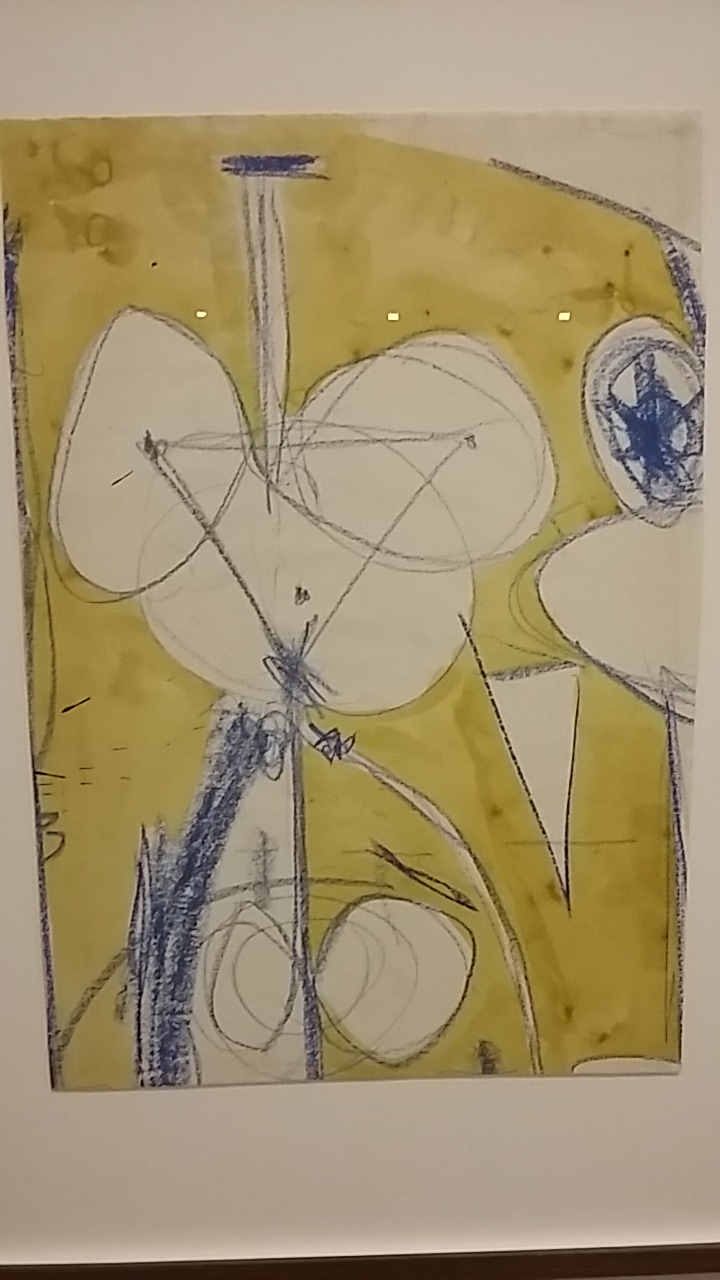
(That painting is Concept of a Woman by Robert Motherwell, 1946, currently on display at the Paul Klee Museum in Bern.)

Beer and the great outdoors

20170910_123133

Switzerland has such an abundance of hiking trails that searching for a new route can send you down a rabbit hole of maps and websites. To make things easier, and more refreshing, hiking guide Monika Saxer has compiled a list of 59 hikes, each of which ends at a brewery or bar where you can quench your thirst with a local craft beer.

Beer Hiking Switzerland is published in English, German and French by Helvetiq, the same publisher that will publish the translations of The Naked Swiss: A Nation Behind 10 Myths in the new year. As I am partial to hiking and beer, I didn’t need any persuading to try out one of Saxer’s trails. I once went too far for my own good when I walked my old work commute from Fribourg to Bern (an adventure you can read about here), therefore expert advice is gratefully received.

For this hike, I press-ganged my family to join in and we chose the 11-kilometre Gottéron route on page 94. It starts in the German-speaking village of St Antoni in canton Fribourg, passes by the edge of Tafers and ends up following the wooded Gottéron valley all the way to the Old Town of Fribourg.

I already knew the Gottéron part of the walk well, a narrow other-worldly trail that winds along by the Gottéron river through steep sandstone gorges and dense forest. As with any walk on Swiss hiking trails, there are places set up for grilling and picnicking, as well as signposts to reassure you that you’re on the right track.

20170910_113428

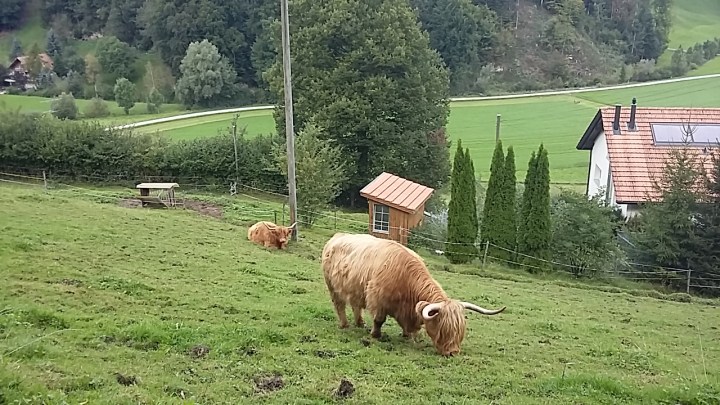
From St Antoni, after a dip and a short climb, most of the route was gradually descending which is the kind of hike I like best. I also like quiet walks. We did not meet any other walkers on the St Antoni to Tafers part, although it was a Saturday afternoon. But we did spot some ostriches, llama and these unusual highland-type cattle.

20170910_111952

The arrival into Fribourg is one of the most romantic approaches to the town, across the Pont de Berne and into Place Petit Saint Jean. Confession alert: we did the walk in two parts over two weekends. As recommended, we made our way to l’Auberge du Soleil Blanc to order a Fri-mousse beer which is brewed a few doors up on the rue de la Samaritaine. The perfect way to enjoy one of these Indian summer days.

20170924_150015

I’m always interested to see what other ideas people come up with to write about Switzerland. The sky’s the limit. The important thing is to write about something you are passionate about. Monika explains in her book that this book grew from her interest in microbreweries. She starting selecting hikes that ended near breweries, and writing up those routes on the website of the Women’s Alpine Club of Zurich, now called CAS Section Baldern. After she was featured in a Migros Magazine article about women and beer, Monika was approached by Helvetiq to write this book.

If you were to write a book about the country you live in, what approach would you take? I’d love to hear (but not steal) your ideas.

One Voice in Bern calls out to the world

One river

I’m so impressed by the inspiring work of two Irish women in Bern that I want to share their achievement here. Clíodhna Ní Aodáin and Shirley Grimes, both professional musicians and long-term residents of the Swiss capital, conceived the idea of recording a song with an international choir to send a message of tolerance and love. 

“In the face of a world building walls that create separation, fear and helplessness, we want to encourage connection through the joy of music,” they write on the project website – One River Voices.

After putting together a team of volunteers, including the talented music video director Roman Droux, Clíodhna and Shirley chose a date in May and started to spread the word.

They were hoping for 200 voices. More than 350 people from 40 different countries turned up at Köniz Castle in Bern to join the one-day choir. A group of strangers, they spent the day together, learning and rehearsing the song, and getting to know each other. Here is the result of their combined enthusiasm and commitment.

Clíodhna and Shirley would like to encourage others, anywhere and everywhere, to create similar multicultural choral projects. All the material is available for free on the One River Voices website – lyrics, sheet music, the full score, and playback tracks. 

“Invite your friends. Invite your neighbours that you haven’t met properly. Invite people from a refugee community. Be brave! Whether it’s a small gathering around your kitchen table or even a big event at a local community centre, talk, eat, have fun together and learn the One River song.”

Just a note about the background of the two artists behind the project. Clíodhna, who arranged the music, is a cellist and conductor who teaches at the Bern Music Conservatory, and Shirley, who wrote the song, is a singer-songwriter with seven albums under her belt. Both perform regularly around Switzerland.  You should be able to spot them in the photo above – Shirley with the guitar, and Clíodhna in a red cardigan.

If you know of anyone with the kind of experience and creative spirit needed to make an event like this happen, please let them know about One River Voices. It would be wonderful to hear more joyful voices carried far and wide.

My Swiss TV debut on Telezüri

English-speakers are really spoilt in Switzerland, more than any other language group. The locals gladly switch to English at the first opportunity, call centres for banks and insurance companies have English-speaking operators, most websites have an English page, and the state even produces much of its official documentation in English.

Of course that makes it harder to learn the national languages but most of the time it’s an advantage. I’ve written before about the challenges of being a non-native speaker when you live in a foreign country. My language ability varies, mainly depending on levels of confidence and tiredness in a given situation. That’s why is was such a breakthrough for me to accept my first television interview in German and to get through the interview in one piece!

This time last week I was googling tips to prepare for a television interview. Now, the interview is behind me and it’s a huge relief because everything went well. Not that I didn’t make any language mistakes but I managed to make my points clearly and calmly. The 25-minute discussion was broadcast yesterday by Zurich television station Telezüri. The host was Hugo Bigi and I was joined on the Talk Täglich show by fellow Bergli Books writer Wolfgang Koydl, author of Switzerland: A Cartoon Survival Guide. Above is a clip from the interview, and you can view the full programme on this link.

The Telezüri interview was a real case of stepping outside my comfort zone. It was daunting but extremely rewarding. Speaking in public is challenging for many of us, whether it is giving a presentation in work or asking a question in a lecture hall. One of the positive outcomes of writing The Naked Swiss has been that I have been forced to practice public speaking. Now I am at the point that I really enjoy it. It is a privilege to be given a platform to express your ideas, and I am glad to have overcome my fears, as a woman, as a semi-introvert and finally, as a foreigner, so that I can speak up and be heard.

A Christmas warning

christmas-carol

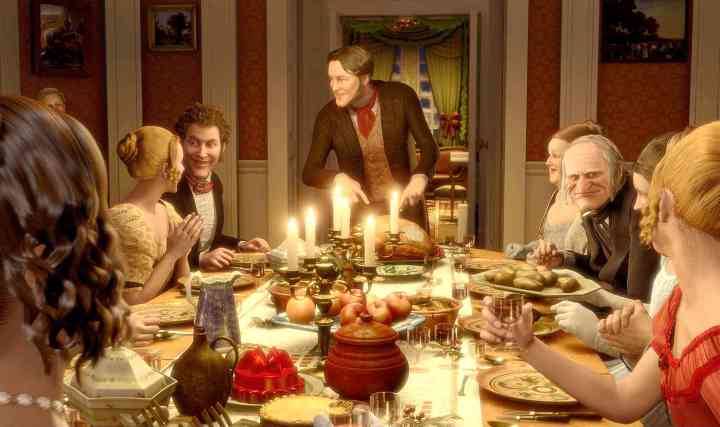
I am telling you this in good time. Producing a big Christmas feast for a group of people is a lot of work, and if all that work is left to one person, something is not right. Anne Enright’s latest book, The Green Road, tells the story of four siblings and their widowed mother in the lead up to a long overdue Christmas reunion.

Because the mother has opted out of the difficult parts of life, and three of the siblings live away from their native County Clare, and also happen to be completely self-absorbed, the task of preparing the Christmas dinner falls to the most reliable sister with the least glamorous life, Constance. No need to tell you that turns out to be a thankless task. Here she is doing the dreaded Christmas grocery shopping:

The next morning, she went early into Ennis. It was 10 a.m. on Christmas Eve and the supermarket was like the Apocalypse, people grabbing without looking, and things fallen in the aisles. But there was no good time to do this, you just had to get through it. Constance pushed her trolley to the vegetable section: celery, carrots, parsnips for Dessie, who liked them. Sausage and sage for the stuffing, an experimental bag of chestnuts, vacuum packed. Constance bought a case of Prosecco on special offer to wrap and leave on various doorsteps and threw in eight frozen pizzas in case the kids rolled up with friends. Frozen berries. Different ice cream. She got wine, sherry, whiskey, fresh nuts, salted nuts, crisps, bags and bags of apples, two mangoes, a melon, dark cherries for the fruit salad, root ginger, fresh mint, a wooden crate of satsumas, the fruit cold and promising sweet, each one with its own sprig of green, dark leaves. She got wrapping paper, red paper napkins, Sellotape, and – more out of habit, now the children were grown – packs and packs of batteries, triple A, double A, a few Cs. She took five squat candles in cream-coloured beeswax to fill the cracked hearth in the good room at Ardeevin, when no fire was lit this ten years past, and two long rolls of simple red baubles to fill the gaps on her mother’s tree. She went back for more sausages because she had forgotten about breakfast. Tomatoes. Bacon. Eggs. She went back to the dairy section for more cheese. Back to the fruit aisle for seedless grapes. Back to the biscuit aisle for water biscuits. She searched high and low for string to keep the cloth on the pudding, stopped at the delicatessen counter for pesto, chicken liver pate, tubs of olives. She got some ready-cooked drumsticks to keep people going. At every corner, she met a neighbour, an old friend, they rolled their eyes and threw Christmas greetings, and no one thought her rude for not stopping to converse. …

Constance pays, pushes the trolley down to the carpark, unloads the shopping into the boot, and remembers Brussels sprouts. What can she do? Everyone knows Christmas is an all-or-nothing occasion.

‘Oh what the hell,’ said Constance. She slammed the boot shut and turned her sore feet back to the walkway and the horrors of the vegetable section. The over to the spices to get nutmeg, which was the way Rosaleen liked her Brussels, with unsalted butter. And it was a good thing she went back up, because she had no cranberry sauce either – unbelievably – no brandy for the brandy butter, no honey to glaze the ham. It was as though she had thrown the whole shop in the trolley and bought nothing. She had no big foil for the turkey. Constance grabbed some potato salad, coleslaw, smoked salmon, mayonnaise, more tomatoes, litre bottled of fizzy drinks for the kids, kitchen roll, cling film, extra toilet paper, extra bin bags. She didn’t even look at the bill after another 15 minutes in the queue behind some woman who had forgotten flowers – as she announced – and abandoned her groceries to get them, after which Constance did exactly the same thing, fetching two bouquets of strong pink lilies because they had no white left. She was on the way home before she remembered potatoes, thought about pulling over to the side of the road and digging some out of a field, imagined herself with her hands in the earth, scrabbling around for a few spuds.

Lifting her head to howl.

You get the picture. Don’t be Constance this Christmas. The passage is also a commentary on the gluttony and excess that gripped Ireland during the economic boom, probably still the norm for many people.

The Green Road is one of about 25 books I read this year but I’m afraid it was almost too deliberately well-crafted for me. I enjoyed many of the sections as stand-alone pieces, particularly the scenes in Africa and New York. Less so the hammed-up Irish scenes. Ultimately the odd character of the mother at the centre of it all removed all the urgency of the climax as I didn’t care enough what happened to her or her spoilt/neglected kids.

Goodreads puts together a list of the books you’ve read each year, and looking back on my titles, I can give you my favourites. Best memoir: I Know Why the Caged Bird Sings, Maya Angelou Best non-fiction: Sugar in the Blood, Andrea Stuart Best novel: It’s a tie between Transatlantic by Colum McCann, The Uninvited by Liz Jensen (seriously disturbing), Nutshell by Ian McEwan (just finished, wow) and The Summer Guest by Alison Anderson.

If you are based in Switzerland and still looking for Christmas present ideas, don’t forget my non-fiction book, The Naked Swiss: A Nation Behind 10 Myths, stocked in all bookshops with English titles.

Happy holidays!

All aboard the Swiss-bashing bandwagon

clint-eastwood

This week two Swiss newspapers reported on the problem of the “Swiss stare”. Apparently “expats” (I need a separate blog post to explain what I find wrong with this word) have been complaining online about how they dislike it when Swiss people stare at them. The fact that both papers quoted a forum discussion from 2013 gives an indication of how thin this story is.

I am used to Swiss-bashing articles appearing in the English-language media but when I see Swiss newspapers jumping on the bandwagon, I think it is unfortunate, to say the least. All it does is make everyone look bad.

Here’s the interesting part. I heard about the “Swiss stare” when I was contacted by one of the newspapers in question earlier this week, and asked for my take on the issue. I said, honestly, that I had never found it a problem. I’m a bit of a starer myself so maybe I’ve come to live in the right place. In my view, Swiss people in public behave quite like introverts. They are happier to observe others than to draw attention to themselves. That is the group dynamic rather than a reflection of individual characters.

The journalist did not use my answers because they did not fit into the thesis he was presenting. Fair enough. It’s a trivial enough subject and not a serious newspaper so that’s OK. But in the long run, these sorts of stories have a cumulative negative impact, and this is one of the reasons I was motivated to write The Naked Swiss. This quote is from chapter one:

Particularly in the English-speaking world, but also among Germans, there is a great appetite for ‘aren’t they strange’ cultural commentary stories about the Swiss. As a general rule, any piece that makes the Swiss appear ridiculous or sinister, or both, is welcome. The result is a caricature of the cat-eating, obsessively recycling, robotically-dull and silly rule-making Swiss that has been so carefully constructed over years that it may never be dismantled. It’s tough being the rich kid of Europe.

Is there any point in me pointing out that this is a multi-cultural country with a much higher proportion of foreigners than the UK or US (13% in each)? One in four people living in Switzerland are foreign-born. That proportion could well be higher on public transport. How do you even know if the person who stared at you on the train that time is Swiss?

But even if it is a real thing that Swiss people do above all others, I’m not sure why this has to be a problem. When I travel, I neither want nor expect the rest of the world to behave like Irish people. I have never been under the illusion that the Irish way is the defining way of behaviour worldwide. Maybe this is a big country / small country thing. If you don’t count Irish pubs, Ireland has never attempted to dominate the world (or indeed any other country) with its norms and culture. I wonder if it is easier to accept differences in other places if you come from a smaller, more insignificant country, or is it mainly down to the individual’s capacity to accept change and adapt?

In the introduction to my book, I quote Siri Hustvedt who said “no person leaves themselves behind in order to look at a painting”. Our individual responses to a work of art depend on who we are, our character. I think the same applies to our individual responses to a country as immigrants.

So, what can you tell me about the “Swiss stare”? Is it real or imagined? Does it make you dislike the Swiss in general? Or could it happen anywhere? I would love to hear some different perspectives on this from anyone who has experience of living in another culture.  

In praise of coworking (and other news)

20160707_172319

An early adopter is a person who starts using a new technology or product as soon as it becomes available. I am more of a chronically-late adopter, but that doesn’t stop me from being enthusiastic about the new thing when I eventually discover it for myself.

When I wrote a few months ago about how much I was enjoying my new self-employed lifestyle, the only drawback I mentioned was that it had been difficult, based at home, to keep working time fenced off from family and house duties. The other thing I didn’t mention was the isolation that goes with working solo. Social media makes up for this to some extent but it doesn’t beat having a little catch-up over coffee with real human beings.

I first heard of coworking through a video journalist colleague at swissinfo.ch who was working one day per week in a shared office space to pursue film and animation projects outside his regular four-day per week job. I thought it sounded great but I wasn’t looking for something like that at the time. Besides, I thought, that’s the kind of thing you only find in big cities.

And then one day this summer, when things were a bit hectic at home, I did an impulsive google search for ‘coworking Fribourg,’ and immediately struck gold with Colab Fribourg. It turned out that there was an ideal co-working space just five minutes’ away from where I live.

Colab Fribourg is an initiative of local entrepreneur Philippe Lang of attik.ch. It has the special attraction of being located in an atmospheric old building in the old industrial part of Fribourg. Not only that, the large, bright office space is directly above the Villars chocolate shop and café. People come from miles around to buy chocolate there.

It is a quiet working environment (with kitchen, meeting room etc.) but Philippe is currently converting a second room with a built-in phone cabin to cater for people who need to talk more and make phone calls.

I have met people from lots of different countries and professional backgrounds in Colab. Many are working on interesting projects. Some of these – like distributing solar panels in Africa, or coaching small businesses – are easy to understand. Others are at the innovative (and more obscure) end of new technology. I hate the word synergies but it is possible I could link up with some of these fellow Colab workers in future.

Apart from pooling resources, the advantage of self-employed people sharing an office space is that you can have as much or as little contact with each other as desired. In that sense, it is different to a regular working space where it’s more difficult to have a quiet day not talking much to colleagues.

In other news, I am getting very good feedback about The Naked Swiss, most recently this five-star review from nudge-book.com, in which the reviewer says she enjoyed the book so much she read it in one sitting. Check out this quote:

“Clare O’Dea’s writing is informative without being too dry, and her clear, well-structured style means that this is a fascinating read, occasionally funny, but never boring. It is an excellent social and historical portrayal of the Swiss nation.”

Last week I went to Basel to the home of Bergli Books’ parent company Schwabe Publishing. A good crowd turned out in Schwabe’s book shop Das Narrenschiff for an author talk and book signing. We ended up having a long question and answer session afterwards where I heard from people of several different nationalities. I’m really glad the book is also appealing to readers outside the English-speaking community. Fellow Irish author Padraig Rooney came along to the Narrenschiff event. I am currently reading his book The Gilded Chalet, a highly enjoyable crash course in literary Switzerland.

This week saw an interview about The Naked Swiss by Zurich-based freelance journalist Jennifer Lisle, published in newinzurich.com. It’s great to be getting the word out about the book. I hope I can come to Zurich soon for an event – just have to find the right co-host and venue.

Finally, the big news is that Bergli has reached an agreement with another Swiss publisher Helvetiq to bring out the French and German translations of the book next year. I’m delighted the book will reach a much wider audience in Switzerland. If you find any mistakes, now is the time to tell me!

A guide to the six stages of the immigrant experience

geneva-plane

Integration is a long road, with many twists and turns along the way. There’s always going to be some conflict in the mind of an immigrant; after all, this is a complex relationship with a lot of psychological wheels turning behind the scenes. For some people, a new country is like a step parent. They will never forgive the newcomer simply for being who they are. Bearing in mind that it’s not the same for everyone, here is my guide to the six stages of the immigrant experience, based on my 13 years in Switzerland.

Stage 1, Honeymoon: This will only happen if you have come to live the country under positive circumstances. If not, skip to Stage 2. This new start may be daunting but it is fundamentally an adventure for you. You waltz through the early weeks and possibly months (days if you are unlucky) in a state of hyper observation, mostly noticing the charming things and the positive differences – the street markets, the architecture, the trams, the cleanliness, the landscape. You will be discovering new tastes, sights and sounds, picking up phrases of the local language. It’s the perfect time to sign up for a language course. Enthusiasm is the order of the day. You’ve had no time to miss people at home. You may in fact be busy with a steady stream of visitors, keen to share the excitement of the new start.

Stage 2, The First Wobble: It might be a harsh word from someone in officialdom, a work or parent-teacher meeting where you felt out of your depth, or a bolt of loneliness brought on by an important event missed back home. Something will set you off on the first round of doubts, and the gloss of everything being new and different will suddenly disappear. Constantly learning and adapting is tiring. Is it possible this has all been a terrible mistake? The first wobble may be followed at any time by other wobbles in the future, varying in severity from a cold to a serious dose of flu. I hope you’ve got a good immune system. From here you will transition somewhat unhappily into …

Stage 3, Reality Bites: Just like that, the novelty wears off, you are faced with the realisation that life still has to be lived, in all its tedious repetition, with or without picturesque walks, cobbled streets and Christmas markets. There are days of work to get through, bills to be paid and housework to be done. From a promising start, you hit your first wall with the language learning. Fluency seems more unattainable than ever.

Stage 4, Frustration: All those things you found charming at the beginning start to get on your nerves. You adopt a hypercritical frame of mind: Why are they speaking like that, behaving like that? Oh, how much better [insert the thing(s) you miss] is back home. Linguistically, culturally and socially, you are still (still!) an outsider, and that’s discomfiting and humbling. The effort required to lose your outsider status is so great that it seems easier just to take refuge in negative judgments. Warning! Some people get stuck permanently in this phase. Don’t let this happen to you.

Stage 5, Transition: This is the point where everyone who might come to visit has already been at least once. Most will not come again. You have missed weddings, births and funerals back home. By not being there to share the fun and the tears, you have grown apart from people in your home country. There’s an unavoidable sadness in that, which can overshadow the new life you are trying to build. But it doesn’t have to. Because something unexpected is happening at the same time. Opportunities arise to support other people, or receive support, in the place where you live. New friendships are being tested and getting stronger, as you accompany people through marriage break-ups, illnesses and the challenges of child-rearing. Around this time, the language starts to flow. It might never be perfect but you’re making a decent go of it. Many logistical things that took effort before are now second nature. What’s that you notice around you? Could it be a community? Some days you feel a strong sense of belonging. You start to create your own traditions, favourite places to go and things to do. You are close, very close.

Stage 6, Comfort Zone: How do you know when you’ve reached this stage? You might notice, arriving back from travelling somewhere, that you feel the relief that only comes with returning home. Or, you might throw a party and realise the guest list would probably be shorter in your home country. You will be part of a community – people you can rely on and who can rely on you, from the small things to the major emergencies. Whether it’s through culture, sport, work or chance, you will have found like-minded people who share your values or passions. You will feel a bond with your familiar environment. The streets, the fields, the mountains, the well-worn paths will have become yours through use and experiences lived there. You catch yourself thinking or speaking like the locals. You dare to use the word home again.

We can’t get far in life without community. My experience, once I got over my first few wobbles, was that new communities were waiting with open arms to take me in. Whether it was the other students in German class, my in-laws, my work colleagues or the people in my neighbourhood. Many years later, I am still finding new communities, such as the small writers’ group I joined in Bern this summer.

This is why my book, which aims above all things to be fair, is written from a position of affection for the Swiss. My adopted country is not perfect, and I have highlighted some of those problems in The Naked Swiss. But there is so much here that is positive and admirable.

The Naked Swiss: A Nation Behind 10 Myths was a challenge to write, but a good challenge. My hope is that it will spark a conversation and some reflection among the Swiss and foreign residents here. If we can bring out the best in each other, the future is bright.

What stage of the immigrant experience have you reached? Have I left anything out? And, what I am most curious to know, what comes after the comfort zone? I’d love to know what’s around the corner!

Rendezvous with a sheep farmer

canis_lupus_-_juraparc_vallorbe_vaud_switzerland_-_20090822_-_01

When a wolf attacks a flock of sheep they run but don’t scatter. The wolf circles the terrified flock biting anything within reach. That’s why there is so much damage. In the small canton of Glarus in central Switzerland a farmer lost ten sheep and lambs in one attack two summers ago. He made the grim discovery when he went up to check on his flock on a high mountain pasture above the town of Näfels. What made the Glarus attack special was that it was the first confirmed presence of a wolf in the canton for more than two centuries.

I had seen the story on the wires and decided to follow up on it. A few days later I had a rendezvous with the sheep farmer at 7.30a.m. I was the only guest in the B&B. The retired couple who ran the place served me a banquet for breakfast. They watched me eat with solicitous care, possibly still alarmed by my admission that I had left my children at home overnight. I explained that the children were in the care of their father but that did not seem to diminish their concern. No mother will ever feel unimportant in Switzerland.

This carefully prepared Swiss breakfast was a treat for the senses. Little ramekins of home-made jams sat next to a plate of cold cuts of meat. A loaf of fresh Zopf bread was draped with a white napkin, ready to be sliced, and the cheese board beckoned with a wealth of tastes and textures. There was a constant supply of fresh coffee and hot milk. The man of the house accepted my compliments for his special creation, carpaccio of fennel served with dill and vinaigrette. I was ready for my hike.

Before I travelled there, the only thing I knew about canton Glarus – one big valley, lots of mountains – was that it was where Switzerland’s ‘last witch’ was beheaded in 1782. I had once interviewed a local historian about the subject by telephone. Anna Goldi was a servant woman who worked for an influential family in the village of Mollis. When one of the children in her care sickened and allegedly coughed up pins, Anna was accused of witchcraft and locked up. Rumour had it she was also having sexual relations with her employer, information which would have been damaging to him if made public. Incredibly, even though the child recovered, Anna was sentenced to death by the Protestant church council, fifty years after the last similar execution for witchcraft had taken place in Germany. She was officially exonerated by the cantonal parliament in 2008 and there is now a museum in her memory.

The sheep farmer was waiting for me outside the train station. A stocky man with an Amish-style beard – Switzerland is home to the original Mennonites – he pointed to the high grey cliffs looming over the town of Näfels. Above the wall of rock I could see some patches of meadow in between the trees. That’s where we’re going, he said.  We drove a short distance outside the town and then began the hike up.

As we walked, we talked. Robert, a carpenter by trade, was a hobby farmer who brought his sheep up to graze in the Alpine meadow from May to September. The land he rented for a nominal sum from the commune of Näfels, a system of commonage that has survived since time immemorial. Most of the Alpine meadows in Glarus belong to the communes, he told me. He walked up three times a week, an hour each way, to check on his flock. I began to think I had met the quintessential Swiss man, a man who only needed a change of costume to seem right at home in the time of Anna Göldi and the last wolf in Glarus.

Robert pointed out tufts of black wool on the path. The wildlife ranger who had passed by there earlier in the week to inspect the scene of the wolf attack said that wool had been coughed up by a bird of prey after it had fed on the carcasses of the sheep.

The conversation had to stop when I ran out of breath, and we climbed steadily up the steep forest path. When we got above the tree line, a tiny mountain chalet came into view. A wizened old man was sitting outside the hut smoking a pipe, the shepherd. Aha, another character from the 18th century, I thought.

But behind the timeless traditions and rustic conditions, a modern, sophisticated, state-funded system was at work. The wolf’s DNA had already been gathered and sent off for testing and its presence would soon be recorded on the website of the monitoring group.

The old shepherd with the weather-beaten face was called Walter and he came from Valais on the other side of the country. He works with a sheepdog protection service that is mobilised within a couple of days of a wolf attack, run by Agridea, a national agriculture development agency. He had come with two sheepdogs, white-haired Italian Maremanno-Abruzzese, who did not take too kindly to my visit. Walter was there to get the dogs settled in and they were due to spend the rest of the summer on the alp, guarding the sheep.

Walter was a retired sports teacher turned sheep farmer and sheepdog breeder who had achieved his dream of living far away from and, in his case far above, the madding crowd.

The three of us sat on the bench outside the hut enjoying the morning sun and eating slices of dried sausage and cherries from Robert’s garden. Two border collies that Walter had brought along for company watched our every move, especially when the slices of sausage were involved. There was construction work going on in the valley and the low buzz of civilisation drifted up to us.

Later, Walter and I chatted about wolf and sheep matters while Robert cleared a large patch of thistles and nettles with a scythe, another subsidised task, under the protection of the mountains scheme.

I went to see the sheep to take some photographs, as close as the sheepdogs allowed me to get, and too soon, it was time to hike back down to roads and cars and houses and crowds. I was reminded of the allure of the mountains and the precious escape they provide to many Swiss people. Some argue that things are getting too crowded at high altitude too, as farmers, tourists and wildlife compete for space. I hoped the wolf would continue on her way and choose her next meal more carefully. If you’d like to read the story I wrote for swissinfo.ch about the return of the wolf, click here.

My non-fiction book about Switzerland, The Naked Swiss: A Nation Behind 10 Myths, partly draws on my years of reporting for swissinfo.ch, such as this trip to Glarus. Now available to buy through the publisher Bergli Books and on Amazon, it will be officially launched in Switzerland tomorrow. I’m really looking forward to feedback from readers, so don’t forget to rate or review on Goodreads or Amazon, drop over to my Facebook page to comment, or simply tell your friends about The Naked Swiss.

Image courtesy of Micha L. Rieser, Wikipedia Commons

Would you pass the Swiss sleeping-in-straw test?

csm_Heubuehne_1_gross_ef4165d139
The ‘Stroh Deluxe’ room in Hotel Kemmeriboden Bad in the Emmental is a world away from the real thing

The longest night I ever lived through in Switzerland was spent half way up a mountain in a barn, my head resting on a rough pillow several feet above a calving cow. Although 90 per cent of the population lives in the lowlands, the Swiss like to think of themselves as a mountain people, and therefore they celebrate all the trappings of rustic mountain life. When the idea of ‘sleeping in the straw’ came up, I took my cue from my enthusiastic Swiss friends and convinced myself it would be a fun thing to do.

It was a chair lift ride and half a day’s hike to get to the chalet where a farming couple were spending the summer looking after their herd of two dozen cows. We ate fondue outside and watched the sun set over the pre-Alps. I had to agree it was lovely. When we were shown to the accommodation upstairs – rough-hewn wooden bunks with the promised straw-filled mattresses and army blankets – I thought it could have been worse. I hadn’t taken vernacular Swiss architecture into account.

To keep everybody warm in winter, Swiss farmhouses traditionally integrated the family’s living quarters and the barn or cowshed under one roof. We were actually sleeping in the old hay loft, directly above the stall. This soon became clear from what I could smell through the gaps between the floorboards. One cow was being kept in for the night (I soon discovered why) while the rest were free to roam outside. When I resigned myself to the smell and the occasional sounds of snorting and stamping from downstairs, it seemed like sleep might be possible.

I awoke from a short and fitful sleep to distinctly more unhappy sounds coming from the cow below. I don’t know how many hours that poor cow was calving but I didn’t sleep a wink throughout. It did eventually come to an end and finally the light went out and the sound of lowing and voices was gone. All was not lost, I thought, dawn was still at least an hour off. I hadn’t reckoned on the morning milking, which started after what felt like a mere moment of shut-eye. First the whole house shook with the thundering of twenty-four sets of hooves on the wooden floor, and the clanging of twenty four cowbells, as the cows came in to be milked. Then the milking machine generator started up, also seemingly located directly under my bed, with its own penetrating noise. Eventually I was lulled back to sleep by the chugging – until it stopped. But then it was time for the cows to be let out, and the din of hooves started up again.

The next day I hurried down to the Central Swiss Plateau, glad to be back in the one of the most densely populated areas in Europe if it meant having modern conveniences and sleeping through the night.

The age-old tradition of taking herds up the mountains to the summer pastures is only maintained by a relatively small number of famers nowadays. Some 17,000 mountain farmers make the trek every year with 800,000 livestock, usually staying in simple chalets while they look after their animals, serve drinks to hikers, and make cheese or other farm produce. Where practical, herds or flocks are left alone, or in the care of sheepdogs.

An incredible two thirds of Switzerland’s land surface is taken up by mountains but my sleeping in the straw experience is the closest most Swiss get to mountain life in the land of Heidi, chalets and yodelling from alp to alp. To the Swiss who live in the lowlands, the mountains are their playground, a place to go skiing, hiking, paragliding or hunting. The fact is it is difficult to make a living up there. The majority of Alpine farmers rely on subsidies, and volunteers are drafted in to help with the summer harvest in a support programme organised by the charity Caritas. And the Swiss are loyal to their high-altitude brethren. The charity for hard-up mountain dwellers Schweizer Berghilfe (Swiss Mountain Aid) is one of the most popular in Switzerland for bequests. On the scientific front, the Swiss are global leaders in avalanche and glacier research. They also know a thing or two about hydroelectric power, since more than half of Switzerland’s electricity production comes from hydroelectric power generation.

This summer I summoned the courage to sleep in a mountain hut again, this one belonging to the family of a friend. First we had a hair-raising drive up a narrow winding road hewn out of the mountainside, literally stuck between a rock and a hard place whenever we met another car. Then came a long hike, up and up. There was no milking involved this time – the small herd left alone on our particular alp were too young – so I only had the spiders to worry about as I waited for morning to come. But I did have the pleasure of being first up and lighting the morning fire to heat water for breakfast, one of those age-old tasks that almost made me sentimental about mountain life. Have you ever tried sleeping on the straw? Or what is the equivalent where you come from?  For those curious to try it, check out this Swiss agritourism website to find a farmhouse nearby. But if you prefer something more refined, why not try the room in the picture above at the Hotel Kemmeriboden Bad in Emmental, canton Bern? I know I’m tempted.