My own personal book awards of 2025

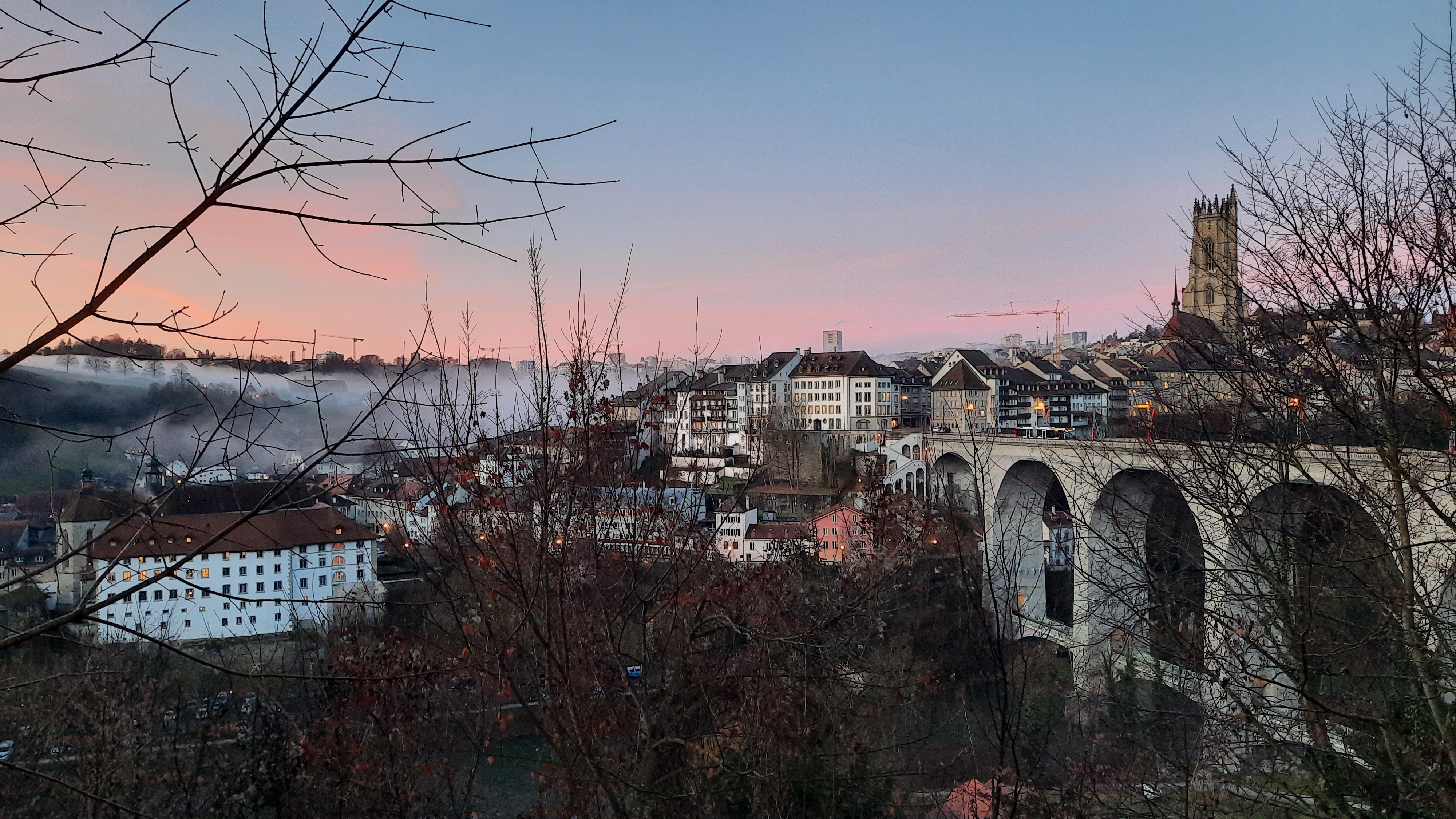
Fribourg at dawn, taken on my morning commute

I’ve decided to run a last-minute mini book awards with a jury of one (me) selecting from the books I’ve read in 2025. Please take a seat and see if you agree with the line-up of winners. We (the royal we) have nine categories this year.

And the Slightly Disappointing Award goes to Tell Me Everything by Elizabeth Strout. It’s only disappointing because I’ve loved everything of hers so far, and this novel I only liked. One too many walks with Bob and Lucy not quite saying what they’re thinking. The murder side plot was good and I wonder if I might have rushed it. Elizabeth Strout needs to be savoured. Might revisit.

Katriona O’Sullivan’s searingly honest memoir Poor wins in the non-fiction category with the award for Best Social Commentary. As the daughter of addicts, Katriona O’Sullivan endured desperate poverty and neglect in her childhood. If anyone doesn’t believe in systemic disadvantage yet, Poor will set them straight.

Also in non-fiction, there is an award for the Strangest / Most Original Book, which goes to The Sound of a Wild Snail Eating by Elisabeth Tova Bailey. This is the experience of a woman who was hit with a sudden and severe debilitating illness that left her almost unable to move. She found solace in the company of a snail accidentally carried into her sick room on a plant. I felt there was a little too much snail and not enough human in the book but still plenty of wonderful reflections on both conditions.

The Best Novel Set in Dublin Award goes to The Coroner’s Daughter by Andrew Hughes. The novel brings to life the dank, disturbing and oppressive Dublin of 1816 and introduced me to the wonderfully spirited and inquisitive character of Abigail Lawless.
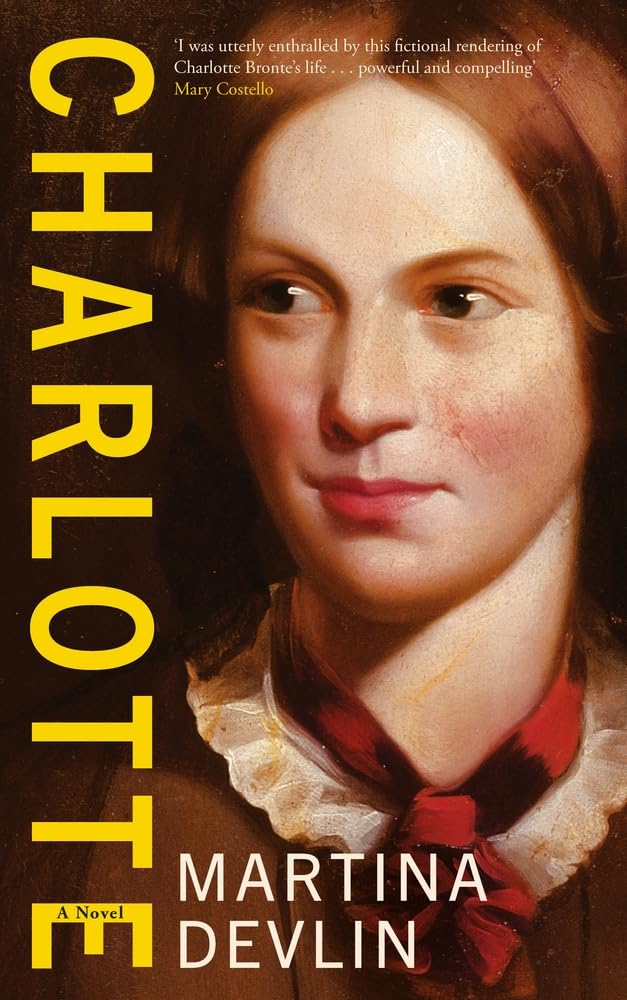
Back to fiction, and the Rich Historical Fiction Award goes to Charlotte by Martina Devlin, an evocative and fascinating tale woven around Charlotte Brontë’s little-known Irish connections. Charlotte spent her honeymoon in Ireland with her Irish husband the year before she died tragically of pregnancy complications in 1855, the last of six Brontë siblings to die young.

The award for the Most Clichéd and Occasionally Sexist Nonsense book goes to Love is Blind by William Boyd. I was given a 10-CD set (don’t laugh) of this book that someone had lying around and I listened to it mostly on car journeys. It could also win an award for the most research dumping about the piano tuning profession, if there was such an award. Having said all that, it was entertaining.

To be more positive, may I present Three Days in June by Anne Tyler which walks away with the Easiest Read Award. Featuring a socially awkward mother of the bride navigating the days before and after her daughter’s wedding, it’s amusing, touching and insightful in equal measures.
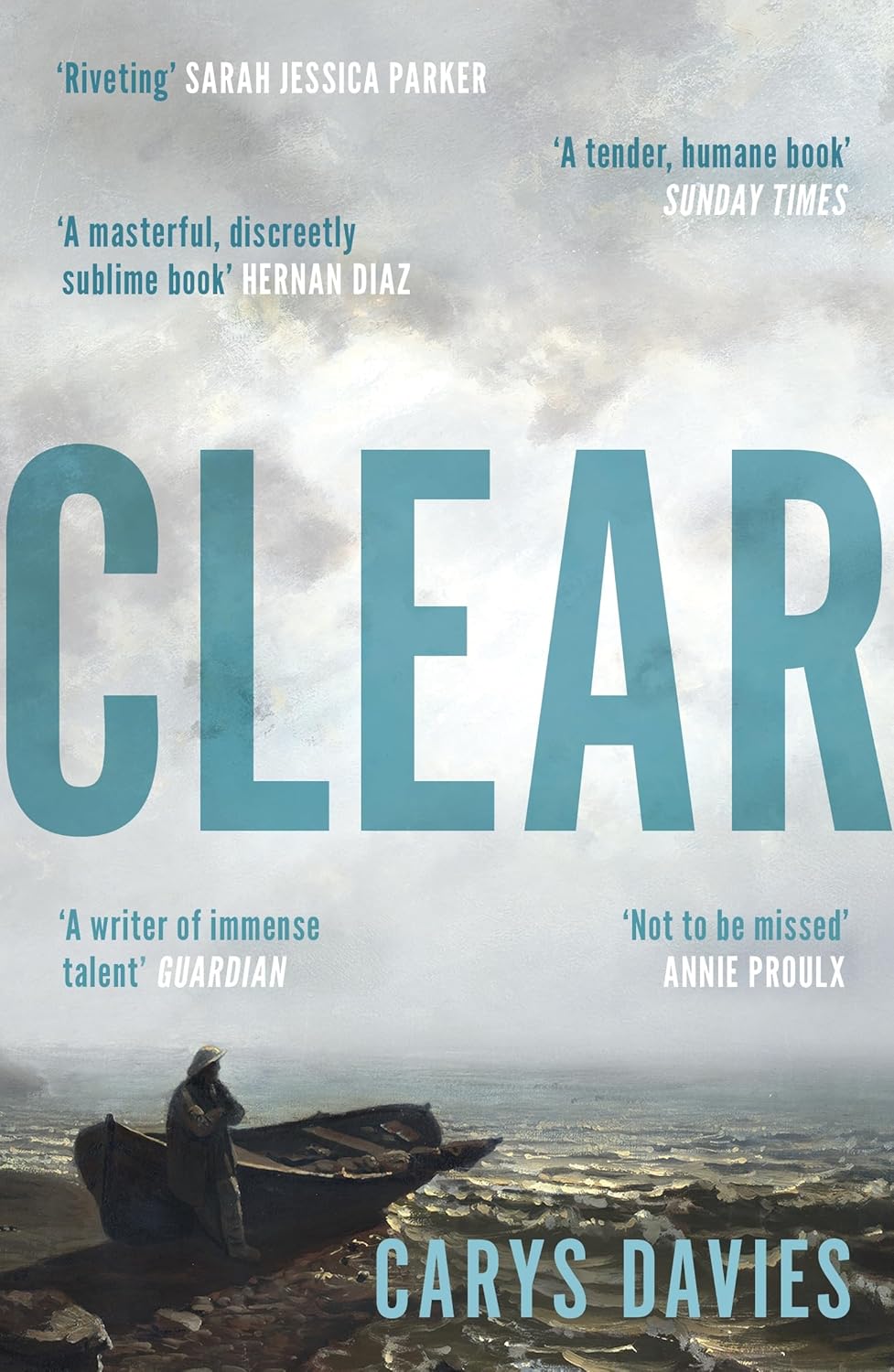
The Most Beautiful Story Award of 2025 is still Clear by Carys Davies, which I read in August and felt would be my book of the year. Set mainly on a remote Scottish island in the 1840s, it’s exquisite in every way.  Ivar, the sole occupant of the island, leads a life of quiet isolation until the day he finds a man unconscious on the beach below the cliffs. 

After listening to Colm Tóibín being brilliant about Henry James on The Secret Lives of Books podcast, his book A Long Winter caught my eye in Fribourg cantonal library.  It’s a long short story that’s just been given the Claire Keegan treatment by being sold as a book. And we are all the better for it! A Long Winter wins the Enchanting Sense of Place Award. In an afterword, Tóibín explains the background to the tragic story of a woman’s disappearance, which he heard during his time living in that region of Spain.

I hope you fall under the spell of one or more of these award-winning titles. Have you read any of them already? And what was your favourite read of 2025?

Summer reading, autumn happenings (save the date!)

Two high points of my childhood summers were berry picking and wild swimming. Those two free pleasures are still part of my life, and I managed to do both today – pick blackberries in the forest and go for a dip in my local river. With a good book thrown in, the perfect Sunday.

I’ve read more than usual this summer, helped by the fact that I have access to an endless supply of books at my day job working for a book distributor. I’ve just finished The Paris Express by Emma Donoghue, a real page-turner about a train hurtling towards disaster in 1895.

The novel is based on the true story of a derailment and, to create her characters, Emma Donoghue used the biographies of real people who were either on the train or could well have been. She says she drew on more than 40 articles about the accident in 26 publications. To find out more about the individual lives, especially uncelebrated ones, she “ransacked the wonderful hoard of French bureaucracy filae.com”.  The result of all this – apart from a gripping, richly-imagined story – is that you find out what became of the main characters in later life.  

Recent favourite reads include Tell Me What I Am by Una Mannion, Shy Creatures by Clare Chambers, Love is Blind by William Boyd, Audition by Katie Kitamura and the unforgettable Clear by Carys Davies.

Meanwhile preparations for the publication of my new novel Before the Leaves Fall are continuing and it’s time to save the date(s)! The Swiss launch of the book will take place in Stauffacher Bookshop in Bern on Thursday, October 9th at 8pm. The event is being generously sponsored by the Irish Embassy. Full details at this link.

Two weeks later in Dublin, the Gutter Bookshop in Cow’s Lane will host the Irish launch on Thursday, October 23rd, time tbc. All are welcome. I’m extremely grateful to both bookshops, who have a great record in supporting authors.

In between, I’ll be at the Frankfurt Book Fair for work and will hopefully steal a moment to present my book to Literature Ireland, which publishes a catalogue of translation-worthy new Irish fiction titles. I’d love to see the book translated into the Swiss languages as Voting Day was.

Before all that, September has some literary treats in store. I’ll be attending the annual Le livre sur les quais festival in Morges on the weekend of September 5th-7th. The full English programme has been published and it includes Natasha Brown, Alan Hollinghurst, Caroline Bishop, Mark O’Connell, Claire Massud and more. I’m very pleased to be interviewing Padraig Rooney about his biography of Annemarie Schwarzenbach, one of the most interesting Swiss women of the 20th century. That event is at 1pm on Saturday 6th in Hotel La Couronne.

At the end of September, the wonderful Jonathan Coe is coming to Geneva as a guest of the Société de Lecture. I will be interviewing him in the elegant salon jaune on Monday, September 29th. There’s lots to talk about in his latest cleverly-plotted, satirical, dark-yet-funny novel, The Proof of My Innocence.

With all that hopping around, I hope I get to see some of you over the next couple of months. For now, let’s enjoy this summer feeling and any good books we find along the way.

Before the Leaves Fall gets a botanical cover

Cover design by Becky Fish

One of the milestones of publishing a book is the moment when the cover design is revealed. I’m delighted to share the cover of Before the Leaves Fall with you today, along with the first endorsements the novel has received from authors Liz Nugent, Annie Lyons, Anne Griffin and Martina Devlin.

These amazing authors all gave their support unstintingly and I appreciate their generosity hugely. So here are the quotes, which I hope will whet your appetite for October.

‘This is a beautifully written study of Ruedi and Margrit, loosely connected by their past, bonding over a life changing decision causing both parties to reflect on their lives and relationships without sentimentality. The short length of the novel lends itself perfectly to the life expectancy of Margrit. Profoundly moving, I loved this book.’ — Liz Nugent, author of Strange Sally Diamond

‘A beautifully written story of unlikely friendship and the choices we face as we reach the end of our lives. Profound, poignant and refreshingly honest, this is very much a novel for our times.’ — Annie Lyons, author of The Brilliant Life of Eudora Honeysette 

Before The Leaves Fall once again shows O’Dea as a competent writer, unafraid to examine the relevant and vital issues of ordinary lives in Switzerland. The power of self-determination shines through in this touching read.’ — Anne Griffin, author of The Island of Longing

‘A poignant account of the lost boy trapped inside an old man, and his chance reconnection with a woman who touched his life when hers is almost played out. Told with compassion, wisdom and insight, it considers how death can offer a new perspective on life. It stayed with me long after I reached the end.’ — Martina Devlinauthor of The House Where It Happened and Charlotte.

This evening I sent off my feedback on the proofreader’s changes, which basically involved me agreeing with everything she marked up, bowing to her superior knowledge about hyphenation and the difference between ‘on to’ and ‘onto’. The next time I see the manuscript will be between the covers of a printed book! If you’re stuck for reading material in the meantime, have a look at the websites of the four talented writers above and take your pick.

I can’t wait for October. But I also want to enjoy this time before, when I can dream big about the book, hoping that it gets widely read and positively received, and that people understand – as Liz, Annie, Anne and Martina have done – that it comes from a good place.  

Home is where the sunrise is

20180731_061843

I recently received an invitation to attend an event in Zurich to discuss the concept of Heimat, among other things. Heimat is a German word that doesn’t have a direct equivalent in English. It can mean home, homeland, native land and more.

When Swiss citizens fill in official forms, they are routinely asked to give their Heimatort (literally ‘native place’), the commune of origin of their family. This is passed down through the paternal line so that my husband’s Heimatort (and by extension mine) is the village where his grandfather was born, even though his grandfather left there as a small boy when he was sent to live with relatives after his mother’s death. This grandfather, who ended up working as a saddler in another village, never lived in his native village again and may not have felt any emotional attachment to the place but many Swiss are proud of their Heimatort.

The old function of Heimatort was that the commune (municipality) would provide for you in case of destitution. In the past, this was more about social control than charity. Somebody caught begging or drunk in public could be picked up and returned to his or her Heimat to be dealt with. Not a cheery prospect at a time when people who were classed as ‘work shy’ could be interned under the ‘administrative care’ legal provision (common up to the 1970s). Children who were taken into care were referred to their Heimat for a foster home placement – in practice to work as labourers or servants for farming families – which often meant a new life of drudgery miles away from where they grew up.

Now, thankfully, we have prosperity, social welfare payments and a professionalised child welfare system. The Heimatort is only relevant in a few minor, archaic ways, such as the right to graze animals on commonly held land.  (Admittedly this is not minor if you can’t access the land your neighbours are using for free.) I don’t know of any other residual rights Heimatort grants but I’d be curious to know if anyone can enlighten me.

I have some Heimat issues myself in that I still feel the loss of my Irish homeland very keenly. Ideally, after fifteen years in a different country I should have transferred my allegiance and affections to my new location. But this has not happened, at least not to a convincing degree. Despite the fact that I have built a decent life for myself in Switzerland, a process that involved great effort, I still feel the inner tension of being pulled back to my place of origin. Meanwhile, my family is deeply rooted and happy here. It’s a conundrum.

A three-month stay in Ireland this year went some way to alleviating that tension. Apart from all the external trappings of life in Dublin that I enjoy (the sea, the sea!), there are two interlinked things the place offers me that I haven’t been able to replicate in Switzerland. One is a sense of community and the other is the ability to be myself. My German and French are good but I don’t feel truly myself when I speak those languages. I cannot be as genuine when I am working to communicate with a reduced vocabulary (and I seem to have hit a ceiling in both languages). But it’s not only about language; I have good relations with lots of people on an individual basis but it’s in a group that solidarity and shared experiences come into play. In this environment you can express a bigger range of your personality and find meaningful acceptance. I already have some ideas on how to respond to this problem and I’ll be giving it more thought over the coming months.

As for my book related activities, I am doing my bit to promote the French and German editions of The Naked Swiss (La Suisse mise à nu and Die Wahre Schweiz), which has so far notably involved a live television interview in Payot bookshop in Geneva on July 5th.

The interview was hosted by Patrick Vallélian of the in-depth Swiss news magazine Sept.Info, which is running an excerpt from La Suisse mise à nu in their latest edition and organising various joint events at bookshops in French-speaking Switzerland. More updates about these events on my Facebook page.

I was delighted to see the French translation reviewed in the Tribune de Genève newspaper and I’m looking forward to reading the write-up of the interview I gave 24 Heures newspaper later this month.

This time last year I was preparing for Le livre sur les quais festival in Morges at the beginning of September. This year the pressure is off as I will be attending as a visitor rather than a guest author. I have my ticket to see Maggie O’Farrell on September 2nd and will book more as soon as the full English programme is online. Especially looking forward to hearing Lisa McInerney speak. I loved her first book, The Glorious Heresies.

The photo above is the view from the top of the Kaiseregg mountain in Fribourg at sunrise a fortnight ago. The actual sunrise pics didn’t come out too well on my old phone but this one captures the dreamy beauty of the place. We had to get up at half past three in the morning to complete the climb in time before the sun came up. Tough going but well worth the effort, this was the best experience of my Swiss summer so far. I wish you all good times and safe travels this summer too.

In praise of coworking (and other news)

20160707_172319

An early adopter is a person who starts using a new technology or product as soon as it becomes available. I am more of a chronically-late adopter, but that doesn’t stop me from being enthusiastic about the new thing when I eventually discover it for myself.

When I wrote a few months ago about how much I was enjoying my new self-employed lifestyle, the only drawback I mentioned was that it had been difficult, based at home, to keep working time fenced off from family and house duties. The other thing I didn’t mention was the isolation that goes with working solo. Social media makes up for this to some extent but it doesn’t beat having a little catch-up over coffee with real human beings.

I first heard of coworking through a video journalist colleague at swissinfo.ch who was working one day per week in a shared office space to pursue film and animation projects outside his regular four-day per week job. I thought it sounded great but I wasn’t looking for something like that at the time. Besides, I thought, that’s the kind of thing you only find in big cities.

And then one day this summer, when things were a bit hectic at home, I did an impulsive google search for ‘coworking Fribourg,’ and immediately struck gold with Colab Fribourg. It turned out that there was an ideal co-working space just five minutes’ away from where I live.

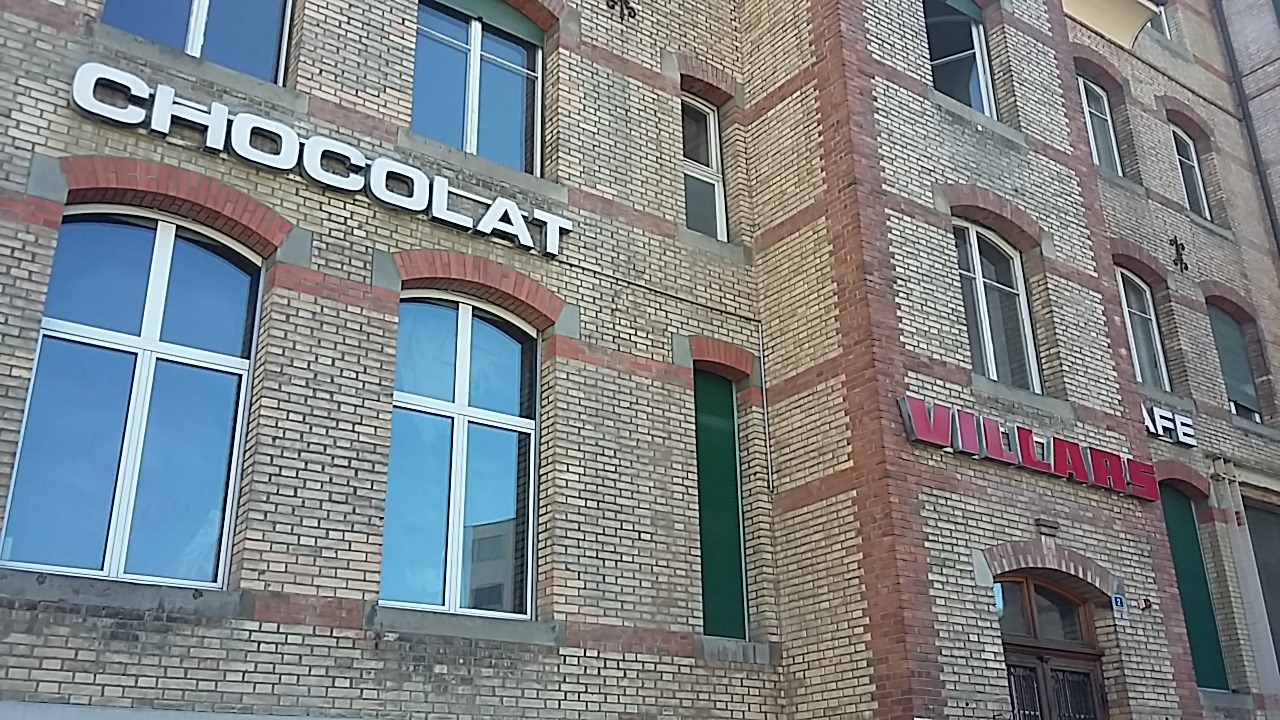
Colab Fribourg is an initiative of local entrepreneur Philippe Lang of attik.ch. It has the special attraction of being located in an atmospheric old building in the old industrial part of Fribourg. Not only that, the large, bright office space is directly above the Villars chocolate shop and café. People come from miles around to buy chocolate there.

It is a quiet working environment (with kitchen, meeting room etc.) but Philippe is currently converting a second room with a built-in phone cabin to cater for people who need to talk more and make phone calls.

I have met people from lots of different countries and professional backgrounds in Colab. Many are working on interesting projects. Some of these – like distributing solar panels in Africa, or coaching small businesses – are easy to understand. Others are at the innovative (and more obscure) end of new technology. I hate the word synergies but it is possible I could link up with some of these fellow Colab workers in future.

Apart from pooling resources, the advantage of self-employed people sharing an office space is that you can have as much or as little contact with each other as desired. In that sense, it is different to a regular working space where it’s more difficult to have a quiet day not talking much to colleagues.

In other news, I am getting very good feedback about The Naked Swiss, most recently this five-star review from nudge-book.com, in which the reviewer says she enjoyed the book so much she read it in one sitting. Check out this quote:

“Clare O’Dea’s writing is informative without being too dry, and her clear, well-structured style means that this is a fascinating read, occasionally funny, but never boring. It is an excellent social and historical portrayal of the Swiss nation.”

Last week I went to Basel to the home of Bergli Books’ parent company Schwabe Publishing. A good crowd turned out in Schwabe’s book shop Das Narrenschiff for an author talk and book signing. We ended up having a long question and answer session afterwards where I heard from people of several different nationalities. I’m really glad the book is also appealing to readers outside the English-speaking community. Fellow Irish author Padraig Rooney came along to the Narrenschiff event. I am currently reading his book The Gilded Chalet, a highly enjoyable crash course in literary Switzerland.

This week saw an interview about The Naked Swiss by Zurich-based freelance journalist Jennifer Lisle, published in newinzurich.com. It’s great to be getting the word out about the book. I hope I can come to Zurich soon for an event – just have to find the right co-host and venue.

Finally, the big news is that Bergli has reached an agreement with another Swiss publisher Helvetiq to bring out the French and German translations of the book next year. I’m delighted the book will reach a much wider audience in Switzerland. If you find any mistakes, now is the time to tell me!

Five flash book reviews

(FreeDigitalPhotos.net pannawat)

I’m just getting over a bad dose of reading fever (feeling better now, thanks) and thought I’d share a few short reviews of the books that have been keeping me glued to the screen and page over the past couple of weeks. It’s an eclectic mix so there should be something for everyone here.

The Imperfectionists by Tom Rachman
Each chapter is written from the point of view of a different character, all connected in some way to an English-language newspaper in Rome over four decades. It’s funny, it’s tragic, it’s superbly plotted. The setting is lovely. Loss and loneliness feature prominently and the relationships are complex and fascinating. Rachman has a wonderful satirical touch which he applies lightly, poking fun in the right places. I think I’ve found my book of the year. Thanks for the recommendation Nicki Chen. Anyone who has worked in journalism will get a special kick out the novel but it’s in no way written for a clique. I’ll be pushing this hard at my book club next month. Going to start buying votes now.

His overarching goal at the paper is indolence, to publish as infrequently as possible, and to sneak away when no one is looking. He is realizing these professional ambitions spectacularly.
He opens a manila folder so that, if anyone happens past, he can flutter sheets and mutter “Preparedness!” which seems to put most people off.


The Blazing World by Siri Hustvedt

I borrowed this book from a friend after attending a scintillating talk by the author in Zurich in May. I’ll admit I was a little put off by the heavy intellectual fabric of the novel. The paperback travelled with me to Ireland and back, by car and ferry – unread. I finally started it a month ago and did what is normally unheard of for me – I alternated it with other books. Indeed The Blazing World is probably to blame for this bout of reading fever as I kept fleeing to other books for light relief.

That’s not to say that I didn’t enjoy it, in the way you might enjoy trekking through the jungle with a machete. I loved the premise of the disillusioned old artist who tries to hit back at the New York art establishment by colluding with three male artists to pass off her work as theirs. Like The Imperfectionists the book is polyphonic, written in the voices of about a dozen different characters. The different accounts are assembled and presented in the style of an academic work, complete with footnotes (I’ll be a long time getting over those footnotes), cleverly building to a full revelation of what went wrong with Harriet Burden’s plan. I’m not sure I liked the format but this book, but the questions it raises about ageing, gender roles, art and psychological scars will resonate for a long time.

I want to blaze and rumble and roar.
I want to hide and weep and hold on to my mother.
But so do we all.

Trespass by Rose Tremain

Something completely different. I don’t even remember how I came into possession of this book but I do remember starting it and abandoning it last year. Last week, burning with fever, I found it in among the children’s books and rescued it. Since I finished the book I looked up Rose Trumain and it turns out she is a prolific prize-winning writer, quite the maestro. Set in the arid Cévennes region of France, this cracking whydunnit is a dark portrait of the terror of early old age, unhealthy sibling ties and psychological scars galore. She uses the landscape brilliantly to help build the atmosphere of oppression and dread. And oh the malice that the characters feel for each other! Not to be read by anyone considering a move to warmer climes to buy that dreamy old stone house surrounded by wizened vines. This book will kill the dream.

A Better Man by Leah McLaren

I was hooked when I heard about the plot of this book in a review on Anne Goodwin’s blog. Man wants to divorce his wife and mother of their twin children. Realises it will cost too much because she has become a deeply dissatisfied (and neglected) stay-at-home mother. Decides to fake a complete change in his behavior to being loving and supportive to make things more advantageous for the divorce. Ends up becoming a better man by behaving like one. But will it save the marriage? I couldn’t sympathise with either of the two spoilt main characters (he runs a groovy adverstising agency, she is an ex-lawyer turned neurotic mother with full-time nanny and chip on shoulder). This was ok because we were mostly watching them suffer. It felt a bit like writing by numbers but I kept reading to see where she would take the story. The twins featured quite a lot but I didn’t feel the child characters came off the page. The perfect South American nanny was also a cardboard cut-out. Despite all the negative things I’m saying it was very readable. Proof of the power of a strong central story idea.

In the Sea there are Crocodiles by Fabio Geda

This book should be compulsory reading for every citizen of Europe over the age of ten. It is a fictional treatment of the true story of Enaiatollah, a young man who made a remarkable five-year journey from Afghanistan to Italy where he finally managed to claim political asylum aged fifteen. The author met Enaiatollah and was so intrigued by his story he wanted to write it as a novel. If you want to know how it feels to be an illegal immigrant risking your life crossing seas and borders, this book will bring that experience alive like no other. So compelling. It also gives valuable insight into the push factors driving the undocumented ever onwards – misery upon misery in the transit countries.

All in all a highly enjoyable run of reading. I’m glad the fever struck when it did. In other reading news, I received an e-reader as a gift earlier this year and I’m very happy with the transition. The score for the above list: E-reader versus paper book – 3: 2. And I finally joined Goodreads, a great resource for readers and writers. Hope to see some of you there.

What’s your reading news?

Childbirth in fiction – delivering the goods

Birth of Adonis by Marcantonio Franceschini

Births, marriages, deaths. These are the building blocks of stories. But what does it take to write a good childbirth scene? Is it even necessary to describe how a fictional baby comes into the world? Not always, I would say. But sometimes, as shown by the examples below, the birth is much more than a biological event. It is an important driver of the story which has an impact on how the characters behave later on. We have to be there with these women in their hour of need.

There is a short story in Annie Proulx’s 2008 collection Fine Just the Way It Is called Them Old Cowboy Songs which contains one of the most tragic birth scenes imaginable. The mother is a teenage girl living alone in a cabin in a remote part of Wyoming in 1885 (were there any non-remote parts of Wyoming at that time? I’m not sure). Her young husband Archie has gone off on his last cattle drive before the birth, hoping to be back in time, having asked a neighbour to check in occasionally on Rose.

The next morning was cold and sleety and her back ached; she wished for the heat of summer to return. She staggered when she walked and it didn’t seem worthwhile to make coffee. She drank water and stared at the icy spicules sliding down the window glass. Around midmorning the backache increased, working itself into a slow rhythm. It dawned on her very slowly that the baby was not waiting until September. By afternoon the backache was an encircling python and she could do nothing but pant and whimper, the steady rattle of rain dampening her moaning call for succor. She wriggled out of her heavy dress and put on her oldest nightgown. The pain increased to waves of cramping agony that left her gasping for breath, and on and on, the day fading into night, the rain torn away by wind, the dark choking hours eternal. Another dawn came sticky with the return of heat and still her raw loins could not deliver the child. On the fourth afternoon, voiceless from calling for Archie, her mother, Tom Ackler, Tom Ackler’s cat, from screaming imprecations at all of them, at god, any god, then at the river ducks and the weasel, to any entity that might hear, the python relaxed its grip and slid off the bloody bed, leaving her spiralling down in plum-colored mist.

There follows a heart-rending scene where Rose crawls out of the cabin with her stillborn baby wrapped in a dish towel and tries to dig a grave with a spoon. I won’t say any more.

At the risk of mentioning Lionel Shriver once too often in this blog, I have to include an extract from the birth chapter in We Need to Talk about Kevin because the savage eloquence of Eva, writing here to her husband Franklin, is so remarkable.

So I made an effort, at which point I had to recognize that I’d been resisting the birth. Whenever the enormous mass approached that tiny canal, I’d been sucking it back. Because it hurt. It hurt a whole lot. In the New School course, they drummed into you that the pain was good, you were supposed to go with it, push into the pain, and only on my back did I contemplate what retarded advice this was. Pain, good? I was overcome with contempt. In fact, I never told you this before, but the emotion on which I fastened in order to push beyond a critical threshold was loathing. I despised being spread out like some farm exhibit with strangers gawking between my canted knees. I detested Dr. Rhinestein’s pointed, ratlike little face and her brisk, censorious manner. I hated myself for ever having agreed to this humiliating theatre, when I was fine before and right at this moment I could have been in France.

In some countries, one in four babies is now being delivered by caesarian section and yet it’s not often you come across a description of a surgical birth. Maggie O’Farrell has one in her 2010 novel The Hand That First Held Mine. The birth is important in the book because things go drastically wrong just after this scene and the mother, Elina, spends most of the book recovering from the shock.

She could feel them, the two doctors, rummaging about inside her, like people who had lost something at the bottom of a suitcase. She knew it ought to hurt, it ought to hurt like hell, but it didn’t. The anaesthetic washed coolly down and then up her spine, breaking like a wave on the back of her head. There was a green canvas screen bisecting her body. She could hear the doctors murmuring to each other, could see the tops of their heads, could feel their hands in her innards. Ted was nearby, at her left, perched on a stool. And there was a great heave and suck and she almost cried out, what are you doing, before she realised, before she heard the sharp, angry cry, surprisingly loud in the hushed room, before she heard the anaesthetist, behind her, saying a boy. Elina repeated this word to herself as she stared ahead at the tiled ceiling. Boy. A boy. Then she spoke to Ted. Go with him, she said, go with the baby.

There are various other flashbacks of the birth as Elina tries to piece together what happened and come to terms with it. The other option is to skip the technicalities of the birth altogether, as Mary Costello does in Academy Street.

The pain struck at dawn. Willa came. In the hospital foyer her waters broke. She looked down at her drenched shoes and began to cry.

That evening when it was all over she thought she had scaled Everest, stood at its peak, exhilarated.

What, that’s it?
Actually there is a little more. Costello continues:

The next morning the enormity of it all hit her. She had brought forth life, rendered human something from almost nothing, and this power, this ability to create, overwhelmed her.

She did not take to the child. The light down on his skin resembled fur. She could not bear to touch the head, the unknitted bones of his crown. She thought of him as half-hatched, not quite finished. She was not in her right mind. Her body had been riven open, pummelled, her innards displaced. A disgust at her physical self took hold, at the engorged breasts, the bleeding. I am a cow, she thought. But cows are good mothers.

Nine and five years on I still remember the births of my own children in forensic detail and I remember feeling an urgent need in the early weeks and months to tell the story as often as I could (hopefully to a willing audience). Telling the story is a way of fully understanding and celebrating what has happened. It is too big an experience to fit into one day.

What about you? Do you think it’s desirable for authors to write detailed fictional accounts of labour? Have you ever written a childbirth scene or read one that stayed with you?

Honest words from Donal Ryan in Zurich

Honest words from Donal Ryan in Zurich

20150420_192210

Imagine a struggling writer standing over his kitchen sink burning page after page of handwritten manuscripts because he doesn’t want any record of “these travesties” to remain on earth.

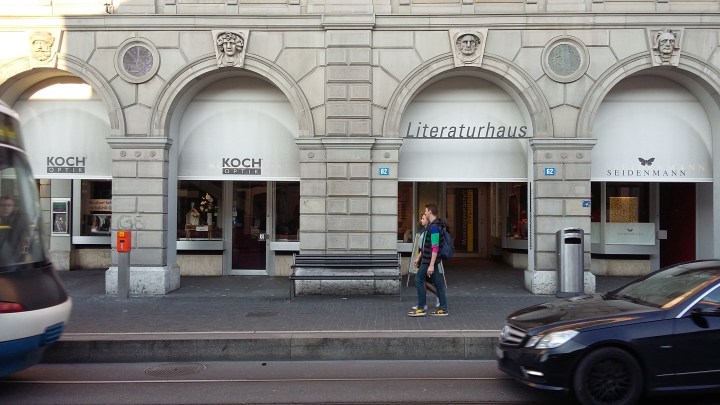
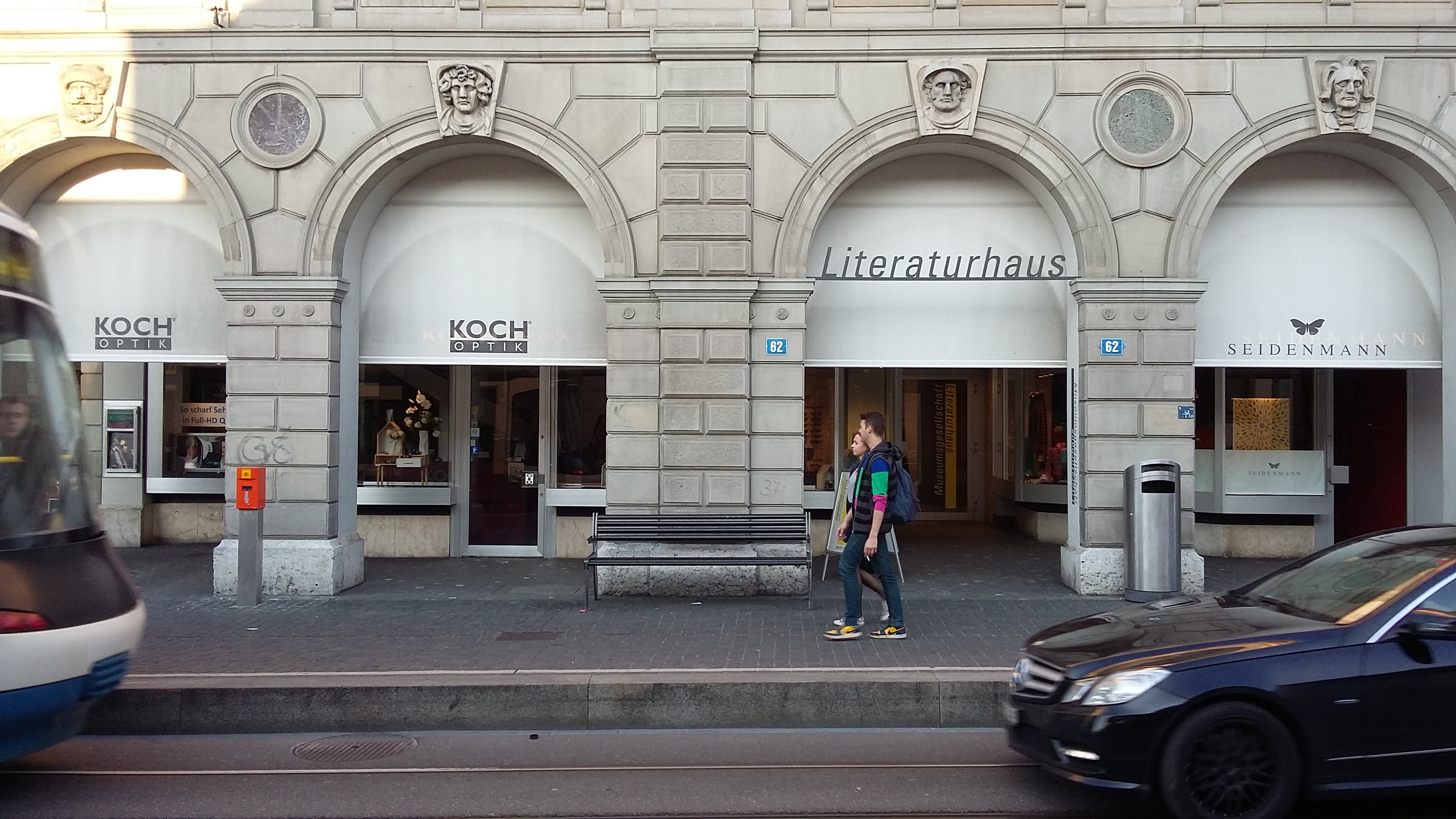
That’s what’s Donal Ryan did with seven or eight (!) novels and one hundred (!) short stories before he became Ireland’s most successful debut author with the release of The Spinning Heart in 2012. I heard this account from Ryan yesterday evening at a reading in Zurich Literaturhaus. His honesty and Tipperary accent were a tonic.

In fact some of the early work that Ryan destroyed was festering in the hard drives of old computers and it was a case of delete and empty trash rather than burning. But what made him trash the old material and believe in his first published novel so much he submitted it “to every publisher in the English-speaking world”?

Ryan discarded the work he wrote in his twenties because it didn’t ring true. “The voices were too forced and contrived and I had a weird low-level nausea in my stomach when I was writing.”

Then, with The Thing About December, Ryan tuned in to the right station, as he put it, and found his voice. The book, written before The Spinning Heart, was published last year and tells the story of Johnsey, a vulnerable young man in rural Ireland, hopelessly ill equipped to deal with the changes life thrusts upon him after his parents die. The story is written in the close third person and Johnsey’s predicament is told in his own deceptively simple language. The writing is moving and eloquent, and funny when it’s not devastating.

The story is well described in this Irish Times review.

Ryan spoke about love a lot on Monday night and reading between the lines he appears to care deeply about Johnsey and what the character represents. Even his mother became fiercely protective of Johnsey and spoke of him as if he were a real person (rather endearingly, Ryan mentions his family a lot).

Ryan’s compassion is evident when he is talking about his characters. “Johnsey is a distillation of all the men I know who don’t speak. And I know lots. These are men who live alone in totally isolated farmhouses. I wanted to know what the inside of their heads would sound like.”

“All stories are about love, or the absence of love. All stories are based on declensions between those two states.” Ryan repeated this idea, which seems to be his motto.

I’m in the submission doldrums at the moment, that point when a writer begins to doubt their worthiness and the wisdom of committing so much time and passion to the whole enterprise. So of course I asked Ryan how he struck submission gold. He mentioned sheer luck and a scatter-gun approach but perseverance seems to have been the key.

Interestingly Ryan wrote The Spinning Heart (also set in Johnsey’s village but about a decade later, and written in 21 chapters of different first person narratives) swiftly and without a struggle while he was submitting The Thing About December, to take his mind off the rejections.

When he moved on to the submitting stage with The Spinning Heart he clocked up dozens of rejections. He kept print-outs of his email rejections in a folder and once, when asked by a journalist, made a rough count of forty seven, but there were more that didn’t make it into the folder, he said.

Ryan has been described as the best literary chronicler of the Celtic Tiger but in typical unassuming style, he says the fact that his two novels provided bookends for the Irish economic boom was accidental. “It was fortunate for me because it got me published. It was my hook.”

Donal Ryan has a collection of short stories coming out in December, also set in the same fictional village as the novels. He describes it as the best work he’s ever done. Meanwhile, work on his third novel is progressing painfully, he admits.

I left the Literaturhaus with a smile and with the feeling I was fortunate to have spent time listening to a great ambassador for Irish writing. It’s a reminder that whenever things get tough, it’s good to connect with other writers (if only from a distance) for inspiration and encouragement.

I’ll be back in Zurich next month to attend a talk by Siri Hustvedt. Can’t wait!

The desolation of domestic life

2014-12-21 12.06.59

It’s ok, I’m not talking about my own domestic woes. I’ve just been reading The Springs of Affection by Maeve Brennan, a collection of short stories set in Dublin and written between the 1950s and 1970s when Brennan lived in New York.

In between stories I started the wonderful Academy Street by Mary Costello, in which the main character Tess lives in New York through that same period and beyond. I lived under the melancholy spell of that book for three days, snatching it greedily back up at every opportunity. Academy Street gives the illusion of moving slowly without much drama but before you know it you have been through Tess’s entire life, a patchwork of tragedy, transient love and inertia.

For more on Academy Street I would recommend this fabulous review by fellow blogger and author Anne Goodwin, whose first novel, Sugar and Snails, was published last July.

Tess, with her emotionally debilitating upbringing and tragic lack of self-belief, could be a character from one of Brennan’s stories. But while Brennan reproduced on paper the “petty social intricacies of the city she had left”, she was living the high life in New York, working as a columnist for The New Yorker and enjoying the kind of success and freedom most girls of those times only dreamed about.

After a disastrous marriage, Brennan had a breakdown and her illustrious career – and her life – fell apart. She spent the last fifteen years of her life plagued by alcoholism and mental illness, homeless at times, and died forgotten and penniless in 1993.

Some of Brennan’s characters appear in several of her stories and a lot of the action takes place in one particular house in a suburban street on the city’s south side, in Ranelagh to be exact. This is the house where Brennan grew up, where her family went through precarious times while her father was on the run during the Civil War. In the new Free State, he was on the winning side and the family moved to Washington when he was appointed Ireland’s envoy the United States. Maeve Brennan never moved back.

There is a play, Maeve’s House, based on Brennan’s life which I wish I had seen. It was commissioned by the Abbey Theatre in Dublin and was also staged in New York in 2013. The play owes its existence to an amazing coincidence: the actor performing the one-man show also lived in the house were Brennan grew up. Eamon Morrissey’s family bought the house in Ranelagh from Brennan’s parents when they moved to the US.

Morrissey was surprised to discover in one of her stories an exact description of his childhood home and he contacted her at the magazine; they arranged to meet in New York.
Here’s a review of the New York show.

To get back to the stories. Some are gently moving while others are steeped in despair, portraits of people trapped in prisons of their own making. The title story The Springs of Affection (1972) is the longest in the book and it features one of the most vividly drawn and unlikable characters I have ever come across.

Her name is Min and she is the last surviving member of her family. A seamstress by trade, Min has lived a life of unrealised dreams, defined by envy and spite, but she finds herself on top in the end, triumphant in her longevity.

“Min sat beside her own gas fire in her own flat in Wexford and considered life and crime and punishment according to the laws of arithmetic. She counted up and down the years, and added and subtracted the questions and answers, and found that she came out with a very tidy balance in her favour.”

Min’s brother Martin and his wife Delia are described with scathing disapproval by Min in her recollections. We meet the couple in several of the other stories, notably in The Twelfth Wedding Anniversary (first published in The New Yorker in 1966), where their domestic misery is writ large. When Martin returns home late after ignoring their anniversary, he finds refuge in his family’s slumber.

“… If this night could only last a week, or two weeks, I might have time to get everything straightened out in my head, and then I would know what to do … If they would only sleep happily like that for a long time, he might find himself able to think again. But the coming of day, a few hours off, rose up in his mind like a towering wave that was all the more awful because it would be succeeded after twenty-four hours by another wave, and then another. There was no end to the days ahead, and the ones furthest off, years from now, were gathering power while he stood waiting on the landing. It was a merciless prospect. There was no way out of this house, which now seemed to contain all of his future as well as a good part of his past.”

Oh the unhappiness!

The Secret History opens a door to the past

DSCN1219

You don’t have to have murdered someone in your college days to go through a spell of nostalgia after reading The Secret History by Donna Tartt. This haunting book captures the clannishness, the impressionability, the uncertainty and excess of those years. It is a story about the defining experiences we would rather forget, if only we could.

Of course the Greek-quoting, champagne-swilling lifestyle enjoyed by the six main characters in The Secret History is far removed from the experience of the average student. The rarefied atmosphere cultivated by these privileged classics students belongs to a lost era; this is how we imagine things were when only the rich and brilliant entered the hallowed halls of university.

Told as a memoir from the perspective of the latest addition to the exclusive group, the novel reveals how, and ultimately why, five of the six “clever, eccentric misfits” end up colluding in the killing of their friend.

The book, set in an elite college in Vermont, takes up the mantle of The Great Gatsby so overtly that the students, in tweeds and cashmere, could be the grandchildren of Tom and Daisy Buchanan and the narrator Richard a direct descendant of Nick Carraway.

Those formative years between adolescence and adulthood are fertile ground for fiction and The Secret History draws on other classics such as Catcher in the Rye, Crime and Punishment and Brideshead Revisited, sometimes by direct reference.

But nothing in the 600 plus pages of The Secret History happens by accident. The novel is so well crafted it screams good writing. There is so much to enjoy – from the biting satire in the depiction of the family of the murder victim Bunny, to the heart-wrenching descriptions of tortured souls and the beautiful passages on the changing seasons. My only criticism would be the sense of repetition in the countless scenes of heavy drinking and hangovers. But knowing the writer, that was probably deliberate.

Like many people, I was inspired to read The Secret History after the long-awaited and much-fêted appearance of Tartt’s third novel, The Goldfinch (don’t say anything, I’m only on page 304). Somehow I missed The Secret History when it was first published in 1992, even though it was right in the middle of my college years.

I’d love to hear your impressions of this book or any thoughts on the folly of youth. Among the small readership of this blog are three people I went to university with who have remained good friends to this day. I believe that the decision we made in 1989 to study Russian was one of the most significant and far-reaching of our lives. Or maybe I’m just carried away by The Secret History.

Here’s what Donna Tartt’s narrator Richard Papen has to say on the question. Read the punctuation and weep!

I suppose there is a certain crucial interval in everyone’s life when character is fixed forever; for me, it was the first fall term I spent at Hampden. So many things remain with me from that time, even now: those preferences in clothes and books and even food – acquired then, and largely, I must admit, in adolescent adulation of the rest of the Greek class – have stayed with me through the years.