My own personal book awards of 2025

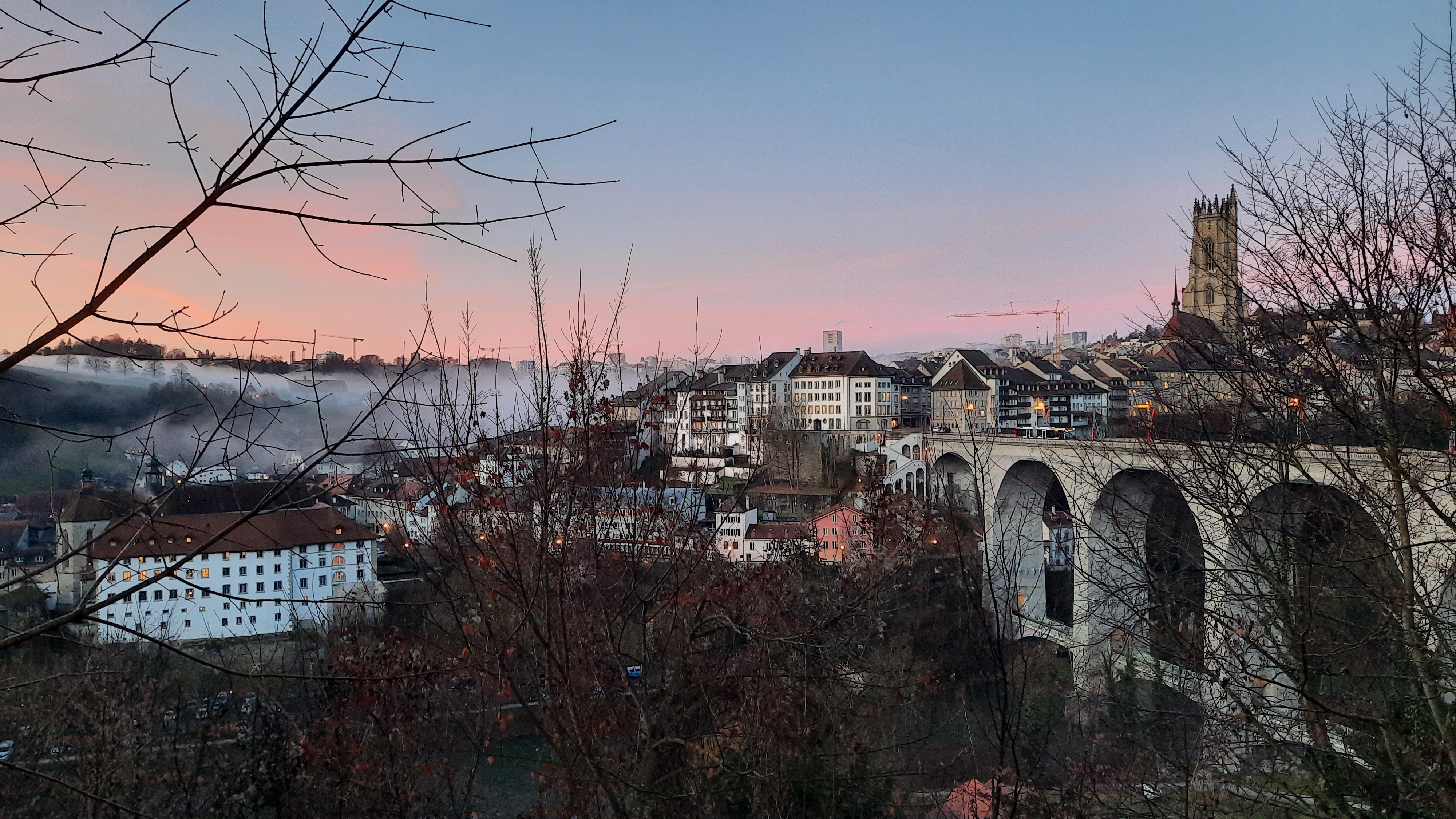
Fribourg at dawn, taken on my morning commute

I’ve decided to run a last-minute mini book awards with a jury of one (me) selecting from the books I’ve read in 2025. Please take a seat and see if you agree with the line-up of winners. We (the royal we) have nine categories this year.

And the Slightly Disappointing Award goes to Tell Me Everything by Elizabeth Strout. It’s only disappointing because I’ve loved everything of hers so far, and this novel I only liked. One too many walks with Bob and Lucy not quite saying what they’re thinking. The murder side plot was good and I wonder if I might have rushed it. Elizabeth Strout needs to be savoured. Might revisit.

Katriona O’Sullivan’s searingly honest memoir Poor wins in the non-fiction category with the award for Best Social Commentary. As the daughter of addicts, Katriona O’Sullivan endured desperate poverty and neglect in her childhood. If anyone doesn’t believe in systemic disadvantage yet, Poor will set them straight.

Also in non-fiction, there is an award for the Strangest / Most Original Book, which goes to The Sound of a Wild Snail Eating by Elisabeth Tova Bailey. This is the experience of a woman who was hit with a sudden and severe debilitating illness that left her almost unable to move. She found solace in the company of a snail accidentally carried into her sick room on a plant. I felt there was a little too much snail and not enough human in the book but still plenty of wonderful reflections on both conditions.

The Best Novel Set in Dublin Award goes to The Coroner’s Daughter by Andrew Hughes. The novel brings to life the dank, disturbing and oppressive Dublin of 1816 and introduced me to the wonderfully spirited and inquisitive character of Abigail Lawless.

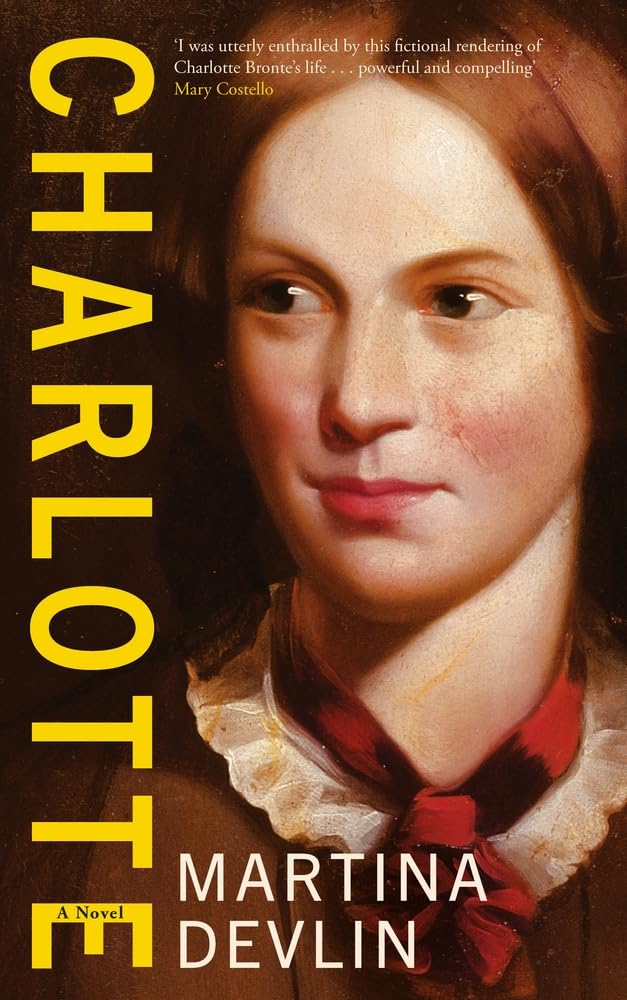
Back to fiction, and the Rich Historical Fiction Award goes to Charlotte by Martina Devlin, an evocative and fascinating tale woven around Charlotte Brontë’s little-known Irish connections. Charlotte spent her honeymoon in Ireland with her Irish husband the year before she died tragically of pregnancy complications in 1855, the last of six Brontë siblings to die young.

The award for the Most Clichéd and Occasionally Sexist Nonsense book goes to Love is Blind by William Boyd. I was given a 10-CD set (don’t laugh) of this book that someone had lying around and I listened to it mostly on car journeys. It could also win an award for the most research dumping about the piano tuning profession, if there was such an award. Having said all that, it was entertaining.

To be more positive, may I present Three Days in June by Anne Tyler which walks away with the Easiest Read Award. Featuring a socially awkward mother of the bride navigating the days before and after her daughter’s wedding, it’s amusing, touching and insightful in equal measures.

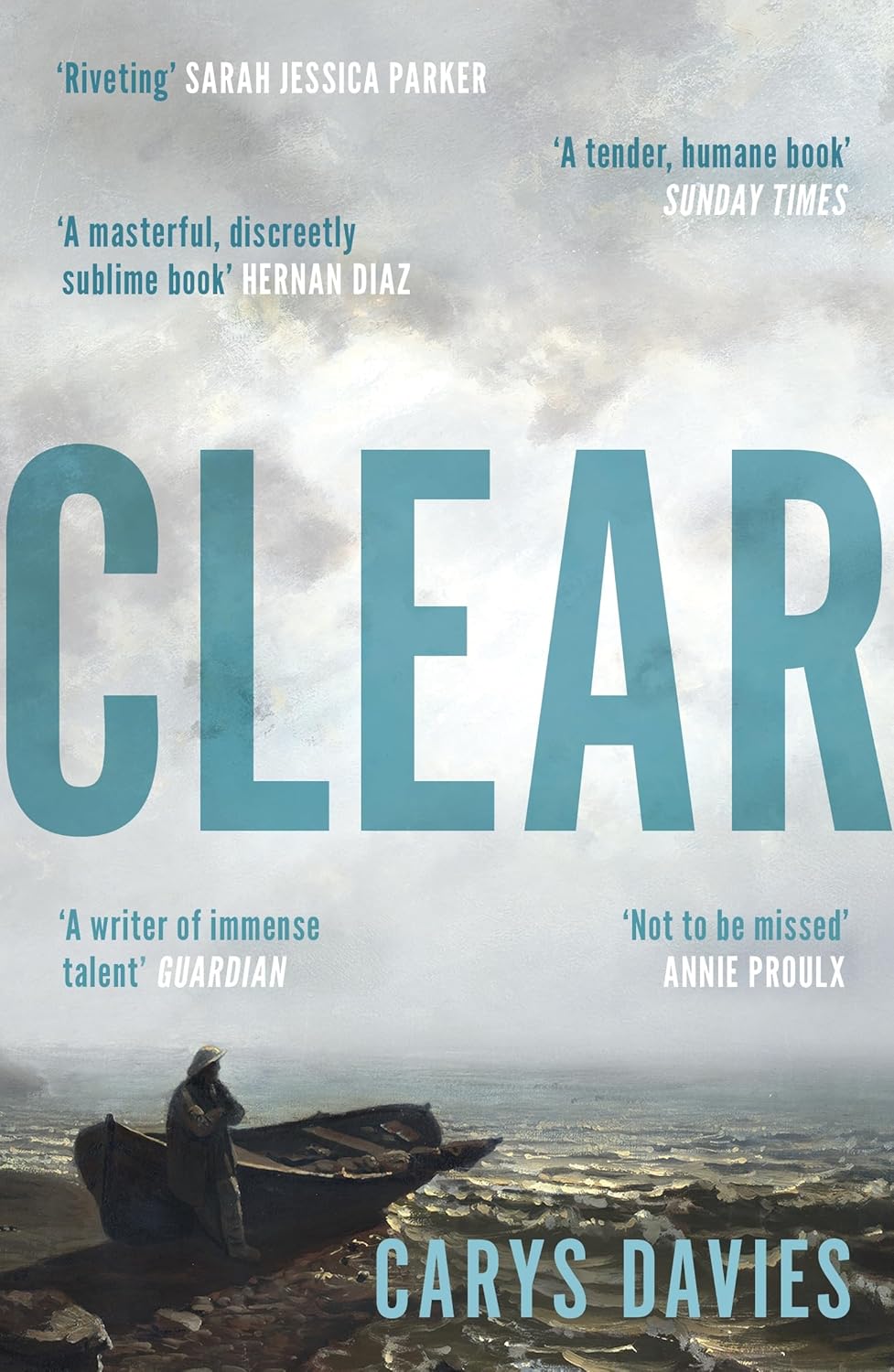
The Most Beautiful Story Award of 2025 is still Clear by Carys Davies, which I read in August and felt would be my book of the year. Set mainly on a remote Scottish island in the 1840s, it’s exquisite in every way.  Ivar, the sole occupant of the island, leads a life of quiet isolation until the day he finds a man unconscious on the beach below the cliffs. 

After listening to Colm Tóibín being brilliant about Henry James on The Secret Lives of Books podcast, his book A Long Winter caught my eye in Fribourg cantonal library.  It’s a long short story that’s just been given the Claire Keegan treatment by being sold as a book. And we are all the better for it! A Long Winter wins the Enchanting Sense of Place Award. In an afterword, Tóibín explains the background to the tragic story of a woman’s disappearance, which he heard during his time living in that region of Spain.

I hope you fall under the spell of one or more of these award-winning titles. Have you read any of them already? And what was your favourite read of 2025?

The story behind ‘Before the Leaves Fall’

In just a few days, Before the Leaves Fall will be available in Switzerland. Elsewhere, the launch date is October 23rd. Now that the book is so close to being in the hands of readers, I feel I can tell you more about it.

The first interview about the novel was published by newinzurich.com recently. I’m going to borrow a couple of answers from that interview to tell you some of the whys and wherefores of this standalone story, which is linked to my first novel, Voting Day.

First of all, you should know that this is a story about a person who has decided to end her life with the help of an assisted dying organisation. Even though it is a hopeful story about human connection, healing and self-determination, I do think that it might be upsetting for anyone currently too close to bereavement.

So why would I be drawn to such a sombre topic, and assisted dying in particular? Well, it might be partly to do with being middle-aged and seeing the different, often difficult but sometimes beautiful ways life comes to an end. Or as I said in the newinzurich interview:

“Assisted suicide is always in the air in Switzerland, whether it’s peripherally in news stories or through the direct experience of people you know. I’m interested in how it becomes a path for some but not for others, who may even be suffering more.”

Introducing Ruedi and Margrit

One of the conversations my two protagonists have is about what makes life worth living, or not. They are past any pretence and can speak honestly. So, who are these characters? Ruedi is a Swiss widower in his seventies living in Bern. He worked for the Swiss Federal Railways until he had to retire early to look after his sick wife. As a child, he spent time in care and he still feels shame about his origins. Ruedi is freshly trained in the role of facilitator for Depart, a fictional assisted dying organisation, and Margrit is his first client.

“Margrit is in her late eighties and has become quite contrary in old age. She has a strained relationship with her two sons and has lived a life of material comfort but ultimately failed to find meaning or satisfaction in her lot as a traditional wife and mother.  When the two characters realise their paths have crossed before, it sparks some new self-discovery for both of them.”

If you’re familiar with Voting Day, set in 1959 on the day Swiss men voted ‘no’ to granting women the vote, you will recognise these names. Ruedi was a foster child in that book and Margrit, a young woman struggling to maintain her independence, was kind to him.

There are a lot of authors who revisit characters from one book to the next. Jonathan Coe, whom I had the pleasure of interviewing this week in Geneva, has done it a lot, as has another of my favourite authors Elizabeth Strout. Donal Ryan recently released Heart, be at Peace, “a heartfelt, lyrical novel that can be read independently, or as a companion to his first book The Spinning Heart“. I like that way of phrasing the connection, and might borrow it, if Penguin Random House doesn’t mind.

A tale of two launches

For the Swiss contingent, I hope to see some of you at the launch next Thursday, October 9th at 8pm in Stauffacher Bookshop in Bern. There’s a link to sign up for the event (Anmeldung) but you can also turn up on the night and buy a ticket at the door (CHF 15). I’ll be in conversation with Helen Stubbs Pugin and the discussion, followed by signing and apéro, will be in English.

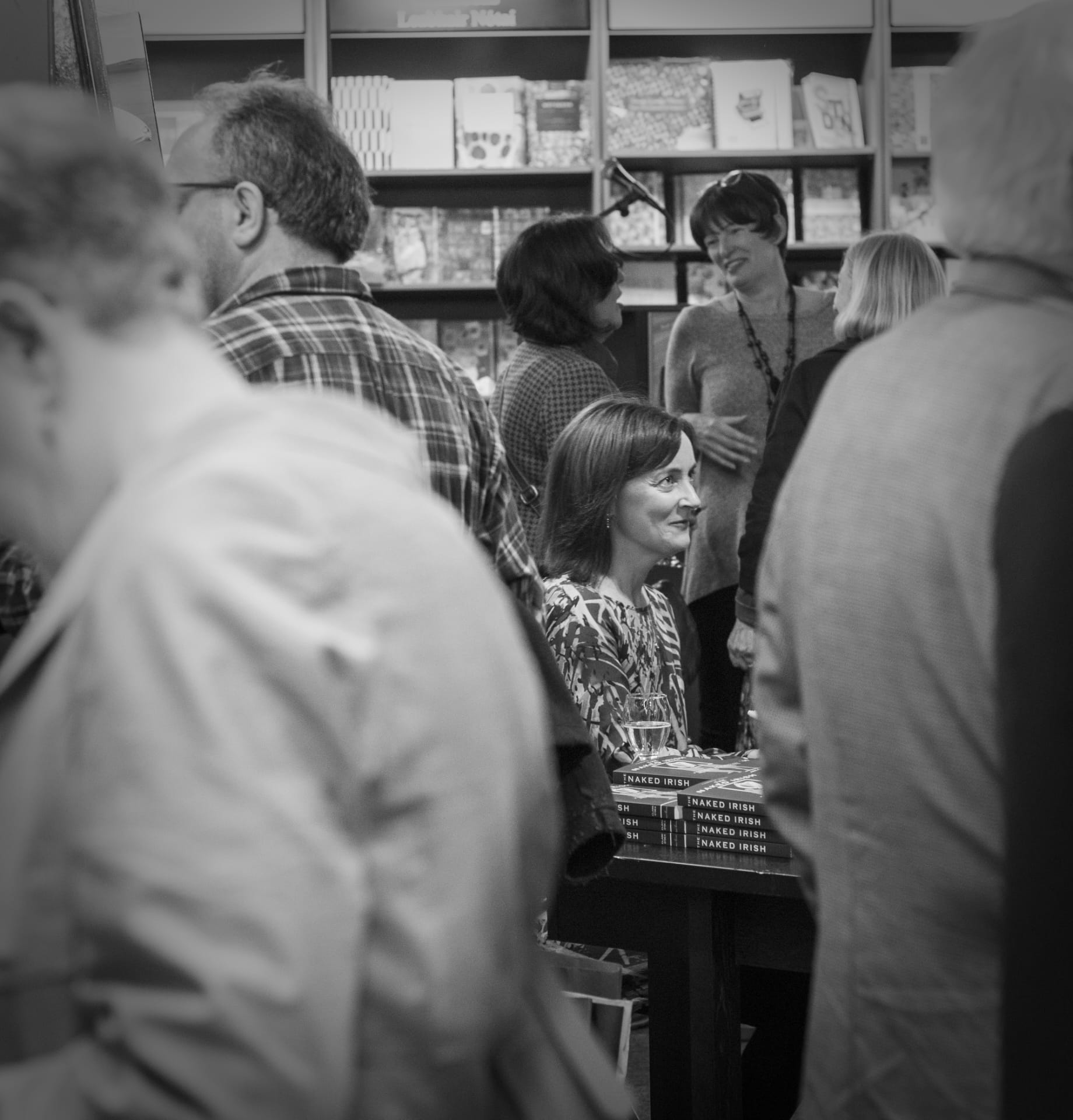
Irish friends, readers and country(wo)men are warmly invited to the Dublin launch at The Gutter Bookshop, Temple Bar on Thursday, October 23rd at 6.30pm. Sarah Moore Fitzgerald will be hosting that gathering and I can promise Swiss chocolate, just as we had for the launch of The Naked Swiss in the same venue in 2016.

I’m very grateful that my editor from Fairlight Books, Laura Shanahan, will be joining us for the Dublin launch. And the Irish Ambassador Aoife McGarry will say a few words of welcome at the Swiss launch.

If you can’t make it to either of those countries on either of those dates, you can really help the visibility of Before the Leaves Fall by ordering it already at your local bookshop or online, and by spreading the word. Part of me is nervous about what reception this book will have but I wouldn’t be taking the leap if I didn’t trust that some readers will find truth in it and new things to think about.

Summer reading, autumn happenings (save the date!)

Two high points of my childhood summers were berry picking and wild swimming. Those two free pleasures are still part of my life, and I managed to do both today – pick blackberries in the forest and go for a dip in my local river. With a good book thrown in, the perfect Sunday.

I’ve read more than usual this summer, helped by the fact that I have access to an endless supply of books at my day job working for a book distributor. I’ve just finished The Paris Express by Emma Donoghue, a real page-turner about a train hurtling towards disaster in 1895.

The novel is based on the true story of a derailment and, to create her characters, Emma Donoghue used the biographies of real people who were either on the train or could well have been. She says she drew on more than 40 articles about the accident in 26 publications. To find out more about the individual lives, especially uncelebrated ones, she “ransacked the wonderful hoard of French bureaucracy filae.com”.  The result of all this – apart from a gripping, richly-imagined story – is that you find out what became of the main characters in later life.  

Recent favourite reads include Tell Me What I Am by Una Mannion, Shy Creatures by Clare Chambers, Love is Blind by William Boyd, Audition by Katie Kitamura and the unforgettable Clear by Carys Davies.

Meanwhile preparations for the publication of my new novel Before the Leaves Fall are continuing and it’s time to save the date(s)! The Swiss launch of the book will take place in Stauffacher Bookshop in Bern on Thursday, October 9th at 8pm. The event is being generously sponsored by the Irish Embassy. Full details at this link.

Two weeks later in Dublin, the Gutter Bookshop in Cow’s Lane will host the Irish launch on Thursday, October 23rd, time tbc. All are welcome. I’m extremely grateful to both bookshops, who have a great record in supporting authors.

In between, I’ll be at the Frankfurt Book Fair for work and will hopefully steal a moment to present my book to Literature Ireland, which publishes a catalogue of translation-worthy new Irish fiction titles. I’d love to see the book translated into the Swiss languages as Voting Day was.

Before all that, September has some literary treats in store. I’ll be attending the annual Le livre sur les quais festival in Morges on the weekend of September 5th-7th. The full English programme has been published and it includes Natasha Brown, Alan Hollinghurst, Caroline Bishop, Mark O’Connell, Claire Massud and more. I’m very pleased to be interviewing Padraig Rooney about his biography of Annemarie Schwarzenbach, one of the most interesting Swiss women of the 20th century. That event is at 1pm on Saturday 6th in Hotel La Couronne.

At the end of September, the wonderful Jonathan Coe is coming to Geneva as a guest of the Société de Lecture. I will be interviewing him in the elegant salon jaune on Monday, September 29th. There’s lots to talk about in his latest cleverly-plotted, satirical, dark-yet-funny novel, The Proof of My Innocence.

With all that hopping around, I hope I get to see some of you over the next couple of months. For now, let’s enjoy this summer feeling and any good books we find along the way.

Before the Leaves Fall gets a botanical cover

Cover design by Becky Fish

One of the milestones of publishing a book is the moment when the cover design is revealed. I’m delighted to share the cover of Before the Leaves Fall with you today, along with the first endorsements the novel has received from authors Liz Nugent, Annie Lyons, Anne Griffin and Martina Devlin.

These amazing authors all gave their support unstintingly and I appreciate their generosity hugely. So here are the quotes, which I hope will whet your appetite for October.

‘This is a beautifully written study of Ruedi and Margrit, loosely connected by their past, bonding over a life changing decision causing both parties to reflect on their lives and relationships without sentimentality. The short length of the novel lends itself perfectly to the life expectancy of Margrit. Profoundly moving, I loved this book.’ — Liz Nugent, author of Strange Sally Diamond

‘A beautifully written story of unlikely friendship and the choices we face as we reach the end of our lives. Profound, poignant and refreshingly honest, this is very much a novel for our times.’ — Annie Lyons, author of The Brilliant Life of Eudora Honeysette 

Before The Leaves Fall once again shows O’Dea as a competent writer, unafraid to examine the relevant and vital issues of ordinary lives in Switzerland. The power of self-determination shines through in this touching read.’ — Anne Griffin, author of The Island of Longing

‘A poignant account of the lost boy trapped inside an old man, and his chance reconnection with a woman who touched his life when hers is almost played out. Told with compassion, wisdom and insight, it considers how death can offer a new perspective on life. It stayed with me long after I reached the end.’ — Martina Devlinauthor of The House Where It Happened and Charlotte.

This evening I sent off my feedback on the proofreader’s changes, which basically involved me agreeing with everything she marked up, bowing to her superior knowledge about hyphenation and the difference between ‘on to’ and ‘onto’. The next time I see the manuscript will be between the covers of a printed book! If you’re stuck for reading material in the meantime, have a look at the websites of the four talented writers above and take your pick.

I can’t wait for October. But I also want to enjoy this time before, when I can dream big about the book, hoping that it gets widely read and positively received, and that people understand – as Liz, Annie, Anne and Martina have done – that it comes from a good place.  

What’s another year? Shifting goalposts in 2019

20190919_140323

I didn’t write a round-up of 2018. Looking back, this was probably because not much went according to plan. It was a year of near misses professionally. The only big project I managed to salvage was the book that became The Naked Irish. I signed with Mentor Books / Red Stag in November 2018 and the book was published in September 2019.

Other plans that went by the wayside last year after a lot of work and anticipation included a book translation project, an application to do a Master’s, a possible job in Basel, submission of a middle grade novel and a memoir writing business. But just when I was beginning to think everything I touched turned to ashes, I got that much-needed yes from Mentor Books.

So there was a point in time when all I wanted was for a publisher to accept the book about Ireland and publish it. But as soon as that became a reality, the goalposts shifted. It wasn’t enough just for the book to be published any more, I wanted it to be a critical success. I wanted reviews to confirm that I had done a good job.

From my point of view, the book has been a critical success, with positive reviews appearing in the Irish Independent, the Business Post and The Irish Times. It is on sale all over Ireland and was hopefully under many Christmas trees this year.

Now, I notice that my greedy writer goalposts have shifted again. Suddenly, Ireland is not enough. I want the book to be a commercial success and that means looking beyond the small Irish market. After all, The Irish Times review said the book would appeal to readers outside Ireland who have reasons for peering in. People like Irish Americans. They should obviously read The Naked Irish too, ideally in great numbers. God, it’s exhausting.

No, instead of obsessing about US publishers, I would like to savour the moment. That’s what Christmas is all about, isn’t it? I want to be thankful for everything I’ve achieved so far and all the good things that have happened in 2019. I already have more than I could have hoped for a year ago. It is enough, as these photos remind me.

20190116_114445

In January, I went to Ireland on a short research trip for the book. I had so much work ahead of me but this was the best part, the last bit of real-life research. I had meetings set up in Belfast and Ballyjamesduff and I interviewed the veteran women’s rights campaigner, Ailbhe Smyth, in Dublin. I also recorded two radio essays for RTE’s Sunday Miscellany, and enjoyed time with family and friends.

This is a photo from the drive to Co. Cavan. I chose Ballyjamesduff as a case-study because it perfectly represents the two sides of the Irish emigration story. On the one hand, the town is associated with emigration thanks to Percy French’s 1912 song, Come Back Paddy Reilly to Ballyjamesduff. On the other hand, it has the fourth highest immigrant population of all Irish towns with 30 per cent non-national residents. I got a warm welcome at the local school, St Clare’s College. My mother came with me as co-driver and she visited the local emigration museum (coincidence!) while I was at the school. We had a lovely lunch on the way back in this village, Virginia, and plenty of time to chat on the journey.

In March, I finally got to visit James Joyce’s grave in Zurich at the instigation of my cousin Jennifer, who was visiting from Ireland. We spent a wonderful day together in the city with time to talk and had a memorable conversation about life and death at the graveyard. There were murmurings this year about moving Joyce’s body back to Dublin. Such nonsense, he’s fine where he is, really.

20190324_111541

Also in March, I had a writing weekend away in Wilderswil in the Berner Oberland. It’s the second time I’ve gone away with this small group of writers. The village is quiet off-season and we stay in a nice little hotel and meet for meals in between writing sessions. The perfect mix of solitude and good company. This was the view from my room.

20190330_160726

The big event in June was the Women’s Strike in Switzerland. Hundreds of thousands of people took to the streets all over Switzerland on the 14th. I went along to my local demonstration in Fribourg with two friends. We wanted to draw attention to all the unresolved equality issues in Switzerland and elsewhere. The energy and feeling of unity in the crowd was amazing. As the white sign here says: ‘If you’re here it means you get it’. I don’t always feel like I’m fully connected to Swiss society. This was one of the good days.

20190614_192017

In July, one day that stands out is when I took a hike with my daughter and the dog. She had a few days home alone while the other two were at camps. It was a very hot day and we took the train to the neighbouring town of Düdingen to walk back home. I know the area well but I’d never walked it so it was a journey of discovery and we had a lovely relaxing, fun time together.

20190719_101130

We had a family version of this adventure when we took the train to Grenchen with our bikes one day in the summer and cycled along the Aare river to Solothurn. A week spent in Portugal with the extended family was another delightful escape from normal life.

September brought the launch of The Naked Irish in Dublin, a very happy occasion. Both my godparents were there, three generations of my family, my husband, friends from school, college, writing and work. It was a reunion really, a great reason to get together and celebrate. I had the pleasure of seeing my book on Irish shelves at last (photo by Ger Holland).

IMG-20190927-WA0000

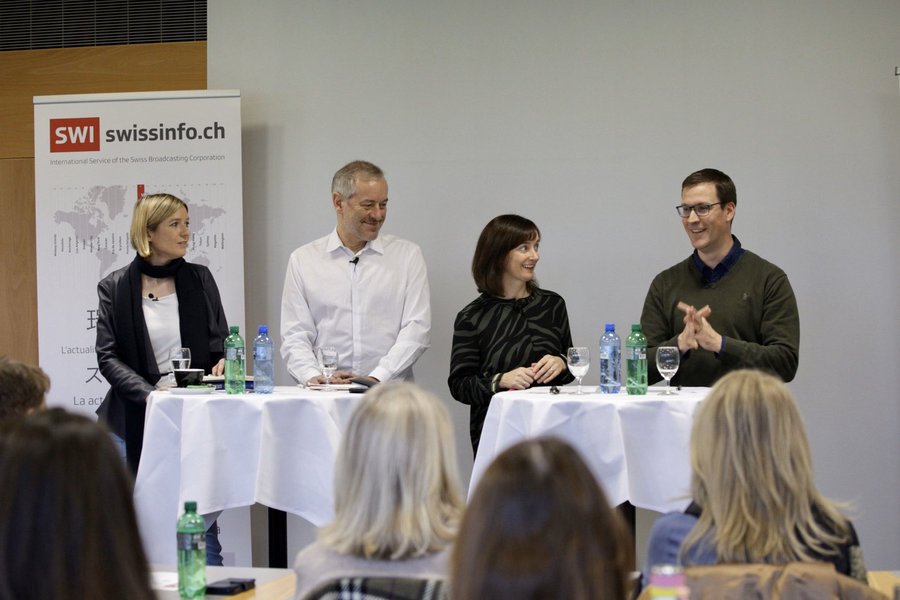
A Swiss launch of The Naked Irish followed in November in Book Books Books in Lausanne, and, in December, I was asked to moderate a panel discussion on Brexit in the University of St. Gallen, organised by swissinfo.ch. It was my third time moderating this year – the first two were literary events: the Bibliotopia festival in May and Le Livre sur les quais in September. This is something I definitely want to do more of.

EKxxbhtWkAAuqDk

It seems like most of my highlights this year involved spending time connecting with people and doing interesting work. There were plenty of humdrum days too but the year was also made richer by the books I read. Thanks to Goodreads, I know I read 50 books this year. You can view the list on that link, including some reviews. My favourite novels were Olive Again by Elizabeth Strout, The Narrow Land by Christine Dwyer Hickey, The Italian Teacher by Tom Rachman, and Hidden Latitudes by Alison Anderson.

I really enjoyed answering questions about my favourite non-fiction books for the website Smartthinkingbooks. You can read the interview here. Actually, I think a separate blog post is needed to talk about the books of 2019.

I hope you are fortunate enough, like me, to have a few more quiet days of freedom left before returning to the normal routine. If you scroll back through your photos of the year, may you find many good times to recall with a smile. Wishing everyone good health, harmony and goodwill in 2020.

Writing news and summer days

Zurich

Quite a lot has happened over the past few months so I thought I’d share some of my writing news before I lose track. I’m borrowing the Irish calendar summer here, which is May, June and July. In Switzerland, summer officially starts on midsummer’s day, June 21st. This way I get the best of both worlds.

May was the month of reviews. An Irish academic in Germany, Fergal Lenehan, wrote a long, thoughtful essay about The Naked Swiss for the Dublin Review of Books. It is the best, most comprehensive analysis of the book so far. A great reward in itself. Lenehan is the author of a book about German images of Ireland which is based on a study of news coverage of Ireland in two German weekly publications, Der Spiegel and Die Zeit, over a 60-year period. On average, the two outlets together ran one article about Ireland per month from 1946 to 2010, indicating a surprising level of interest.

At the end of the month, I got an unexpected message from the Swiss correspondent of the Financial Times, Ralph Atkins, to let me know that his review of The Naked Swiss was online. Needless to say, I was delighted, but also taken aback by the tone of the debate in the comments at the end of the article. Who would have thought FT readers were so emotional?

In June, I got the good news that a short story of mine had been placed second in the fiction category of the Geneva Literary Prize. The story hasn’t been published yet but I will let you know as soon as it’s available to read. A member of my tiny writers’ group, Tara McLoughlin Giroud, won the non-fiction prize so it was a double celebration.

Then came the most exciting news of the summer. I received an invitation to take part in Le Livre sur les Quais literary festival in Morges, an event I referred to last year in a blog post as ‘book heaven’ on Lake Geneva. Here’s a photo from the 2016 festival.

20160903_143714

The festival takes place from September 1 to 3, and what makes it really special is that the guest country of honour this year is Ireland. To be appearing under the same roof as some of the most respected names in contemporary Irish literature is almost too good to be true. My panel event is scheduled for Sunday afternoon but the rest of the time I will be hopping from one talk to the next, soaking up the literary atmosphere. As soon as the English programme is published, I’ll share it here. The Irish and international authors on the bill include John Boyne, Kevin Barry, Sara Baume, Paul McVeigh, Donal Ryan, Kit de Waal and Douglas Kennedy.

I’ll leave you with some images of these summer days in Switzerland. The photo at the top is of Limmatquai in Zurich. Highlights so far: Swims in the Aare river (Bern) and the Limmat. A hike along Lake Brienz. A night spent “sleeping on the straw”. Meeting scary cows on an alp. Crossing Lake Geneva at dawn. Sunset at Muntelier.

Wishing you all lots of freedom and fun this summer.

20170610_155026
Axalp in the Bernese Oberland

20170714_072140
Morning in Lausanne


20170525_172558
Charmey, Fribourg


A guide to writing your first nonfiction book

IMG-20161112-WA0000

Since my first book, The Naked Swiss: A Nation Behind 10 Myths, was published last October, I’ve met several people who’ve mentioned their wish to write a nonfiction book. These tend to be people who already write as part of their work. They have strong ideas and expertise, but they feel uncertain about making the leap to a book.

Like all challenges, this one can be broken down. The first thing to say is that you don’t need anyone’s permission to write. You could start this weekend. No-one will know, and no-one will stop you.

As an unpublished writer, the first stage of writing is purely between you and the page. It is a process of self-expression. When it comes to the next stage of writing – entering the writing business – things get more complicated. But that should not prevent you from attempting stage one.

Test the idea

It is likely you will have carried the idea for your book around in your head for a while. This is a good thing. It means the idea is incubating, and should hatch at some point. But if you don’t test it, you might never find out if the concept is strong enough to stand up.

In terms of subject matter, the sky is the limit. The important thing is that this is a subject you feel passionate about. You have something to communicate.

The test is to answer this question: What is the book about? Write it down in one line. Here are some examples I made up:

  • A week-by-week guide to cultivating a successful vegetable patch, with blank pages for readers to track their progress.
  • A self-help book for people who want to convert to a vegetarian diet, offering a mix of psychology, politics and recipes.
  • A compilation of ten mini-biographies of leading women scientists – aimed at young girls.
  • This book tells the true story of the Swiss children sent to work as chimney sweeps in Italy in the 20th century.

Get organised

When the concept is clear in your mind, you can expand it to a one-page pitch. If yours is a long-held idea, chances are you will have already done some research, if not in a targeted way. You need to organise that material. How much do you have? Perhaps you already have your own written content that could be fed into the book, such as articles, blogposts, diary entries or essays. What fresh research do you need to do? Come up with a system to collate your material – folders, notebooks, cards, whatever works for you.

This is the point where the structure becomes important. You need to put some thought into how your content can be arranged. In some cases, for example the scientist biographies mentioned above, the chapter divisions will be obvious. In other cases, you will have to carefully work out how to present your ideas or story. Have a look at the content pages of the nonfiction books you like. Reading books similar to one you intend to write is part of the research process, and an indication of your passion.

Every book is written one chapter at a time. When you are ready, sit down and try to write a chapter. It is only by writing a sample chapter that you will bring forth the style of the book. Expect to have to work through many drafts.

If you are planning to self-publish, you carry on from here. If not, this is the moment to pause and research submitting targets.

Submitting

Unlike fiction, where authors approach an agent or publisher with a polished, completed manuscript, nonfiction is usually sold on proposal. Most publishers and agents ask for one sample chapter, and a cover letter explaining the concept, structure and target audience. They want to hear why you are right person to write the book, what platform you have, and they may ask how you would help promote the book. Submission requirements vary, so do make sure to follow them faithfully to show your professionalism. Expect each submission to take as much time as a job application.

As a first-time writer, you can expect go through this process umpteen times without success. You will receive either no response or standard rejections, and be happy if you get a few words of encouragement from one in twenty submissions. Here is a post I wrote about dealing with rejection as an author.

The reality of the market is that the world is not waiting for anyone’s book. There is an oversupply of authors eager to be published. It comes down to finding the right match. If you present the right kind of book to the right person at the right time, you may be lucky.

Make time

If you do get to the point of ploughing ahead with the book, you will need to allocate time to write regularly. Even if you have plenty of free time, it makes sense to set yourself writing hours, as this is a project that requires discipline. If you don’t have much free time, you will need to decide what can be sacrificed from your weekly activities – television, social media, family time, sport. Something has to give.

Ideally, you should have a writing partner or editor to review your work as you go along, as a form of quality control. But whatever happens, no book should be sent out into the world without some form of editing from another party or parties, as well as proofreading.

I hope you found this advice useful. Depending on the reaction to this post, I may make it the first in a series of how-to articles. Don’t forget to share the link with others through the social media buttons below, and feel free to comment if you have any questions.

Book heaven on Lake Geneva

Book heaven on Lake Geneva

Walking into the crowded authors’ tent at Le livre sur les quais (The book on the quays) literary festival in Morges on Saturday, my first thought was that I had entered a cattle market of books and authors. The festival now boasts a roll call of more than 300 authors. Could this be too much of a good thing?

Le livre sur les quais is only in its seventh year but has achieved significant national and international recognition, attracting big names and 40,000 visitors. Although mainly a festival of French-language literature, the festival has an excellent English programme and star-studded guest list (Paula Hawkins, The Girl on the Train).

Morges is a pretty little town on Lake Geneva, a short commute from the city of Lausanne. On the five-minute walk down from the train station to the lake shore, you glimpse large courtyards to the left and right, surrounded by low-rise apartment blocks. This is urban living at its best. There is an attractive old centre, and when you cross the main street, Grande rue, any of the side streets lead down to the lake shore and stunning views of the water and the French Alps to the south.  

20160903_144802

The authors’ tent is right on the water’s edge, an impossibly long marquee with the sides left open on the lake side in the hopes of a breeze. Continuous lines of tables run along the ‘walls’ on each side of the tent, facing several inner rectangular ‘islands’ of tables. It was a hot day on Saturday and the temperature in the tent was sweltering.

The authors sit behind these tables, each with a pile of books on display. The presence of so many authors in one place, selling their books (not that they handle money, you take the books from the table and pay at a till) creates a feeling that they are vying for attention.

Maybe I was projecting, the way I do with cows too, but some of the authors looked a little forlorn and overwhelmed. According to the programme there were 348 guests attending the festival, authors, poets, translators.

20160903_143714

For the visitors, the wonderful thing about the set-up was that you could walk up to an author you admire and strike up a conversation. This accessibility is one of the great attractions of the festival. I went straight to the island of English-speaking authors island. The authors come and go participating or attending various talks in venues around the town or on pleasure boats!

I was delighted to meet Alison Anderson, author of The Summer Guest, which I had been reading on the train journey to Morges (big disadvantage of ebooks – you can’t get them signed!). The novel is a fictionalised account of a real summer spent by Chekhov and his family in an idyllic country setting in Sumy in Eastern Ukraine. The story is told partly through the diary of a blind woman who became close to the great writer, made poignant by the knowledge that she is dying, and partly from the perspective of the present day translator of the diary.  Anderson gives a fascinating account of her research trip to Sumy here.

It was a day of discoveries and striking up connections with people. One talk I attended was a panel discussion about historical fiction with Rosie Thomas, Petina Gappah (amazing speaker from Zimbabwe), John Boyne and Anne Korkeakivi. John Boyne, best known as the author of Boy in the Striped Pyjamas, talked about the nit-pickers who come to him with minor factual corrections. He also confessed he checked one-star Amazon reviews to see what people did not like about his books.

“There are no mistakes in fiction. Once you put a made-up character into a historical setting, it’s corrupted. The story you’re telling comes first.” I am really looking forward to reading my new copy of Boyne’s latest novel, A History of Loneliness, his first novel with an Irish setting.

My visit to Le Livre sur les quais was a very enriching day for me, but one where I was glad to be the observer and not the observed. But soon it will be my turn to sit at a table and talk about my book. After a career of asking questions, I’m not sure how easy it will be to have the roles reversed. This month I will be giving my first interviews about my book, and two talks at the Geneva Expo on October 2 (more info here).  

One more thing for any of you who are on Goodreads. The Naked Swiss  is now listed there and you can mark it as ‘want to read’ if you like, and/or follow my author page.

Have you attended any literary festivals this year? What do you think is the best formula? I know a huge amount of work goes into these events and I think they are fantastic for readers. I hope authors feel the same. Not only did I come away with these great books, but I was able to meet or listen to four out of the five authors. 

20160904_103643 (1)


The desolation of domestic life

2014-12-21 12.06.59

It’s ok, I’m not talking about my own domestic woes. I’ve just been reading The Springs of Affection by Maeve Brennan, a collection of short stories set in Dublin and written between the 1950s and 1970s when Brennan lived in New York.

In between stories I started the wonderful Academy Street by Mary Costello, in which the main character Tess lives in New York through that same period and beyond. I lived under the melancholy spell of that book for three days, snatching it greedily back up at every opportunity. Academy Street gives the illusion of moving slowly without much drama but before you know it you have been through Tess’s entire life, a patchwork of tragedy, transient love and inertia.

For more on Academy Street I would recommend this fabulous review by fellow blogger and author Anne Goodwin, whose first novel, Sugar and Snails, was published last July.

Tess, with her emotionally debilitating upbringing and tragic lack of self-belief, could be a character from one of Brennan’s stories. But while Brennan reproduced on paper the “petty social intricacies of the city she had left”, she was living the high life in New York, working as a columnist for The New Yorker and enjoying the kind of success and freedom most girls of those times only dreamed about.

After a disastrous marriage, Brennan had a breakdown and her illustrious career – and her life – fell apart. She spent the last fifteen years of her life plagued by alcoholism and mental illness, homeless at times, and died forgotten and penniless in 1993.

Some of Brennan’s characters appear in several of her stories and a lot of the action takes place in one particular house in a suburban street on the city’s south side, in Ranelagh to be exact. This is the house where Brennan grew up, where her family went through precarious times while her father was on the run during the Civil War. In the new Free State, he was on the winning side and the family moved to Washington when he was appointed Ireland’s envoy the United States. Maeve Brennan never moved back.

There is a play, Maeve’s House, based on Brennan’s life which I wish I had seen. It was commissioned by the Abbey Theatre in Dublin and was also staged in New York in 2013. The play owes its existence to an amazing coincidence: the actor performing the one-man show also lived in the house were Brennan grew up. Eamon Morrissey’s family bought the house in Ranelagh from Brennan’s parents when they moved to the US.

Morrissey was surprised to discover in one of her stories an exact description of his childhood home and he contacted her at the magazine; they arranged to meet in New York.
Here’s a review of the New York show.

To get back to the stories. Some are gently moving while others are steeped in despair, portraits of people trapped in prisons of their own making. The title story The Springs of Affection (1972) is the longest in the book and it features one of the most vividly drawn and unlikable characters I have ever come across.

Her name is Min and she is the last surviving member of her family. A seamstress by trade, Min has lived a life of unrealised dreams, defined by envy and spite, but she finds herself on top in the end, triumphant in her longevity.

“Min sat beside her own gas fire in her own flat in Wexford and considered life and crime and punishment according to the laws of arithmetic. She counted up and down the years, and added and subtracted the questions and answers, and found that she came out with a very tidy balance in her favour.”

Min’s brother Martin and his wife Delia are described with scathing disapproval by Min in her recollections. We meet the couple in several of the other stories, notably in The Twelfth Wedding Anniversary (first published in The New Yorker in 1966), where their domestic misery is writ large. When Martin returns home late after ignoring their anniversary, he finds refuge in his family’s slumber.

“… If this night could only last a week, or two weeks, I might have time to get everything straightened out in my head, and then I would know what to do … If they would only sleep happily like that for a long time, he might find himself able to think again. But the coming of day, a few hours off, rose up in his mind like a towering wave that was all the more awful because it would be succeeded after twenty-four hours by another wave, and then another. There was no end to the days ahead, and the ones furthest off, years from now, were gathering power while he stood waiting on the landing. It was a merciless prospect. There was no way out of this house, which now seemed to contain all of his future as well as a good part of his past.”

Oh the unhappiness!

Breaking every rule in the book

“Never let a manuscript hit the ground. Keep them in flight – working for you.” That was the advice I heard from Mike McCormack at a seminar organised by the Irish Writers’ Centre in November. This is a man who tried forty publishers before he got a deal for his first book. At the moment I have two little birds in flight but I’d like to do better than that and declare February a submissions month.

The timing is right because the novel, now that the rewrite is done (let’s call it the second draft), is going to be banished to a drawer again, almost a year after its first banishment, which in retrospect was too short.

Looking back, I don’t know why I didn’t prepare a little better before embarking on this writing marathon. Along the way I have broken every rule in the book.

It started with too many sub plots. A novel, like a good meal, needs the right ingredients and a little bit of planning. You are unlikely to delight your guests if you throw everything you have in the cupboard into the pot. When I removed the extraneous bits and pieces from the book, the debris resembled the collection of things you might see extracted from a dead shark’s stomach (just to stretch the digestion metaphor ever so slightly).

There were also too many goddamn people in the book. It got so bad they were bumping into each other and there was nowhere to sit down. I’ve done my best here but things still a tad crowded.

Not only that but I fell into the trap of dumping back story in the opening chapters like it was going out of fashion. For every one step forwards, my main character was taking thirteen steps backwards, way back into her memory and the more distant past, reflecting on her childhood, relationships, current life situation – anything rather than get on with the story.

Did I mention that I changed the point-of-view of the novel too? Somewhere around the end of November I had a crisis of faith (another one!) and came to the conclusion that the book would work better if it was told in the first person. I tried out a reworked chapter on the members of my writing course, got their blessing and the big conversion began.

There was also the small matter of multiple breaches of the show don’t tell rule, which I dealt with in a previous post.

Also on the subject of showing, I made the classic mistake of showing too soon. Under the illusion that the novel was ‘finished’, I asked for feedback before I had a clear idea of where I was going with the story – and before I had weeded out the indigestible matter.

Which brings me to the final point, the only piece of advice I feel qualified to give to anyone wanting to write their first novel. Do not put finger to keyboard until you have a clear sense of direction for the story. Something like this perhaps:

Girl in tribal Pakistan wants to be a doctor, makes a bargain with local warlord to sacrifice her honour for her dream. He pays her way through medical school but will she ever really escape the clutches of the evil Khalid?

Of course it will evolve as you write but so much better to have the roadmap there.

You might wonder whether I have managed to rescue a coherent piece of fiction from this muddle. I’d like to think I have, or at least that I am well on the way there. But we’ll see when the manuscript comes back from the cooler.

Another speaker at that seminar in Dublin, Dave Lordan, said he had always found it essential to take time away from everything to work on a manuscript. “That time and concentration will lift the manuscript. It won’t happen if you do two hours here and there.”

It would be nice to make a date with the manuscript after its return from exile, a mini-break away from all the other demands and distractions of life, just the two of us. Here’s hoping. Has anyone else managed to steal time away to write? Sounds like heaven to me.

Ps. This blog is one year old today!

pink-cupcake-candle-illustration-19566495