A wannabe vegetarian goes hunting

DSCN1704

My New Year’s resolution this year was to give up meat. With great effort and a handful of staple dishes, I managed to get through January meat-free. My quest has gone steadily downhill since then and I am now back where I started, eating meat roughly every second day and feeling uneasy about it. Part of the problem is that the rest of my family are not yet converted, so I still have to cook for four meat eaters. There’s only so many times I can reheat my lentil stew and watch them eat lasagne (I make a very good lasagne).

To be accurate, I never aimed to be a pure vegetarian. Ideally, I would like to eliminate meat from my own cooking while being relaxed about eating a meat dish as a guest at someone else’s table. But by not taking a hard line, I’ve been too open to making other exceptions. Classic slippery slope.

My motivation to stop eating meat mainly stems from conscientious objection to the meat industry. I just wish I was more conscientious about it. When I think about the cruel and unnatural conditions animals must endure in large-scale farming and the way they are slaughtered, I feel I cannot be complicit. I’m also swayed by the environmental arguments and, to a lesser extent, the health benefits.

But why is it proving so difficult to give up just one of many foodstuffs? Meat eating is just a habit, not an addiction, even if I did grow up in a strong meat-eating culture.

A lot of people grapple with this issue in young adulthood but my twenties came and went without me seriously considering vegetarianism. I was always too hungry and in too much of a hurry chasing other goals. But that’s a long time ago now. I can’t believe it’s taken me so long to face up to this basic moral choice. And I can’t believe what a lousy job I’m doing at sticking to that choice.

In my reasoning, and some vegetarians will disagree strongly, the problem is not the fact that an animal dies to feed me, the problem is how the animal lives and dies. The forced breeding of billions of animal lives in miserable warehouse conditions to produce meat is an ugly reality. The more traditional small-scale farming model is obviously more acceptable, and one thing you see in Switzerland is a lot of contented cows ambling about in beautiful, big fields. Pigs and chickens suffer behind closed doors, unfortunately. But no matter how pretty the farm, when the time comes, the animals still have to be transported to be slaughtered en masse. Back to my original sticking point of not wanting to be complicit in a horrible, distressing death.

But what if there was such a thing as a good life and a clean death for an animal? It turns out this ideal does exist and there is a group of people dedicated to making it possible, Swiss hunters. Though it’s a hugely popular pastime here, hunting has always been alien to me. Now, as part of this whole thinking process around the ethics of eating meat, I have become more curious about hunting. So much so, that I was inspired to go on a hunting expedition and write an article about it.

The autumn hunting season is currently in full swing and game features on the menu of Swiss restaurants everywhere, from the hushed dining rooms of Michelin Star restaurants to the loud and crowded supermarket canteens. The most popular meat is venison and it is served with an array of mouth-watering side dishes, including glazed chestnuts, Späzle dumplings, Brussels sprouts, red cabbage, poached pear and cranberry sauce. About a third of the game eaten in Switzerland comes from domestic hobby hunters but the demand is so high that most of the meat has to be imported.

Up until last month, you could fit everything I knew about hunting onto a beermat. I certainly didn’t see the attraction of stalking and shooting an animal. As an activity, it seemed a bit selfish and unnecessary. When I go walking near my home, I sometimes catch sight of chamois (a kind of goat antelope native to the Alps) and deer and it makes my day. Why would you want to hurt those lovely creatures?

This was more of a superficial, city girl reaction. Of course I have heard of culling and how it is necessary to keep wild populations at sustainable levels to protect biodiversity. And I know humans started out as hunter gatherers. Children don’t play chasing and hide-and-seek for no reason. Hunting is in the blood. I just didn’t think it was in my blood.
DSCN1743

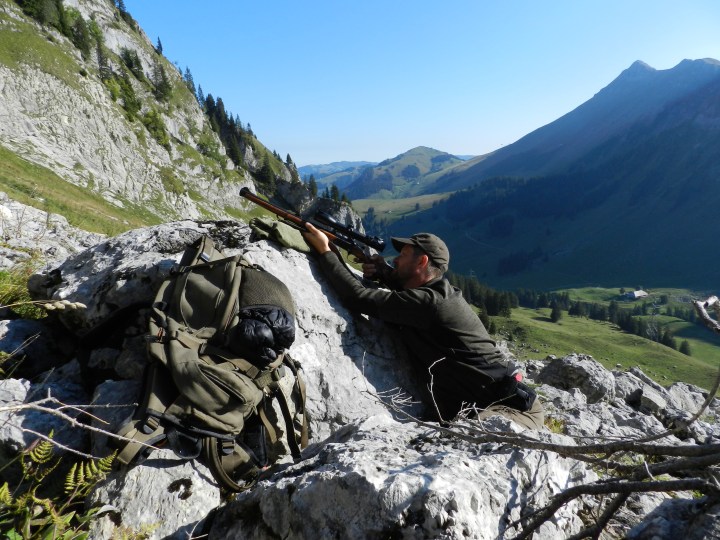
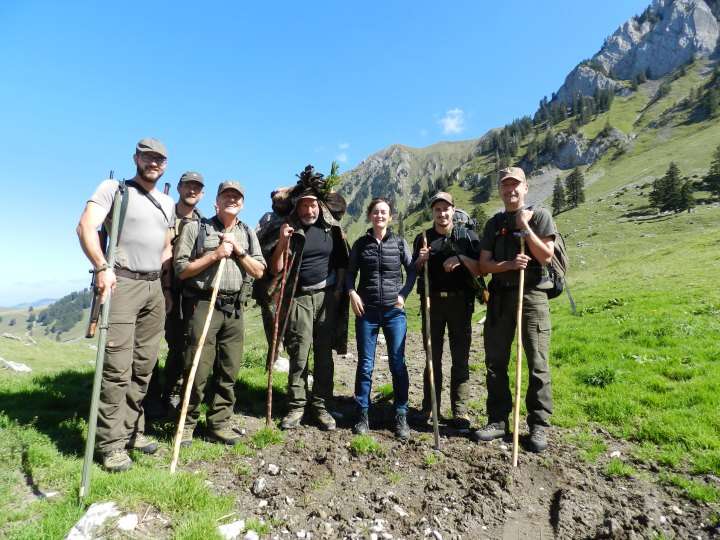
Well, I was wrong. The day I spent hunting chamois was completely different and more exciting than most other days I’ve spent in the great outdoors. It beats skiing, paragliding (OK, I’ve only done a tandem jump once) and hiking.  And I didn’t even carry a gun! All I did was trek around the place, look through binoculars a lot, and watch animals. I was with a party of eight hunters who split up for the day and only one of the eight shot a chamois. Yet everyone had a great time because we were all there with a purpose. I discovered that you don’t need to shoot something yourself to feel the thrill of the chase.

It felt OK to me because the chamois that was shot was killed instantly and was sold to a restaurant. And then there’s the context in which the hunt was happening. Hunting is tightly regulated in Switzerland, and I think this is a good thing. They don’t just let any fool go out with a gun. You have to go through a two-year training programme to get your hunting licence, and then pass an annual shooting test. The cull numbers are carefully controlled (15 per cent of the herd) and hunters who apply are allocated a small number of animals to shoot, age and sex specified. They have to put a date tag on their kill and show it to a wildlife inspector the same day.

The hunters aim for the side of the chest, just under the leg, to kill with one shot. Some butcher the carcass themselves and keep the meat, the rest sell directly to butchers or restaurants but the money they make does not cover the licence costs. For these men – and some women, the proportion is growing – hunting is a way of life.

There are two hunting systems in Switzerland. In most cantons, the hunting period for the ‘better’ animals – red deer, roe deer and chamois – is limited to a few weeks in the autumn. Smaller animals, fowl and wild boar have a longer hunting season.

Swiss hunters tend to be members of clubs. In the non-hunting months, they spend a lot of time involved with the animals – saving fawns from combine harvesters during the mowing season (the little ones tend to hide in the long grass when they get scared), delivering hay to feeding points in the winter, doing forest maintenance and lots of observing to see the condition, whereabouts and numbers of the animals.

The hunters are a tightly-knit community from all walks of life, but the majority I met work in manual jobs. They spend a lot of time in nature and that, along with the camaraderie and the challenge, is the attraction. I wonder if I fell into the trap of the embedded journalist of liking the hunters too much and losing sight of the rights and wrongs of the venture. I hope not.

If you want to read more about it, the article I wrote for swissinfo.ch is here: The Swiss hunt: collecting the reward for a year’s work. You’ll find recipes and more information on what goes into the classic Swiss game dish at Helvetic Kitchen, the excellent Swiss cooking blog by author Andie Pilot.

Feel free to scroll down and comment. I’d love to hear your take on any of these subjects from vegetarianism to cooking for a family with different diets to humane farming to hunting. These are areas where personal decisions can have far-reaching consequences – at least that’s the hope. 
All of life on a Swiss boulevard

20181005_142829

Every town is a collection of businesses at different stages of their life cycle – fledgling, midlife, waning, and shuttered for good.

The town I live in, Fribourg in Switzerland, was founded in 1157. Many generations have made their living here. It is built in and around a gorge, which also happens to be the geographical line separating the French-speaking Swiss from the German-speaking Swiss. It’s got history and medieval architecture in spades. For a guided walk around the most interesting parts of the town, see this blog post

Fribourg was first settled around the river bank, growing upwards on steep slopes, century by century. When the Swiss constitution was created in 1848, the area of Pérolles was just fields. But when the trainline came to Fribourg, it brought new energy to the periphery, and by the turn of the century the new Boulevard de Pérolles, and its side streets, was the happening part of town.

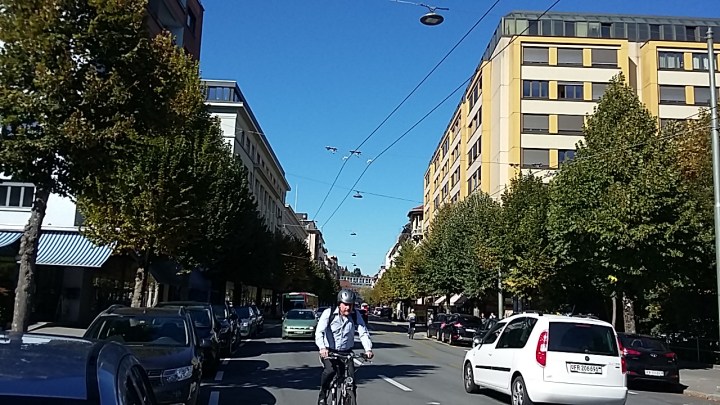
The boulevard is about a kilometre long, starting at the train station and ending at a bunch of new university buildings. There’s a cinema on Pérolles, a church with a declining congregation, a newspaper with a declining circulation, a bank, a secondary school, various bars and restaurants, clothes shops, hairdressers, a small shopping centre and lots of apartments. The dentists and doctors of Fribourg have their surgeries on the upper floors of this street. The strangest business is a shop that offers ‘acqua-ness’, cycling in tank of water in your own private cabin.  

But despite all this activity, Pérolles does not have the feel of a thriving street. Shops change hands too often and many businesses appear to be hanging on by a thread. The longest shopfront on the street is FriCash, a store that offers cash for jewellery and household goods. This lack of vitality is probably to do with the fact that the street is bordered by a gorge on one side and not leading anywhere in particular. The rest of the town, situated to the north and west of Pérolles forms a better-connected core.

Yet many things have happened on Pérolles in my 15 years in Fribourg. I had 30 anti-allergy injections on 30 separate visits (that didn’t work) on Pérolles. I had my Swiss citizenship interview in an office on Pérolles. I learned to speak German in the adult education centre off Pérolles. And I found out I was pregnant with twins at a gynaecologist on Pérolles. I’ve had fillings filled at the dentist on this street, I’ve had my hair cut here many times, I’ve celebrated birthdays and anniversaries on this street, and now I rent office space in an old chocolate factory just a few yards from the boulevard.

Two awful things have happened on Pérolles in my time living here. One day, a man stabbed his toddler in the toilets of the shopping centre. The mother ran with the injured child to a clinic just off the boulevard but they could not save him. Desperately sad.

A few years later, a tailor whose shop was next door to a café, flew into a murderous rage. He was having a long-running row with the café owner about the café’s street tables infringing on his shop front. One day, he grabbed a scissors, stormed into the café and stabbed his neighbour in the heart.

Miraculously, the injured man survived. I read a newspaper article about him some years later, written after the trial. Although he had recovered physically, he could not get over the crime because his attacker did not receive a custodial sentence – just a suspended sentence and a fine. The lack of punishment tormented the victim so much. But that is the Swiss justice system. You can deliberately stab someone in the heart in anger and not go to jail. Suspended sentences are the norm as jail is mainly reserved for those at risk of reoffending.

You can park on Pérolles, one franc per half hour. Two bus routes also carry people up and down the street and into the suburbs. And if you look closely, you will see that all of life is there.  

Home is where the sunrise is

20180731_061843

I recently received an invitation to attend an event in Zurich to discuss the concept of Heimat, among other things. Heimat is a German word that doesn’t have a direct equivalent in English. It can mean home, homeland, native land and more.

When Swiss citizens fill in official forms, they are routinely asked to give their Heimatort (literally ‘native place’), the commune of origin of their family. This is passed down through the paternal line so that my husband’s Heimatort (and by extension mine) is the village where his grandfather was born, even though his grandfather left there as a small boy when he was sent to live with relatives after his mother’s death. This grandfather, who ended up working as a saddler in another village, never lived in his native village again and may not have felt any emotional attachment to the place but many Swiss are proud of their Heimatort.

The old function of Heimatort was that the commune (municipality) would provide for you in case of destitution. In the past, this was more about social control than charity. Somebody caught begging or drunk in public could be picked up and returned to his or her Heimat to be dealt with. Not a cheery prospect at a time when people who were classed as ‘work shy’ could be interned under the ‘administrative care’ legal provision (common up to the 1970s). Children who were taken into care were referred to their Heimat for a foster home placement – in practice to work as labourers or servants for farming families – which often meant a new life of drudgery miles away from where they grew up.

Now, thankfully, we have prosperity, social welfare payments and a professionalised child welfare system. The Heimatort is only relevant in a few minor, archaic ways, such as the right to graze animals on commonly held land.  (Admittedly this is not minor if you can’t access the land your neighbours are using for free.) I don’t know of any other residual rights Heimatort grants but I’d be curious to know if anyone can enlighten me.

I have some Heimat issues myself in that I still feel the loss of my Irish homeland very keenly. Ideally, after fifteen years in a different country I should have transferred my allegiance and affections to my new location. But this has not happened, at least not to a convincing degree. Despite the fact that I have built a decent life for myself in Switzerland, a process that involved great effort, I still feel the inner tension of being pulled back to my place of origin. Meanwhile, my family is deeply rooted and happy here. It’s a conundrum.

A three-month stay in Ireland this year went some way to alleviating that tension. Apart from all the external trappings of life in Dublin that I enjoy (the sea, the sea!), there are two interlinked things the place offers me that I haven’t been able to replicate in Switzerland. One is a sense of community and the other is the ability to be myself. My German and French are good but I don’t feel truly myself when I speak those languages. I cannot be as genuine when I am working to communicate with a reduced vocabulary (and I seem to have hit a ceiling in both languages). But it’s not only about language; I have good relations with lots of people on an individual basis but it’s in a group that solidarity and shared experiences come into play. In this environment you can express a bigger range of your personality and find meaningful acceptance. I already have some ideas on how to respond to this problem and I’ll be giving it more thought over the coming months.

As for my book related activities, I am doing my bit to promote the French and German editions of The Naked Swiss (La Suisse mise à nu and Die Wahre Schweiz), which has so far notably involved a live television interview in Payot bookshop in Geneva on July 5th.

The interview was hosted by Patrick Vallélian of the in-depth Swiss news magazine Sept.Info, which is running an excerpt from La Suisse mise à nu in their latest edition and organising various joint events at bookshops in French-speaking Switzerland. More updates about these events on my Facebook page.

I was delighted to see the French translation reviewed in the Tribune de Genève newspaper and I’m looking forward to reading the write-up of the interview I gave 24 Heures newspaper later this month.

This time last year I was preparing for Le livre sur les quais festival in Morges at the beginning of September. This year the pressure is off as I will be attending as a visitor rather than a guest author. I have my ticket to see Maggie O’Farrell on September 2nd and will book more as soon as the full English programme is online. Especially looking forward to hearing Lisa McInerney speak. I loved her first book, The Glorious Heresies.

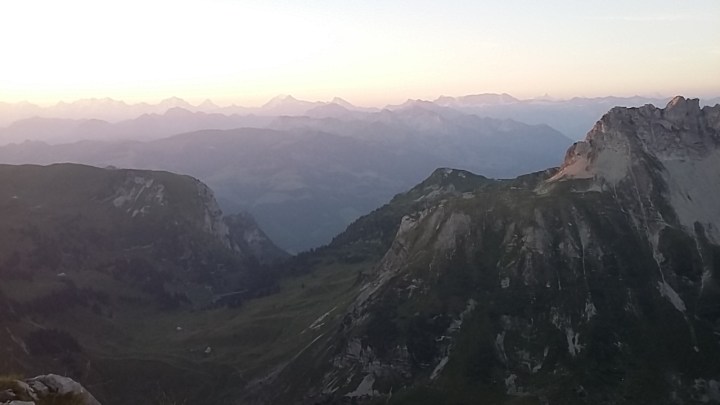
The photo above is the view from the top of the Kaiseregg mountain in Fribourg at sunrise a fortnight ago. The actual sunrise pics didn’t come out too well on my old phone but this one captures the dreamy beauty of the place. We had to get up at half past three in the morning to complete the climb in time before the sun came up. Tough going but well worth the effort, this was the best experience of my Swiss summer so far. I wish you all good times and safe travels this summer too.

The Naked Swiss translations are here!

IMG_20180523_105929_BURST001_COVER_resized_20180523_110003625

Today I am celebrating the good news that the French and German translations of The Naked Swiss: A Nation Behind 10 Myths are out in the world. My copies arrived this week and I am delighted with the look and feel of the new books.

The publication of the translations coincides with the publication of the second edition of the original version, which has an extra chapter on the Swiss relationship with the European Union. For more about the second edition, check out this interview. The books are available online from the publishers Bergli Books and Helvetiq (German, French), from the usual online booksellers and in all good book shops in Switzerland.

The German title is Die Wahre Schweiz, which means the true or the real Switzerland, and the French is La Suisse mise à nu, which means Switzerland laid bare. The subtitles of both are the same: ‘A people and their 10 myths’. It has been a fascinating process working the with the translators to produce a text that was faithful to the original, as well as being crystal clear to readers from other cultures.

Also today, Swiss author Hans Durrer published a glowing review of The Naked Swiss, in which he praised the book as “highly informative”, “profoundly balanced” and “good storytelling”.

And the final bit of good news is the launch of this book trailer, created by Bergli Books. Enjoy!

Second edition giveaway of The Naked Swiss

20180426_100153

When Bergli Books started the preparations for the second edition of The Naked Swiss last year, we had a chat about whether it would be a good idea to add something to the book. In the end I agreed to write a new chapter, one that had been on my original list but that I had run out of time to write.

I’m delighted to announce that the updated second edition is now available online and in shops all over Switzerland. The new chapter is about the Swiss relationship with the European Union. Switzerland is a lot more deeply entwined in the EU than many Swiss people realise.

In the Europe chapter, I explain how Switzerland got to where it is today regarding the EU and how the relationship works. Switzerland and the EU are like the long-term couple who are not married but have been to a lawyer to cobble together most of the equivalent rights and obligations. One of the parties (guess who?) is not happy and is pushing for more commitment. I also explain how the Swiss soon-to-be-defunct bilateral model is not a viable option for the United Kingdom to copy in the brave new post-Brexit world. All the same, you can be sure the British are watching the Swiss very closely to see what new deal they settle for.

As part of the research for the new chapter, I crossed Lake Geneva last summer to spend a night in Thonon-les-Bains on the French side. Early the next morning I set off towards Lausanne with the French cross-border commuters. More on that trip to Thonon-les-Bains in this blog post.

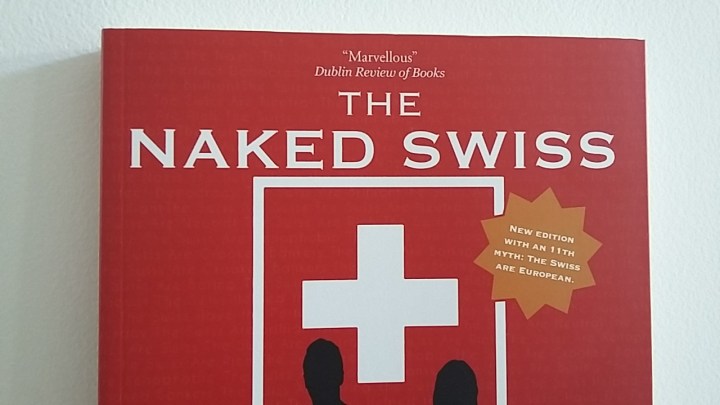
What else is new in the second edition? Well, I updated the statistics and some political developments. The book now has an index and a new author photo (thanks to Elaine Pringle Photography). If you want to be sure you’ve got the right one, it sports a little gold rosette on the cover that reads: NEW EDITION WITH AN 11TH MYTH: THE SWISS ARE EUROPEAN.

The launch of the second edition coincides with the launch of the French and German translations, which are due out on April 30th. I’ll write again when I have a copy of each in my hands. La Suisse mise à nu and Die Wahre Schweiz are available to pre-order this week from Helvetiq. The Swiss language editions have a different cover depicting the roof being lifted off a Swiss chalet. It’s fun and clever. Check it out!

I’m in Ireland at the moment so I haven’t seen the new The Naked Swiss on the shelves. I will send a free book to the first person to post a photo of the second edition in a Swiss bookshop, either to my Twitter account @clareodeaz or on my Facebook page. Happy hunting 😊

Feeling the cold and snow in literature

IMG-20180212-WA0002

The cold and the snow are on everybody’s mind and doorstep this week in Europe. In Switzerland we have had a week of extreme cold. Wednesday was the worst, minus fourteen in the morning. When I walked the dog at the edge of the Gottéron Valley I thought the cold wind racing down from the Alps would crack my cheekbones.

I just finished reading Helen Dunmore’s The Siege, set in Leningrad in the desperate years of 1941/2 where the cold plays a fateful part. My brush with wind chill inspired me to look for some great descriptions of cold and snow in literature, beginning with The Siege. In this scene, the main character is on her way to the bakery to queue for bread. She is suffering from malnutrition because of food shortages.

“It’s cold, so cold. Anna adjusts the scarf she has wound around her face. She’ll rest for a couple of minutes. No longer than that, because in her weakened state the cold could easily finish her off. The scorching frost goes down into her lungs like a knife. She coughs, gasps, shifts her weight from foot to foot, and bats her hands together. Her gloved hands make a muffled, ghostly sound. She thinks of the bulbs under their coverlets of snow, and shivers.”

This is such a beautiful novel, describing searing hardship in a wonderfully sympathetic way with characters who emerge as more important than the crushing heel of history.

The other examples I found happen to come from short stories. I love this scene from George Saunders’ Tenth of December featuring Don Eber, an old man on a suicide bid who has stripped off in a remote area in sub-zero temperature and is talking to himself.

Nausea had not been mentioned in The Humbling Steppe.

A blissful feeling overtook me as I drifted off to sleep at the base of the crevasse. No fear, no discomfort, only a vague sadness at the thought of all that remained undone. This is death? I thought. It is but nothing.

Author, whose name I cannot remember, I would like a word with you.

A-hole.

The shivering was insane. Like a tremor. His head was shaking on his neck. He paused to puke a bit in the snow, white-yellow against the white-blue.

This was scary. This was scary now.

Every step was a victory. He had to remember that. With every step he was fleeing father and father. Farther from father. Stepfarther. What a victory he was wresting. From the jaws of the feet.

He felt a need at the back of his throat to say it right.

From the jaws of defeat. From the jaws of defeat.”

There’s a very chilly and chilling scene in Them Old Cowboy Songs from Annie Proulx’s collection Fine Just the Way It Is. Archie is the unlucky young cowboy who has been sent out to round up stray cows in Wyoming in January.

“Back in the swamp it was just coming light, like grey polish on the cold world, the air so still Archie could see the tiny breath cloud of a finch on a willow twig. Beneath the hardened crust the snow was wallowy. His fresh horse was Poco, who did not know swamps. Poco blundered along, stumbled into an invisible sinkhole and took Archie deep with him. The snow shot down his neck, up his sleeves, into his boots, filled eyes, ears, nose, matted his hair. Poco, in getting up, rammed his hat deep into the bog. The snow in contact with his body heat melted, and as he climbed back into the saddle the wind that accompanied the pale sunlight froze his clothes. Somehow he managed to push eight Wing-Cross strays out of the swamp and back toward the high ground, but his matches would not light and while he struggled to make a fire the cows scattered. He could barely move and when he got back to the bunkhouse he was frozen into the saddle and had to be pried off the horse by two men. He heard cloth rip.”

And finally, the most well-known and the most exquisite, the ending of James Joyce’s The Dead, when Gabriel Conroy looks out the window at the snow after his wife has told him about a boy she loved who died many years before.

“A few light taps upon the pane made him turn to the window. It had begun to snow again. He watched sleepily the flakes, silver and dark, falling obliquely against the lamplight. The time had come for him to set out on his journey westward. Yes, the newspapers were right: snow was general all over Ireland. It was falling on every part of the dark central plain, on the treeless hills, falling softly upon the Bog of Allen and, farther westward, softly falling into the dark mutinous Shannon waves. It was falling, too, upon every part of the lonely churchyard on the hill where Michael Furey lay buried. It lay thickly drifted on the crooked crosses and headstones, on the spears of the little gate, on the barren thorns. His soul swooned slowly as he heard the snow falling faintly through the universe and faintly falling, like the descent of their last end, upon all the living and the dead.”

Stay warm, folks!

Ps. I’m attending the Geneva Writers Conference this weekend, weather permitting, and really looking forward to immersing myself in writing talk and ideas.

Pps. The photo is a view of Lake Brienz taken from Axalp in the Bernese Oberland.

A Swiss woman of fire and fury

20170226_170655

This time sixty years ago, Iris von Roten was putting the finishing touches to her life’s work, a 600-page cri de coeur on the woeful position of women in Swiss society. A journalist and lawyer, von Roten put years of research into her book, Frauen im Laufgitter: Offene Worte zur Stellung der Frau (Women in the Playpen: Plain Words About the Situation of Women). In ruthless and unsentimental terms, she examined subects like equality in the workplace (or lack thereof), civil rights, domestic drudgery, motherhood and sexuality. This is a work of fire and fury, the product of a free spirit who all around her saw women in chains.

To give you a taste of von Roten’s style and themes, here is a short passage I translated from the opening chapter, “Female professional activity in a man’s world”.

“Every era has its favourite illusions, and one of the most cherished of our century is that of “the modern woman”, the professionally equal, independent and successful woman.

The “woman of today” supposedly has extensive professional fields open to her; in contrast to her grandmother she is active in every job at every level. Even the most prestigious and highly-paid jobs are not out of reach of the capable woman. Where such positions are not yet occupied by women it is only because no woman has yet deigned to clamber up and take the place that the progressive man is hurrying to offer her. Just like a young man, the young woman can attain the job that corresponds to her talents, standing on her own two feet. To wait for a man, to marry so as to be provided for, this is unknown to today’s woman. She marries purely for love, when and whom she wishes, which allows her to complete the work of art – the combination of job, housework and motherhood – running the show and “mastering life with a laugh”. Beside the modern woman stands the progressive man, filled with admiring awe for the proud swan that the ugly duckling has become. He has long ago freed his mind of prejudices and slowly but surely clears the way for the equality of the sexes in the life of the family, the economy and the state.

The reality, however, looks different in some places, and especially in Switzerland.”

You’ve got to love that sarcasm. I would like to see von Roten’s work gain wider recognition in the English-speaking world. Her radical book/manifesto is one of the leading feminist texts of the twentieth century and there is still a lot to learn from it.

For a brief update on the position of women in Switzerland today, check out this article I wrote for the current edition of International School Parent Magazine: Working mothers in Switzerland – something has to give. I’ll start you off here with the opening two paragraphs.

“Switzerland manages to successfully project two flattering but contradictory images side-by-side. On the one hand, it is a rural mountain idyll populated by wholesome country folk, and dotted with chalets, ski resorts and pretty medieval towns. On the other hand, it is a sophisticated economic hub powered by a productive and innovative workforce.

It is nice balance if you can spend your working hours in business Switzerland and your free time in bucolic Switzerland. But for women, it is certainly not easy if you are expected to raise a family in the traditional model while facing all the challenges of the modern workplace. Something has to give.” (Read more)

Carnival season is kicking off in Switzerland. It’s hugely popular but I’ve never really enjoyed carnival much, if I may admit that. I like the effigy (Rababou) burning in Fribourg because, after the long speech, it’s the only part where I don’t feel bored and cold!

Von Roten’s book came out in the autumn of 1958, a few months before Swiss men voted by a two-thirds majority to deny women the right to vote. She had hoped that her carefully constructed arguments would win hearts and minds. But instead of seeing her ideas analysed and debated, von Roten was personally attacked and villified in the media. Some even blamed her for the negative outcome of the vote. Most painfully, she was ridiculed at the Basel carnival, her fellow townsfolk having spent the winter preparing elaborate costumes and floats on the theme of her book.

But don’t let me ruin carnival for anyone. Depending on where you go, it can be spectacular and wild. If you have any good carnival tips or experiences to share, let me know in the comments. I’d also be really interested to hear your thoughts on Iris von Roten’s work.

Another day, another commute from France to Switzerland

DSCN1599

On the eve of Bastille Day last year, I joined several hundred French commuters returning from Lausanne to Thonon-les-Bains after their day’s work in Switzerland. The 50-minute ferry journey against the backdrop of Lake Geneva and the French Alps must be one of the most picturesque commutes in the world.

I made the trip as part of the research for a new chapter about Europe in the second edition of The Naked Swiss: A Nation Behind 10 Myths, due out next month. The chapter examines Switzerland’s relationship with the European Union, and I wanted to see for myself the phenomenon of cross-border commuting in action.

Frontaliers, Grenzgänger or frontalieri make up six per cent of the Swiss workforce. The relationship between Switzerland and the EU is above all a human one, with millions of Swiss and EU citizens interacting with each other every day in workplaces, families and communities. Apart from the 318,500 cross border workers, some 1.4 million EU citizens currently live in Switzerland, while 430,000 Swiss citizens live in EU countries.

As the commuters streamed onto the Général Guisan ferry that summer’s evening, some carrying scooters and laptops, and many still wearing work badges, the atmosphere was jovial. The last woman to make it on board joined a table of friends indoors. “I left the clinic at 27 past,” she announced, before pulling up a chair.  The table soon filled with bottles of beer and glasses of white wine, and the conversation turned to plans for the holiday.

The captain reversed the ship out and swung around to head southwest to the town of Thonon-les-Bains. The 5.30pm crossing in the Général Guisan is one of 28 daily crossings between the two ports each way run by CGN ferries. Some 600 people make this particular crossing every day.

I wandered around with my camera taking pictures, and struck up a conversation with a Swedish marketing director and an IT worker who were having a drink outside, sheltered from the strong breeze at the stern of the boat.

Both were returning to their homes in the Thonon area. We were out in the middle of the lake, where the border lies. “The border is not important,” the Swedish woman said. “We live and work in the same region.”

The journey is not always as pleasant as it was on that July day. “It can be magnificent, travelling when the sun is setting or rising,” the IT man said, “but in the winter, travelling both ways in the dark, we feel a bit like cattle.”

They both agreed that working in Switzerland is not complicated. It is not complicated because, after fifteen years of free movement of labour between Switzerland and the EU, Swiss employers are used to cross-border workers. All the necessary arrangements are in place, including the mutual recognition of professional qualifications, exemption from taxation at source, and coordination of social insurance systems. For more information on cross-border workers in Switzerland, see this summary.

The average age of the ferry passengers I travelled with was 30 to 50. The scooter riders queued at the door as the ferry docked, eager to get off first.

Thonon was lively the day before the French national holiday, with all generations out on the streets in a festive mood. The next morning I expected there to be much fewer people on the 6.30am ferry to Ouchy, Lausanne but it was still quite busy.

DSCN1609

Understandably the atmosphere was more subdued, with some people already in work mode on their laptops, other sipping coffee and staring into space and a few tired souls with their heads down on their arms sleeping.

I chatted to some hospital staff from Lausanne’s university hospital CHUV. They were blasé about their special circumstances, as only French people can be blasé, but I left the ship impressed with the slice of life I had witnessed, and keen to understand more about the special relationship between Switzerland and the EU.

Do you have any experience of cross-border commuting in Switzerland or elsewhere? Have I painted too rosy a picture? I’d love to hear more first-hand perspectives on this.

Morges, a festival to remember

20170903_123155

Hurrying in the rain, listening, learning, signing books, cool evenings, coffee vouchers, wet umbrellas, smiling crowds, dogs in arms, queues at the till, drinks at the bar, boats, sunshine, big names, kind words, new ideas and free white wine.

What more could you ask for?

When I knew I would be spending the weekend at Le Livre Sur Les Quais literary festival in Morges, I decided I wouldn’t take any notes. I would just enjoy the moment and soak it all in. Now, one week later, I am left with a colourful miscellany of impressions and memories. There was so much going on, my quiet writer brain had to shift into a completely new gear.

I was invited to the festival to promote my book, The Naked Swiss: A Nation Behind 10 Myths. I would have been thrilled enough at this honour alone but the festival was also hosting Ireland as guest country of honour, which meant I was sharing space with some of Ireland’s most accomplished contemporary authors.

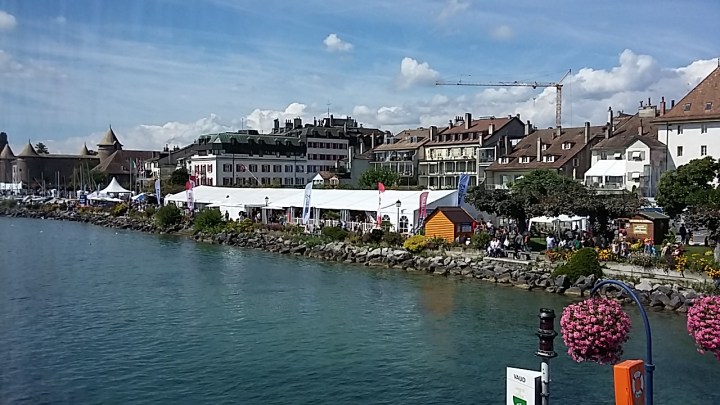
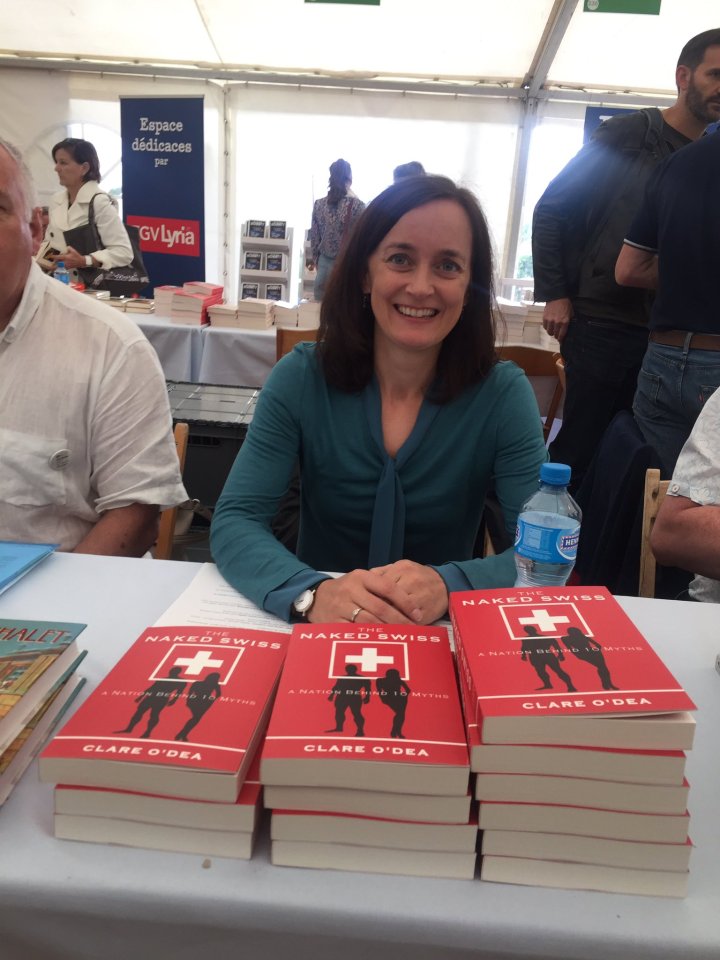
Morges is known for its authors’ tent, a huge marquee filled with rows of authors sitting behind tables. The English language section was like an island in the middle. I sat there with the Swiss-based authors, the visiting Irish authors and a number of other English-language authors, like Douglas Kennedy, Hisham Matar and Rachel Joyce. They were all gracious and welcoming.

Morges

Most people who approached the table to talk were friendly, pleased to put a face to the name. A few were not so pleased about the book. You can’t win ‘em all.

On the first afternoon, I did a stint in the tent and attended two talks about Irish literature, the first with John Boyne and Donal Ryan, and the second with Donal on duty again along with Anne Enright and Paul McVeigh. The next day presented a different mix, Anne Enright, Donal Ryan and Sara Baume, this time talking about families in Irish fiction. I cannot tell you everything they said, just that I appreciated listening to Irish voices analysing Irish questions, and the feeling it gave me of being closer to home.

I went on a literary cruise (!) on Sunday. Five minutes before the cruise started, I was at the wrong end of the lakefront eating a hot dog. Running under those circumstances is not something I’d advise anyone else to do, especially right before a boat trip. In the queue to board, a man asked me to hold his crepe so he could search for his ticket. I was not the only one squeezing in food around much more exciting things.

The cruise talk featured debut authors Paul McVeigh and Kit de Waal, two interesting and talented writers who clearly like each other. If any chat show hosts are looking for the perfect duo, ask these guys. Both of them come from difficult backgrounds and write about those times in their fiction.

20170902_174757

Spending time with the three other authors based in Switzerland – Padraig Rooney, Diccon Bewes and Jason Donald – was great fun, like having work colleagues again. I also took part in a panel discussion with Padraig and Diccon about Switzerland, Brexit and the European Union. It was a lively debate, the first time I’ve had an event in that particular format. Very enjoyable.

In a weekend of many interesting conversations, one chat about a potential nonfiction project was particularly illuminating. Maybe Morges will be indirectly responsible for my next book. All I know is that I need to send out a proposal before the leaves start to turn. And that means back to quiet time for a while.

Swiss-based authors: Alison Anderson

Alison Anderson official photo

My interview with American author Alison Anderson is the fourth and final author profile in the swissinfo.ch series on English-language writers living in Switzerland. Of all the authors I interviewed, Alison is the one with the closest ties to Switzerland, having first come to the country as an eight-year-old to attend her sister’s wedding.

She came back to complete her schooling in Switzerland, studied at Lausanne University, and finally settled in the Lake Geneva area in 2008 after a long stay in California, including five years living on a wooden sailboat in San Francisco bay.

Alison’s new novel, The Summer Guest, is a delightful read that dips in and out of 1880s Ukraine and two present day settings the French-Swiss border and London before reintroducing us to present-day Ukraine. Although the storylines are all linked to Chekhov, the three female narrators are in the foreground.

It was a pleasure to share a pot of Irish tea with Alison and find out more about her life and work. Alison is also a leading translator of French literature. Her many translations include Muriel Barbery’s The Elegance of the Hedgehog, Ingrid Betancourt’s memoir, and the work of Nobel laureate JMG De Clézio.

Have a look back at the other Swiss-based novelists featured in this series: Jason Donald, author of Dalila, Anne Korkeakivi, author of Shining Sea, and Susan Jane Gilman, author of The Ice Cream Queen of Orchard Street and three nonfiction titles.

After the summer, swissinfo.ch will publish a literary podcast featuring audio material from these four interviews. With such different styles and publishing journeys represented, it promises to be very interesting!

In case you missed the link, the full interview with Alison Anderson is here.