Would you pass the Swiss sleeping-in-straw test?

csm_Heubuehne_1_gross_ef4165d139
The ‘Stroh Deluxe’ room in Hotel Kemmeriboden Bad in the Emmental is a world away from the real thing

The longest night I ever lived through in Switzerland was spent half way up a mountain in a barn, my head resting on a rough pillow several feet above a calving cow. Although 90 per cent of the population lives in the lowlands, the Swiss like to think of themselves as a mountain people, and therefore they celebrate all the trappings of rustic mountain life. When the idea of ‘sleeping in the straw’ came up, I took my cue from my enthusiastic Swiss friends and convinced myself it would be a fun thing to do.

It was a chair lift ride and half a day’s hike to get to the chalet where a farming couple were spending the summer looking after their herd of two dozen cows. We ate fondue outside and watched the sun set over the pre-Alps. I had to agree it was lovely. When we were shown to the accommodation upstairs – rough-hewn wooden bunks with the promised straw-filled mattresses and army blankets – I thought it could have been worse. I hadn’t taken vernacular Swiss architecture into account.

To keep everybody warm in winter, Swiss farmhouses traditionally integrated the family’s living quarters and the barn or cowshed under one roof. We were actually sleeping in the old hay loft, directly above the stall. This soon became clear from what I could smell through the gaps between the floorboards. One cow was being kept in for the night (I soon discovered why) while the rest were free to roam outside. When I resigned myself to the smell and the occasional sounds of snorting and stamping from downstairs, it seemed like sleep might be possible.

I awoke from a short and fitful sleep to distinctly more unhappy sounds coming from the cow below. I don’t know how many hours that poor cow was calving but I didn’t sleep a wink throughout. It did eventually come to an end and finally the light went out and the sound of lowing and voices was gone. All was not lost, I thought, dawn was still at least an hour off. I hadn’t reckoned on the morning milking, which started after what felt like a mere moment of shut-eye. First the whole house shook with the thundering of twenty-four sets of hooves on the wooden floor, and the clanging of twenty four cowbells, as the cows came in to be milked. Then the milking machine generator started up, also seemingly located directly under my bed, with its own penetrating noise. Eventually I was lulled back to sleep by the chugging – until it stopped. But then it was time for the cows to be let out, and the din of hooves started up again.

The next day I hurried down to the Central Swiss Plateau, glad to be back in the one of the most densely populated areas in Europe if it meant having modern conveniences and sleeping through the night.

The age-old tradition of taking herds up the mountains to the summer pastures is only maintained by a relatively small number of famers nowadays. Some 17,000 mountain farmers make the trek every year with 800,000 livestock, usually staying in simple chalets while they look after their animals, serve drinks to hikers, and make cheese or other farm produce. Where practical, herds or flocks are left alone, or in the care of sheepdogs.

An incredible two thirds of Switzerland’s land surface is taken up by mountains but my sleeping in the straw experience is the closest most Swiss get to mountain life in the land of Heidi, chalets and yodelling from alp to alp. To the Swiss who live in the lowlands, the mountains are their playground, a place to go skiing, hiking, paragliding or hunting. The fact is it is difficult to make a living up there. The majority of Alpine farmers rely on subsidies, and volunteers are drafted in to help with the summer harvest in a support programme organised by the charity Caritas. And the Swiss are loyal to their high-altitude brethren. The charity for hard-up mountain dwellers Schweizer Berghilfe (Swiss Mountain Aid) is one of the most popular in Switzerland for bequests. On the scientific front, the Swiss are global leaders in avalanche and glacier research. They also know a thing or two about hydroelectric power, since more than half of Switzerland’s electricity production comes from hydroelectric power generation.

This summer I summoned the courage to sleep in a mountain hut again, this one belonging to the family of a friend. First we had a hair-raising drive up a narrow winding road hewn out of the mountainside, literally stuck between a rock and a hard place whenever we met another car. Then came a long hike, up and up. There was no milking involved this time – the small herd left alone on our particular alp were too young – so I only had the spiders to worry about as I waited for morning to come. But I did have the pleasure of being first up and lighting the morning fire to heat water for breakfast, one of those age-old tasks that almost made me sentimental about mountain life. Have you ever tried sleeping on the straw? Or what is the equivalent where you come from?  For those curious to try it, check out this Swiss agritourism website to find a farmhouse nearby. But if you prefer something more refined, why not try the room in the picture above at the Hotel Kemmeriboden Bad in Emmental, canton Bern? I know I’m tempted.

The Naked Swiss: A Nation Behind 10 Myths

NakedSwiss_Cover_Full-01

My Swiss book has a title – and a cover! It has an author’s note, an afterword, and ten action-packed chapters in between. Now that the book has start to pop up on book retailers’ websites, I wanted to share the news here.

I am at the stage of dotting the i’s and crossing the t’s, and by the end of the week my work on the manuscript itself will finally be done. What a year it’s been. This time last year I had just arrived in Ireland by ferry for my annual summer holiday. I had the task of reworking the concept for the book I had pitched to Bergli Books two months beforehand, plus a new sample chapter to write.

The starting point for me was that I felt the Swiss were poorly served by the clichés – some flattering, many negative – that had crystallised around them. Their true nature was obscured by false assumptions and fixed ideas. To paint an accurate picture, I wanted to go through the dirty laundry and great achievements, and get close to the Swiss at their best and at their worst.

Did the Swiss really help the Nazis? Are Swiss women stuck in the past? Are the Swiss xenophobic? Is there even such as thing as a real Swiss person? How did these people get so rich? And what’s going on with the banks?

This book introduces an engaging cast of Swiss characters – refugees from Stalin’s Soviet Union, one of the country’s last surviving suffragettes, a street-sweeper philosopher, a pragmatic private banker and a president with no regrets, to name but a few. It also provides all the context you need to make your mind up about this complex and dynamic land.

Have a look at the Bergli Books catalogue for autumn 2016 (The Naked Swiss is on page 6) for the full list of chapters. If you are a long-term planner, you can pre-order the book here. So far it’s only available to pre-order on German-language websites (although the book is in English) but I’ll let you know as soon as the English-language Bergli website has the book for sale.

If you are interested in keeping up to date on The Naked Swiss, I’ve just started a Facebook page which will be a good source of book news and related events over the next three months ahead of publication in October. Now that we’re on the subject of non-fiction, what is your favourite non-fiction book?


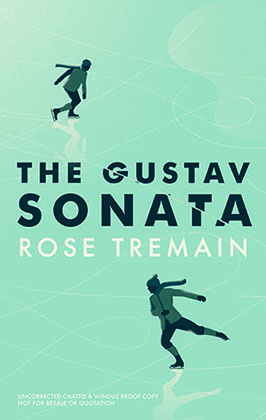
The Gustav Sonata gets Switzerland right, beautifully

GustavSonata-Proof_Page_1-1

When I heard Rose Tremain’s new book, The Gustav Sonata, was set in Switzerland, I could not wait to get my hands on it. Knowing she had a particular gift for evoking time and place, I had to see what she would do with the challenging setting of Switzerland during the Second World War.

From the first page, I was struck by how exquisite this novel is. Tremain delivers on all three fronts – story, characters and writing. The first of three parts is written from the point of view of the protagonist, Gustav, as a boy. I wanted to rush in and rescue this darling child. The middle part shows us how his ill-fated parents met each other and drifted towards their ruin. The third ‘movement’ brings us close to the present day, where we meet Gustav again in late middle age, the proprietor of a hotel and lonely heart.

Tremain fits so much human frailty and so many wrong turnings in these pages, inspiring compassion for every character, even those with awful failings. At the same time, she captures the atmosphere of small-town Swiss society and has an amazing touch for the environment and cadence of language, so much so that you feel you could be reading a Swiss work in translation. No chisel marks are visible on her sentences – they seem to have come into existence ready-made and perfect.

There are so many stories in one here, set against one of the biggest stories of all, the persecution and genocide of the Jews in the Nazi Germany. The character of Gustav’s father, an assistant police chief, is inspired by a real Swiss police chief, Paul Grüniger who risked his career by falsifying documents to admit 3,000 Jewish refugees into Switzerland illegally. Like Gustav’s father, Erich Perle, Grüniger was dismissed from his position and disgraced for this crime.

The Gustav Sonata is a story of a man who, by being true to his own humanity, will lose everything he holds dear. It is also a story of a lovely boy and his troubled mother who cannot see the treasure she has in him, and the story of a mismatched couple who fail at the first test. Through it all runs the special relationship and lifelong friendship between two sensitive boys, Gustav from a poor and loveless home and the much more privileged Anton.

One chapter in my non-fiction book examines the role of Switzerland during the Second World War, which has been severely criticised over the years. Switzerland’s record in taking in Jewish refugees during the war is mixed. Although it was one of the main routes out of Nazi territory for several years and thousands of Jews were able to transit through Switzerland or find refuge there, the border was closed against Jews in their greatest hour of need. Worst of all, in 1938 the Swiss asked the Germans to stamp the passports of Jewish citizens with a red letter J so that they could identify and turn back likely refugees without having to resort to imposing a visa requirement on all Germans.  The chief of the aliens police Heinrich Rothmund welcomed the move, maintaining that he did not want Switzerland to be “swamped” by people unable to assimilate to the Swiss way of life. Doesn’t that sound familiar?

Swiss President Kaspar Villiger issued a public apology for the treatment of Jewish refugees in 1995: “There is no doubt in my mind that our policy has brought guilt upon us. By introducing the so-called Jewish stamp, Germany was complying with a request made by Switzerland. At that time in an excessively narrow interpretation of our country’s interest, we made a wrong decision. The Federal Council deeply regrets this, and apologises for it, in the full knowledge that such a failure is ultimately inexcusable.”

It has to be remembered that most other European countries and the United States either imposed strict quotas on Jewish refugees or tried to restrict any Jewish immigration before and during the first half of the war. There was a change of heart but it came too late to save most European Jews.

20160605_174747
Most Swiss villages have a shooting range where men do annual target practice as part of their military service, a legacy of the war years #ordinaryswitzerland


To get back to The Gustav Sonata, and an interesting note about how novelists get their ideas. While I was reading, I was struck by how familiar the circumstances of the Perle family seemed. And then I read the acknowledgments where Tremain mentions the debt she owes to Mitya New’s 1997 book, Switzerland Unwrapped: Exposing the Myths. I came across this book during my research for my book on Switzerland. It was written by New after some years working as a Reuters journalist in Zurich. The book is a series of interviews with key Swiss individuals whose views and experiences shed light on Swiss society, narrated in the first person if I remember rightly. It is a great selection. One of the New’s subjects is Ruth Rhoduner, the daughter of Police Chief Grüniger. There is also an interview with a leading banker and a woman from a Swiss Yenish (gypsy) family who was forcible taken into care. And, another theme that feeds into the novel, a description of a day out at a Schwingen festival, a traditional Swiss wrestling sport.

Tremain’s novel is set in the fictional town of Mazlingen. I’d love to know how much time she spent in Switzerland researching this book. Did she stay in an earnest little hotel like Gustav Perle’s and go for walks through sleepy valleys dotted with cherry trees? Considering that the last novel I read by Tremain was set in New Zealand during the gold rush of the 1860s, it is possible she was able to rely purely on good research and her gift for recreating a distant place and time.

I really enjoyed how Tremain portrayed the ordinariness of Switzerland – the everyday food and drink, modest homes, plain streets and dull jobs that are hardly ever seen by tourists. Recently, I’ve been having some fun on Twitter, inviting people to post pictures using the hashtag #ordinaryswitzerland, just to remind ourselves and others that we don’t live in a spectacular film set. We tend to automatically post pretty views of our surroundings on social media. It’s been refreshing keeping an eye out for the less lovely views and watching others do the same.

Looking forward to hearing your reaction to The Gustav Sonata (or Tremain’s other novels) or any of the other themes I’ve touched on today. Have a great start to the summer!

Strawberries for the self-employed

WP_001013

A year has gone by since I walked away from a permanent job that ticked almost all the boxes for me. It was part-time, an easy commute, I liked my boss, the money was fine and the people were great. But something was missing.

That something was freedom. The Pocahontas in me wanted the freedom to discover new professional territory, and the freedom to say no sometimes.

I have no illusions about work. No matter what your job, you have to spend most of the time digging and planting in order to have days (or brief moments) when you can eat sun-kissed strawberries. The same rule applies whether you are working for yourself or for someone else. But in my case, I have found that being self-employed gives me a better digging to strawberry-eating ratio. And home-grown strawberries also taste better.

Looking back over the last 12 months, I’m pleased with the range of work I’ve found. One thing I’ve learned about being self-employed is that it is very much about relationships. I’m lucky to have made connections with good people. I’ve worked on a mix of writing and translation projects for corporate, scientific and media clients. I registered my own company (easy) and sorted out the paperwork for national insurance (not easy). After going to hell and back with my old laptop, I finally bought a new one which has been very obedient so far.

The challenging part of working from home has been keeping my work time fenced off from family duties. Swiss school hours don’t make this any easier. But I’ve got so used to working with interruptions now, I probably couldn’t work uninterrupted anymore!

The most unexpected and exciting project to come from my new freelance life is the book about Switzerland I am very close to completing. When I left the Swiss Broadcasting Corporation last year, one of the things on my list was to submit a proposal for a non-fiction book to Bergli Books in Basel. That proposal was ultimately developed into the book that will be published in October. I’m looking forward to announcing the title and cover as soon as the publisher’s catalogue is ready.

I saw in a recent report that 28% of Swiss citizens work at least one half day per week at home, and one in four are self-employed. Of the remaining 75%, one third would like to go freelance in the next yearIt’s not always a smooth transition. On my previous two attempts at working freelance I struggled to find enough work. But that was at an earlier stage in my career in a different economic climate. It helps too to have a broader base of activities. What is your perspective on working from home or working for yourself? Anyone thinking of taking the plunge?

Disclaimer: I am a woman

2015 First batch 284.jpg

At the moment I am writing about women in Switzerland for the book, and trying very hard to be fair. I almost think this chapter needs a disclaimer: I am a woman but the word may not mean the same thing to you as it does to me.

We are all products of our culture and family circumstances, and I have to hold my hands up and say that my background makes it very difficult for me to approach the Swiss situation in a non-judgmental way. I believe that the subjugation of women is the biggest swindle in human history. Nothing in my experience has taught me that women are in any way less important or less capable than men, therefore I cannot and will not accept any arrangement based on this idea.

My family is full of inspiring women, going back more than a century. I grew up in a three-generation household where both my mother and grandmother worked full-time as teachers. My maternal grandmother worked as a cook before she married, and later farmed a smallholding, while bringing up nine children. Her sisters emigrated to America to work. A great-grandmother on the other side was a ‘deserted wife’ who trained as a nurse in England in the 1910s and went on to work as matron of an old people’s home. There’s another great-grandmother who had her own toy shop in Dublin in the 1890s. One thing all these women had in common was that, somewhere along the line, the men in their lives could not be financially relied upon, mostly through no fault of their own. The women learned through experience that having children and doing paid work did not have to be mutually exclusive (disclaimer within a disclaimer: I think looking after children without doing paid work is equally admirable, as long as it’s a choice).

I come from an all-girl family, which meant I never experienced the division of chores on gender lines that happens in some households. I was just as often asked to wash the floor as cut the grass or bring in the coal. The secondary school I attended was also all-girls with a long tradition of fostering female achievement. A woman became president of my country when I was eighteen, not to mention that women got the vote in Ireland at the foundation of the state in 1922 (in Switzerland it was 1971).

By the time I noticed that my version of what it meant to be a woman was not the norm, it was too late. The meaning of the word had set in my mind forever. Forget about ‘Frailty thy name is woman’, I will always believe that women are strong, capable decision-makers. That is why I don’t like the ‘Irish Mammy’ cliché, which portrays Irish mothers as simple-minded old biddies. Funnily enough there is no popular incarnation of the Swiss mother, like the Italian or Jewish mamma or the Irish Mammy. One saving grace at least.

Have you ever thought about what the word woman means to you? I’m curious to hear your thoughts.

Good news about my Swiss book deal

2015 First batch 418

I am delighted to announce that I have signed a book deal with Swiss publisher Bergli Books for a non-fiction book about Switzerland. I believe this country is hopelessly misunderstood and a little unloved. Armed only with a cheap laptop, I intend to stress-test the stereotypes, and change the narrative about Switzerland.

People always say you should write the book only you could write. That’s what I’m doing now. I came to Switzerland in 2003 on the love train (actually an Aer Lingus flight to Geneva). Since then I have experienced the country on many levels – as an immigrant, a journalist, a foreign spouse, and mother of three Swiss children.

Churchill famously said that Russia was a riddle, inside a mystery, wrapped in an enigma. At times Switzerland has felt like that to me too. But over the past decade of covering Swiss news for swissinfo.ch, and navigating everyday life, I feel I have stripped away the layers and got closer to understanding the Swiss soul. I’m ready to share the good and the bad about the Swiss.

This book will introduce readers to the real face of Switzerland, from presidents to poets, from bankers to street sweepers. At the same time it will paint a faithful picture of the political, cultural, economic and historic landscape.

Recently I wrote about rejection on this blog because it was becoming my specialized subject. I was getting used to it. In fact I was even getting good at it. After all that I can’t tell you how good it feels to take this long-awaited step towards being an author.

The title of the book has yet to be confirmed. The release date is also still being worked out by teams of experts (well maybe one small team), but I’m expecting it to be sooner rather than later. In the meantime I have a lot of work to do and will keep you posted on progress.

I’ll leave you with one small interesting fact. Bergli Books is an imprint of the Swiss publisher Schwabe, which was established in Basel in 1488, making it the oldest publishing house in the world.

A positive African voice in Switzerland

Lisa Chuma loved this gift from the organisers

It you had to talk about your life, would it make a good story? Would it inspire people? I listened to someone in Bern yesterday who has the gift of being able to present an inspirational narrative of her life. Her name is Lisa Chuma and her message is about empowering women in business.

Chuma is a rarity in Switzerland – an African businesswoman. The Zimbabwean-born entrepreneur has been attracting attention in Swiss media since she emerged as the founder of Women’s Expo Switzerland, an annual networking event in Zurich which serves as a platform for businesswomen to showcase their products and services.

As a journalist I’ve sat through more than my fair share of talks. These are usually horribly detailed presentations involving a criminal amount of line-by-line Powerpoint reading.

The talk by Chuma was like a breath of fresh air in comparison. It’s not only her message that has a positive effect, it’s how she communicates the message.

Watching her last evening, I was trying to figure out the secret. Chuma took her time speaking to us. She paused to allow her ideas to sink in. She built her message around stories that were all linked to defining experiences in her life. This was public speaking as a form of storytelling.

What I found most interesting is that the stories Chuma told could also have been presented as stories of suffering and defeat. Chuma spoke about her mother’s brave decision to leave an abusive marriage and the tough year she spent at a Zimbabwean boarding school when her mother was establishing a new life in London.

The inspirational part came in the support that Chuma’s mother received when she left her husband. It was a difficult place and time to be a single mother. Her female friends rallied round and thanks to their practical and emotional support she was able to pursue her dream of becoming a nurse and achieve financial independence.

We need to see more women helping women, Chuma said. Too often we have fine ambitions but when we come up against our own limitations we give up. The trap of talking ourselves out of progress is more a female one, which is why Chuma’s focus is on women. Together we can achieve much more. Chuma’s talk was really aimed at women who have their own businesses but the principle can be applied to any area of life.

Chuma came to Switzerland because of her husband’s job and began her life here moving in expat circles. She noticed that expat women were not mixing with Swiss women, both groups wrongly assuming they were not needed or wanted by the other. It is a great achievement that she has broken down those barriers and built a community of businesswomen in Zurich who are now actively collaborating with each other. The vast majority of women who attend the annual Women’s Expo are Swiss.

The talk in Bern was organized by the American Women’s Club of Bern and Bern English Resource Network BERNnet, which happens to be a great example of Chuma’s ‘better together’ principles put into practice.

If you’d like to see Lisa Chuma in action, here she is giving a TEDx talk in Zurich this summer.

Discovering the delights of Fribourg

wpid-20150630_132123.jpg

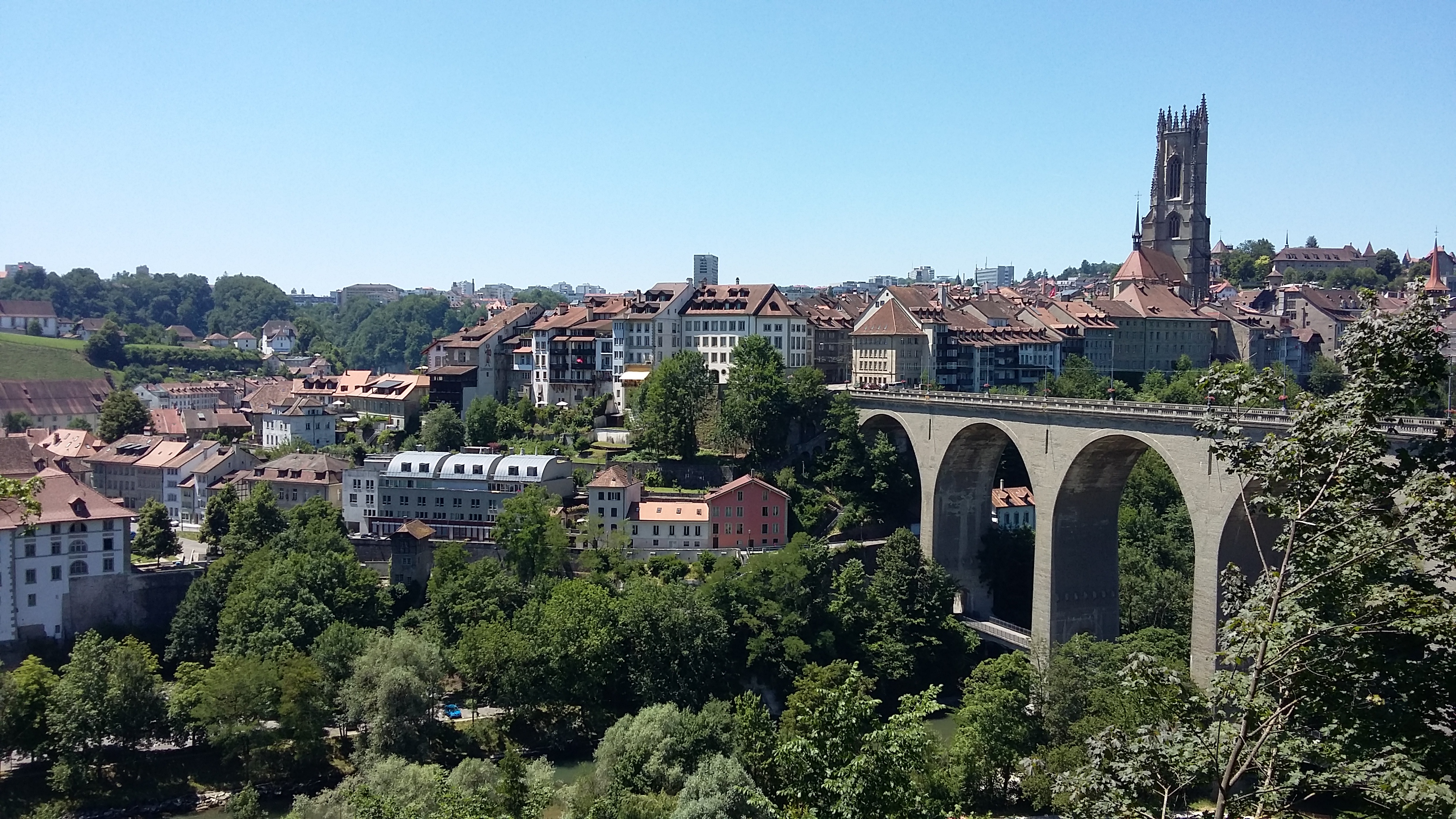
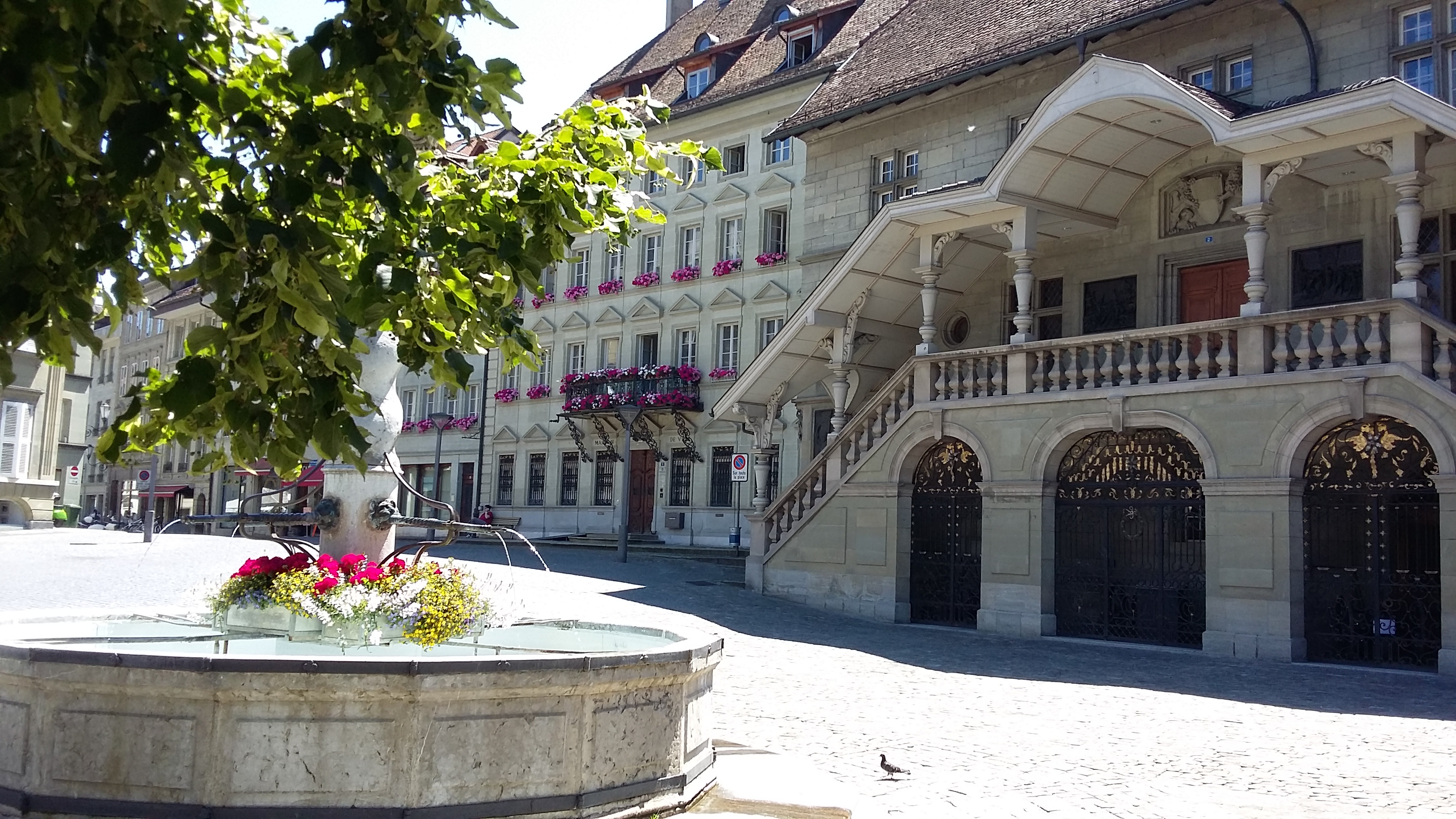
Fribourg is a charming medieval town situated between Bern and Lausanne on the main Zurich to Geneva rail line, often overlooked as a tourist stop. Though I’ve lived here for the past thirteen years, I’m still discovering hidden gems.

It’s that time of year when people are on the move. Some of you will be exploring Switzerland and if you can possibly make room for Fribourg on your itinerary, here are some suggestions on how to spend the day. If you don’t have the time or the means to get to Fribourg, let me show you around.

Fribourg is a small enough town to get to know on foot. For anyone who doesn’t have the energy for the hills and cobblestones, there is the option to take the little tourist train, which leaves every day at 2pm, 3pm and 4pm from Place Jean Tingeuly, five minutes’ walk from the train station. This one-hour guided tour with a couple of stops will help you get your bearings and see the different styles of architecture stretching back 800 years.

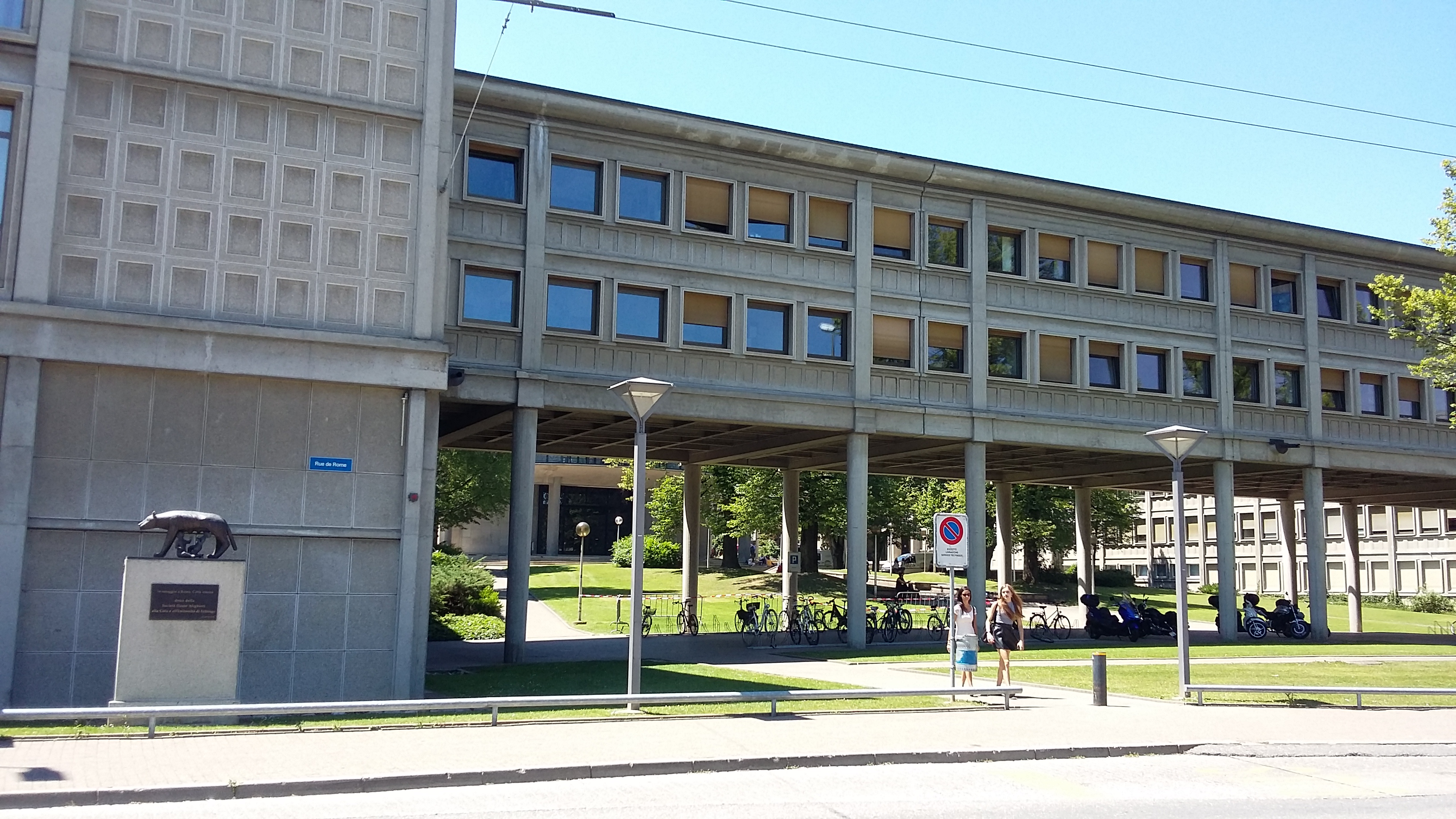
Miséricorde campus, built in the 1930s

Walkers can start by asking directions to Collège St Michel. If you take the back route by the main post office, you will pass by the main university building Miséricorde with its distinctive Le Corbusier style architecture, which is worth a look. Carry on along rue Joseph Piller towards the collège and you can break for your first coffee opposite the cantonal library in Marcello’s.

Marcello's is on the edge of the charming Quartier d'Alt
Marcello’s is on the edge of the charming Quartier d’Alt

Afterwards you can go up the steps of the college and wander around the grounds of what used to be a Jesuit seminary and is now a pre-university college, taking in a visit to the church of St Michel.

The college is at one of the highest points of the town, which descends, quite steeply in places, to the Sarine River. There is a wonderful view of Fribourg from the terrace at the back of the college. From there you can take the old covered steps, Escaliers du Collège, down to the narrow shopping street rue de Lausanne.

wpid-20150630_125947.jpg

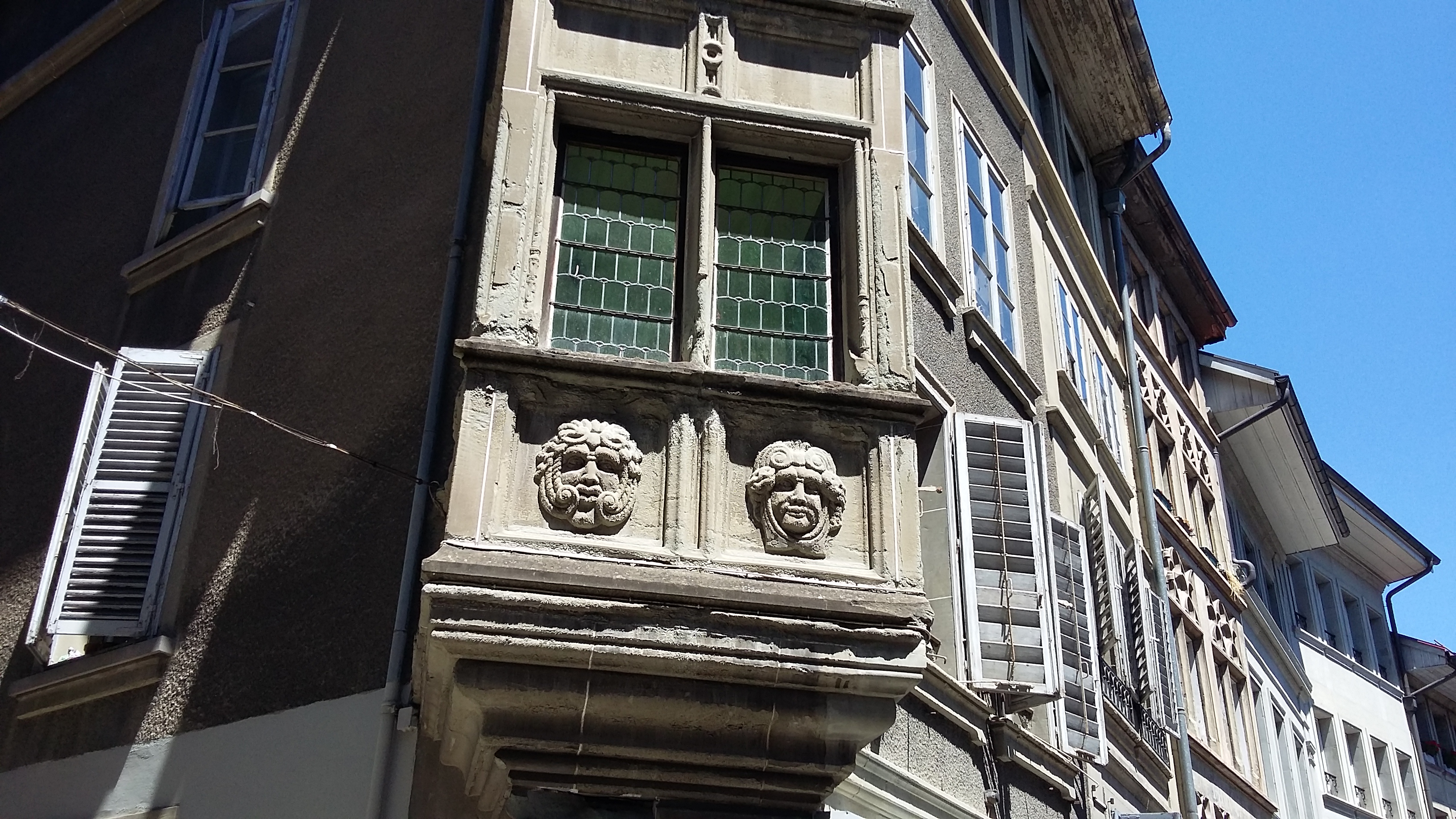
Rue de Lausanne with its quirky boutiques and townhouses leads down to the Bourg area. Don’t forget to look up to see the stone carvings and decorative windows at first floor level.

wpid-20150630_125553.jpg

Now you arrive at the Hotel de Ville and cantonal court around the large open space of Place de L’Hotel de Ville where, if it’s a Saturday morning, the weekly market will be taking place. Grand Rue comes next, a narrow 17th to 18th century street which is completely unchanged, and used to be the town’s best address in its heyday.

Here you are faced with a couple of choices. You can loop around by the cathedral and back to the cafe des Arcades for more refreshments before visiting the mini gallery quarter which includes the Tinguely museum, the Museum of Art and History (lovely garden) and the small Gutenberg printing press museum. Two more heavy duty churches – the Basilique Notre Dame and the Église des Cordeliers – provide shade and tranquility on this part of the tour.

The garden of the Museum of Art and History

Or you can do down to the river. On this walk you’ve been gradually descending through the centuries and altitude towards the legendary Old Town – Basse Ville or Unterstadt. From this Hotel de Ville level there are at least three ways to get down – by taking the fairytale-like Stalden steps which begin at the end of Grand Rue, the more workaday steps from the Pont de Zaehringen (check out the view of the new Poya bridge) which gives you an opportunity to cross the Sarine River at the foot of the steps and enter the walled part of the Old Town through the impressive Bern gate.

Pont de Berne, close to the Bern gate and city walls

Fribourg is a little confusing and the river doesn’t help for orientation because it keeps changing sides. That’s because the town is built on a sharp turn in the river which creates a river peninsula. The third way to reach the Old Town is from the other side of the Hotel de Ville, towards the rue de la Grande Fontaine where you will find more pretty steps.

What makes these routes even more interesting is that all these streets are lived in and many of the houses have been kept in excellent condition. You will see people bringing their shopping home, tending to their balcony plants or sitting on their front steps.

There is a bus that carries passengers up from the Old Town to the train station – the number 4. An alternative to the bus or the climb is the funicular railway which starts at the bottom of rue de la Grande Fontaine and leads to Place Python, which is also where the Wednesday farmers market takes place.

If you like what you’ve seen on this walking tour, here are some suggestions of other places to see from Fribourg Tourism, where you will also find information on the festivals and events on this summer.Wishing you all safe and happy travels.

(all photos taken 30.06.2015 © Clare O’Dea)

Walking past the point of no return

tafers

I walked all day, more than I ever have before or ever will again. Up steep forest paths, along by babbling brooks, across fields of barley, through farmyards and back and forth over a railway line, I walked and walked as far as my legs could carry me. And then I stopped, defeated.

I had reached the outskirts of Bern and I had two pressing problems – my feet. You see, the walk didn’t exactly go according to plan. The plan was that I would walk from my home in Fribourg to my old place of work in Bern – a distance of 40 kilometres – over two days.

The first half of the walk would take me Schwarzenburg, covering part of St Jakob’s Weg, the pilgrimage route that leads from Konstanz across Switzerland and France to Santiago de Compostela. I left home at 9.30 in the morning, having delayed as long as I possibly could when I was hit by last minute nerves.

Five hours and eighteen kilometres later I was sitting in a bar in Schwarzenburg, sipping a beer and studying the map. I felt well, the pains in my legs and feet were tolerable, and it was clearly too soon to stop. But could I do the same distance again to reach my final destination? I had to give it a shot.

signs

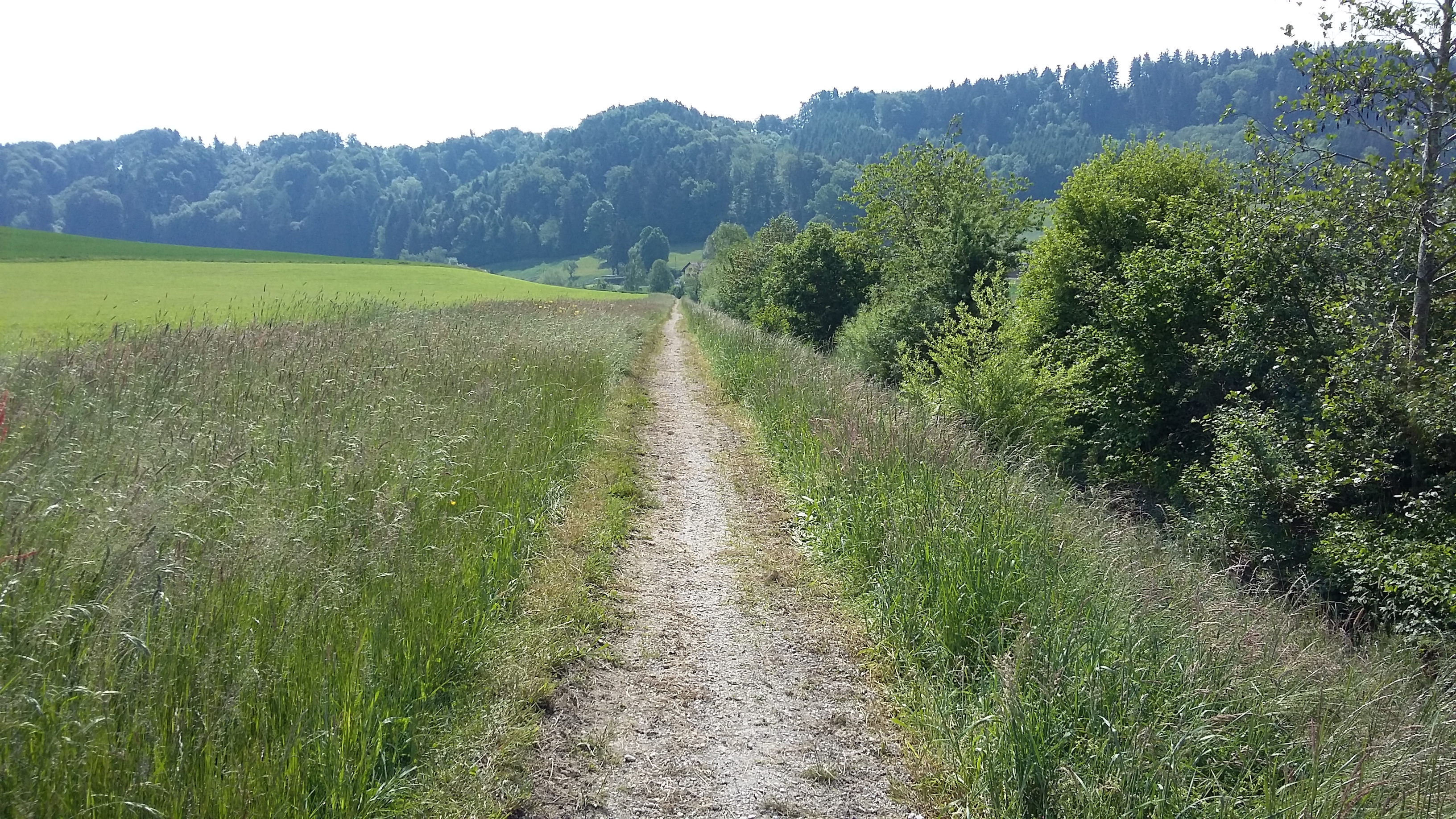
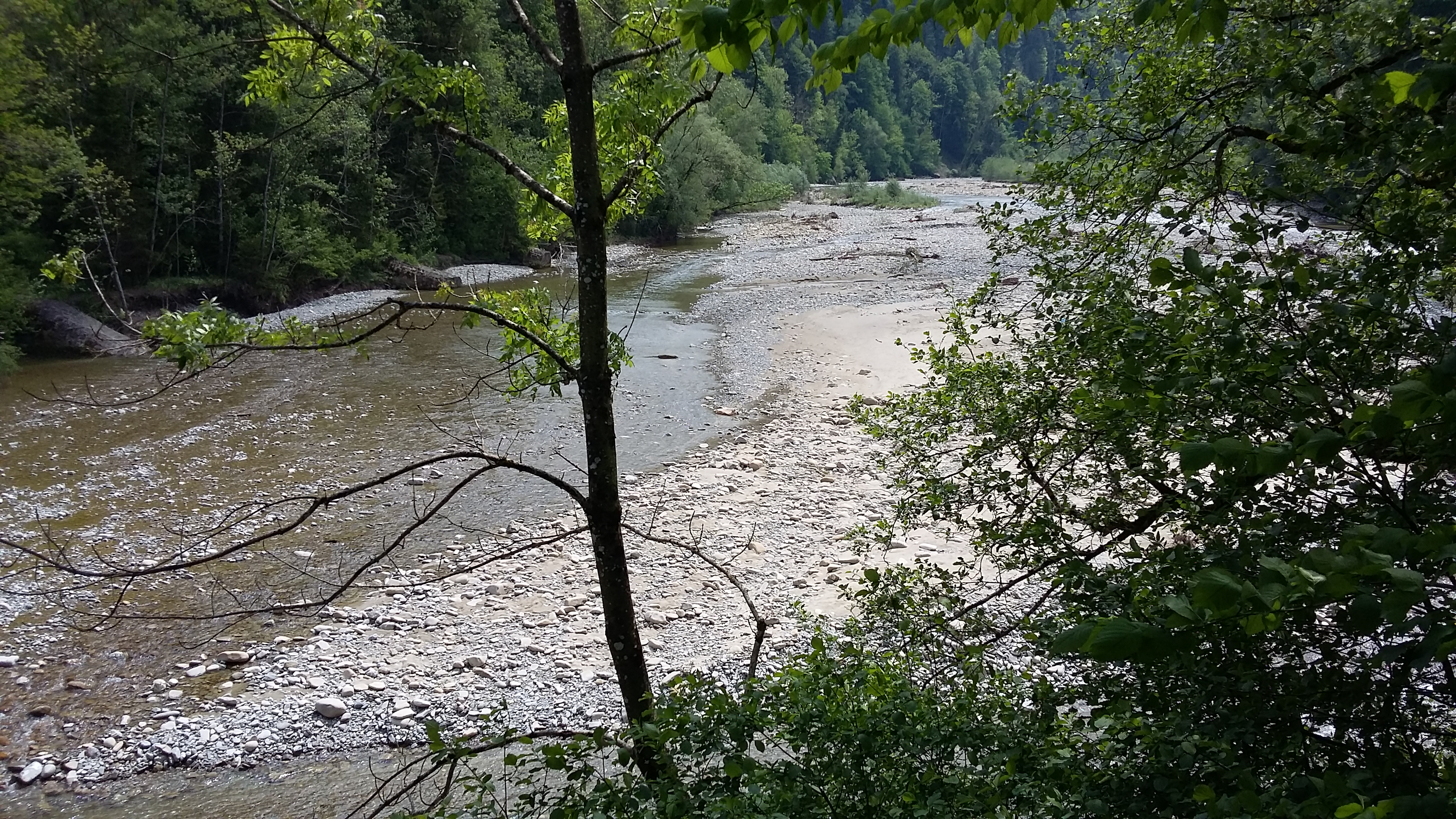
Walking alone over a long distance is a great way of being present in the moment. The senses take over, the awareness of your own body going about its quiet work of being alive. You look at the ground, you look at everything alive and growing, you look at the horizon. The landscape is gracious, letting you pass – at times opening up far and wide, all rolling hills, woods and meadows; at times closing in to usher you through corridors of stone or dark tunnels of green.

It was a windy day, an east wind with a cold bite known as the ‘bise’ in this part of the world. I ate my lunch in a sheltered spot at the edge of a wood near Heitenried and watched the wild wind rushing across fields of barley. I was thankful for the sun which kept up a regular appearance all day.

sense

An hour and a half after Schwarzenburg, I stopped for a break at an old restaurant beside the bridge and railway station of Schwarzwasserbrücke. According to the hiking signs that I had come to depend on, I had two and a half hours to go. When I stood up my legs were so stiff and sore I half-waddled, half-hobbled out of the place. I felt a pain on the sole of my foot that made me unwilling to take my boot off. The ankle on the other side was already a problem area. I pressed on and the aches faded for a while.

Over the next two hours I crossed some of the loveliest country, farmed in peace for generations. That is the ultimate prize every country should be so fortunate to have.

path

I had my route printed out on ten sheets of A4 paper. On map eight I was still enjoying the view but by map nine I didn’t want to look up anymore to see how painfully slowly I was approaching the next village. The turning point was Niederscherli.

There’s a wonderful approach to the village across a wide area of pasturage called Rifishalte. That part I appreciated. Also the two sweet boys on skateboards who helped me get on the right road out of Niederscherli towards Gasel. But that interruption cost me. A small eternity of twenty minutes later, I limped past Gasel and set my sights on Schliern, every step a trial. I will not forget these places.

There was no possibility of me walking another hour or more across the city of Bern to get to my original destination of Ostring. In Schliern I saw a smartly-dressed old woman going in to a restaurant, every inch the widow. I longed to follow her. It was seven o’clock on Saturday night and I had walked well over thirty kilometres since morning. I turned a corner and saw a bus, a Bern city bus sitting at its terminus, a most welcome sight.

That’s where my walk ended. The bus was due to leave in three minutes. I bought a ticket from the machine, the best two francs I’ve ever spent, and allowed myself to be carried in total luxury four stops to Köniz. All that was left to do was to call my trusty driver to come and get me, and sit content and patient in the last of the sun. I was ready to go home.

Irish nobles, a lost fortune and the Swiss connection

Croagh Patrick, Co. Mayo

Irish history teachers are a mournful bunch. Their job is to tell children a series of sad stories, filling their heads with tales of dashed hopes and doomed endeavors. When the teachers come into the classroom, the children look up with baleful eyes, wondering what misery is in store.

The Flight of the Earls is one such epic saga of shattered dreams but little is known of the Swiss chapter in this story.

Short version: In 1607, a group of increasingly marginalised Irish nobles, their families and followers set sail for mainland Europe, looking for Spanish support to challenge English rule. On their way to Spanish-controlled Milan, they passed through Switzerland.

Do I need to add that things didn’t work out so well? The nobles died in exile, after being diverted to Rome by the Spanish, who had in the meantime switched to being friendly to the English. The loss of these great Ulster families marked the end of the old Gaelic order.

And what about the Swiss connection? Travelling with the group was a scribe, Tadhg Ó Cianáin, whose job it was to record the fateful events of the day. His account of the journey has survived and been translated into English.

Ó Cianáin said of the Swiss people that they were “the most just, honest, and untreacherous in the world, and the most faithful to their promises”.

A smaller group of 30 Irish men and women arrived in Basel in March 1608 and travelled from there to Lucerne. They then crossed Lake Lucerne heading for the Gotthard Pass. On St Patrick’s Day 1608 the party crossed the Devil’s Bridge near Andermatt in the lower reaches of the Gotthard Pass.

This was the toughest part of the journey at the end of a legendary cold winter, as Ó Cianáin describes.

“The next day, Saint Patrick’s day precisely, the seventeenth of March, they went to another small town named Silenen. From that they advanced through the Alps. Now the mountains were laden and filled with snow and ice, and the roads and paths were narrow and rugged. They reached a high bridge in a very deep glen called the Devil’s Bridge. One of Ó Néill’s horses, which was carrying some of his money, about one hundred and twenty pounds, fell down the face of the high, frozen, snowy cliff which was in front of the bridge. Great labour was experienced in bringing up the horse alone, but the money decided to remain blocking the violent, deep, destructive torrent which flows under the bridge through the middle of the glen. They stayed that night in a little town named Piedimonte. Their journey that day was six leagues.

The next day the Earl proceeded over the Alps. Ó Néill remained in the town we have mentioned. He sent some of his people to search again for the money. Though they endured much labour, their efforts were in vain.”

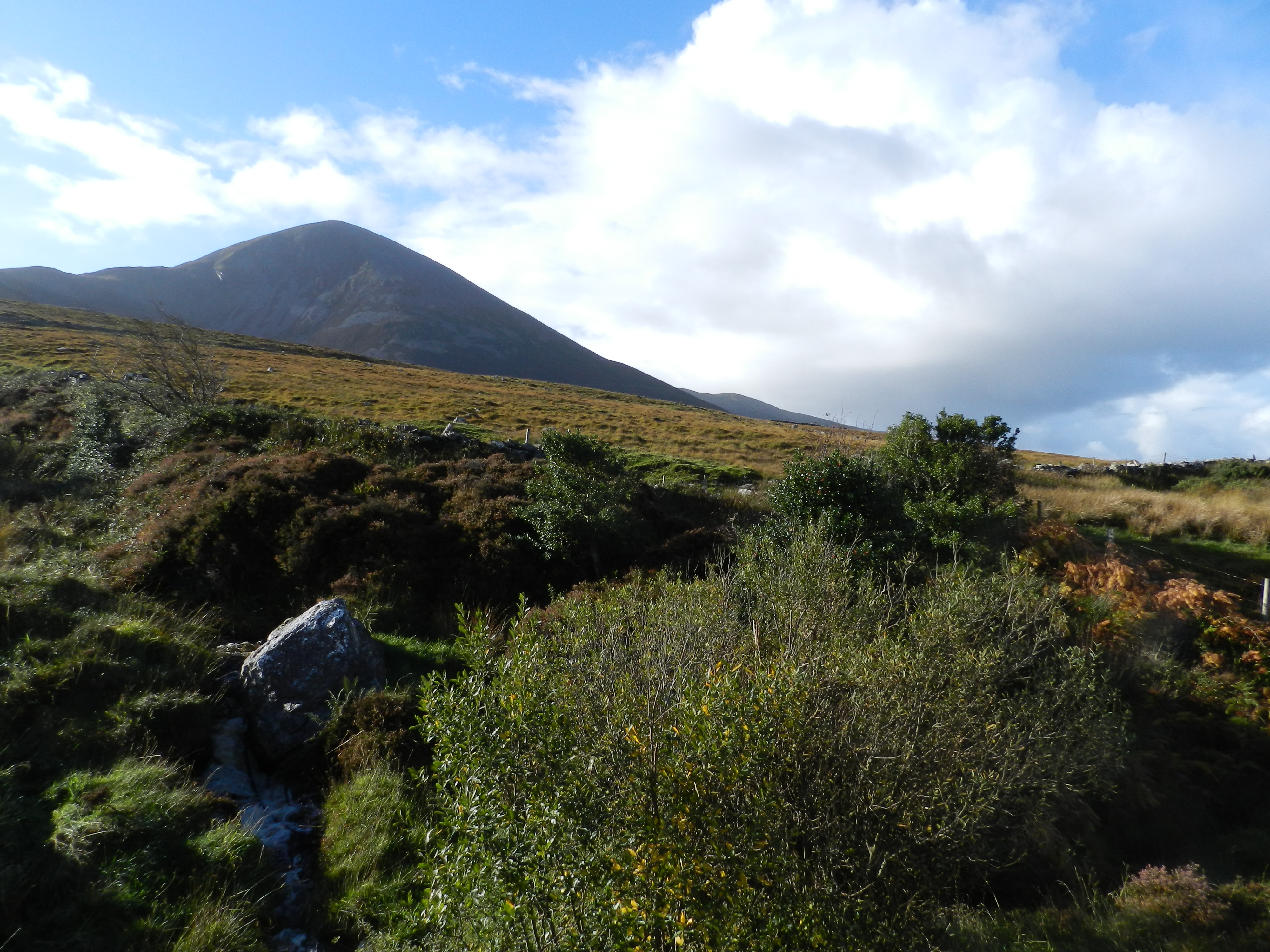
A little slice of Irish and Swiss history for you there. The photo above is a view of Croagh Patrick in Co. Mayo, a famous mountain associated with the man himself. Incidentally, traces of gold have been found there which indicate significant gold deposits but that’s another lost fortune which will never be mined because of the cultural value of the site.