The Woman Who Went to Bed For a Year

No it’s not me. The most I have managed is half a day. Great title though. When I saw that this novel was written by the British icon of young adult comic fiction in the 1980s, Sue Townsend, I was intrigued. I hadn’t read anything of hers since the early titles of the Adrian Mole series.

The Woman Who Went to Bed for a Year is a cautionary tale for wives and mothers everywhere. When your identity – and all your time – is subsumed by what you do for other people, you may suddenly find yourself a lost cause.

On the day her twins leave home for university, Eva climbs into bed and stays there. She doesn’t have a plan or a manifesto, just a conviction which evolves into a phobia that she cannot leave that bed.

Against this backdrop Townsend introduces a host of characters, some loveable, some dreadful but all very human and highly amusing. The best laughs of the book come from the antics of Eva’s appalling husband Brian, closely followed by his long-suffering mother.

What I like about the book is that it’s entertaining first and thought provoking second. It will be enjoyed by young women – should even be handed out in maternity wards as a guide to the pitfalls of mothering (and marriage!) – but perhaps most appreciated by older women.

On a practical level what I took away from Townsend’s story was a decision to step back ever so slightly last Christmas. Eva’s long description of the exhausting self-imposed burden that the family’s Christmas celebrations had become rang warning bells for me. This time round I shared the festive secrets and the to-do list, and will do my best to resist the temptation from now on to scale up the traditions and obligations from year to year.

King and queen of fifth class

Competition is healthy, right? The will to win pushes human beings to excel and for those with the right attributes and drive, the reward is the sweet taste of success. But too much emphasis on competition brings out its destructive force. It can distort and poison relationships, even society.

Here is an example of what a regime of competition did to a class of 10 and 11 year olds in Dublin in the 1980s. Our teacher was an old-fashioned disciplinarian who clearly missed the days of corporal punishment. He used to stalk the classroom with a metre stick and bring it crashing down on the desks of chattering children, shouting “watch out” just before he made contact.

The teacher had what Catholics call a “special devotion” to St. Teresa of Avila. Beware of anyone with a special devotion. We heard stories about her wonderful qualities – purity, humility, and obedience – ad nauseum. Enough already we would have shouted only that particular Americanism hadn’t yet reached Irish shores (nor had insubordination in the classroom).

Our school master imposed a system of continuous tests on us. Not a day went by without tests. On the wall he had meticulously put together a detailed chart where he recorded every pupil’s name and score in every single test. On a separate sheet there was a ranking of the running totals. At a glance we could see the order of achievement for all 28 children. There was no escaping it. So what did we do in this oppressive atmosphere? We became very competitive. More than that, we developed our own feudal society based on our rankings.

At the top of the pecking order came the King and Queen – the two brightest children in the class who alternated first and second place between them. The next half-dozen kids on the list were the Knights and their job was to defend the King and Queen whenever the teacher left the room and we all slipped into open animosity, expressed through ruler fights. The rest of the children were Commoners. When the teacher unwittingly seated a Commoner in the Knights’ section, he or she became a slave and had to fetch milk at break time, sharpen pencils, defend the royals and so on. Interestingly all the roles disappeared when we went out into the yard to play at lunchtime.

But inside the classroom, we stuck rigidly to the social order we had spontaneously created. Not quite Lord of the Flies but King and Queen of Fifth Class.

The Newspaper Hour

Beginning with the front page, Marta read out the headlines and waited for the nod. If there was a medical or health connection, Dr Cleary would definitely want the full article. The economy was also a must, although he tended to shout “mumbo-jumbo” angrily before she got the end. Politics brought on more heckling. He seemed to know all these people with their unpronounceable names intimately and he didn’t like any of them. The old man remained silent, his head bowed, during accounts of natural disasters or other senseless tragedies.

What made it tiring at first was that she had to pronounce everything right. He would interrupt her five times in a sentence. Inside she would be railing against him but she remained outwardly docile. On the Tuesday of her second week she deliberately forgot the paper but his disappointment was too much for her. She didn’t come empty handed again.

After reading through the first story, she would offer to do some housework but he always refused. Although the house was tidy, it needed a good clean. Marta considered switching with someone else. She was afraid someone might inspect the place and she would get into trouble. But all he wanted with his hour was the newspaper.

Three weeks into the job Marta made a stand. She struck a deal with him that the final fifteen minutes would be given up to cleaning. In this time she raced around with a cloth and disinfectant spray wiping down surfaces, speed vacuumed the hall, stairs and landing or swept and mopped the kitchen floor.

By the New Year the reading time had become less fraught and more interesting. Marta was getting to know the themes and the players. When she tut-tutted over the latest revelations about the minister for transport Dr Cleary chuckled. From then on they read and listened as a team. She would pour a cup of tea for herself and pause to take sips, enjoying his rapt attention.

On a mid-March morning Graham was passing the graveyard on his jogging route and stopped at the entrance. He pushed open the gate and walked down the hill towards the newer graves. It was a heart-soaring day, the first spring warmth in the air, the sky boldly blue. Could it only have been a week before that they had buried his father seemingly in the depths of winter?

All the what-to-do-about-Dad conversations were over. There would be no more late night skype calls from his brother in Australia. For over a year Conor had pestered Graham relentlessly, his anxiety multiplied by distance. A blind 79 year old man cannot live alone, he insisted, as if it were a known natural law. But Graham saw his father once a week and thought he was doing OK. He’s partially sighted, he would remind Conor. I organise the internet shopping. He doesn’t complain.

Graham turned into his father’s row, his sneakers compressing the soft grass. There was a child’s grave on the left complete with paper windmills and toy trucks. He hadn’t noticed it at the funeral but he hadn’t noticed much that day. The wooden crosses on the new graves were all the same. He assumed the last in the row would bear his father’s name but there was a new grave there and Dr John Cleary was now second from the end.

The funeral wreaths that still covered the mound of earth looked surprisingly fresh. Leaning against the thin wooden cross was something new. Graham leaned over to pick it up. In a plastic folder someone had placed that day’s Independent on the grave. Odd, Graham thought, Dad hasn’t read the paper in years.

Swiss crimes against tea

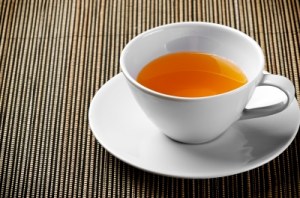
Image courtesy of podpad at FreeDigitalPhotos.net

When it comes to tea, different cultures have different ideas about what is appropriate and what is criminal adulteration. As an Irish tea drinker I am not a tea lover in the gourmet sense. I would never dream of owning a collection of fine teas. I shudder at the thought of accidently consuming Earl Grey. It’s got to be pure black and preferably one of the classic blends that have been sold by the Irish market leaders for generations. This is what we are talking about when we say we’d love a cup of tea.

Living in Switzerland over the past decade I am now wise to the dangers of tea crimes in everyday life here and can avoid the worst. For the uninitiated:

Crime number 1 – Hospitali-tea: Beware of a Swiss person, or French or German, offering you a cup of tea. If you listen closely you will hear that they are saying: Would you like a tea? Can you hear the broad sweep in there? It could mean literally anything, from lemon and ginger to a fruit berry concoction but almost never means a regular cup of black tea. The worst thing is when you are caught off guard and say yes gratefully to the offer of tea only to be presented with a cup of perfumed water which could not be further from the actual beverage you were gasping for.

Crime number 2 – Austeri-tea: You may work your way through the different brands of Schwarztee/ thé noir as systematically as you like, they all share the same unforgiveable weakness – weakness. Put the tea bag in and you will be drawing a pension before it draws to the right strength. Needless to say you can forget squeezing out a second cup.

Crime number 3 – Traves-tea: Sometimes, despite the best laid plans, you are going to have to order a cup of tea in a café or restaurant because it’s just what you want at that moment more than anything else in the world. Let’s ignore the fact that the French-speaking Swiss waiter will sometimes bring a can of sickly sweet iced tea because this is a more popular drink, the biggest problem is that you will be served a cup of hot water IN A GLASS. The water is not boiling hot and it does not contain tea. No, the tea is in an individually wrapped tea bag on the saucer. Good luck cobbling together a cup of tea with these raw materials.

Crime number 4 – Duplici-tea: In my book a cup of tea needs a decent splash of cold full-fat fresh milk before it is complete. This is considered an eccentricity in this part of the world, very Miss Marple. Tea here is served with no accompaniment apart from sugar and if you have the temerity to ask for milk you will be given one tiny container of UHT creamer. I don’t know what this milk-like product actually is, some kind of cream/milk hybrid, but it does not belong in a cup of tea, even in minute quantities.

Crime number 5 – Atroci-tea: A proper cup of tea belongs in the brown and amber part of the colour spectrum. The final crime against tea in Switzerland is not only that it is weak but also that it lets down the eye. When the milk is added all you have is an insipid grey brew which is about as appetising as all the other grey foods we like to consume. Oh wait, there aren’t any.

Disclaimer: Although black tea is my special area of prejudice, I have to admire how knowledgeable the Swiss are about the medicinal properties of various teas. A new mother in hospital will be served breastfeeding tea, babies with conjunctivitis have their eyes cleaned with cold black tea, children with stomach ache are given fennel tea and in every supermarket you can buy cough tea, bladder tea and, most importantly, calming tea.

Image courtesy of podpad at FreeDigitalPhotos.net

Strange and terrible stories

Around the age of two and a half my twins discovered stories. At the same time I discovered the power stories had over them. It started with Goldilocks. The naughty little girl, the bear family, the repetition, the danger – I could not retell it often enough for them, always with the same cadence and gestures. They were hooked and stories like these got me over plenty of sticky moments, especially while travelling, when they were restless or bored.

By the age of four the girls were regularly demanding made-up stories. These they preferred to books, because they could be made to order and they lasted longer! The request was always the same. It should be about a little girl or animal, or both. One twin would demand that something “strange” and “terrible” had to happen, while her sister would modify this with “but not too terrible”.

So began a series of strange and terrible stories, usually involving the diminutive protagonist getting into some kind of danger herself, or rescuing an animal from danger. I got tired of this formula long before the children did. One story I told them about a Neanderthal family made a big impression. What really got them was that the people had not developed language yet and communicated by grunts, tone and sign language. Language truly is the greatest gift of our species.

This craving for stories stays with us for life. We meet friends and family to swap stories; we read books, watch films, follow television series. The news media are also part of the great storytelling tradition. These sources are all feeding the same need, which goes far beyond entertainment. We seek out stories to make sense of the world, to understand ourselves and others, to explore our worst fears and greatest hopes. Long live strange and terrible stories!

Back to Blackbrick

May I introduce myself? I was the person sitting next to you on the flight last Sunday who had to keep closing her book because she was welling up. I also had to keep going back to it because I was hooked by the plot. What was I reading? Back to Blackbrick by Sarah Moore Fitzgerald. I don’t normally read young adult fiction; it all looks a bit deliberately silly to me – judging by the covers (I know!). But this novel is different. The main character Cosmo is like Adrian Mole’s sweet younger cousin. He has all the right instincts in the face of life’s challenges, without the judgement or the conviction to make the right moves. Cosmo can’t really handle his emotions and yet he is the character who remains truest to those he loves.

Who hasn’t dreamt of going back in time to see how our forefathers lived? The Blackbrick of the title is the stately home where Cosmo’s grandfather lived and worked as a boy. Distressed at his grandfather’s decline brought on by Alzheimer’s, Cosmo goes back to Blackbrick and discovers a way to unlock the secrets that overshadowed his grandfather’s early life. There are some pretty adult themes in Back to Blackbrick – bereavement, the perils of the class system and the stigmatisation of unmarried mothers. But here is a writer who can make you smile when she describes the tragic advance of dementia, who celebrates the bonds of family and friendship no matter what. If you are looking for something a little more meaningful to buy your teenagers or bright pre-teens, Back to Blackbrick is it.

Sarah Moore Fitzgerald’s book was launched earlier this month in Limerick and Dublin, published by Orion. The US version will be published soon as far as I know and translations are in the pipeline. So, bearing in mind the small disclaimer that I was once Sarah’s sweet younger cousin (less sweet now), rest assured this is an exceptional piece of fiction.
http://www.amazon.co.uk/Back-Blackbrick-Sarah-Moore-Fitzgerald/dp/1444006592

True History of the Kelly Gang

Last October I stepped off a bus in Wicklow town on the east coast of Ireland into hard driving rain. I made a run for the old town jail, a place I’d been meaning to visit for a while. On the tour of the building, which dates from 1702, visitors are transported back to crueller times, just as the inmates of the prison were once transported to Australia. You learn about the inhumane conditions the prisoners, including children, were kept in, the miserable rations they were given on the ocean voyage and the petty crimes, borne of poverty, which sealed their fate.

Under the Banishment Act, Irish convicts from Wicklow Gaol were sentenced to transportation up to 1856, around the time the infamous outlaw Ned Kelly, son of an Irish convict, was born in Victoria.

Kelly, whose remains were only given a proper burial in January this year, is a hero to many (though not all) in Australia but whatever your political colours, Peter Carey’s truly original novel True History of the Kelly Gang is captivating. Narrated in Kelly’s voice, the words come tumbling onto the page charged with passion and pain. It is such a convincing account, the period details and nineteenth century Irish-Australian idiom so fresh and vivid that within a few lines, you are there in the hot, dusty township walking in the footsteps of the little boy Kelly.

Carey’s novel is a story of a pride, prejudice and the abuse of power. It is also the story of a son’s love for his mother and the human capacity for endurance. When you read True History of the Kelly Gang you wear the clothes of the downtrodden colonials, eat their food and feel their burning sense of injustice. It must be one of the most accomplished fictional representations of the life of an historical figure. You believe Ned Kelly is speaking, you want it to be him – and you don’t want it to end.

The Dogleg Shortcut

By Clare O’Dea

To the untrained eye he was just a man checking his bicycle but Kelly knew the signs. She stopped dead. These men could be old or young, fat or thin, dark or fair but they all radiated ill intent. You could read it in the line of their shoulders, the way they stole a glance at you or the way they affected not to look your way. They moved too slowly; they were bad actors.

The dogleg shortcut halved the journey time to school – and there he was just at the bend, waiting. If she took this route she could be there in 11 minutes door to door, just in time for assembly. Going down to the main road, over the bridge and back through the park would cost her precious minutes and Kelly could not afford to be late for school today. Mrs. Kearney would be at the door taking names as usual and that would be her second poor punctuality mark this week. She just couldn’t do detention on Friday. Missing the inter-schools match was out of the question.

Kelly looked up and down the footpath but there was no-one around. Cracked chestnuts littered the ground at her feet, revealing their gleaming russet hearts. Treasure like this should not go to waste. If only she could gather them up, go home and skip this day. But no-one would understand; she was locked into the routine. The heavy schoolbag weighed down on her bra strap and she shifted it further out to the edge of her shoulder.

He was wearing a navy tracksuit and his hair was red – a young one. Kelly stooped to tie her shoelace, giving him a few more seconds to move on but still he fiddled with the bicycle chain. You’re not fooling anyone you bastard, she wanted to shout. The girls would never forgive her if she missed the match. She was in top form, playing the hockey of her life.

The flashing wasn’t so bad, it was creepy and ugly but it was over quickly. The bad part was the fear. What if this one reached out and grabbed her? The thought of being overpowered terrified her. Most of the time you could ignore the fact that men were stronger, it wasn’t relevant. But in this case it was all too relevant – a fact that squeezed her throat tight, stung her eyes and set her heart hammering.

One step down the lane meant danger, one step down the footpath meant disgrace. And then she remembered her hockey stick. Without being aware of her decision she began to advance down the shortcut. Behind the high walls on either side of her were back gardens. No-one would be gardening in this weather at this time of day. She slipped the stick out of its cover and held it loosely in her right hand like a spear.

Thirty more steps, twenty – the man straightened up and turned towards her. Kelly couldn’t look behind her for help; she didn’t want to show fear. Part of the trick was to behave normally. Treat him like a normal passer-by there’s a chance he’ll behave like one. She wouldn’t know until she reached him whether there was anyone coming in the other direction to save her. He started tugging at his waistband. Kelly felt a chill running up her back.

Hurrying down the steps into the school building, Kelly heard the bell ringing inside. She opened the door just as Mrs. Kearney came out of her office. “Are you on the warpath Kelly?” Mrs. Kearney seemed amused. “Pardon?” Kelly stopped and stared for a moment. Then she noticed she was still gripping the hockey stick with both hands. “You look like you’re going to hit someone with that stick dear.” “Just getting into the zone for the match,” Kelly answered, walking past the vice principal.

She went straight to the cloakroom to change into her indoor shoes. Anita was there. “So Kelly, what’s the strategy for Friday? They’re a pretty strong team,” she said, unwinding a long colourful scarf. Kelly sat down on the bench to unlace her boots. She felt a cold new energy circulating in her veins. “I’ve been thinking about it and I reckon it all comes down to one thing – attack is the best form of defence. They won’t know what hit them.”
Spare the rod?

I recently had a conversation with a friend of mine about disciplining children. I was telling her what a troublesome weekend we had with bad behaviour and imposing punishments and she informed me that she and her husband didn’t punish their children. Well I nearly fell off my chair.

My friend is a psychologist who works with children and I have to admit her kids seem less rowdy than mine. Have I been going wrong all this time?

Obviously the norms of childrearing change over time and one thing I am sure about is that I don’t want to have to use force to get through to my children. So what weapons are at our disposal today? The most common one for small children is probably time out. Will future child development experts say this was a horrible form of child cruelty? I hope not. If so the producers of the Supernanny programmes will have to stand trial first.

The whole issue brings to mind a recent article I wrote about the relatively soft sentencing practices in Switzerland.

http://www.swissinfo.ch/eng/swiss_news/Weighing_up_the_unusual_Swiss_justice_system_.html?cid=33999476

One criminology professor I spoke to pointed out that harsher sentences did not reduce crime rate – on the contrary. In other words there is no deterrent effect. During my research I also came across the work of the Australian criminologist John Braithwaite and his method of restorative justice. He believes that shaming is part of administering justice but that there is good shaming and bad shaming. According to Braithwaite shaming which stigmatises and alienates the person, like prison (or time out?), is much less effective than shaming which involves recognising what you did wrong and trying to atone for it. Here’s the link.

http://www.restorativejustice.org/leading/braithwaitej

Growing up with books

Every writer starts out as a reader. If I cast my mind back to my childhood, books were a central feature of our lives. The greatest influence came from my paternal grandmother who lived with us growing up. She was a remarkable woman. Born in her father’s brewery in Kilkenny, Ireland in 1911, she had a small but fantastic library of books. Nanny, as we called her, trained as a Montessori teacher in London in the 1930s and later worked as a governess. She had a wonderful way with children. She introduced us to her favourite authors over the years and one of my sweetest memories is of sitting wedged into the armchair beside her as she read aloud.

There was the Swallows and Amazons series by Arthur Ransome about a family of kids living in the English Lake District and My Family and Other Animals by Gerald Durrell describing his years living on the island of Corfu. Nanny was crazy about Dickens and read through Oliver Twist, David Copperfield, Dombey & Son, Nicholas Nickleby and  A Christmas Carol for us. She had a beautifully illustrated edition of the fairy tales of Hans Christian Andersen.

The more girl-oriented stories included The Ballet Shoes by Noel Streatfeild, A Little Princess and The Secret Garden by Frances Hodgson Burnett, Little Women and Anne of Green Gables were in there too as was the fantasy novel The Midnight Folk by John Masefield.

Stories featuring animals began with the Beatrix Potter series, moving on to Winnie the Pooh by A.A. Milne and The Wind in the Willows by Kenneth Grahame.

My own favourite children’s book of all time is The Animals of Farthing Wood by Colin Dann, the story of a group of animals forced to flee when their forest is destroyed. Tom McCaughren’s Run Swift, Run Free series also featured foxes’ adventures. The list goes on and the great thing is I now have the pleasure of starting all over again with my own children.