The year in musuems

My idea of a perfect day out involves a visit to a museum. With ten museums in four countries visited in 2023, it’s been a pretty good year. When I remember a visit to a museum, I remember the person or people I spent that precious time with. I can recapture the mood of the day and the inspirational effect of the art or history.

Let’s start with tables. On a visit to Ireland in October, I visited three museums. One was Derrynane House on the beautiful Iveragh Peninsula in Co. Kerry. This is the house Daniel O’Connell inherited from his uncle, the place where he felt most at home throughout his life.

In this dining room, the Liberator would have spent many entertaining evenings with friends and family. Also in the house is O’Connell’s death bed, which was transported back from Genoa. By the way, there is a brilliant novel by Seamus Martin about O’Connell’s ill-fated final pilgrimage called Duggan’s Destiny.

The next table is from 14 Henrietta Street house, the once grand eighteenth century residence that ended up housing more than 100 people living in tenements. This table is from the flat of the last resident of the house who left in the 1970s.  

Another table that caught my eye was in the Kunstmuseum Basel. This 1916 painting by Marc Chagall is called Strawberries or Bella and Ida at the Table. I like Chagall but I didn’t know he painted peaceful family scenes.

Two cats

Also in Basel, I saw some of Giacometti’s works, including one of his rare animal sculptures, The Cat (1951). I once worked in a building on Giacomettistrasse in Bern, which is where I first heard the name, to be honest.

The other cat is the lynx which was successfully reintroduced into the wild in Switzerland about 50 years ago. This lynx is in Lugano Museo cantonale di storia naturale. We spent a couple of happy hours in there as a large family group on a rainy afternoon in July. Serious paws!

More paintings

I’m one of those annoying people who takes photos in museums but I really do like to look back on them and remember the artists and paintings. The photo at the top of the page was taken in the Rjiksmusuem in September. It was my first visit to Amsterdam and I fell in love with the city. The famous painting everyone wants to see in the photo is The Milkmaid by Vermeer. You could get an excellent view of most other paintings.

I can’t resist including another Basel painting here. Portrait of Bonifacius Amerbach by Hans Holbein was painted in 1519. More than 500 years old and the face looks like it could be someone you might know. Incredible.

And here is another lovely face from the Strasbourg Museum of Fine Arts, Virgin in Prayer (ca. 1640) by Gian Battista Sassoferrato. I travelled to Strasbourg in France by train in February to meet two old friends, who came from Germany and Belgium. Such a treat.

Sassoferatto was a new name to me and I was interested to learn that he specialised in depictions of the Virgin in Prayer, which were apparently all the rage in the 1600s.

Handwritten

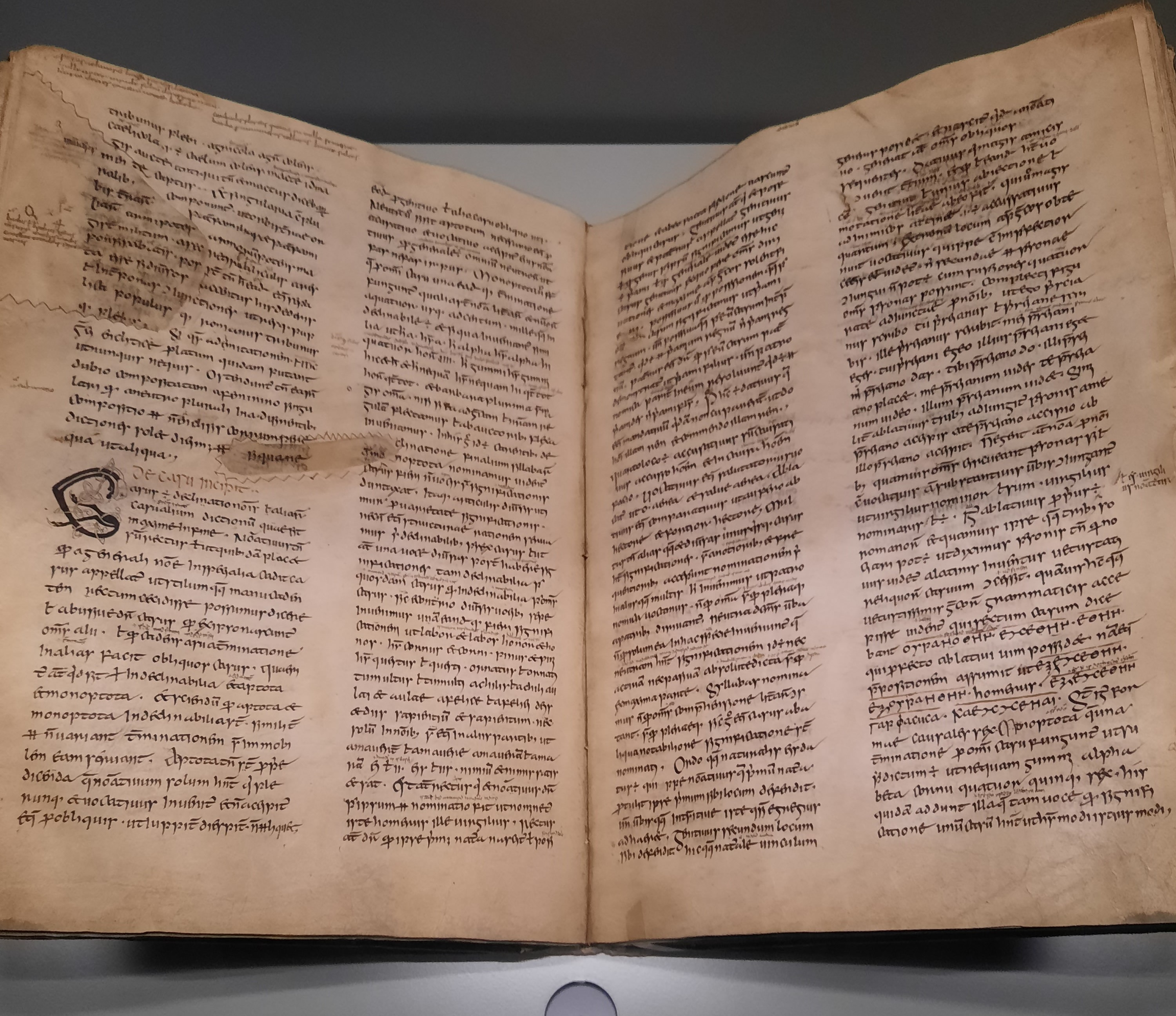
The last two items are the least picturesque but they are fascinating. Only yesterday, I visited the historic Abbey Library in St. Gallen, which has a very important collection of Irish manuscripts dating from the seventh to ninth centuries.

In my book The Naked Irish, I quote some verse inscribed in the margins of the Priscian Manuscript (ca. 850) – to show the ancient roots of Irish writing. But this was actually my first time seeing the manuscript. This version of Priscian’s Latin Grammar was transcribed possibly in Co. Down, with lots of glosses (explanations), a third of which were in Old Irish. That makes it one of the key sources for the study of the language.

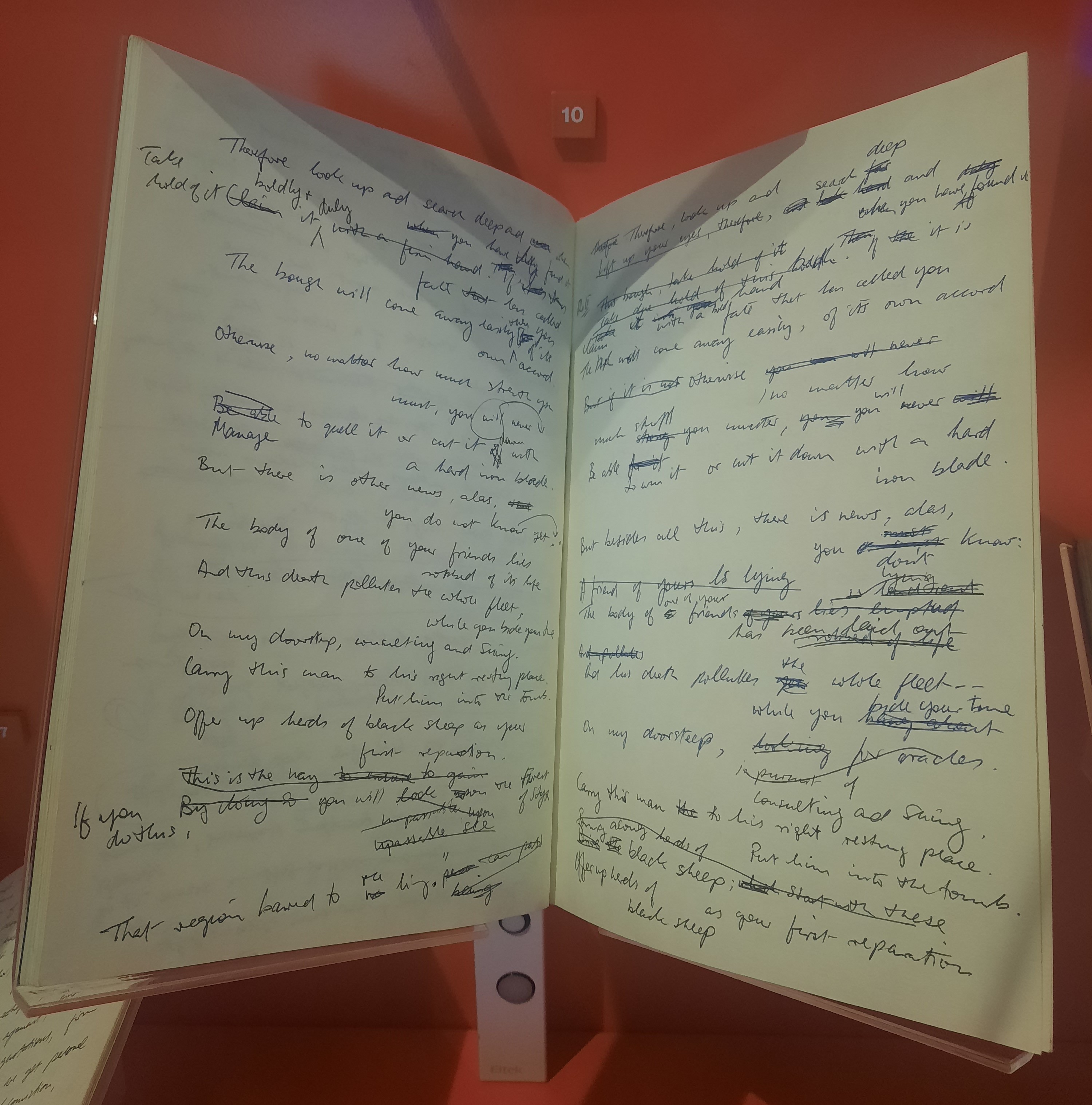
And the last exhibit is from Listen Now Again, a lovely little exhibition of Seamus Heaney’s life and work, running in the Bank of Ireland Culture and Heritage Centre on Westmoreland Street until the end of 2025. I opened my first bank account in this building as a student. It was originally home to the Parliament of Ireland before the Act of Union, the world’s first purpose-built bicameral parliament house. The building has been in the hands of the bank since 1803. But to get back to Seamus Heaney, this sample of the poet’s creative process is pretty amazing, don’t you think? Even Nobel Prize winners have to edit.

Observant readers will note that I’ve only mentioned eight museums so far. I also visited the Museum of Amsterdam, which covers the social and commercial history of the city. But my pics are hopeless. The same goes for Kilmainham Goal in Dublin, quite the gloomy tour, especially in the lashing rain, but very interesting.

What museums did you visit this year? Any recommendations for me? On my list for next year is the house on Lake Geneva designed by Le Corbusier, Villa “Le Lac”. It opens again in March and I’d love to go there on a warm day. We are knee deep in snow at the moment in Fribourg. So first, let’s enjoy the winter!

Festival time: when Ireland came to Fribourg

At the welcome desk in Equilibre (photo credit: Patrice Bechtiger Photography)

Exactly this time last week, the Irish festival in Fribourg was in full swing. I was in La Spirale Jazz Club enjoying an exhilarating performance by The Dixie Micks. At the end of the sold-out concert, I ended up on stage with fellow organisers Julie and Deirdre for a rendition of Whiskey in the Jar. I can’t remember the last time I was part of such a joyful gathering.

The day had started at the university building with a writing workshop, followed by two public lectures and an interview with John Boyne. Later, there were two more author events in Equilibre Theatre, and two films (A Date for Mad Mary and Redemption of a Rogue) before The Dixie Micks concert.

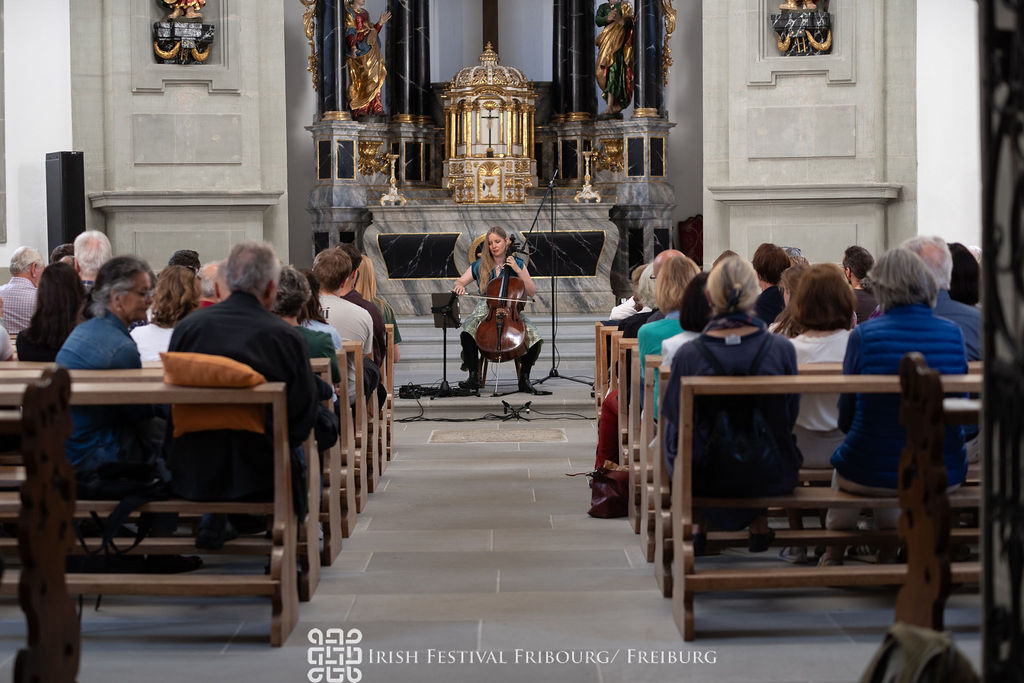
Before that, bright and early, I was standing at a bus stop with a sandwich board and a bunch of large cut-out arrows in bright orange card. Things got so busy on Sunday afternoon that I needed my bicycle to travel quickly between the The Celtic Cello concert set-up, the Welcome Desk at Equilibre Theatre and the Cinema Rex to announce the Irish-language film The Quiet Girl.

From the launch party on Friday afternoon to finally packing away the welcome desk on Sunday evening, I had seen friends, guests, volunteers and visitors happily take over the streets of Fribourg, secure in their welcome. In the 20 years I’ve lived here, it’s never felt more like home.

The Irish Festival Fribourg/Freiburg (IFF) has gradually taken over my life in the past year. Before the festival fades into a blur of indistinct moments in my memory, I want to get some highlights down in colour. I want to remember how amazing it was.

I hope you enjoy these photos, some taken by friends, some by our official photographers Rromir Imami and Patrice Bechtiger.

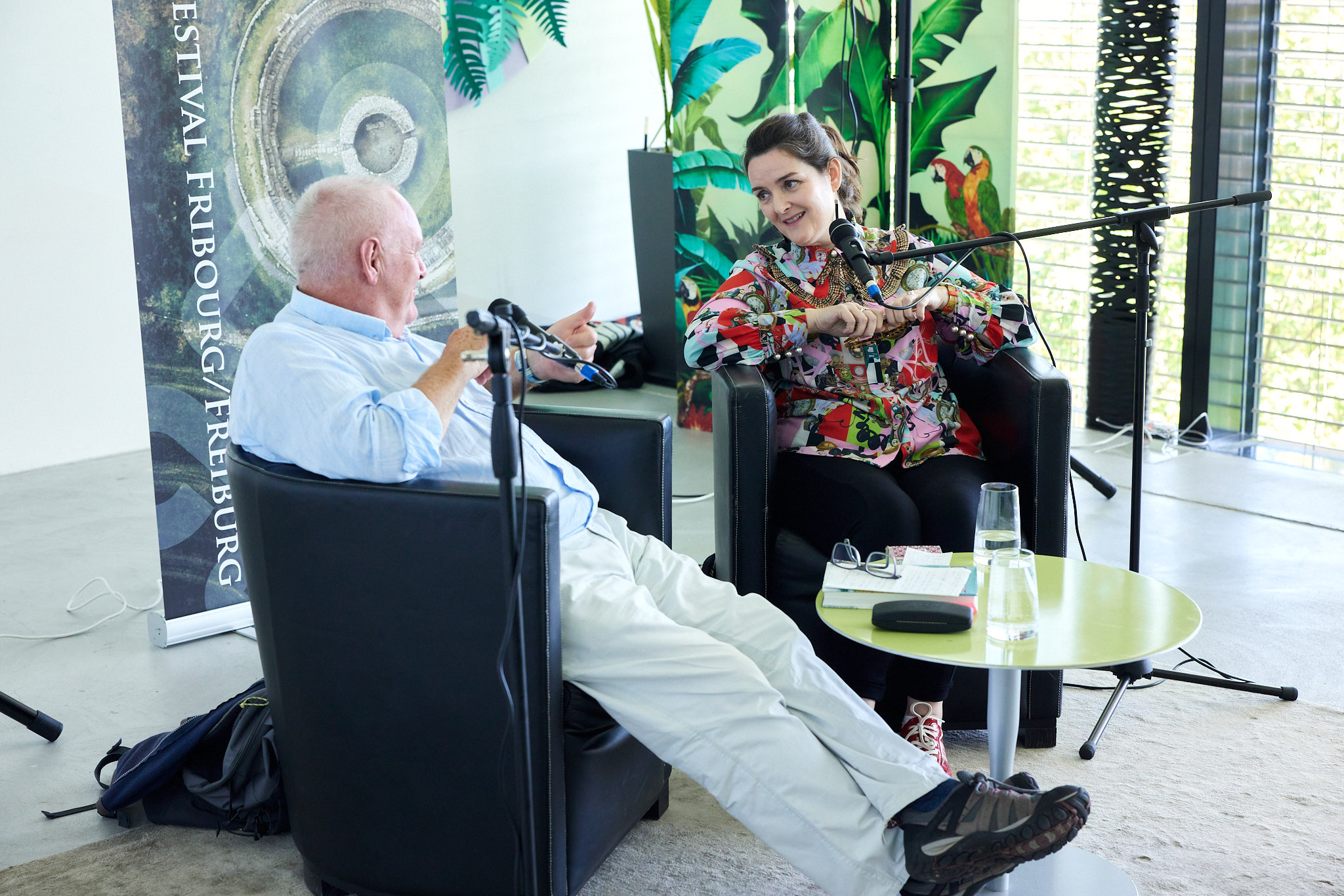
John Boyne signing books after his interview with Helen Stubbs Pugin (Photo credit: Rromir Imami)
The Celtic Cello performance in l’Hôpital des Bourgeois (Photo credit: Rromir Imami)
With Deirdre Coghlan (L), Julie Hunt (R) and The Dixie Micks (Photo credit: @seaagency1)
Padraig Rooney and Nuala O’Connor (Photo credit: Patrice Bechtiger Photography)

Captive audience at the lecture by Shane Walshe of the Swiss Centre of Irish Studies (Photo credit: Rromi Imami)
The writing workshop with Sarah Moore Fitzgerald (Photo credit: Rromir Imami)
Véronique Platschka of Tourism Ireland and Shane Walshe at the Welcome Desk (Photo credit: Patrice Bechtiger Photgraphy)

A week on, today, the festival team – temporarily scattered by illness and other work commitments – got together to review the weekend. The verdict: we couldn’t have asked for a better first edition of the festival, we expect to come back in 2025 (tbc) and we need time to tend to the neglected parts of our lives – in my case writing.

A thousand thanks to all who came to Fribourg for the festival, to the volunteers, our local partners, the guests of honour, the visitors and those who made the inaugural IFF possible through financial and practical support:

Loterie Romande, Tourism Ireland, l’Agglomération de Fribourg, l’Etat de Fribourg, Culture Ireland, Government of Ireland Emigrant Support Programme, Colm and Ella Kelleher, the Irish Embassy Berne, Max Geilinger Stiftung, IFI International, McGonigle Watches and the Swiss Centre of Irish Studies. 

Thoughts on twenty years in Switzerland

This day twenty years ago, I boarded a flight for Switzerland. Apart from my suitcase, all I had with me was my bicycle and a fold-up occasional table my grandmother had once given me. I had carried it from flatshare to flatshare and now I was carrying it with me to a new life in a new country.

Travelling light was what I did back then – in work, in love and in material things. A year earlier I had left a permanent job in The Irish Times, and my last short-term job in Dublin was producing a play for a small theatre company.

But I was ready for a steadier life, and that is what Switzerland had in store for me. My Swiss boyfriend became my husband. In our apartment in Fribourg, I finally cooked in my own kitchen with my own pots and pans. I got a job with the Swiss Broadcasting Corporation. Eventually we had three daughters and built a house together.

I look back over those years and cannot believe how much my life has changed, and how fortunate I have been. Workwise, I reclaimed my freedom after ten years in the same job. I started writing books. This autumn, I’m organising a festival of Irish culture in Fribourg, enjoyable work that reminds me of the theatre job two decades ago.

Even though I’m as integrated as a piece of bread dipped in fondue and I speak the local languages, I haven’t always found it easy to accept my destiny as an emigrant. I didn’t realise how much I would be leaving behind, and for how long.

Acceptance. I got there eventually. I believe I will live in Ireland again – one day. But it doesn’t matter that it’s not now. Right now, this Swiss life is full in the best possible way. Yesterday evening, I went for a beautiful sunset walk with my mother (my most faithful Irish visitor) and daughters. It made me glad, yet again, that I found this place and made it my home.

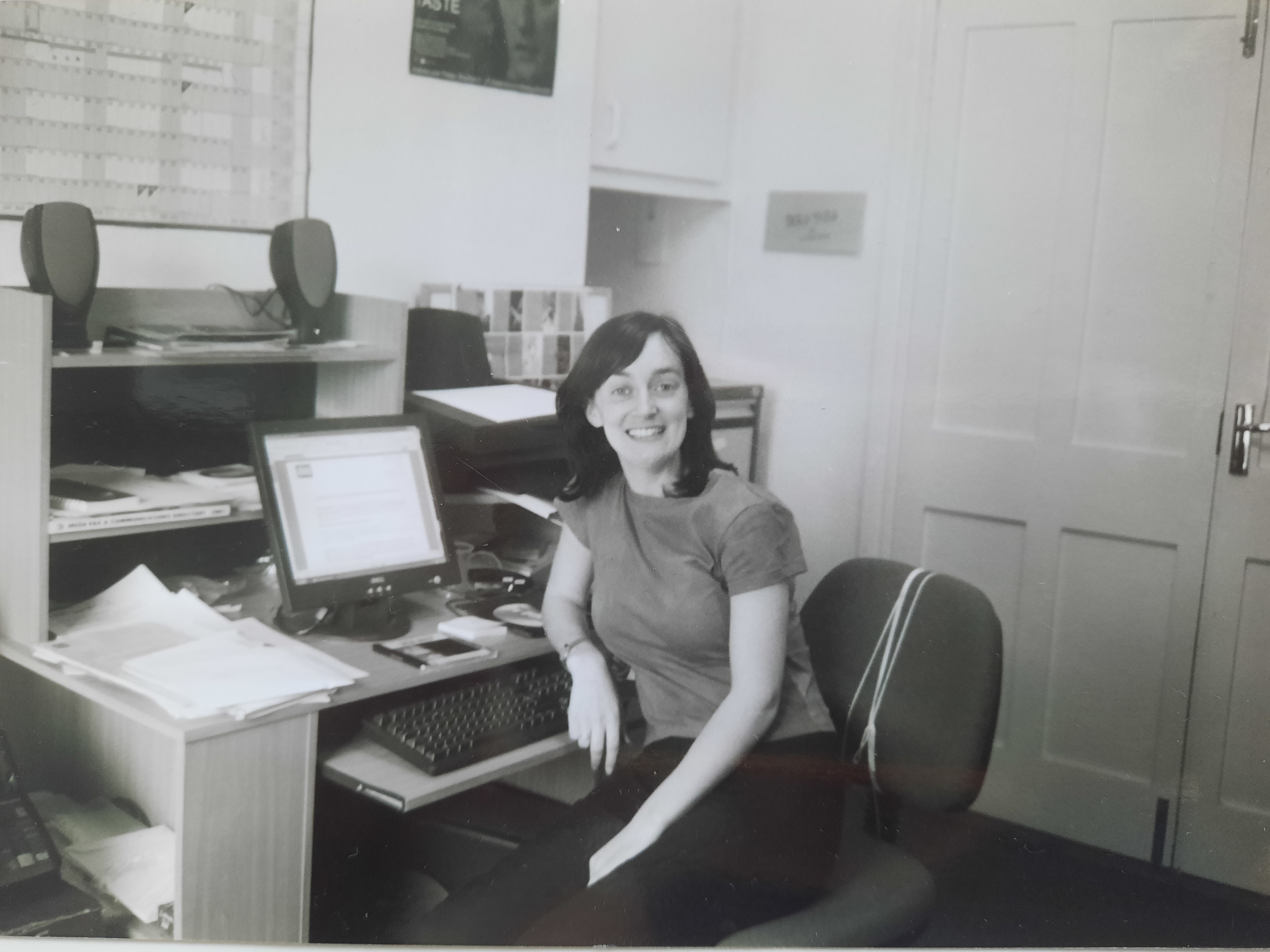
Above is a photo of me from 2003 in the Gúna Nua Theatre Company office in Dame Street. It was taken a few weeks before I left Dublin for good. If I told her the whole story now, I think she would be more than ready to fold up the table once again.  

Why ageing is a good thing for women

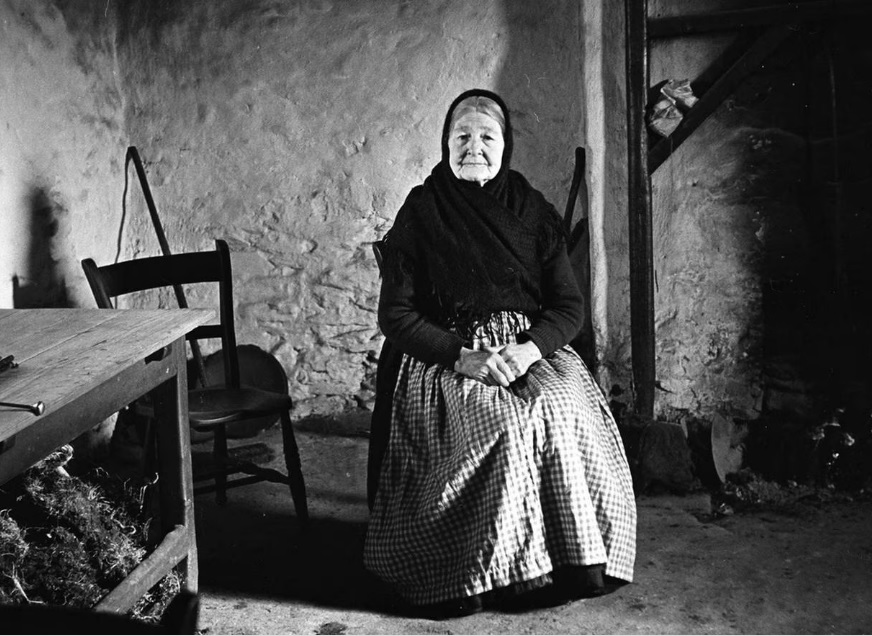
Peig Sayers (1873 – 1958), author, storyteller and iconic figure in Ireland.

Looking older seems to be one of the hardest things for women to accept. Entire industries profit from (and actively encourage) female insecurity, and the work of chaining women to their looks starts young, as early as babyhood. In our beauty-obsessed society, it’s hard to find the key to unlock those chains.

At a social gathering last week, I was part of a discussion about Botox, fillers and plastic surgery. This was a first for me and I sat back and listened at the beginning because there was a lot of new information.

One of the group is a beauty blogger and had just tried Botox for research purposes.  Her message was that creams and supplements will do nothing to stop the hand of time. If you want to tackle wrinkles and sagging skin, you have to go for one of the medical interventions. Several of those present, women in their fifties, were considering doing exactly that.

I think people should feel free to do whatever they want to look better. Whether it’s going to the gym, eating in a healthier way or getting medical procedures done. But if the motivation is fear of ageing or losing attractiveness, I wonder if it’s really worthwhile. Ageing is good, it’s necessary and it should be liberating.

At least that’s how I choose to embrace ageing. I’m 51 years old and I welcome the season of caring less about my appearance. I think trying to look a decade younger at every age is a stressful and futile quest. I want to look well, not young. And how I look will depend on my level of contentment with life, and on my health.

When women post photos of themselves on social media, their friends rush to tell them how beautiful they look. We can’t all be beautiful and certainly not indefinitely. You can look lovely without looking beautiful, and you can look beautiful without looking lovely.

I don’t particularly remember being told I was pretty or beautiful as a girl. This message didn’t really feature, and as a result my looks were not central to my sense of worth, though, like any teenager, I did spend plenty of time looking in the mirror trying to summon beauty. I wasn’t an ugly duckling but I was no cygnet. Qualities in my character or the work I did was praised. Being funny, helping out at home, writing a poem, doing well in school – these were the things that were noticed. The love and approval I received from my parents was what made me secure, not any external measure of my attractiveness.  

In the years when I was working behind the bar as a student, I got compliments and insults about my appearance from punters, and I didn’t take either very much to heart. I would like my daughters to be grounded in the same way.

So what’s good about ageing? Many things, not just your chance to be free of artificial beauty standards. It’s your time to enjoy the good things in life – food, art, friendships, the beauty of others, maybe romance, maybe even grandchildren (in no particular order). It’s about benefiting from the long view, being able to make sense of things, truly appreciating the people in your life, now that you’ve starting to lose them, and helping others who still have a lot to learn. The second half of life, post fertility for women, can also be the time when you finally have the time and confidence to express your own creativity and talents.

Behind the fear of ageing lurks the deepest fear of all, fear of death. We are all meant to die and we don’t know when. But if we get to age first, it’s a blessing, so we should really separate the two fears. An old friend and contemporary of mine died recently. I shared part of my youth with him and the affection I felt for him all those years ago returned intact as I watched his funeral online last week.

So I will continue my ageing process and treat it as a gift from the universe. I don’t know how I’ll feel when old age really hits, but middle age has been good so far, despite the unmistakable traces of time on my face.

But what’s a few wrinkles between friends? There are so many important things to focus on over the next few decades: helping the younger generation to grow up safely, fulfilling my own potential, saying goodbye to the older generation, hoping we can reverse manmade damage to the planet before it’s too late.

What is your own experience of ageing? How do you think your upbringing or life path has influenced how you feel about your looks? I hope you find some encouragement from these ideas, and maybe even find the key to unlock those chains.  

Behind the scenes: the slow business of show business

The first quarter of the year is over and the Irish Festival Fribourg/Freiburg is taking shape. A lot has been accomplished since I last wrote about the festival in October. Even though there is plenty more to do, and it feels as if new tasks are added to the list daily, we are also seeing the first results of the winter’s work.

I’ve attended my fair share of cultural events over the years but only once before actually worked on the organisational side. That was in 2003, the last job I had before I left Ireland for good, when I worked as a producer for Gúna Nua theatre company. I’d forgotten how enjoyable and satisfying it is to make things happen! But, my God, where did that 20 years go?

The most important breakthrough this year was that the Agglomération de Fribourg, the equivalent of the city council, decided to back the festival. Without their support, other potential funders would automatically have said no.

We got the news on March 9th after sending in our 25-page application at the end of November with 13 supporting documents. More supporting documents were requested in January, including a contract with one of the venues. The project was discussed at three meetings before we finally got the good news. A champagne moment. 

Group effort

Having the support of the Irish Embassy, Tourism Ireland, Fribourg Tourism and the Irish Film Institute International helped make our case much stronger. There are still some funding decisions to come in and possibly more applications to send out. In the meantime, we are getting everything else lined up – the programme, the venues, the website, publicity, ticketing, volunteers, insurance, travel … the list goes on.

Now it’s as sure as sure can be: Ireland is coming to Fribourg for the weekend of 6-8 October. Save the date! We’ll be announcing the programme in June, which is suddenly around the corner. Just a note that I’m not using the royal we. I’m joined in the whole enterprise by two brilliant Fribourg women – Julie Hunt and Deirdre Coghlan. Follow the festival Facebook page to hear more about our progress.

Book anniversary

In other news, it’s a year since Voting Day was published by Fairlight Books, and two years since the Swiss edition came out. I’m visiting two Swiss schools in the next few weeks to talk to students who’ve studied the novel and I’ve been invited to a university in Poznań in Poland later this month for the same reason. I’m delighted the story is still making waves, and I love meeting readers of all ages.

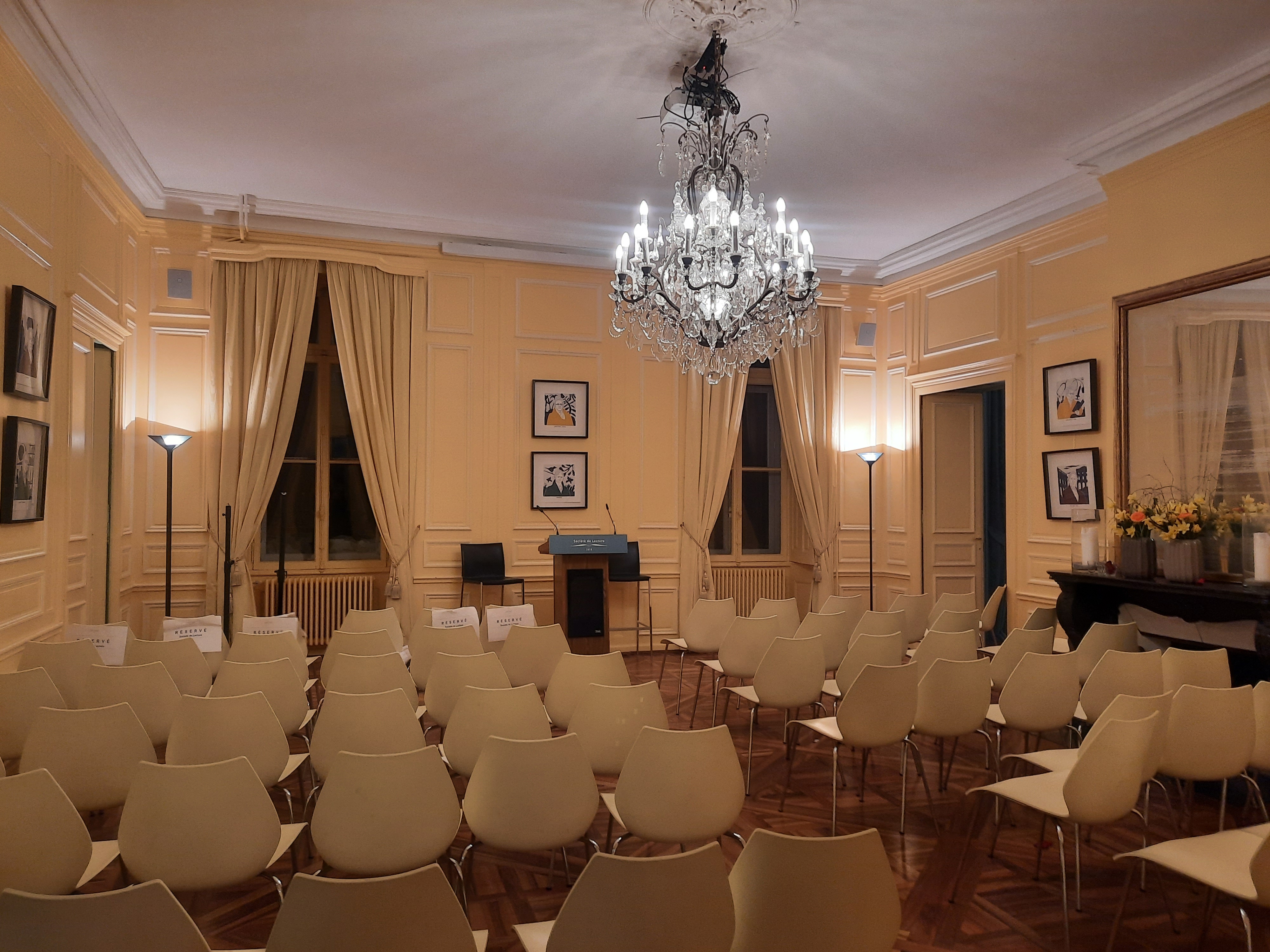
On my own reading pile, I’ve been working my way through the excellent Wyndham-Banerjee series of crime novels, set in Calcutta in the 1920s. I was lucky enough to interview the author Abir Mukherjee at the Société de Lecture in Geneva last week. We were in the beautiful yellow room you see above. I don’t have photos of the event yet.

More reading tips

My standout read of the year so far is Haven by Emma Donoghue, an extraordinary, captivating story set in seventh-century Ireland, featuring three monks on a quest to found a monastery in the most inhospitable place possible – Skellig Michael off the coast of Kerry. It was amazing to be transported back that far in history. Donoghue must be one of the most accomplished writers of historical fiction working today. I can also highly recommend the film adaptation of her 2016 novel, The Wonder.

And there’s a treat in store for fans of Swiss crime fiction with the publication of the second title in the Polizei Bern series by Kim Hays this month. Sons and Brothers centres on the suspicious death of an eminent (but not very likeable) heart surgeon whose body is pulled from the Aare in Bern on a winter’s night. The investigation leads detectives Giuliana Linder and Renzo Donatelli back to the doctor’s childhood home in the Emmenthal region.

Time for me to wrap up and wish the readers of this blog a pleasant Easter break. This is birthday season in our home with three birthdays coming up next week, so my to-do list is taken over by presents, cakes and parties for the next while. A very welcome change.

A year when war came close to home

Lviv, Ukraine – March 2, 2022. Evacuees from eastern Ukraine near the railway station in western Ukrainian city of Lviv.

I did my school-leaving exams in the summer of 1989, what’s known as the Leaving Certificate in Ireland. It was long ago and far away; the world was younger than today etc. Seventeen-year-old me studied like mad in the last couple of months. I always was a crammer.

We felt (and we were repeatedly told) that our whole future depended on how we did in those three weeks of written exams. If you wanted to go to university you had to get enough points overall, counting the six best subjects out of eight. It was intense but you also gained temporary VIP status in the family.

We had to fill in the application form for third level courses in January of exam year. I was good at languages and writing, but clueless about careers. My first choice was a Communications course and my second choice was French and Russian in Trinity College. As it turns out, those two fields have dominated my working life.

Mikhail Gorbachev was the man of the moment. He had been president since 1985 and suddenly everyone knew two new Russian words – glasnost and perestroika. I got into the French and Russian course, and found myself surrounded by enthusiasts for all things Russian. There I made friends for life.

That’s the beauty of higher education, finding other people who tick like you, and diving into the world of your chosen subject. I took a year off between second year and third year, spending the first half working in restaurants in Paris to improve my French and save for Russia. At the beginning of 1992, I was on my way to St. Petersburg for a semester.

The Soviet Union had just ceased to exist, replaced by the Russian Federation and the Commonwealth of Independent States. The Baltic States had achieved their independence, Gorbachev had resigned and Yeltsin was waiting in the wings.

In his resignation speech on Christmas Day 1991, Gorbachev touched on an important point, saying he was “concerned about the fact that the people in this country are ceasing to become citizens of a great power and the consequences may be very difficult for all of us to deal with”.

What he couldn’t foresee was that the culture of lying and repression that the ruling elite were steeped in would be revived to a terrible degree in the twenty-first century under a new self-serving, amoral and extremely dangerous leader.

The time I spent in St. Petersburg was the peak of my love of Russian culture. This memoir essay I read on Irish radio gives a flavour of the excitement.  As students of the city’s state university, we had official student cards and could get tickets for everything in roubles.

We could easily afford long-distance train travel, which we took advantage of, visiting Moscow, the Baltics and Ukraine, all the way down to Odesa. Tickets for museums and the many theatre, ballet and opera productions cost next to nothing.

We were able to get by on ten dollars per week, which converted into increasingly large piles of roubles. Unfortunately, ordinary Russians were suffering economically while their better-placed and more corrupt compatriots were stripping the national assets. Organised crime took off.

I lived in Russia a second time in 1999 and I have spent the ensuing years feeling no desire to return. I have regarded the country with increasing dismay as Putin tightened his stranglehold on Russian life. The worst vainglorious tendencies of Russian people, tendencies often displayed by citizens of former empires, have been pumped up and twisted into something truly nasty, with deadly consequences.

Which brings us to today, and the war in Ukraine. There are decent Russians, who don’t subscribe to Putin’s genocidal project. It takes exceptional critical faculties and exceptional courage to maintain any opposition to such a powerful force inside Russia. I salute those people.

The rest of the population is awash in disinformation and short on options. They have been encouraged to take refuge in a dangerous brand of patriotism, built on grievance and false superiority.  

I can’t express strongly enough how much I abhor what Russia is currently doing to Ukraine. We had a Ukrainian family staying with us for a few months this year. They have lost everything – their home, their school, their friends and family left behind, their business, their peace of mind, all their favourite things, all their plans.

Those losses are multiplied by thousands, millions, and the sad thing is that these refugees are the lucky ones. Countless others have lost their lives, or suffered horrific injuries, terror, torture, rape, bereavements.

In normal life, most of us apologise when we bump into someone, or rush to help when a person trips in the street. How can it be that one group of people is willing to inflict such terrible damage on another group? It is a question that has always been asked about humanity, a question that haunts me as 2022 draws to a close.

The people of Ukraine are foremost in my thoughts this festive season. As part of a communications project this year, I worked with several Ukrainian colleagues, and I have nothing but admiration for their dignity and fortitude. Even in that small circle, they have experienced so much disruption and fear.

The Russians like to talk about the Russian soul and how special it is. A cancer has taken hold of that soul, and there is a long and painful road to travel before it can be cured. Repentance will be part of the cure, though that seems very far off right now.

I was originally going to write a post about the novels I’ve read this year. One of them is The Orphanage by Serhiy Zhadan. It’s a gritty portrayal of Ukrainian citizens caught up in conflict, a difficult read but worth your time if you want to understand better. A gentler but equally affecting story is Grey Bees by my favourite Ukrainian author Andrey Kurkov.     

Wishing the readers of this blog a peaceful and cheerful Christmas break. I hope that we will have happier things to report at the end of next year. Take care.

(Photo credit: see link to the Ukraine-based content platform Depositphotos ‘Say no to war’)

Three books that offer an antidote to apathy

No books were harmed in the taking of this photograph

Do you find it hard to read about the climate crisis? When I really take it in, I feel overwhelmed. I support word for word what the campaigners say yet I make no meaningful contribution of my own. A version of the bystander effect.  

I’m currently reading Dara McAnulty’s Diary of a Young Naturalist, a “miraculous memoir” that describes the 14-year-old writer’s fascination with the natural world and his urgent desire to protect it. I feel the same sorrow and worry, though not as nobly or intensely as McAnulty does.

I would support the most radical systemic changes but the path to those changes seems blocked. In the face of that failure, making small individual changes seems futile. I’m willing to do anything but I end up doing nothing.

Ece Temelkuran describes a telling moment in the opening of her book Together: A Manifesto Against the Heartless World. She’s at her local recycling bins in Zagreb, a few weeks into lockdown and just a week after the 2020 earthquake. The world has gone to hell and she and a stranger, in their crooked masks and messed-up hair, start laughing helplessly when they make eye contact. A dust cloud still hangs over the city, everything is in chaos, and “here we are at the start of the twenty-first century, looking like the garbage of human history”.

On Time and Water

Up in Iceland, Andri Snær Magnason is applying his sharp mind and passion to pushing back against the climate crisis with words. Magnason’s book, On Time and Water was a national bestseller in Iceland in 2019 and it’s been translated into about 30 languages. The words from Iceland have travelled far.

Magnason campaigned against the destruction of the Icelandic highlands. He ran for president of the country in 2016 on a platform of environmental issues. What comes across strongly in his book is that he cares deeply about his family – past, present and future. I interviewed Magnason at Le Livre sur les Quais festival this year in Morges.

The Icelandic author and filmmaker uses a conversation with his daughter as an illustration of the passage of time in the world. His grandmother’s long life (94) has overlapped with his young daughter’s life, and she might know and love a child in her family who will still be alive in 2186.

“Imagine that. Two hundred and sixty-two years. That’s the length of time you connect across. You’ll know the people who span this time. Your time is the time of the people you know and love, the time that moulds you.”

This exercise is meant to make the vague future closer and more real. Magnason rightly understands the impossibility of writing about climate change because it’s too big to comprehend. The phrase climate change has become white noise. “The issue’s enormity absorbs all the meaning.”

He writes about the subject by going “past it, to the side, below it, into the past and the future, to be personal but also scientific and to use mythological language.”

The points made in On Time and Water spark uncomfortable reflections. “Anyone who understands what’s at stake would not prioritise anything else. We have the antithesis of mass hysteria; we have mass apathy.”

And then Magnason goes on to explain what is a stake, and it’s frightening. But he still believes that when our backs are against the wall, which they very nearly are, humans will work together. The breakthrough just announced in nuclear fusion energy offers a glimmer of hope.

The right direction

The book is rich in storytelling but also interwoven with facts about what Magnason calls “humanity’s contemporary bomb of consumption and waste”.

Half of the CO2 in the atmosphere is due to emissions since 1990. China used more cement in each of the three years after 2004 than the US used throughout the whole twentieth century. Ocean acidification is “more frightening than words can say”.

Throughout the book, Magnason reminds us that “business interests and human comfort have been seen as more important than the ocean, the atmosphere and all the world’s grandchildren for all time.”

But thankfully, he does counter that with optimism: “The world is not just an out-of-control and meaningless flood, always in flux; it can be influenced, can be steered in the right direction.”

Magnason writes about people who have made a difference. He makes the argument that we need to rethink everything: nutrition, technology, transport, manufacturing and consumerism. Yes please!

If my own weak actions yet strong feelings are any guide, there is a huge untapped willingness to change and to sacrifice. And I hope that this positive side of humanity will be harnessed before it’s too late. We can be useful and we can make a difference.

I’ll be writing one more post this year about some of the best novels I’ve read in 2022. Thank you for continuing to follow this blog and to support my writing. Leaving you for now with a picture of my local forest in the snow. Happy Christmas!

Irish Festival coming to Fribourg/Freiburg in 2023

Fribourg aka Freiburg is one of the most charming places in Switzerland. A university town set in beautiful, rolling countryside, it’s 20 minutes from Bern and equidistant from the three biggest cities – Geneva, Zurich and Basel. It’s also an overlapping point where the country’s two main language groups meet.

What a perfect place to hold a festival of Irish culture, I hear you say. That’s what I thought! The Irish Festival Fribourg / Freiburg is in the calendar for October 2023. It’s going to be a celebration of Irish literature, cinema, theatre and music. I hope it will be enjoyed by the people of Fribourg and by visitors from far and wide.

The inspiration for the festival can be traced back to my visit to Listowel Writers’ Week in Co. Kerry in June. I saw that the organisers had achieved something really special, bringing the whole town to life and attracting the great and the good to a place that – I hope they don’t mind me saying – is relatively small and off the beaten track.

I’ve been similarly impressed by Le livre sur les quais festival in Morges, which I’ve attended every year since 2017. Occasions like this are precious to the artists and audiences and to the community. I can’t think of a better way to celebrate my 20 years of life as an Irish person in the town of Fribourg, than by building cultural ties between my two homes.

I will keep you updated on the festival as it takes shape. Some partners have already come on board, details to be announced. The first volunteers have begun working on the festival and we should be able to reveal the logo and unique name soon. It’s going to take a lot of work and we may have ups and downs, but, a year from today, the weekend festival should be in full swing.  

Will you be there?

All kinds of everything from TEDx to theatre

Geneva Graduate Institute in March 2022

One of the challenges of working as a freelance writer is that you constantly have to renew and redirect your career. It does not happen by itself. At the beginning of this year, I set myself the goal of writing more journalism because 2021 had been a bit of a fallow year for journalism after taking a detour into science writing and communications for a while.

I also wanted to write another book in 2022, and I put together a proposal for a Swiss true crime book. In hindsight, I’m glad that project didn’t work out because the crimes were gruesome and I think writing about them would have taken its toll.

If I do manage to produce the bones of a book this year – and time is running out – it’s more likely to be fiction, as I have something percolating in the back of my mind and I’m waiting for news on a related funding application, coming next month. Fingers crossed!

One really positive development was that I completed my first literary translation, a long-standing goal. I had the pleasure of translating a play by Joëlle Richard from French to English. I have translated non-fiction books in the past but this was a different kind of challenge. Very rewarding.

The play Mångata (a Swedish word for the road-like reflection of the moon on the water) tells the story of a Venetian woman who falls in love with a mermaid. It’s a bittersweet contemporary fairy tale about love, lockdown, isolation, self-hatred, gender fluidity, tolerance, female desire and empowerment. It packs a punch, and will be performed in Fribourg in the original French in September.

Opinion writing

On the journalism front, I have become a regular contributor to The Local Switzerland and I’d like to share some of my opinion pieces here in case you might be interested. If you’re based in Switzerland, it would be worth subscribing to the website which produces extensive coverage of Swiss news plus a lot of material that’s helpful to Swiss residents.

It’s also possible to read a couple of articles to get a taste without hitting the paywall. Some recent articles of mine include pieces about the climate crisis, food security, abortion, the European Union and Ukraine. The picture below is the river I mention in the climate story.

I was also thrilled to be able to write about Voting Day in the Irish Times around the time of publication. I find it interesting and disappointing that although Irish women had the vote 50 years before Swiss women, it hardly did them any good. Cold climate for Swiss and Irish women with or without the vote – The Irish Times

TEDx

An expected opportunity came along in March, when I was invited to give a TEDx talk by students at the Geneva Graduate Institute. My topic was the lack of voting rights for foreigners and TED chose to feature the talk on their website, which meant it was only released online two weeks ago. Check it out! (If the embed doesn’t work, you can click on the hyperlink in the previous sentence.)

To round off this writing news update, a reminder that Le Livre sur les Quais festival is taking place next month in Morges. I’ll be interviewing four writers in two events this year. The guest country of honour this year is Iceland so it’s a wonderful opportunity to discover Icelandic writers. The English programme is not up on the website yet; will keep you posted.

Enjoy the rest of the summer, preferably in the shade!

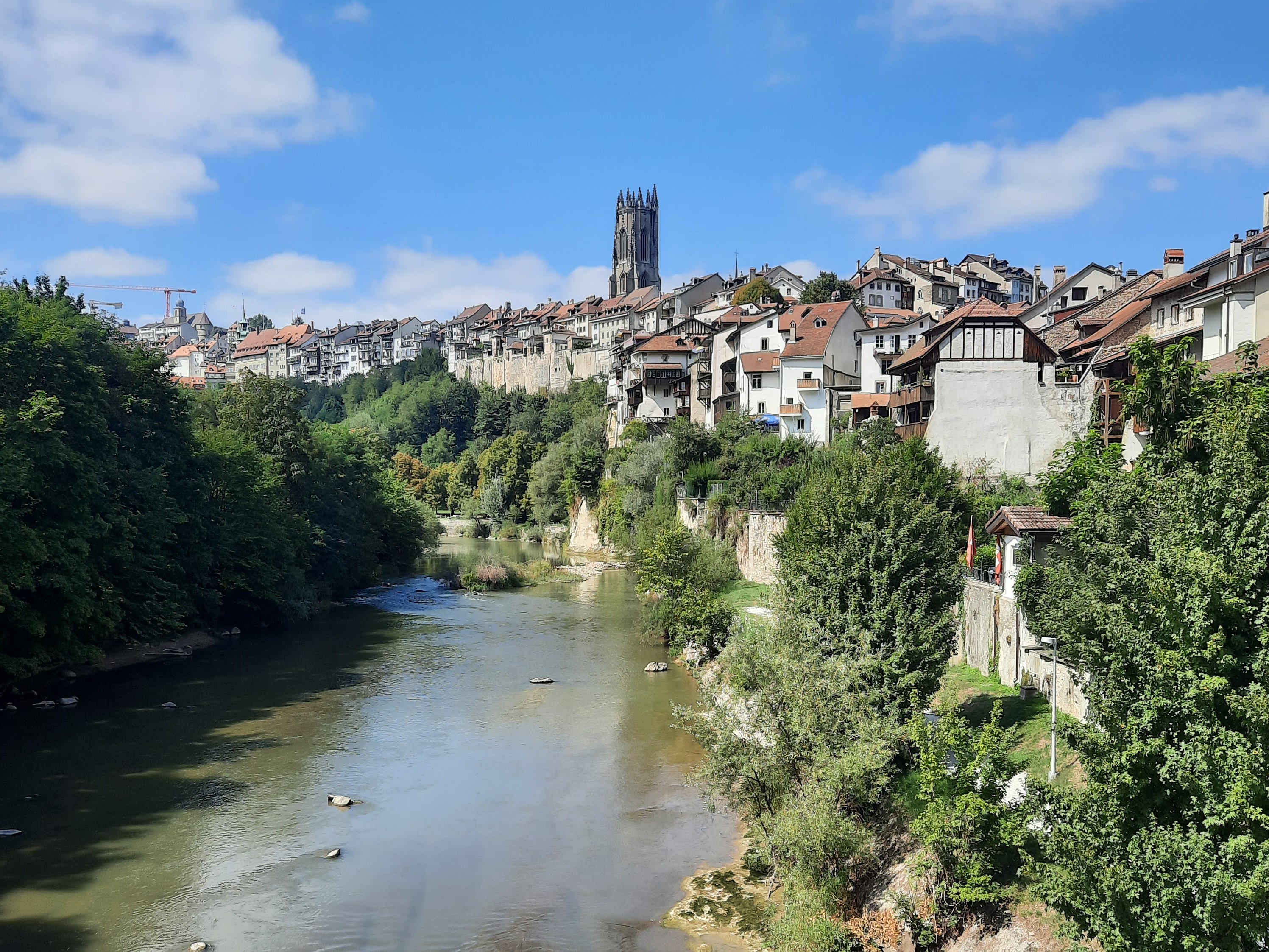
The River Gérine in Marly

Introducing Kim Hays, new author of Swiss crime fiction

Kim Hays at the launch of Pesticide in Bern (photo credit: Bettina Vollenweider Stucker)

There are lots of reasons why I would like to recommend the work of Swiss-American author Kim Hays. First, she writes great crime fiction, and if you like her debut novel Pesticide, there are more to follow soon in the Linder & Donatelli series. Second, her authentic, clever and gripping police procedurals are set in Bern, a city I know well. Third, she has served her time in the writing trenches and is now enjoying well-earned success. And, finally, she is my friend.

Kim’s heroine in the series is homicide detective Giuliana Linder, ably assisted by her younger colleague Renzo Donatelli. Both characters are sympathetic and have depth and realistic married lives. They grapple with the moral questions thrown up by police work, and the little, or not so little, complication of being attracted to each other. I particularly like Urs, the character of Giuliana’s husband, who is a freelance journalist, working all hours and keeping the home fires burning. Nice to come across a male character in this role.

Swiss noir

The murders are brutal and gruesome as murders inevitably are but the violence is not the focus, nor is it there in any way to titillate – something that puts me off a lot of crime fiction, especially with female victims and sadistic killers. Kim writes the kinds of murders that could happen to people you know, involving murderers you might meet in the corner shop or a Dorffest (village festival).  

Kim has a flair for dramatizing the investigation in a really interesting and human way, building momentum, unravelling all the knots, as her heroes doggedly search for the truth, and hopefully justice.

The suspense-filled stories take place in a Switzerland I recognise, an ordinary, gritty, diverse, and complicated place with secrets beneath the surface. The settings are pleasingly far from the clichés of bankers and Alps.

Double murder

Pesticide. No flowers were harmed in the taking of this picture.

Here’s what you need to know about the opening action of Pesticide …

When a rave on a hot summer night in Bern erupts into violent riots, a young man is found the next morning bludgeoned to death with a policeman’s club. Giuliana Linder is assigned to the case. That same day, an elderly organic farmer turns up dead and drenched with pesticide. An unexpected discovery ties the two victims together.  

If you want to order the book, you can find it in the usual online places. For Swiss deliveries I recommend Books Books Books in Lausanne or Stauffacher / Orell Füssli. The book is in the system so you should be able to order it anywhere in the US or Switzerland. Published by Seventh Street Books and distributed by Simon & Schuster.

To find out more about Kim Hays, check out her website and blog or read this interview on the Cosy Dragon website. I’ve known Kim since 2016 when I sat beside her at a writing workshop in the Geneva Writers’ Group and we got on like a house on fire.

Summer reads

A little more about my summer reads, which also fall into the category of liking the author before discovering their work. I am just about to start Mother’s Boy by Patrick Gale about the life of the enigmatic British WW2 poet Charles Causley. Before that I read the wonderful Edith by Martina Devlin about the life of Edith Somerville around the time of the Irish War of Independence. I keep finding treasures in this booming genre of historical biofiction.

I have another book on the go about real-life conflict but I’m working through it slowly. It’s much harder to read because it’s set in (recent) present-day Ukraine and it brings the reader straight into the horror of what Russia has perpetrated there. The Orphanage by Serhiy Zhadan is visceral, depressing, eye-opening, staggering. If you think that’s too much to take, Andrey Kurkov’s Grey Bees is a gentler version of blighted lives in the occupied zones, more sweetly devastating but still hard hitting.

Finally, Voting Day was mentioned on this list of summer reads put together by Isabel Costello on her literarysofa blog, which I’ve been following for years. She found my novella “very moving and beautifully written”. I still can’t believe it when I get a reaction like this. Feeling very grateful.

You’re bound to find some reading inspiration on the list. Lest I forget, Isabel Costello’s highly enjoyable new novel Scent is the quintessential summer read, set between Provence and Paris. A heady summer affair from her youth comes to the surface for Clementine in a disturbing way just at the moment when her own marriage seems to be grinding to a painful, empty halt. Clementine is a successful perfumer with her own shop but the time has come to confront the façades in her life.

Happy summer reading, folks! Do report back if you pick up any of these titles.