You’re looking fierce well altogether

2013-08-25 10.53.27

This phrase, which I overheard on the street today in Dun Laoghaire, adds great flourish and emphasis to the standard ‘you’re looking very well’. You can also be fierce upset or fierce busy in Ireland. In my first week back I am feeling fierce well altogether myself.

Maybe it’s the street where we are staying, ten minutes’ walk from my childhood home and from the sea.

Or the morning we spent on the sea shore, climbing the rocks and looking for crabs.

Being there for my little nephew’s birthday.

My membership card for the Irish Writers’ Centre arriving in the post.

Bumping into old friends at the Sunday market in the park.

Sitting out in the back garden with my mother and knowing that for a change we have time on our side.

A tall order for Ireland

Sandcove beckons
Sandcove beckons

Is there any way the next four months in Ireland can match my ridiculously great expectations? How many gallons of tea, Jamaica ginger cakes, meaningful conversations and seafront walks will it take to satisfy me?

Small recap: After ten years in Switzerland I have taken some time off to return to Dublin to write, spend time with friends and family and give my children a chance to be more than just visitors to Ireland.

I am finally going to connect to the everyday rhythm of Irish life again, without the pressured merry-go-round of arrangements and catching up that my shorter visits home have become. At least that’s the hope.

More than one person has warned me that what I am looking for cannot be found. They perceive me as longing for le temps perdu – the way things used to be. Could they be right? I do know it’s not the same country I left ten years ago and that time and circumstances have changed us all but do I really accept that?

So what is it I am looking for? There are concrete things like my mother’s Sunday lunch, family birthdays, a dip in the sea at Sandycove. On the cultural side I’m looking forward to my first book festival in Dun Laoghaire, an evening or two at the theatre, the writing course I’ll be attending at the Irish Writers’ Centre. My children will come home from school, happy I hope, with a few phrases of Irish and a stronger sense of their other identity.

But it is the people I have missed the most. Close friends and family in whose treasured company I passed the first thirty years of my life. People I’ve only managed to have snatched moments with for too long, not only because of the distance but because of the demands of a growing family. A reservoir of unshared stories and experiences has built up behind the dam. It’s in these relationships that the greatest potential disappointment or reward of the trip lies.

Fellow blogger Karen O’Reilly returned to Ireland with her family earlier this month for good after 11 years in France.

http://getrealfrance.blogspot.fr/2013/08/taking-leap-moving-back-to-ireland.html

A lot of the reasons she gave for her decision echo my own but in my case the move is temporary. I hope the time in Ireland will soothe the homesickness I feel and help me commit more fully to my future in Switzerland. Whatever happens I think the regret of not following through on this idea would definitely do more harm in the long run. With just over two weeks to go before we leave Switzerland, any last minute advice or warnings are welcome!

Green light for return to Ireland

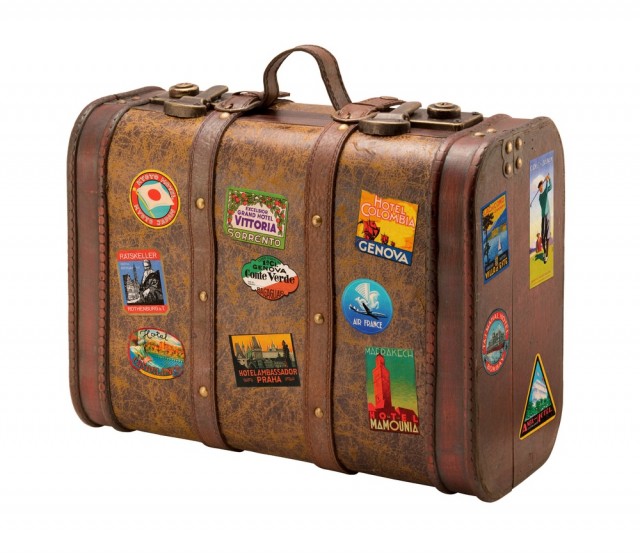
Old-Suitcase-with-Travel-Stickers2-640x553

In the author description of Douglas Kennedy’s latest book Five Days, we are told that the writer divides his time between London, Paris, Berlin, Maine and Montreal. Is he serious? You have to wonder what kind of lifestyle that involves. A lot of fridges to clear and restock.

Most of us are confined to one geographical base at a time but that doesn’t mean we don’t dream of other possibilities. Last year I met an Eritrean refugee who risked his life crossing the Sahara and the Mediterranean, mournfully reconciled to living in Switzerland, while longing to go back home.

A lucky few have holiday homes and can shuttle between two different lifestyles and even climates. Wealthy Northern Europeans love to buy up properties in Spain, France and Italy. You can only admire their good sense.

This year I will be ‘dividing my time’ between Switzerland and Ireland, leaving Switzerland in August, ten years to the day since I arrived here to live, and staying on in Dublin until Christmas. The germ for this idea came around a year ago and the trip has come together thanks to a little serendipity and perseverance.

Last summer I had a conversation with my sister about my wish to live in Ireland again someday. Working out when my youngest child would be independent, I reckoned I could possibly arrange something around the age of sixty. This reflection shocked me to the core and started me thinking.

A short time before that on a flight from Dublin to Geneva I met an Irish woman who had lived in France for 20 years. She was married to a Frenchman and they had four daughters together. She told me she had twice moved with the children to Ireland for a school year, staying in her old family home. She was able to keep up her small travel business from Dublin and her husband, a teacher, used all his holiday time to visit them.

Moving forward to the end of last summer, one of my colleagues went to Florence for six weeks to do an Italian course, thanks to a creativity fund in work. I found out more about the fund that supports employees wishing to pursue various projects.

Now it just so happened that I had a very active creative project in progress – writing my first novel. I looked at courses in the Irish Writers’ Centre and found one that would be ideal for me. Everything was telling me to seize the moment.

My funding application was finally approved last week and I went ahead and booked the flights. What I have gained is the most precious thing of all – time. Time to write, time to spend with friends and family, time for my children to get to know their origins and time off from being a foreigner.

Wish me luck!

Post visit stress disorder

One thing my family does quite well is emigrate but the experience has changed fundamentally through the generations. When my grandmother’s siblings emigrated to the US in the 1920s and 1930s, they knew they would only cross the Atlantic once. Visits home were unheard of for most long-distance emigrants of that era. When my uncles emigrated to Britain in the 1960s and 1970s, the trip back to Ireland was still expensive and they mostly came back once a year – until they found English wives and then less often. Even my older cousins who emigrated to the US and London in the 1980s baulked at the price of phone calls and visits were infrequent.

I can only imagine to what degree they suffered homesickness and loneliness in their new homes. Ultimately they were forced to let go. For better or for worse they built new lives for themselves.

Mine has been a very different type of emigration. Ten years ago I left Ireland to come and live in Switzerland and now new family ties keep me here. The trouble is I haven’t left Ireland behind, I can’t and I don’t want to. All the time that I’m forging a new life here for myself, I’m carrying around an ailing version of my old one. Through email, phone calls, skype and texts and regular visits I try to keep up contact – but it is an imperfect and fractured kind of contact. I try to stay close but people are having crises I know nothing about and I am having a crisis I never get to explain.

The truth is I come back from visits to Ireland like a bag of cats, suffering from a kind of post visit stress disorder. Instead of being happy that I got to see one aunt, a friend who lost his mother at Christmas, my niece and nephews, my mother and sisters, and a college friend back from England (all in three days!), I am tormented by guilt and regret over the other people I didn’t get to see or speak to, some of whom I didn’t even tell I was coming (more guilt). The long visits are even worse because we all have the mistaken impression two weeks is a long time. Arrangements add up and people say “sure we’ll see you again before you go” and next thing I know I’m squeezing in appointments like a greedy doctor and I’m using my mother’s house like a hotel with free babysitting.

I like to imagine that one day, when my working life is through and my children are established in their own lives, I will end up in an old folks’ home with my sisters, close cousins and friends. We will hang out on the porch, enjoying warm Irish summer evenings (it is a fantasy) and we will talk, talk talk. We will finally get to catch up on all those missing years and belatedly support each other through every past triumph and disaster and all the humdrum days in between. If I find myself feeling nostalgic about post visit stress disorder – not impossible, I can develop nostalgia for almost anything – all I’ll have to do is book a flight back to Switzerland.

King and queen of fifth class

Competition is healthy, right? The will to win pushes human beings to excel and for those with the right attributes and drive, the reward is the sweet taste of success. But too much emphasis on competition brings out its destructive force. It can distort and poison relationships, even society.

Here is an example of what a regime of competition did to a class of 10 and 11 year olds in Dublin in the 1980s. Our teacher was an old-fashioned disciplinarian who clearly missed the days of corporal punishment. He used to stalk the classroom with a metre stick and bring it crashing down on the desks of chattering children, shouting “watch out” just before he made contact.

The teacher had what Catholics call a “special devotion” to St. Teresa of Avila. Beware of anyone with a special devotion. We heard stories about her wonderful qualities – purity, humility, and obedience – ad nauseum. Enough already we would have shouted only that particular Americanism hadn’t yet reached Irish shores (nor had insubordination in the classroom).

Our school master imposed a system of continuous tests on us. Not a day went by without tests. On the wall he had meticulously put together a detailed chart where he recorded every pupil’s name and score in every single test. On a separate sheet there was a ranking of the running totals. At a glance we could see the order of achievement for all 28 children. There was no escaping it. So what did we do in this oppressive atmosphere? We became very competitive. More than that, we developed our own feudal society based on our rankings.

At the top of the pecking order came the King and Queen – the two brightest children in the class who alternated first and second place between them. The next half-dozen kids on the list were the Knights and their job was to defend the King and Queen whenever the teacher left the room and we all slipped into open animosity, expressed through ruler fights. The rest of the children were Commoners. When the teacher unwittingly seated a Commoner in the Knights’ section, he or she became a slave and had to fetch milk at break time, sharpen pencils, defend the royals and so on. Interestingly all the roles disappeared when we went out into the yard to play at lunchtime.

But inside the classroom, we stuck rigidly to the social order we had spontaneously created. Not quite Lord of the Flies but King and Queen of Fifth Class.