Sarah Moore Fitzgerald and Clare O’Dea at The Gutter Bookshop launch (credit: Ger Holland Photography)
The last few weeks have been all about sending Before the Leaves Fall out into the world. I’ve been touched by the goodwill that surrounded the three events in Bern, Dublin and Geneva. I hope you can get a sense of that atmosphere in these photos.
In Stauffacher in Bern, the Irish Ambassador Aoife McGarry gave a lovely speech before the Swiss launch on October 9th. The Embassy is extremely supportive of the Irish community in Switzerland, which I’ve seen flourish over the past decade especially, with more cultural, sports and business activities than ever.
The Irish Ambassador to Switzerland Aoife McGarry at Stauffacher Bookshop with Clare O’Dea
I got a very warm welcome from Marta in The Gutter Bookshop in Temple Bar, Dublin for the Irish launch on October 23rd, and was delighted to have the older generation represented in the audience by my mother, aunt, godfather and my teacher from first class! The O’Dea clan was out in force.
The evening was made all the more special by the presence of Louise Boland and Laura Shanahan of Fairlight Books who flew over from England for the occasion. Photographer Ger Holland did a great job of capturing the best moments. I’ll add a few more of those pics at the end of this post for posterity.
Louise Boland, Clare O’Dea and Laura Shanahan (credit: Ger Holland Photography)
Next up was Payot Rive Gauche in Geneva on November 6th. A huge thank you to Marianna Baudouin who suggested and hosted the event, and to everyone who turned up to hear more about the novel. On the morning of the event, I did my first radio interview about the book on World Radio Switzerland. You can listen back here.
With Marianna Baudouin of Payot Rive Gauche
There have been some great reviews of the novel on social media and I’m hoping for a review to appear in The Irish Times soon. Fingers crossed! Meanwhile, I enjoyed doing this Q&A for Books Ireland on books that have meant something to me over the years.
I’m not sure where Before the Leaves Fall will take me next but I look forward to meeting more readers and booksellers. Don’t forget to add the book to your Christmas shopping list. Buy the book in Ireland from The Gutter Bookshop, in Switzerland from Stauffacher or Payot. Or anywhere you like!
Before the Leaves Fall Dublin launch (credit: Ger Holland Photography)Before the Leaves Fall launch (credit: Ger Holland Photography)Before the Leaves Fall launch (credit: Ger Holland Photography)
In just a few days, Before the Leaves Fall will be available in Switzerland. Elsewhere, the launch date is October 23rd. Now that the book is so close to being in the hands of readers, I feel I can tell you more about it.
The first interview about the novel was published by newinzurich.com recently. I’m going to borrow a couple of answers from that interview to tell you some of the whys and wherefores of this standalone story, which is linked to my first novel, Voting Day.
First of all, you should know that this is a story about a person who has decided to end her life with the help of an assisted dying organisation. Even though it is a hopeful story about human connection, healing and self-determination, I do think that it might be upsetting for anyone currently too close to bereavement.
So why would I be drawn to such a sombre topic, and assisted dying in particular? Well, it might be partly to do with being middle-aged and seeing the different, often difficult but sometimes beautiful ways life comes to an end. Or as I said in the newinzurich interview:
“Assisted suicide is always in the air in Switzerland, whether it’s peripherally in news stories or through the direct experience of people you know. I’m interested in how it becomes a path for some but not for others, who may even be suffering more.”
Introducing Ruedi and Margrit
One of the conversations my two protagonists have is about what makes life worth living, or not. They are past any pretence and can speak honestly. So, who are these characters? Ruedi is a Swiss widower in his seventies living in Bern. He worked for the Swiss Federal Railways until he had to retire early to look after his sick wife. As a child, he spent time in care and he still feels shame about his origins. Ruedi is freshly trained in the role of facilitator for Depart, a fictional assisted dying organisation, and Margrit is his first client.
“Margrit is in her late eighties and has become quite contrary in old age. She has a strained relationship with her two sons and has lived a life of material comfort but ultimately failed to find meaning or satisfaction in her lot as a traditional wife and mother. When the two characters realise their paths have crossed before, it sparks some new self-discovery for both of them.”
If you’re familiar with Voting Day, set in 1959 on the day Swiss men voted ‘no’ to granting women the vote, you will recognise these names. Ruedi was a foster child in that book and Margrit, a young woman struggling to maintain her independence, was kind to him.
There are a lot of authors who revisit characters from one book to the next. Jonathan Coe, whom I had the pleasure of interviewing this week in Geneva, has done it a lot, as has another of my favourite authors Elizabeth Strout. Donal Ryan recently released Heart, be at Peace, “a heartfelt, lyrical novel that can be read independently, or as a companion to his first book The Spinning Heart“. I like that way of phrasing the connection, and might borrow it, if Penguin Random House doesn’t mind.
A tale of two launches
For the Swiss contingent, I hope to see some of you at the launch next Thursday, October 9th at 8pm in Stauffacher Bookshop in Bern. There’s a link to sign up for the event (Anmeldung) but you can also turn up on the night and buy a ticket at the door (CHF 15). I’ll be in conversation with Helen Stubbs Pugin and the discussion, followed by signing and apéro, will be in English.
Irish friends, readers and country(wo)men are warmly invited to the Dublin launch at The Gutter Bookshop, Temple Bar on Thursday, October 23rd at 6.30pm. Sarah Moore Fitzgerald will be hosting that gathering and I can promise Swiss chocolate, just as we had for the launch of The Naked Swiss in the same venue in 2016.
I’m very grateful that my editor from Fairlight Books, Laura Shanahan, will be joining us for the Dublin launch. And the Irish Ambassador Aoife McGarry will say a few words of welcome at the Swiss launch.
If you can’t make it to either of those countries on either of those dates, you can really help the visibility of Before the Leaves Fall by ordering it already at your local bookshop or online, and by spreading the word. Part of me is nervous about what reception this book will have but I wouldn’t be taking the leap if I didn’t trust that some readers will find truth in it and new things to think about.
Two high points of my childhood summers were berry picking and wild swimming. Those two free pleasures are still part of my life, and I managed to do both today – pick blackberries in the forest and go for a dip in my local river. With a good book thrown in, the perfect Sunday.
I’ve read more than usual this summer, helped by the fact that I have access to an endless supply of books at my day job working for a book distributor. I’ve just finished The Paris Express by Emma Donoghue, a real page-turner about a train hurtling towards disaster in 1895.
The novel is based on the true story of a derailment and, to create her characters, Emma Donoghue used the biographies of real people who were either on the train or could well have been. She says she drew on more than 40 articles about the accident in 26 publications. To find out more about the individual lives, especially uncelebrated ones, she “ransacked the wonderful hoard of French bureaucracy filae.com”. The result of all this – apart from a gripping, richly-imagined story – is that you find out what became of the main characters in later life.
Recent favourite reads include Tell Me What I Am by Una Mannion, Shy Creatures by Clare Chambers, Love is Blind by William Boyd, Audition by Katie Kitamura and the unforgettable Clear by Carys Davies.
Meanwhile preparations for the publication of my new novel Before the Leaves Fall are continuing and it’s time to save the date(s)! The Swiss launch of the book will take place in Stauffacher Bookshop in Bern on Thursday, October 9th at 8pm. The event is being generously sponsored by the Irish Embassy. Full details at this link.
Two weeks later in Dublin, the Gutter Bookshop in Cow’s Lane will host the Irish launch on Thursday, October 23rd, time tbc. All are welcome. I’m extremely grateful to both bookshops, who have a great record in supporting authors.
In between, I’ll be at the Frankfurt Book Fair for work and will hopefully steal a moment to present my book to Literature Ireland, which publishes a catalogue of translation-worthy new Irish fiction titles. I’d love to see the book translated into the Swiss languages as Voting Day was.
Before all that, September has some literary treats in store. I’ll be attending the annual Le livre sur les quais festival in Morges on the weekend of September 5th-7th. The full English programme has been published and it includes Natasha Brown, Alan Hollinghurst, Caroline Bishop, Mark O’Connell, Claire Massud and more. I’m very pleased to be interviewing Padraig Rooney about his biography of Annemarie Schwarzenbach, one of the most interesting Swiss women of the 20th century. That event is at 1pm on Saturday 6th in Hotel La Couronne.
At the end of September, the wonderful Jonathan Coe is coming to Geneva as a guest of the Société de Lecture. I will be interviewing him in the elegant salon jaune on Monday, September 29th. There’s lots to talk about in his latest cleverly-plotted, satirical, dark-yet-funny novel, The Proof of My Innocence.
With all that hopping around, I hope I get to see some of you over the next couple of months. For now, let’s enjoy this summer feeling and any good books we find along the way.
One of the milestones of publishing a book is the moment when the cover design is revealed. I’m delighted to share the cover of Before the Leaves Fall with you today, along with the first endorsements the novel has received from authors Liz Nugent, Annie Lyons, Anne Griffin and Martina Devlin.
These amazing authors all gave their support unstintingly and I appreciate their generosity hugely. So here are the quotes, which I hope will whet your appetite for October.
‘This is a beautifully written study of Ruedi and Margrit, loosely connected by their past, bonding over a life changing decision causing both parties to reflect on their lives and relationships without sentimentality. The short length of the novel lends itself perfectly to the life expectancy of Margrit. Profoundly moving, I loved this book.’ — Liz Nugent, author of Strange Sally Diamond
‘A beautifully written story of unlikely friendship and the choices we face as we reach the end of our lives. Profound, poignant and refreshingly honest, this is very much a novel for our times.’ — Annie Lyons, author of The Brilliant Life of Eudora Honeysette
Before The Leaves Fall once again shows O’Dea as a competent writer, unafraid to examine the relevant and vital issues of ordinary lives in Switzerland. The power of self-determination shines through in this touching read.’ —Anne Griffin, author of The Island of Longing
‘A poignant account of the lost boy trapped inside an old man, and his chance reconnection with a woman who touched his life when hers is almost played out. Told with compassion, wisdom and insight, it considers how death can offer a new perspective on life. It stayed with me long after I reached the end.’ — Martina Devlin, author of The House Where It Happened and Charlotte.
This evening I sent off my feedback on the proofreader’s changes, which basically involved me agreeing with everything she marked up, bowing to her superior knowledge about hyphenation and the difference between ‘on to’ and ‘onto’. The next time I see the manuscript will be between the covers of a printed book! If you’re stuck for reading material in the meantime, have a look at the websites of the four talented writers above and take your pick.
I can’t wait for October. But I also want to enjoy this time before, when I can dream big about the book, hoping that it gets widely read and positively received, and that people understand – as Liz, Annie, Anne and Martina have done – that it comes from a good place.
At last I can share the good news that my second novel will be published in October by Fairlight Books. Before the Leaves Fall is set in present-day Switzerland and tells the story of Margrit and Ruedi who have come together for the most important of reasons.
Here’s the text from the back cover:
“Seeking a new purpose in life, Swiss widower Ruedi signs up to work with Depart, an assisted dying organisation. His role is to spend time with those who have sought out Depart’s services, acting as a guide and companion in their final weeks.
Margrit, his crotchety first client, wants only to get on with things. Marking time in a care home, with poor health weighing down on her, she has decided it’s time to go. Her family are upset by her choice, but she is determined. By the end of the summer, she’ll have left the world behind – and on her own terms.
Yet when she and Ruedi realise their paths have crossed once before, an unexpected bond forms. One that will illuminate both their lives.”
If you ask me what the book is about beyond the story, the answer changes all the time. I could say it’s about relationships and regrets. Or that it’s about the things we hide and how small steps can lead us astray in life. It’s also about the magic of human connection and making up for lost time.
Those who’ve read Voting Day (set in 1959) will recognise the two main characters but Before the Leaves Fallis a stand-alone novel.
I hope that readers will identify with these characters and take them to their hearts. I’m excited to find out what you all think but I’ll just have to wait!
Martina Devlin, author of Charlotte. Picture credit, Steve Humphreys
All winter, the various Irish groups in Switzerland have been meeting regularly online to plan Ireland Week. And now that St. Patricks’ Day is approaching, we’re counting down to the first events next weekend.
The Ireland Week programme includes one Fribourg event, where I will get to interview award-winning Irish author and newspaper columnist Martina Devlin. If you’re within reach of Fribourg city, do join us at Centre le Phénix, rue des Alpes, on Saturday 15th at 5pm. The talk will be followed by music and drinks.
Martina’s latest novel, Charlotte, explores the little-known Irish connections of Charlotte Brontë, who died less than a year after her honeymoon in Ireland. At that stage, Charlotte had lost all five of her siblings and this was her brief chance at happiness. Her Irish widower went on to marry a younger cousin who had met and admired Charlotte on that Irish trip and would remain forever in her shadow.
We’ll be talking about Charlotte, and perhaps some of Martina’s eight other novels. Early this century, Martina and I crossed paths briefly as journalists in Dublin so there’s a high risk we’ll also touch on current affairs. I am so pleased to have this opportunity to present such a talented writer to a Swiss audience. Full details on the Irish Festival website. With thanks to Tourism Ireland, Colm Kelleher and the Irish Embassy for their support.
Meanwhile in Zurich, fans of Irish literature will be spoilt for choice, with five ‘Irish Voices’ author events during Ireland Week, as well as a literary pub stroll, a writing workshop (in German) and ‘A Dublin Man’s Guide to Zurich’ walking tour. Back to the Ireland Week link for details and you can enter two competitions to win flights to Ireland while you’re at it.
The Irish Voices series is organised by the Swiss Centre of Irish Studies and hosted by the Zurich James Joyce Foundation. The series kicks off with Martina Devlin (in Zurich) on Friday 14th at 7.30pm. Wendy Erskine, Melatu Uche Okorie and Elaine Feeney will each have their own event, finishing up with the authors of the Complete Aisling series, Orla Breen and Emer McLysaght on March 22nd.
Just before Ireland Week, on March 11th, Colum McCann will be at the Literaturhaus in Zurich to talk about his new novel, Twist. I believe that event is almost sold out. But you can check on the Literaturhaus website.
I would love to go to all these events but I’m going to be at the London Book Fair and the Salon du Livre in Geneva for work, which clashes with everything. Luckily Martina Devlin can make time to come to Fribourg in between!
While I’m in London, I’m also going to meet my UK publisher and editor in person for the first time, even though we’re well advanced on book two! Can’t wait to hear about Fairlight Books’ plans for my new novel. The title and publication date should be announced very soon. Hopefully that will be my next post!
Enjoy Ireland Week & St. Patrick’s Day, let me know what you get up to, and may the sun shine warm upon your face etc.
Famous people with a dark side run the risk of having their diaries and correspondence destroyed by those close to them who want to influence how the person is remembered. But is this done to protect the reputation of the living or the dead?
In the recent BBC drama Miss Austen, Jane’s sister Cassandra is shown to be acting out of love when she burns Jane’s unhappiest letters. It’s not so likely that Renée Schwarzenbach was acting out of love when she destroyed her daughter Annemarie’s letters and diaries after the young writer’s tragic death in 1942.
Reputation meant different things to the two women. Renée cared mainly about a certain kind of high society, pro-Nazi respectability, and Annemarie cared about recognition and her own personal freedom.
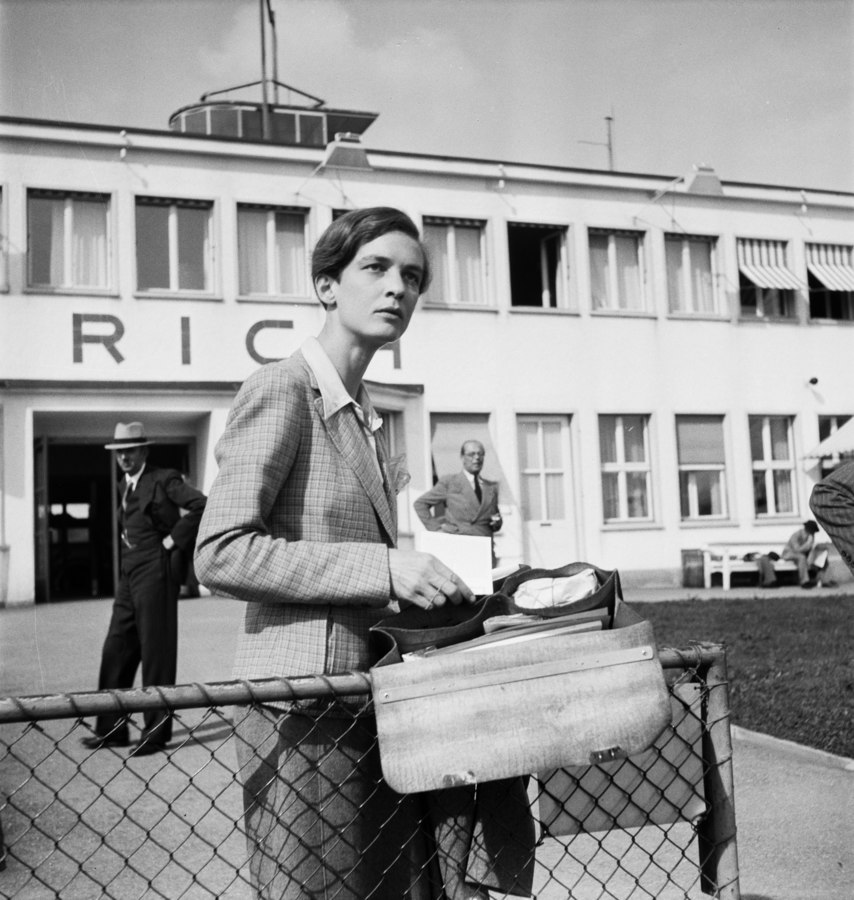
This mother-daughter relationship from hell is just one of many fascinating threads running through Padraig Rooney’s mesmerising new biography of the iconic Swiss writer, journalist and photographer Annemarie Schwarzenbach.
In Rebel Angel: The Life and Times of Annemarie Schwarzenbach, Rooney gets as close to the troubled beauty as it is possible to get, yet the ever-striving, ever-suffering Annemarie still keeps some mystery about her. Maybe the answers were in those long-lost letters.
Zurich-born Annemarie came of age in the 1920s, with an appetite for every possible kind of adventure – travel, sexual, narcotic, creative and political. Annemarie was always running from her conservative and hypocritical upbringing. Eyes on the horizon, she was also seeking relevance and a real place in the world as a young, lesbian woman with something to say.
Schwarzenbach was the kind of writer who could lock herself in a hotel room for two weeks in between drink and drugs binges, and come out with a novel. She fell madly in love time and time again but never seemed to find her soulmate. She drove flashy cars, dressed in masculine clothes from a very young age and travelled to far-flung places, generating endless travel articles for Swiss media, and picking up a marriage of convenience along the way.
Annemarie Schwarzenbach started feverishly writing articles as a student in Zurich. By the time she finished her studies in Paris, she was a published novelist. She went on to write many books – fiction with an autobiographical slant, non-fiction and travel. And she took amazing photographs all over the world, some of which are featured in the book, along with moody portraits taken by her many admirers.
In Rebel Angel, Padraig Rooney has captured Annemarie Schwarzenbach, who deserves to be celebrated as a queer icon, in all her self-destructive brilliance and chaos. She liked peace when she found it but she didn’t find it often.
Annemarie was closely involved with Thomas Mann’s family, mainly his two wildest children, Erika and Klaus, who were close friends and sometimes more. She turned up as a long-staying guest in various Mann households in Germany, France and the United States over the years, causing trouble more often than not.
A morphine addition wreaked havoc on most of Annemarie’s adult years. Her friendships were taxed to the limit, and, during her most severe breakdown in New York in 1940, past the limit. Those were times when her family had to step in.
Rooney’s book encompasses so much of this incredibly full life – family conflicts, the 1930s social scene in Berlin, travels to Persia, Afghanistan, India, the United States, the Soviet Union, the west coast of Africa, Congo. Unfortunately, Annemarie’s addictions and regular mental health crises left her at the mercy of the psychiatric treatments of the day.
Most of these experiences happened in first-class settings though Annemarie’s sympathies were usually with the downtrodden of society. She was virulently anti-Nazi, unlike some members of her family, notably her mother, who went the other way.
Meanwhile, war was looming until it eventually crashed over everything. Annemarie had many friends who were refugees, scrambling for the right papers, sneaking over borders at night, the unlucky ones ending up in enemy alien camps or going down with a torpedoed ship.
Interestingly, Annemarie Schwarzenbach never wrote about female suffrage, or lack of it, in her homeland. Rooney notes the contradiction between Annemarie’s sympathy for the injustices endured by the black population of the Southern US states and her blithe acceptance of mass exploitation in colonial Africa. She saw the latter system as being important for the war effort and possibly, like many (most?) of her generation of European, the natural order of things.
Padraig Rooney’s rebel angel emerges as a tragic figure unable to find contentment, who, after all her dangerous escapades, died after the most innocuous seeming bicycle accident in her beloved Sils in Graubünden. Her head injury was atrociously mismanaged and her mother swooped in at the end to control her free-spirited daughter one last time.
Rebel Angel: The Life and Times of Annemarie Schwarzenbach is published by Polity Books in February 2025 and is worth getting for the photos alone. Available online and in all good bookshops, if you have the patience to wait a couple of days.
Did you know that I’ve been writing about Switzerland for twenty years? Most of that writing has taken the form of journalism, and today I have something new to share with you – a book of selected articles written for The Local Switzerland between 2022 and 2024.
All About Switzerland officially launches today as an ebook, available on Amazon, Kobo, and other online retailers. With the support of The Local Switzerland, I hope to reach new readers who are interested in gaining insider knowledge about this special country.
Now’s your chance to get up to date on Swiss current affairs and society, with sections on money, the future, women, foreigners, Europe and more. Who are the elite in Switzerland? What are the best cantons for foreigners to live in? Why is Switzerland failing in the fight against money laundering? Find out the answers to these questions and many more in this broad-ranging mix of facts, analysis and personal perspective.
There are no FAQs about this ebook because it’s brand new! But here, to put you in the picture, are some questions I anticipate.
What’s the book about?
The book contains a selection of 29 news and background articles, opinion pieces and personal essays about Switzerland. The articles were first published online between 2022 and 2024 in The Local Switzerland. I have grouped the articles into themes, and added an introduction and key facts. Some of the articles are fun but most are serious. It’s basically an up-to-date guide to Swiss society and current affairs.
What is The Local?
Founded in 2004, The Local provides news, advice and essential information to readers in nine countries across Europe. As well as in Switzerland, The Local has teams of journalists on the ground in Sweden, Norway, Denmark, Germany, France, Spain, Italy and Austria. Here is a piece I wrote for The Local about how Switzerland has changed over the past 20 years.
Who is All About Switzerland for?
Readers who enjoyed my first book, The Naked Swiss: A Nation Behind 10 Myths, will feel at home with All About Switzerland. It’s for people who want to understand Switzerland better, either because they live here or have a special interest in the country. It’s for people who like their non-fiction to be informed by thorough research and direct experience.
Why are you publishing All About Switzerland?
It seemed to me that this body of writing would add up to something greater than the sum of its parts. I thought it deserved a wider audience and, luckily, The Local agreed. Put together, these articles give a comprehensive picture of modern Switzerland for an English-speaking readership, neatly filling the gap left since the publication of last edition of The Naked Swiss in 2018.
How are you publishing this ebook?
This is a self-publishing venture and experiment in one. The content is fresh and should be published immediately, the kind of turn-around that is not possible with a traditional publisher. I have used the platform IngramSpark, which lists the ebook on the larger retailers’ websites, collecting the sales data and proceeds minus a nice commission. I designed the cover myself, with the help of Canva and Unsplash (thank you, Baptiste for the lovely image of Lucerne). Backed by The Local, I’ll do my best to make the ebook visible. Hopefully, the right people will hear about it and buy it.
Where can I buy All About Switzerland?
The ebook should be easily findable through the main online retailers. The design works on all kinds of ereaders. All About Switzerland costs between 5.00 and 7.99 in the three main currencies: francs, euros, dollars. Buy the ebook online at Amazon France, Amazon Germany, Amazon UK, Amazon.com, Kobo and elsewhere.
Why just an ebook?
Publishing an ebook is quicker and simpler than publishing a regular book. Because this is a one-woman, learning-by-doing operation, I’d like to see how well it all works with the ebook first.
How can I support the launch?
The fact that you’ve read this far is already very encouraging! Buying the book is a fantastic way to support the project. Those early sales really help with visibility and algorithms. Spreading the word is also a big help, whether it’s by sharing social media posts, talking about the book in your circle or posting reviews wherever you are active online. Feel free to use the hashtag: #allaboutswitzerland
Many thanks in advance for your support! And thanks to Ben McPartland of The Local for being a great editor, to Helen Baggot for proofreading, and to Kim Hays for being such a loyal reader of these articles.
Feel free to drop by again with comments on the book. Besten Dank! Merci mille fois!
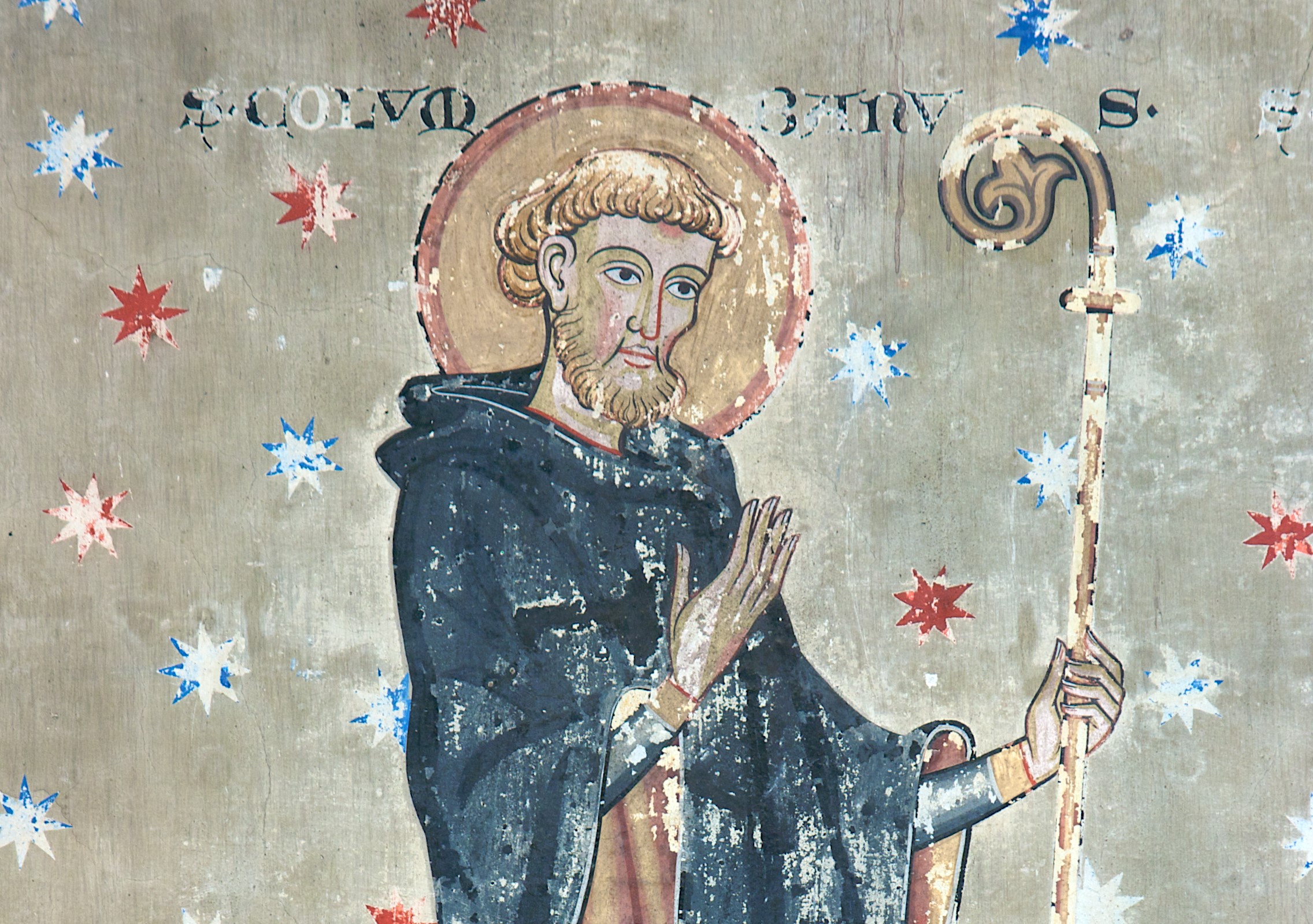
St Columbanus, neo-gothic mural in the church of St Pierre-le-Jeune, Strasbourg
The historical connections between Ireland and Switzerland run deep. Both countries share a Celtic past, and Switzerland (Confoederatio Helvetica) is even named after a Celtic tribe – the Helvetii – that once called these lands home.
The most legendary phase of Swiss-Irish connection was in medieval times when Irish monks travelled across the Continent after the fall of the Roman Empire, bringing learning to the peoples of Europe.
This era of saints and scholars is the subject of a pop-up exhibition taking place in Centre le Phénix, Fribourg this Friday, March 15th, from 2pm to 6pm. The exhibition is organised by the Irish Festival Fribourg/Freiburg as part of Ireland Week celebrations in Switzerland in the lead-up to St. Patrick’s Day.
Trailblazers
“Ireland and the Birth of Europe” exhibition tells the story of the long-lasting Irish presence in Europe, from Columbanus and his followers in the 6th and 7th centuries, up to the Irish-founded monasteries called Schottenklöster, a movement that peaked in the 13th century.
Around the year 590, Columbanus left the Irish monastery of Bangor for the Continent, where he established a succession of monasteries: Annegray, Fontaine, and Luxeuil in the Vosges mountains, and Bobbio near Genoa. Over the centuries, the monks were followed by scholars, theologians, philosophers, and poets.
Around 600 CE, Columbanus wrote ‘of all of Europe’ (totius Europae), becoming the first to use the expression in reference to the Continent’s cultural identity.
One of the original Bangor group, St. Gall, reached the region of today’s city of St. Gallen around 612 CE, and established a small settlement there in the wilderness, which was later the site of the famous Abbey of St. Gall. The Abbey Library, to this day, holds some of the most important sources of Old Irish in existence.
“Is acher ingáith innocht fufuasna faireggae findḟolt ni ágor réimm mora minn dondláechraid lainn ua lothlind
‘Bitter is the wind tonight, it tosses the ocean’s white hair
I fear not the coursing of a clear sea by the fierce warriors from Lothlend’
These words in Old Irish run along the top of a page of a manuscript of Latin grammar dating from the ninth century, the Priscian manuscript of St. Gallen. Lothlind, land of the lakes, is an early form of the Irish word for Scandinavia, more specifically Norway. The fierce heroes kept at bay by the weather are Viking raiders.
The unknown scribe who wrote these lines lived in dangerous times. We don’t know exactly what scriptorium he worked in, but two possible locations are the monasteries of Bangor or Nendrum, in Co. Down, both of which suffered heavily under Viking attacks in the ninth and tenth centuries. The monks would have breathed easier on stormy days.
I love the idea of the obedient monk faithfully transcribing page after page of intricate text for months or years, working for the community, for learning, for God. And then, one dreary day, he feels the urge to write something heartfelt and original. He throws caution to the wind and allows himself a brief moment of creative expression. That brief moment of inspiration survives more than a millennium.”
Traces of the past
“Ireland and the Birth of Europe” was researched, written and curated by Dr Damian Bracken, University College Cork, and Dr Angela Byrne for the Irish Department of Foreign Affairs. The exhibition is hosted by the Irish Festival Fribourg/Freiburg with the support of the Embassy of Ireland.
The source of the translation above is http://www.stgallpriscian.ie/index.php?id=7056&an=1 with input from Kuno Meyer’s translation. I was amazed I could recognise some Old Irish words – like ‘tonight’, ‘sea’, ‘wind’, ‘warrior/hero’ – that are very similar in Modern Irish. Needless to say, a visit to Abbey of St. Gall is well worth the trek.
If you are on the trail of Switzerland’s Celtic past, the impressive Laténium museum and park on the Lake Neuchâtel is a good place to start. It has a wonderful collection of La Tène metalwork, pottery and jewellery, as well as objects from settlements as far back as the Palaeolithic Era.
The most amazing artefacts, I think, are words. I grew up in a place called Dún Laoghaire in Ireland. We have a lot of dun- placenames in Ireland, from the Irish word for ‘fortified place’.
But I didn’t realise that the -don placenames in Switzerland – like Yverdon – come from the same older, common Celtic word. The list goes on: Rhone, Brig, Winterthur, Solothurn are just a few of the many Swiss placenames derived from the original Celtic names.
If you can make it to Fribourg on Friday, the festival team will be glad to welcome you at Centre Le Phénix, and we’ll send you home with some Irish sweets. Enjoy your St. Patrick’s Day celebrations wherever you are. Beannachtaí na Féile Pádraig oraibh go léir!
We’re running out of January days which is not necessarily a bad thing. But what I do like about January is that it holds the promise of a new start – a new year where we all get a second chance, or a 52nd chance in my case.
Until a few weeks ago, I had virtually no plans for 2024. Now, I’m glad to say, I have a few literary dates in the diary, and pop-up event in March connected to the Irish Festival Fribourg/Freiburg.
On February 14th, I’ll be interviewing Anne Eekhout about her book Mary and the Birth of Frankenstein. The event is taking place in the Société de Lecture in Geneva, and it should be popular with the locals, seeing as Mary Shelley started writing her iconic novel in that part of the world at the tender age of eighteen.
Interviews and history
When I was asked to do the Eekhout interview, I bought Miranda Seymour’s biography of Mary Shelley. I’ve been blown away by how daring and talented this 19th century woman was. Running away with a married poet at sixteen precipitated a life very much out of the ordinary but also plagued with loss. I’m still waiting for the Eekhout translation (from Dutch) to arrive. Tickets and more info on the event available here.
Also at the Société de Lecture, I will be interviewing Deborah Levy on May 29th. I’m a huge fan of Levy’s writing, especially her memoir trilogy. Really looking forward to both these conversations.
My third literary interview of the first half of this year is with Bern-based Kim Hays whose third book, A Fondness for Truth is coming out in April. Kim is having her Swiss launch on June 13th in the Progr venue in Bern. Her Polizei Bern crime novels are cracking good reads, showing the murky side of Swiss life.
Then there is the event connected to the Irish Festival Fribourg/Freiburg. We haven’t got an exact date yet but it will be in the week of March 11th to 17th – Ireland Week. All being well, we’ll have a pop-up historical exhibition in Fribourg about Ireland’s early ties to the European Continent. Think saints and scholars. Details to follow soon.
Writing talk
As for my own writing, I’m still working on my second novel and hope to submit it soon. It’s a story about human connection, where we rejoin two of the characters from Voting Day whose paths cross again in the present day.
I’m also very pleased to have a memoir essay published in the Sunday Miscellany Anthology, edited by Sarah Binchy, which won Irish Book of the Year at the Irish Books Awards in November. It’s nice to have a tiny share of the glory (100+ contributors), even if it’s from a distance. My essay Northern Sky is about the time I went to Russia as a student in the early 1990s and met some Irish language enthusiasts there. You can listen to me reading the piece on radio here.
Speaking of radio, I will be interviewed on Dublin South FM on February 23rd. You can listen live to the programme Rhyme and Reason with Helen Dwyer or listen to the podcast after the show has aired. It’s a chat about books, life and Switzerland with some poetry and music.
Apart from the culture and books, I am carrying on with my regular freelance work and weighing up other options. One thing I’m looking at is possibly to train as a secular funeral celebrant in Switzerland. There’s a long story behind that, which I’ll tell another time.
Very best wishes for 2024! If you’ve any exciting plans or good news, do let me know in the comments.




 Clare O'Dea