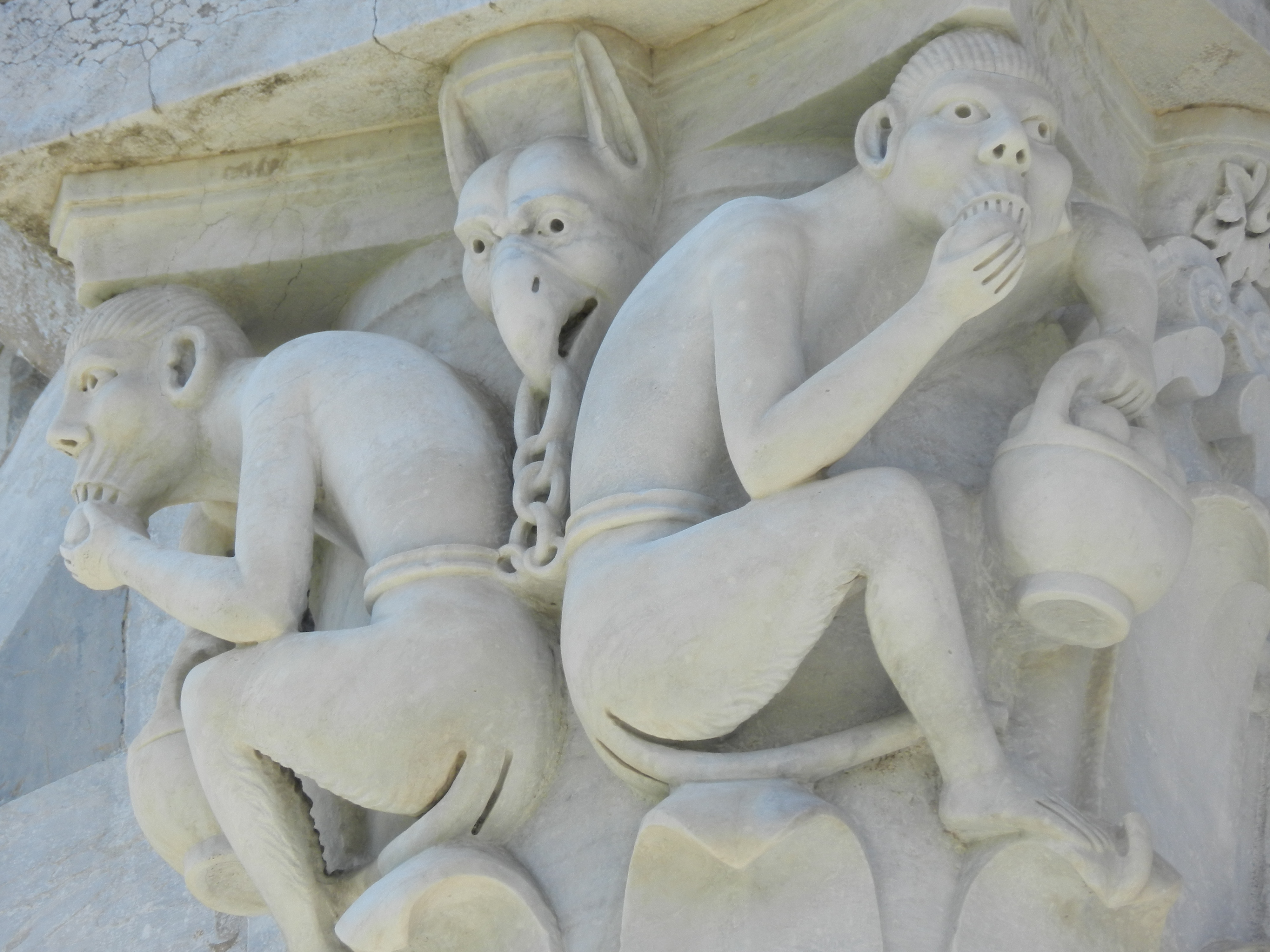
The Secret History opens a door to the past

DSCN1219

You don’t have to have murdered someone in your college days to go through a spell of nostalgia after reading The Secret History by Donna Tartt. This haunting book captures the clannishness, the impressionability, the uncertainty and excess of those years. It is a story about the defining experiences we would rather forget, if only we could.

Of course the Greek-quoting, champagne-swilling lifestyle enjoyed by the six main characters in The Secret History is far removed from the experience of the average student. The rarefied atmosphere cultivated by these privileged classics students belongs to a lost era; this is how we imagine things were when only the rich and brilliant entered the hallowed halls of university.

Told as a memoir from the perspective of the latest addition to the exclusive group, the novel reveals how, and ultimately why, five of the six “clever, eccentric misfits” end up colluding in the killing of their friend.

The book, set in an elite college in Vermont, takes up the mantle of The Great Gatsby so overtly that the students, in tweeds and cashmere, could be the grandchildren of Tom and Daisy Buchanan and the narrator Richard a direct descendant of Nick Carraway.

Those formative years between adolescence and adulthood are fertile ground for fiction and The Secret History draws on other classics such as Catcher in the Rye, Crime and Punishment and Brideshead Revisited, sometimes by direct reference.

But nothing in the 600 plus pages of The Secret History happens by accident. The novel is so well crafted it screams good writing. There is so much to enjoy – from the biting satire in the depiction of the family of the murder victim Bunny, to the heart-wrenching descriptions of tortured souls and the beautiful passages on the changing seasons. My only criticism would be the sense of repetition in the countless scenes of heavy drinking and hangovers. But knowing the writer, that was probably deliberate.

Like many people, I was inspired to read The Secret History after the long-awaited and much-fêted appearance of Tartt’s third novel, The Goldfinch (don’t say anything, I’m only on page 304). Somehow I missed The Secret History when it was first published in 1992, even though it was right in the middle of my college years.

I’d love to hear your impressions of this book or any thoughts on the folly of youth. Among the small readership of this blog are three people I went to university with who have remained good friends to this day. I believe that the decision we made in 1989 to study Russian was one of the most significant and far-reaching of our lives. Or maybe I’m just carried away by The Secret History.

Here’s what Donna Tartt’s narrator Richard Papen has to say on the question. Read the punctuation and weep!

I suppose there is a certain crucial interval in everyone’s life when character is fixed forever; for me, it was the first fall term I spent at Hampden. So many things remain with me from that time, even now: those preferences in clothes and books and even food – acquired then, and largely, I must admit, in adolescent adulation of the rest of the Greek class – have stayed with me through the years.

Are you writing in the right language?

You hear a lot about voice in fiction. Agents and publishers are looking for new voices. New writers still haven’t found their voice. Reviewers rave about the novel’s voice. And the rest. But what about writers who go so far as to write phonetically in the dialect of their own community? How’s that for voice?

Recently at Bern Literary Festival I had an interesting conversation with two writers about language and translation. One was a Swiss writer whose breakthrough success came when he finally wrote a book in his own dialect. His name is Pedro Lenz. The other was his translator, short story author Donal McLaughlin from Glasgow.

Swiss Germans like Pedro Lenz speak dialect all the time, unless they really have to speak standard German for some formal reason, or to communicate with a non-Swiss German speaker. Many never feel fully at ease in standard German (also known as high German). And yet most Swiss German writers write in high German because that is considered the ‘proper’ language.

In the case of McLaughlin, whose childhood was split between Derry and Glasgow, there was more than one leap to be made to get to grips with the standard English taught at school. Europe, despite all its disappearing dialects, is still full of this kind of linguistic tension.

The meeting with Lenz and McLaughlin was one of those rare occasions when my day job intersected with my interest in writing fiction. I put together a podcast for swissinfo.ch which was published last week. I’m including it here if you would like to listen to the conversation. There’s also an article based on the same subject.

And for those who’d like to test their knowledge of Glaswegian, here are some phrases from the Glaswegian book Naw Much of a Talker (Original title: Der Goalie Bin Ig). Maybe you have some great lines or vocabulary to share from your own home-grown style of English?

Kid ye slip me a fifty tae Monday? (Could I borrow fifty [pounds] ‘til Monday?)

Ah get ma kick fae the present (I get my kick from the present)

It’s guid craic, listenin tae a French-speaker tryin tae speak German (It’s good fun, listening to a French speaker trying to speak German)

Marta but was greetin aw the way home. (Marta was crying all the way home)

Looks like his wife picks stuff ootae her stupit catalogue fae him – ivry couple ae years. (Looks like his wife picks stuff out of her stupid catalogue for him – every couple of years.)

Did I miss the memo?

Snow White and the Huntsman, Universal Pictures

A novel is long enough for all your writing weaknesses to come out of the shadows but it takes an outside eye to see them. I am now much better informed about my pet redundant words, grammar sins and my penchant for padding, thanks to one particularly ruthless and brilliant editor friend.

For instance there was a short scene in my novel where the main character put on make-up before going out for the evening. Those lines have now been cut.

I mention make-up because I was struck by a throwaway statement in an article I read earlier this week about narcissism and the ice-bucket challenge. The article on the BBC Future website gives an interesting take on the role narcissism and performance play in modern altruism.

The writer Chris Baraniuk refers back to another social media craze this summer where women posted photos of themselves – shock, horror – without make-up, to raise funds for cancer research.

Baraniuk observes that “make-up remains de rigueur for women”, a statement which stopped me in my tracks. Could this really be true? And if so, how did I miss the memo? Was it only sent to English women, or Londoners perhaps?

This got me thinking about what make-up says about women. Is not wearing make-up a sign of liberation or laziness? I know of women who need to ‘put on their face’ before they venture into the outside world. But I’m inclined to think they are not the majority.

My grandmother used to keep lipstick by the front door and always applied a dash of pink to her lips before going out, even when going out meant trundling to the local shops with her walker at the age of 93. I’m more of a make-up-for-special-occasions gal myself.

But to get back to the main theme of the article, it did make me wonder what place bloggers have in this “culture of rampant narcissism in social media”.

Blogging is self-publishing in its simplest and most direct form. You don’t have to pitch your idea to anyone and wait for their approval. If you have something to say, an idea to share, if a tree fell down and you want it to be on the record – you just hit publish. And there is a nice sense of fulfilment with that. It’s instant and it’s all yours.

But, bearing in mind that there are two million blogposts published every day, most bloggers are dropping very small pebbles in a very large pond. Something tells me this social media niche might not be rewarding enough for narcissists.

Here’s a narcissism test for anyone who’s worried. 😉

Good things come in twos

My idea of heaven
My idea of heaven

I did say I wouldn’t post again until the novel was finished and I meant it. It’s been a long summer of some discontent, a lot of hard work, and a gradual brightening of the light at the end of the tunnel.

And now I’m here, out the other side. Still reluctant to use the word ‘finished’ in the same sentence as my novel, what I can say is that I have completed the most difficult draft so far. Thanks to wonderful challenging feedback from kind and generous readers, I hope I’ve managed to fix some of the weaknesses that were bogging down this manuscript.

The other good thing I discovered first thing this morning is that my blog has been shortlisted for the Irish Blog Awards, Diaspora category. I’m thrilled to be included in this list and look forward to reading through the other blogs as soon as I finish work today. Thanks again to fellow exile Niall McArdle for nominating me and to the judges for overlooking the fact that I was on a break.

Without the distraction of blogging for the past two months, I have been able to write every day and have harnessed the power of that rhythm.

A three-week holiday in Ireland also helped with the daily time-stealing challenge and the inspiration, as my book is set in Ireland. Anyone who was lucky enough to be in Ireland this summer will tell you that the weather was superb. I wanted the country to be at its best so that my Swiss family would experience the magic of an Irish summer. In fact I wanted them to be enchanted and to develop some of the feelings about the country that I have. For once the weather came up trumps.

The novel is back in the hands of two readers and I’m hoping that only small changes will be required from now on and that I will be able to declare September the month of submitting.

I’ll be posting soon again, about a fascinating meeting in Bern with award-winning Swiss-German writer Pedro Lenz and his Glaswegian translator Donal McLaughlin. Not only is McLaughlin from Glasgow (via Northern Ireland), he also writes in Glaswegian dialect. Can’t wait to review the result of this unique collaboration: Naw Much of a Talker.

Looking forward to connecting with everyone again and catching up with your summer stories.

It’s good to be back.

So, have you finished the novel yet?

This question kills me, even though I know it’s the obvious one to ask. The short answer is no. More than once I thought I had finished but it turned out I had only reached milestones along the way. The first draft took almost twelve months to the day. I have now been writing my first novel for two years, five months and forever.

My heart sank today when I heard it took veteran BBC journalist Kirsty Wark ten years to write her novel The Legacy of Elizabeth Pringle. Ten years! She gave a talk at the Dalkey Book Festival in Dublin yesterday and I sent my spies along to find out what she had to say.

I’m curious to read her book, despite reading this bad review a few weeks ago, which was breathtakingly spiteful. The Irish Times reviewer actually said: ‘don’t give up the day job’.

http://www.irishtimes.com/culture/books/a-nice-fantasy-but-don-t-give-up-the-day-job-1.1777733

Wark started ten years ago but had to put the book to one side because of family commitments until her youngest started university. My youngest hasn’t started school yet. How long before I can find time?

Maeve Binchy addressed this issue in the first page of her book on writing, The Writers’ Club.

“Time doesn’t appear from nowhere. You have to make it, and that means giving up something else. Regularly. Like sleep, for example, or drinking or playing poker, or watching television, or window-shopping or just lounging about with your family.”

As it is I do regularly give things up for writing. But what if I’ve been giving up the wrong things?

The time has come to question where the writing blog fits in here. Would Maeve Binchy ever have finished Light a Penny Candle if she’d been blogging about it? I’ve published more than 70 posts over eighteen months, an average of 500 words per post. That’s a lot of words, half a novel in fact.

Without further ado, I hereby declare this blog temporarily suspended – normal service to be resumed when my novel is finished. I hope to connect again with fellow bloggers and followers of the site when the time is right.

Have a great summer folks!

ps. here is a link to Ashra’ Wish, a story I wrote for children which has just been published on a new children’s stories website.

http://www.shortkidstories.com/story/ashras-wish/

I'll be back.
I’ll be back.

“Too much statement and not enough suggestion”

Photo_6AEE6DB4-F527-CC2A-DF23-B7EF820BC320

This is what many writers are getting wrong, according to Irish short story writer Claire Keegan who passed through Bern this week. Keegan, a woman of strong convictions and deep thoughts, gave a talk and read from her award-winning story Foster.

I couldn’t believe my luck to hear that such a well-respected author was in town and that I could manage at the last minute to go along and listen to her. For Keegan, it is clear that writing is not something to be taken lightly. She spoke passionately about life, love and literature.

Foster is a story, about a poor young girl sent to live with more prosperous relatives for the summer. Written from the child’s point of view in the present tense, the story manages to convey that gulf that exists between children and adults and the disadvantage that children have in their inability to understand what’s going on in the adult world around them. It’s all the more poignant in Foster because the girl comes from a neglectful home and she is being looked after in a loving way for the first time.

As Keegan pointed out: “Love can come from anywhere, it doesn’t matter where.” The author sees herself as a critic of her society. Foster, set in 1970s rural Ireland, is in part a commentary on the plight of families forced, because of religious dictates on contraception, to have more children than they could love.

As I writer I was naturally curious to hear what Keegan, who has lectured in creative writing, had to say about the craft of writing.

The first thing that surprised me was that she goes through about thirty (!) drafts before she considers her stories finished. More proof that writing is rewriting!

During this process, Keegan does not give her work to anyone else for feedback, although she did admit she would like to have someone who would look at her manuscripts as closely as she does but from another perspective.

She explained that having spent decades reading attentively and developing her own taste, she trusts her own taste. A good place to be.

On the subject of what new writers are getting wrong, Keegan was very precise. In her view there isn’t enough priority given to the story, to the point that the story can be completely buried by the writing or even missing altogether.

Keegan is quite a purist when it comes to storytelling and confessed that she mostly preferred reading “dead authors”. For it to be a story something has to happen in a defined space of time, something irreversible that the character would take back if they could, she said.

Nowadays there is “too much statement and not enough suggestion”. Readers have to endure pages of analysis about the character before they even have a chance to go through something with them. In other words the analysis has not been earned.

Keegan is a great believer in “turning down the sound” and observing what people do with their hands and feet and eyes. That’s where the truth is, she said, and that is what she writes about. She won’t tell us someone is miserable and proceed to tell us why over many pages. She will show that misery and the context and let the reader reach their own conclusions.

Finally I liked what Keegan had to say about the elegance and efficiency going hand in hand in good writing. Not something that can be achieved in every blog post, but a good standard to aspire to in fiction.

The event was held under the auspices of the Swiss-British Society, Bern and SATE (the Swiss Association of Teachers of English).

Freddie had to go

There was a time when he was important. It was because of his charming deceitful ways that the whole story began. He made life unbearable for my main character, gave her the push she needed to run away and try to change things.

But when it became apparent that there was too much back story and too many love interests in this novel, Freddie had to go. Like any intense relationship, it was hard to make the break but bit by bit I have managed to delete all trace of him.

I had to ask myself the question: ‘Can I live without him?’ And painful as it was, the answer was yes. It’s a well-known mistake to cram too much into your first novel, one that you usually discover after the fact. I fell into this trap on a grand scale and it’s a difficult one to get out of. Difficult but not impossible.

So goodbye Freddie and everything that came with you:
The convoluted back story about the festival he was organising and embezzling money from – out.
The flirting scene in the pub – out.
The scene when they first get physical – out.
His jealous girlfriend’s reaction – out.
The successful launch of the festival – out.
Police raiding the offices – out.
Freddie going awol – out.
Police interviews – out.
The scene in the solicitor’s office – out.
Freddie featuring in other people’s conversations – out.
References to the court case – out.
The visit to Freddie in prison – out.

And finally, today, after my sly attempt to keep Freddie in the background of the story, even though no new reader could figure out what he was doing there, I have removed any last trace of Freddie’s character.

Amazingly it turned out that Freddie and the hefty subplot that went with him were not essential to this novel. In fact this overload of storylines was taking away from the true heart of the novel, which is about family. He may appear in another guise in another story, but for now the mischievous, restless Freddie is out of the picture.

I’m definitely not the first person to have to cut a character from a novel in progress. Sometimes two characters can be rolled into one if they are serving the same purpose or a peripheral character can disappear over the horizon without being missed. Has anyone else had the experience of cutting a major character? Am I right in thinking (and hoping) you never regret what you cut?

And now for something completely different …

Chateau de Chillon
Chateau de Chillon

This is a writing blog but today I am breaking the mould by posting a selection of photos of a beautiful place. It’s been a busy few weeks with visitors, and my novel is in the capable hands of a small group of trusted readers, which means I am holding my breath and can’t write much.

After a wet and unseasonably cold week, the sun came out today just in time for the Easter egg hunt and afterwards we went off on a day trip to Chateau de Chillon on Lake Geneva.

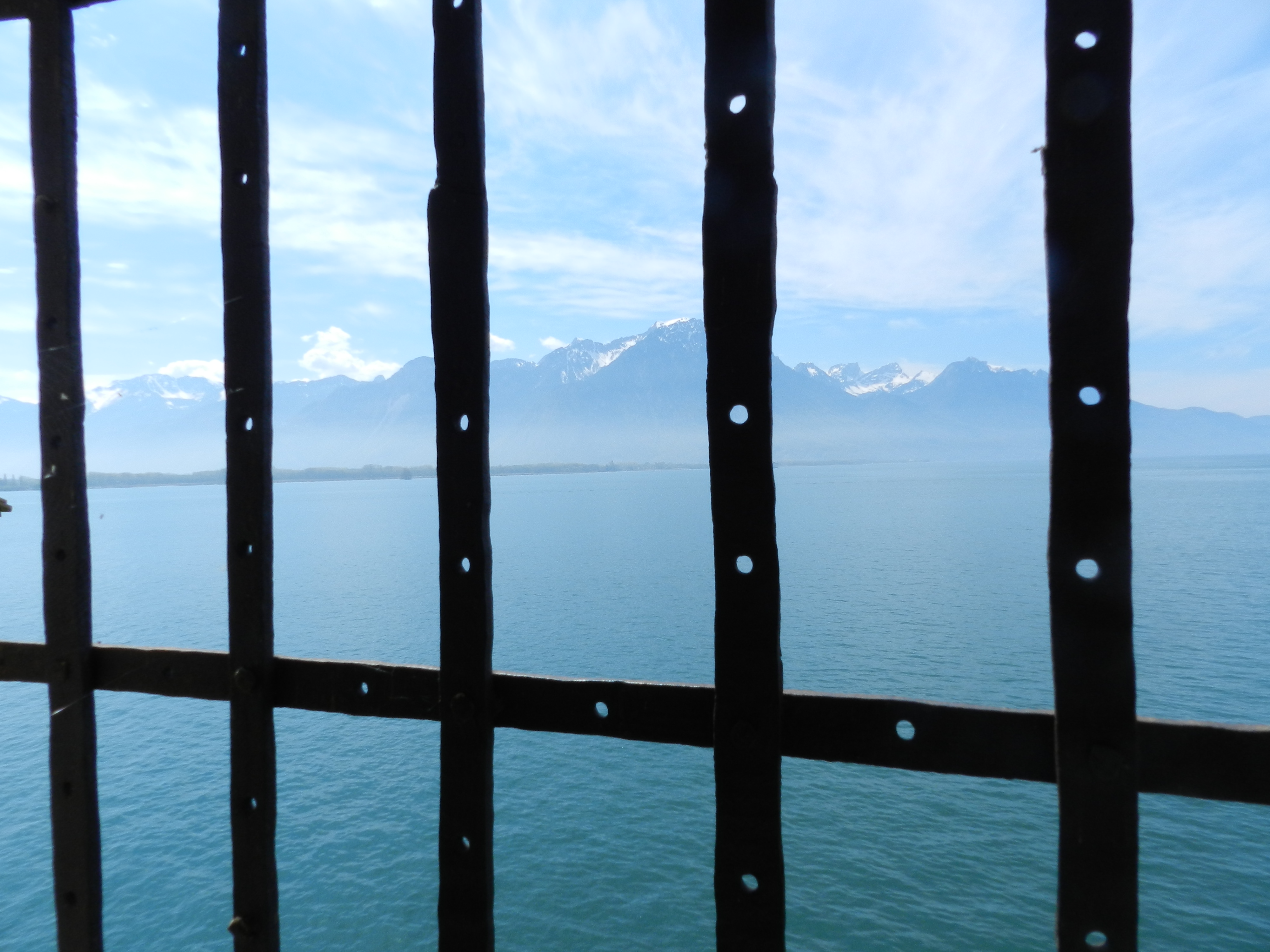
Room with a view
Room with a view

I don’t know if you can make out the Alps there in the background. The view from most rooms was spectacular.

I love a nice medieval courtyard!

Stone glamour
Stone glamour
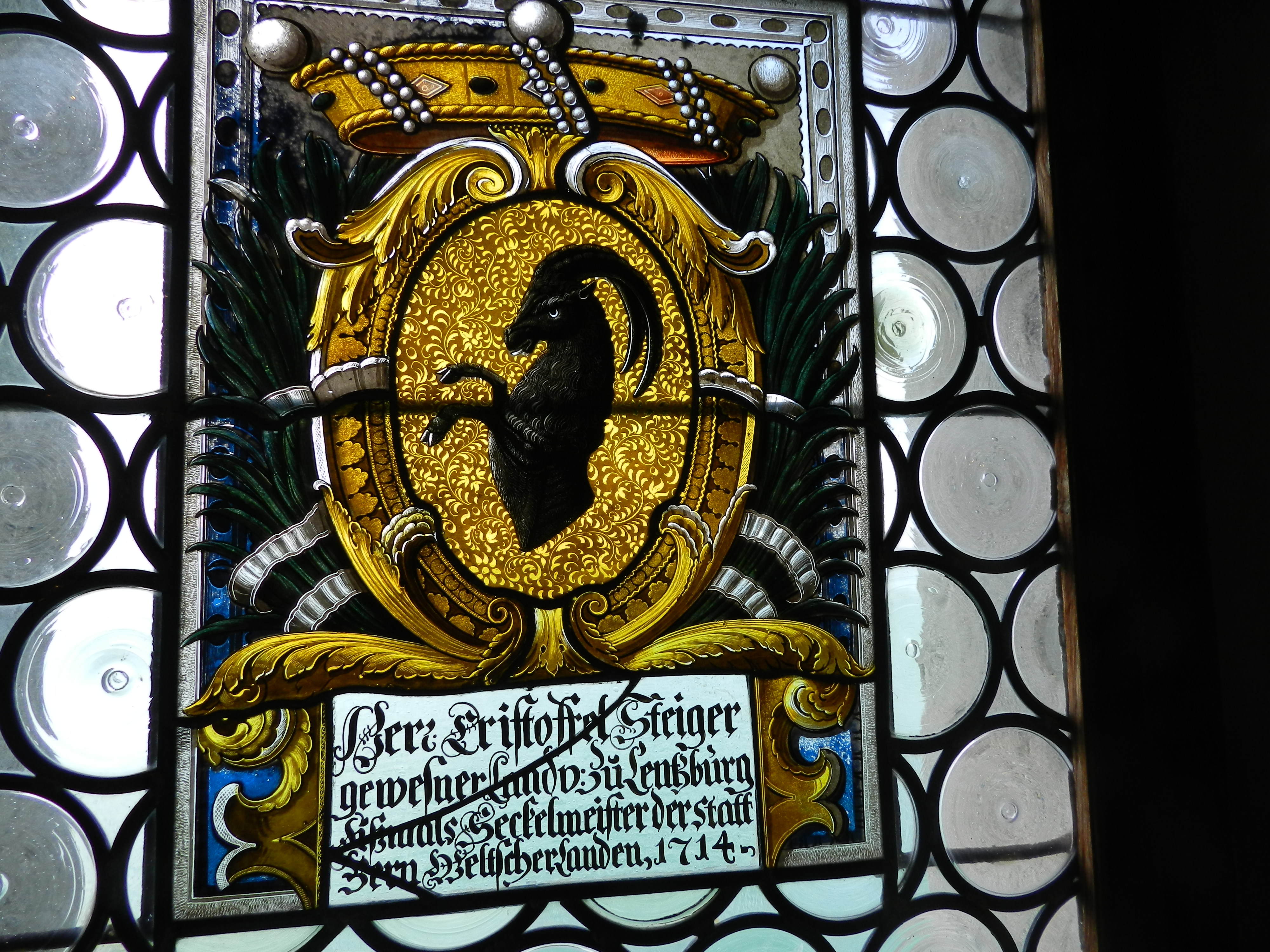
Window crest
Window crest

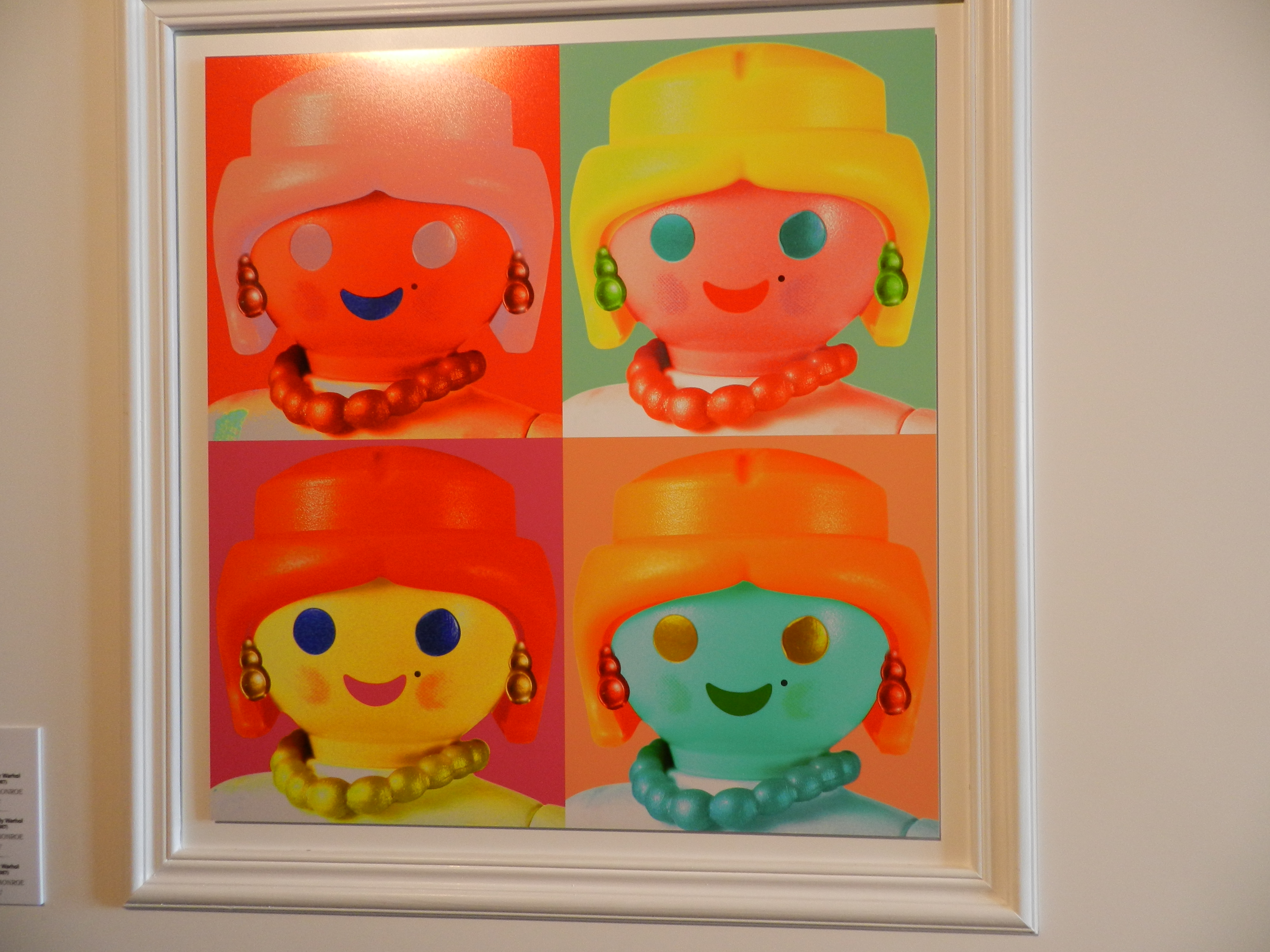
This stained glass crest is dated 1714 but parts of the castle are about 500 years older. The castle was hosting a special exhibition by French photographer and cinematographer Richard Unglick who has staged and photographed many classic paintings using Playmobil characters. Here’s one example:

Richard Unglick Playmobil

And another:

Richard Unglick
Richard Unglick

Before I leave you with one last image, I’d like to thank and pay tribute to my fellow bloggers (in alphabetical order) who have recently nominated me for a Liebster Award:

Arran Bhansal
http://arranbhansal.com/
David J Delaney
http://davidjdelaney.wordpress.com/
Anne Goodwin
http://annegoodwin.weebly.com/annecdotal.html
Niall McArdle
http://ragingfluff.wordpress.com/

And here is the Easter tree in the chateau. Happy Easter!

Can you see the decorations?

10 good things about not being published

Take a seat (© Clare O'Dea)
Take a seat (© Clare O’Dea)

Writing is a very private and personal affair; publishing is anything but. I seem to be hearing a lot lately about published writers living not so happily-ever-after once their first book is out there. They have to deal with changes they were pressured into making, a title or cover they don’t like, poor sales or reviews, stressful book promotion and the pressure to get the next book written or accepted.

On some level I must be taking this in and yet it has about the same effect as hearing about someone else’s unhappy marriage, when you and your chosen one are still love-struck and kissing on a park bench.

So just to celebrate the journey, here are ten great things about writing while it’s all about passion:

1. Just the Two of Us: You spend a lot of time together and you’ve been through a lot. The characters have become real people whose unfolding stories keep you from ever feeling bored. After that long process of building a relationship sentence by sentence, you are protective of your manuscript. Nobody who isn’t hand-picked by you will get to comment on your work. You’re slightly unhinged about the book but who cares, it’s mine, all mine!

2. Dream a Little Dream: If you haven’t tried to get published yet, you haven’t tasted failure and this is the time when you can still dream big. On your first query letter, the agent will instantly get back to you asking for more and it will be love at first sight for him or her. This will be followed by a bidding war, a fabulous launch party, the big reaction, the prizes, translations, interviews. Who will play your lead character in the hit movie?

3. Sitting on the Dock of the Bay: There has to be a certain self-imposed pressure or you would never have got as far as finishing the book, but it is self-imposed and therefore adapted to your reality and routine, and, well, if you keep extending your deadline, no one minds but you.

4. Wild World: This may not apply if you have started submitting your novel but before that phase, you are delightfully naïve about the whole publishing business. That innocence is something you’ll probably miss someday.

5. All By Myself: You know the argument, partly because successful self-published authors are very vocal about it. Agents are the gatekeepers to a moribund publishing industry that excludes good books from reaching the audience they deserve. You can spend your life crying over your forty rejection slips or take matters into your own hands and bring out your own book. Better still, don’t even bother submitting to agents and publishers, put your energy into self-publishing and reap the rewards.
When you are still writing you can ignore this whole debate, as it’s only academic – for now.

6. It Had to Be You: Somewhere out there is someone who will like your work, believe in what you do and put their heart and soul into getting your book off the ground. You haven’t met them yet, but when you do find the one, it will all have been worthwhile. In the meantime, you can dream about getting the call.

7. You’re So Vain: If you haven’t had the good fortune of having your book chosen by an agent or a publisher then you won’t have experienced the begrudgery backlash that inevitably comes with success. Even writing buddies you laboured uphill with may not be immune from thinking sour thoughts about you.

8. Learning to Fly: Writing your first novel is special because it’s an intense learning process, and that makes it very interesting. You can do the learning in advance or learn as you go about point-of-view, antagonists, show-don’t-tell, foreshadowing, revising. Either way it’s a pleasure.

9. With a Little Help from My Friends: Since I started writing two years ago I have met many wonderful people – some in person and some through social media – who have been bitten by the same bug. Some I now count as friends, whose support and understanding light the way on this sometimes lonely journey.

10. When I Wish Upon a Star: Before you write a book, there has usually been a long period of carrying around that wish and doubting your ability ever to achieve it. That fantastic feeling of satisfaction when you get to the last page is for keeps, and it is independent of the publishing outcome.

Did I miss anything folks?

I never liked you anyway

DSCN0951

Don’t you just love confrontation in fiction? Those flashpoints of drama, whether it’s a blazing stand-up row or a subtle exchange of fire unnoticed by the rest of the crowd, when the characters are pushed to extremes and the reader has the best seats in the house. Of course most of the time the conflict is underlying, like the thrum of an engine on a ship. That’s what makes it so satisfying when the tension surfaces.

I’m just coming to the end of Alice Munro’s short story collection Hateship, friendship, courtship, loveship, marriage and marvelling at her mastery of every aspect of the craft of writing. In scenes of confrontation she has an amazing ability to convey the build-up of tension between characters, through facial expressions, dialogue, the character’s own commentary and the things that are left unsaid.

Take one brief scene in the short story Family Furnishings. Two women meet for the first time at a funeral. One of them, the narrator, whose father has just died, is a writer who once wrote a story based on a personal experience in the life of an older cousin called Alfrida. It turns out that the other woman who approaches her is Alfrida’s daughter, given up for adoption when she was a baby.

Munro describes the moment after the woman (only ever referred to as ‘the woman’) breaks the news of her identity.

“There was some sense of triumph about her, which wasn’t hard to understand. If you have something to tell that will stagger someone, and you’ve told it, and it has done so, there has to be a balmy moment of power. In this case it was so complete that she felt she needed to apologise.”

From there the conversation becomes more edgy as they reminisce about an old family story, involving the narrator’s father and his first cousin Alfrida, and it transpires that their versions of events do not match.

“… that feeling of apology or friendliness, the harmlessness that I had felt in this woman a little while before, was not there now.
I said, “Things get changed around.”
“That’s right,” the woman said. “People change things around. You want to know what Alfrida said about you?”
Now. I knew it was coming now.
“What?”
“She said you were smart, but you weren’t ever quite as smart as you thought you were.”
I made myself keep looking into the dark face against the light. Smart, too smart, not smart enough.
I said, “Is that all?”
“She said you were kind of a cold fish. That’s her talking, not me. I haven’t got anything against you.”

It’s such a perfect depiction of something we are all familiar with. The gap between our true feelings towards others and what is actually revealed (in some cases even to ourselves). People may go through life harbouring ill-will towards people close to them without ever giving an outward hint of their animosity. If those true feelings are ever expressed the effect is dramatic. And when I say people, more often than not it is family. Like this exchange between another set of fictional Munro cousins, Polly (single and left behind with an extended family to care for) and Lorna (married with children and comfortably off) in the story Post and Beam.

Fresh tears came welling up in her eyes. She was a mound of misery, one solid accusation.
“What is it?” Lorna said. She feigned surprise, she feigned compassion.
“You don’t want me.”
Her eyes were on Lorna all the time, brimming not just with her tears, her bitterness and accusation of betrayal, but with her outrageous demand, to be folded in, rocked, comforted.
Lorna would sooner have hit her. What gives you the right, she wanted to say. What are you leeching onto me for? What gives you the right?
Family. Family gives Polly the right. She has saved her money and planned her escape, with the idea that Lorna should take her in. Is that true – has she dreamed of staying here and never having to go back? Becoming part of Lorna’s good fortune, Lorna’s transformed world?
“What do you think I can do?” said Lorna quite viciously and to her own surprise.

I think with conflict the real challenge for a writer is to stay on the right side of the line between drama and melodrama. I’m still working on that, and trying to eliminate clichés is part of the challenge. In my novel, Counting the Days, the main character, Laura, cannot accept how unemotional her sister Kate is about their brother’s disappearance five years before. They’ve just spend a day and night together, the first time they’ve been under the same roof overnight since Kate left home for college. For most of the visit they manage to steer clear of expressing the resentment and misunderstanding that lies between them, until a few minutes before Kate has to leave when they finally get to talk about their brother, falling back on the same old arguments until there’s nothing more to say.

“It must be time for you to go.”
We stand in silence, indifferent now to the gentle glory of early summer gathering around us.
Moving closer, Kate puts her hand on my shoulder.
“I’m sorry. You did a good job with the campaign. No one can say you didn’t try your hardest.”
Pushing off her touch, I glare at Kate. “If you could just once show that you cared, that you still felt something. Where is the love for God’s sake?”
Kate shakes her head slowly and looks at me, her bewildered eyes full of reproach.
“You’re too much for me,” she says and walks back to the house.
A short time later, the sound of car doors closing cuts through my cloud of resentment and I hurry back towards the yard, almost tripping in the tangle of undergrowth in my sudden desperation to make amends. Kate opens the passenger window of the car for a final word. “Can I say something? You’re not going to like it.”
“Go ahead.”
“I saw your diary.”
A sudden fury passes through me like a spasm. The lack of respect, I am not imagining it.

First and last time I put my writing on the same page as Alice Munro’s! Some of the participants in the writing course I attended in Dublin last year have got together to meet fortnightly as a writers’ group and I am really pleased to be taking part by Skype. It’s difficult to know when a novel is finally ready and then to let it go. I’m hoping that this routine will give me the motivation and discipline to get the novel polished for submission.

In other news, I have a new writing buddy – Lucky. Isn’t he lovely?

Good boy!