Who will end the agony of Gaza?

Photo of the Al-Masry Tower in Rafah by Emad El Byed, Unsplash

Death, destruction and displacement on a massive scale – that is Gaza today. The people have inadequate food and shelter, and live every day in terror of the next attack. Children are killed, maimed, orphaned, traumatised beyond belief. They’ve lost everything , and many will face lifelong effects of malnutrition in combination with physical and psychological scars.

When will it be enough? Israel’s usual response to the killing of its own citizens has been to kill many multiples more civilians in the area the threat came from. That pattern is part of the region’s recent history. Hamas knew that when they brought down the wrath of hell on their own people by launching the mass killing and kidnapping attack of October 2023.

What reaction were they hoping to provoke? A revenge so awful that Israel would lose all legitimacy and backing, opening to the way to a state of Palestine? Perhaps. Yet Isael’s killing-spree is still under way at no particular cost to the country’s core support globally. How many of their compatriots’ lives were Hamas prepared to sacrifice in this pointless escalation? At least 58,000 as it turns out – and counting.

Twenty months on, Israel and Hamas share the blame for this ongoing catastrophe. The Israeli army is either the most incompetent or the most brutal in the world. They appear to be incapable of killing combatants without slaughtering thousands of innocent people and destroying essential infrastructure and entire residential areas. They cannot/ will not provide adequate food and shelter for those displaced by their actions. They will not stop killing and destroying; no target is exempt. For all their superior resources, they are unable to wrest control of a tiny piece of land in more than 1.5 years of trying. All they can do is destroy and lie about it. This is what we see.  

I don’t care whether the term genocide is valid or not. It does not matter what word you use. The sum of the parts of the Israeli campaign in Gaza is abominable, a crime of the ages, whatever you call it – a stain on the soul of Israel. The strategy and actions of Hamas equally so.

Extending the agony of the civilian population is deeply wrong. Hamas and Israel choose war over peace every day, sacrificing the poor people of Gaza. The greater betrayal lies with Hamas for dragging their own people into this war in the first place, and choosing to hide behind them every horrendous day that goes by. The greater responsibility lies with the democratic state of Israel for the absolute power it holds over the lives of Gaza’s residents.

What is the point in saying all of this? There is so much self-righteous noise and anger around this conflict already, fuelling hatred.  I’m not an expert on the region and I have no media organisation behind me any more, but I do have a moral compass. The cynical, merciless leadership of Israel and Gaza are the worst their people could possibly have at this point in time. To be clear, I distinguish between the Israeli state and army and the people of Israel. I distinguish between the planners and participants of October 7th and the people of Gaza. I recognise that both societies have a share of private and public dissent. And I trust the testimony of medical staff and independent humanitarian organisations.

This is not the time to peddle in denial or simplistic slogans. Such dishonesty is not the way out of this horror. After “Two Legs Bad, Four Legs Good”, we should all know that. Who will end Gaza’s agony? Only those who are inflicting it can end it.

On a local level, the grain of support I have goes to the political party in Switzerland showing the most concern for the people of Gaza, the Social Democrats (Sozialdemokratische Partei der Schweiz). I also salute the efforts of the Irish government to stop the bloodshed.

The ongoing torment of Gaza is the biggest mistake in the shared history of the two sides. Because they do have a shared history and, more importantly, a shared future. By hurting each other, they’re hurting themselves. Their only viable future is as good neighbours. But where are the leaders who could take them there? Let’s hope they emerge when this nightmare ends. Israel and Palestine have never needed them so badly.

New ebook launches today: All About Switzerland

Did you know that I’ve been writing about Switzerland for twenty years? Most of that writing has taken the form of journalism, and today I have something new to share with you – a book of selected articles written for The Local Switzerland between 2022 and 2024.

All About Switzerland officially launches today as an ebook, available on Amazon, Kobo, and other online retailers. With the support of The Local Switzerland, I hope to reach new readers who are interested in gaining insider knowledge about this special country.

Now’s your chance to get up to date on Swiss current affairs and society, with sections on money, the future, women, foreigners, Europe and more. Who are the elite in Switzerland? What are the best cantons for foreigners to live in? Why is Switzerland failing in the fight against money laundering? Find out the answers to these questions and many more in this broad-ranging mix of facts, analysis and personal perspective. 

There are no FAQs about this ebook because it’s brand new! But here, to put you in the picture, are some questions I anticipate.

What’s the book about?

The book contains a selection of 29 news and background articles, opinion pieces and personal essays about Switzerland. The articles were first published online between 2022 and 2024 in The Local Switzerland. I have grouped the articles into themes, and added an introduction and key facts. Some of the articles are fun but most are serious. It’s basically an up-to-date guide to Swiss society and current affairs.

What is The Local?

Founded in 2004, The Local provides news, advice and essential information to readers in nine countries across Europe. As well as in Switzerland, The Local has teams of journalists on the ground in Sweden, Norway, Denmark, Germany, France, Spain, Italy and Austria. Here is a piece I wrote for The Local about how Switzerland has changed over the past 20 years.

Who is All About Switzerland for?

Readers who enjoyed my first book, The Naked Swiss: A Nation Behind 10 Myths, will feel at home with All About Switzerland. It’s for people who want to understand Switzerland better, either because they live here or have a special interest in the country. It’s for people who like their non-fiction to be informed by thorough research and direct experience.

Why are you publishing All About Switzerland?

It seemed to me that this body of writing would add up to something greater than the sum of its parts. I thought it deserved a wider audience and, luckily, The Local agreed. Put together, these articles give a comprehensive picture of modern Switzerland for an English-speaking readership, neatly filling the gap left since the publication of last edition of The Naked Swiss in 2018.

How are you publishing this ebook?

This is a self-publishing venture and experiment in one. The content is fresh and should be published immediately, the kind of turn-around that is not possible with a traditional publisher. I have used the platform IngramSpark, which lists the ebook on the larger retailers’ websites, collecting the sales data and proceeds minus a nice commission. I designed the cover myself, with the help of Canva and Unsplash (thank you, Baptiste for the lovely image of Lucerne). Backed by The Local, I’ll do my best to make the ebook visible. Hopefully, the right people will hear about it and buy it.

Where can I buy All About Switzerland?

The ebook should be easily findable through the main online retailers. The design works on all kinds of ereaders. All About Switzerland costs between 5.00 and 7.99 in the three main currencies: francs, euros, dollars. Buy the ebook online at Amazon France, Amazon Germany, Amazon UK, Amazon.com, Kobo and elsewhere.

Why just an ebook?

Publishing an ebook is quicker and simpler than publishing a regular book. Because this is a one-woman, learning-by-doing operation, I’d like to see how well it all works with the ebook first.

How can I support the launch?

The fact that you’ve read this far is already very encouraging! Buying the book is a fantastic way to support the project. Those early sales really help with visibility and algorithms. Spreading the word is also a big help, whether it’s by sharing social media posts, talking about the book in your circle or posting reviews wherever you are active online. Feel free to use the hashtag: #allaboutswitzerland

Many thanks in advance for your support! And thanks to Ben McPartland of The Local for being a great editor, to Helen Baggot for proofreading, and to Kim Hays for being such a loyal reader of these articles.

Feel free to drop by again with comments on the book. Besten Dank! Merci mille fois!

Making a better world, fuelled by friendship

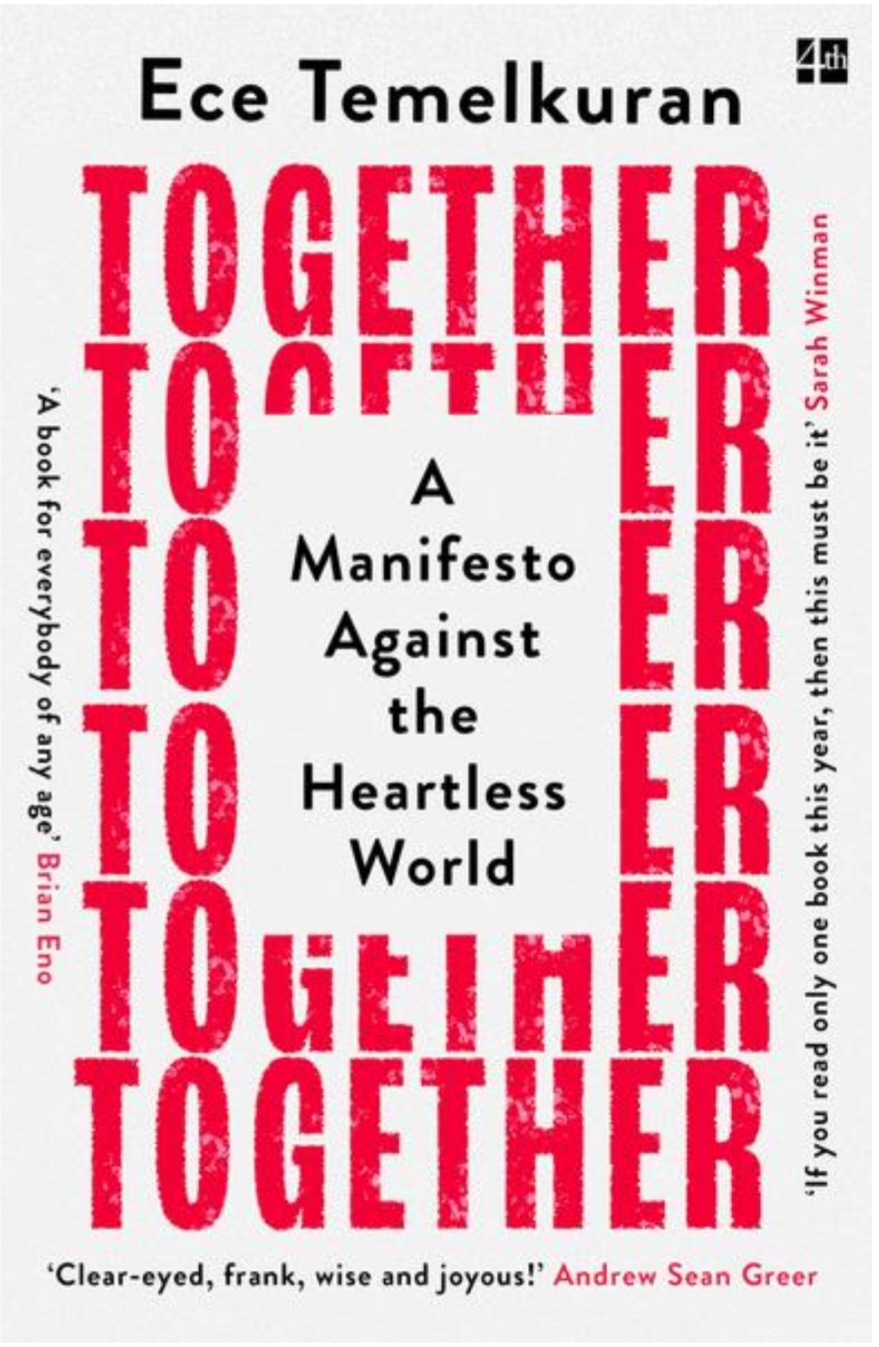
They say you shouldn’t meet your heroes but I can assure you that you are safe with Ece Temelkuran. When I heard the celebrated Turkish writer was coming to speak in my back yard – not literally, the event was about ninety minutes’ drive away – I knew I had to be there.

Temelkuran took part in the Bibliotopia festival on May 15, hosted by the Jan Michalski Foundation in the beautiful setting of Montricher in the foothills of the Jura mountains. The Bibliotopia programme is in French and English with simultaneous translation. It’s a great place to discover international voices.

Temelkuran played a prominent role in public life as a critic of the Erdogan regime until it was no longer safe for her to stay in Turkey. In her 2019 book How to Lose a Country: The Seven Steps from Democracy to Dictatorship, she passes on her hard-earned wisdom as a dissident who experienced first-hand the slide towards right-wing authoritarianism. I found the book fascinating and reviewed it for the Dublin Review of Books.

Having listened to the author yesterday speaking about her new book, I have high expectations for my newly-purchased copy. Entitled Together: A Manifesto Against the Heartless World, the book offers a roadmap to a better present and future. She gives us 10 guiding principles and each one is a choice, such as ‘choose dignity over pride’ and ‘choose strength over power’.

I was very interested in what Temelkuran had to say about friendship, which she considers the best medium to redefine our political connections. “Citizenship is not working, political party membership is not working, comradeship is not really working – it sounds so retro now. So how about we become friends?”

There is a chapter in Together about the unique role that friendship, with its lack of hierarchy, obligation, duty or power dynamic could play. It is the only type of relationship where, as Temelkuran says, absolute justice can be found.

“When friendship has a solid foundation that allows it to mature, friends and conversations with friends eventually become the gravitational force in one’s life. Friendship is the most profound confirmation of the individual as a human being. It is the confirmation that you are able to see the beauty in humankind and the ultimate recognition of the fact that you are, as well, human.”

She goes on to talk about enlarging this kind of “warm regard” to the scale of humanity. Just to give you a little bit more …

“What stands at the core of such wide-scale friendship is not sentimental love but a moral stance; a commitment to acquire and maintain a certain perspective on life and humankind.”

Living in a time where the word friend has been stripped of much of its meaning by social media, I find this exploration of the theme of friendship really important and encouraging. I will read more and report back. Or you could start reading Temelkuran yourselves.

Temelkuran spoke about a lot of other things, ably interviewed by Patrick Vallélian of Sept Info. She said that representative democracy had failed in its fundamental promise which was equality. This has left it hollowed out and vulnerable to right-wing populism. When there is no social justice, it is easy for a ruthless leader to come along and exploit the system, manipulating people into making choices against their own interests.

When asked to describe Russia’s invasion of Ukraine, she used the words tragic, absurd, incomprehensible and frightening. However, she cautioned against demonising the Russian people, who, she says, should not be equated with Putin.

Temelkuran wrote Together because, “I wanted to heal my politics and my faith in people.” Here’s hoping that her message of faith and courage will travel far.  

A spoonful of duckweed helps Brexit go down

Duckweed

In a slight change of direction, I’ve been commissioned to write some science stories over the next few months and that means my inbox is now flooded with Swiss science newsletters. Actually, it’s a great way to start the day, finding out about scientists’ wild and wonderful ideas. The creativity is infectious!

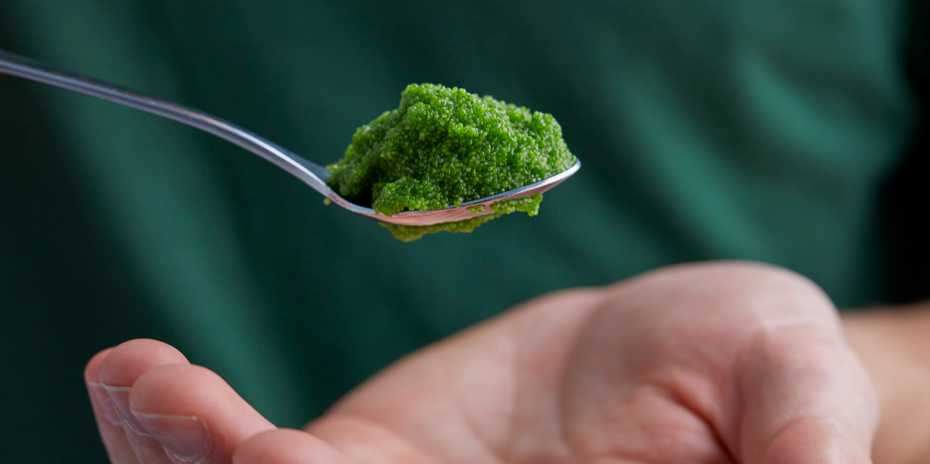
Today brought a press release from Zurich’s Federal Institute of Technology about duckweed, aka Wolffia. Two researchers, Cyrill Hess and Melanie Bingelli, want to take this common water plant beloved of ducks, and make it widely available as a superfood for humans. Duckweed contains lots of high-​quality plant proteins and fibre, as well as valuable unsaturated fatty acids. They think it could become a staple for vegetarians, perfect in smoothies or salads, apparently.

Apart from the various challenges the scientists have to overcome in the production process, there is one important administrative hurdle to get over, and it involves the European Union. Hess and Binggeli have to apply for EU approval for Wolffia to be listed as a novel food before it can be sold as a foodstuff. This approval might eventually make the production and sale of the plant economically viable.

If you want to read more about their work, check out the press release here.

So what’s the Brexit connection? I’m getting there. Reading about this exciting research, it struck me, not for the first time, how central the EU is to everything that happens in the European region, scientific research and food production being just two of countless examples.

Switzerland had a free trade agreement with the EEC from 1972, but when the EU single market came along, new arrangements were needed. The plan was for Switzerland (along with fellow neutrals Sweden and Austria) to join the European Economic Area (EEA) in 1992, which would have offered the advantages of EU integration without compromising on sovereignty. But when voters rejected this option, the government had to go back to the drawing board, a bit like the position the British are in now. Membership of the EEA might have made sense for the UK which is obviously much more integrated in the EU economy than Switzerland ever was but, thanks to Teresa May’s red lines, this was ruled out at an early stage after the Brexit vote.

Since 1992, the Swiss have negotiated some 120 bilateral agreements with the EU, a slow and painstaking process. These agreements, along with membership of Schengen, have brought Switzerland very close to full integration. Thanks to the 1999 Agreement on Trade in Agricultural Products, for example, approximately 58% of Swiss agricultural exports went to EU member states in 2018, while about 75% of its agricultural imports came from the EU. Maybe one day duckweed will feature among those exports.

The UK officially leaves to the EU on January 31st and the (in)famous Withdrawal Agreement will be in place until the end of this year. The idea that Boris Johnson’s government wants to negotiate a raft of new agreements governing every aspect of the UK’s future relationship with the EU in 11 months is for the birds. Yet another unnecessary self-imposed deadline that could only be met at great cost to the smaller negotiating partner.

Seeing the distasteful triumphalism of the flag-waving Brexit Party MPs in the European parliament yesterday was yet more evidence of the national delusion at the heart of Brexit. I still can’t understand the appeal of this behaviour although it clearly pleases many British people. Which is why the Johnson regime is running video ads this week in the same style which would have been dismissed as a parody of patriotism just a few short years ago.

As I wrote in The Naked Irish, the long-term effects of Brexit are impossible to predict. Walking away from the world’s largest trading block and all the preferential trading deals it has in place with the rest of the world seems bonkers to any sane observer. I certainly don’t see the UK, one of Europe’s most unequal societies thanks to home-grown policies, becoming a better place for the majority to live in the wake of this decision. No-one wants the population of the UK to go through unnecessary suffering and instability. What’s bad for them is bad for the rest of Europe too, particularly Ireland. It’s a crying shame.

Look, it’s too late for the duckweed lesson. The UK isn’t listening anyway. As the country sails off into the sunset /over the cliff of Brexit, the people I feel sorry for are the other half of the population who have been press-ganged into a future they did not choose.

On a different note, you may be interested in two votes taking place in Switzerland next week. I wrote a piece for The Irish Times about the affordable housing initiative, which shows that housing is an issue everywhere. And fellow Bergli Books author Diccon Bewes wrote a great piece on his blog about the second vote on extending racism law to include homophobia.

Remember the song ‘Be Back Soon’ from the Oliver! musical? That’s stuck in my head now so I hope you don’t mind me passing it on to you 😊

(Photograph: ETH Foundation / Das Bild)

What’s another year? Shifting goalposts in 2019

20190919_140323

I didn’t write a round-up of 2018. Looking back, this was probably because not much went according to plan. It was a year of near misses professionally. The only big project I managed to salvage was the book that became The Naked Irish. I signed with Mentor Books / Red Stag in November 2018 and the book was published in September 2019.

Other plans that went by the wayside last year after a lot of work and anticipation included a book translation project, an application to do a Master’s, a possible job in Basel, submission of a middle grade novel and a memoir writing business. But just when I was beginning to think everything I touched turned to ashes, I got that much-needed yes from Mentor Books.

So there was a point in time when all I wanted was for a publisher to accept the book about Ireland and publish it. But as soon as that became a reality, the goalposts shifted. It wasn’t enough just for the book to be published any more, I wanted it to be a critical success. I wanted reviews to confirm that I had done a good job.

From my point of view, the book has been a critical success, with positive reviews appearing in the Irish Independent, the Business Post and The Irish Times. It is on sale all over Ireland and was hopefully under many Christmas trees this year.

Now, I notice that my greedy writer goalposts have shifted again. Suddenly, Ireland is not enough. I want the book to be a commercial success and that means looking beyond the small Irish market. After all, The Irish Times review said the book would appeal to readers outside Ireland who have reasons for peering in. People like Irish Americans. They should obviously read The Naked Irish too, ideally in great numbers. God, it’s exhausting.

No, instead of obsessing about US publishers, I would like to savour the moment. That’s what Christmas is all about, isn’t it? I want to be thankful for everything I’ve achieved so far and all the good things that have happened in 2019. I already have more than I could have hoped for a year ago. It is enough, as these photos remind me.

20190116_114445

In January, I went to Ireland on a short research trip for the book. I had so much work ahead of me but this was the best part, the last bit of real-life research. I had meetings set up in Belfast and Ballyjamesduff and I interviewed the veteran women’s rights campaigner, Ailbhe Smyth, in Dublin. I also recorded two radio essays for RTE’s Sunday Miscellany, and enjoyed time with family and friends.

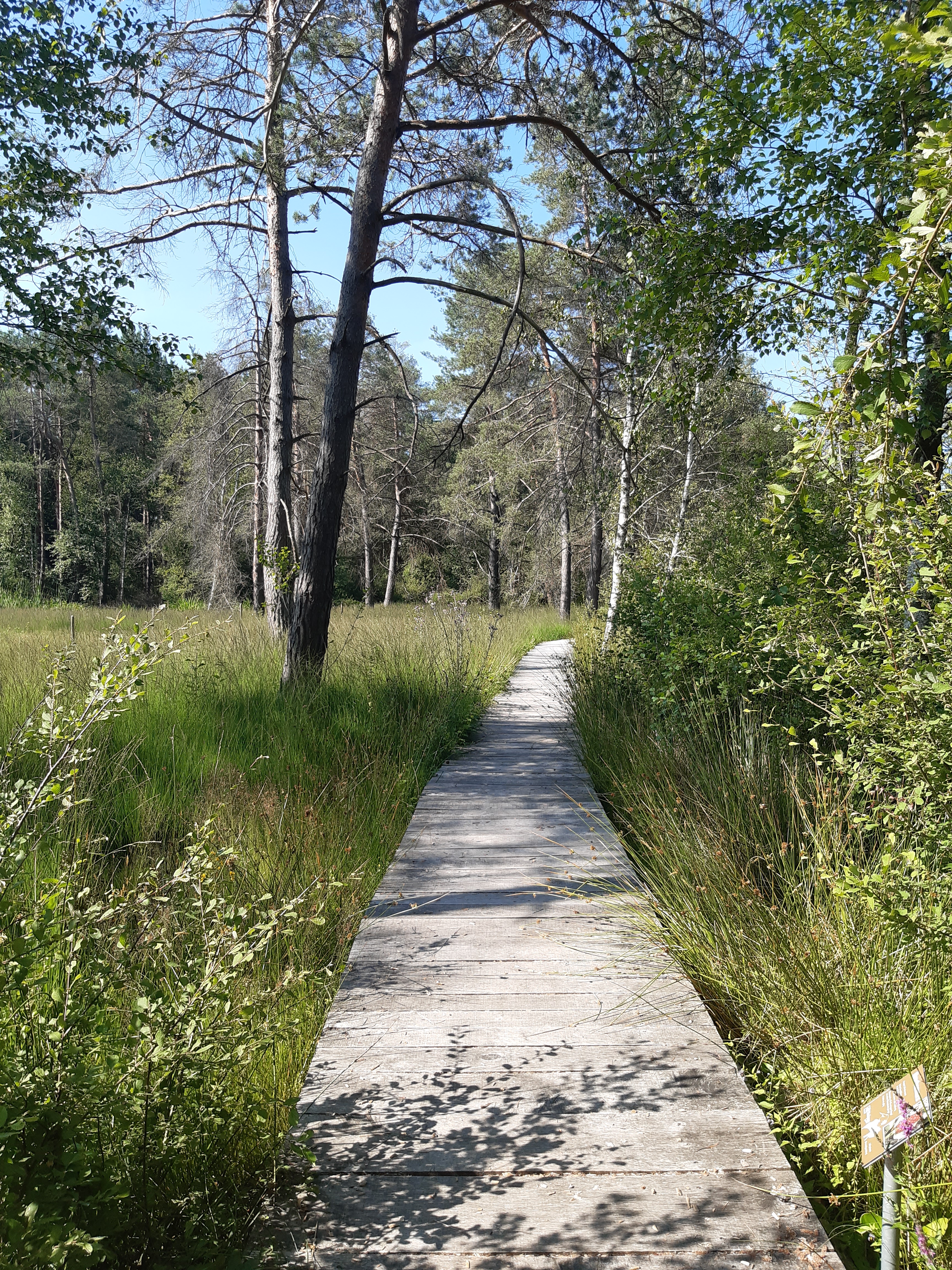
This is a photo from the drive to Co. Cavan. I chose Ballyjamesduff as a case-study because it perfectly represents the two sides of the Irish emigration story. On the one hand, the town is associated with emigration thanks to Percy French’s 1912 song, Come Back Paddy Reilly to Ballyjamesduff. On the other hand, it has the fourth highest immigrant population of all Irish towns with 30 per cent non-national residents. I got a warm welcome at the local school, St Clare’s College. My mother came with me as co-driver and she visited the local emigration museum (coincidence!) while I was at the school. We had a lovely lunch on the way back in this village, Virginia, and plenty of time to chat on the journey.

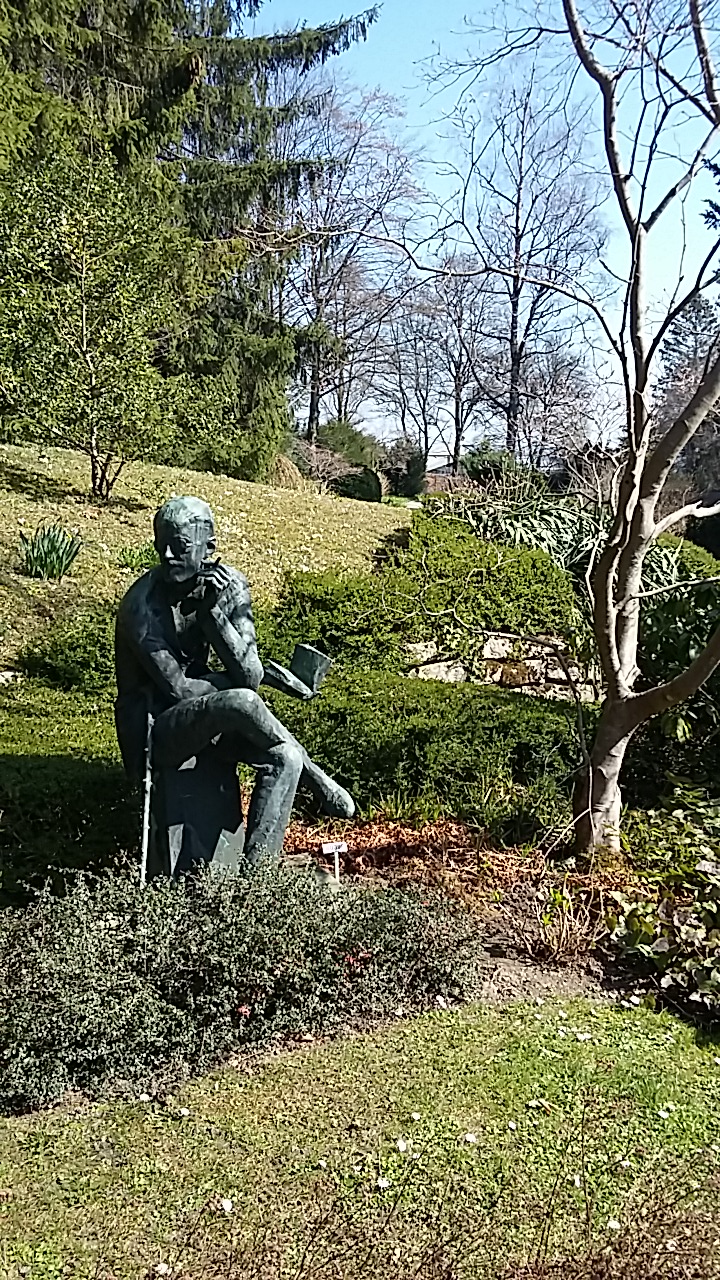
In March, I finally got to visit James Joyce’s grave in Zurich at the instigation of my cousin Jennifer, who was visiting from Ireland. We spent a wonderful day together in the city with time to talk and had a memorable conversation about life and death at the graveyard. There were murmurings this year about moving Joyce’s body back to Dublin. Such nonsense, he’s fine where he is, really.

20190324_111541

Also in March, I had a writing weekend away in Wilderswil in the Berner Oberland. It’s the second time I’ve gone away with this small group of writers. The village is quiet off-season and we stay in a nice little hotel and meet for meals in between writing sessions. The perfect mix of solitude and good company. This was the view from my room.

20190330_160726

The big event in June was the Women’s Strike in Switzerland. Hundreds of thousands of people took to the streets all over Switzerland on the 14th. I went along to my local demonstration in Fribourg with two friends. We wanted to draw attention to all the unresolved equality issues in Switzerland and elsewhere. The energy and feeling of unity in the crowd was amazing. As the white sign here says: ‘If you’re here it means you get it’. I don’t always feel like I’m fully connected to Swiss society. This was one of the good days.

20190614_192017

In July, one day that stands out is when I took a hike with my daughter and the dog. She had a few days home alone while the other two were at camps. It was a very hot day and we took the train to the neighbouring town of Düdingen to walk back home. I know the area well but I’d never walked it so it was a journey of discovery and we had a lovely relaxing, fun time together.

20190719_101130

We had a family version of this adventure when we took the train to Grenchen with our bikes one day in the summer and cycled along the Aare river to Solothurn. A week spent in Portugal with the extended family was another delightful escape from normal life.

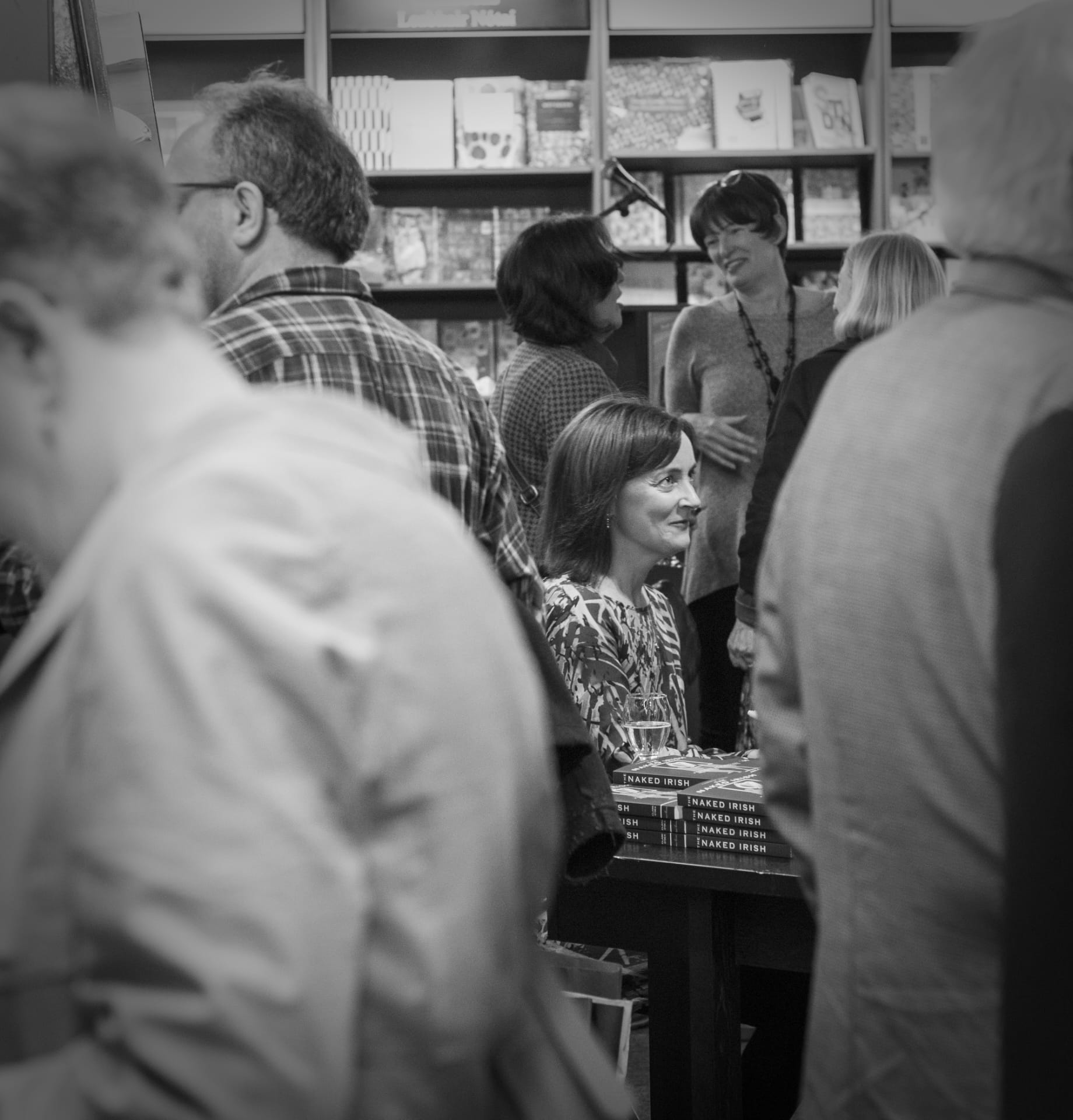
September brought the launch of The Naked Irish in Dublin, a very happy occasion. Both my godparents were there, three generations of my family, my husband, friends from school, college, writing and work. It was a reunion really, a great reason to get together and celebrate. I had the pleasure of seeing my book on Irish shelves at last (photo by Ger Holland).

IMG-20190927-WA0000

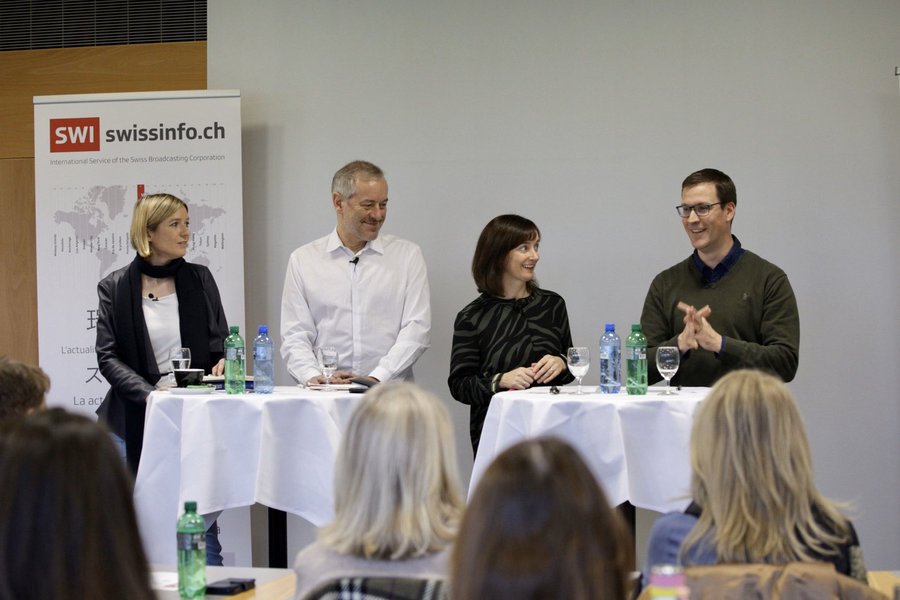
A Swiss launch of The Naked Irish followed in November in Book Books Books in Lausanne, and, in December, I was asked to moderate a panel discussion on Brexit in the University of St. Gallen, organised by swissinfo.ch. It was my third time moderating this year – the first two were literary events: the Bibliotopia festival in May and Le Livre sur les quais in September. This is something I definitely want to do more of.

EKxxbhtWkAAuqDk

It seems like most of my highlights this year involved spending time connecting with people and doing interesting work. There were plenty of humdrum days too but the year was also made richer by the books I read. Thanks to Goodreads, I know I read 50 books this year. You can view the list on that link, including some reviews. My favourite novels were Olive Again by Elizabeth Strout, The Narrow Land by Christine Dwyer Hickey, The Italian Teacher by Tom Rachman, and Hidden Latitudes by Alison Anderson.

I really enjoyed answering questions about my favourite non-fiction books for the website Smartthinkingbooks. You can read the interview here. Actually, I think a separate blog post is needed to talk about the books of 2019.

I hope you are fortunate enough, like me, to have a few more quiet days of freedom left before returning to the normal routine. If you scroll back through your photos of the year, may you find many good times to recall with a smile. Wishing everyone good health, harmony and goodwill in 2020.

Plastic forks and breadcrumbs in non-fiction

20191109_164719

The biggest challenge when writing non-fiction on a serious subject is to keep the reader engaged. You have mountains of information but how to package it? My approach is to give the reader enough entertaining breadcrumbs to follow so that they don’t get bogged down in the statistics and analysis.

While researching the book I was constantly on the look-out for these breadcrumbs/nuggets. This quote, for example, from the Archbishop of Dublin talking about his diocese: “there are more members of the current cabinet under the age of 45 than there are priests of that age in the diocese.”

Apart from killer quotes, I also used photographs, anecdotes, memoir, reportage and, in one chapter of The Naked Irish, a piece of micro fiction. I also tried to keep a conversational style to avoid straying into textbook territory.

Another way the reader keeps his or her sense of direction is from the structure of the book. If it is strong enough, the reader should never wonder what a particular passage is doing there. It should always make sense.

When I was writing the chapter about whether the Irish want a united Ireland, I wanted to come up with a suitable allegory for the three-way relationship between Northern Ireland, the Republic of Ireland and the United Kingdom. It was no easy task.

At first I was leaning towards the broken home comparison, which works up to a point. The UK is the somewhat reluctant father who has custody of the troublesome child, and Ireland is the mother who lost custody but has been trying for years to get her baby back.

There was also the option of bringing romance into it. Ireland is the rejected suitor who is still holding a candle for the North, an incurable optimist who cannot and will not move on. Meanwhile the North is smitten with the dashing prince next door who is staring at the ceiling, wishing he was somewhere else instead. A double dose of unrequited love.

For an unreconstructed Irish nationalist interpretation, you cannot beat Tommy Makem’s best-known folk song, Four Green Fields, written in 1967. Ireland is the field-owning old woman lamenting that one of her four ‘jewels’ is ‘in bondage in stranger’s hands’, despite her sons’ best efforts.

‘But my sons had sons, as brave as were their fathers

My fourth green field will bloom once again said she.’

This old lady wouldn’t be into any new-fangled ideas such as agreed solutions, or the principle of consent or respecting different identities. A battle is what she is envisaging, one she expects her sons to win.

What none of these set pieces takes into account is that Northern Ireland is not a single entity that can be represented by a single role.

In the end I imagined something that combined economics and identity: Northern Ireland as a company. This is an excerpt from the opening of the chapter:

Imagine a small company that makes plastic forks. It has always lost money but has survived because it belongs to a big company that produces stainless steel forks. The big company has said more than once that it has no strategic or economic interest in holding onto the plastic fork company.

A few miles away, a medium-sized company that makes plastic knives is keeping a close eye. This company is looking to grow and believes a merger with the plastic fork company would be the best way forward. It hires a plane to fly over the plastic fork company pulling a banner that reads, ‘YOU COMPLETE ME’.

But the staff and management of the plastic fork company are split. A narrow majority of the board are firm believers in the fork business. Their fathers and grandfathers made forks and were part of a great fork tradition best represented by the big fork company. They don’t like change and they don’t trust knife-makers. The rest of the board, well disposed towards plastic knives, argue in vain for a brighter future of plastic forks and knives together under one roof. We’re all plastic at the end of the day, they say. No surrender, say the forkmen.

The plastic knife company settles down for a long wait.

The Naked Irish is two months old today! As good a time as any to give an update on the book and other work I’ve been doing.

There have been several highlights since I last wrote about the book. The first is the review that was published by the Irish Independent newspaper on November 16. I had no idea who had been commissioned to read the book or what they would make of it so of course I imagined the worst. But the review, by Darragh McManus, was very favourable, and fair in my opinion. Here’s a taste:

O’Dea is ideally placed to cast an eye – not cold, as per Yeats, but with the necessary coolness of the investigative journalist and/or social scientist – over our foibles and delusions. She brings the perspective of an outsider, leavened with a genuine grá [love] for, and understanding of, her homeland: a potent mix.

Another big day was October 28 when I went into the Radio Centre in RTE to be interviewed by Ella McSweeney on the Tubridy Show. The podcast of the 20-minute interview is available here.

Back in Switzerland, I was invited to Lausanne-based Books Books Books to have an author event at the shop. It became a sort of Swiss launch and there was a great atmosphere on the day. This was the first time my children got to see me in my public role as an author. Makes a nice change from seeing me hunched over the laptop, scowling at the screen.

On the journalism side, I’ve had two articles published on swissinfo.ch recently that might be of interest. One is about a group of tenants in Zurich who are being evicted from their apartments – owned by Credit Suisse Pension Fund. This is a story with lots of layers which reveals the tension between tenants’ needs and the investor’s prerogative, which is to make money.

The second article is a profile of Irish right-to-die campaigner Tom Curran, who comes to Switzerland often in the course of his work. Tom Curran is well known in Ireland as the partner of Marie Fleming whose 2013 case seeking the right to assisted suicide ended up in the Supreme Court in Ireland.

The last bit of work-related news is that I will be moderating a panel discussion on Brexit and direct democracy on Monday 2 December in St. Gallen University. More information on the event here. It’s free and open to the public but you do have to register.

Just one more thing. If you have read and enjoyed The Naked Irish, don’t forget to rate and review the book online. The book is listed on amazon.co.uk and on Goodreads. The more reviews, the merrier!


Announcing my new book about Ireland


TNI COVER

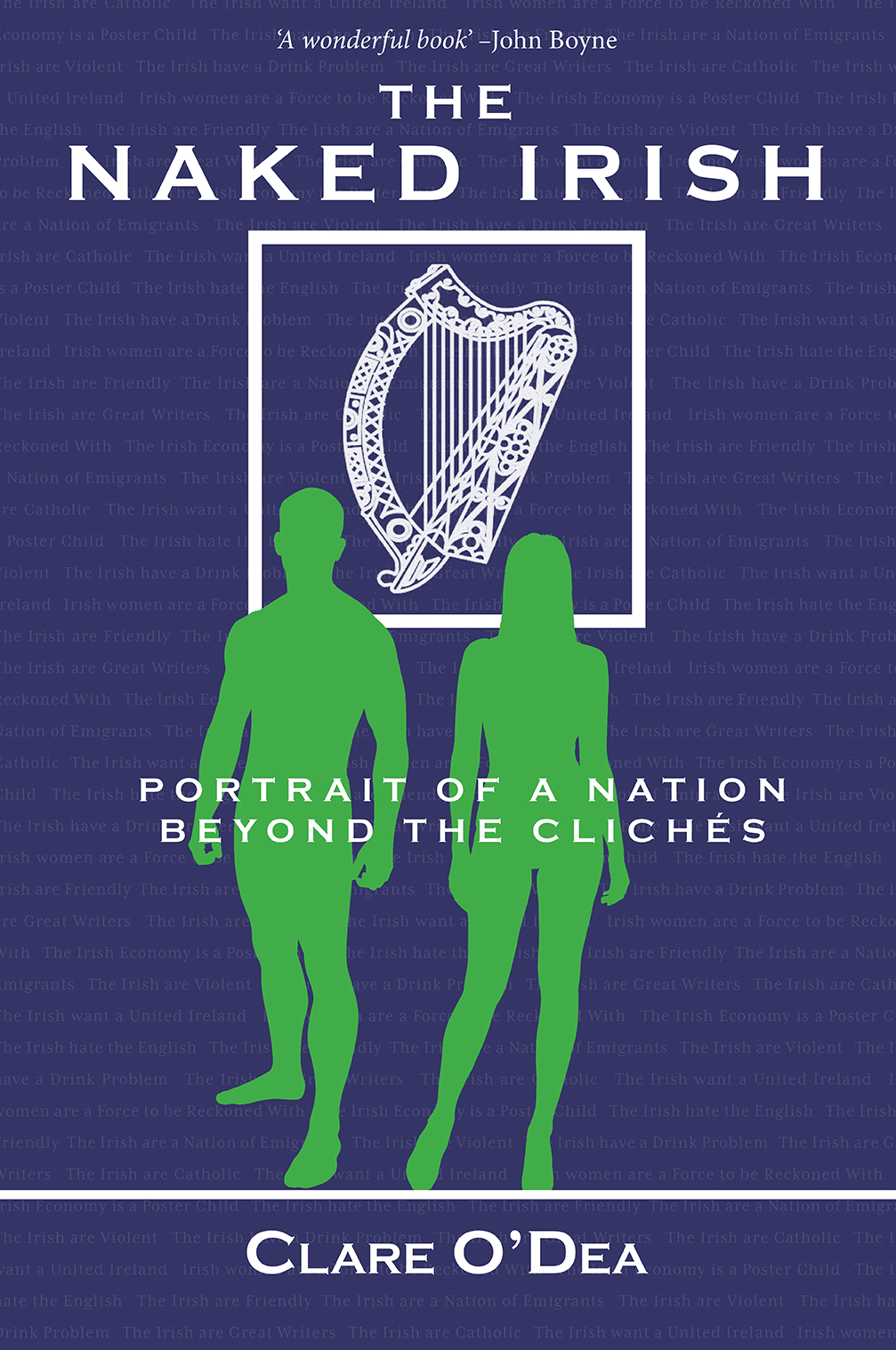
I’m delighted to announce that I have a new non-fiction book coming out with an Irish publisher next month. The Naked Irish: Portrait of a Nation Beyond the Clichés will be published by Red Stag Books (a new imprint of Mentor Books) on September 24th. The book offers a “fresh and insightful analysis of what it means to be Irish in the 21st century”.

Ireland has changed dramatically in the space of a generation. The Naked Irish is a broad canvas, drawing on culture, history, politics and economics, as well as personal reportage and memoir, to interpret that change.

The book tackles the most persistent stereotypes about the Irish to find out how much truth lies behind them. Are the Irish a nation of emigrants if we have the second highest foreign-born population in Europe? Are we Catholic if attendance at Mass is as low as three percent in some parishes? Do we really hate the English and want a united Ireland? Is the oppression of women in our DNA? Are the Irish really friendly or just faking it?

My motivation for writing this book is to question the received wisdom so that we can have a truer, fairer, and ultimately healthier understanding of ourselves. As an emigrant, I have experienced Ireland from the inside and the outside, and I hope that gives me some extra objectivity. The Naked Irish obviously builds on the approach of my first book, The Naked Swiss: A Nation Behind 10 Myths. If I had to pin down the difference, I would say: this time it’s personal.

It has been the greatest pleasure to immerse myself in all things Irish again and to have had the excuse for frequent research trips to Ireland with lots of intense reading and listening. I met many interesting people in the course of my research, from experts to artists to everyday heroes.

Here’s what John Boyne said about the book. I’m so thrilled to have his approval!

‘A wonderful book, Clare O’Dea captures the essence of who we once were and who we’ve become with admirable wit and insight.’

I’ll be back with news about the cover design (added in above!) and any events around the launch of The Naked Irish, as well as information about where you can buy the book. Another way to stay in the loop is to like my author page on Facebook or follow me on Twitter. My thanks to the team at Mentor Books who have been amazing to work with.

Brexit: disarray and disappointment for Christmas

20170304_133120

Brexit has given us another Shakespearean year in British politics and, like many observers, I am simultaneously gripped and dismayed by the drama. I am fully expecting a once-in-a-lifetime thunder storm to accompany the final act, though it is anyone’s guess what that ending will look like.  

For the Irish, there is too much at stake for schadenfreude. The dominant feeling is disbelief that we are witnessing such an extreme public display of incompetence and bad judgment on the part of our former rulers. Whatever we thought of the English, we never considered them to be foolish.

The Brexit project was based on the premise that the EU was bad for the UK and that life outside the union would be much better. The UK’s real, home-grown problems, such as having the highest rate of income inequality in the EU, were ignored in the debate which concentrated on the woolly issue of sovereignty, fuelled by wild economic fantasies.

Leaving the EU is a new concept but it is imaginable, assuming you approach the task with good imagination, good planning and some respect for the rest of the union. That we are where we are today clearly shows the plan had no great minds or vision behind it. It is obvious that the Leave campaign never expected to win. The goal, or the game, was to stir up as much discontent as possible while using the debate as a vessel for grand-standing and disruption. At the end of it all, the Leave campaign has left us with a dated, mean-spirited brand of nationalism in lieu of a workable roadmap for Brexit.

The English and Welsh decision to leave the EU, dragging Scotland and Northern Ireland along, was based on negative, not to mention dishonest, campaigning. The narrative of the European Union as a tyrannous force from which the British have to be liberated is bizarre considering the UK’s influential place in the union and the special exceptions it successfully negotiated over the years.

The EU has many flaws but it is not the enemy. If the British public need an enemy so badly, why don’t they look slightly further afield to the country that revived the practice of annexation in the 21st century?

The vote result showed a profound lack of consideration for others – whether immigrants or the Irish or fellow EU countries – and a lack of understanding of the wider implications, such as who would really benefit from this course of action. Why did Putin, to name one Brexit fan, speak out against a second referendum? Because the first result, actively encouraged by his back office, fits perfectly into his agenda of weakening Europe.

Trade was a big argument in the referendum but the Leave campaign denied how complex and painful severing ties with the EU was bound to be. In the 25 years of the single market, entirely new ways of doing business have evolved based on 28 countries being a single trading space. The pain of undoing that mesh of interdependence will be felt for years.

When it came to the prospect of Northern Ireland being pulled from the EU, the Leavers did not bother with denial, just indifference. Thanks to the single market, a hard-won peace agreement and the (relatively new) good working relationship between the UK and the Republic of Ireland, the island of Ireland has, in many ways, been able to move beyond the border.

Joint membership of the EU goes way beyond trade for Ireland. As part of the 1998 Good Friday Agreement, we in the Republic voted to remove the territorial claim to Northern Ireland from our constitution. This was conceivable not just because everyone wanted peace so badly but because we were all EU citizens. Being European is an additional, welcome identity that unites us and makes it easier to for the two Irelands to cooperate in healthy ways. The shared identity enhances the links between north and south which can only be a good thing. Taking it away is the most destabilising thing that could be done to Northern Ireland.  

The border is not just a line on a map. For many, north and south it is a scar that in recent years was finally allowed to heal in a context of forgiveness.  The fading of that scar allowed people who had been oppressed by it to feel free, and it took away the legitimacy of paramilitaries. We don’t know what life will look like – economically, emotionally and politically – with the scar cut open again. But we have got the message that the people who voted leave could not care less. 

Historically, the Swiss have also had an ambivalent attitude to the EU, and there is an influential segment of Swiss politics and public opinion that beats the same nativist drum as the Brexiteers. This was the constituency Steve Bannon was seeking out when he came to Zurich in March and praised the delighted audience for being the first to stand up to the EU.

Just like the British isolationists, these Swiss have a superiority complex when it comes to Europe. They believe they are better than other Europeans, sweating away stupidly under the yoke of the evil EU. They knock the EU as a rotten construct while benefitting from its strength and partnership in a myriad of tangible and intangible ways. It is a highly unattractive mix of snobbery combined with a sense of entitlement.

The Swiss are not EU members but their relationship with the EU is so close, complicated and crucial to the smooth functioning and well-being of the nation, that they might as well be.  

As well as intensive contact between people – 17.5 per cent of Swiss residents are EU citizens (not including dual nationals), and 430,000 Swiss live in the EU – Switzerland is hooked on the EU because the single market of 510 million people is its largest trading partner.

Switzerland is part of the Schengen area and ties are increasing rather than diminishing, for example in the area of food safety, public health, research, electricity and CO2 emissions. The raft of bilateral agreements that govern the relationship are in the process of being replaced by one over-arching agreement, though there is resistance from the usual suspects to this pragmatic solution.

And while we are all bitching at each other in Europe, things are evolving quickly on the global stage. Since the phenomenal rise of China, the world now has two great economic and military powers where before there was one. China has no allegiance to Europe or wishy-washy ideas like human rights, and Trump has proven that US sympathy for Europe is only skin deep.

Over the same time period, Russia has been trying to claw back to a strong position since the break-up of the Soviet Union, and while unable to score on economic progress, it has fallen back on dirty tricks and military posturing.

The EU has plenty of shortcomings and often does not live up to its own ideals but we don’t know what life in Europe would be like without it. When it comes to regional trade, the EU is the only game in town. When it comes to geopolitical influence, 28 countries may find it hard to reach consensus but as a group they still manage to play an important role as a global voice for democracy.

Whatever happens in the next three months and beyond, we have no choice as Europeans but to wish the British people well and to hope for a tolerable outcome to Brexit that does not cause undue suffering and instability. The British rejection of the EU, adopting the role of the thankless child, has brought the rest of the family closer together – for now. All is disarray and disappointment this Christmas. Let’s stock up on some good cheer and goodwill before the next instalment of drama in 2019. 

A wannabe vegetarian goes hunting

DSCN1704

My New Year’s resolution this year was to give up meat. With great effort and a handful of staple dishes, I managed to get through January meat-free. My quest has gone steadily downhill since then and I am now back where I started, eating meat roughly every second day and feeling uneasy about it. Part of the problem is that the rest of my family are not yet converted, so I still have to cook for four meat eaters. There’s only so many times I can reheat my lentil stew and watch them eat lasagne (I make a very good lasagne).

To be accurate, I never aimed to be a pure vegetarian. Ideally, I would like to eliminate meat from my own cooking while being relaxed about eating a meat dish as a guest at someone else’s table. But by not taking a hard line, I’ve been too open to making other exceptions. Classic slippery slope.

My motivation to stop eating meat mainly stems from conscientious objection to the meat industry. I just wish I was more conscientious about it. When I think about the cruel and unnatural conditions animals must endure in large-scale farming and the way they are slaughtered, I feel I cannot be complicit. I’m also swayed by the environmental arguments and, to a lesser extent, the health benefits.

But why is it proving so difficult to give up just one of many foodstuffs? Meat eating is just a habit, not an addiction, even if I did grow up in a strong meat-eating culture.

A lot of people grapple with this issue in young adulthood but my twenties came and went without me seriously considering vegetarianism. I was always too hungry and in too much of a hurry chasing other goals. But that’s a long time ago now. I can’t believe it’s taken me so long to face up to this basic moral choice. And I can’t believe what a lousy job I’m doing at sticking to that choice.

In my reasoning, and some vegetarians will disagree strongly, the problem is not the fact that an animal dies to feed me, the problem is how the animal lives and dies. The forced breeding of billions of animal lives in miserable warehouse conditions to produce meat is an ugly reality. The more traditional small-scale farming model is obviously more acceptable, and one thing you see in Switzerland is a lot of contented cows ambling about in beautiful, big fields. Pigs and chickens suffer behind closed doors, unfortunately. But no matter how pretty the farm, when the time comes, the animals still have to be transported to be slaughtered en masse. Back to my original sticking point of not wanting to be complicit in a horrible, distressing death.

But what if there was such a thing as a good life and a clean death for an animal? It turns out this ideal does exist and there is a group of people dedicated to making it possible, Swiss hunters. Though it’s a hugely popular pastime here, hunting has always been alien to me. Now, as part of this whole thinking process around the ethics of eating meat, I have become more curious about hunting. So much so, that I was inspired to go on a hunting expedition and write an article about it.

The autumn hunting season is currently in full swing and game features on the menu of Swiss restaurants everywhere, from the hushed dining rooms of Michelin Star restaurants to the loud and crowded supermarket canteens. The most popular meat is venison and it is served with an array of mouth-watering side dishes, including glazed chestnuts, Späzle dumplings, Brussels sprouts, red cabbage, poached pear and cranberry sauce. About a third of the game eaten in Switzerland comes from domestic hobby hunters but the demand is so high that most of the meat has to be imported.

Up until last month, you could fit everything I knew about hunting onto a beermat. I certainly didn’t see the attraction of stalking and shooting an animal. As an activity, it seemed a bit selfish and unnecessary. When I go walking near my home, I sometimes catch sight of chamois (a kind of goat antelope native to the Alps) and deer and it makes my day. Why would you want to hurt those lovely creatures?

This was more of a superficial, city girl reaction. Of course I have heard of culling and how it is necessary to keep wild populations at sustainable levels to protect biodiversity. And I know humans started out as hunter gatherers. Children don’t play chasing and hide-and-seek for no reason. Hunting is in the blood. I just didn’t think it was in my blood.

DSCN1743

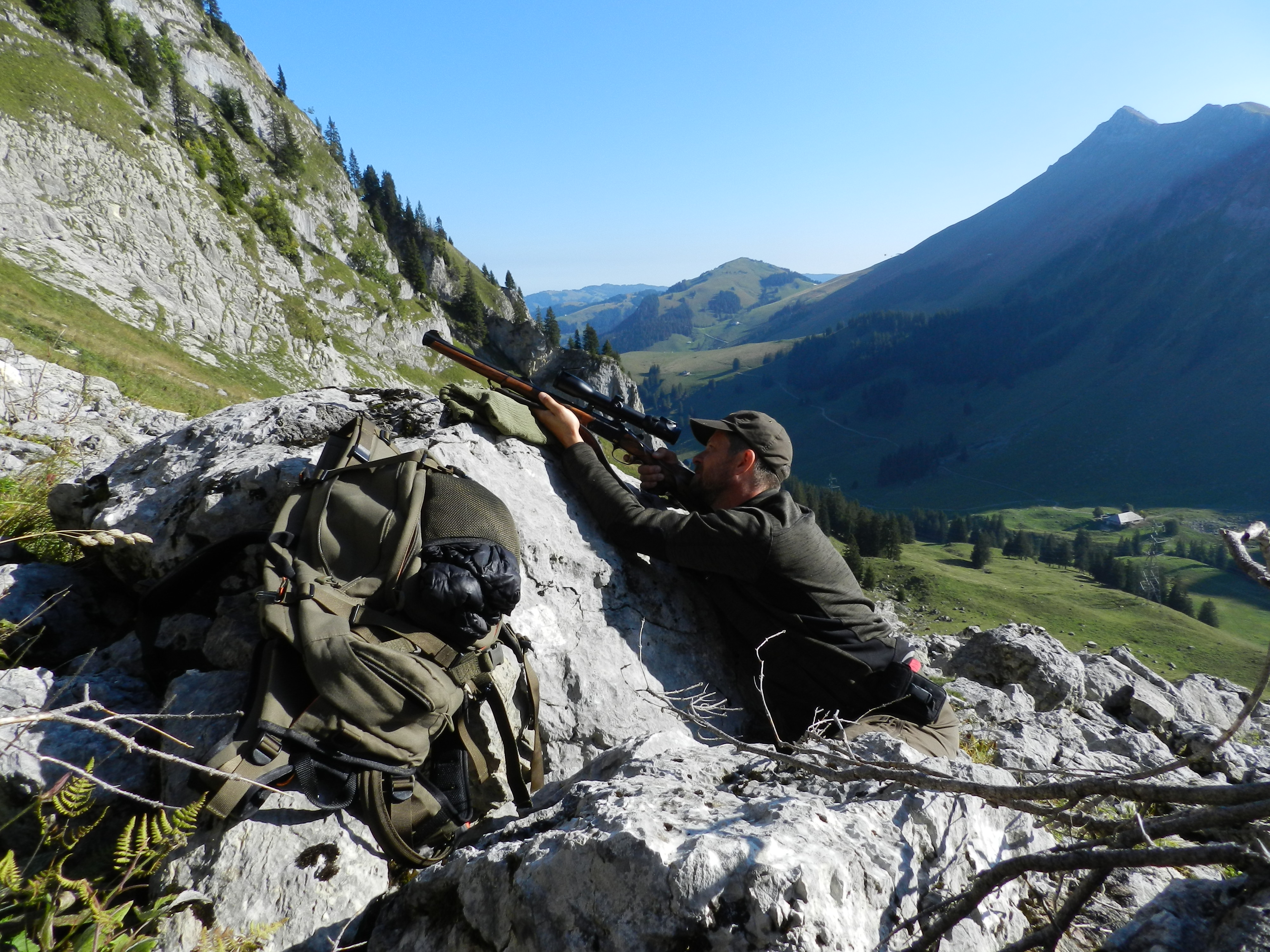
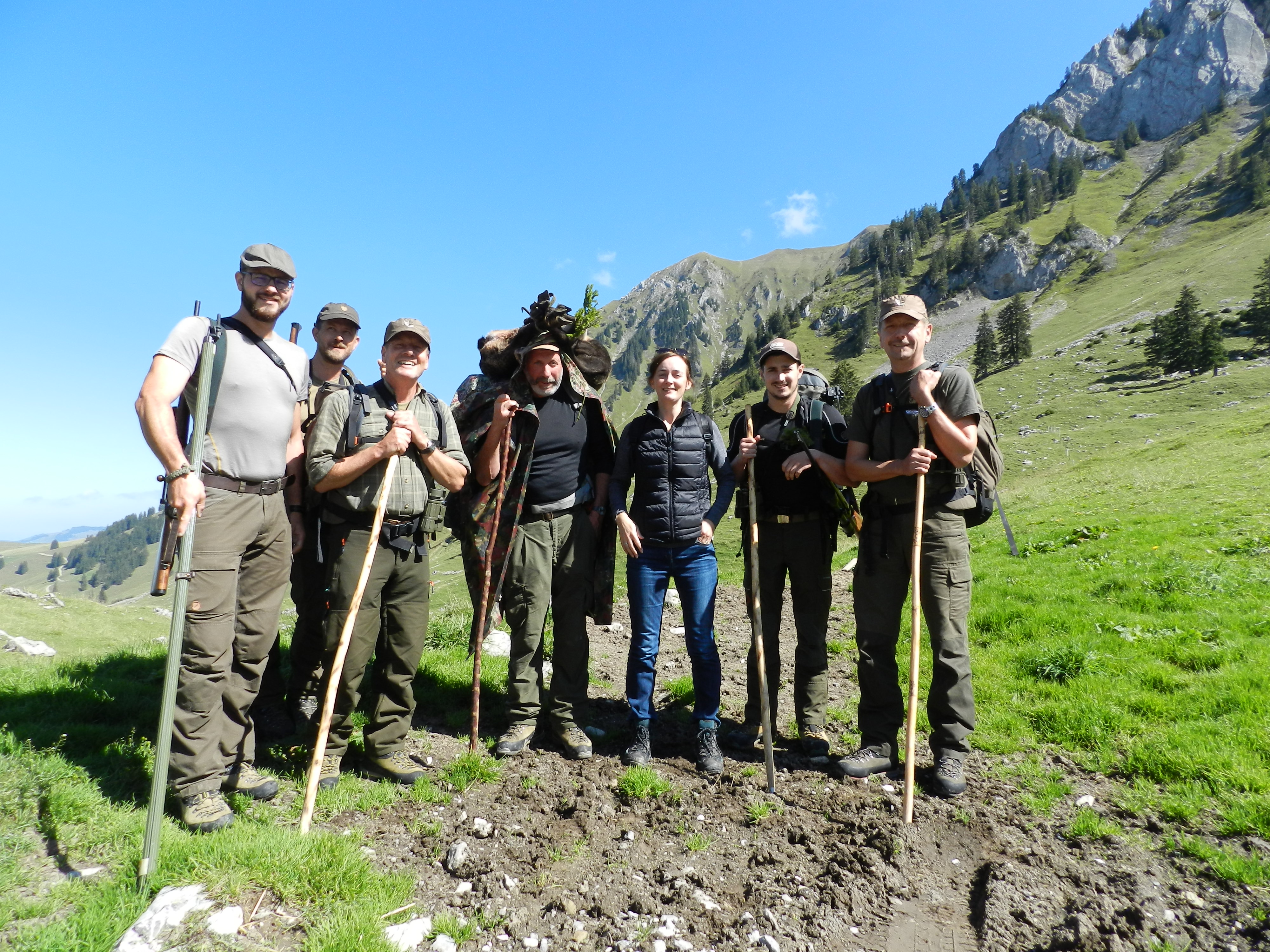
Well, I was wrong. The day I spent hunting chamois was completely different and more exciting than most other days I’ve spent in the great outdoors. It beats skiing, paragliding (OK, I’ve only done a tandem jump once) and hiking.  And I didn’t even carry a gun! All I did was trek around the place, look through binoculars a lot, and watch animals. I was with a party of eight hunters who split up for the day and only one of the eight shot a chamois. Yet everyone had a great time because we were all there with a purpose. I discovered that you don’t need to shoot something yourself to feel the thrill of the chase.

It felt OK to me because the chamois that was shot was killed instantly and was sold to a restaurant. And then there’s the context in which the hunt was happening. Hunting is tightly regulated in Switzerland, and I think this is a good thing. They don’t just let any fool go out with a gun. You have to go through a two-year training programme to get your hunting licence, and then pass an annual shooting test. The cull numbers are carefully controlled (15 per cent of the herd) and hunters who apply are allocated a small number of animals to shoot, age and sex specified. They have to put a date tag on their kill and show it to a wildlife inspector the same day.

The hunters aim for the side of the chest, just under the leg, to kill with one shot. Some butcher the carcass themselves and keep the meat, the rest sell directly to butchers or restaurants but the money they make does not cover the licence costs. For these men – and some women, the proportion is growing – hunting is a way of life.

There are two hunting systems in Switzerland. In most cantons, the hunting period for the ‘better’ animals – red deer, roe deer and chamois – is limited to a few weeks in the autumn. Smaller animals, fowl and wild boar have a longer hunting season.

Swiss hunters tend to be members of clubs. In the non-hunting months, they spend a lot of time involved with the animals – saving fawns from combine harvesters during the mowing season (the little ones tend to hide in the long grass when they get scared), delivering hay to feeding points in the winter, doing forest maintenance and lots of observing to see the condition, whereabouts and numbers of the animals.

The hunters are a tightly-knit community from all walks of life, but the majority I met work in manual jobs. They spend a lot of time in nature and that, along with the camaraderie and the challenge, is the attraction. I wonder if I fell into the trap of the embedded journalist of liking the hunters too much and losing sight of the rights and wrongs of the venture. I hope not.

If you want to read more about it, the article I wrote for swissinfo.ch is here: The Swiss hunt: collecting the reward for a year’s work. You’ll find recipes and more information on what goes into the classic Swiss game dish at Helvetic Kitchen, the excellent Swiss cooking blog by author Andie Pilot.

Feel free to scroll down and comment. I’d love to hear your take on any of these subjects from vegetarianism to cooking for a family with different diets to humane farming to hunting. These are areas where personal decisions can have far-reaching consequences – at least that’s the hope. 

Catching fleas from Bannon, a European view

20180306_192913

Six months ago, I sat in a concert hall in Zurich listening to Steve Bannon fantasise about civil unrest, while the audience around me murmured their appreciation in subdued Swiss fashion. Bannon was talking about the new serfdom of the working class, but this was not a gathering of the disadvantaged. Anything but.

For a start, the poor are as rare as hen’s teeth in Switzerland (OK, seven per cent of the population), but more importantly, they don’t come out on a cold weeknight and pay 40 francs to listen to a political speech, especially not during ice hockey season.

No, this was more like an outing of business clubs and retired professionals. As I wrote in The Irish Times, mostly the kind of people you would see in a city’s central business district at lunchtime, minus the young women working in lower paid roles.

It would be nice to dismiss Bannon as a political Ozzy Osbourne (also coming to Zurich soon on tour), just another ageing performer who still needs the attention or the money that a tour generates. But of course, Bannon is more than a performer, he is a master strategist who represents a powerful movement that wants to revolutionise Western society. It is clear that we, the media, need to keep tabs on him but, as the current confusion of inviting and disinviting shows, not clear whether or not to engage with him.

One thing to be very careful of in this context is journalistic ego. When Bannon speaks, the media lights up the stage. The person interviewing him gets a share of the glory. His Swiss host last March, news editor and right-wing populist parliamentarian Roger Köppel, practically swooned with excitement when he came out to introduce Bannon to the 1,400-strong crowd. The ensuing ‘interview’ was so soft it resembled a sponge bath.

Now we have David Remnick of The New Yorker and Zanny Minton Beddoes of The Economist, both struck with the same brilliant idea at the same time of inviting Bannon as speaker.

Remnick invited Bannon to attend The New Yorker Festival in October, for which he would be paid an honorarium. The news became known on September 3, unleashing a storm of criticism. The next day, Remnick rescinded the invitation without actually accepting any of the arguments that had been voiced against his plan. Reading between the lines, Remnick probably hoped to be the one to slay the dragon with his “rigorous interview” skills. While he has now dropped the festival appearance, he intends to interview Bannon again in a more traditionally journalistic setting in future.

Meanwhile, the editor-in-chief of The Economist, Minton Beddoes, is not for turning. Bannon is scheduled to take part in an event on September 15th in the Open Future festival, a 24-hour rolling event in Hong Kong, London and New York.

In a statement issued on the same day as Remnick’s, defending the magazine’s position, Minton Beddoes spoke of the importance of testing ideas in open debate. While she is clear that Bannon’s world view “is antithetical to the liberal values” of The Economist, she maintains that it is nevertheless necessary to engage in a conversation with critics, including the man she describes as one of the chief proponents of nativist nationalism.

Even Köppel echoed this approach. “If he is the devil,” he told the crowd, “we have to interview the devil!”

So what are these ideas we are supposed to test in open debate? One idea is that we, the mainstream media, are the enemy of the people. Early in the show in Zurich, Bannon called for the lights to be turned on and for the “opposition party media” (a nonsensical notion in the Swiss political context) to make themselves known. That was such an alien and disturbing moment for me as a European journalist, and I shudder to think what American journalists have gone through since this media-trashing narrative took hold under Trump.

When he’s not talking about the corrupt global elite, a good part of Bannon’s spiel is plain boasting. If you don’t stop him, he will relive the excitement of the presidential election night, literally hour-by-hour, gleefully listing the order in which the states turned red.

He does not hide the fact that the election was won on the perception that the US was in decline. The goal of the campaign he led was to sow discontent and provide simple solutions – namely a clamp-down on immigration and trade. Trump and Bannon needed voters to believe that the US was in decline and, as we now know, they used very effective social media tools to reinforce that message.

In the more hysterical portion of his Zurich speech, Bannon’s message got a bit murky. He talked about central banks debasing national currencies, and governments debasing citizenship. He proposed cryptocurrency as a silver bullet, a way of bypassing government. And then, surprisingly, he spoke about the threat of data harvesting.

“Your digital identity is extracted from you for free and used behind a cloud of secrecy to enslave you.” A strange line of attack coming from the man who helped found Cambridge Analytica. Strange is one thing, the next level of this conversation of ideas was sinister.

Bannon predicted turmoil and sounded pleased about it. When asked what he would say to people who fear the consequences of popular revolt, Bannon said it was a false choice. “You are not going to have stability. The system cannot continue as it is.”

In a nutshell, Bannon’s world view is that there is either going to be a right-wing revolt or some form of socialist or state capitalism. These are the stakes and he is clearly in favour of what he calls turmoil or unrest, in other words violence. Bannon’s aim is to provoke that revolt and I’m not sure he cares who wins, as long as the fantasy of destruction is fulfilled.

The Economist wants to expose bigotry and prejudice. I share that desire. But can The Economist, and all the other principled journalists, be sure that they are not being played? Bannon is about perception, not facts. He sounds notes at a frequency that is missed by most reasonable people but highly nourishing to his true listeners.

Sadly, the media, myself included, is as incapable of ignoring Steve Bannon as a kitten is of ignoring a dangling string. Our duty is to discuss, to analyse, to tear apart his arguments, and that may include an interview. But allowing Bannon to perform on your stage is another matter, one sure way for the kitten to end up with fleas.