10 challenges of being a non-native speaker

_51601062_000424720-1

With every language you try to learn, you are opening up common ground with potentially millions of new people. That’s a great thing. But when you have to live your life in that language, you are also opening up a world of uncertainty and struggle. Those foreign words that represent thousands of years of a unique culture can be your enemies as well as your friends.

These are just some of the challenges that come up every day when you are trying to make your way in a foreign language. Next time you speak to a faltering non-native speaker, be kind. They are on a socially painful journey marked by some, if not all of the following trials and tribulations.

  1. The Pained Look. Known to all language learners. Unless you have perfect command of the language and the words flow error-free (there are a lucky few who get to this level), you will regularly come across the pained look when you try to express yourself. The look appears when you are struggling to get to the end of what you want to say, or when you make a mistake, or just because your accent is grating on the listener’s sensitive ear.  It’s a little bit crushing every time.
  2. The Quality Dive. You have reached a level of proficiency that is good enough to get you through almost any situation without drawing attention to yourself or sparking the pained look. You start to feel comfortable, maybe even a tiny bit proud. Then comes a quality dive. Without any warning, you enter a new situation and your language ability suddenly crumbles. It could be small talk at the playground or handing over your car to a mechanic. You will either be unable to find the key words to say whatever banality you reach for, or you will destroy a sentence with mistakes like hand grenades. Once the unravelling starts, it won’t stop until you exit the situation. Crushed again.
  3. You’re Hilarious. This comes when you mix up words and say something completely out of place. These slapstick language moments cause great merriment – to others. Like when I wanted to say insecure but said the word uninsured (unversichert versus verunsichert). Funnier than you’d think.
  4. The Ceiling. Language learning goes in phases. There is the early fun phase where the words are like pieces of Lego and you are the child and you can’t believe you can build sentences. Everything is fresh and fun. This is followed by the hard grind years, where you have to knuckle down and learn difficult things like case endings and verb conjugations and build up your vocabulary to the point of being able to manage whatever life throws at you. Eventually this pays off and you get to a shaky level of fluency, which can sometimes masquerade as real fluency. This I call the ‘look Mum no hands’ phase. From here you think you’ll get to real fluency one day until suddenly, with a blow to the head, you hit the ceiling. You have exhausted your learning ability. Even if you live another fifty years in this country you will never get any better. A chain of mistakes has infected your speech like a virus never to be dislodged. This is where you will stay, a big step short of perfection and comfort, deprived of the ability to be witty or clever forever.
  5. The Nerves. Because of your imperfect mastery of the language, nerves can hit unexpectedly at any time. This often happens when you need to make a phone call and can’t fall back on the support of facial expression and gestures. A task that you would do without the slightest hesitation in your own language – making a dental appointment, ordering curtains – becomes a test of courage. You have to look up words, pace the room and work up the nerve to communicate. It’s humbling.
  6. Out of the Loop. This is where someone refers to a person or event, a book, television show or comic, and you either have to hold up the whole conversation while someone explains to you what Max and Moritz is/was or you have to feign understanding and guess your way across the gap.
  7. Nodding and Smiling. When you didn’t quite understand what the person said but don’t want to do the whole stop and repeat palaver so you smile and nod. This works well most of the time, except when you are rumbled and come across like you either don’t care what the person is saying or are only pretending to understand everything. Cringe. In a group setting you may have to give up for a while until the conversation gets back onto solid ground. Go to a loud place and you turn into your deaf grandmother, hopelessly lost with no choice but to opt out of all the shouted conversations around you.
  8. Not a Whit of Wit. You might be the Oscar Wilde of your own language but in a foreign tongue you have to give up any hopes of being the funny one. Attempts to throw in witty one liners will fall flat, either because your humour doesn’t cross cultural lines or because you didn’t phrase it right. Resign yourself to laughing at other people’s jokes, if you understand them.
  9. Simpleton. You get used to searching for the simplest way to explain something or present an idea. You will not have three or four words to choose from to refine your point. Some contributions you will not even bother trying to make. The less vocabulary you have at your disposal, the less interesting you will be. Welcome to your new personality.
  10. Kids are Cruel. If you think the pained look is bad, try blank incomprehension. Many children cannot accept or believe that an adult is speaking to them incorrectly. Do they help you out, try to meet you half way? No, they are children. They don’t like speaking to adults anyway so they just boycott your efforts and leave you hanging.

The only way to get through all these challenges is with a big helping of patience and a dollop of humility. Learning is a painful process but there are rewards – people who appreciate your efforts, people who love your accent, friendships you would otherwise never have made. And then there are the good days, when you get through twenty-four hours without any of the above happening!

Does this sound familiar? What are your experiences of struggling with a foreign language? Or are you one of the lucky truly fluent few? I’d love to hear from you.

Clueless in Paris, London or New York

20150729_114809

I am eighteen years old and living alone in Paris. It is my first time away from home. The cash I brought with me covered one month’s rent but only a fortnight of living expenses. Pay day is two weeks away and my first credit card is eight years in the future.

For now, the Irish pub that promised to hire me full time is only able to give me three shifts per week – working from 5pm to 2am. My French is not good enough to look for another job. No, that’s just an excuse. I could work as a chambermaid but I am not brave enough to go knocking on hotel doors. Next year I will have the courage, but I don’t know that yet.

There is an older man who comes to the bar every night and has taken a rather unsettling interest in me. He wears a loose-fitting white linen shirt and his beard is patchy. One afternoon, walking through Les Halles on my way to work, he appears from nowhere, hands me a poem written on white card, and scurries away. The handwritten poem mentions swans and breasts. I am mortified but I sense that he is harmless. In this instance my judgment is right.

The bar manager gives me money for a taxi at the end of each shift. Grubby and tired, I walk out of the side street and turn right towards the rue de Rivoli. Later I will adopt the habit of stopping for a blackcurrant sorbet in one of the late-night cafes, but for now I need the money for proper food. So I walk home through the streets of Paris in the small hours, still amazed at the fact that it can be warm at night.

This flash memoir is inspired by Áine Greaney, a transatlantic Irish author living on Boston’s North Shore. Last week I came across an extract from Greaney’s compelling memoir, where she describes her experience as a young emigrant leaving Ireland for the United States in the 1980s. That’s what got me thinking about my first shaky steps towards (short-lived) independence in a foreign land. Greaney’s account, published in the online journal Numéro Cinq and taken from her book What Brought You Here?, takes us to Dublin in 1986 on the day when the young Mayo woman is on her way to the American embassy for her visa interview. After thirty years in the United States, the homepage image on the author’s website is an airport departure lounge.

Pass the lawnmower

I have read numerous articles about helicopter parenting, but I was surprised to discover that there is a new mutation of this syndrome – lawnmower parenting. These are the parents who clear all obstacles from their children’s path, the ones who drive university admissions teams to drink.

It’s easy to laugh but the more I think about it, the more I understand how difficult it must be let young people stand on their own two feet. When you could save them so much trouble! I was singularly unprepared for my stay in Paris and I can’t imagine ever letting a daughter of mine take off like that into the unknown.

When I was young it was normal for our generation to conceal our private lives from our parents, fill out our own forms and make our own plans. We neither expected nor wanted them to be involved in everything we did, let alone make decisions for us. The time for being close could come later. This independence meant facing risks and problems, and it was how we learned resourcefulness.

But in the new family, bound together by open communication and the sharing of feelings, we now have parents who cultivate a close and equal relationship with their kids. This has to be a good thing, until it becomes too much of a good thing. Like good servants, parents anticipate their children’s needs, helping them to negotiate their way through puberty (now celebrated, when it used to be dreaded), providing practical support and advice when the youngsters become sexually active (as opposed to never EVER mentioning the word sex), and taking on the project of finding the best studies and career path. There is no divide between your world and their world; everyone is on the same team. But where in this osmosis-type relationship is there an opportunity to cut the apron strings?

I’ve interviewed people who were sent away from their family home, or children’s institution, at the age of twelve to work. This was not uncommon in Switzerland and Ireland in the bad old days, when fostering, especially in rural communities, was based on paying your way with hard work.

Young Swiss people between 16 and 18 years of age are now likely to be sent away on all-expenses-paid language-learning trips, staying with host families. From the moment they set foot on foreign soil they are in the care of parents just like their own.

I was talking to a cousin of mine about this recently. After completing a one-year secretarial course in Dublin (we’re back in the 1980s), she moved to London with a friend to start her working life at the age of 18. She told her parents she had somewhere to stay but the two girls had no fixed plans and just enough money to pay for a few weeks of cheap accommodation. Proper preparation would have meant more time saving and making arrangements but they were young and impatient for a new life to begin. Luckily they found jobs quickly, overcame the challenges of the new city, and their parents were never the wiser about what a precarious start they’d had. The whole adventure would never have happened if the parents hadn’t trusted in the girls’ abilities in the first place.

I’m off to see Brooklyn tomorrow. I enjoyed the book, although I found it a little quiet. Academy Street, another story of Irish female emigration in the 1950s, had a much more powerful current to it. So many novels, for both children and adults, deal with the arrival of a young person in a new place. I don’t think that story ever gets old. When was the first time you had to manage alone away from home? Was it ultimately a positive experience? I hope so.

A short history of money (and sweets)

20160118_113053

The corner shop close to where I grew up was called Hawker’s. Really. There was a Mrs. Hawker and a Mr. Hawker, and one of the great pleasures of the week was to walk down to Hawker’s on a Saturday morning with a ten pence piece keeping warm in my fist.

No coin was ever more carefully spent. The five minutes’ walking time was used to plan the exact menu of sweets so that my order was crystal clear by the time I got to the small separate counter at the side of the shop used for these important transactions.

I would allow myself two or three of the more expensive sweets – a toffee log, a flying saucer and a white mouse perhaps – and use the rest of the money to buy penny sweets such as cola bottles and fizzy lizzies. The odd time I might splash out on a fizzy cola lolly at four pence, or on a hot day spend the whole lot on a Mr Freeze.

As time went on, I started babysitting, a lucrative activity which brought in one pound an hour. This financed my broken Kit Kit habit. At this stage I liked to buy sweets from big jars by the quarter ounce, usually apple drops and pear drops, but you could also get loose bits of Kit Kat measured from a jar for 40p a quarter (or 20p for an eighth on a lean week).

Along the way I had become aware of the existence of other currencies, through my mother’s coin collection and my father’s special interest in sterling. He was always watching the exchange rate between the Irish pound (punt) and the other, rather more famous, pound sterling. The reason was that he was paid commission for the toys and stationary that he sold for an English company in Ireland. The products were priced in sterling. When sterling was strong, his customers might buy less but his commission was worth more. With the right fluctuations he could theoretically sell well when the punt was having a good couple of months and receive the some strong sterling cheques when the tide turned and the commission came in. I doubt this happened very often.

Through your first encounters with money and prices you build up a sense of the real value of things. How many penny sweets in a loaf of bread? How many loaves of bread in a bale of briquettes (compressed peat bricks for the fire)? How many bales of briquettes in pair of shoes? Eventually you have a well-developed internal price barometer and you know whether something is worth the price.

My first part-time job was as a lounge girl (waitress) in a local pub. I got paid cash in a brown envelope on Thurdays – two pounds an hour plus tips. It was more than enough to cover my expenses as a teenager. Later in college, I knew without calculating exactly what I could afford each week – the bus and train tickets, glasses of beer, visits to the places where you could get lunch for two or three pounds.

Rent on the first place I moved into when I left home was 150 pounds per month for a small room in a small house. As the nineties speeded up towards the long-awaited new millennium, life got more expensive in Dublin but I was perfectly tuned in to the value of everything, and my earning power was going up too.

A few years later, after a lot of hopping around, I was sharing a house with a colleague also in her twenties, paying rent of 300 pounds per month for a bigger room in a ‘better’ area.

And then someone had the bright idea to change the currency. The Irish pound disappeared from one day to the next on January 1st 2002 and we all had to embrace the euro. What used to cost one pound was suddenly €1.27; five pounds was worth €6.35. Retailers were accused of rounding up and hiding price increases in the confusion. Odd prices remained in place for years afterwards, especially for state services.

But we got paid in euro and we got used to it. Pretty soon I stopped trying to convert everything into old money and with one big effort, converted my entire inbuilt price barometer into euro. But it wasn’t to last. I only lived for 20 months in the Eurozone before coming to Switzerland.

At that time the Swiss franc was worth about 1.5 against the euro. It later lost a smidgen of value reaching above 1.6 in 2008 before the euro started to weaken in a steady decline that has continued (with some interludes) until today. Last year the franc was briefly worth more than one euro and it is now resting at around 1.09.

But this is happening in a country with a higher cost of living than Ireland. I am constantly surprised at the cost of things. The upshot of all this shifting about of currencies and countries is that I have lost my sense of price. The strong connection between price tags and banknotes that used to exist in my mind is gone.

We’re a long way from the toffee logs in Hawker’s and you would think that twelve years of earning and spending the Swiss franc would be ample time to adapt to its real value,  screen out the relatively changing value of the euro and completely bury all memories of the fabled Irish pound.

Maybe the only solution is to start again from the beginning. These days my kids get one franc pocket money per week and the ‘penny sweets’ here cost ten cent. How many sweets in a loaf of bread? How many loaves of bread in a pair of skis?

Does anyone else suffer from this problem? Have you ever thought about your money history? And most importantly, what did you spend your pocket money on?

A tall start to the year

2015-07-18 14.23.59
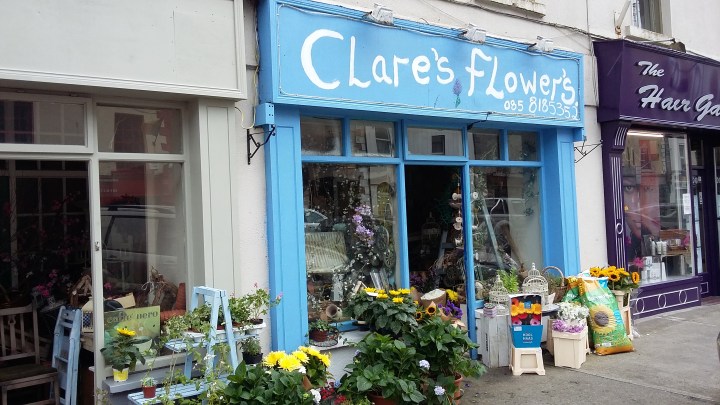
If you’re ever looking for flowers in Ballinasloe, Co. Galway …

Fact: I am beginning 2016 four centimetres taller than I was last year. It turns out that I have been selling myself short for a very long time. All because I never thought of measuring my height again since I filled out my first passport application form at the age of fifteen.

What else has changed over the past year? One big thing is that I have made the transition to being self-employed. It’s been a positive move in terms of the variety and quantity of work I’ve done. Most of the time I relish the freedom of working for myself. My work pattern alternates between semi-idle periods and Stakhanovite bursts of productivity. This is easier to manage alone at home.

The more challenging aspect of not being away at the office is the pressure of family duties intruding on work time. Housework I can ignore, but the children’s various appointments eat into my time, not to mention the fact that the children return home during the two-hour school lunch break. It is an ongoing challenge to fence off the time.

2015 was the year that I secured a book deal, finally signing the contract in November, five months after I first made contact with the publisher, Bergli Books. Because non-fiction books are sold on proposal, I have landed myself with a huge writing task that will dominate the beginning of this year. The deadline to deliver the manuscript is April but there will be more detailed edits to do after that. I expect to have the final word on the title soon.

Last January in my first blogpost of 2015, I mentioned a few New Year’s resolutions, and shared some photographs from the previous year. It’s time to revisit the wishlist:

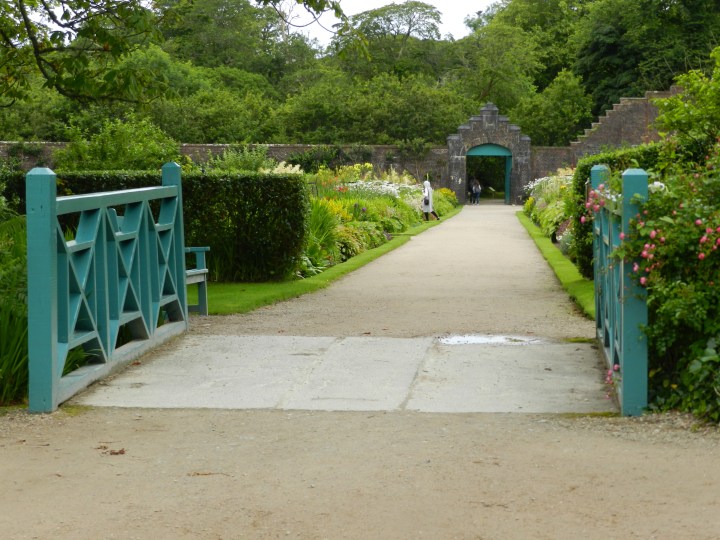
Spend more time in Ireland: This I managed to do, making a six-week trip to Ireland in the summer. It was the first time I had made the journey by car and ferry and I can report that France goes on forever. Crossing that central plain, I really started to lose hope that I would ever reach the sea. One holiday highlight: cycling around the island of Inishbofin off the coast of Galway, stopping for dip in the Atlantic five minutes from where this photograph was taken.

20150729_124953

Become a Swiss citizen: My approval came through in May, after a six-month procedure and I now have a Swiss ID card and the right to vote. Although the experience wasn’t completely positive, I’m glad to have done it at last. That story is for another day. Here’s a post I wrote about taking the decision to apply for naturalisation.

2015-09-25 14.52.09.jpg

Find inspiration for writing, write more and write better! My first novel was longlisted for the Exeter Novel Prize on January 1st last year but, apart from one longlisting for a short story, there are no accolades to show for the fiction I wrote in 2015. Despite the lack of results, I had a productive and satisfying writing year and learned a lot about submitting. I am happy to say that I will have a small but notable success to announce soon. Although it is a natural progression from journalism, I wasn’t expecting to have a breakthrough in non-fiction and I am thrilled to have this opportunity to develop and showcase my writing skills.

20150630_142641
Art installation at the APCd Foundation

Finish the first draft of my second novel: Not quite there. Can you believe it? I set myself the challenge in October to finish the first draft of this novel, got as far as the second-last chapter and stopped dead. No more excuses, I know how the story ends, I just have to turn it into words.

DSCN1445

Stop and smell the roses (or whatever nature has on special offer): I’m lucky to live on the edge of beautiful countryside and having a dog means I have to go out in all weathers. Highlights of the year were the deer I saw one morning and the cross-country hike I did in May.

As for my 2016 writing goals, I’m looking forward to a successful launch of the Swiss book, and hoping to learn a lot about book marketing along the way. Ideally, I’d like to find an agent and a home for my novels, and keep writing short stories, which has been one of the great writing pleasures of the past year.

What about you? Has the year got off to a good start? Do you believe in making New Year’s resolutions?

There but for the grace of God

image

As the year draws to a close, all the talk in Ireland is of storms and fatal traffic accidents. Every time tragedy strikes, as it has this week and every other week of the year, a family’s story is rewritten. They stop being the family with the trampoline in their garden, or whose mother who jogs every morning, and become the family that have experienced a terrible loss. And all the awful irreversible steps that led to the moment of the accident remain engraved in memory to torment them.

You get a glimpse of this in the feelings of shock and wonder that come after a near miss. Tragedy has been averted but it has shown its colours, its capacity to devastate. These are potentially life-changing moments, when the ground opens up beneath your feet and suddenly you are teetering on the edge of a deep ravine of grief and regret from which there is no escape. Most of the time, the gap closes as quickly as it has opened and you take your next step on firm blessed ground.

I had one such day this year, where a tortured alternative future revealed itself to me so sharply and clearly that I almost lived it.

Going anywhere with young children means having your accident radar switched on at all times. You have to anticipate, warn, and take precautions – constantly. But unfamiliar places, travel stress and too many distractions can interfere with this vigilance.

This particular morning we were in the middle of France, on our way back to Switzerland after taking the ferry from Ireland. To break the journey we had stayed the night in a depressed-looking village off the motorway near Orléans. To get to the hotel car park, we needed to wait on the narrow path in front of the hotel and cross a busy road where the cars were completely ignoring the speed limit.

I nearly lost my five-year-old daughter on that road. And I know for certain that I would have blamed myself for the accident forever. Why? Because of the dog. Because of the canal at the end of the lane. Because I was carrying too many things. Because of the choice of hotel. Because for just this once I did not anticipate, did not warn and did not take the right precautions.

Around the corner from the hotel, as I had discovered earlier that morning while walking the dog, was a lane that ran alongside the ruins of an old castle. I walked along that lane, not realising that I was setting in motion a chain of events that might leave my own life in ruins.

At the end of the lane I came across an old canal dock and overgrown waterway. Curious, I thought. The village, with its grand old indoor market hall, many derelict buildings and shuttered businesses, must have seen better days. Maybe the canal once brought life and trade to this place.

An hour later when we were crowded into the small lobby with our too many bags, dog on a lead and three children, the canal was on my mind. When I should have been warning the children about the road and seeking out the hand of my youngest child, I was foolishly asking the owner about the canal she seemed to know nothing about.

End the pointless conversation, say goodbye, transfer the dog’s lead to the other hand, gather up the last stray plastic bags, walk out the door, and see my little girl step straight out onto the road. I shout. She turns, looks at me and says oops, and I believe that is the last time I will hear her voice, that I have already lost her and she is now not six feet away from me on a provincial French street but on the other side where I can never reach her again.

But there was no car, and I got her back, and we are still just the family with the Irish mother and the dog. It is frightening to think how destiny can turn on the slightest sliver of detail. The best book I read in 2015 takes the concept of alternative destinies and uses it to build a fascinating story of the many possible lives of one person.  Life After Life by Kate Atkinson, highly recommended. This is my first ever blog post written and posted on my phone. Excuse any formatting errors. I wanted to write a round-up of the books I read this year but that’s not really possible away from base. I’ve had a lovely Christmas here in stormy, rainy Ireland, counting my blessings.

Wishing everyone a peaceful, pleasant and safe New Year.

Disclaimer: I am a woman

2015 First batch 284.jpg

At the moment I am writing about women in Switzerland for the book, and trying very hard to be fair. I almost think this chapter needs a disclaimer: I am a woman but the word may not mean the same thing to you as it does to me.

We are all products of our culture and family circumstances, and I have to hold my hands up and say that my background makes it very difficult for me to approach the Swiss situation in a non-judgmental way. I believe that the subjugation of women is the biggest swindle in human history. Nothing in my experience has taught me that women are in any way less important or less capable than men, therefore I cannot and will not accept any arrangement based on this idea.

My family is full of inspiring women, going back more than a century. I grew up in a three-generation household where both my mother and grandmother worked full-time as teachers. My maternal grandmother worked as a cook before she married, and later farmed a smallholding, while bringing up nine children. Her sisters emigrated to America to work. A great-grandmother on the other side was a ‘deserted wife’ who trained as a nurse in England in the 1910s and went on to work as matron of an old people’s home. There’s another great-grandmother who had her own toy shop in Dublin in the 1890s. One thing all these women had in common was that, somewhere along the line, the men in their lives could not be financially relied upon, mostly through no fault of their own. The women learned through experience that having children and doing paid work did not have to be mutually exclusive (disclaimer within a disclaimer: I think looking after children without doing paid work is equally admirable, as long as it’s a choice).

I come from an all-girl family, which meant I never experienced the division of chores on gender lines that happens in some households. I was just as often asked to wash the floor as cut the grass or bring in the coal. The secondary school I attended was also all-girls with a long tradition of fostering female achievement. A woman became president of my country when I was eighteen, not to mention that women got the vote in Ireland at the foundation of the state in 1922 (in Switzerland it was 1971).

By the time I noticed that my version of what it meant to be a woman was not the norm, it was too late. The meaning of the word had set in my mind forever. Forget about ‘Frailty thy name is woman’, I will always believe that women are strong, capable decision-makers. That is why I don’t like the ‘Irish Mammy’ cliché, which portrays Irish mothers as simple-minded old biddies. Funnily enough there is no popular incarnation of the Swiss mother, like the Italian or Jewish mamma or the Irish Mammy. One saving grace at least.

Have you ever thought about what the word woman means to you? I’m curious to hear your thoughts.

Hot House Novel Part II

November rose
November rose

Seventeen thousand words in eighteen days. I’m pretty happy with the result of my October writing challenge. I didn’t manage to get to the end of the first draft but at least the end is now in sight.

In case you missed the previous post about this, I had half a children’s novel on my hands that I couldn’t seem to finish. Inspired by the NaNoWriMo (National Novel Writing Month) buzz on Twitter, I decided to tackle the problem with an intensive burst of writing, ahead of the November pack.

There was a small lull in the middle when I went to Germany for the weekend and discovered that my two-prong Swiss plug would not fit into the three-prong German socket. That was the end of writing on the laptop so I tried writing longhand and produced a rather scribbled chapter.

Lots of writers swear by this method, especially for first drafts, but I couldn’t wait to get back to the keyboard where the words stand out crisp and even on the screen and you have the magic of deleting.

All being well I’ll finish the first draft this week and move on to other things.

I never do any correcting or revising while in the process of writing. Let’s say I write a thing out any old way, and then, after it’s cooled off—I let it rest for a while, a month or two maybe—I see it with a fresh eye. Then I have a wonderful time of it. I just go to work on it with the ax. But not always. Sometimes it comes out almost like I wanted it.

That’s a quote from Henry Miller taken from a 1961 interview in The Paris Review, which I came across during the week. While I had to raise an eyebrow at Miller referring to “the writer” by definition as a man, I did find his thoughts on our lack of moral code interesting. At a time when Europe is turning a blind eye, or worse, to distressed refugees at its borders, his words seem to sum things up perfectly.

You see, civilized peoples don’t live according to moral codes or principles of any kind. We speak about them, we pay lip service to them, but nobody believes in them. Nobody practices these rules, they have no place in our lives.

On the subject of refugees, this is the best piece of journalism I’ve read about the crisis so far, by AA Gill. Simply devastating.

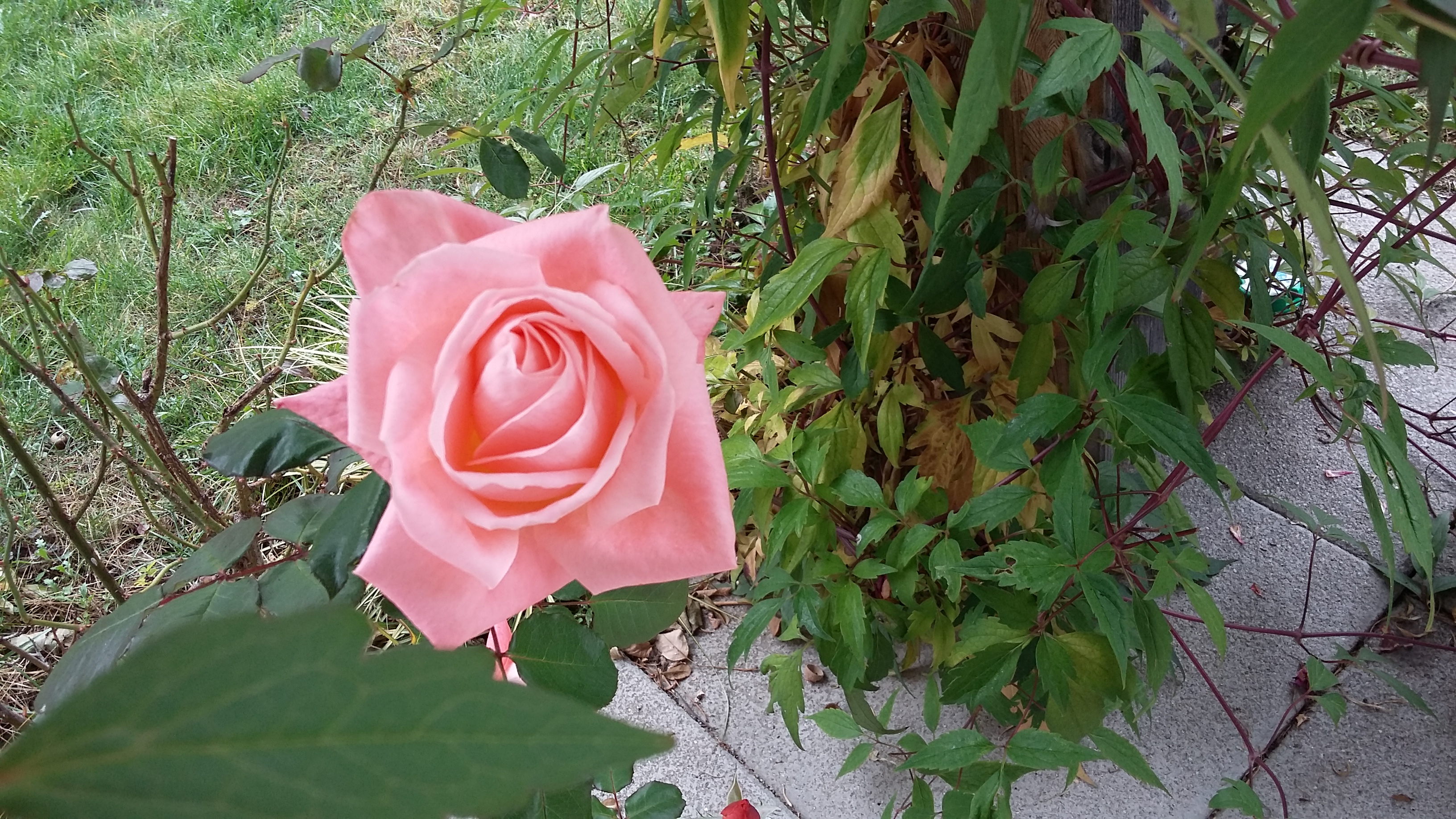
Above is a picture of a rose taken yesterday. It cheered me to see something beautiful surviving in a hostile environment – a bit like the kindness being shown by some individuals in Europe.

My other perfect life

Don't get me started on Swiss home decorations
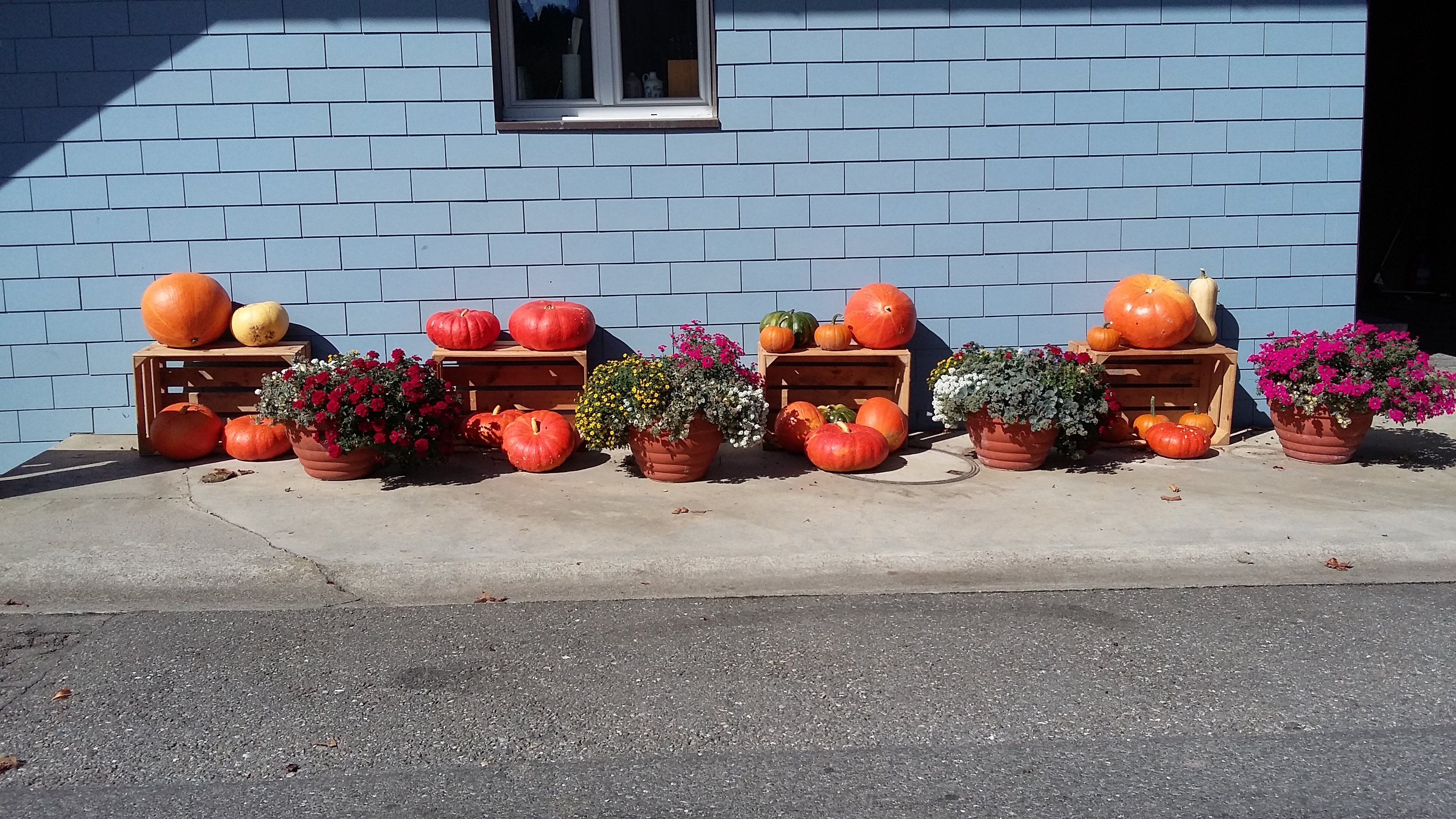
Autumnal scene in Bern, Switzerland

A simple effective way to banish clutter forever. This is the beguiling promise on the cover of Marie Kondo’s book about tidying. It’s big in Japan. But not only in Japan. The Life-Changing Magic of Tidying has been published in more than 30 countries and has sold 1.5 million copies.

A colleague recommended the book to me when he was in between jobs. A bit of a hoarder, he said it really helped him gain control over his environment and achieve clarity. Kondo makes great claims about the transformative power of tidying. I had to find out more.

One of the reasons I love writing is because I have discovered it is something I can see through to the end. I get the satisfaction that only comes from completing a job properly. In other areas I’m not so good at getting across the finish line.

Kondo starts by telling us that there is no use in partial tidying. It’s an all-or-nothing deal. You have to follow her method through to the end, tidying your possessions in every category and every room – every single object – until the job is completely done. Only then can you reap the benefits of the new better life that has eluded you thus far.

I was intrigued by this idea of a better life being just out of reach. Better lifestyle is more accurate. Like that inadequate feeling you get from looking through an Ikea catalogue. I went to Ikea this week but my house is just as cluttered and uncoordinated as it was before I went!

To be fair, Kondo is not saying you can achieve your dreams by buying more objects. She wants us to work hard to reduce the burden of unnecessary objects. True to form, I only made a half-baked attempt at the Kondo method. I will not be granted access to that better life. But I do have her to thank for a massive clear out of my wardrobe.

The Kondo test for whether or not to keep an object is very simple. You have to hold it and ask yourself if it sparks joy. Joy-sparking objects in; non joy-sparking objects out. Now obviously this test doesn’t apply to the tin opener but can be used for almost anything non-essential, she says.

Even though I won’t get to live my other perfect life, I thought it would be fun to list some of those unfulfilled aspirations. In my other life:

I use the juicer I bought to make juices every morning with fresh spinach

I volunteer for several charities.

I have a low meat diet and can think of tasty new vegetarian dishes all the time.

The front path is swept and leaves no longer blow into the hall when I open the door.

I have a short-haired dog or no dog (as opposed to a very hairy collie).

I make homemade ketchup.

My children enjoy dried fruit as a snack.

I let my hair go naturally grey and it really suits me.

I can ski better than my children.

I don’t have a car.

I buy farm produce.

I go horse riding once a week, with galloping.

I banish clutter forever.

May all your troubles be little ones, as they say. So, are you a clutter clogs or a tidy terror? What super lifestyle are you missing out on? I’d love to hear your secret wishes …

Good fathers are not a new invention

Father and Child by Karl Wilhelm Friedrich Bauerle (c) Cuming Museum
Father and Child by Karl Wilhelm Friedrich Bauerle © Cuming Museum

Every new generation knows better than the one that came before.  This is a natural law. According to this law, modern dads are doing a much better job than their own fathers who lived in the bad old days and did everything wrong.  I’m all for praising today’s dads but isn’t it time to stop dismissing the merits of the older generation?

When I hear how fathers of 40+ years ago are characterised, I do not recognise my father or the fathers of my friends and extended family growing up. Distant, authoritarian, unwilling to push the pram or lift a finger at home – well they weren’t all like that.

There have always been dads who sang lullabies, gave bottles and played with their young children. Dads who cleared the table and did the washing up. Dads who did the grocery shopping and took the children to swimming classes. Dads who appreciated their children and understood them, were openly proud of them and affectionate. Dads like mine.

And even if they weren’t hands-on with the children and the household, think of all the fathers who gladly let the kids shadow them around the farm, teaching them important skills, or the ones who did all the driving and photographing on family holidays, or worked in jobs they didn’t enjoy or spent lonely months away as migrant workers to provide for their families.

Sure, we can judge the fathers of the past and find them wanting. Some were selfish and unkind, human traits that have not disappeared with black and white television. But mostly they were good men who made sacrifices and loved their children above all. There is more to fatherhood than proudly parading your cute baby in the park. It’s a job for life and the dads who’ve been around the longest have done the most, taught us through the good times and the bad times to be better people.

I hope you agree with me that good fathers are nothing new.

On the subject of fatherly love, here’s a William Wordsworth poem you probably all know but is well worth reading again. The sonnet was written two hundred years ago in the aftermath of the death of his three-year-old daughter and “heart’s best treasure”, Catherine.

Surprised by joy – impatient as the wind

Surprised by joy – impatient as the wind

I turned to share the transport – Oh! With whom

But thee, long buried in the silent tomb,

That spot which no vicissitude can find?

Love, faithful love, recalled thee to my mind –

But how could I forget thee? – Through what power,

Even for the least division of an hour,

Have I been so beguiled as to be blind

To my most grievous loss? – That thought’s return

Was the worse pang that sorrow ever bore,

Save one, one only, when I stood forlorn,

Knowing my heart’s best treasure was no more;

That neither present time nor years unborn

Could to my sight that heavenly face restore.

Walking past the point of no return

tafers

I walked all day, more than I ever have before or ever will again. Up steep forest paths, along by babbling brooks, across fields of barley, through farmyards and back and forth over a railway line, I walked and walked as far as my legs could carry me. And then I stopped, defeated.

I had reached the outskirts of Bern and I had two pressing problems – my feet. You see, the walk didn’t exactly go according to plan. The plan was that I would walk from my home in Fribourg to my old place of work in Bern – a distance of 40 kilometres – over two days.

The first half of the walk would take me Schwarzenburg, covering part of St Jakob’s Weg, the pilgrimage route that leads from Konstanz across Switzerland and France to Santiago de Compostela. I left home at 9.30 in the morning, having delayed as long as I possibly could when I was hit by last minute nerves.

Five hours and eighteen kilometres later I was sitting in a bar in Schwarzenburg, sipping a beer and studying the map. I felt well, the pains in my legs and feet were tolerable, and it was clearly too soon to stop. But could I do the same distance again to reach my final destination? I had to give it a shot.

signs

Walking alone over a long distance is a great way of being present in the moment. The senses take over, the awareness of your own body going about its quiet work of being alive. You look at the ground, you look at everything alive and growing, you look at the horizon. The landscape is gracious, letting you pass – at times opening up far and wide, all rolling hills, woods and meadows; at times closing in to usher you through corridors of stone or dark tunnels of green.

It was a windy day, an east wind with a cold bite known as the ‘bise’ in this part of the world. I ate my lunch in a sheltered spot at the edge of a wood near Heitenried and watched the wild wind rushing across fields of barley. I was thankful for the sun which kept up a regular appearance all day.

sense

An hour and a half after Schwarzenburg, I stopped for a break at an old restaurant beside the bridge and railway station of Schwarzwasserbrücke. According to the hiking signs that I had come to depend on, I had two and a half hours to go. When I stood up my legs were so stiff and sore I half-waddled, half-hobbled out of the place. I felt a pain on the sole of my foot that made me unwilling to take my boot off. The ankle on the other side was already a problem area. I pressed on and the aches faded for a while.

Over the next two hours I crossed some of the loveliest country, farmed in peace for generations. That is the ultimate prize every country should be so fortunate to have.

path

I had my route printed out on ten sheets of A4 paper. On map eight I was still enjoying the view but by map nine I didn’t want to look up anymore to see how painfully slowly I was approaching the next village. The turning point was Niederscherli.

There’s a wonderful approach to the village across a wide area of pasturage called Rifishalte. That part I appreciated. Also the two sweet boys on skateboards who helped me get on the right road out of Niederscherli towards Gasel. But that interruption cost me. A small eternity of twenty minutes later, I limped past Gasel and set my sights on Schliern, every step a trial. I will not forget these places.

There was no possibility of me walking another hour or more across the city of Bern to get to my original destination of Ostring. In Schliern I saw a smartly-dressed old woman going in to a restaurant, every inch the widow. I longed to follow her. It was seven o’clock on Saturday night and I had walked well over thirty kilometres since morning. I turned a corner and saw a bus, a Bern city bus sitting at its terminus, a most welcome sight.

That’s where my walk ended. The bus was due to leave in three minutes. I bought a ticket from the machine, the best two francs I’ve ever spent, and allowed myself to be carried in total luxury four stops to Köniz. All that was left to do was to call my trusty driver to come and get me, and sit content and patient in the last of the sun. I was ready to go home.