Since I arrived back to live temporarily in Dublin I can’t get enough of the sea and its show-stopping other half, the sky. We are all products of our environment no matter where we come from and that makes me a coastal person. There’s a feeling of being on the edge of something vast and mysterious. The sea is an ever-changing story – welcoming one day and threatening the next.
Gazing out over the sparkling waves again, I am struck by how inaccurate the term insular is. On an island you are always looking out, not in. You are confronted with the limits of your existence, exposed to the beauty and cruelty of nature. You cannot help but dream about the world beyond the horizon.
The sea is a powerful presence. It calls us back when we go away. One day maybe we’ll find out what it has to tell us.
This phrase, which I overheard on the street today in Dun Laoghaire, adds great flourish and emphasis to the standard ‘you’re looking very well’. You can also be fierce upset or fierce busy in Ireland. In my first week back I am feeling fierce well altogether myself.
Maybe it’s the street where we are staying, ten minutes’ walk from my childhood home and from the sea.
Or the morning we spent on the sea shore, climbing the rocks and looking for crabs.
Being there for my little nephew’s birthday.
My membership card for the Irish Writers’ Centre arriving in the post.
Bumping into old friends at the Sunday market in the park.
Sitting out in the back garden with my mother and knowing that for a change we have time on our side.
It’s taken a fortnight of messages back and forth to arrange an afternoon meeting with my busy friend. Finally she’s pouring me a cup of tea in her over-decorated sitting room and we have each other’s undivided attention until the nanny returns with the children from the park in an hour.
Time is short so I skip the opening chit chat about plans for the summer holidays. I’ve always trusted her judgment and I have something important to tell her. It’s about Charles, I begin. I really don’t know what I’m going to do …
There’s a knock at the door and I close my mouth mid-sentence while she deals with the interruption. I take small sips of my tea feigning patience while she opens the envelope she has just been handed. Could she not have waited until I was gone?
Then with a little guilty look, the letter fluttering in her beautifully manicured hand, she jumps up. “Hold on,” she says, “I just have to answer this,” and before I can say a word she is scribbling a note at her writing desk by the window.
Sound familiar? That little scene I wrote for fun is set in London in the 1890s. Believe or not there were between six and 12 postal deliveries per day in the city at that time (depending on the area) which meant correspondents could exchange multiple letters within a single day.
What did they write about? The same things we do, I suppose. With such a high frequency of communication, the residents of Victorian London probably also wrote their fair share of banal messages along the lines of: “what are you wearing tonight?” or “can you pick up cough syrup on your way home?”
As a new smartphone user I am getting used to constant interruptions with SMS, email and social media notifications. I’m not sure I like the dependency that’s creeping in. When I’m out of earshot of my phone I automatically check the screen when I come back to make sure I haven’t missed anything.
If I hear the little chime from my bag when I’m with someone, I can’t let many minutes go by without checking the message. I try to resist the temptation to respond immediately but can’t say for sure that I haven’t occasionally asked a friend to hold on while I answered a message.
The expectation is there that we will respond to each other rapidly. Unanswered texts, direct messages and mails buzz around in the back of my mind like restless wasps. I’m afraid if I don’t answer promptly I might break communication law by forgetting to answer at all!
The Victorians loved their books of etiquette. Maybe it’s time someone wrote a survival guide for the smartphone era. Any takers?
When was the last time you carried someone? Maybe you carried a sleeping child to bed, helped an elderly parent into the car, or lifted a barefoot friend over hot sand. Part of our lot as human beings is to carry each other; we are carried before we come into the world and our bodies are carried to a final resting place at the end.
Of the thousands of news stories that have flashed along my optic nerve, there is one scene that stays with me. It takes place on a suburban street. A man and his adult daughter get out of a car and turn to speak to the waiting media. The distraught young woman collapses and the man scoops her up and carries her into a house. The scene was over in a few seconds. She was a young mother whose baby had been kidnapped. Thankfully the baby was found safe and well.
There was something so beautiful and tender in that image of the man carrying his daughter, helpless in her despair. But most of the carrying we do is unseen. It happens in private – between partners, family members and friends.
For all the people who are carrying someone right now, using every last ounce of strength and patience to support a loved one through a difficult time, don’t give up. For those leaning hard on the people close to them, your time will come around again.
Is there any way the next four months in Ireland can match my ridiculously great expectations? How many gallons of tea, Jamaica ginger cakes, meaningful conversations and seafront walks will it take to satisfy me?
Small recap: After ten years in Switzerland I have taken some time off to return to Dublin to write, spend time with friends and family and give my children a chance to be more than just visitors to Ireland.
I am finally going to connect to the everyday rhythm of Irish life again, without the pressured merry-go-round of arrangements and catching up that my shorter visits home have become. At least that’s the hope.
More than one person has warned me that what I am looking for cannot be found. They perceive me as longing for le temps perdu – the way things used to be. Could they be right? I do know it’s not the same country I left ten years ago and that time and circumstances have changed us all but do I really accept that?
So what is it I am looking for? There are concrete things like my mother’s Sunday lunch, family birthdays, a dip in the sea at Sandycove. On the cultural side I’m looking forward to my first book festival in Dun Laoghaire, an evening or two at the theatre, the writing course I’ll be attending at the Irish Writers’ Centre. My children will come home from school, happy I hope, with a few phrases of Irish and a stronger sense of their other identity.
But it is the people I have missed the most. Close friends and family in whose treasured company I passed the first thirty years of my life. People I’ve only managed to have snatched moments with for too long, not only because of the distance but because of the demands of a growing family. A reservoir of unshared stories and experiences has built up behind the dam. It’s in these relationships that the greatest potential disappointment or reward of the trip lies.
Fellow blogger Karen O’Reilly returned to Ireland with her family earlier this month for good after 11 years in France.
A lot of the reasons she gave for her decision echo my own but in my case the move is temporary. I hope the time in Ireland will soothe the homesickness I feel and help me commit more fully to my future in Switzerland. Whatever happens I think the regret of not following through on this idea would definitely do more harm in the long run. With just over two weeks to go before we leave Switzerland, any last minute advice or warnings are welcome!
We know birds fly south for the winter but northern Europeans have a different migratory pattern – they drive south for the summer. Amazingly, the Mediterranean region is the world’s most popular holiday destination: it attracts some 120 million visitors from northern Europe each year, the largest international flow of tourists on the globe.
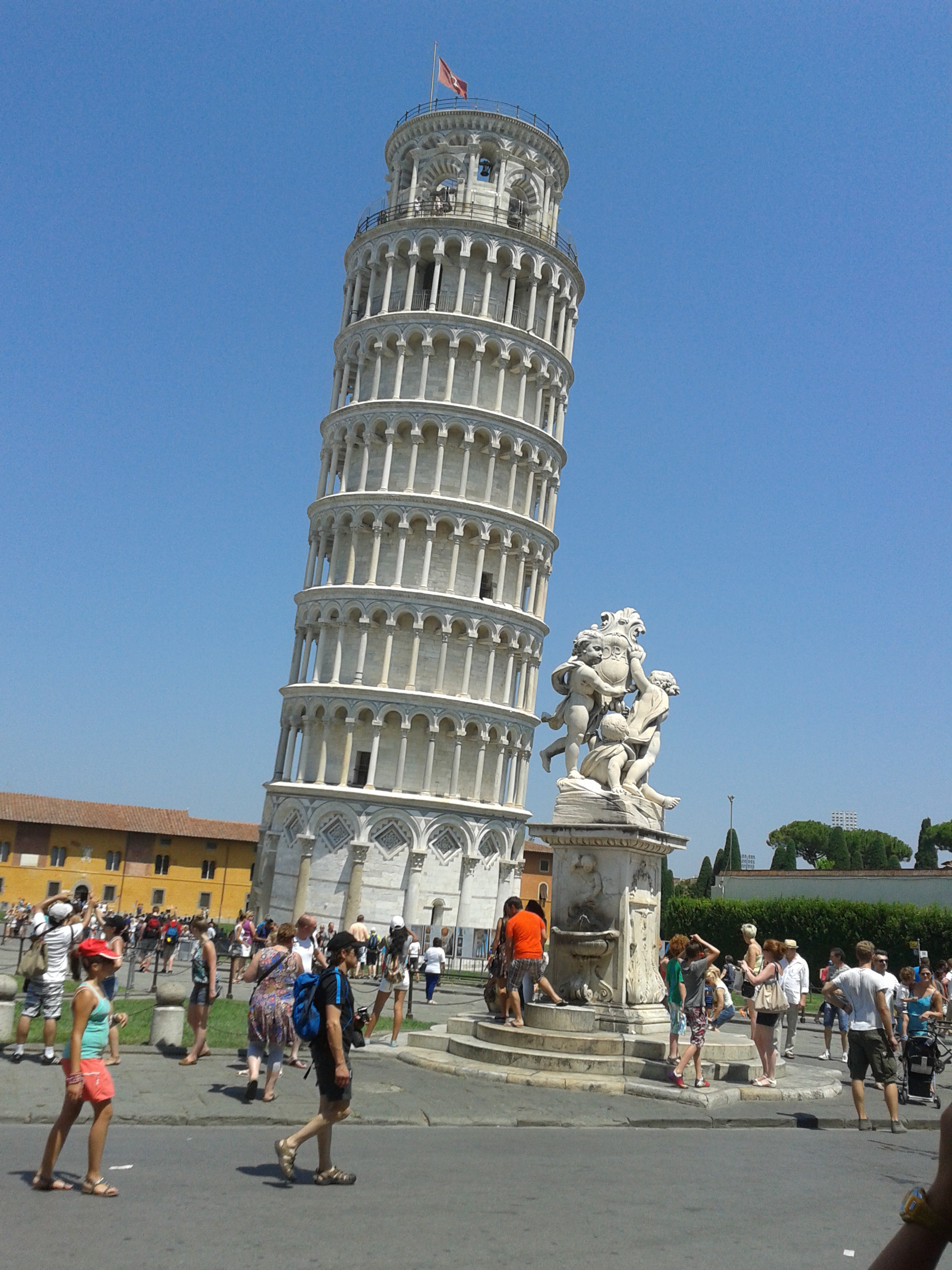
The obvious thing for a Swiss-based family to do is to join the hordes of continentals on the journey south. So imagine you are driving past the city of Pisa. You’ve never seen the famous Leaning Tower. Who knows when you will have another opportunity to do so? (OK, maybe next year but that’s a whole year away).
The temperature is a sweltering 35 degrees (95° F) and it’s the middle of the day. You’ve no GPS because you like to think there’s nothing wrong with old fashioned maps. On an impulse you take the Pisa exit, a random Pisa exit because without GPS or a map of Pisa, you don’t know which is the right one.
After a short while driving through suburbs you spot the sign for Torre Pendente – two new Italian words that can only mean one thing! You keep driving to get as close as possible, the signs disappear from time to time but you persevere and make it to within spitting distance of the tower. You know you must be close because African hawkers are waving you into a parking space in the impossibly narrow streets of the old town.
You spill out of the car and hastily cover the dazed children with lashings of sun cream. They’ve never experienced such high temperatures but are suddenly alert enough to want to buy thread bracelets from the African parking attendant.
Three bracelets later, you set off on the five minute walk to the tower. You know all about the tower, it’s old, Italian and it leans. But then you round the corner and see it for the first time and it is still a wonderful surprise. You can’t help but gasp at the sight. The 800-year-old bell tower is beautiful. Scrubbed clean, the white marble gleams like new.
You have to laugh. The huge open space is filled with every nationality under the sun, taking photos of the tower. You could fill Noah’s Ark from this crowd and repopulate the world. People are stretching out their arms in an odd leaning pose. In their photos they will appear to be supporting the tower. The atmosphere is one of delight. People are hot, a little stressed but happy.
You know you’re not going to forget the moment. You realise it’s one of those things that you have to see for yourself. Last week I wrote in slightly disparaging terms about the Jungfrau railway, the ultimate Swiss tourist trap. But I think I get it now. Some sightseeing trips are worth the effort.
Have you been anywhere interesting this summer? Got any good tourist trap anecdotes or tips to share?
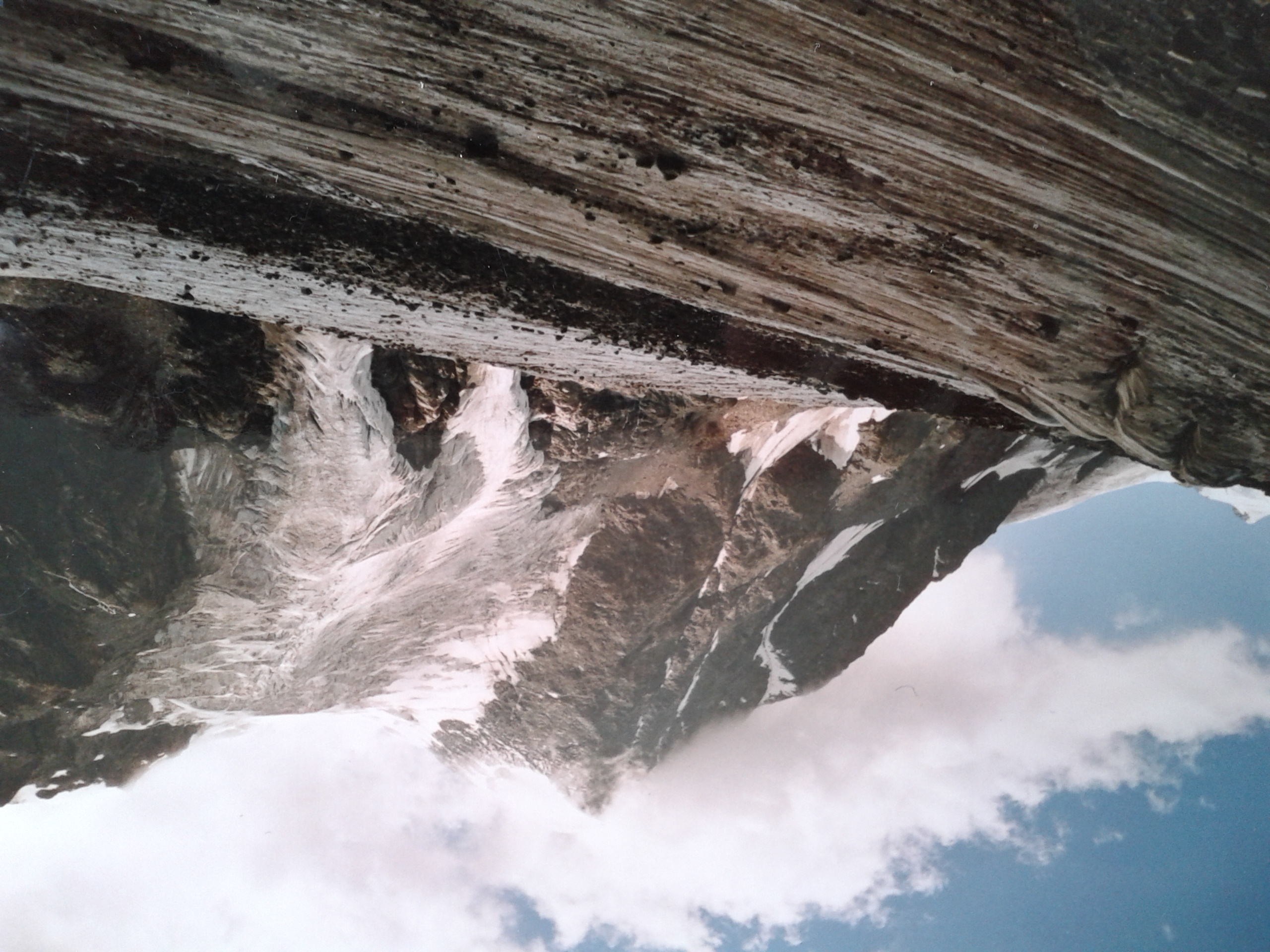
Luckily there’s no railway to the Grand Combin glacier near Verbier
In the summer of 1868, three years before the Rigi railway at Lake Lucerne was completed, an English noblewoman travelling incognito made an excursion to Mount Rigi. The stout 49-year-old woman had a lot of work and family troubles on her mind as she was carried up the mountain in a sedan chair. But this lady was no ordinary tourist. She happened to be the most powerful woman in the world, with the job title Monarch of the United Kingdom of Great Britain and Ireland.
Queen Victoria visited at the beginning of the mountain railway boom. Entrepreneurs were snapping up railway concessions all over the Alps and rushing to complete the first, the highest, the steepest railway lines to make a killing in the lucrative new tourist market.
It is a staggering fact that two thirds of Switzerland’s land surface is taken up by mountains. Small communities had always eked out an existence on the lower slopes but the great peaks were out of bounds, known only from a distance. It was only in the second half of the nineteenth century that the Alps began to be seen as an amenity, first for hikers and climbers and later for less adventurous visitors who could be transported up to dizzying heights in their Sunday best.
Not everyone agreed that laying tracks and blasting tunnels in the Alps for tourists was a worthwhile pursuit, as I discovered when researching article for swissinfo.ch about the centenary of the Jungfrau railway last year.
“We regret that so many mountain lines have already been built, which only benefit a small number of people economically, while from the ethical point of view they are not only useless but even harmful,” the Swiss League for the Defence of Natural Beauty and the Swiss Heritage Society wrote in a petition to the government calling for a more prudent granting of railway concessions.
In its first full year in operation, 1913, the Jungfraujoch station – Europe’s highest train station – on the shoulder of the Jungfrau mountain in the Bernese Oberland attracted 42,880 tourists; last year 833,000 people, myself included, made the unique rail trek to “The Top of Europe”.
The return trip from Interlaken to Jungfraujoch (3,454 metres above sea level) is about an hour and a half each way, with two train changes. If ever I had the feeling of being herded, it was on that day. I joined the multitudes of Indian, Chinese, American, European and Arab tourists being efficiently ushered from one train to the next by smartly-dressed guides. After leaving Kleine Scheidegg for the final leg of the journey there were more stops inside the tunnel at the viewing windows cut into the rock face.
I arrived at the top around lunchtime to join throngs of people wandering around through a maze of tunnels or milling about in front of the different eateries (including what must be the most expensive Indian buffet in mainland Europe). I could see the magnificent Aletsch glacier for a few minutes before everything was obscured by cloud.
Here’s the report I wrote for swissinfo.ch about the centenary.
The 200-franc day trip which is billed as the ultimate Swiss tourist experience seemed to me to be rather overpriced, overhyped and exhausting. Within minutes of boarding the return train, everyone on board promptly fell asleep, wiped out by the altitude and possibly the stress of being herded around all day.
Here’s a little secret. Switzerland is full of mountains and easy ways of getting up them and while I’m not saying they all look the same, there are spectacular views to be seen from almost anywhere, even the top of the smallest, most humble 12-franc chair lift.
It’s holiday time again. Have you got any tourist trap stories to share?
This fork sculpture at Vevey, Lake Geneva is a bit of fun
After ten years in Switzerland, living right on the French/Swiss-German language border, I have gradually been won over by the charms of the German language. Like many foreigners here I started off with classes in one of the adult education centres run by the Swiss retail chain Migros. The learning curve is dragged down a bit by the huge gulf between the standard German learned in class and the dialect spoken by the locals, but hey you get there eventually.
Which brings me to my list today. One of the joys of learning a new language is finding words that express new concepts and ideas, or that describe familiar concepts in different ways. As a newcomer to a language you can also appreciate words purely for how they sound. Without further ado …
1. Ameise (ant): This is the year of the ant in our garden and with a three year old who points out every member of the animal kingdom with equal excitement, including the humble ant, Ameise is a word I hear very often. Far superior to ‘ant’, Ameise (almost rhymes with Eliza) is a great word to announce dramatically.
2. Kavaliersdelikt (peccadillo): One of those compound words that are the hallmark of German, I like the marrying of Kavalier (gentleman) – with Delikt (offence). These days Kavaliersdelikt, which has such a breezy devil-may-care ring to it, is mostly used in the context of the international tax dispute. Part of the reason Switzerland is viewed as a tax haven is because tax evasion is considered a Kavaliersdelikt in this country, i.e. no big deal.
3. Übrigens (by the way): I just enjoy this word because I learnt it early on and managed to sound like I had a bigger vocabulary by sticking it at the beginning of random sentences. Also it sounds funny to my ear – ‘oobrigens’ – as if it’s referring to something rude or silly.
4. Hebamme (midwife): There should be a reggae song written in German with the title Hebamme (sort of rhymes with Obama). It’s one of those bouncy musical words that instantly appeal to me. Might also have something to do with my HUGE respect for this line of work – the true oldest female profession, alongside farmer, market vendor, weaver, child minder, chef and healer. (Side rant: I really think we should protest every time we see prostitution referred to as “the oldest profession”. Enough already!)
5. Baubewilligung (building permission): There is a host of compound words made up with Bewilligung (w pronounced as v in German), such as residence permit, a nice long one Niederlassungsbewilligung. Bau, pronounced like the bow of a ship gives a good punch to this word.
6. Schwach (weak): You’ve got the ‘sh’, the ‘v’ and the ‘ch’ (like Scottish Loch) here. It’s a word you can really get your teeth and throat into. Although it means weak it’s a strong word. Imagine a vindictive voice shouting: ‘Du bist Schwach!’ Scary.
7. Vielfalt (variety): Pronounced feel-falt, I like the Fs and the Ls here. It’s all’s very soft and it’s another one of those words you can use early on to give the impression of an advanced vocabulary.
8. Verrückt (crazy, mad): This is another very expressive word, especially when you hear it pronounced the Swiss-German way as they have a pretty extreme ‘K’ which sounds like someone clearing their throat before spitting. It’s interesting too that the Swiss Germans use verrückt to mean angry as well, like the American double meaning of the word mad.
9. Einsamkeit (loneliness): There’s something gentle about this word. It’s romantic, poetic. You can just imagine someone writing it in a love letter 100 years ago. In general I like the –keit ending (pronounced ‘kite’), like Aufmerksamkeit (attention), Möglichkeit (possibility) and the old chestnut Ausländerfeindlichkeit (xenophobia).
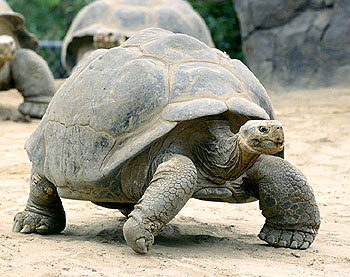
10. Schildkröte (tortoise): I’ve sneaked this one in, not because I like it – I actually find it quite ugly – but because I can never remember the word and I hope to conquer it once and for all here.
I’m sure I’m not alone in enjoying foreign words. Anyone care to add to the German list or present some favourite words from other languages? I’m all ears!
These days when I want to make an arrangement with someone they take out their phone and start finger skating on the screen. Meanwhile I’m leafing through my little appointments diary, pen poised, looking terribly 20th century.
But this lady is not for modernising. The scribbled notes of today are my memory bank for the future. Unlike the data entered into a device, one day I will be able to find that diary at the back of a drawer and step into my everyday life in a given year. It will all come back to me – the old car that kept breaking down, my brief flirtation with jogging, a friendship that has since lapsed. In among the mundane details I might find a little gem like the day the baby took her first steps.
For me a small appointments diary is sufficient to keep a basic narrative and it helps me feel things are not slipping away from me – funny things my kids say, what I planted in the garden, friends invited for dinner. Space is limited but the fact of keeping a record is important. There’s also the memorabilia hiding between the pages, ticket stubs and to do lists that are treasure for a nostalgia nut like me.
At the moment my diary is punctuated with notes on writing submissions and rejections. For the past year or so, I’ve always had at least one piece of work out there, keeping the thread of optimism unbroken. When a response comes with the word ‘unfortunately’ in the first line, I sigh a few times and then make a note of it. This little action allows me to claim the result and draw a line under it – or through it if I’m feeling peevish.
Not to worry, there’s another open submission in the diary somewhere, and anything is possible.
Memory lane: Other twin parents have an inbuilt twin radar that never goes away. Seven years on I still stop in my tracks every time I see twin babies. Where once I was on the receiving end, now I’m the one who has to grin foolishly and stare, carried back in an instant to those golden days of babyhood, times two.
If there’s an opportunity I strike up conversation. ‘Congratulations, how old are they? I have twins myself.’ Some of these conversations are short. Others get long and involved. The oldest twin mother I ever chatted to had sons in their fifties. Another time I remember talking to a security guard in an art gallery about his twin girls, as if we’d known each other for years. The best stories older twin parents will tell is the surprise they had at the birth when a second head appeared.
Hands full: A standard comment you will hear as a twin parent is some version of “you’ve got your hands full there”. There’s some truth in that but it’s tempting to point out that, more importantly, your heart is full. If your babies are premature, you might want to lie about their age to keep the reactions down. If you happen to have different sized twins, this will also be a talking point.
There will be shop assistants who confess they always wanted twins and you are bound to come across the occasional person curious about the conception details. This conversation begins with the question – “are they natural?”
Sad stories: Twin pregnancy is by definition high risk and was more often seen as a burden than a blessing in the past. One thing I didn’t expect was the number of sad stories people told me about twins. A woman we once rented a holiday home from told the story of her twins’ birth 40 years before. They were too small to live and were left in a room in the hospital to die.
Another woman who stopped me in the street one day in Fribourg started out by saying she too was a twin but then revealed she didn’t grow up with her siblings. She was given away to a children’s home because her mother couldn’t manage. She never understood why they chose her, and the rejection hurt her still. Another lady at a garage told me her mother had given birth to three sets of twins but only one child had survived.
Kindness of strangers: One of the lovelier sides of having twins is the kindness it brings out in people – from the people who reach out to take a baby onto their laps in the bus, to the other Mums at the playground who will run to pick up your fallen toddler, when you are struck trying to get the other one down from the climbing frame.
One incident stands out for me. There was an old lady I used to see around town, always dressed in the same shabby coat and old shoes. One day, waiting at the lights to cross the road, she pressed a ten-franc note into my hand and urged me to buy something for the twins. Before I could protest she was gone.
If your twins are brand new and you’re getting up the courage to take them out into the world for the first time, don’t be afraid. There is a big welcome waiting for you.




 Clare O'Dea