Children in school, mothers on stand-by

2014-06-24 19.16.11

I’m not saying there is a conspiracy in Switzerland to make life difficult for working mothers of primary school children, but if there were a conspiracy it might account for my experiences over the past four years, and look something like this:

Strategy 1: Mix it up
Have children start school (kindergarten) at the age of four but give them an erratic timetable. For fun, have the children come in three mornings a week, obviously not consecutive mornings, and throw in an afternoon just to keep it interesting.

I’m not making this up. My four year old has school on Monday, Wednesday and Friday mornings and Thursday afternoon for two hours. That’s it. Every night she asks, do I have school tomorrow? And every morning, do I have school today? Keep ‘em guessing.

Strategy 2: Complications
In the first few years, give different classes different afternoons and mornings off each week. That way, families with more than one child will be kept on their toes with multiple childcare gaps and a different timetable for each child.

Strategy 3: The lunch trap
Close down the school for two hours in the middle of the day so that the timetable looks like this: Morning: 7.45a.m. to 11.30a.m.; Afternoon: 1.40p.m. to 3:30p.m.

Let the parents worry about where the children will eat and who will look after them. Provide a minimum number of places in an after-school programme nearby. Sit back and watch the parents scramble for these places, at their own expense.

Strategy 4: Rise and shine
Start school at an ungodly hour of the morning, so children are too sleepy to eat breakfast and parents are grateful for the children having random mornings off during the week to recover.

Ok, the early start is part and parcel of Swiss society. It’s the norm for people to start work before eight so we all have to go to bed early and get up early.

But the rest? I hear the argument sometimes that these timetables are geared towards children, based on the notion that starting school is a big change for children so they should be eased in gradually.

But I find it hard to believe such a lack of routine is good for children. What about the body clock? And I know it is not good for parents trying to organise childcare.

For stay-at-home mothers who are attached to their role, these timetables have one advantage. It makes them indispensable. They can rightly point out that they hardly have time to turn around, do the shopping and start cooking before the children are home again.

But what if this is a gilded cage? I want stay-at-home mothers to be valued, not shackled to the home. Is it good that mothers who have already put in a huge effort in the baby and pre-school years are so restricted they cannot think of taking on another activity during the 20 to 30 hours their school-gong children are away during the week?

Is there any other country clinging to this home-for-lunch model? In Ireland the four and five year olds attend school from 9a.m. to 1p.m., Monday to Friday. They eat a packed lunch at the 11a.m. break. From the age of six or seven (first class), the school day runs from 9a.m. to 2.30p.m.

This is not about treating schools as a babysitting service for selfish career-mongering parents (a view I’ve heard expressed), it is just a simple plea to stop pretending that the two worlds – home and school – have nothing to do with each other.

I should point out that my children like coming home at lunch on the days I am here but I wouldn’t consider it a hardship for them if things were different. They were just as happy doing five-and-a-half-hour days when they attended school in Dublin for a term.

More and more Swiss schools are adapting, and have begun to provide supervision and hot meals at lunchtime but it is still a minority. Maybe mothers will be able to ‘lean in’ a bit more when this becomes the norm.

Like most mothers of young children in Switzerland, I work part-time, and accept the trade-off that my career will stall for the time being, in return for spending more time with my children.

But to “escape” into the earning world even for 20 hours a week without live-in childcare requires some creative solutions. Last year I traded childcare with a neighbour, both of us taking on each other’s children for a 10-hour day. Luckily my husband also leans in to childcare duty and we have great support from family living nearby.

To repeat what I said earlier, it’s not that there’s a conspiracy to make life difficult for working mothers. It is just that the system evolved to complement a traditional situation which is no longer the reality for many families – and in some regions the winds of change have not yet arrived.

It’s complicated enough for two-parent families. Last week I heard a Swiss parliamentarian say that the majority of social welfare recipients are households headed by one parent. How many more of them would be able to hold down a job if their children weren’t coming and going every few hours?

So what do you think? Am I being unfair to the Swiss way of life? Would you swap your system for ours?

You’ll find more background on this topic in this article I wrote for swissinfo a couple of years ago: Swiss mothers hold back from having it all.
The importance of being Swiss

The boat is full
The boat is full

My husband picks his way through the crowded hall. It’s late and many people are sleeping but I am keeping watch over the children, waiting for his return. He kneels beside me and shows me a cereal bar in the inside pocket of his jacket. The little ones will have something to eat in the morning.

We huddle together, sharing the blanket. After a while I turn and search his face for information. His eyes do not meet mine. I wait for him to share his news. Here we have all time in the world.

“I heard something,” he finally whispers. “There’s going to be another resettlement contingent. Brazil has offered to take a small number of Swiss. There are 18 places on the boat tomorrow.”

I can hardly hear the last words he speaks but I know what this means. It is the news we have been waiting for, the news I have prayed for and dreaded every minute since we arrived in this godforsaken place.

“Did you put the names down?” He covers his face.

“Tell me you put your names down.” He nods.

He cannot speak so I say the lines for him. “You have to take this chance. There is no other way. As soon as I can I will follow you, find you. We have to think of the children.”

That night I dream of our old home in Switzerland, forever out of reach now in the contaminated zone. We are sitting around the table, talking and laughing. I can see the delicious fresh food and the happy healthy faces of my children and I feel blessed. I reach out to touch the cheek of my youngest but where there should be soft, warm skin there is nothing, only air. Trying to control my panic, I feel for the dishes and glasses, sweeping my hands up and down the table. Nothing. What terrifies me the most as I claw the air where my loved ones should be is that I cannot tell if I am the ghost at the table or if I am the only one left.

***

A piece of flash fiction there for the weekend, inspired by an important step I took today. After almost 11 years in Switzerland I have finally applied for citizenship. I could have done it any time since 2008 but I’ve waited until now. The question I’ve been asking myself is – why?

One thing is I’m not alone. Only a tiny percentage of the foreigners living in Switzerland (including second and third generation immigrants) who would be eligible to apply for naturalisation actually do so. The reasons for that reluctance are complex, like everything in this country, but to some extent it’s a standoff.

The non-Swiss are eyeing the Swiss as if to say: “I may be here but I’m not one of them.” Meanwhile the Swiss are holding up a sign in the four national languages: “You may be here but you are not one of us.”

There is some serious bridge-building needed in Switzerland right now and a terrible shortage of engineers. I would suggest bringing in some EU workers but I’m not sure that would go down well.

Yes Switzerland is multi-cultural, but it’s a place where identity matters. Identity matters to me too. Up to now I’ve always thought of myself more as an emigrant rather than an immigrant, as a way of holding on to the person who left Ireland in 2003.

I don’t mean I haven’t integrated; I’m as integrated as a piece of bread dropped in a fondue pot. What I mean is I was afraid I would lose something important by becoming Swiss. Now I feel differently. The long stay in Ireland last year helped. It reminded me that Ireland will always be there and I will always be Irish.

But my life is here now and I want to participate more in Swiss society and, most particularly, I want to vote. Don’t take the story too seriously, I am not applying for citizenship in case I become a refugee at a future date following a nuclear meltdown (there is a nuclear power plant nearby by the way, we get sent iodine tablets in the post every few years, just in case).

No, it’s just that after years of being a very welcome outsider, I am ready to take my place now among the Swiss on equal terms.

And now for something completely different …

Chateau de Chillon
Chateau de Chillon

This is a writing blog but today I am breaking the mould by posting a selection of photos of a beautiful place. It’s been a busy few weeks with visitors, and my novel is in the capable hands of a small group of trusted readers, which means I am holding my breath and can’t write much.

After a wet and unseasonably cold week, the sun came out today just in time for the Easter egg hunt and afterwards we went off on a day trip to Chateau de Chillon on Lake Geneva.

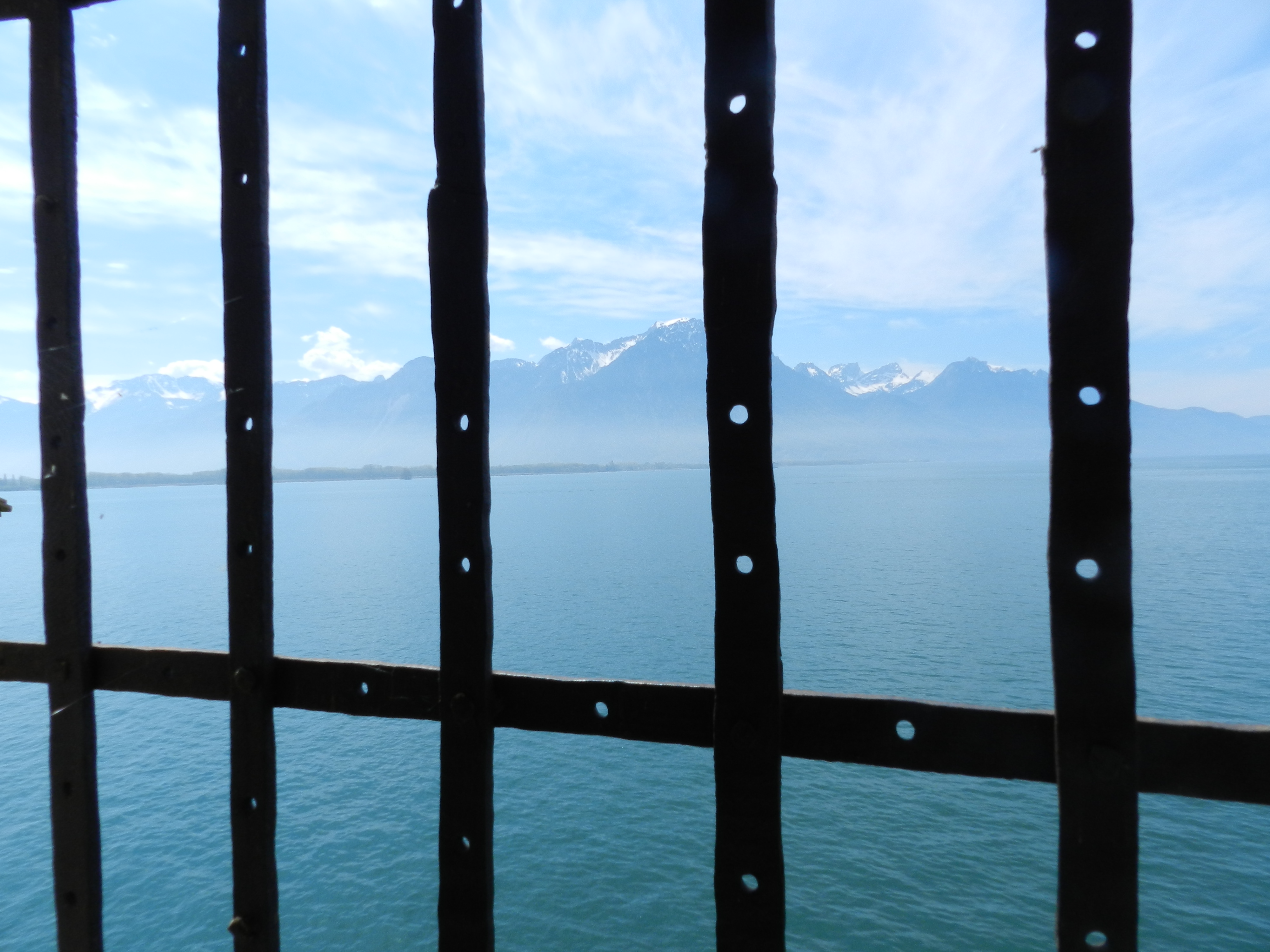
Room with a view
Room with a view

I don’t know if you can make out the Alps there in the background. The view from most rooms was spectacular.

I love a nice medieval courtyard!

Stone glamour
Stone glamour
Window crest
Window crest

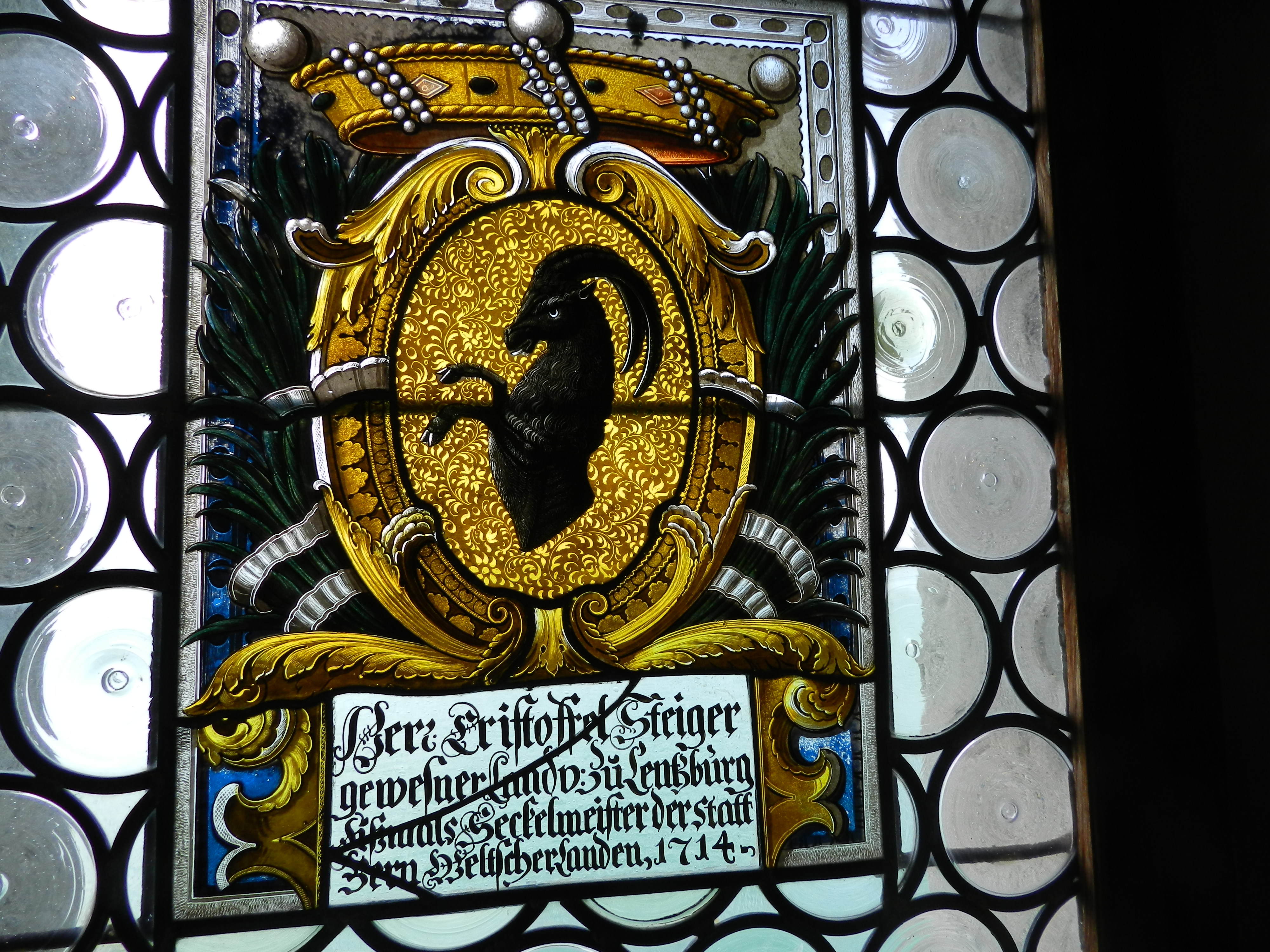
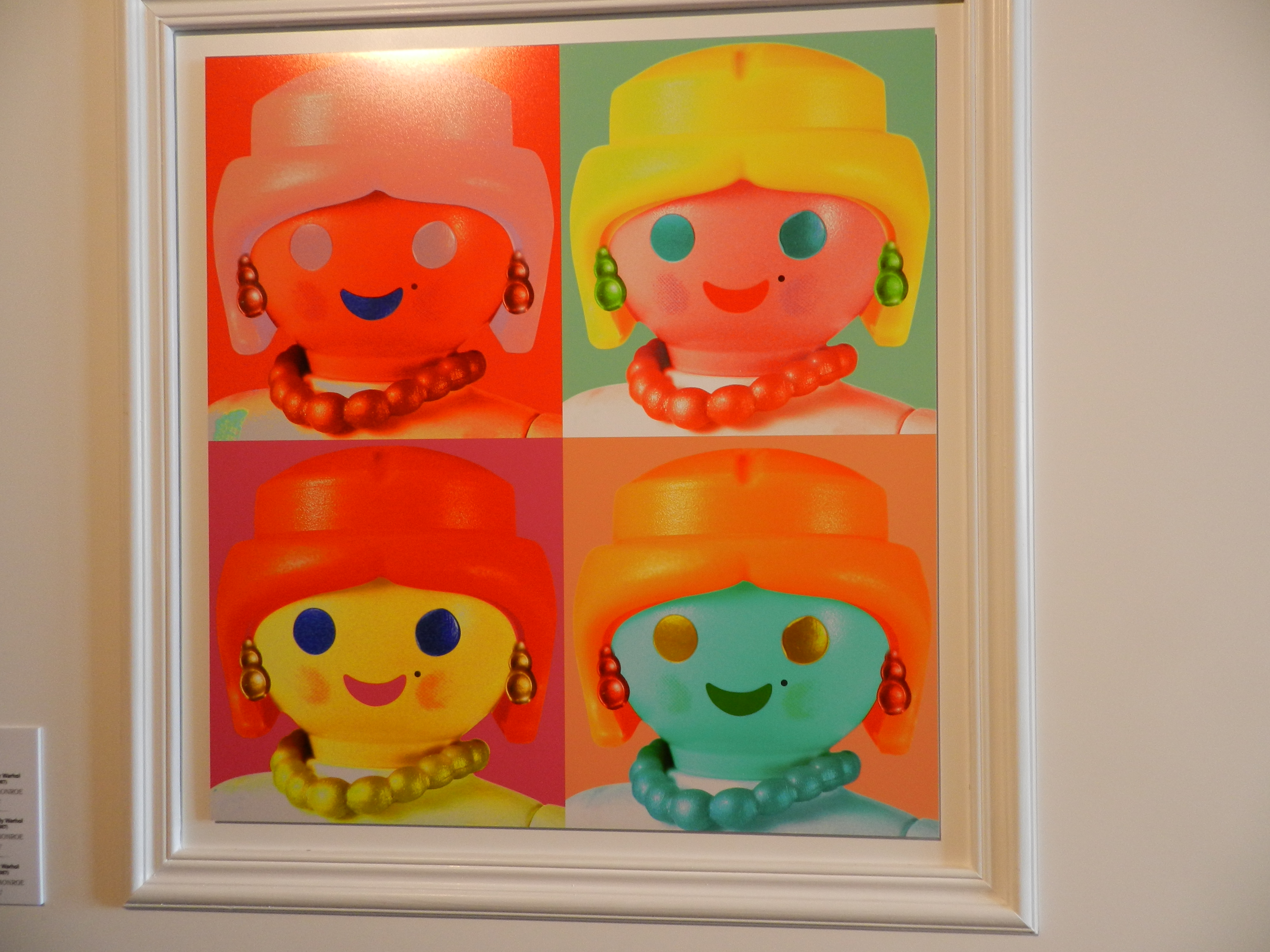
This stained glass crest is dated 1714 but parts of the castle are about 500 years older. The castle was hosting a special exhibition by French photographer and cinematographer Richard Unglick who has staged and photographed many classic paintings using Playmobil characters. Here’s one example:

Richard Unglick Playmobil

And another:

Richard Unglick
Richard Unglick

Before I leave you with one last image, I’d like to thank and pay tribute to my fellow bloggers (in alphabetical order) who have recently nominated me for a Liebster Award:

Arran Bhansal
http://arranbhansal.com/
David J Delaney
http://davidjdelaney.wordpress.com/
Anne Goodwin
http://annegoodwin.weebly.com/annecdotal.html
Niall McArdle
http://ragingfluff.wordpress.com/

And here is the Easter tree in the chateau. Happy Easter!

Can you see the decorations?

Switzerland and the foreigner thing

20150605_132001

After last Sunday’s vote in Switzerland to curb immigration from the European Union, I feel compelled to write about what a discouraging signal this sends to foreigners in this country. Having lived here for a decade and contributed the fruits of my labour to this country for that time – my work output, my taxes, my social security contributions, a thousand supermarket trolleys full of produce, not to mention three new Swiss citizens, I can safely say that Switzerland has enjoyed a substantial net gain from me.

And I’m no exception. The most recent OECD report on migration in Europe showed that the foreign population as a whole are net contributors to the rosy economy in Switzerland. Foreign women have bigger families, filling schools that would otherwise be half empty, with the future workers, footballers and leaders of Switzerland.

And then this campaign begins, peddling the idea that all the problems of the country, literally anything that is bothering the long-suffering natives in their daily lives, is down to this “uncontrolled” influx of people from the EU. Your train carriage is crowded? It’s because of them. You have to wait at the doctor’s? It’s their fault. Your rent has gone up? Obviously those pesky EU workers again. Urban sprawl offending your eyes? You know we wouldn’t have that without these outsiders.

The level of scapegoating would be laughable if it wasn’t hurting people. The debate has got to the point where there is no problem, present or future, that cannot be pinned on bloody foreigners.

And they lapped it up, or at least 50.3% of those who voted on February 9th did. The people have spoken, as is their right, but do they realise what they have said? Did they act to fix a real problem or was this just a way to score a cruel point, to hurt their neighbours?

To understand the result you have to know a little bit of background on how the vote came about. What you are seeing at work here is ‘direct democracy’, the purest form of democracy known to mankind, as I am now tired of hearing.

The Swiss political system has a very special role for popular petitions. Under the initiative system, any citizen may call for a vote on any issue or challenge a parliamentary decision providing they collect at least 100,000 signatures in support of their cause.

Well we all have our pet peeves so that’s great. Of course your average citizen doesn’t have the resources to gather 100,000 signatures but sometimes groups of citizens who are passionate about something get together and pull it off. More often this tool is used by well-organised and well-funded lobby groups and political parties. The gold medal in this category goes to the rightwing Swiss People’s Party.

This particular vote, dubbed “Stop mass immigration”, was brought to us by the Swiss People’s Party. With about a quarter of the popular vote, it is a fairly easy task for the party to gather so many signatures. What they do with this power is to focus on the social blight of foreigners.

For the past twelve years, EU citizens have been free to live and work in Switzerland, without any red tape, just as Swiss citizens have enjoyed the freedom to work and settle anywhere in the European Union. Known as the ‘free movement of people’, this agreement is one of the core principles of the EU and puts Switzerland on a par with EU member states.

It makes it easy for workers to follow work, Swiss retirees (for example) to move to Tuscany or Provence, and people living near borders to have access to the hinterland around them. You could see this as a win-win situation, or you could see it as an affront to your national sovereignty.

As a result of Sunday’s vote, the Swiss government now has to pull out of this agreement with the EU and return to a quota system of work permits, last used in 2002. Never mind that Switzerland has had a pretty good ride since then, helped in no small part by the easy working and living arrangements with its biggest market, i.e. every country surrounding it for as far as the eye can see.

Of course life will go on. Employers will find a way to hire the people they need and the people who are looking for work and prepared to uproot their lives to another country will still come to where the work is.

But the bitter taste will remain. Painted as the problem-makers, come here to rip the country off and make life difficult, we will continue to keep our heads down and work hard but the affection that was growing in our hearts for this nation is flickering and may be snuffed out. And that is the greatest loss of all to Switzerland.

Act II, Scene 1: Return to Switzerland

Home away from home
Home away from home

When there is a scene change in a play, the lights go down, the stage hands scurry in and skilfully whisk away the furniture and props, replacing them with whatever is needed for the new scene. The backdrop changes. The audience waits expectantly. A moment before, the actors were in a sunny garden having a tea party; now we find them on a battlefield, in a kitchen, a schoolroom. And the action continues.

The scene has changed for me again and the action continues. Yesterday I drove to work in the pre-dawn light and returned home at dusk. It was all so familiar, driving along the Swiss motorway, the Alps, crowned with pink-tinged clouds, providing a beautiful, distracting backdrop, the news headlines in German and me concentrating on the words, the road, the scenery.

When you move countries there is no such thing as a gradual change. You emerge from the plane and that is it. The dreamlike state of travelling is over and you have left the other behind, utterly. I’m amazed at how quickly I have adjusted and fallen back into this new/old life. The big goodbyes of last week seem a million miles away, or 1,200 kilometres to be precise.

Having had the luxury of spending so much time with Irish friends and family, it is frustrating to have to revert to long-distance communication again and to think in terms of future visits. The main consolation is that I now have the luxury of spending time with Swiss friends and family and making the most of this wonderful place.

Belated season’s greetings to everyone who follows this blog, as well as to new visitors. You may be pleased to hear that I will have less to say from now on about me the emigrant (you’ve been very patient!) and more to say about me the writer. Assuming I can keep up the momentum, in 2014 I will be blogging more about my novel and other writing themes. Thank you all for your presence and positive comments throughout the year.

Athbhliain faoi mhaise daoibh go léir.

Ireland – far away, up close

Time to say goodbye
Time to say goodbye

Some things, like impressionist paintings, are only clear when you take a step back. Not having lived in Ireland for a decade there are certain things I am seeing with fresh eyes. As I near the end of a four-month sabbatical in Dublin and contemplate the return to my life in Switzerland, it’s a good moment to cast an objective eye on the homeland.

Cold comfort: I now understand why we like to live in terraced houes, in the city at least. Huddling together, as penguins know, is the best way to keep warm. I’m not entirely joking when I say that the only thing keeping me here right now is my electric blanket.

Irish houses have chronic insulation issues and heating – what time you turn it on, how big your bills are, how useless storage heaters are – is a big topic of conversation. This issue should be the central plank of any political party manifesto. I think the political leader who makes our homes affordably warm is destined to win the affection of the nation.

Gale force: A note from the second windiest country in Europe (after Scotland). The wind is wreaking untold devastation on the hairstyles of Ireland, a problem that does not get the recognition it deserves. You could have your hair set in iron cladding and it would still get blown to bits. If there was some way we could marry the wind resource with the home heating gap we would be set up for life. Anyone, anyone?

Comfort eating: You have to have something with those endless cups of tea. The Irish are the biggest chocolate, cake and biscuit munchers in Europe and the selection of crisps is second to none. Yes there may be public health implications but it is also worth celebrating the sheer wealth of delicious treats available.

Storytelling: I don’t think Irish people live more dramatic lives but they certainly have the ability to turn life experiences into good stories. This comes across a lot on radio – I’ve often been stopped in my tracks by the voices of people recounting something powerful. Amongst my own friends and family I’ve had evenings here where story after story is told which could provide the plots for several novels. Speaking of which, I’ve lost count of the number of people I’ve met who are writing novels. The competition is going to be stiff!

Rule bending: Travelling with three children on the bus every day I have experienced plenty of instances of friendliness and kindness from bus drivers which never ceases to amaze me. There have been other situations where the ability to apply common sense or compassion over the rules has made life easier for me. It’s not something you come across as often in Switzerland.

The next twelve days will be all about letting go and saying goodbye again. But that’s OK. The trip has gone really well overall and I think I can say I found what I was looking for.

A tall order for Ireland

Sandcove beckons
Sandcove beckons

Is there any way the next four months in Ireland can match my ridiculously great expectations? How many gallons of tea, Jamaica ginger cakes, meaningful conversations and seafront walks will it take to satisfy me?

Small recap: After ten years in Switzerland I have taken some time off to return to Dublin to write, spend time with friends and family and give my children a chance to be more than just visitors to Ireland.

I am finally going to connect to the everyday rhythm of Irish life again, without the pressured merry-go-round of arrangements and catching up that my shorter visits home have become. At least that’s the hope.

More than one person has warned me that what I am looking for cannot be found. They perceive me as longing for le temps perdu – the way things used to be. Could they be right? I do know it’s not the same country I left ten years ago and that time and circumstances have changed us all but do I really accept that?

So what is it I am looking for? There are concrete things like my mother’s Sunday lunch, family birthdays, a dip in the sea at Sandycove. On the cultural side I’m looking forward to my first book festival in Dun Laoghaire, an evening or two at the theatre, the writing course I’ll be attending at the Irish Writers’ Centre. My children will come home from school, happy I hope, with a few phrases of Irish and a stronger sense of their other identity.

But it is the people I have missed the most. Close friends and family in whose treasured company I passed the first thirty years of my life. People I’ve only managed to have snatched moments with for too long, not only because of the distance but because of the demands of a growing family. A reservoir of unshared stories and experiences has built up behind the dam. It’s in these relationships that the greatest potential disappointment or reward of the trip lies.

Fellow blogger Karen O’Reilly returned to Ireland with her family earlier this month for good after 11 years in France.

http://getrealfrance.blogspot.fr/2013/08/taking-leap-moving-back-to-ireland.html

A lot of the reasons she gave for her decision echo my own but in my case the move is temporary. I hope the time in Ireland will soothe the homesickness I feel and help me commit more fully to my future in Switzerland. Whatever happens I think the regret of not following through on this idea would definitely do more harm in the long run. With just over two weeks to go before we leave Switzerland, any last minute advice or warnings are welcome!

The ultimate Swiss tourist trap

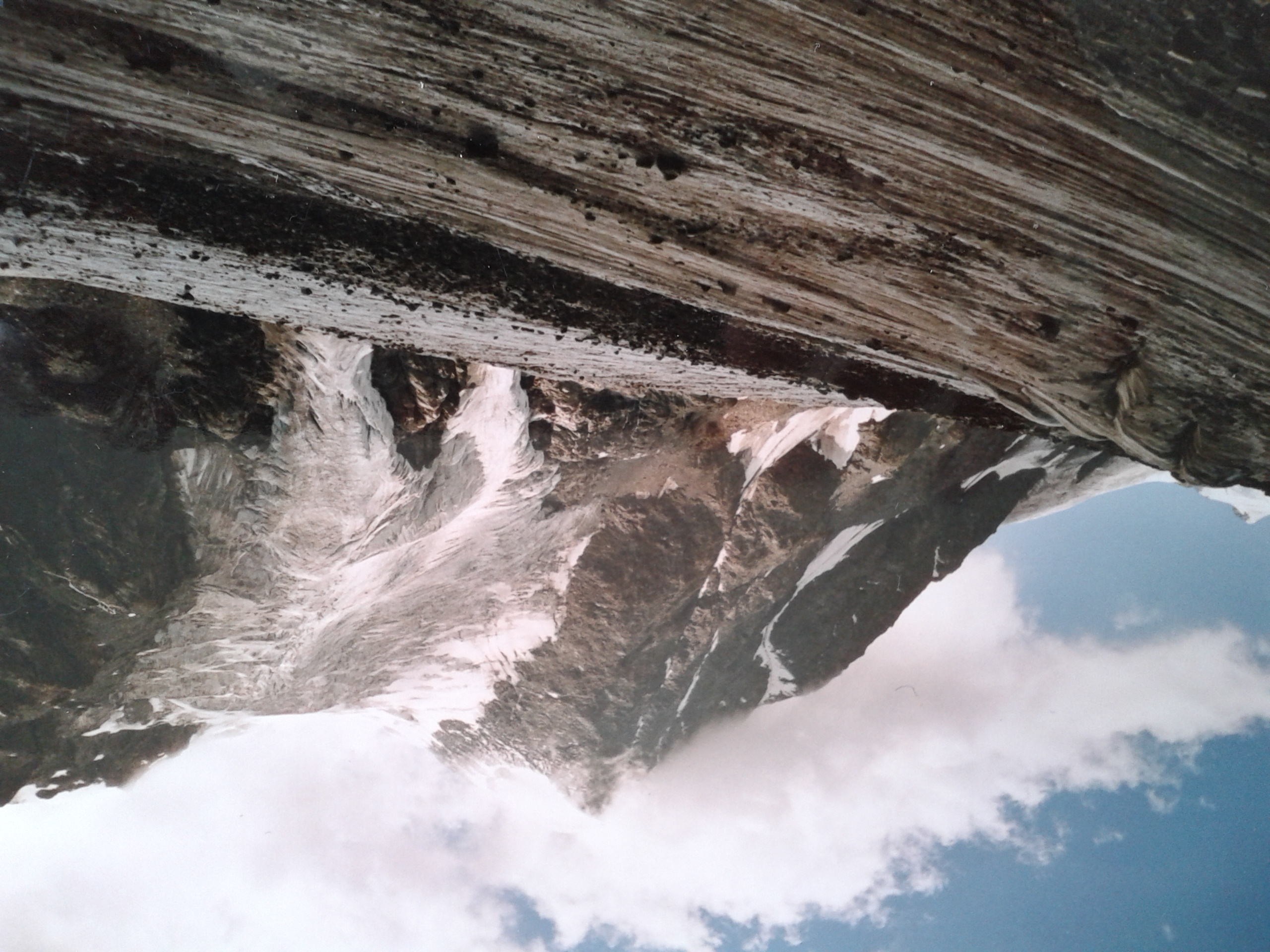
Luckily there's no railway to the Grand Combin glacier
Luckily there’s no railway to the Grand Combin glacier near Verbier

In the summer of 1868, three years before the Rigi railway at Lake Lucerne was completed, an English noblewoman travelling incognito made an excursion to Mount Rigi. The stout 49-year-old woman had a lot of work and family troubles on her mind as she was carried up the mountain in a sedan chair. But this lady was no ordinary tourist. She happened to be the most powerful woman in the world, with the job title Monarch of the United Kingdom of Great Britain and Ireland.

Queen Victoria visited at the beginning of the mountain railway boom. Entrepreneurs were snapping up railway concessions all over the Alps and rushing to complete the first, the highest, the steepest railway lines to make a killing in the lucrative new tourist market.

It is a staggering fact that two thirds of Switzerland’s land surface is taken up by mountains. Small communities had always eked out an existence on the lower slopes but the great peaks were out of bounds, known only from a distance. It was only in the second half of the nineteenth century that the Alps began to be seen as an amenity, first for hikers and climbers and later for less adventurous visitors who could be transported up to dizzying heights in their Sunday best.

Not everyone agreed that laying tracks and blasting tunnels in the Alps for tourists was a worthwhile pursuit, as I discovered when researching article for swissinfo.ch about the centenary of the Jungfrau railway last year.

“We regret that so many mountain lines have already been built, which only benefit a small number of people economically, while from the ethical point of view they are not only useless but even harmful,” the Swiss League for the Defence of Natural Beauty and the Swiss Heritage Society wrote in a petition to the government calling for a more prudent granting of railway concessions.

In its first full year in operation, 1913, the Jungfraujoch station – Europe’s highest train station – on the shoulder of the Jungfrau mountain in the Bernese Oberland attracted 42,880 tourists; last year 833,000 people, myself included, made the unique rail trek to “The Top of Europe”.

The return trip from Interlaken to Jungfraujoch (3,454 metres above sea level) is about an hour and a half each way, with two train changes. If ever I had the feeling of being herded, it was on that day. I joined the multitudes of Indian, Chinese, American, European and Arab tourists being efficiently ushered from one train to the next by smartly-dressed guides. After leaving Kleine Scheidegg for the final leg of the journey there were more stops inside the tunnel at the viewing windows cut into the rock face.

I arrived at the top around lunchtime to join throngs of people wandering around through a maze of tunnels or milling about in front of the different eateries (including what must be the most expensive Indian buffet in mainland Europe). I could see the magnificent Aletsch glacier for a few minutes before everything was obscured by cloud.

Here’s the report I wrote for swissinfo.ch about the centenary.

The 200-franc day trip which is billed as the ultimate Swiss tourist experience seemed to me to be rather overpriced, overhyped and exhausting. Within minutes of boarding the return train, everyone on board promptly fell asleep, wiped out by the altitude and possibly the stress of being herded around all day.

Here’s a little secret. Switzerland is full of mountains and easy ways of getting up them and while I’m not saying they all look the same, there are spectacular views to be seen from almost anywhere, even the top of the smallest, most humble 12-franc chair lift.

It’s holiday time again. Have you got any tourist trap stories to share?

This fork sculpture at Vevey, Lake Geneva is a bit of fun

Ten award-winning German words

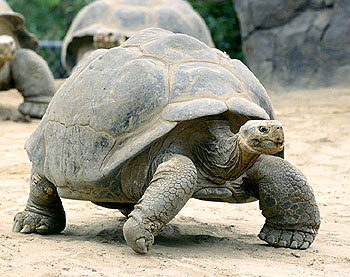
library.sandiegozoo.org
‘Ugly, me?'(library.sandiegozoo.org)

After ten years in Switzerland, living right on the French/Swiss-German language border, I have gradually been won over by the charms of the German language. Like many foreigners here I started off with classes in one of the adult education centres run by the Swiss retail chain Migros. The learning curve is dragged down a bit by the huge gulf between the standard German learned in class and the dialect spoken by the locals, but hey you get there eventually.

Which brings me to my list today. One of the joys of learning a new language is finding words that express new concepts and ideas, or that describe familiar concepts in different ways. As a newcomer to a language you can also appreciate words purely for how they sound. Without further ado …

1. Ameise (ant): This is the year of the ant in our garden and with a three year old who points out every member of the animal kingdom with equal excitement, including the humble ant, Ameise is a word I hear very often. Far superior to ‘ant’, Ameise (almost rhymes with Eliza) is a great word to announce dramatically.

2. Kavaliersdelikt (peccadillo): One of those compound words that are the hallmark of German, I like the marrying of Kavalier (gentleman) – with Delikt (offence). These days Kavaliersdelikt, which has such a breezy devil-may-care ring to it, is mostly used in the context of the international tax dispute. Part of the reason Switzerland is viewed as a tax haven is because tax evasion is considered a Kavaliersdelikt in this country, i.e. no big deal.

3. Übrigens (by the way): I just enjoy this word because I learnt it early on and managed to sound like I had a bigger vocabulary by sticking it at the beginning of random sentences. Also it sounds funny to my ear – ‘oobrigens’ – as if it’s referring to something rude or silly.

4. Hebamme (midwife): There should be a reggae song written in German with the title Hebamme (sort of rhymes with Obama). It’s one of those bouncy musical words that instantly appeal to me. Might also have something to do with my HUGE respect for this line of work – the true oldest female profession, alongside farmer, market vendor, weaver, child minder, chef and healer. (Side rant: I really think we should protest every time we see prostitution referred to as “the oldest profession”. Enough already!)

5. Baubewilligung (building permission): There is a host of compound words made up with Bewilligung (w pronounced as v in German), such as residence permit, a nice long one Niederlassungsbewilligung. Bau, pronounced like the bow of a ship gives a good punch to this word.

6. Schwach (weak): You’ve got the ‘sh’, the ‘v’ and the ‘ch’ (like Scottish Loch) here. It’s a word you can really get your teeth and throat into. Although it means weak it’s a strong word. Imagine a vindictive voice shouting: ‘Du bist Schwach!’ Scary.

7. Vielfalt (variety): Pronounced feel-falt, I like the Fs and the Ls here. It’s all’s very soft and it’s another one of those words you can use early on to give the impression of an advanced vocabulary.

8. Verrückt (crazy, mad): This is another very expressive word, especially when you hear it pronounced the Swiss-German way as they have a pretty extreme ‘K’ which sounds like someone clearing their throat before spitting. It’s interesting too that the Swiss Germans use verrückt to mean angry as well, like the American double meaning of the word mad.

9. Einsamkeit (loneliness): There’s something gentle about this word. It’s romantic, poetic. You can just imagine someone writing it in a love letter 100 years ago. In general I like the –keit ending (pronounced ‘kite’), like Aufmerksamkeit (attention), Möglichkeit (possibility) and the old chestnut Ausländerfeindlichkeit (xenophobia).

10. Schildkröte (tortoise): I’ve sneaked this one in, not because I like it – I actually find it quite ugly – but because I can never remember the word and I hope to conquer it once and for all here.

I’m sure I’m not alone in enjoying foreign words. Anyone care to add to the German list or present some favourite words from other languages? I’m all ears!

10 things to love about Switzerland

DSCN0831

I’ve been dwelling a lot lately on what I’m missing out on by not living in Ireland anymore so in the interests of positive energy I’ve put together a list of 10 wonderful things Switzerland has to offer.

1. The Alps: They take up almost two-thirds of the country’s landmass and play a big part in national consciousness and history. Whether you are sailing up in a chairlift over green meadows in a warm summer’s breeze, hiking over a glacier or swooping through a pine forest on skis, any visit to the Alps brings breath-taking moments where you just can’t get over the sheer beauty of it all.

2. Languages: For a language nut like myself, Switzerland is a fascinating mini Tower of Babel. I’ve enjoyed the challenge of cracking Swiss German, completely impenetrable the first time you hear it, even to Germans. Living in a town on the French-German language divide, there’s a lively mix of both cultures; people in my neighbourhood switch between the two languages effortlessly. How do you say hello in Switzerland’s fourth language, Romansh? Allegra!

3. Public Transport: Switzerland demonstrates what public transport should be. The service is frequent, reliable and synchronised, and can take you anywhere. Amazing that the Swiss still feel the need to have five million cars for eight million inhabitants.

4. Location, location, location: Imagine living in a place where in a couple of hours you could visit Germany, France, Italy or Austria. That place is Switzerland. Coming from an island on the edge of Europe, I still get a thrill when I stand in Zurich station and see destinations like Milan, Vienna, Warsaw and Prague on the timetable display.

5. Egalité: Go to an ice hockey match and you’ll see how strongly the Swiss feel about their local identity. People are very attached to their canton and recognise each other’s regional accents straight away. On the other hand there is no such thing as class-related accent and children of all backgrounds are educated side by side in state schools.

6. Built to last: Here’s something that amazes me. There are farmhouses in Switzerland still standing that were built in the 13th century. Not forts or castles but simple farmhouses. This surely is a sign of a great country. For more on that subject here’s a story I did about Switzerland’s oldest house in canton Schwyz: http://bit.ly/ddypTP

7. Traditions: With a huge variety of traditional celebrations and rituals still thriving, Switzerland is all about continuity. Carnival is massive, people spend half the year preparing their costumes and rehearsing with bands. The things people celebrate here feel authentic. Instead of Santa Claus, children wait excitedly for a visit from St Nicholas in early December, a man dressed as a bishop who goes from house to house giving out nuts and chocolate.

8. Waterways: For many people water is about boating and fishing – for me it’s swimming. Switzerland has a wealth of beautiful clean, accessible lakes and rivers. The water warms up by mid-summer and you can walk in without getting a heart attack. The beaches are well kept and there are numerous public pools built on the lake and river shores. So far I’ve swum in a dozen different Swiss lakes, each experience unforgettable – dozens more to go!

9. Cheese: I’m completely hooked on the national cheese dishes raclette and fondue. These melted cheese meals are an institution here, part of the weekly menu all through the winter. I can’t decide which one I like the most so I just have to keep eating them both until I make up my mind.

10. People: One in five Swiss marries someone from outside the country. Like many foreigners in Switzerland, you may start off loving one Swiss person but for those of us who stay and make the effort, the rewards are great. The Swiss I now count as friends are fun-loving, kind and generous. They make me feel at home.

It’s been a good exercise for me to count my Swiss blessings. Have you ever done the same for your adopted home?