Falling in love with fictional babies

Image courtesy of tuelekza at FreeDigitalPhotos.net

The baby was astonishing. He had little cloth ears, floppy as cats. The warmth of his round stomach could heat the world. His head smelled like a sacred flower. And his fists held mysterious, tiny balls of fluff from which he could not bear to be parted.

Meet baby Raqib, the adorable son of Nazneen in Brick Lane by Monica Ali. I read and loved this book when it came out in 2003 and particularly remember being enchanted by this baby. It seemed that he was the first convincing baby character I had come across in a novel.

Babies are given birth to, carried around, fed, loved and admired in books, but it’s rare for a baby’s personality to emerge on the page. And babies are brimming with personality. They’re fun to be around, for their expressions and gestures alone. Back to Raqib.

Nazneen curled around him on the bed. He raised an arm, which reached only halfway up his head. He put it back down. The futility of this exercise appeared to anger him.

In the same scene, Nazneen’s husband Chanu is droning on about setting up a business. He asks: “What can you do without capital?”

Raqib tried to lift his head from Nazneen’s shoulder as if he knew the answer to this difficult question. Overcome with his burden of knowledge, he collapsed instantly into sleep. Squinting down, Nazneen looked at his month-old nose, the sumptuous curve of his cheek, his tight-shut, age-old eyes.

There is more of Raqib and every appearance he makes is so beautifully written you want to reach out and stroke that little cheek.

Often, the fictional baby’s role is to channel the thoughts of the parent or caregiver. Baby Jonah in The Hand That First Held Mine by Maggie O’Farrell is that kind of baby. This scene takes place with his mother Elina out in the garden.

She moves the rattle from side to side and the coloured beads ricochet around inside their clear globes. The effect on the baby is instantaneous and remarkable. His limbs stiffen, his eyes spring wide; his lips part in a perfect round O. It’s as if he’s been studying a manual on how to be a human being, with particular attention to the chapter, ‘Demonstrating Surprise’. She shakes it again and again and the baby’s limbs move like pistons, up, down, in, out. She thinks: this is what mothers do.

There’s another ‘as if’. There is a tendancy to ascribe thoughts and emotions to babies that they aren’t capable of having. Also the idea that they have some ancient knowledge – I’m sure I’ve read that more than once but can’t find any references now.

But in real life as in fiction, babies are interesting in what they reveal about the people who love them. Take baby Matt in What I Loved by Siri Hustvedt, whose parents tracked his development “with the precision and attentiveness of Enlightenment scientists”:

For a baby he seemed weirdly compassionate. One evening when Matt was about nine months old, Erica was getting him ready for bed. She was carrying him around with her and opened the refrigerator to retrieve his bottle. By accident two glass containers of mustard and jam came with it and smashed on the floor. Erica had gone back to work by then, and her exhaustion got the better of her. She looked at the broken glass and burst into tears. She stopped crying when she felt Matt’s small hand gently patting her arm in sympathy. Our son also liked to feed us – half chewed bits of banana or pureed spinach or mashed carrots. He would come at me with his sticky first and push the unsavoury contents into my mouth. We read this as a sign of his generosity.

The examples I found are all boy babies. I wonder if this is a coincidence or do we consider the archetypal baby to be a boy?

We’ve had childbirth on this blog, now babies. My next blogpost will look at new mothers or motherhood in fiction – and then I’ll leave the subject alone for a while. Promise.

Has anyone else come across any good babies in fiction? I can think of one obvious bad baby, also a boy, but I’m more interested in the sweet ones. I think it’s difficult to write a convincing baby. Nicki Chen, a fellow blogger and author, does it in her novel Tiger Tail Soup. I’ll dig that excerpt out as soon as I get my copy back.

The desolation of domestic life

2014-12-21 12.06.59

It’s ok, I’m not talking about my own domestic woes. I’ve just been reading The Springs of Affection by Maeve Brennan, a collection of short stories set in Dublin and written between the 1950s and 1970s when Brennan lived in New York.

In between stories I started the wonderful Academy Street by Mary Costello, in which the main character Tess lives in New York through that same period and beyond. I lived under the melancholy spell of that book for three days, snatching it greedily back up at every opportunity. Academy Street gives the illusion of moving slowly without much drama but before you know it you have been through Tess’s entire life, a patchwork of tragedy, transient love and inertia.

For more on Academy Street I would recommend this fabulous review by fellow blogger and author Anne Goodwin, whose first novel, Sugar and Snails, was published last July.

Tess, with her emotionally debilitating upbringing and tragic lack of self-belief, could be a character from one of Brennan’s stories. But while Brennan reproduced on paper the “petty social intricacies of the city she had left”, she was living the high life in New York, working as a columnist for The New Yorker and enjoying the kind of success and freedom most girls of those times only dreamed about.

After a disastrous marriage, Brennan had a breakdown and her illustrious career – and her life – fell apart. She spent the last fifteen years of her life plagued by alcoholism and mental illness, homeless at times, and died forgotten and penniless in 1993.

Some of Brennan’s characters appear in several of her stories and a lot of the action takes place in one particular house in a suburban street on the city’s south side, in Ranelagh to be exact. This is the house where Brennan grew up, where her family went through precarious times while her father was on the run during the Civil War. In the new Free State, he was on the winning side and the family moved to Washington when he was appointed Ireland’s envoy the United States. Maeve Brennan never moved back.

There is a play, Maeve’s House, based on Brennan’s life which I wish I had seen. It was commissioned by the Abbey Theatre in Dublin and was also staged in New York in 2013. The play owes its existence to an amazing coincidence: the actor performing the one-man show also lived in the house were Brennan grew up. Eamon Morrissey’s family bought the house in Ranelagh from Brennan’s parents when they moved to the US.

Morrissey was surprised to discover in one of her stories an exact description of his childhood home and he contacted her at the magazine; they arranged to meet in New York.
Here’s a review of the New York show.

To get back to the stories. Some are gently moving while others are steeped in despair, portraits of people trapped in prisons of their own making. The title story The Springs of Affection (1972) is the longest in the book and it features one of the most vividly drawn and unlikable characters I have ever come across.

Her name is Min and she is the last surviving member of her family. A seamstress by trade, Min has lived a life of unrealised dreams, defined by envy and spite, but she finds herself on top in the end, triumphant in her longevity.

“Min sat beside her own gas fire in her own flat in Wexford and considered life and crime and punishment according to the laws of arithmetic. She counted up and down the years, and added and subtracted the questions and answers, and found that she came out with a very tidy balance in her favour.”

Min’s brother Martin and his wife Delia are described with scathing disapproval by Min in her recollections. We meet the couple in several of the other stories, notably in The Twelfth Wedding Anniversary (first published in The New Yorker in 1966), where their domestic misery is writ large. When Martin returns home late after ignoring their anniversary, he finds refuge in his family’s slumber.

“… If this night could only last a week, or two weeks, I might have time to get everything straightened out in my head, and then I would know what to do … If they would only sleep happily like that for a long time, he might find himself able to think again. But the coming of day, a few hours off, rose up in his mind like a towering wave that was all the more awful because it would be succeeded after twenty-four hours by another wave, and then another. There was no end to the days ahead, and the ones furthest off, years from now, were gathering power while he stood waiting on the landing. It was a merciless prospect. There was no way out of this house, which now seemed to contain all of his future as well as a good part of his past.”

Oh the unhappiness!

The Laws of Love by Clare O’Dea

Some children start out unwanted but are soon loved and cherished. It was not so with me. Once unwanted, always unwanted. When I reached an age where I could question this, I could only conclude that I was missing the loveable ingredient possessed by other children, and no amount of eagerness to please would make up for this.

If my eldest brother is to be believed, my parents were happy in the early days. There was laughter and fun, there were callers and outings. Ten years later, when my newborn cries were keeping everyone awake, there was bitterness and want.

I developed a system of good and bad luck omens. Walking home from school I would fall back from my brothers and sisters and bet my wellbeing on chance variations in detail along the route. If the Currys have sheets on the line I will get a smile from mother, if it’s clothes I’ll get a clout, if it’s nothing, I’ll get nothing. I had the odds well worked out.

Mealtimes were quiet. There was none of the grabbing and rushing people associate with big families. We had our portion and we wanted to savour it. Not to forget my mother’s temper, which had a civilising effect on us all. I did not go to bed hungry although if I woke in the night hunger was lurking. We had clothes to wear, we washed. No laws were broken but the laws of love.

Escape was a room in a boarding house in Dublin 7, a house of straw as it turned out. I got shop work and independence, blighted at first by unwelcome attention from men in the neighbourhood. I faithfully sent money home and scraped by. A new room in a new house and life turned a corner. I met your father.

Shall I recite for you the list of his virtues? You could not know them all, for what child does? In the order in which I discovered these sides to him: he was good company, true to his word, thoughtful, tender and compassionate. He was in love with life and with me by association, and so together we built a house of sticks. What you saw between us was less than we started out with, to be sure, but it was still something good.

When I discovered that I was expecting – pregnant was considered a coarse word in those days, much too blunt – I felt the deepest and fullest satisfaction of my life. Those were my glory days.

Nothing could match my zeal. I was going to be the perfect mother. I was determined to shield you two from any harm at any cost. You placed your fervent baby love in me; I mixed it with my anxious adoration and gave it back to you in dangerous measures. It is not an exaggeration to say that I worshipped you. The light that shone from your eyes was my sun, moon and stars. I feasted on your purity and beauty. Your father could only watch and pray.

No doubt many mothers delight in every gesture and utterance of their children. But if they do, there is a counterbalance – feelings of criticism and irritation. This was missing in me. I bathed you in love and subjugated myself to you and your needs. There were no tensions between you children because I fulfilled your every desire. My purpose in life was to see that you wanted for nothing. I am truly sorry.

Wherever I was in the house I ran at the first cry. I smoothed over every conflict, made equal room on my lap for victim and culprit. When you stumbled I caught you before you hit the ground. I cooked only your favourite foods, bought your favourite toys and shoes, protected you from challenges and disappointments. I was ever vigilant. No laws were broken but the laws of love.

School was torture for me – hours of the day when anything could be happening to you, and all out of my control. I redoubled my efforts at home. There your spirits were replenished before you went out to face another day of adversity without me. Your father, Lord rest him, could not compete with my fanaticism. He retreated into his own life outside the home, which suited us, didn’t it?

This has been the way of our family until now. And look where it has taken us. For all the love I heaped upon you growing up, your cupboards are bare. Your every action motivated by self-interest, you can only muster mean-spirited possessiveness and call it love. Christopher is the worst offender, the newspapers are sure of that. What he did to that poor girl is one thing, but who can fathom his lack of remorse? No-one, apart from the woman who nurtured that weakness over many years.

What about you Paula? The results may not make headlines but I have failed you just as badly. When I think of all your father’s virtues, you match each one with the opposite vice. You navigate your way through life with wilfulness and spite. People are drawn to your narcissistic ways and then hurt by them. Your children suffer, their father too. I have my reasons alright.

Now that your father is gone, the house reverts to me. When you get out of prison Christopher there will not be a home here for you anymore. I am selling and plan to buy a small house of bricks for myself. I will not be passing the address on to either of you. Paula, get a nanny. If it’s any consolation I blame myself.

I hope you enjoyed this piece of flash fiction. I haven’t posted any short stories for a while because I discovered that publishing on a blog breaks the ‘previously unpublished’ rule for most journals and competitions. All the same, sometimes it’s nice to send a story out for its own sake.

Did I miss the memo?

Snow White and the Huntsman, Universal Pictures

A novel is long enough for all your writing weaknesses to come out of the shadows but it takes an outside eye to see them. I am now much better informed about my pet redundant words, grammar sins and my penchant for padding, thanks to one particularly ruthless and brilliant editor friend.

For instance there was a short scene in my novel where the main character put on make-up before going out for the evening. Those lines have now been cut.

I mention make-up because I was struck by a throwaway statement in an article I read earlier this week about narcissism and the ice-bucket challenge. The article on the BBC Future website gives an interesting take on the role narcissism and performance play in modern altruism.

The writer Chris Baraniuk refers back to another social media craze this summer where women posted photos of themselves – shock, horror – without make-up, to raise funds for cancer research.

Baraniuk observes that “make-up remains de rigueur for women”, a statement which stopped me in my tracks. Could this really be true? And if so, how did I miss the memo? Was it only sent to English women, or Londoners perhaps?

This got me thinking about what make-up says about women. Is not wearing make-up a sign of liberation or laziness? I know of women who need to ‘put on their face’ before they venture into the outside world. But I’m inclined to think they are not the majority.

My grandmother used to keep lipstick by the front door and always applied a dash of pink to her lips before going out, even when going out meant trundling to the local shops with her walker at the age of 93. I’m more of a make-up-for-special-occasions gal myself.

But to get back to the main theme of the article, it did make me wonder what place bloggers have in this “culture of rampant narcissism in social media”.

Blogging is self-publishing in its simplest and most direct form. You don’t have to pitch your idea to anyone and wait for their approval. If you have something to say, an idea to share, if a tree fell down and you want it to be on the record – you just hit publish. And there is a nice sense of fulfilment with that. It’s instant and it’s all yours.

But, bearing in mind that there are two million blogposts published every day, most bloggers are dropping very small pebbles in a very large pond. Something tells me this social media niche might not be rewarding enough for narcissists.

Here’s a narcissism test for anyone who’s worried. 😉

Good things come in twos

My idea of heaven
My idea of heaven

I did say I wouldn’t post again until the novel was finished and I meant it. It’s been a long summer of some discontent, a lot of hard work, and a gradual brightening of the light at the end of the tunnel.

And now I’m here, out the other side. Still reluctant to use the word ‘finished’ in the same sentence as my novel, what I can say is that I have completed the most difficult draft so far. Thanks to wonderful challenging feedback from kind and generous readers, I hope I’ve managed to fix some of the weaknesses that were bogging down this manuscript.

The other good thing I discovered first thing this morning is that my blog has been shortlisted for the Irish Blog Awards, Diaspora category. I’m thrilled to be included in this list and look forward to reading through the other blogs as soon as I finish work today. Thanks again to fellow exile Niall McArdle for nominating me and to the judges for overlooking the fact that I was on a break.

Without the distraction of blogging for the past two months, I have been able to write every day and have harnessed the power of that rhythm.

A three-week holiday in Ireland also helped with the daily time-stealing challenge and the inspiration, as my book is set in Ireland. Anyone who was lucky enough to be in Ireland this summer will tell you that the weather was superb. I wanted the country to be at its best so that my Swiss family would experience the magic of an Irish summer. In fact I wanted them to be enchanted and to develop some of the feelings about the country that I have. For once the weather came up trumps.

The novel is back in the hands of two readers and I’m hoping that only small changes will be required from now on and that I will be able to declare September the month of submitting.

I’ll be posting soon again, about a fascinating meeting in Bern with award-winning Swiss-German writer Pedro Lenz and his Glaswegian translator Donal McLaughlin. Not only is McLaughlin from Glasgow (via Northern Ireland), he also writes in Glaswegian dialect. Can’t wait to review the result of this unique collaboration: Naw Much of a Talker.

Looking forward to connecting with everyone again and catching up with your summer stories.

It’s good to be back.

So, have you finished the novel yet?

This question kills me, even though I know it’s the obvious one to ask. The short answer is no. More than once I thought I had finished but it turned out I had only reached milestones along the way. The first draft took almost twelve months to the day. I have now been writing my first novel for two years, five months and forever.

My heart sank today when I heard it took veteran BBC journalist Kirsty Wark ten years to write her novel The Legacy of Elizabeth Pringle. Ten years! She gave a talk at the Dalkey Book Festival in Dublin yesterday and I sent my spies along to find out what she had to say.

I’m curious to read her book, despite reading this bad review a few weeks ago, which was breathtakingly spiteful. The Irish Times reviewer actually said: ‘don’t give up the day job’.

http://www.irishtimes.com/culture/books/a-nice-fantasy-but-don-t-give-up-the-day-job-1.1777733

Wark started ten years ago but had to put the book to one side because of family commitments until her youngest started university. My youngest hasn’t started school yet. How long before I can find time?

Maeve Binchy addressed this issue in the first page of her book on writing, The Writers’ Club.

“Time doesn’t appear from nowhere. You have to make it, and that means giving up something else. Regularly. Like sleep, for example, or drinking or playing poker, or watching television, or window-shopping or just lounging about with your family.”

As it is I do regularly give things up for writing. But what if I’ve been giving up the wrong things?

The time has come to question where the writing blog fits in here. Would Maeve Binchy ever have finished Light a Penny Candle if she’d been blogging about it? I’ve published more than 70 posts over eighteen months, an average of 500 words per post. That’s a lot of words, half a novel in fact.

Without further ado, I hereby declare this blog temporarily suspended – normal service to be resumed when my novel is finished. I hope to connect again with fellow bloggers and followers of the site when the time is right.

Have a great summer folks!

ps. here is a link to Ashra’ Wish, a story I wrote for children which has just been published on a new children’s stories website.

http://www.shortkidstories.com/story/ashras-wish/

I'll be back.
I’ll be back.

“Too much statement and not enough suggestion”

Photo_6AEE6DB4-F527-CC2A-DF23-B7EF820BC320

This is what many writers are getting wrong, according to Irish short story writer Claire Keegan who passed through Bern this week. Keegan, a woman of strong convictions and deep thoughts, gave a talk and read from her award-winning story Foster.

I couldn’t believe my luck to hear that such a well-respected author was in town and that I could manage at the last minute to go along and listen to her. For Keegan, it is clear that writing is not something to be taken lightly. She spoke passionately about life, love and literature.

Foster is a story, about a poor young girl sent to live with more prosperous relatives for the summer. Written from the child’s point of view in the present tense, the story manages to convey that gulf that exists between children and adults and the disadvantage that children have in their inability to understand what’s going on in the adult world around them. It’s all the more poignant in Foster because the girl comes from a neglectful home and she is being looked after in a loving way for the first time.

As Keegan pointed out: “Love can come from anywhere, it doesn’t matter where.” The author sees herself as a critic of her society. Foster, set in 1970s rural Ireland, is in part a commentary on the plight of families forced, because of religious dictates on contraception, to have more children than they could love.

As I writer I was naturally curious to hear what Keegan, who has lectured in creative writing, had to say about the craft of writing.

The first thing that surprised me was that she goes through about thirty (!) drafts before she considers her stories finished. More proof that writing is rewriting!

During this process, Keegan does not give her work to anyone else for feedback, although she did admit she would like to have someone who would look at her manuscripts as closely as she does but from another perspective.

She explained that having spent decades reading attentively and developing her own taste, she trusts her own taste. A good place to be.

On the subject of what new writers are getting wrong, Keegan was very precise. In her view there isn’t enough priority given to the story, to the point that the story can be completely buried by the writing or even missing altogether.

Keegan is quite a purist when it comes to storytelling and confessed that she mostly preferred reading “dead authors”. For it to be a story something has to happen in a defined space of time, something irreversible that the character would take back if they could, she said.

Nowadays there is “too much statement and not enough suggestion”. Readers have to endure pages of analysis about the character before they even have a chance to go through something with them. In other words the analysis has not been earned.

Keegan is a great believer in “turning down the sound” and observing what people do with their hands and feet and eyes. That’s where the truth is, she said, and that is what she writes about. She won’t tell us someone is miserable and proceed to tell us why over many pages. She will show that misery and the context and let the reader reach their own conclusions.

Finally I liked what Keegan had to say about the elegance and efficiency going hand in hand in good writing. Not something that can be achieved in every blog post, but a good standard to aspire to in fiction.

The event was held under the auspices of the Swiss-British Society, Bern and SATE (the Swiss Association of Teachers of English).

Freddie had to go

There was a time when he was important. It was because of his charming deceitful ways that the whole story began. He made life unbearable for my main character, gave her the push she needed to run away and try to change things.

But when it became apparent that there was too much back story and too many love interests in this novel, Freddie had to go. Like any intense relationship, it was hard to make the break but bit by bit I have managed to delete all trace of him.

I had to ask myself the question: ‘Can I live without him?’ And painful as it was, the answer was yes. It’s a well-known mistake to cram too much into your first novel, one that you usually discover after the fact. I fell into this trap on a grand scale and it’s a difficult one to get out of. Difficult but not impossible.

So goodbye Freddie and everything that came with you:
The convoluted back story about the festival he was organising and embezzling money from – out.
The flirting scene in the pub – out.
The scene when they first get physical – out.
His jealous girlfriend’s reaction – out.
The successful launch of the festival – out.
Police raiding the offices – out.
Freddie going awol – out.
Police interviews – out.
The scene in the solicitor’s office – out.
Freddie featuring in other people’s conversations – out.
References to the court case – out.
The visit to Freddie in prison – out.

And finally, today, after my sly attempt to keep Freddie in the background of the story, even though no new reader could figure out what he was doing there, I have removed any last trace of Freddie’s character.

Amazingly it turned out that Freddie and the hefty subplot that went with him were not essential to this novel. In fact this overload of storylines was taking away from the true heart of the novel, which is about family. He may appear in another guise in another story, but for now the mischievous, restless Freddie is out of the picture.

I’m definitely not the first person to have to cut a character from a novel in progress. Sometimes two characters can be rolled into one if they are serving the same purpose or a peripheral character can disappear over the horizon without being missed. Has anyone else had the experience of cutting a major character? Am I right in thinking (and hoping) you never regret what you cut?

And now for something completely different …

Chateau de Chillon
Chateau de Chillon

This is a writing blog but today I am breaking the mould by posting a selection of photos of a beautiful place. It’s been a busy few weeks with visitors, and my novel is in the capable hands of a small group of trusted readers, which means I am holding my breath and can’t write much.

After a wet and unseasonably cold week, the sun came out today just in time for the Easter egg hunt and afterwards we went off on a day trip to Chateau de Chillon on Lake Geneva.

Room with a view
Room with a view

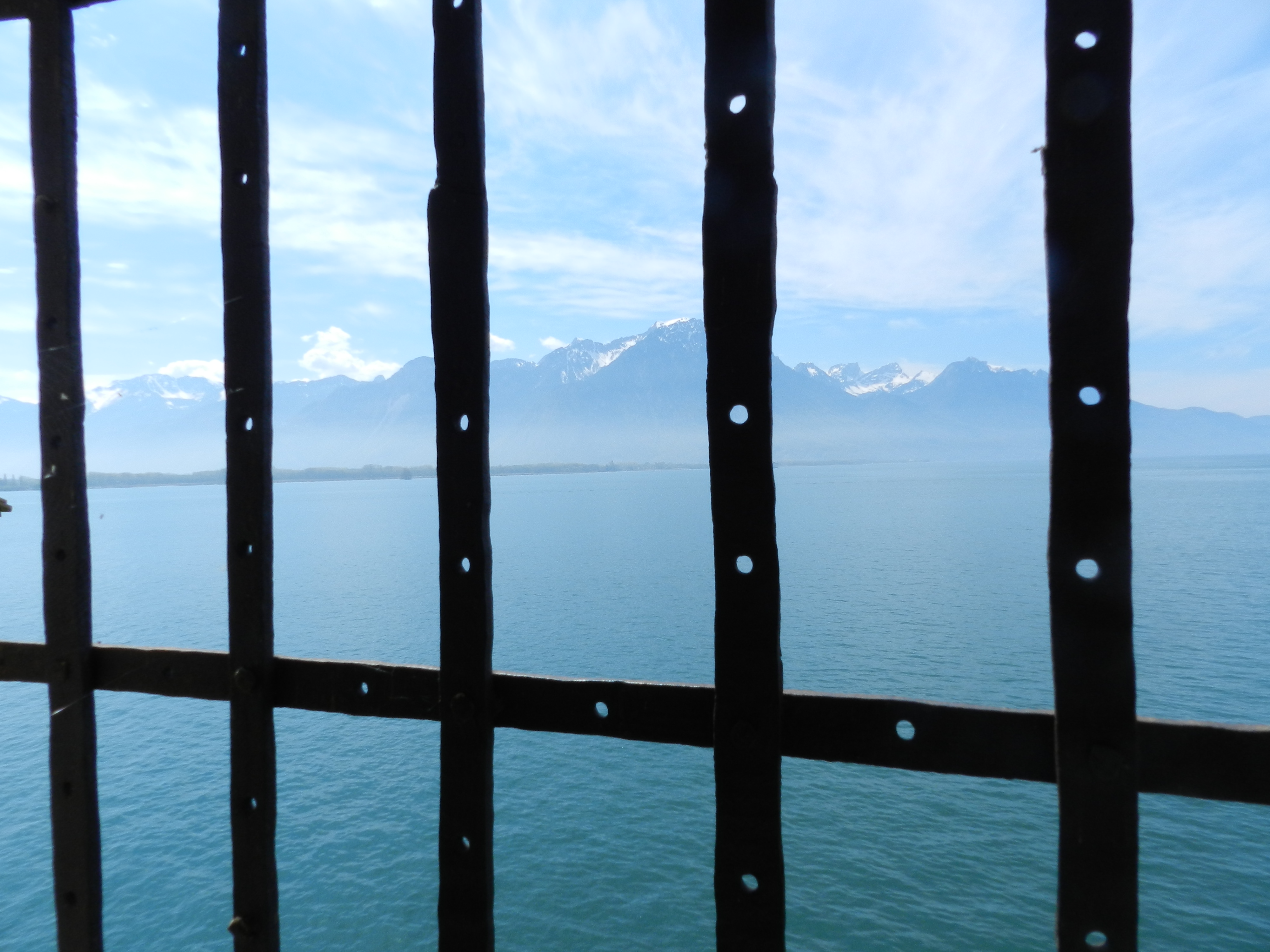
I don’t know if you can make out the Alps there in the background. The view from most rooms was spectacular.

I love a nice medieval courtyard!

Stone glamour
Stone glamour
Window crest
Window crest

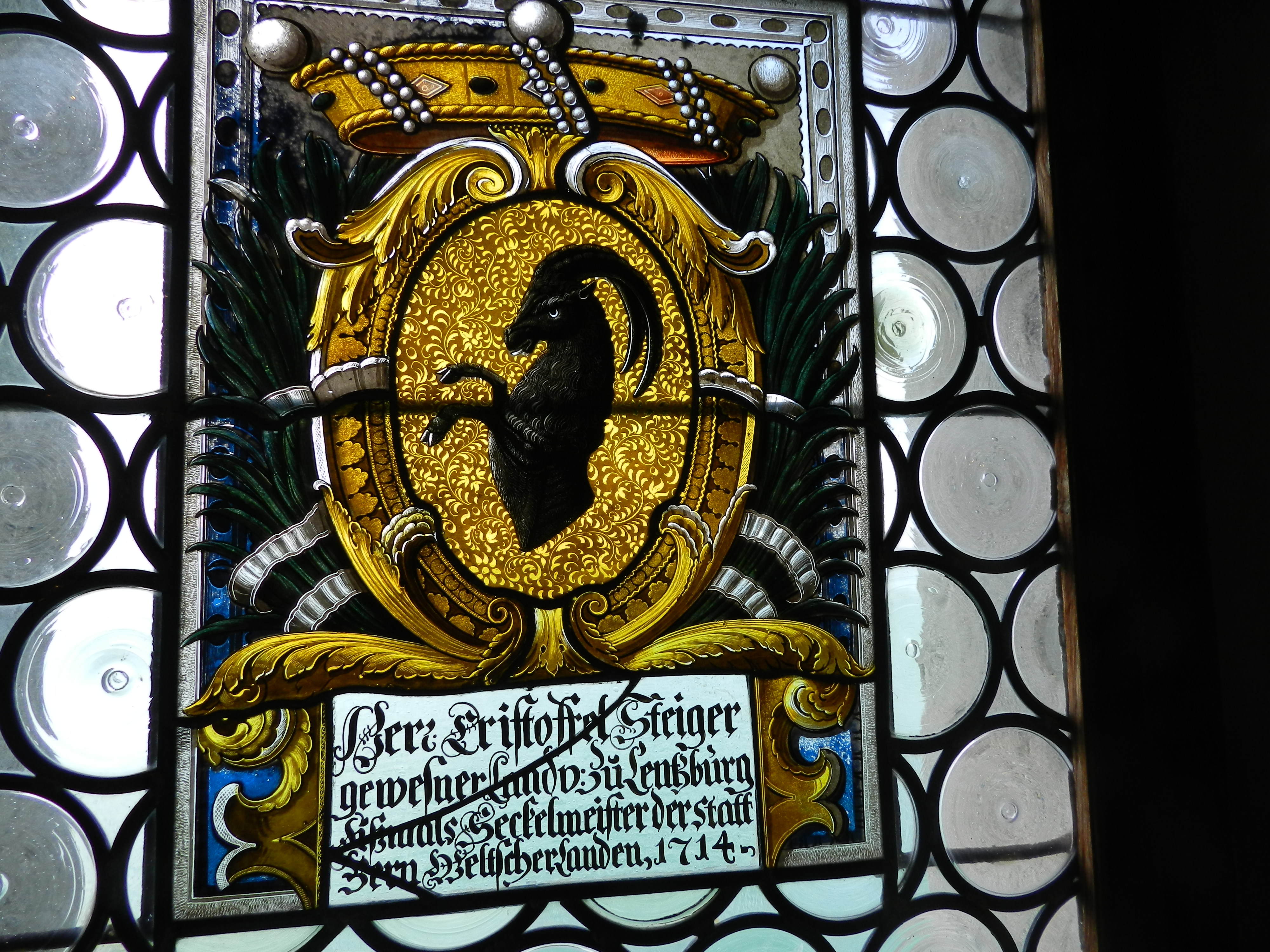
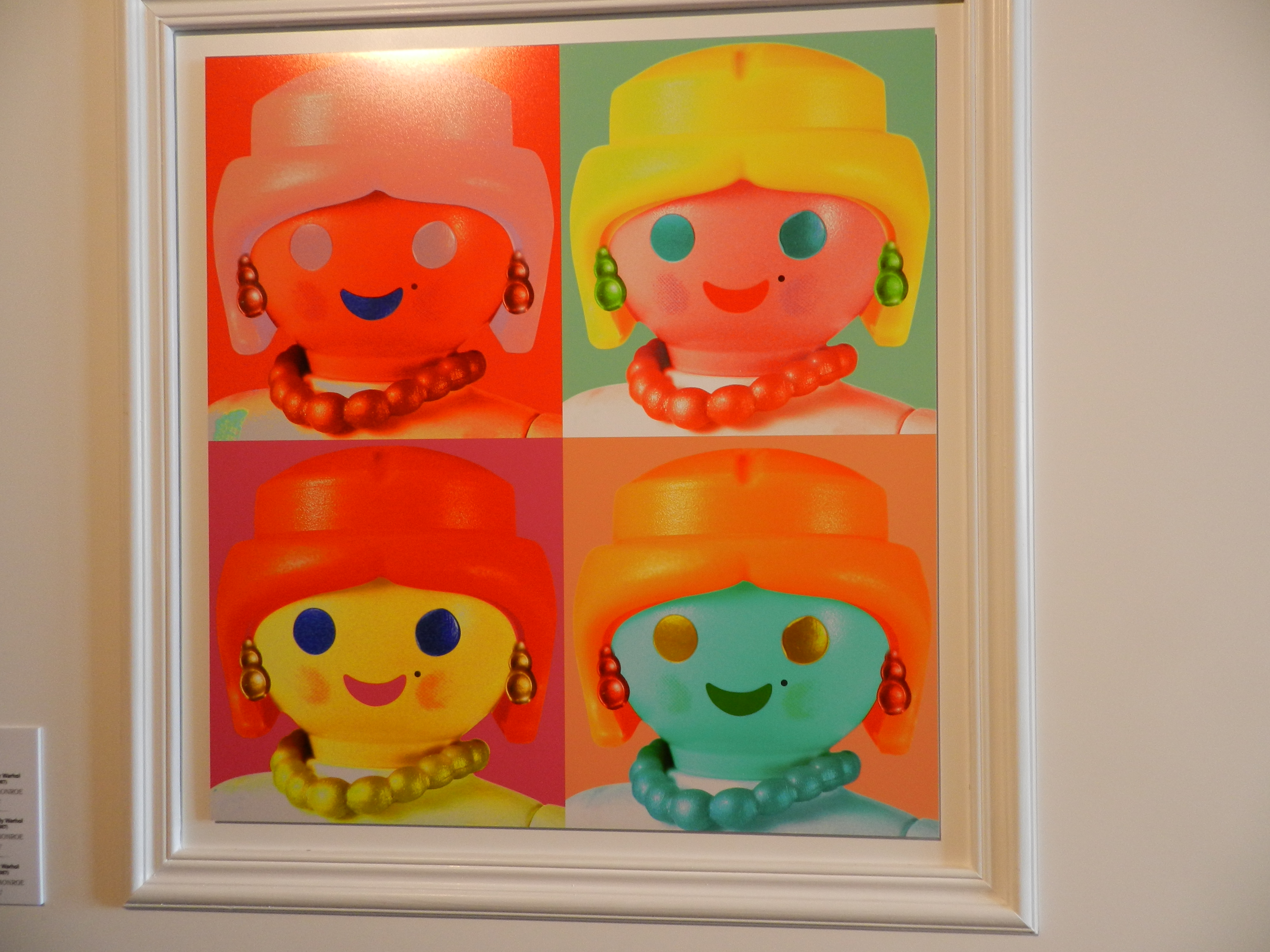
This stained glass crest is dated 1714 but parts of the castle are about 500 years older. The castle was hosting a special exhibition by French photographer and cinematographer Richard Unglick who has staged and photographed many classic paintings using Playmobil characters. Here’s one example:

Richard Unglick Playmobil

And another:

Richard Unglick
Richard Unglick

Before I leave you with one last image, I’d like to thank and pay tribute to my fellow bloggers (in alphabetical order) who have recently nominated me for a Liebster Award:

Arran Bhansal
http://arranbhansal.com/
David J Delaney
http://davidjdelaney.wordpress.com/
Anne Goodwin
http://annegoodwin.weebly.com/annecdotal.html
Niall McArdle
http://ragingfluff.wordpress.com/

And here is the Easter tree in the chateau. Happy Easter!

Can you see the decorations?

10 good things about not being published

Take a seat (© Clare O'Dea)
Take a seat (© Clare O’Dea)

Writing is a very private and personal affair; publishing is anything but. I seem to be hearing a lot lately about published writers living not so happily-ever-after once their first book is out there. They have to deal with changes they were pressured into making, a title or cover they don’t like, poor sales or reviews, stressful book promotion and the pressure to get the next book written or accepted.

On some level I must be taking this in and yet it has about the same effect as hearing about someone else’s unhappy marriage, when you and your chosen one are still love-struck and kissing on a park bench.

So just to celebrate the journey, here are ten great things about writing while it’s all about passion:

1. Just the Two of Us: You spend a lot of time together and you’ve been through a lot. The characters have become real people whose unfolding stories keep you from ever feeling bored. After that long process of building a relationship sentence by sentence, you are protective of your manuscript. Nobody who isn’t hand-picked by you will get to comment on your work. You’re slightly unhinged about the book but who cares, it’s mine, all mine!

2. Dream a Little Dream: If you haven’t tried to get published yet, you haven’t tasted failure and this is the time when you can still dream big. On your first query letter, the agent will instantly get back to you asking for more and it will be love at first sight for him or her. This will be followed by a bidding war, a fabulous launch party, the big reaction, the prizes, translations, interviews. Who will play your lead character in the hit movie?

3. Sitting on the Dock of the Bay: There has to be a certain self-imposed pressure or you would never have got as far as finishing the book, but it is self-imposed and therefore adapted to your reality and routine, and, well, if you keep extending your deadline, no one minds but you.

4. Wild World: This may not apply if you have started submitting your novel but before that phase, you are delightfully naïve about the whole publishing business. That innocence is something you’ll probably miss someday.

5. All By Myself: You know the argument, partly because successful self-published authors are very vocal about it. Agents are the gatekeepers to a moribund publishing industry that excludes good books from reaching the audience they deserve. You can spend your life crying over your forty rejection slips or take matters into your own hands and bring out your own book. Better still, don’t even bother submitting to agents and publishers, put your energy into self-publishing and reap the rewards.
When you are still writing you can ignore this whole debate, as it’s only academic – for now.

6. It Had to Be You: Somewhere out there is someone who will like your work, believe in what you do and put their heart and soul into getting your book off the ground. You haven’t met them yet, but when you do find the one, it will all have been worthwhile. In the meantime, you can dream about getting the call.

7. You’re So Vain: If you haven’t had the good fortune of having your book chosen by an agent or a publisher then you won’t have experienced the begrudgery backlash that inevitably comes with success. Even writing buddies you laboured uphill with may not be immune from thinking sour thoughts about you.

8. Learning to Fly: Writing your first novel is special because it’s an intense learning process, and that makes it very interesting. You can do the learning in advance or learn as you go about point-of-view, antagonists, show-don’t-tell, foreshadowing, revising. Either way it’s a pleasure.

9. With a Little Help from My Friends: Since I started writing two years ago I have met many wonderful people – some in person and some through social media – who have been bitten by the same bug. Some I now count as friends, whose support and understanding light the way on this sometimes lonely journey.

10. When I Wish Upon a Star: Before you write a book, there has usually been a long period of carrying around that wish and doubting your ability ever to achieve it. That fantastic feeling of satisfaction when you get to the last page is for keeps, and it is independent of the publishing outcome.

Did I miss anything folks?