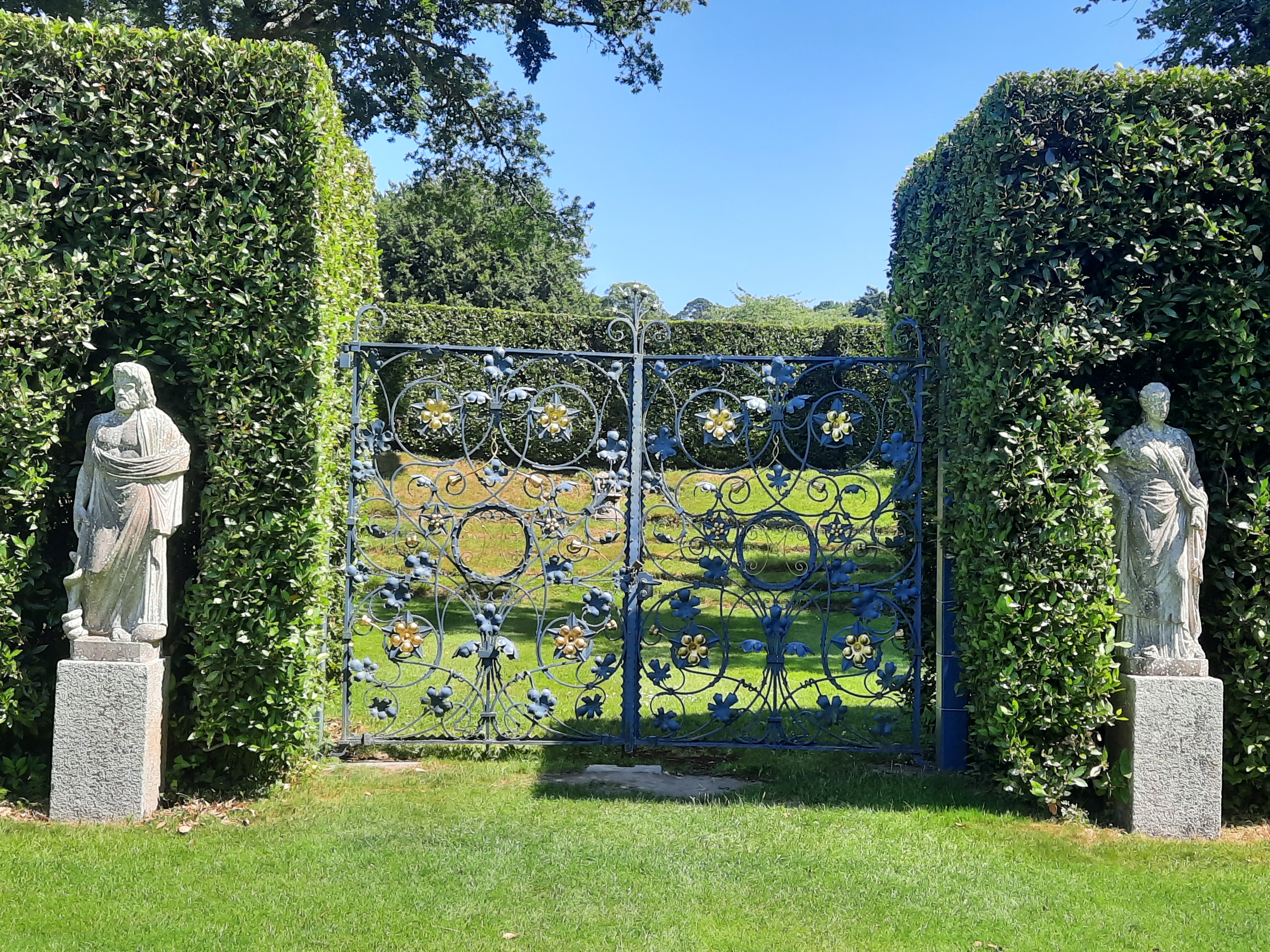
The year in musuems

My idea of a perfect day out involves a visit to a museum. With ten museums in four countries visited in 2023, it’s been a pretty good year. When I remember a visit to a museum, I remember the person or people I spent that precious time with. I can recapture the mood of the day and the inspirational effect of the art or history.

Let’s start with tables. On a visit to Ireland in October, I visited three museums. One was Derrynane House on the beautiful Iveragh Peninsula in Co. Kerry. This is the house Daniel O’Connell inherited from his uncle, the place where he felt most at home throughout his life.

In this dining room, the Liberator would have spent many entertaining evenings with friends and family. Also in the house is O’Connell’s death bed, which was transported back from Genoa. By the way, there is a brilliant novel by Seamus Martin about O’Connell’s ill-fated final pilgrimage called Duggan’s Destiny.

The next table is from 14 Henrietta Street house, the once grand eighteenth century residence that ended up housing more than 100 people living in tenements. This table is from the flat of the last resident of the house who left in the 1970s.  

Another table that caught my eye was in the Kunstmuseum Basel. This 1916 painting by Marc Chagall is called Strawberries or Bella and Ida at the Table. I like Chagall but I didn’t know he painted peaceful family scenes.

Two cats

Also in Basel, I saw some of Giacometti’s works, including one of his rare animal sculptures, The Cat (1951). I once worked in a building on Giacomettistrasse in Bern, which is where I first heard the name, to be honest.

The other cat is the lynx which was successfully reintroduced into the wild in Switzerland about 50 years ago. This lynx is in Lugano Museo cantonale di storia naturale. We spent a couple of happy hours in there as a large family group on a rainy afternoon in July. Serious paws!

More paintings

I’m one of those annoying people who takes photos in museums but I really do like to look back on them and remember the artists and paintings. The photo at the top of the page was taken in the Rjiksmusuem in September. It was my first visit to Amsterdam and I fell in love with the city. The famous painting everyone wants to see in the photo is The Milkmaid by Vermeer. You could get an excellent view of most other paintings.

I can’t resist including another Basel painting here. Portrait of Bonifacius Amerbach by Hans Holbein was painted in 1519. More than 500 years old and the face looks like it could be someone you might know. Incredible.

And here is another lovely face from the Strasbourg Museum of Fine Arts, Virgin in Prayer (ca. 1640) by Gian Battista Sassoferrato. I travelled to Strasbourg in France by train in February to meet two old friends, who came from Germany and Belgium. Such a treat.

Sassoferatto was a new name to me and I was interested to learn that he specialised in depictions of the Virgin in Prayer, which were apparently all the rage in the 1600s.

Handwritten

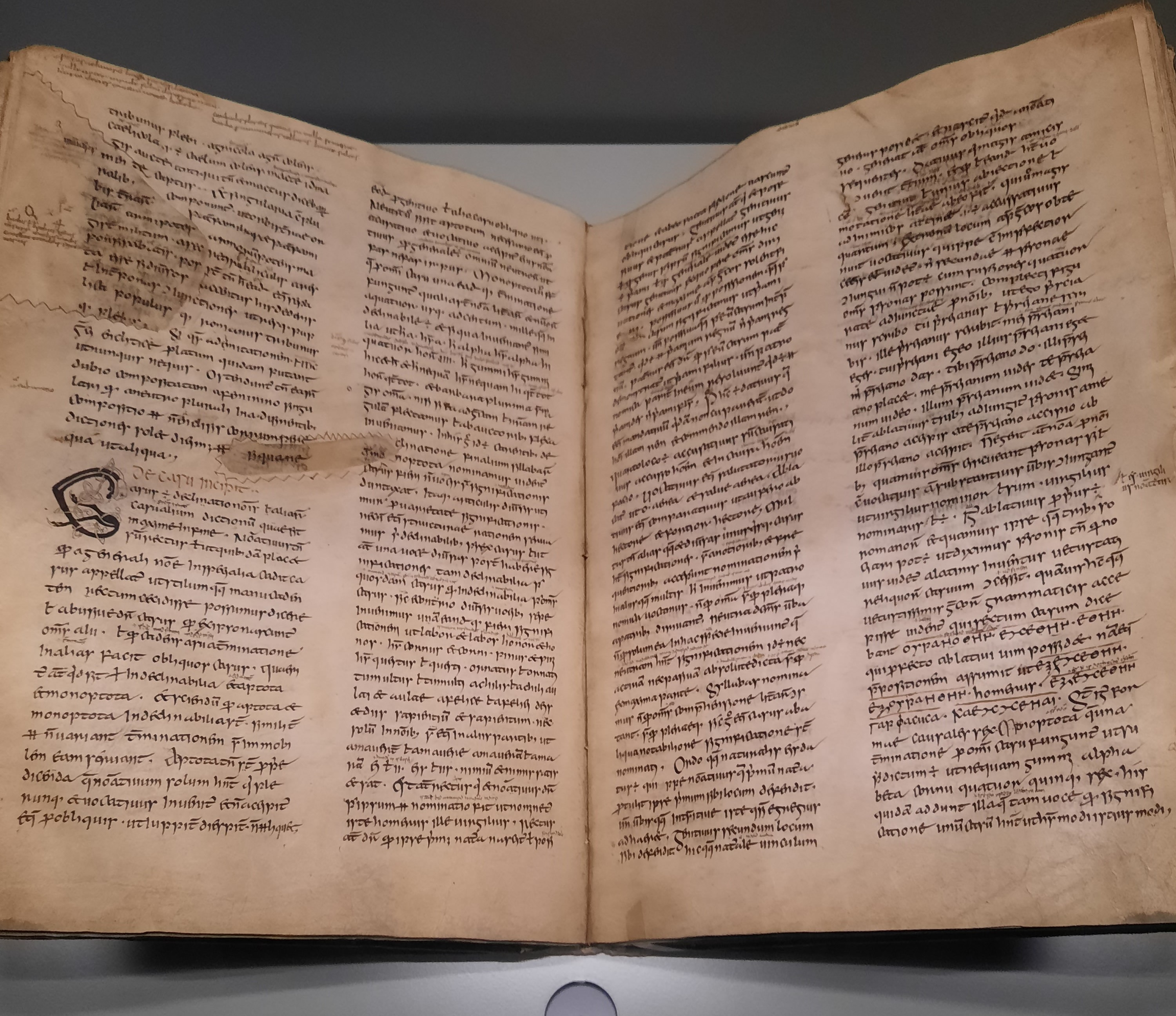
The last two items are the least picturesque but they are fascinating. Only yesterday, I visited the historic Abbey Library in St. Gallen, which has a very important collection of Irish manuscripts dating from the seventh to ninth centuries.

In my book The Naked Irish, I quote some verse inscribed in the margins of the Priscian Manuscript (ca. 850) – to show the ancient roots of Irish writing. But this was actually my first time seeing the manuscript. This version of Priscian’s Latin Grammar was transcribed possibly in Co. Down, with lots of glosses (explanations), a third of which were in Old Irish. That makes it one of the key sources for the study of the language.
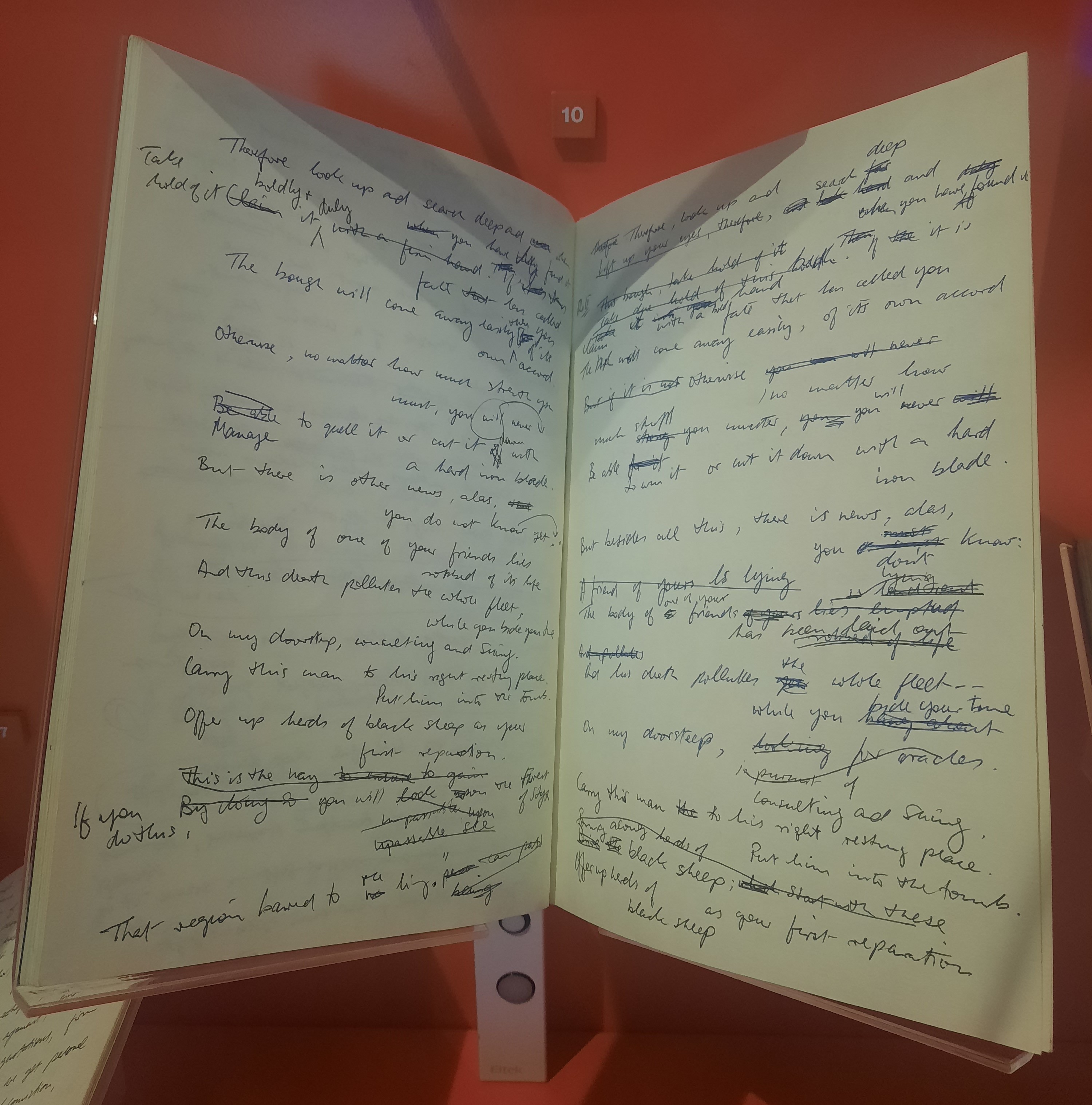
And the last exhibit is from Listen Now Again, a lovely little exhibition of Seamus Heaney’s life and work, running in the Bank of Ireland Culture and Heritage Centre on Westmoreland Street until the end of 2025. I opened my first bank account in this building as a student. It was originally home to the Parliament of Ireland before the Act of Union, the world’s first purpose-built bicameral parliament house. The building has been in the hands of the bank since 1803. But to get back to Seamus Heaney, this sample of the poet’s creative process is pretty amazing, don’t you think? Even Nobel Prize winners have to edit.
Observant readers will note that I’ve only mentioned eight museums so far. I also visited the Museum of Amsterdam, which covers the social and commercial history of the city. But my pics are hopeless. The same goes for Kilmainham Goal in Dublin, quite the gloomy tour, especially in the lashing rain, but very interesting.

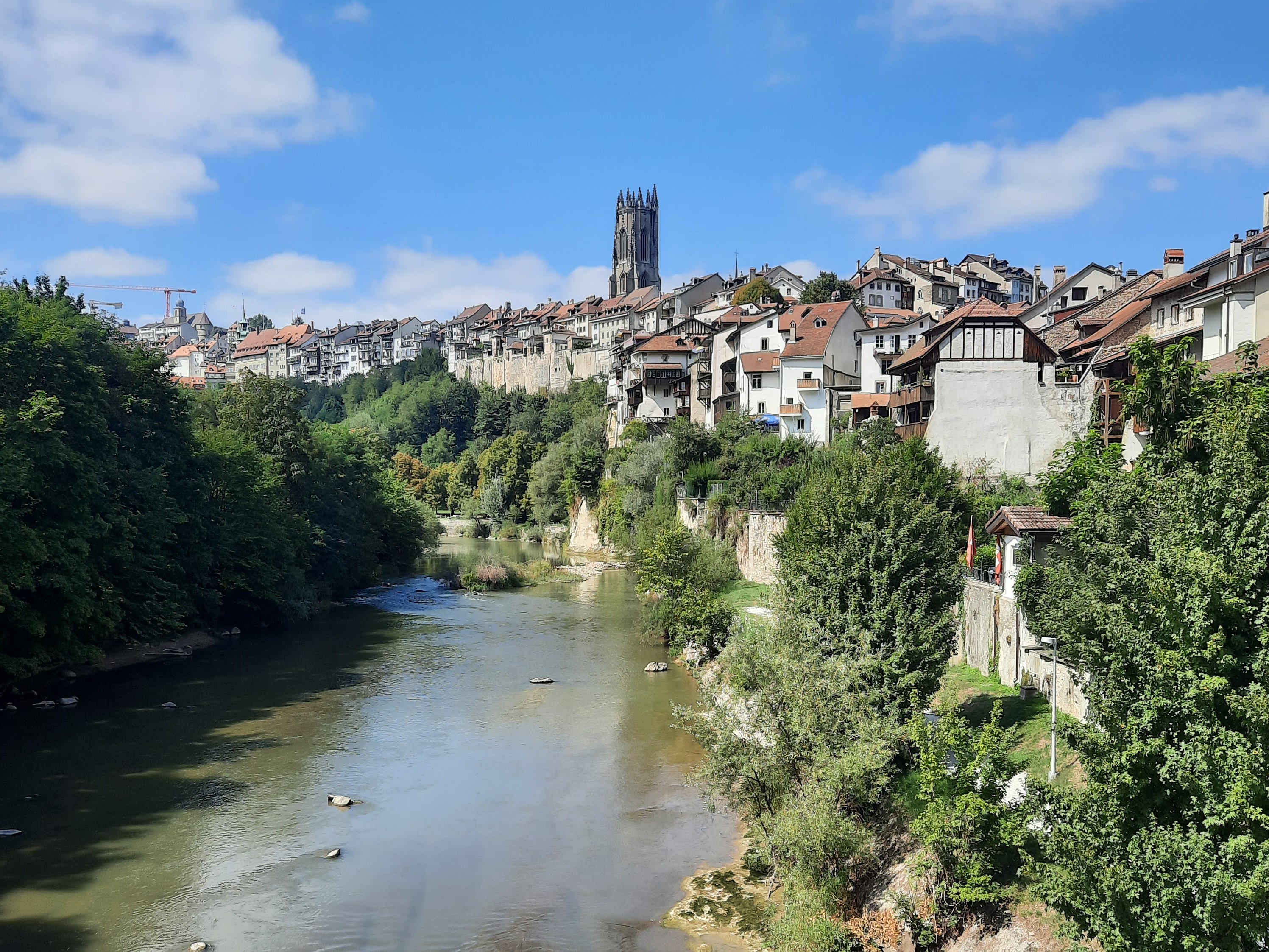
What museums did you visit this year? Any recommendations for me? On my list for next year is the house on Lake Geneva designed by Le Corbusier, Villa “Le Lac”. It opens again in March and I’d love to go there on a warm day. We are knee deep in snow at the moment in Fribourg. So first, let’s enjoy the winter!

Festival time: when Ireland came to Fribourg

At the welcome desk in Equilibre (photo credit: Patrice Bechtiger Photography)

Exactly this time last week, the Irish festival in Fribourg was in full swing. I was in La Spirale Jazz Club enjoying an exhilarating performance by The Dixie Micks. At the end of the sold-out concert, I ended up on stage with fellow organisers Julie and Deirdre for a rendition of Whiskey in the Jar. I can’t remember the last time I was part of such a joyful gathering.

The day had started at the university building with a writing workshop, followed by two public lectures and an interview with John Boyne. Later, there were two more author events in Equilibre Theatre, and two films (A Date for Mad Mary and Redemption of a Rogue) before The Dixie Micks concert.

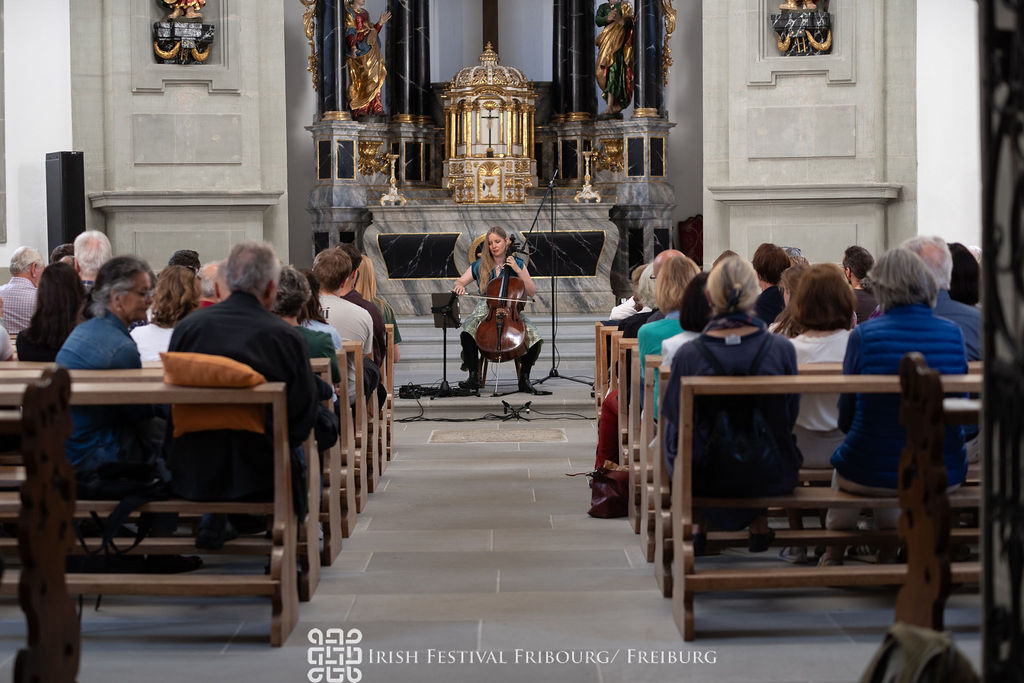
Before that, bright and early, I was standing at a bus stop with a sandwich board and a bunch of large cut-out arrows in bright orange card. Things got so busy on Sunday afternoon that I needed my bicycle to travel quickly between the The Celtic Cello concert set-up, the Welcome Desk at Equilibre Theatre and the Cinema Rex to announce the Irish-language film The Quiet Girl.

From the launch party on Friday afternoon to finally packing away the welcome desk on Sunday evening, I had seen friends, guests, volunteers and visitors happily take over the streets of Fribourg, secure in their welcome. In the 20 years I’ve lived here, it’s never felt more like home.

The Irish Festival Fribourg/Freiburg (IFF) has gradually taken over my life in the past year. Before the festival fades into a blur of indistinct moments in my memory, I want to get some highlights down in colour. I want to remember how amazing it was.

I hope you enjoy these photos, some taken by friends, some by our official photographers Rromir Imami and Patrice Bechtiger.

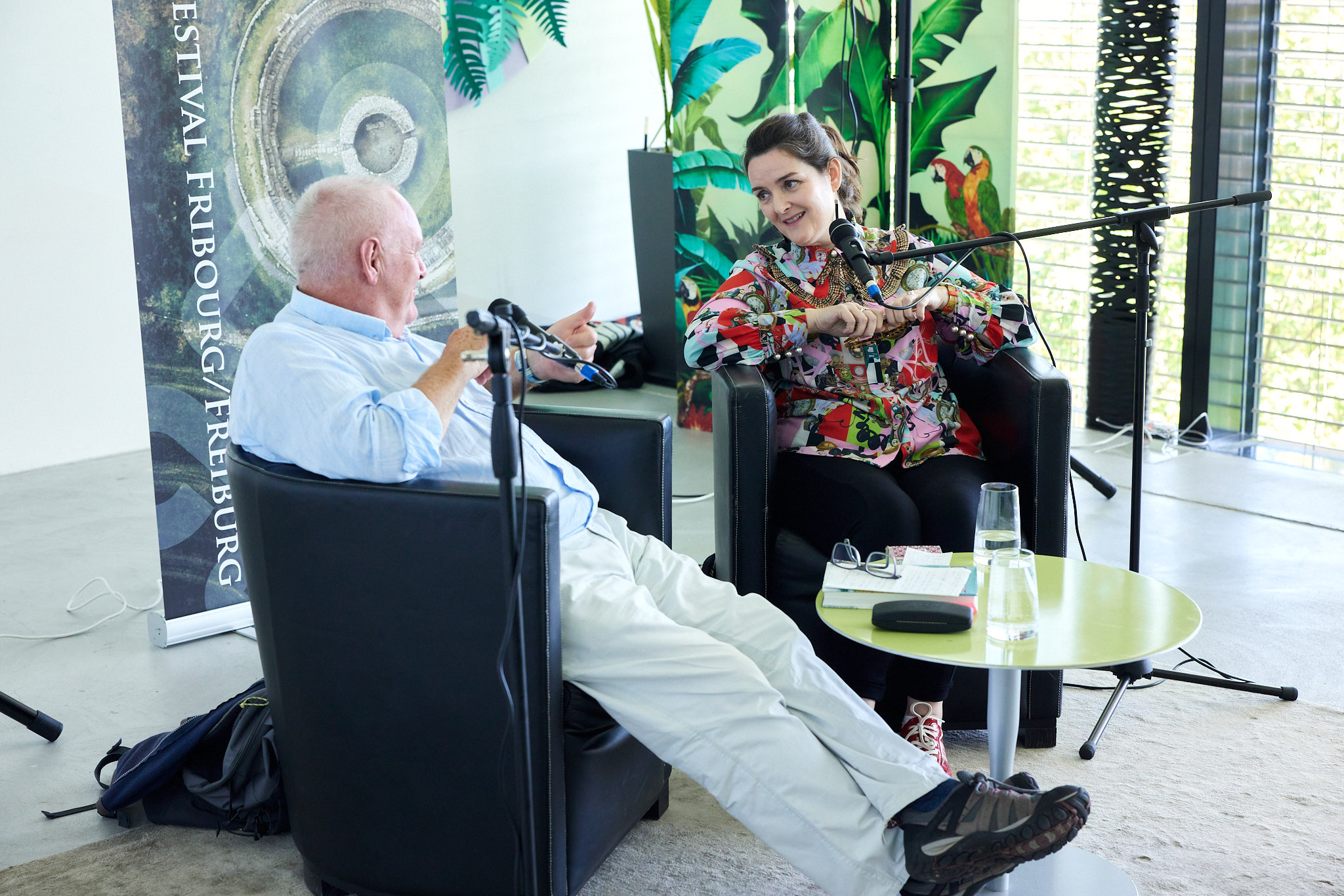
John Boyne signing books after his interview with Helen Stubbs Pugin (Photo credit: Rromir Imami)
The Celtic Cello performance in l’Hôpital des Bourgeois (Photo credit: Rromir Imami)
With Deirdre Coghlan (L), Julie Hunt (R) and The Dixie Micks (Photo credit: @seaagency1)
Padraig Rooney and Nuala O’Connor (Photo credit: Patrice Bechtiger Photography)

Captive audience at the lecture by Shane Walshe of the Swiss Centre of Irish Studies (Photo credit: Rromi Imami)
The writing workshop with Sarah Moore Fitzgerald (Photo credit: Rromir Imami)
Véronique Platschka of Tourism Ireland and Shane Walshe at the Welcome Desk (Photo credit: Patrice Bechtiger Photgraphy)

A week on, today, the festival team – temporarily scattered by illness and other work commitments – got together to review the weekend. The verdict: we couldn’t have asked for a better first edition of the festival, we expect to come back in 2025 (tbc) and we need time to tend to the neglected parts of our lives – in my case writing.

A thousand thanks to all who came to Fribourg for the festival, to the volunteers, our local partners, the guests of honour, the visitors and those who made the inaugural IFF possible through financial and practical support:

Loterie Romande, Tourism Ireland, l’Agglomération de Fribourg, l’Etat de Fribourg, Culture Ireland, Government of Ireland Emigrant Support Programme, Colm and Ella Kelleher, the Irish Embassy Berne, Max Geilinger Stiftung, IFI International, McGonigle Watches and the Swiss Centre of Irish Studies. 

Thoughts on twenty years in Switzerland

This day twenty years ago, I boarded a flight for Switzerland. Apart from my suitcase, all I had with me was my bicycle and a fold-up occasional table my grandmother had once given me. I had carried it from flatshare to flatshare and now I was carrying it with me to a new life in a new country.

Travelling light was what I did back then – in work, in love and in material things. A year earlier I had left a permanent job in The Irish Times, and my last short-term job in Dublin was producing a play for a small theatre company.

But I was ready for a steadier life, and that is what Switzerland had in store for me. My Swiss boyfriend became my husband. In our apartment in Fribourg, I finally cooked in my own kitchen with my own pots and pans. I got a job with the Swiss Broadcasting Corporation. Eventually we had three daughters and built a house together.

I look back over those years and cannot believe how much my life has changed, and how fortunate I have been. Workwise, I reclaimed my freedom after ten years in the same job. I started writing books. This autumn, I’m organising a festival of Irish culture in Fribourg, enjoyable work that reminds me of the theatre job two decades ago.

Even though I’m as integrated as a piece of bread dipped in fondue and I speak the local languages, I haven’t always found it easy to accept my destiny as an emigrant. I didn’t realise how much I would be leaving behind, and for how long.

Acceptance. I got there eventually. I believe I will live in Ireland again – one day. But it doesn’t matter that it’s not now. Right now, this Swiss life is full in the best possible way. Yesterday evening, I went for a beautiful sunset walk with my mother (my most faithful Irish visitor) and daughters. It made me glad, yet again, that I found this place and made it my home.

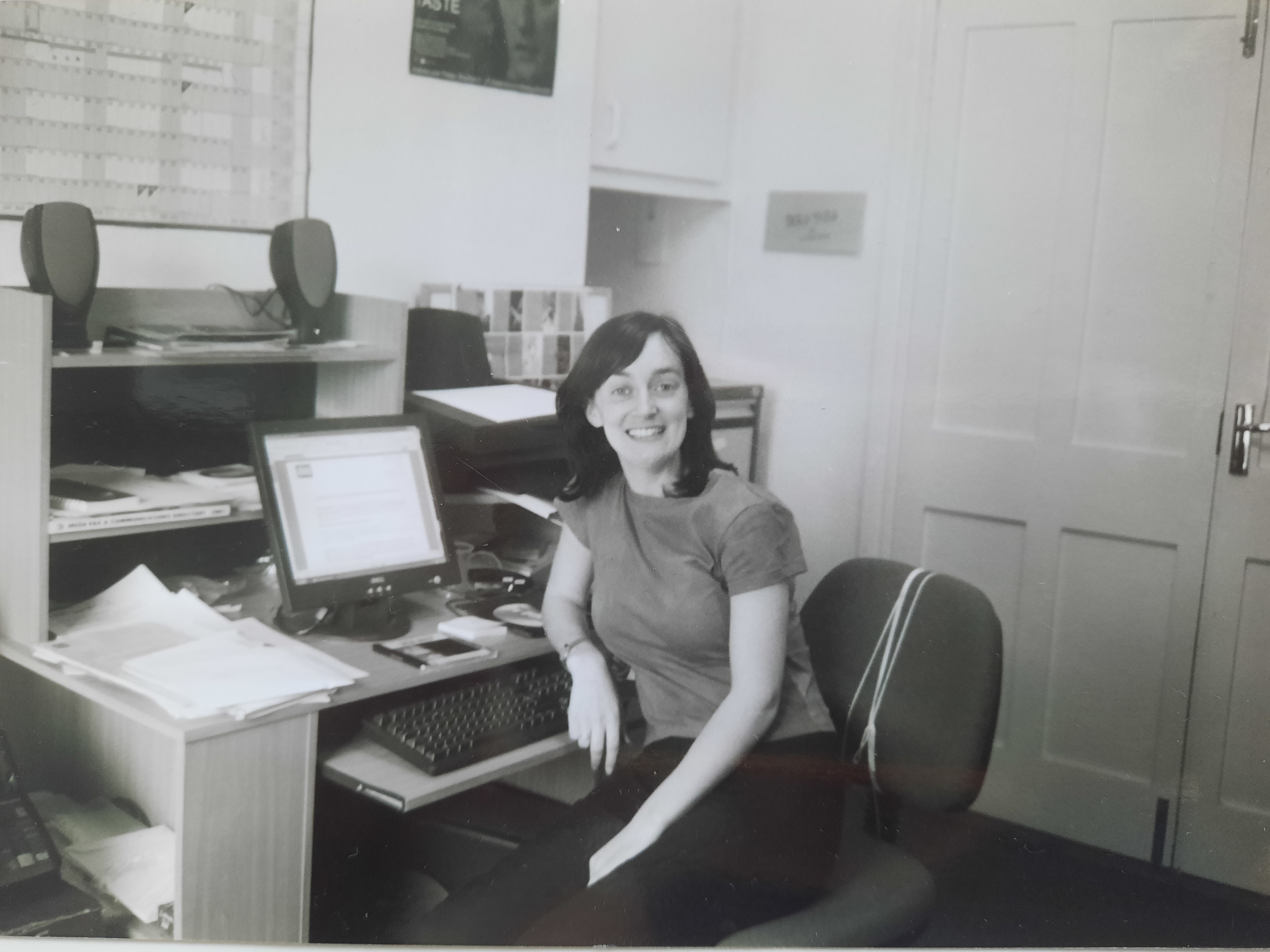
Above is a photo of me from 2003 in the Gúna Nua Theatre Company office in Dame Street. It was taken a few weeks before I left Dublin for good. If I told her the whole story now, I think she would be more than ready to fold up the table once again.  

Behind the scenes: the slow business of show business

The first quarter of the year is over and the Irish Festival Fribourg/Freiburg is taking shape. A lot has been accomplished since I last wrote about the festival in October. Even though there is plenty more to do, and it feels as if new tasks are added to the list daily, we are also seeing the first results of the winter’s work.

I’ve attended my fair share of cultural events over the years but only once before actually worked on the organisational side. That was in 2003, the last job I had before I left Ireland for good, when I worked as a producer for Gúna Nua theatre company. I’d forgotten how enjoyable and satisfying it is to make things happen! But, my God, where did that 20 years go?

The most important breakthrough this year was that the Agglomération de Fribourg, the equivalent of the city council, decided to back the festival. Without their support, other potential funders would automatically have said no.

We got the news on March 9th after sending in our 25-page application at the end of November with 13 supporting documents. More supporting documents were requested in January, including a contract with one of the venues. The project was discussed at three meetings before we finally got the good news. A champagne moment. 

Group effort

Having the support of the Irish Embassy, Tourism Ireland, Fribourg Tourism and the Irish Film Institute International helped make our case much stronger. There are still some funding decisions to come in and possibly more applications to send out. In the meantime, we are getting everything else lined up – the programme, the venues, the website, publicity, ticketing, volunteers, insurance, travel … the list goes on.

Now it’s as sure as sure can be: Ireland is coming to Fribourg for the weekend of 6-8 October. Save the date! We’ll be announcing the programme in June, which is suddenly around the corner. Just a note that I’m not using the royal we. I’m joined in the whole enterprise by two brilliant Fribourg women – Julie Hunt and Deirdre Coghlan. Follow the festival Facebook page to hear more about our progress.

Book anniversary

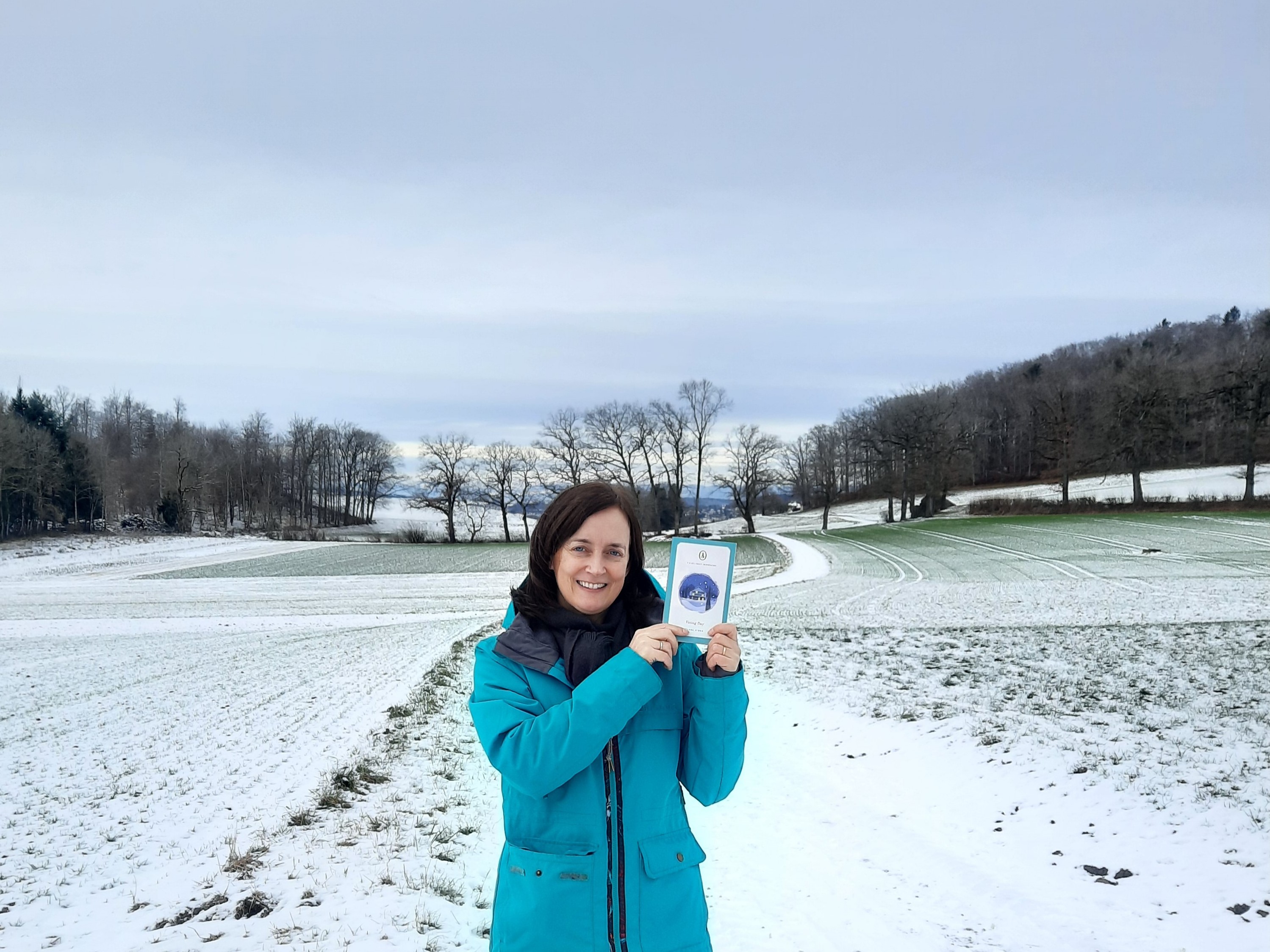
In other news, it’s a year since Voting Day was published by Fairlight Books, and two years since the Swiss edition came out. I’m visiting two Swiss schools in the next few weeks to talk to students who’ve studied the novel and I’ve been invited to a university in Poznań in Poland later this month for the same reason. I’m delighted the story is still making waves, and I love meeting readers of all ages.

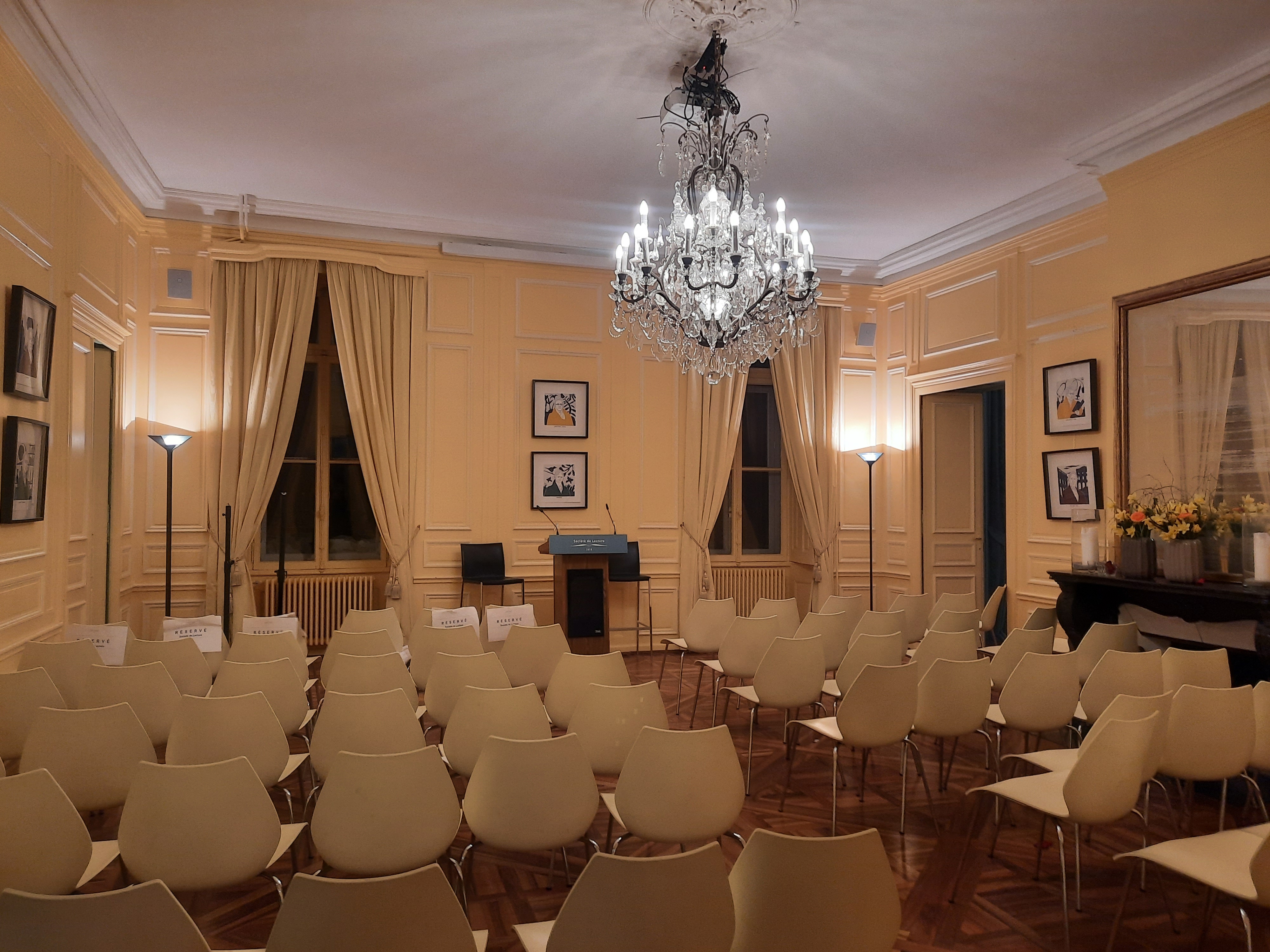
On my own reading pile, I’ve been working my way through the excellent Wyndham-Banerjee series of crime novels, set in Calcutta in the 1920s. I was lucky enough to interview the author Abir Mukherjee at the Société de Lecture in Geneva last week. We were in the beautiful yellow room you see above. I don’t have photos of the event yet.

More reading tips

My standout read of the year so far is Haven by Emma Donoghue, an extraordinary, captivating story set in seventh-century Ireland, featuring three monks on a quest to found a monastery in the most inhospitable place possible – Skellig Michael off the coast of Kerry. It was amazing to be transported back that far in history. Donoghue must be one of the most accomplished writers of historical fiction working today. I can also highly recommend the film adaptation of her 2016 novel, The Wonder.

And there’s a treat in store for fans of Swiss crime fiction with the publication of the second title in the Polizei Bern series by Kim Hays this month. Sons and Brothers centres on the suspicious death of an eminent (but not very likeable) heart surgeon whose body is pulled from the Aare in Bern on a winter’s night. The investigation leads detectives Giuliana Linder and Renzo Donatelli back to the doctor’s childhood home in the Emmenthal region.

Time for me to wrap up and wish the readers of this blog a pleasant Easter break. This is birthday season in our home with three birthdays coming up next week, so my to-do list is taken over by presents, cakes and parties for the next while. A very welcome change.

Irish Festival coming to Fribourg/Freiburg in 2023

Fribourg aka Freiburg is one of the most charming places in Switzerland. A university town set in beautiful, rolling countryside, it’s 20 minutes from Bern and equidistant from the three biggest cities – Geneva, Zurich and Basel. It’s also an overlapping point where the country’s two main language groups meet.

What a perfect place to hold a festival of Irish culture, I hear you say. That’s what I thought! The Irish Festival Fribourg / Freiburg is in the calendar for October 2023. It’s going to be a celebration of Irish literature, cinema, theatre and music. I hope it will be enjoyed by the people of Fribourg and by visitors from far and wide.

The inspiration for the festival can be traced back to my visit to Listowel Writers’ Week in Co. Kerry in June. I saw that the organisers had achieved something really special, bringing the whole town to life and attracting the great and the good to a place that – I hope they don’t mind me saying – is relatively small and off the beaten track.

I’ve been similarly impressed by Le livre sur les quais festival in Morges, which I’ve attended every year since 2017. Occasions like this are precious to the artists and audiences and to the community. I can’t think of a better way to celebrate my 20 years of life as an Irish person in the town of Fribourg, than by building cultural ties between my two homes.

I will keep you updated on the festival as it takes shape. Some partners have already come on board, details to be announced. The first volunteers have begun working on the festival and we should be able to reveal the logo and unique name soon. It’s going to take a lot of work and we may have ups and downs, but, a year from today, the weekend festival should be in full swing.  

Will you be there?

Introducing Kim Hays, new author of Swiss crime fiction

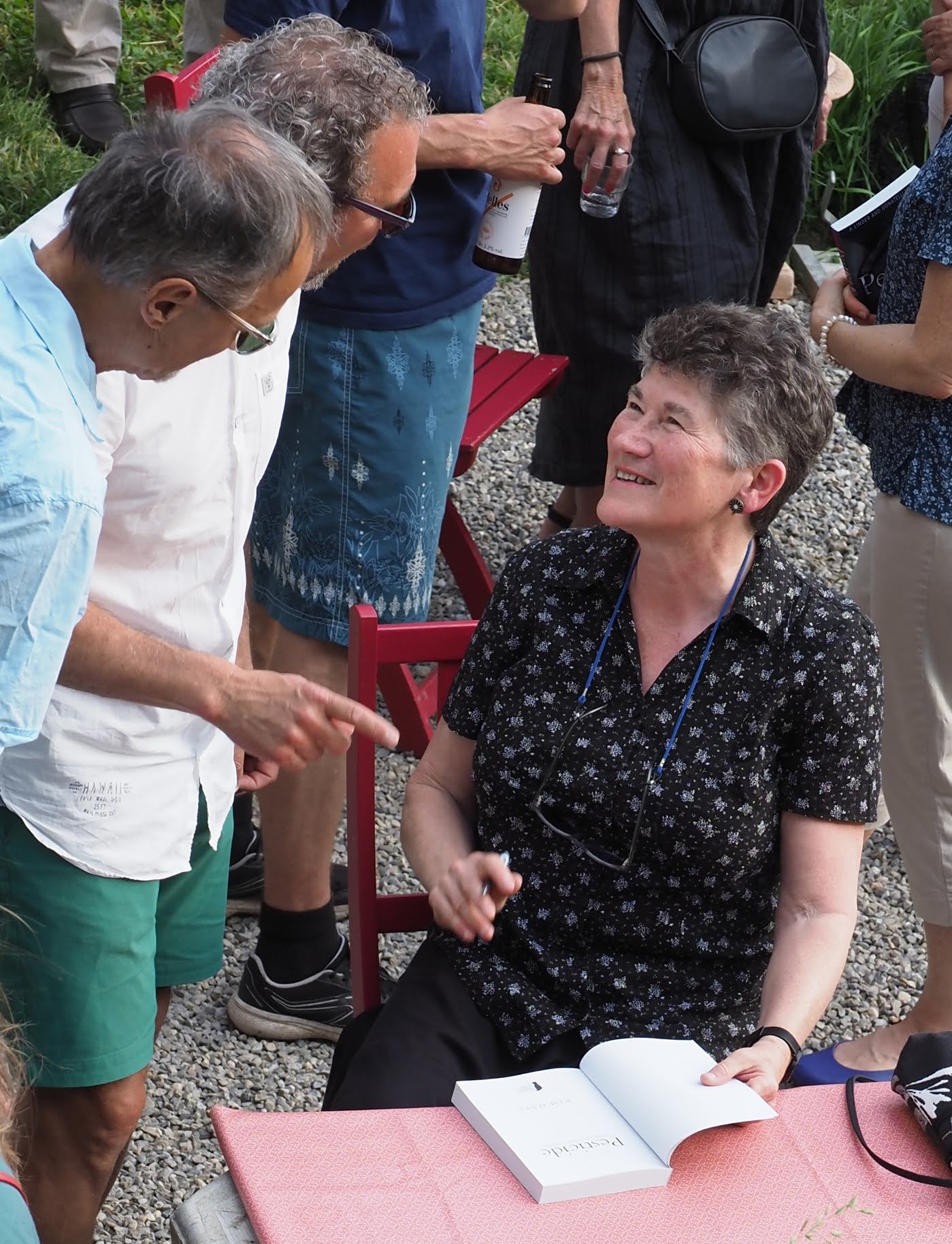
Kim Hays at the launch of Pesticide in Bern (photo credit: Bettina Vollenweider Stucker)

There are lots of reasons why I would like to recommend the work of Swiss-American author Kim Hays. First, she writes great crime fiction, and if you like her debut novel Pesticide, there are more to follow soon in the Linder & Donatelli series. Second, her authentic, clever and gripping police procedurals are set in Bern, a city I know well. Third, she has served her time in the writing trenches and is now enjoying well-earned success. And, finally, she is my friend.

Kim’s heroine in the series is homicide detective Giuliana Linder, ably assisted by her younger colleague Renzo Donatelli. Both characters are sympathetic and have depth and realistic married lives. They grapple with the moral questions thrown up by police work, and the little, or not so little, complication of being attracted to each other. I particularly like Urs, the character of Giuliana’s husband, who is a freelance journalist, working all hours and keeping the home fires burning. Nice to come across a male character in this role.

Swiss noir

The murders are brutal and gruesome as murders inevitably are but the violence is not the focus, nor is it there in any way to titillate – something that puts me off a lot of crime fiction, especially with female victims and sadistic killers. Kim writes the kinds of murders that could happen to people you know, involving murderers you might meet in the corner shop or a Dorffest (village festival).  

Kim has a flair for dramatizing the investigation in a really interesting and human way, building momentum, unravelling all the knots, as her heroes doggedly search for the truth, and hopefully justice.

The suspense-filled stories take place in a Switzerland I recognise, an ordinary, gritty, diverse, and complicated place with secrets beneath the surface. The settings are pleasingly far from the clichés of bankers and Alps.

Double murder

Pesticide. No flowers were harmed in the taking of this picture.

Here’s what you need to know about the opening action of Pesticide …

When a rave on a hot summer night in Bern erupts into violent riots, a young man is found the next morning bludgeoned to death with a policeman’s club. Giuliana Linder is assigned to the case. That same day, an elderly organic farmer turns up dead and drenched with pesticide. An unexpected discovery ties the two victims together.  

If you want to order the book, you can find it in the usual online places. For Swiss deliveries I recommend Books Books Books in Lausanne or Stauffacher / Orell Füssli. The book is in the system so you should be able to order it anywhere in the US or Switzerland. Published by Seventh Street Books and distributed by Simon & Schuster.

To find out more about Kim Hays, check out her website and blog or read this interview on the Cosy Dragon website. I’ve known Kim since 2016 when I sat beside her at a writing workshop in the Geneva Writers’ Group and we got on like a house on fire.

Summer reads

A little more about my summer reads, which also fall into the category of liking the author before discovering their work. I am just about to start Mother’s Boy by Patrick Gale about the life of the enigmatic British WW2 poet Charles Causley. Before that I read the wonderful Edith by Martina Devlin about the life of Edith Somerville around the time of the Irish War of Independence. I keep finding treasures in this booming genre of historical biofiction.

I have another book on the go about real-life conflict but I’m working through it slowly. It’s much harder to read because it’s set in (recent) present-day Ukraine and it brings the reader straight into the horror of what Russia has perpetrated there. The Orphanage by Serhiy Zhadan is visceral, depressing, eye-opening, staggering. If you think that’s too much to take, Andrey Kurkov’s Grey Bees is a gentler version of blighted lives in the occupied zones, more sweetly devastating but still hard hitting.

Finally, Voting Day was mentioned on this list of summer reads put together by Isabel Costello on her literarysofa blog, which I’ve been following for years. She found my novella “very moving and beautifully written”. I still can’t believe it when I get a reaction like this. Feeling very grateful.

You’re bound to find some reading inspiration on the list. Lest I forget, Isabel Costello’s highly enjoyable new novel Scent is the quintessential summer read, set between Provence and Paris. A heady summer affair from her youth comes to the surface for Clementine in a disturbing way just at the moment when her own marriage seems to be grinding to a painful, empty halt. Clementine is a successful perfumer with her own shop but the time has come to confront the façades in her life.

Happy summer reading, folks! Do report back if you pick up any of these titles.

Making a better world, fuelled by friendship

They say you shouldn’t meet your heroes but I can assure you that you are safe with Ece Temelkuran. When I heard the celebrated Turkish writer was coming to speak in my back yard – not literally, the event was about ninety minutes’ drive away – I knew I had to be there.

Temelkuran took part in the Bibliotopia festival on May 15, hosted by the Jan Michalski Foundation in the beautiful setting of Montricher in the foothills of the Jura mountains. The Bibliotopia programme is in French and English with simultaneous translation. It’s a great place to discover international voices.

Temelkuran played a prominent role in public life as a critic of the Erdogan regime until it was no longer safe for her to stay in Turkey. In her 2019 book How to Lose a Country: The Seven Steps from Democracy to Dictatorship, she passes on her hard-earned wisdom as a dissident who experienced first-hand the slide towards right-wing authoritarianism. I found the book fascinating and reviewed it for the Dublin Review of Books.

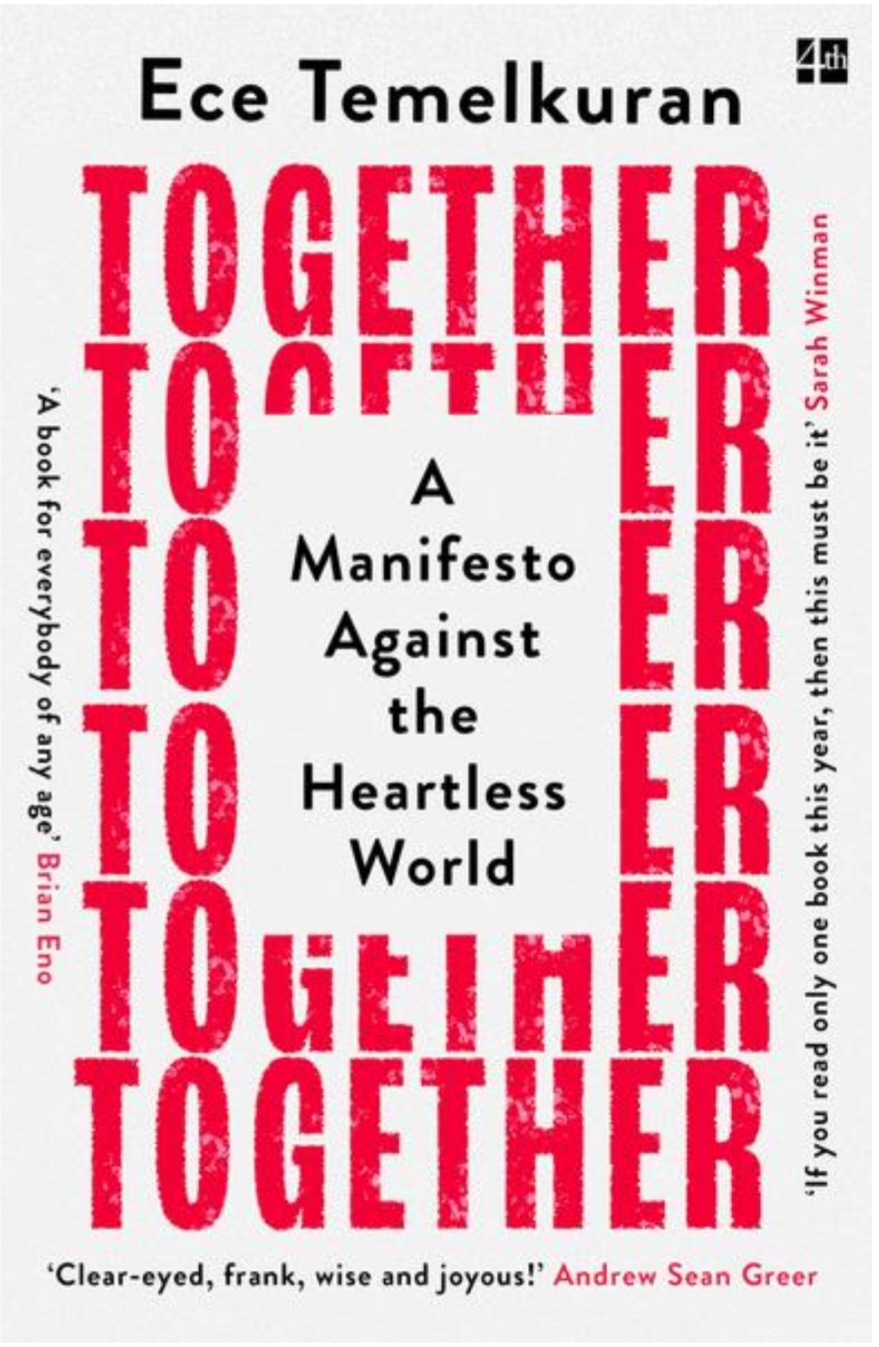
Having listened to the author yesterday speaking about her new book, I have high expectations for my newly-purchased copy. Entitled Together: A Manifesto Against the Heartless World, the book offers a roadmap to a better present and future. She gives us 10 guiding principles and each one is a choice, such as ‘choose dignity over pride’ and ‘choose strength over power’.

I was very interested in what Temelkuran had to say about friendship, which she considers the best medium to redefine our political connections. “Citizenship is not working, political party membership is not working, comradeship is not really working – it sounds so retro now. So how about we become friends?”

There is a chapter in Together about the unique role that friendship, with its lack of hierarchy, obligation, duty or power dynamic could play. It is the only type of relationship where, as Temelkuran says, absolute justice can be found.

“When friendship has a solid foundation that allows it to mature, friends and conversations with friends eventually become the gravitational force in one’s life. Friendship is the most profound confirmation of the individual as a human being. It is the confirmation that you are able to see the beauty in humankind and the ultimate recognition of the fact that you are, as well, human.”

She goes on to talk about enlarging this kind of “warm regard” to the scale of humanity. Just to give you a little bit more …

“What stands at the core of such wide-scale friendship is not sentimental love but a moral stance; a commitment to acquire and maintain a certain perspective on life and humankind.”

Living in a time where the word friend has been stripped of much of its meaning by social media, I find this exploration of the theme of friendship really important and encouraging. I will read more and report back. Or you could start reading Temelkuran yourselves.

Temelkuran spoke about a lot of other things, ably interviewed by Patrick Vallélian of Sept Info. She said that representative democracy had failed in its fundamental promise which was equality. This has left it hollowed out and vulnerable to right-wing populism. When there is no social justice, it is easy for a ruthless leader to come along and exploit the system, manipulating people into making choices against their own interests.

When asked to describe Russia’s invasion of Ukraine, she used the words tragic, absurd, incomprehensible and frightening. However, she cautioned against demonising the Russian people, who, she says, should not be equated with Putin.

Temelkuran wrote Together because, “I wanted to heal my politics and my faith in people.” Here’s hoping that her message of faith and courage will travel far.  

Three words for Voting Day on publication day

Voting Day in its natural habitat

If I could describe Voting Day in one word, it would be dignity. That’s what each of my characters has in common, despite all the limitations and frustrations they face. Not that I set out with this theme in mind but this is what Vreni, Margrit, Esther and Beatrice brought to the story.

I only came to this realisation when I had to answer the question in this interview for Fairlight Books. You can also read an extract from the book at the end of the interview. The other two words that sum up the novel are solidarity and hope.

Today, April 1 2022, is publication day for Voting Day with Fairlight Books in the UK, the US, Ireland and beyond. I am over the moon that the novel is going to find new readers outside Switzerland. Though it is a quintessentially Swiss story, the dignity of oppressed women and solidarity between them is a universal phenomenon. As is hope for a better life.

I’d like to share links to some of the reviews I’ve seen so far for the book. This lovely review by Anne Goodwin includes a bonus piece of flash fiction inspired by Voting Day. Anne writes: “Clare O’Dea’s fiction debut is one to savour, with beautiful language and convincing characterisation.”

This one by Craig Smith for the Mechanics’ Institute Review is pretty amazing too: “Each tale is beautifully told by first time author, Clare O’Dea, who skilfully depicts the character of each woman and spins the connections between them into a compelling, coherent narrative.” 

And you might be interested in this opinion piece I wrote for The Local Switzerland about the Swiss response to Ukrainian refugees (there may be a paywall, not always). As the horror of the war drags on in Ukraine, I admire the dignity of the Ukrainian people and I hope for a swift and just end to their ordeal.

To find out about the inspiration behind Voting Day, check out this essay I wrote for the Women Writers website. I’m going to steal the closing paragraphs of that essay for today’s post.

“When I covered historical injustices in the care system as a journalist, I felt deeply sorry for the survivors. Even in the less severe cases, where ‘nothing bad’ happened, there was the pain of being looked down upon, of growing up without love or protection. I ended up writing about one such child in Voting Day.

By the time I sat down to write, I felt familiar with the life and times of my characters. I knew what their homes looked like inside, what they ate, how they spoke and what their worries were. I was also able to borrow from the traces of the past that are still visible today.

It has taken almost two decades of living in Switzerland to bring me close enough to inhabit Swiss characters. Once I set the story in motion, I only had to follow and see what they would reveal. What have I learned? How difficult it is for us as humans to truly see and accept each other. How easy it is to make a difference when we do.”

Many thanks to the team at Fairlight Books for believing in my book and giving it wings, especially to Laura Shanahan, Daniela Ferrante, Sarah Shaw and Louise Boland. And congratulations to my Fairlight Moderns twin Polis Loizou whose fantastic novel A Good Year, set in Cyprus in 1925, is also published today.

Ps. If you’re in Dublin on April 21st, come along to Hodges Figgis at 6pm for the launch of Voting Day with Anne Griffin!

The crooked Christmas tree and other problems

View from Gantrischseeli, canton Bern. Those little dots near the top of the mountain are skiers hiking up!

I’m going to see if I can write a blog post while I’m on hold to Swiss airlines. It’s been 53 minutes already and I can’t sit here any longer doing nothing.

This week hasn’t gone very smoothly. I mean I got all the presents wrapped and under the tree on time and I cooked a wonderful Christmas dinner, as stipulated in my mother contract, but an uninvited and most unwelcome guest is causing havoc at home. Guess who?

It all started with the crooked Christmas tree. A little bit of imperfection is fine, I thought. No need to fix it, everything else will be just right. Little did I know, I was opening to door to all sorts of calamity!

Monday was spent making trips to the local Covid testing centre. My youngest had said she was cold on Sunday afternoon and I told her to put on a cardigan. She put on her winter jacket. It was an everyone-do-their-own-thing sort of day (living with four people, I need and encourage days like these) so I didn’t pay too much attention until I saw her later, still wearing her jacket. Alarm bells rang and I checked her temperature. A fever. Her rapid antigen test was positive, confirmed by a PCR on Monday.

This development brought a surprising amount of admin. Calling, emailing, texting, filling in forms online, researching, cancelling things. The big disappointment was cancelling our post-Christmas visit to Ireland to see family. That’s why I’m on hold to Swiss now, into my second call, now at 15 minutes. I’ve chosen German this time, hoping it will be picked up faster.

Monday was also the day that my husband, after several days of bad back pain suddenly had an episode of such severe pain that meant he couldn’t move from the floor for 15 hours. It proved impossible to get a home visit from a doctor so he just had to ride it out. He’s gradually recovering since then.

For the past few weeks, I’ve been waiting to hear about a grant I applied for to support my next writing project. If I received the grant, I could take a break from freelance work and concentrate on writing for six months. It would have also meant recognition in the Swiss literary establishment. I got the news on Wednesday – no grant.

Christmas Eve is when the Swiss have their festive meal and exchange gifts. Despite everything we managed to go ahead with our family celebration in a safe way. It was different but still felt special. I think it will make us appreciate future Christmases all the more.

‘May all your troubles be little ones’ is what you can except to hear in Ireland when you complain about anything less than tragedy. With only two more days to go in this isolation regime at home, no sign that the rest of the family has caught Covid, and my husband well enough to take short walks, things are looking up.

My 11-year-old daughter has light symptoms and she’s been a trooper all week, staying mostly in her room and keeping herself occupied without complaint. She can expect a lot of hugs on Monday evening.

I am somewhat back to the drawing board for 2022, both professionally and creatively. But I’m not short of ideas. Since I went freelance almost seven years ago, I have based my career on the Mr Micawber principle that ‘something will turn up’ and, thankfully, it always does.

Miraculously, a human being just answered the phone and is sorting out the flight rebooking problem (child changing age category) while putting me on hold again. So I will very soon have one definite thing to look forward to next year – Easter in Ireland.

Things could be worse. I could be working in a call centre on Christmas Day! Thanks for listening and I wish you all a happy and healthy Christmas break. See you in the New Year full of new possibilities!

Kilruddery Gardens in Co. Wicklow. One of the highlights of the year was an afternoon spent here with my mother and daughters.

An online reading, a vintage setting and gift ideas

This month I’ve had a flurry of book-related activity, some of which required learning new skills. Like video editing! We’ve all come a long way with video communication in the past year and a half, haven’t we?  

I remember back at the start of the pandemic when members of my book club suggested holding our next meeting online. That’s not going to work, I thought. Too many people on screen, too addling. How could you possibly have a discussion?

Soon after that I was asked to do a live online interview about my books. I declined because I was pretty overwhelmed at the time with the children off school and a new temporary job. I also didn’t think I could bear to be live on screen for a whole hour.

Now of course, that’s completely routine. I’ve been part of umpteen ‘Team’ and zoom meetings with different organisations. Our book club did well for a year online. My extended family ran a monthly quiz with three generations taking part. And the online launch of Voting Day in February of this year was an amazing experience, almost better than the real thing!  

Drink and the Irish

Which brings me to a new date for the diary. I’ve been invited to give an online lecture as part of the ‘Ireland and the World’ series hosted by the University of Zurich and the Swiss Centre of Irish Studies. These are free public lectures, and my topic, on December 1st at 6.15pm (Swiss time), is ‘Conquering the world, one Irish pub at a time’. You can find the link by clicking through on this page. For this lecture I’ll be returning to the chapter in The Naked Irish on the Irish relationship with the demon drink.

Translators Aloud

The video editing I tried is pretty rudimentary but it’s a start. To make this video for the Youtube platform Translators Aloud with translators Corinne Verdan-Moser and Anna Rusconi, I had to research how to get the record settings right on zoom, and I figured out how to add a title page and photo at the end. So here it is, Corinne, Anna and I reading from the opening of Voting Day.

December event

One last date for the diary for Zurich people. I have a free public event in German coming up on December 5th in a vintage furniture shop on Ankerstrasse called WOW Props. The ambiance will fit nicely with the 1950s storyline of Der Tag, an dem die Männer Nein sagten (Voting Day). I’d like to thank Andrea Maurer for hosting and Yolanda Pantli of Ouï-e Communications for organising the event. There are two time slots – 11am & 1pm and coffee and croissants for everyone. Register by email: pr@oui-e.com and tell your friends!

Christmas presents

Now is a good time to beat the Christmas rush by buying books from your local bookshop or online. The Naked Swiss: A Nation Behind 10 Myths is the perfect read to demystify Swiss culture and politics. Available in Swiss bookshops or direct from Bergli Books (French and German translations from Helvetiq).

The Naked Irish: Portrait of a Nation Beyond the Clichés is a timely reflection on what it means to be Irish a century after independence. Available from Irish retailers, like Kennys in the above link.

Voting Day is currently available to buy in Switzerland in English, French, German and Italian, either through a bookshop or directly from me at this link (free delivery).

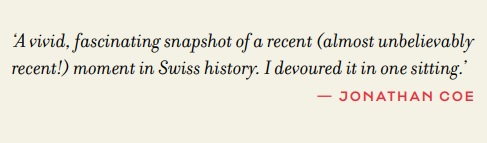
And finally, the UK edition of Voting Day, to be published by Fairlight Books in 2022 is available to pre-order at this link: Voting Day by Clare O’Dea – Fairlight Moderns | Fairlight Books. I’m delighted to share the quote on the back cover of the novel from a writer I really admire, Jonathan Coe.

It’s lovely to come across such kindness in the publishing business. I hope you all have a peaceful time between now and Christmas. Be careful out there!