To the disgruntled aunt on the train

20151230_175656

Really I should be writing to the nephew of the woman I overheard complaining on the train yesterday. You see the nephew hosts Christmas dinner in his house, as the disgruntled aunt explained to her travelling companion (a woman of few words), and anyone else in the carriage who spoke Swiss German. He invites the extended family, including his disgruntled aunt, for a fondue chinoise on December 24th.

(Cultural note: fondue chinoise is not remotely traditional but it has become really popular as the seasonal celebratory meal. You have a big platter of thin strips of raw meat and each person spears their piece of meat on a fork and cooks in a hot broth set up over a flame on the table. This is eaten with French fries, salad and a selection of up to five mayonnaise based sauces for the meat.)

Now the disgruntled aunt usually contributes lamb’s lettuce (Nüsslisalat) to this meal and she brings a lot more than is needed, a kilo in fact. So the nephew has at least 500g left over and can eat lamb’s lettuce all week. Lamb’s lettuce lasts for ages.

But this year the nephew is asking the guests to chip in to pay for the meat. The aunt is outraged, what with all the extra lamb’s lettuce she’s been providing , not that she ever got a word of thanks or recognition for that. And lamb’s lettuce is not cheap.

In revenge this year, the loud aunt will contribute only 500g of lettuce and certainly no money and we’ll see what the nephew thinks of that.

There is a separate row simmering in the family over the Christmas songs. Another relative takes it upon herself to print out a booklet of Christmas songs for everyone to sing together and there have been mutterings about the songs being too old fashioned, and there is one in particular that the loud aunt cannot abide and she has asked the other relative to strike it out because she simply cannot bear it.

The disgruntled aunt provided some entertainment for her fellow travellers today but also a little food for thought. Why is the nephew hosting a party he cannot afford, inviting people who are less than grateful? If he can afford it, why is he asking for money? Is this the kind of Christmas gathering these people should be having? How many other people are chained to arrangements that they are dreading? And of course, wouldn’t this gathering make a very entertaining Christmas film?

All this reminds me of a sweet poem by Frances Cornford which I first heard earlier this year from a colleague of mine who recited it at a very apt moment, the details of which I can’t remember now.

To a Fat Lady Seen From the Train

O why do you walk through the fields in gloves,
Missing so much and so much?
O fat white woman whom nobody loves,
Why do you walk through the fields in gloves,
When the grass is soft as the breast of doves
And shivering sweet to the touch?
O why do you walk through the fields in gloves,
Missing so much and so much.

This post is in tribute to Maeve Binchy, the great advocate and champion of listening in to conversations.

Are you writing in the right language?

You hear a lot about voice in fiction. Agents and publishers are looking for new voices. New writers still haven’t found their voice. Reviewers rave about the novel’s voice. And the rest. But what about writers who go so far as to write phonetically in the dialect of their own community? How’s that for voice?

Recently at Bern Literary Festival I had an interesting conversation with two writers about language and translation. One was a Swiss writer whose breakthrough success came when he finally wrote a book in his own dialect. His name is Pedro Lenz. The other was his translator, short story author Donal McLaughlin from Glasgow.

Swiss Germans like Pedro Lenz speak dialect all the time, unless they really have to speak standard German for some formal reason, or to communicate with a non-Swiss German speaker. Many never feel fully at ease in standard German (also known as high German). And yet most Swiss German writers write in high German because that is considered the ‘proper’ language.

In the case of McLaughlin, whose childhood was split between Derry and Glasgow, there was more than one leap to be made to get to grips with the standard English taught at school. Europe, despite all its disappearing dialects, is still full of this kind of linguistic tension.

The meeting with Lenz and McLaughlin was one of those rare occasions when my day job intersected with my interest in writing fiction. I put together a podcast for swissinfo.ch which was published last week. I’m including it here if you would like to listen to the conversation. There’s also an article based on the same subject.

And for those who’d like to test their knowledge of Glaswegian, here are some phrases from the Glaswegian book Naw Much of a Talker (Original title: Der Goalie Bin Ig). Maybe you have some great lines or vocabulary to share from your own home-grown style of English?

Kid ye slip me a fifty tae Monday? (Could I borrow fifty [pounds] ‘til Monday?)

Ah get ma kick fae the present (I get my kick from the present)

It’s guid craic, listenin tae a French-speaker tryin tae speak German (It’s good fun, listening to a French speaker trying to speak German)

Marta but was greetin aw the way home. (Marta was crying all the way home)

Looks like his wife picks stuff ootae her stupit catalogue fae him – ivry couple ae years. (Looks like his wife picks stuff out of her stupid catalogue for him – every couple of years.)

Children in school, mothers on stand-by

2014-06-24 19.16.11

I’m not saying there is a conspiracy in Switzerland to make life difficult for working mothers of primary school children, but if there were a conspiracy it might account for my experiences over the past four years, and look something like this:

Strategy 1: Mix it up
Have children start school (kindergarten) at the age of four but give them an erratic timetable. For fun, have the children come in three mornings a week, obviously not consecutive mornings, and throw in an afternoon just to keep it interesting.

I’m not making this up. My four year old has school on Monday, Wednesday and Friday mornings and Thursday afternoon for two hours. That’s it. Every night she asks, do I have school tomorrow? And every morning, do I have school today? Keep ‘em guessing.

Strategy 2: Complications
In the first few years, give different classes different afternoons and mornings off each week. That way, families with more than one child will be kept on their toes with multiple childcare gaps and a different timetable for each child.

Strategy 3: The lunch trap
Close down the school for two hours in the middle of the day so that the timetable looks like this: Morning: 7.45a.m. to 11.30a.m.; Afternoon: 1.40p.m. to 3:30p.m.

Let the parents worry about where the children will eat and who will look after them. Provide a minimum number of places in an after-school programme nearby. Sit back and watch the parents scramble for these places, at their own expense.

Strategy 4: Rise and shine
Start school at an ungodly hour of the morning, so children are too sleepy to eat breakfast and parents are grateful for the children having random mornings off during the week to recover.

Ok, the early start is part and parcel of Swiss society. It’s the norm for people to start work before eight so we all have to go to bed early and get up early.

But the rest? I hear the argument sometimes that these timetables are geared towards children, based on the notion that starting school is a big change for children so they should be eased in gradually.

But I find it hard to believe such a lack of routine is good for children. What about the body clock? And I know it is not good for parents trying to organise childcare.

For stay-at-home mothers who are attached to their role, these timetables have one advantage. It makes them indispensable. They can rightly point out that they hardly have time to turn around, do the shopping and start cooking before the children are home again.

But what if this is a gilded cage? I want stay-at-home mothers to be valued, not shackled to the home. Is it good that mothers who have already put in a huge effort in the baby and pre-school years are so restricted they cannot think of taking on another activity during the 20 to 30 hours their school-gong children are away during the week?

Is there any other country clinging to this home-for-lunch model? In Ireland the four and five year olds attend school from 9a.m. to 1p.m., Monday to Friday. They eat a packed lunch at the 11a.m. break. From the age of six or seven (first class), the school day runs from 9a.m. to 2.30p.m.

This is not about treating schools as a babysitting service for selfish career-mongering parents (a view I’ve heard expressed), it is just a simple plea to stop pretending that the two worlds – home and school – have nothing to do with each other.

I should point out that my children like coming home at lunch on the days I am here but I wouldn’t consider it a hardship for them if things were different. They were just as happy doing five-and-a-half-hour days when they attended school in Dublin for a term.

More and more Swiss schools are adapting, and have begun to provide supervision and hot meals at lunchtime but it is still a minority. Maybe mothers will be able to ‘lean in’ a bit more when this becomes the norm.

Like most mothers of young children in Switzerland, I work part-time, and accept the trade-off that my career will stall for the time being, in return for spending more time with my children.

But to “escape” into the earning world even for 20 hours a week without live-in childcare requires some creative solutions. Last year I traded childcare with a neighbour, both of us taking on each other’s children for a 10-hour day. Luckily my husband also leans in to childcare duty and we have great support from family living nearby.

To repeat what I said earlier, it’s not that there’s a conspiracy to make life difficult for working mothers. It is just that the system evolved to complement a traditional situation which is no longer the reality for many families – and in some regions the winds of change have not yet arrived.

It’s complicated enough for two-parent families. Last week I heard a Swiss parliamentarian say that the majority of social welfare recipients are households headed by one parent. How many more of them would be able to hold down a job if their children weren’t coming and going every few hours?

So what do you think? Am I being unfair to the Swiss way of life? Would you swap your system for ours?

You’ll find more background on this topic in this article I wrote for swissinfo a couple of years ago: Swiss mothers hold back from having it all.

Take a walk with an old man

2014-04-09 12.57.06

Most English speakers will go through life without ever reading a Swiss novel. It’s not surprising. There are so many countries, so many languages – and not enough of their literary treasures are scooped up in the English translation net. But the ones that make it are well worth opening, if only to look at the world through a different lens.

You might find something beautiful, something completely different to anything you’ve ever read before, something like Zbinden’s Progress by Christoph Simon.

I just finished the book on the train on the way home this evening. I also read it while sitting in a department store restaurant in Bern at lunchtime, and in between flipping pancakes for breakfast on Sunday.

The Zbinden of the title is Lukas Zbinden, a frail elderly widower living in a retirement home who loves to talk and loves to go for walks. His progress is his slow journey from his room on the third floor down to the ground floor entrance, on the arm of a carer. The bulk of novel is narrated in his voice during this arduous trek. I can’t imagine how Simon pitched the book but within the confines of this device, he manages to skilfully and movingly present a life story, a love story and a comedy of manners.

No doubt you’ll soon take a shine to them all: the respectable ladies and eccentric gentlemen, the talkative widows and taciturn bachelors, the seasoned walking-frame users, shuffling stay-at-homes with faces like dried meat. The confused ones, whose thoughts roll around like peas on a plate. Those on medication with a cocktail in their veins of which blood’s just a minor ingredient. Veteran engineers, tradesmen and -women, office workers, housewives, civil servants, army personnel, fire extinguisher inspectors, bus drivers, over-achievers, service workers, stationary shop staff.

Zbinden’s Progress is a slim volume but we get to know a lot of Lukas’ fellow residents and their foibles. But most of all the old man likes to wax eloquent about walking, and he puts a lot of energy into trying to convert others to this noble calling.

Do you know what it means to go for a walk? Going for a walk is: acquiring the world. Celebrating the random. Preventing disaster by being away. Speaking to the bees though you’re already a bit too old for that. Not being especially rushed on a street that’s like an oven in the afternoon sun. Missing the tram. … Going at your own pace. Going for a walk is: saying hello to more people than you know. Losing Frau Dürig amid the turmoil of the Christmas market. Sensing a storm brewing, from a distance.

The endearing thing about Lukas Zbinden is that he knows how ridiculous he sounds. A former teacher, he realises he is a pedant but he is never pompous. This is probably because he was married to Emilie, a thoroughly practical woman who combined rock solid self-belief with exceptional generosity of spirit. We hear a lot about his love for Emilie and relive the defining moments of their marriage.

What I love about Zbinden’s Progress is that the main character both encapsulates and subverts the Swiss stereotype. On the surface he has led such a conventional life – army recruit, schoolteacher, married father-of-one, enthusiastic walker – but at heart he’s a revolutionary. I’ll keep an eye out for him on my walks from now on.

Yes, this book will stay with me. Its message of stopping to smell the roses is one we need to be reminded of more than ever in the communication whirlwind modern society has become.

And I really like what he says about competition, “the lion tamer, constantly cracking his whip and rushing people”.

Competition takes us up a very high mountain, from which you can see far. It opens the curtains and we can see all the riches of the world and all its splendour. Competition says to us: I’ll give you all of that if you are industrious enough and compete well.

Zbinden’s Progress (Spaziergänger Zbinden) was translated by Donal McLaughlin, a prolific translator of contemporary Swiss fiction. I mentioned before that I met McLaughlin in Bern recently when he was over from Glasgow for a reading from another of his translations Naw Much of a Talker by Pedro Lenz. I’ll be able to link to a podcast discussion with McLaughlin and Lenz next week when it is published on swissinfo.ch.

In the meantime, I’d love to hear your recommendations. What book, translated or not, has awakened strong feelings in you?

Good things come in twos

My idea of heaven
My idea of heaven

I did say I wouldn’t post again until the novel was finished and I meant it. It’s been a long summer of some discontent, a lot of hard work, and a gradual brightening of the light at the end of the tunnel.

And now I’m here, out the other side. Still reluctant to use the word ‘finished’ in the same sentence as my novel, what I can say is that I have completed the most difficult draft so far. Thanks to wonderful challenging feedback from kind and generous readers, I hope I’ve managed to fix some of the weaknesses that were bogging down this manuscript.

The other good thing I discovered first thing this morning is that my blog has been shortlisted for the Irish Blog Awards, Diaspora category. I’m thrilled to be included in this list and look forward to reading through the other blogs as soon as I finish work today. Thanks again to fellow exile Niall McArdle for nominating me and to the judges for overlooking the fact that I was on a break.

Without the distraction of blogging for the past two months, I have been able to write every day and have harnessed the power of that rhythm.

A three-week holiday in Ireland also helped with the daily time-stealing challenge and the inspiration, as my book is set in Ireland. Anyone who was lucky enough to be in Ireland this summer will tell you that the weather was superb. I wanted the country to be at its best so that my Swiss family would experience the magic of an Irish summer. In fact I wanted them to be enchanted and to develop some of the feelings about the country that I have. For once the weather came up trumps.

The novel is back in the hands of two readers and I’m hoping that only small changes will be required from now on and that I will be able to declare September the month of submitting.

I’ll be posting soon again, about a fascinating meeting in Bern with award-winning Swiss-German writer Pedro Lenz and his Glaswegian translator Donal McLaughlin. Not only is McLaughlin from Glasgow (via Northern Ireland), he also writes in Glaswegian dialect. Can’t wait to review the result of this unique collaboration: Naw Much of a Talker.

Looking forward to connecting with everyone again and catching up with your summer stories.

It’s good to be back.

The importance of being Swiss

The boat is full
The boat is full

My husband picks his way through the crowded hall. It’s late and many people are sleeping but I am keeping watch over the children, waiting for his return. He kneels beside me and shows me a cereal bar in the inside pocket of his jacket. The little ones will have something to eat in the morning.

We huddle together, sharing the blanket. After a while I turn and search his face for information. His eyes do not meet mine. I wait for him to share his news. Here we have all time in the world.

“I heard something,” he finally whispers. “There’s going to be another resettlement contingent. Brazil has offered to take a small number of Swiss. There are 18 places on the boat tomorrow.”

I can hardly hear the last words he speaks but I know what this means. It is the news we have been waiting for, the news I have prayed for and dreaded every minute since we arrived in this godforsaken place.

“Did you put the names down?” He covers his face.

“Tell me you put your names down.” He nods.

He cannot speak so I say the lines for him. “You have to take this chance. There is no other way. As soon as I can I will follow you, find you. We have to think of the children.”

That night I dream of our old home in Switzerland, forever out of reach now in the contaminated zone. We are sitting around the table, talking and laughing. I can see the delicious fresh food and the happy healthy faces of my children and I feel blessed. I reach out to touch the cheek of my youngest but where there should be soft, warm skin there is nothing, only air. Trying to control my panic, I feel for the dishes and glasses, sweeping my hands up and down the table. Nothing. What terrifies me the most as I claw the air where my loved ones should be is that I cannot tell if I am the ghost at the table or if I am the only one left.

***

A piece of flash fiction there for the weekend, inspired by an important step I took today. After almost 11 years in Switzerland I have finally applied for citizenship. I could have done it any time since 2008 but I’ve waited until now. The question I’ve been asking myself is – why?

One thing is I’m not alone. Only a tiny percentage of the foreigners living in Switzerland (including second and third generation immigrants) who would be eligible to apply for naturalisation actually do so. The reasons for that reluctance are complex, like everything in this country, but to some extent it’s a standoff.

The non-Swiss are eyeing the Swiss as if to say: “I may be here but I’m not one of them.” Meanwhile the Swiss are holding up a sign in the four national languages: “You may be here but you are not one of us.”

There is some serious bridge-building needed in Switzerland right now and a terrible shortage of engineers. I would suggest bringing in some EU workers but I’m not sure that would go down well.

Yes Switzerland is multi-cultural, but it’s a place where identity matters. Identity matters to me too. Up to now I’ve always thought of myself more as an emigrant rather than an immigrant, as a way of holding on to the person who left Ireland in 2003.

I don’t mean I haven’t integrated; I’m as integrated as a piece of bread dropped in a fondue pot. What I mean is I was afraid I would lose something important by becoming Swiss. Now I feel differently. The long stay in Ireland last year helped. It reminded me that Ireland will always be there and I will always be Irish.

But my life is here now and I want to participate more in Swiss society and, most particularly, I want to vote. Don’t take the story too seriously, I am not applying for citizenship in case I become a refugee at a future date following a nuclear meltdown (there is a nuclear power plant nearby by the way, we get sent iodine tablets in the post every few years, just in case).

No, it’s just that after years of being a very welcome outsider, I am ready to take my place now among the Swiss on equal terms.

And now for something completely different …

Chateau de Chillon
Chateau de Chillon

This is a writing blog but today I am breaking the mould by posting a selection of photos of a beautiful place. It’s been a busy few weeks with visitors, and my novel is in the capable hands of a small group of trusted readers, which means I am holding my breath and can’t write much.

After a wet and unseasonably cold week, the sun came out today just in time for the Easter egg hunt and afterwards we went off on a day trip to Chateau de Chillon on Lake Geneva.

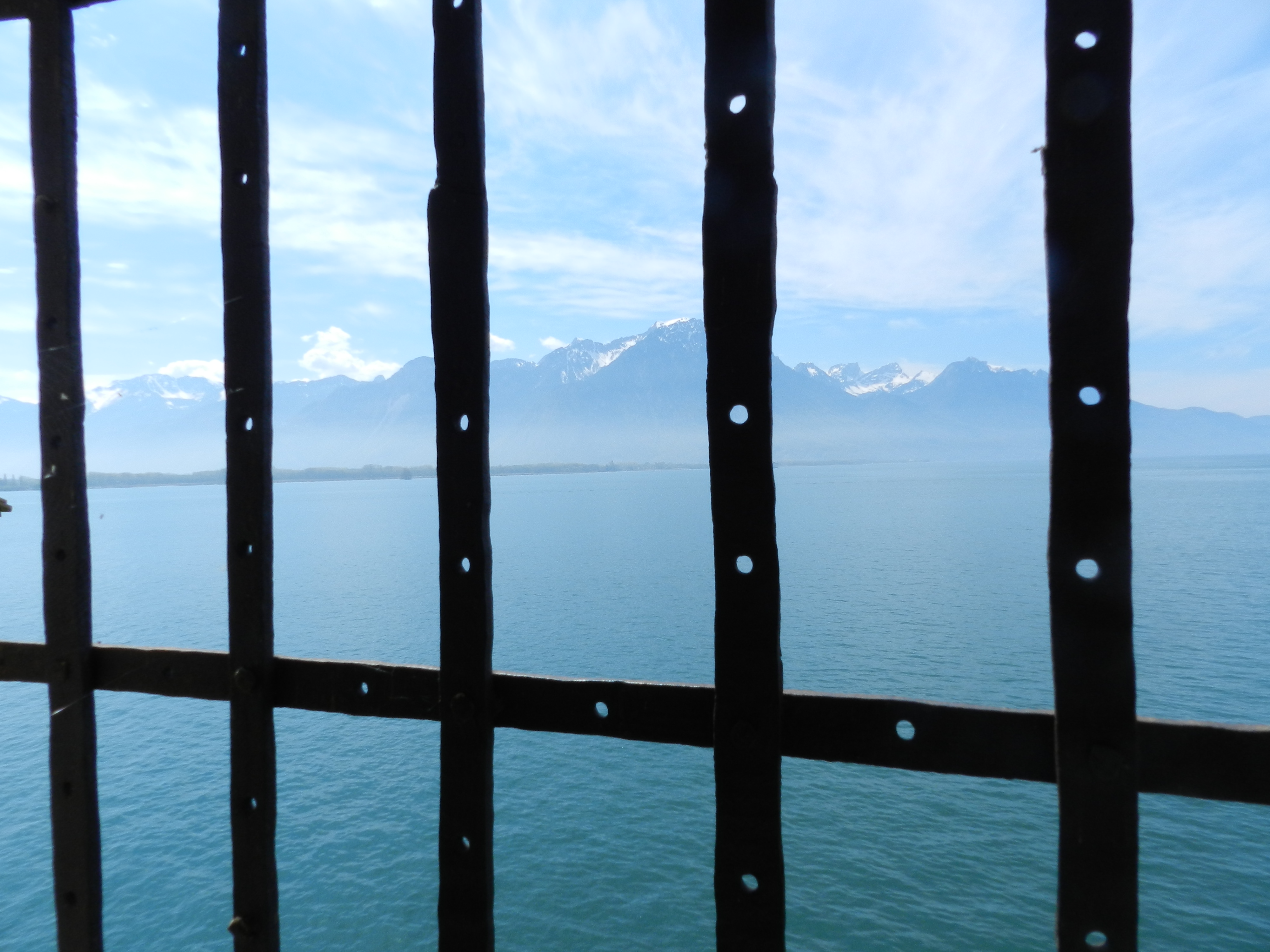
Room with a view
Room with a view

I don’t know if you can make out the Alps there in the background. The view from most rooms was spectacular.

I love a nice medieval courtyard!

Stone glamour
Stone glamour
Window crest
Window crest

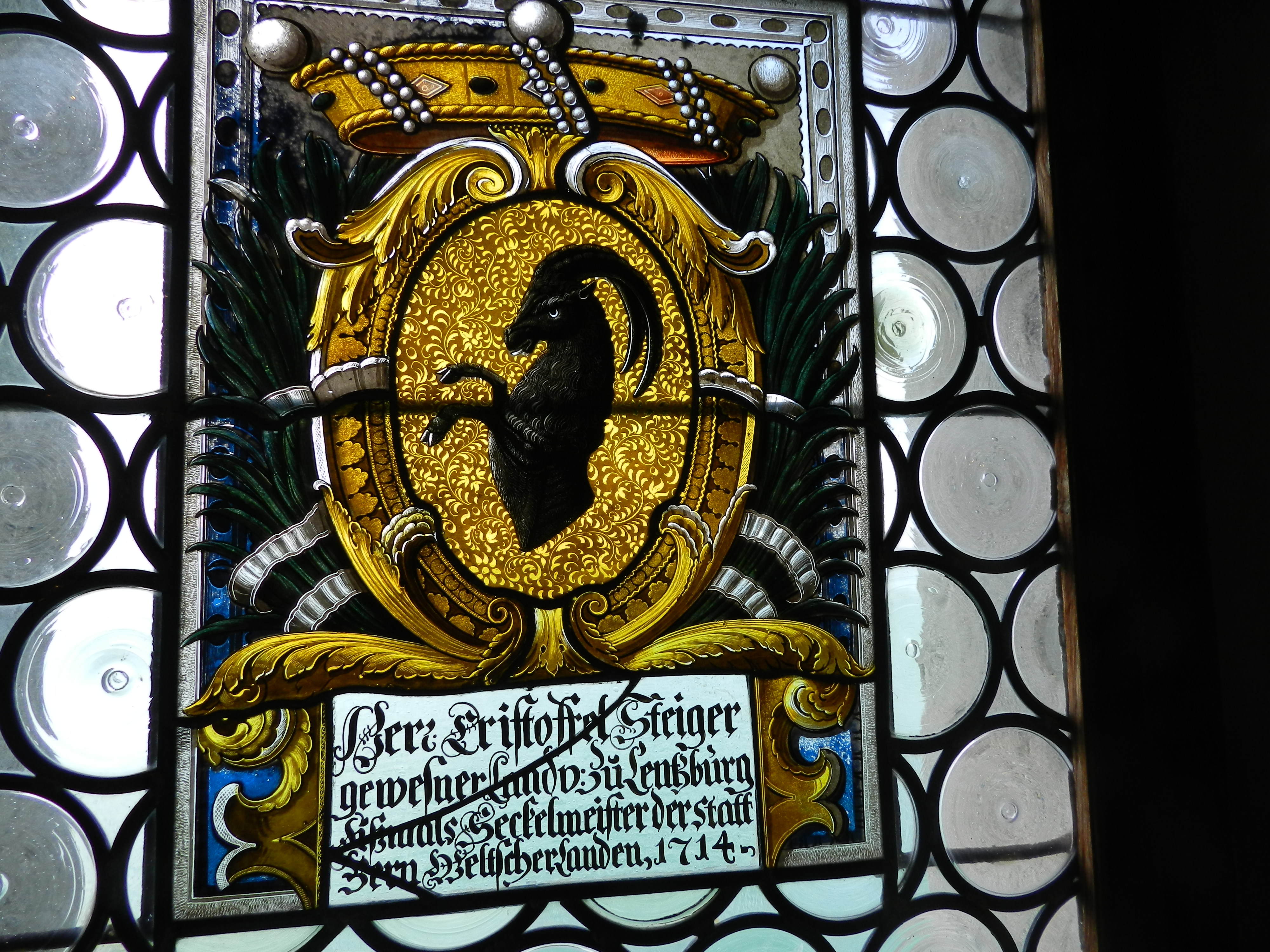
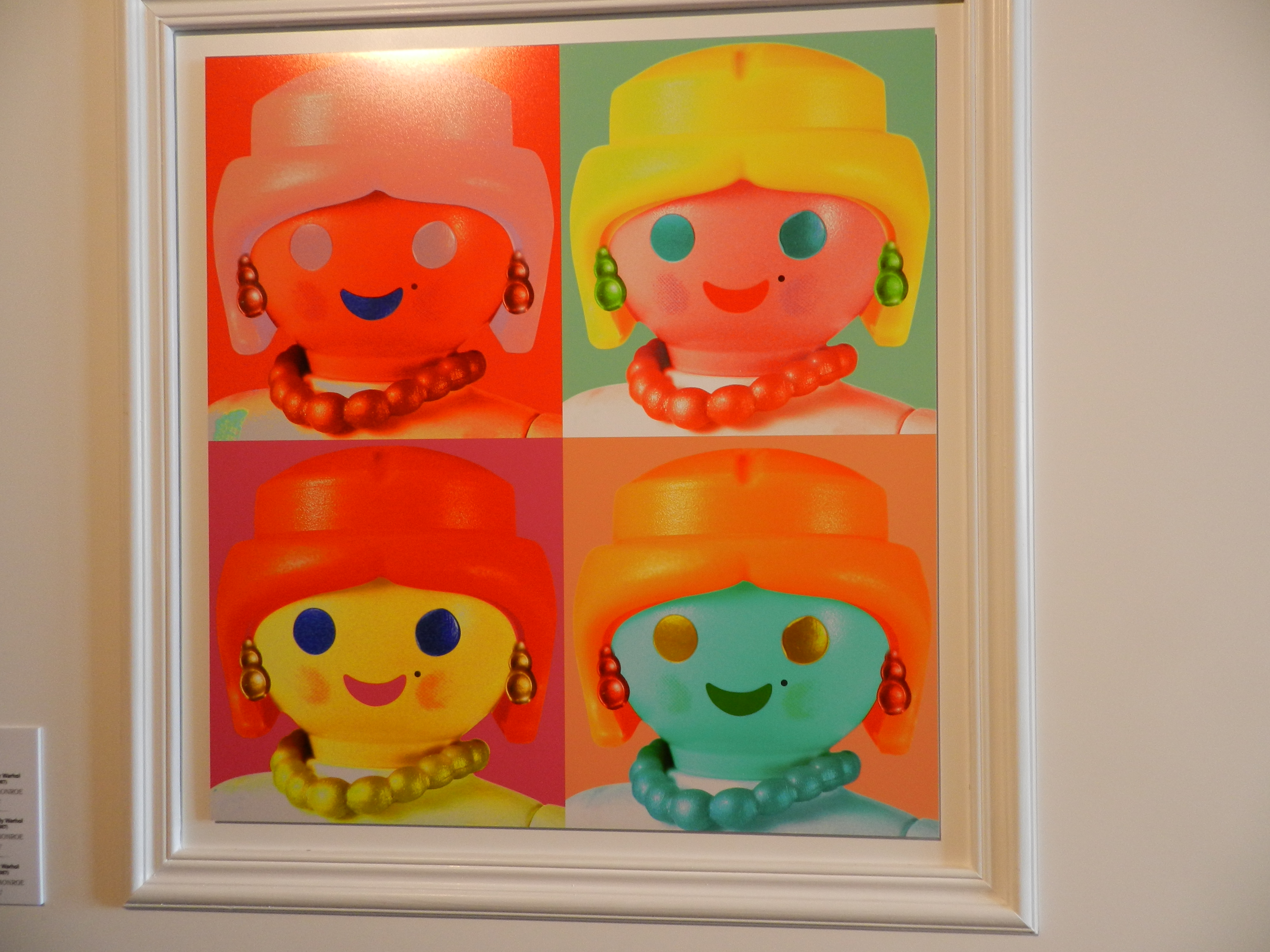
This stained glass crest is dated 1714 but parts of the castle are about 500 years older. The castle was hosting a special exhibition by French photographer and cinematographer Richard Unglick who has staged and photographed many classic paintings using Playmobil characters. Here’s one example:

Richard Unglick Playmobil

And another:

Richard Unglick
Richard Unglick

Before I leave you with one last image, I’d like to thank and pay tribute to my fellow bloggers (in alphabetical order) who have recently nominated me for a Liebster Award:

Arran Bhansal
http://arranbhansal.com/
David J Delaney
http://davidjdelaney.wordpress.com/
Anne Goodwin
http://annegoodwin.weebly.com/annecdotal.html
Niall McArdle
http://ragingfluff.wordpress.com/

And here is the Easter tree in the chateau. Happy Easter!

Can you see the decorations?

Switzerland and the foreigner thing

20150605_132001

After last Sunday’s vote in Switzerland to curb immigration from the European Union, I feel compelled to write about what a discouraging signal this sends to foreigners in this country. Having lived here for a decade and contributed the fruits of my labour to this country for that time – my work output, my taxes, my social security contributions, a thousand supermarket trolleys full of produce, not to mention three new Swiss citizens, I can safely say that Switzerland has enjoyed a substantial net gain from me.

And I’m no exception. The most recent OECD report on migration in Europe showed that the foreign population as a whole are net contributors to the rosy economy in Switzerland. Foreign women have bigger families, filling schools that would otherwise be half empty, with the future workers, footballers and leaders of Switzerland.

And then this campaign begins, peddling the idea that all the problems of the country, literally anything that is bothering the long-suffering natives in their daily lives, is down to this “uncontrolled” influx of people from the EU. Your train carriage is crowded? It’s because of them. You have to wait at the doctor’s? It’s their fault. Your rent has gone up? Obviously those pesky EU workers again. Urban sprawl offending your eyes? You know we wouldn’t have that without these outsiders.

The level of scapegoating would be laughable if it wasn’t hurting people. The debate has got to the point where there is no problem, present or future, that cannot be pinned on bloody foreigners.

And they lapped it up, or at least 50.3% of those who voted on February 9th did. The people have spoken, as is their right, but do they realise what they have said? Did they act to fix a real problem or was this just a way to score a cruel point, to hurt their neighbours?

To understand the result you have to know a little bit of background on how the vote came about. What you are seeing at work here is ‘direct democracy’, the purest form of democracy known to mankind, as I am now tired of hearing.

The Swiss political system has a very special role for popular petitions. Under the initiative system, any citizen may call for a vote on any issue or challenge a parliamentary decision providing they collect at least 100,000 signatures in support of their cause.

Well we all have our pet peeves so that’s great. Of course your average citizen doesn’t have the resources to gather 100,000 signatures but sometimes groups of citizens who are passionate about something get together and pull it off. More often this tool is used by well-organised and well-funded lobby groups and political parties. The gold medal in this category goes to the rightwing Swiss People’s Party.

This particular vote, dubbed “Stop mass immigration”, was brought to us by the Swiss People’s Party. With about a quarter of the popular vote, it is a fairly easy task for the party to gather so many signatures. What they do with this power is to focus on the social blight of foreigners.

For the past twelve years, EU citizens have been free to live and work in Switzerland, without any red tape, just as Swiss citizens have enjoyed the freedom to work and settle anywhere in the European Union. Known as the ‘free movement of people’, this agreement is one of the core principles of the EU and puts Switzerland on a par with EU member states.

It makes it easy for workers to follow work, Swiss retirees (for example) to move to Tuscany or Provence, and people living near borders to have access to the hinterland around them. You could see this as a win-win situation, or you could see it as an affront to your national sovereignty.

As a result of Sunday’s vote, the Swiss government now has to pull out of this agreement with the EU and return to a quota system of work permits, last used in 2002. Never mind that Switzerland has had a pretty good ride since then, helped in no small part by the easy working and living arrangements with its biggest market, i.e. every country surrounding it for as far as the eye can see.

Of course life will go on. Employers will find a way to hire the people they need and the people who are looking for work and prepared to uproot their lives to another country will still come to where the work is.

But the bitter taste will remain. Painted as the problem-makers, come here to rip the country off and make life difficult, we will continue to keep our heads down and work hard but the affection that was growing in our hearts for this nation is flickering and may be snuffed out. And that is the greatest loss of all to Switzerland.

Act II, Scene 1: Return to Switzerland

Home away from home
Home away from home

When there is a scene change in a play, the lights go down, the stage hands scurry in and skilfully whisk away the furniture and props, replacing them with whatever is needed for the new scene. The backdrop changes. The audience waits expectantly. A moment before, the actors were in a sunny garden having a tea party; now we find them on a battlefield, in a kitchen, a schoolroom. And the action continues.

The scene has changed for me again and the action continues. Yesterday I drove to work in the pre-dawn light and returned home at dusk. It was all so familiar, driving along the Swiss motorway, the Alps, crowned with pink-tinged clouds, providing a beautiful, distracting backdrop, the news headlines in German and me concentrating on the words, the road, the scenery.

When you move countries there is no such thing as a gradual change. You emerge from the plane and that is it. The dreamlike state of travelling is over and you have left the other behind, utterly. I’m amazed at how quickly I have adjusted and fallen back into this new/old life. The big goodbyes of last week seem a million miles away, or 1,200 kilometres to be precise.

Having had the luxury of spending so much time with Irish friends and family, it is frustrating to have to revert to long-distance communication again and to think in terms of future visits. The main consolation is that I now have the luxury of spending time with Swiss friends and family and making the most of this wonderful place.

Belated season’s greetings to everyone who follows this blog, as well as to new visitors. You may be pleased to hear that I will have less to say from now on about me the emigrant (you’ve been very patient!) and more to say about me the writer. Assuming I can keep up the momentum, in 2014 I will be blogging more about my novel and other writing themes. Thank you all for your presence and positive comments throughout the year.

Athbhliain faoi mhaise daoibh go léir.

The ultimate Italian tourist trap

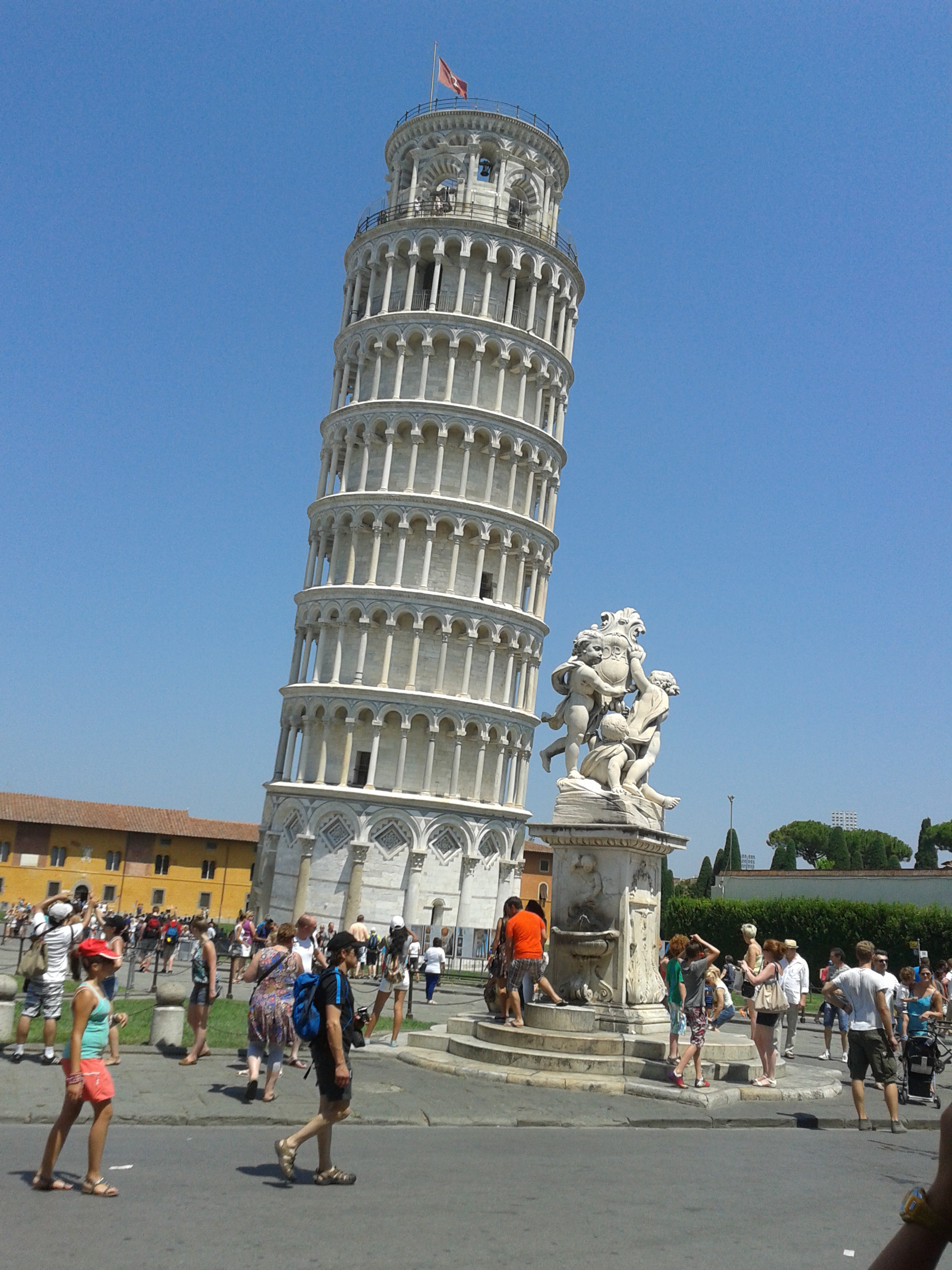
Pisa, July 2013
Pisa, July 2013

We know birds fly south for the winter but northern Europeans have a different migratory pattern – they drive south for the summer. Amazingly, the Mediterranean region is the world’s most popular holiday destination: it attracts some 120 million visitors from northern Europe each year, the largest international flow of tourists on the globe.

The obvious thing for a Swiss-based family to do is to join the hordes of continentals on the journey south. So imagine you are driving past the city of Pisa. You’ve never seen the famous Leaning Tower. Who knows when you will have another opportunity to do so? (OK, maybe next year but that’s a whole year away).

The temperature is a sweltering 35 degrees (95° F) and it’s the middle of the day. You’ve no GPS because you like to think there’s nothing wrong with old fashioned maps. On an impulse you take the Pisa exit, a random Pisa exit because without GPS or a map of Pisa, you don’t know which is the right one.

After a short while driving through suburbs you spot the sign for Torre Pendente – two new Italian words that can only mean one thing! You keep driving to get as close as possible, the signs disappear from time to time but you persevere and make it to within spitting distance of the tower. You know you must be close because African hawkers are waving you into a parking space in the impossibly narrow streets of the old town.

You spill out of the car and hastily cover the dazed children with lashings of sun cream. They’ve never experienced such high temperatures but are suddenly alert enough to want to buy thread bracelets from the African parking attendant.

Three bracelets later, you set off on the five minute walk to the tower. You know all about the tower, it’s old, Italian and it leans. But then you round the corner and see it for the first time and it is still a wonderful surprise. You can’t help but gasp at the sight. The 800-year-old bell tower is beautiful. Scrubbed clean, the white marble gleams like new.

You have to laugh. The huge open space is filled with every nationality under the sun, taking photos of the tower. You could fill Noah’s Ark from this crowd and repopulate the world. People are stretching out their arms in an odd leaning pose. In their photos they will appear to be supporting the tower. The atmosphere is one of delight. People are hot, a little stressed but happy.

You know you’re not going to forget the moment. You realise it’s one of those things that you have to see for yourself. Last week I wrote in slightly disparaging terms about the Jungfrau railway, the ultimate Swiss tourist trap. But I think I get it now. Some sightseeing trips are worth the effort.

Have you been anywhere interesting this summer? Got any good tourist trap anecdotes or tips to share?