Spring is in the air and I’m ready for more colour and connection. I think everybody feels the same. At the moment, I’m gearing up for the UK & Ireland launch of Voting Day with Fairlight Books on April 1st. The book will also be available in the United States which is very exciting (links to order below).
When Voting Day came out in Switzerland, this time last year, book shops were closed and the maximum number of people who were allowed to gather was five. It makes me all the more grateful for the opportunities coming up this year – especially an invitation to the legendary Listowel Writers’ Week!
Here are some dates for your diary if you live in Switzerland or Ireland:
March 8 BERN International Women’s Day event in Stauffacher Book Shop, Neuengasse in Bern. Stauffacher was founded in the 1950s and my book is set in Bern in the 1950s. Serendipity! My characters could have shopped there. I’m pretty sure Beatrice would have been a regular.
Doors open for the FRAUEN IM FOKUS event at 8pm. There’ll be music from pop duo Cruise Ship Misery and I’ll be in conversation with the German translator of Voting Day, Barbara Traber. Come along, bring your friends, and let’s celebrate books, women’s rights, music and other positive things. Tickets (CHF 15.00) and more info here. The event is in German.
April 6 ZURICH at the Swiss National Museum (Landesmuseum). As part of the current exhibition Amazingly ambivalent (Wunderbar widersprüchlich), I’ll be giving a short tour and talk on the topic of contradictions in Switzerland. The tour, in German again, starts at 6pm. You can reserve a place at this link.
April 21 DUBLIN for the launch of Voting Day (Fairlight Books) in Hodges Figgis Book Shop, Dawson Street. After two years of cancellations and missed opportunities, I’m not missing the chance to celebrate the new edition of Voting Day. The book will be launched by the lovely Anne Griffin, author of Listening Still. The launch starts at 6pm and everyone is welcome. The more the merrier!
June 1 – 5 LISTOWEL WRITERS’ WEEK in Co. Kerry. One of Ireland’s longest-running book festivals, Listowel Writers’ Week is a famously friendly and stimulating occasion. Lots of great writers have been part of the festival over the years and I’m truly honoured to be asked to present Voting Day in this beautiful part of the world. Date of the event to be confirmed.
For all my books I’ve worked with small publishers and no agent. It’s been a bit of a rocky road but somehow, good things keep happening – just in the nick of time – that make it all worthwhile. I hope I get to meet some of this blog’s readers in person over the next couple of months.
Here are those links I promised to buy Voting Day in different places:
Barnes and Noble (US), Waterstones (UK) and Stauffacher (Orell Füssli). I also have an order form for the four Swiss editions (English, German, French & Italian) on this website, if you want to order directly from me to a Swiss address. Available from O’Mahony’s in Ireland.
And you might enjoy this review I wrote for the Dublin Review of Books of Rosita Sweetman’s wonderful memoir Feminism Backwards. One last link in this link-fest – I really enjoyed writing this essay for the booksbywomen.org website about time travellers and book research. Have you spoken to any time travellers recently?
View from Gantrischseeli, canton Bern. Those little dots near the top of the mountain are skiers hiking up!
I’m going to see if I can write a blog post while I’m on hold to Swiss airlines. It’s been 53 minutes already and I can’t sit here any longer doing nothing.
This week hasn’t gone very smoothly. I mean I got all the presents wrapped and under the tree on time and I cooked a wonderful Christmas dinner, as stipulated in my mother contract, but an uninvited and most unwelcome guest is causing havoc at home. Guess who?
It all started with the crooked Christmas tree. A little bit of imperfection is fine, I thought. No need to fix it, everything else will be just right. Little did I know, I was opening to door to all sorts of calamity!
Monday was spent making trips to the local Covid testing centre. My youngest had said she was cold on Sunday afternoon and I told her to put on a cardigan. She put on her winter jacket. It was an everyone-do-their-own-thing sort of day (living with four people, I need and encourage days like these) so I didn’t pay too much attention until I saw her later, still wearing her jacket. Alarm bells rang and I checked her temperature. A fever. Her rapid antigen test was positive, confirmed by a PCR on Monday.
This development brought a surprising amount of admin. Calling, emailing, texting, filling in forms online, researching, cancelling things. The big disappointment was cancelling our post-Christmas visit to Ireland to see family. That’s why I’m on hold to Swiss now, into my second call, now at 15 minutes. I’ve chosen German this time, hoping it will be picked up faster.
Monday was also the day that my husband, after several days of bad back pain suddenly had an episode of such severe pain that meant he couldn’t move from the floor for 15 hours. It proved impossible to get a home visit from a doctor so he just had to ride it out. He’s gradually recovering since then.
For the past few weeks, I’ve been waiting to hear about a grant I applied for to support my next writing project. If I received the grant, I could take a break from freelance work and concentrate on writing for six months. It would have also meant recognition in the Swiss literary establishment. I got the news on Wednesday – no grant.
Christmas Eve is when the Swiss have their festive meal and exchange gifts. Despite everything we managed to go ahead with our family celebration in a safe way. It was different but still felt special. I think it will make us appreciate future Christmases all the more.
‘May all your troubles be little ones’ is what you can except to hear in Ireland when you complain about anything less than tragedy. With only two more days to go in this isolation regime at home, no sign that the rest of the family has caught Covid, and my husband well enough to take short walks, things are looking up.
My 11-year-old daughter has light symptoms and she’s been a trooper all week, staying mostly in her room and keeping herself occupied without complaint. She can expect a lot of hugs on Monday evening.
I am somewhat back to the drawing board for 2022, both professionally and creatively. But I’m not short of ideas. Since I went freelance almost seven years ago, I have based my career on the Mr Micawber principle that ‘something will turn up’ and, thankfully, it always does.
Miraculously, a human being just answered the phone and is sorting out the flight rebooking problem (child changing age category) while putting me on hold again. So I will very soon have one definite thing to look forward to next year – Easter in Ireland.
Things could be worse. I could be working in a call centre on Christmas Day! Thanks for listening and I wish you all a happy and healthy Christmas break. See you in the New Year full of new possibilities!
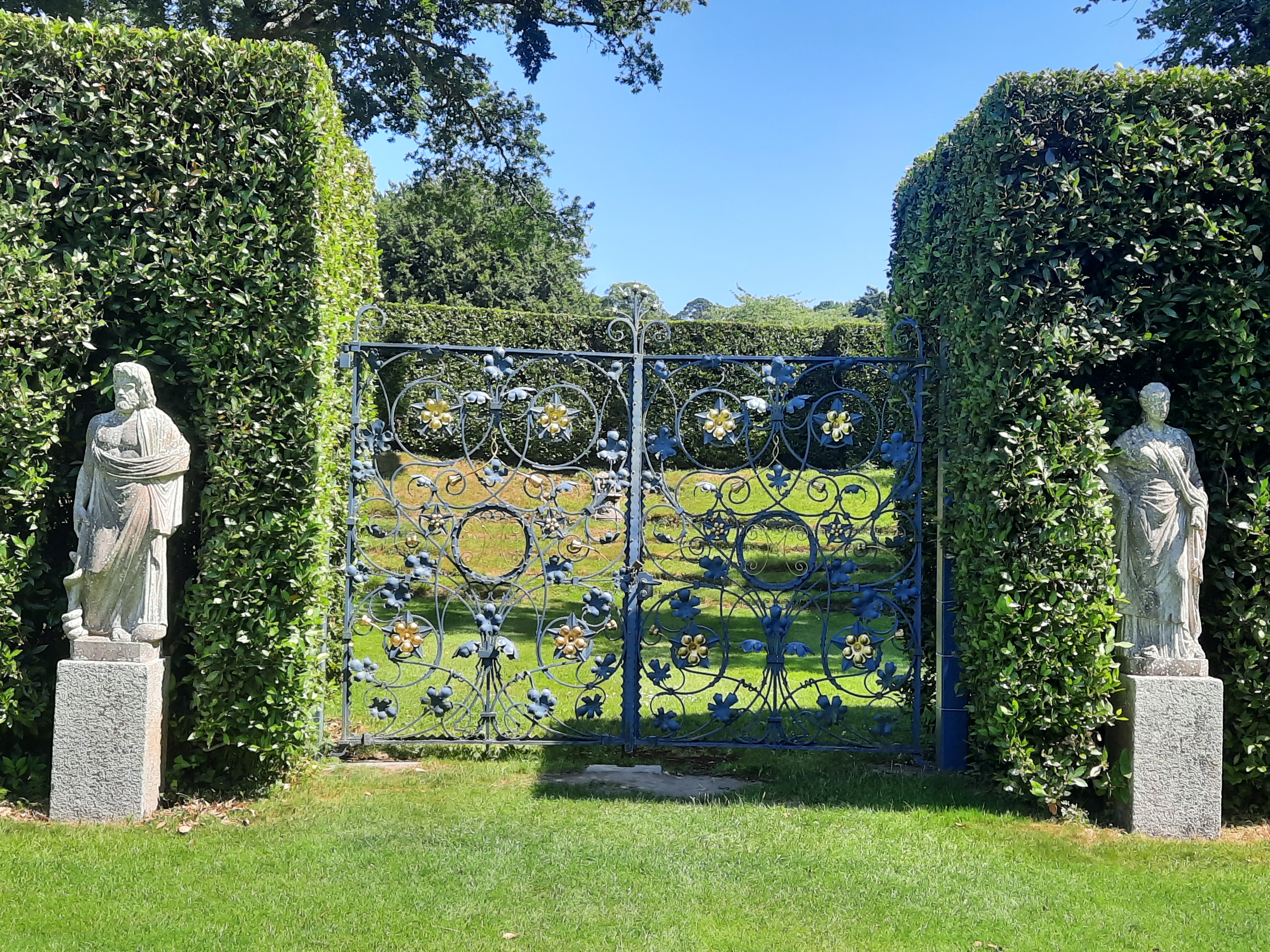
Kilruddery Gardens in Co. Wicklow. One of the highlights of the year was an afternoon spent here with my mother and daughters.
This month I’ve had a flurry of book-related activity, some of which required learning new skills. Like video editing! We’ve all come a long way with video communication in the past year and a half, haven’t we?
I remember back at the start of the pandemic when members of my book club suggested holding our next meeting online. That’s not going to work, I thought. Too many people on screen, too addling. How could you possibly have a discussion?
Soon after that I was asked to do a live online interview about my books. I declined because I was pretty overwhelmed at the time with the children off school and a new temporary job. I also didn’t think I could bear to be live on screen for a whole hour.
Now of course, that’s completely routine. I’ve been part of umpteen ‘Team’ and zoom meetings with different organisations. Our book club did well for a year online. My extended family ran a monthly quiz with three generations taking part. And the online launch of Voting Day in February of this year was an amazing experience, almost better than the real thing!
Drink and the Irish
Which brings me to a new date for the diary. I’ve been invited to give an online lecture as part of the ‘Ireland and the World’ series hosted by the University of Zurich and the Swiss Centre of Irish Studies. These are free public lectures, and my topic, on December 1st at 6.15pm (Swiss time), is ‘Conquering the world, one Irish pub at a time’. You can find the link by clicking through on this page. For this lecture I’ll be returning to the chapter in The Naked Irish on the Irish relationship with the demon drink.
Translators Aloud
The video editing I tried is pretty rudimentary but it’s a start. To make this video for the Youtube platform Translators Aloud with translators Corinne Verdan-Moser and Anna Rusconi, I had to research how to get the record settings right on zoom, and I figured out how to add a title page and photo at the end. So here it is, Corinne, Anna and I reading from the opening of Voting Day.
December event
One last date for the diary for Zurich people. I have a free public event in German coming up on December 5th in a vintage furniture shop on Ankerstrasse called WOW Props. The ambiance will fit nicely with the 1950s storyline of Der Tag, an dem die Männer Nein sagten (Voting Day). I’d like to thank Andrea Maurer for hosting and Yolanda Pantli of Ouï-e Communications for organising the event. There are two time slots – 11am & 1pm and coffee and croissants for everyone. Register by email: pr@oui-e.com and tell your friends!
Christmas presents
Now is a good time to beat the Christmas rush by buying books from your local bookshop or online. The Naked Swiss: A Nation Behind 10 Myths is the perfect read to demystify Swiss culture and politics. Available in Swiss bookshops or direct from Bergli Books (French and German translations from Helvetiq).
Voting Day is currently available to buy in Switzerland in English, French, German and Italian, either through a bookshop or directly from me at this link (free delivery).
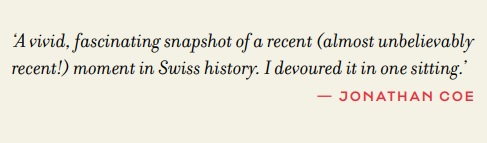
And finally, the UK edition of Voting Day, to be published by Fairlight Books in 2022 is available to pre-order at this link: Voting Day by Clare O’Dea – Fairlight Moderns | Fairlight Books. I’m delighted to share the quote on the back cover of the novel from a writer I really admire, Jonathan Coe.
It’s lovely to come across such kindness in the publishing business. I hope you all have a peaceful time between now and Christmas. Be careful out there!
Marriage is great fodder for fiction. ColmTóibín’s latest novel, The Magician, tells the story of the life of Thomas Mann. In a sweeping narrative, it takes in German culture and politics of the first half of the twentieth century, Mann’s creative life, as well as his family and erotic life. But most of all, according to the author, it’s the story of a marriage.
Tóibín came to Zurich this week, and I jumped at the chance to hear him talk. He was interviewed on stage in a gorgeous venue, the 100-year-old Kaufleuten, a legendary nightclub, pub-restaurant and cultural space. It’s the kind of place Mann might have frequented when he lived in Zurich. James Joyce once had a play staged there.
The character of Mann craves a lot of things – stability, routine, recognition, young men’s bodies. He was one of many homosexual men of his time who married for convenience or safety. Yet his marriage to Katia Pringsheim, a student of physics and mathematics from one of the wealthiest families in Germany, was no less interesting for that.
“The marriage was intense, and the loyalty between them was intense, and the love was intense. It was in many ways a great relationship,” Tóibín said.
I agree, at least in how Tóibín depicts the relationship. But Katia remains a bit of a mystery. Once in the book, there is a scene where she is pressed to justify why she married Mann and she says it’s personal. All she reveals is that her father was a philanderer and she knew she would never have that trouble with Mann (who obviously fancied her beautiful twin brother). Marriage to Mann gave Katie a certain freedom. Coming from a rich, cultured, high-achieving family, he was a prize for her too.
Katia Mann is shown tolerating her husband’s roving eye and infatuations for boys and young men. More than that, she is quite magnanimous about it. Mann’s sexual life was mainly lived in his head and he rarely dared to follow up on these feelings. She seems to have understood that. Now I’m making the same mistake as the moderator on Wednesday night, treating the book as if it were a biography, and Tóibín the biographer.
A rich tapestry
Mann’s life is so interesting – a gay man, literary genius, dissident, exile, father of six extraordinary children, the most famous German voice in the United States during the war – it’s easy to get sucked into only thinking about him.
So, more about the writing. It’s a linear narrative from childhood in Lübeck to the end of his life in Switzerland, divided into chapters entitled the year and place. Overall, a rich tapestry. After lingering in Lübeck, the story skips along through Mann’s career and home life. We enjoy dinner party conversations with a great number of clever and unconventional people, there are terribly poignant scenes of Mann receiving tragic news, his imaginings and travels, moments and settings where he got his ideas – the Davos sanitorium, the famous Lido in Venice – and regular interactions with (mostly negative) political events.
We see the marriage in action, in their conversations and habits, getting to the point as readers where we know what is unsaid between Thomas and Katia. But Tóibín never shows us any physical intimacy between the pair. I wish I’d had a chance to ask why he shied away from the marital bed but there were no questions from the audience.
I managed to scribble down a few notes in the dark. “There’s a difference always between what we think we feel, what we feel and what we say. A novel can show that gap,” Tóibín said.
The German question
The Irish writer had plenty of research material at his disposal to fill that gap. The lives of the Manns have been exhaustively documented in diaries, contemporary accounts and biographies. We even heard Thomas Mann’s voice in the Kauflauten theatre from a 1942 broadcast in English, one of several speeches he made railing against the Nazis. A nice touch.
Mann’s brother Heinrich and three of Thomas Mann’s children were also writers, so we also have their body of work to add to Mann’s oeuvre. Many of the Mann circle were the subjects of biographies themselves. Tóibín credits 35 works in the back of his book. It must have been quite a struggle to stop researching and start writing.
Interestingly, all of the titles Tóibín mentions are in English and I wonder how Germans feel about an Irish writer (researching in English) speaking for Mann who is after all a national treasure. But Tóibín didn’t want to be drawn on this. The interviewer Blas Ulibarri tried to ask about the German reception to the book but Tóibín just said, “the Germans are very nice” and pointedly put his microphone back down on the table. Because he came straight from a book tour in Germany, we would all like to have heard more.
Anyway, I loved the book. A lot happens, there are many scene changes, just as there were in Mann’s life – from his staid home city of Lübeck to Munich, Lugano, South of France, Princeton, Los Angeles and back to Switzerland.
The Nazis’ rise to power is the dramatic engine of the middle part of the book, not just because it forces the Manns into exile but because of the delay before Mann publicly denounced Hitler. His timidity almost cost him the love of some family members. But Tóibín makes this conflict between Mann’s private views and his public position an understandable failing.
Mann’s routine is dull and unchanging, working every morning in his study wherever he lives, taking meals and having conversations with his wife and children, receiving visitors. This lack of action presented a challenge, Tóibín said, but he clearly overcame the challenge. There is ample external drama in between the quiet days: complications with Mann’s mother and siblings, the horror of the Second World War and the unruly behaviour of his children.
Three out of six younger Manns were gay, two of them openly and joyously so, in the years before Hitler choked all the joy out of German life. The same three – Klaus, Erika and Golo Mann – were also prolific writers. All the Mann children were damaged by the experience of losing their homeland, however much they were protected by their parents’ great wealth.
Other gems
Tóibín’sThe Magician(Penguin) is the third great work of biofiction I’ve read this year, all by Irish writers. If you want more after finishing The Magician, I highly recommend Nora (New Island) by Nuala O’Connor, a banquet of a novel written in the voice of James Joyce’s wife Nora Barnacle. Covering the same era, it’s another story of fame, genius, an unconventional marriage, the peripatetic life and difficulties with grown children.
A Quiet Tide by Marianne Lee is the third title, a masterful debut, also published by New Island Books. It tells the story of the great Irish botanist Ellen Hutchins, a solitary and tragic figure. A fascinating and moving novel that depicts the complexity of early nineteenth century Ireland in exquisite detail.
That should be enough reading to keep you occupied when the clocks go back. I have no decent photos from the Kaufleuten venue so I opted for this street view of the famous Bahnhofstrasse nearby. It was fun travelling to another city for a night of culture and meeting writing friends, especially with Thomas Mann’s story so fresh in my mind.
Have you been to a reading recently? If you’re in the mood, the Dublin Book Festival is running until November 12with a fantastic online programme. Have a great weekend!
Do book clubs have a natural shelf life? I’ve been a member of the same book club for about ten years. We started out as work colleagues and now more than half the group work in different places so the club has become a way to keep in touch. The most far-flung member of the group lives in Joshua Tree.
But, I must admit, we are beginning to lose our book club mojo. The number of no-shows and did-not-finish-on-time readers is growing and the gaps between meetings are getting longer. During Covid we had a few video sessions and they went very well. Maybe that’s the way forward.
At the invitation of a friend, I visited a very lively book club last week, a group of mostly Americans living in and around Bern. What made the evening special – apart from the amazing snacks and hospitality – was that the book they were discussing was Voting Day.
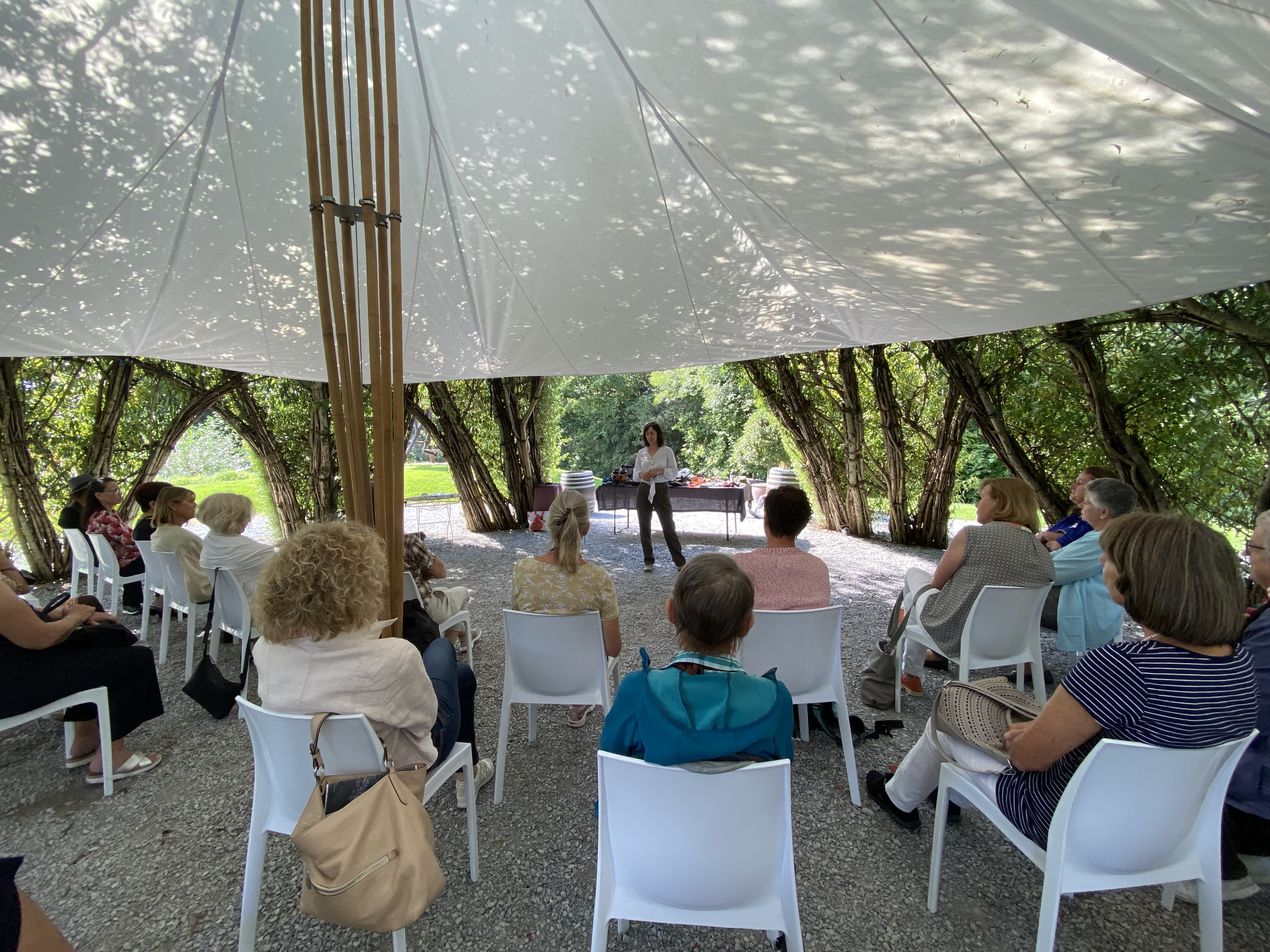
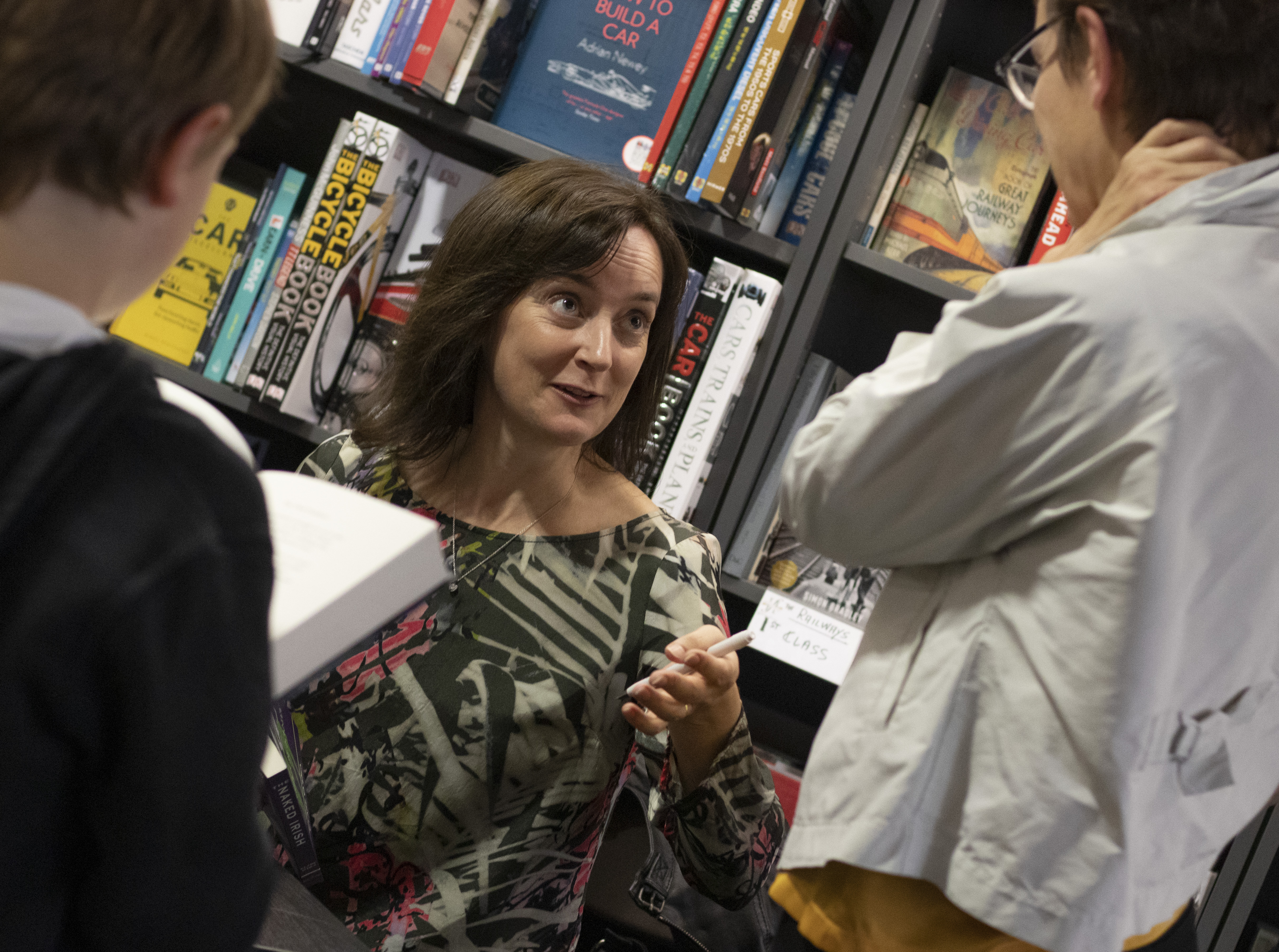
I’ve done quite a few author talks recently but mostly to an audience of potential readers, such as the image above with the Zurich International Women’s Association. This was different. The book club members had read my book and seemingly enjoyed it very much. They were brimming with enthusiasm and questions and I was impressed to see how many aspects of the story resonated with different readers on an individual level. It sparked a discussion about Swiss life, women’s role in families and society today, what has and hasn’t changed.
I left the group with a promise that I would put together a list of questions for book clubs, something they said they always looked for online. So here it is, my list of book club questions for Voting Day. I hope you find them useful and if you have any more suggestions, let me know in the comments.
Book club questions
In Voting Day, what is the most important difference between the characters – generation, class or personality?
How well do you think Vreni knows Margrit and vice versa?
Is Peter a good husband to Vreni?
Who is the strongest character?
We see different types of marriages and views of marriage in the story. To what extent do the four characters’ understanding of marriage overlap or differ?
What are the blind spots of the four protagonists?
Which character appealed to you the most?
How does motherhood impact the lives of Vreni and Esther?
How important is family to each of the main characters?
What do we learn about the place of foreigners or minorities in Swiss society at the time?
If there is a message to the book, what would you say it is?
Switzerland was an outlier with regard to women’s suffrage, with women remaining disenfranchised until 1971. Do you think the situation of the four main characters is therefore very different to the situation of women in your country in the 1950s?
What is the most significant change in women’s lives between then and now, as depicted in the book? Is there anything that hasn’t changed?
What does the boy Ruedi symbolise or represent in the novel?
What scene in the story did you find the most moving?
Book news
The last month has been busy on the book front. I put in an application for a grant to support the writing of my next novel next year. Will keep you posted on that. Even if nothing comes of it, I was still motivated to start writing again and I welcome that very much!
At the end of August, I met the Swiss Ambassador to Ireland José-Louis Touron to plan an event in Dublin in November. Also part of the meeting was Abigail Seran, a Swiss writer whose latest book D’ici et d’ailleurs is partly set in Ireland.
In the first weekend of September, I had a wonderful opportunity to take part in Le livre sur les quais festival in Morges. I spent the whole of Sunday in the authors tent meeting readers and signing books. And I got to meet some amazing writers, including the Flemish author Stefan Hertmans who is a genius as far as I am concerned. Caroline Bishop (author of The Other Daughter) and I shared a stage for our event, Stories of Women’s Suffrage in Switzerland. It was all over too soon!
Also this month, Fairlight Books revealed the cover of their edition of Voting Day, to be published next April. I think it’s beautiful (see below). There was even an article about Voting Day in The Bookseller. And finally, the Swiss book blog, Mint & Malve, ran a glowing review of the German translation of Voting Day, Der Tag an dem die Männer Nein sagten.
A reminder that Voting Day (distributed by Zytglogge Verlag) and the three other language versions are available to buy or order in all Swiss book shops or here on my website (Switzerland only). Happy reading this autumn!
Actually, it’s more of a beginning than an ending – I hope! This Sunday I have my first in-person book event since Voting Day was published. The event is taking place in a fairy-tale setting, Schloss Heidegg in Canton Lucerne.
The castle, overlooking Lake Baldegg, dates back to the Middle Ages. It has a rose garden and a park and a museum. I would go there gladly anyway. But to be invited by the Seetaler Poesiesommer festival to talk about my book is amazing.
I’ll be there along with Barbara Traber, the German translator of Voting Day (Der Tag, an dem die Männer Nein sagten), who also wrote the foreword of the book. Barbara was a translating match made in heaven. Not only is she a Swiss-German author who has written and translated dozens of books, she also remembers the vote in 1959 when she was a teenager. She has given me wonderful encouragement and guidance since we met exactly a year ago.
The event in German begins at 11am and you can find more details on the castle website here. It’s organised by Ulrich Sutter and there is an Irish theme with music from Irish composers and readings from the poetry of Franz Felix Lehni who lived in Ireland.
UK publisher
Last month on social media I shared the news that I’ve signed a publishing deal for Voting Day in the UK. Fairlight Books came back to me with a yes at the beginning of this year and they will publish their own edition of the book in the UK and Ireland under their Fairlight Moderns novella series next April. If you like your literary fiction on the short side, check out their titles.
It just happens that next year is the centenary of Irish women gaining full and equal voting rights, and I think a book written about the Swiss experience should be of interest to everyone. Women have faced the same problems to a different degree in all patriarchal societies over time. A culture that gives men a disproportionate share of authority, ownership and power breaks the natural partnership between the sexes. We are stuck fighting the same fight over and over – for our safety and dignity, and against economic disadvantage. And I’m not sure we ever will find the lost Eden of true partnership and equality again. But I digress!
There is one more piece of book news relevant for Swiss readers. Up to the end of June, the distribution of Voting Day and the three other language versions was handled by Bergli Books in Basel. From now on, this role will pass to Zytglogge Verlag. Booksellers should still be able to find the book easily in their system and order it for you. Or, if you are a Swiss resident, you can order directly from this website anytime.
I wish all followers of this blog a great summer, hopefully without Covid clouds on the horizon. If, like me, you’re feeling guilty about being fully vaccinated while most of the world is still vulnerable, it might help to donate to this Unicef vaccination campaign.
Please feel free to contact me if you’d like to request a review copy of the book or to talk about possible book events or publicity. Email on contact page.
Visiting the German edition of Voting Day in Kanisiusbuchhandlung Lüthy
This day last month, the Irish Embassy in Bern hosted the launch of my debut novel Voting Day, published in four languages. Set on the day of a failed vote on women’s suffrage in Switzerland in 1959, it tells the story of four women whose lives are connected by a foster child.
The launch evening was incredibly special, hosted by the Irish Ambassador Eamon Hickey and attended by the three translators of the book – Barbara Traber, Corinne Verdan-Moser and Anna Rusconi. You can still view the event at this link (passcode 70N?6Rq@).
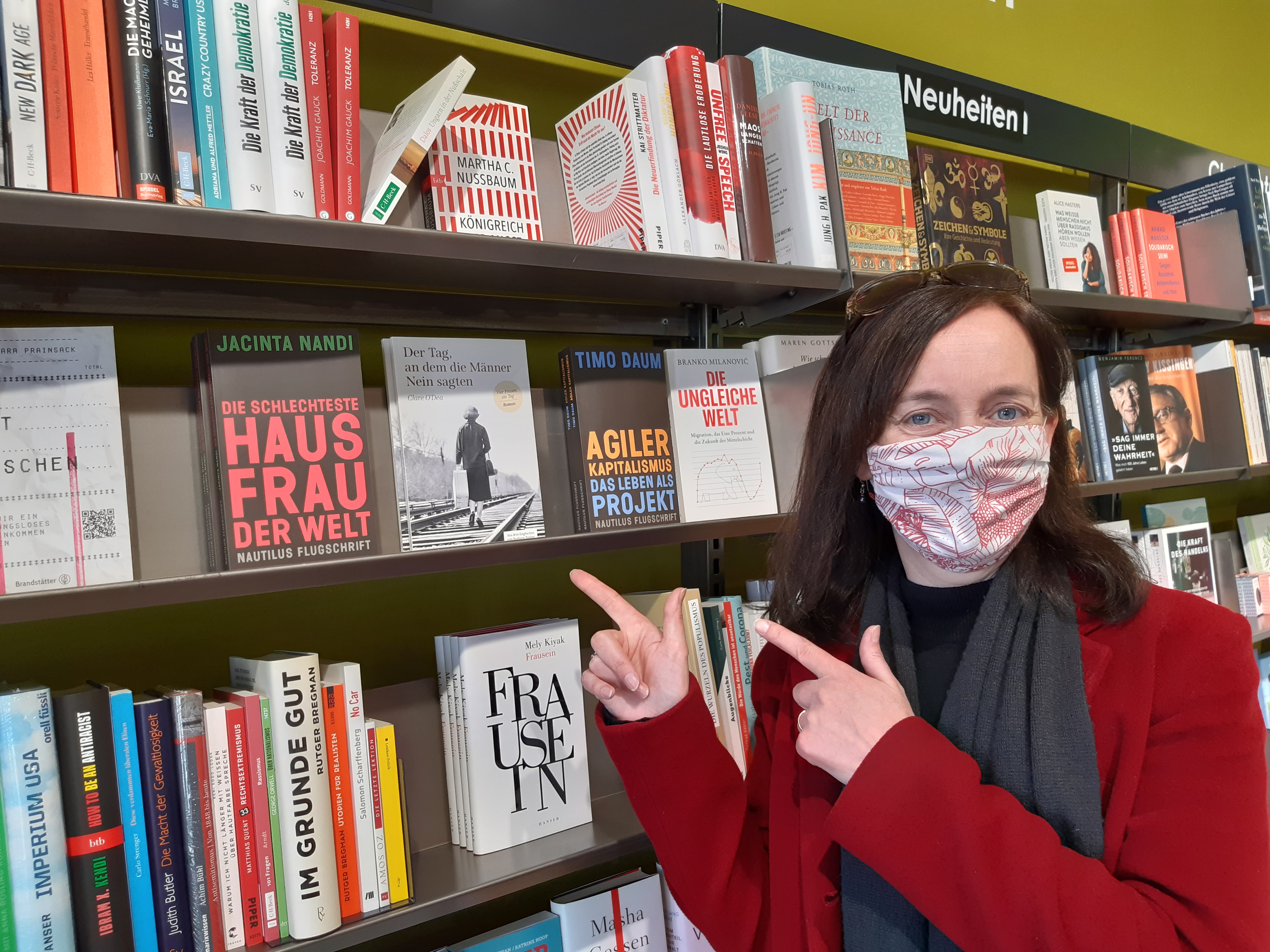
I’d like to share some of the news and reviews of my novel from the past month. At the time of the launch, book shops were closed but I’m delighted to say that shops have opened in Switzerland today and I paid a visit to my local shop to see the book on the shelves – as you can see!
In English, there have been two videos I’d like to mention. This report by Julie Hunt on swissinfo.ch featured Voting Day along with another new novel set in Switzerland called The Other Daughter by Caroline Bishop. The report is full of wonderful archive footage.
The second video is a really enjoyable interview I did with Matthew Wake of Books Books Books in Lausanne.
When the 50th anniversary of the women’s vote came around on February 7th, I wrote this piece for Global Geneva Magazine explaining why it took so long for Swiss men to do the decent thing.
Reviews
As for reviews, they have been positive but small in number so far. The magazine for the Swiss abroad, Swiss Review, published a favourable review of the German edition of the book by Ruth von Gunten that was translated into French, English and Spanish. Another reviewer, Antonella Amodio, wrote a review of the Italian edition of the book for the Italian edition of the magazine.
It’s a wonderful review so I will quote, courtesy of online translation:
“A story that speaks of female solidarity, dignity, kindness, the search for independence and social redemption … I thank the author Clare O’Dea and the translator of the Italian version Anna Rusconi because it was a truly touching and enlightening read.”
A review of the French edition in the newspaper Journal du Pays d’Enhaut was also lovely. The reviewer, M.Z., describes some of the plot and then adds: “I won’t say any more because this novel is very moving and you have to appreciate its originality to the last page.”
If you enjoyed Voting Day and would like other people to discover it, I’d be very glad to increase the number of reader reviews on Goodreads (EN), Lesejury.de (DE) or Lovelybooks.de (DE, FR, EN, IT). Another way to help the book fly is to ask for it in your local Swiss bookshop.
Film festival
One last thing … here’s a date for the diary if you happen to have the evening free on International Women’s Day next Monday the 8th.
The Women in Film Festival, What If? will present four short films and a Q&A with the filmmakers. Voting Day will get a mention thanks to the swissinfo.ch video. The curators have chosen narratives of courage, determination and strength and I am delighted to be associated with the event. Sign up for the free 1.5-hour event here.
For Swiss readers of the blog, enjoy the freedom to browse for books again from today and stay safe out there! Congratulations to everyone who has received a vaccine. It makes me so happy to hear all the vaccination stories. We’re on the right path now.
ciara_mcconville @moorhen21 Tuesday just a flying visit
meghan_flynn what, you’re here???
ciara_mcconville @meghan_flynn not staying in Dublin, for my Mam’s 70th
meghan_flynn thought that was last year
ciara_mcconville @meghan_flynn using up a voucher
moorhen21 time for coffee or lunch on your way through the big smoke?
lahinchsurfsports Lahinch rocks, ha ha
Conniecawley Lovely pic!
ciara_mcconville@moorhen21 sorry it’s a short trip this time,gotta go, crab claws beckon
meghan_flynn you missed my 40th on Saturday
ciara_mcconville @meghan_flynn sorry meg, having dinner with my folks here, call you later
meghan_flynn I sent the invite in March. Pity you couldn’t have combined the 2
taramcc enjoy your crab claws (hope not fished locally, stocks are low)
ciara_mcconville @taramcc ignore her, she ordered them too!
taramcc ha ha just messing with you
danodonnell Great pic. Me and Sinead are here too!!! How long r u staying? See you in Kenny’s later?
ciara_mcconville Ciara’s Mam here, yis are unbelievable. The girls’ phones are in my bag for the rest of dinner. Congrats on the twins, Maura. Conversation over.
meghan_flynn call me
melonslice Gorgeous pic!
A little piece of Instagram-based flash fiction dedicated to all the Irish abroad who would love to go home but can’t because of you know what.
One day while walking my dog in the forest, I had an idea to tell the story of four women on a particular day in history. The date I had in mind was February 1st, 1959, and the setting was to be Switzerland. The result is my first novel, Voting Day, which will be published next February in the three official Swiss national languages (German, French and Italian) and English.
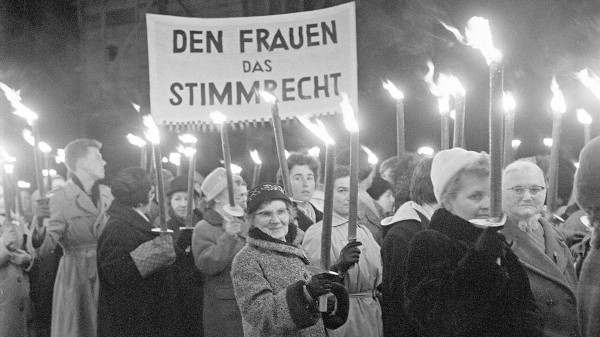
The vote in question was a referendum on female suffrage, rejected by male voters on that cold, foggy Sunday. Swiss women eventually gained voting rights 12 years later in 1971 so we’ll be celebrating the 50th anniversary next year.
From early morning until last thing at night, Voting Day tells the story of four very different women whose lives are connected by the fate of a foster child. While the men go out to vote, these women have other things on their minds, mostly.
Vreni is a farmer’s wife and foster mother in her late forties whose life has shrunk to the confines of the farm and village. Her daughter Margrit seems to have found success as an office girl in Bern but her boss has put her in an impossible position.
Esther is a Yenish woman, one of the native travelling people of Switzerland. Taken from her family as a child, she now works as a hospital cleaner. When her own son Ruedi is taken into care, the future looks bleak.
Beatrice has made a good career as the hospital administrator. She dreads the prospect of a no vote after putting her heart and soul into the yes campaign. But could she hold the key to reuniting Esther with Ruedi?
It was clear to me when I started writing Voting Day that it really should reach Swiss readers, but I didn’t know how I could achieve this. How could I find one Swiss publisher willing to arrange the translation of the book, let alone three? What to do with the English version?
Luckily a sponsor came on board who was willing to pay for the translations. That brought my dream much closer to reality. With the help of a local company in Fribourg, I began to put together an ambitious self-publishing project with a simultaneous launch in the four languages planned for next February.
Publishing has become more and more challenging and often loss-making for authors. I want to find a way around that. The German translation is complete and the French and Italian are under way. The publishing costs are adding up but everything is moving in the right direction.
In November I will launch a crowdfunding campaign and continue seeking other kinds of funding. I’ve already received a lot of moral and practical support. My characters – Vreni, Margrit, Esther and Beatrice – are my inspiration.
From now on, I’ll be writing regular updates on the progress of Voting Day, and I hope you’ll enjoy hearing about it. I can already share the first interview (in German) with skippr.ch about the German version, Der Tag, an dem die Männer Nein sagten.
Book bloggers and journalists, please get in touch through my contact page if you would like to receive a review copy in one of the languages.
When I was researching and writing The Naked Irish in 2018 and 2019, I spent every spare minute feverishly gathering information, reading books and articles, listening to the radio, interviewing people, collecting notes and quotes left, right and centre.
This process came after 15 years of living outside the country. Nobody asked me to do it. Finding a publisher was a nail-biting challenge and I’ll always be grateful to Mentor Books (Red Stag) for saying yes.
Now that the book has been out for a year, I have enough distance to look back and wonder what the quest was all about. Why was it so important for me to write that particular book? It has a lot to do with being an emigrant.
When I left Ireland in 2003 to move to Switzerland, I stopped writing about Ireland but I never stopped caring. But if Ireland is a mother figure, she’s a mother who is indifferent to her absent children. She has enough mouths to feed at home!
And yet, I wanted to reclaim and rediscover Ireland, force her to take notice. I think I managed to do that through The Naked Irish, but in the process, I have become less sentimental about the people and the place. Close up, the hills are a bit muddy.
Before I wrote this book, I used to wonder how different my life might have been if I’d stayed in Ireland. At least The Naked Irish answered one aspect of that question. This is the work I would have covered as a journalist. I finally got my chance to write about the Irish economy, politics, social issues and literature.
I got to hold Ireland close and now I feel it drifting away again. The country is not really mine to keep any more. And that’s OK. It will be partly mine from now on, not fully mine, and that makes my life easier.
My next book is completely different. It’s a historical novel set in Switzerland and it could only be written by a Swiss person, the Swiss me. It has shown me how much this country means to me now. I’ll be sharing more news about this project with lots of razzmatazz very soon.
Before I sign off, I have to give the usual reminder that my non-fiction books The Naked Irish: Portrait of a Nation Beyond the Clichés and The Naked Swiss: A Nation Behind 10 Myths are ideal gifts for anyone who wants to understand either of the countries better. You can order them directly from the publishers on those links or make a trip to your local bookshop because they badly need your custom.
Final note: I took the picture above during a visit to the laténium museum and park on Lake Neuchâtel in June (highly recommended!). These reconstructed lake dwellings are based on a 6,000-year-old village that was discovered on the site. Amazing to see.
Final final note: I might as well stick in a picture from the book launch in Dublin last year because it was such a happy day. Credit, Ger Holland (@GHollandPhoto on Twitter), who did a wonderful job.








 Clare O'Dea